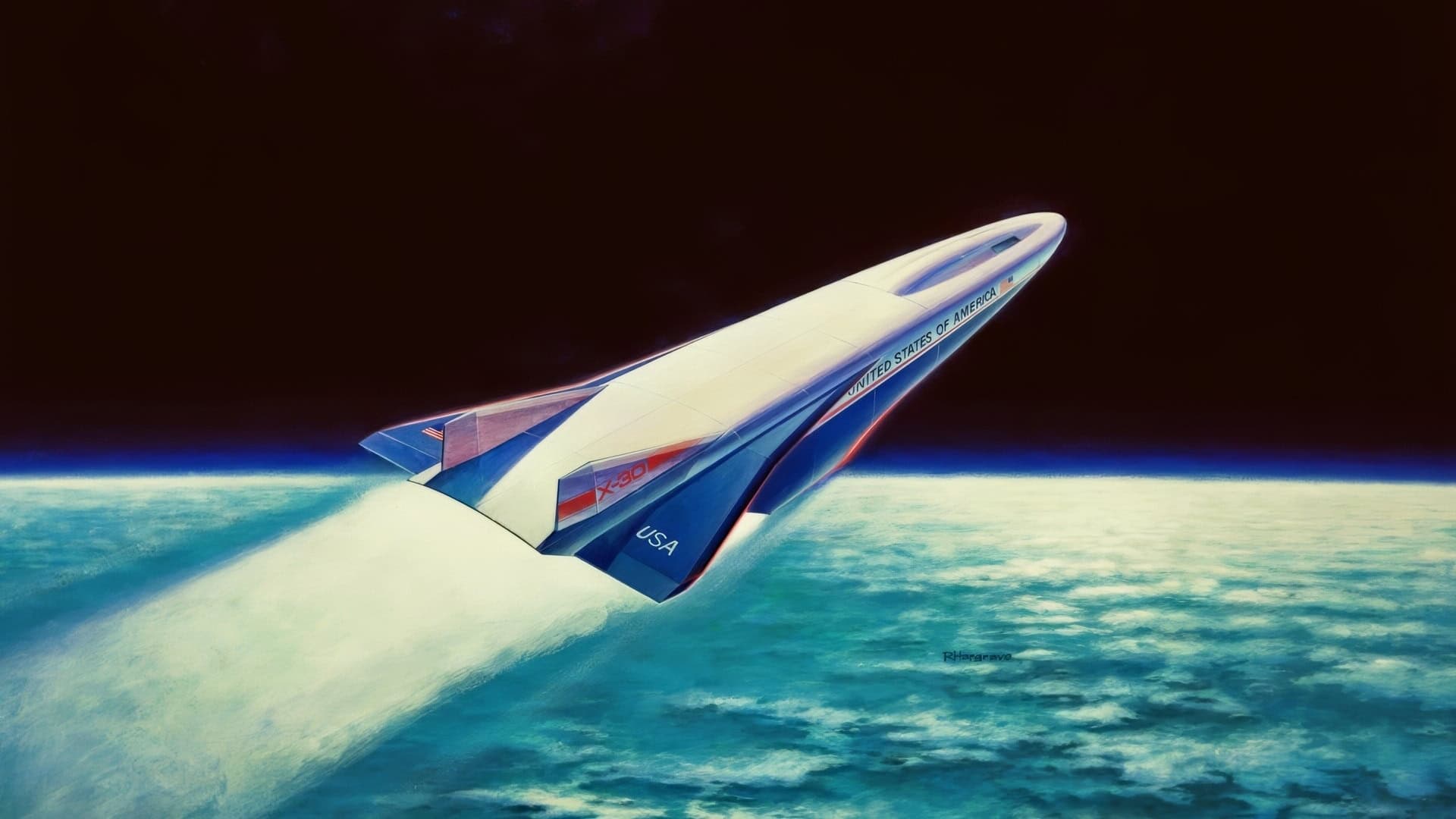
While the Cold War era saw some of the most distinctive and innovative aerospace designs pushed to the forefront of development (to better compete with and defeat the Soviet Union), such as the SR-71 Blackbird, some designs never made it.
In fact, the president announced some aerospace plans that never materialized. And it isn’t only a pattern unique to the Cold War era.

SR-71 at National Museum of the Air Force.
We see it happening today. How many times, for instance, has the Air Force teased the arrival of a new system–think the SR-72 “Son of Blackbird”–only for nothing to appear in our skies in more than a decade?

SR-72 Darkstar. Image Credit: Lockheed Martin.
One such early example of this problem was the X-30 National Aerospace Plane (NASP).
President Ronald Reagan unveiled the X-30 concept during his State of the Union address in February 1986.
He described the X-30 as representing the new “Orient Express” that could take off from Washington, D.C.’s Dulles International Airport, blast off to speeds approaching Mach 25, enter low-Earth orbit (LEO), and carry passengers to distant places, like Tokyo, in two hours.
The key was that this futuristic spaceplane could take off from an airport like a regular plane, become a high-flying spacecraft to cut down on travel time over long distances, and then land like a conventional plane.
Eight years later, however, the program was dead.
Not one X-30 was ever built. It remains one of the most remarkable episodes in which lofty presidential rhetoric did not even come close to the painful technical realities that engineers faced when designing the X-30.
The mismatch between rhetoric and action on such a high-flying concept can also help to explain similar failures (or appearances of failure) in ongoing American attempts to build hypersonic aircraft.
It also explains why hypersonic aircraft development programs today are so low-key (with smaller demonstrators built before promising operational aircraft are ever built).
Reagan’s “Orient Express”
Like so many advanced programs today, the X-30 NASP evolved from the Defense Advanced Research Projects Agency (DARPA). Specifically, X-30 came out of a program known as “Copper Canyon.” That was DARPA’s attempt to determine whether advances in propulsion, aerodynamics, and new materials could make an air-breathing single-stage-to-orbit vehicle even possible.
The Copper Canyon aircraft was less of an airplane and more of a spaceplane.
NASA specifically likened it to Tony DuPont’s “Orient Express.” The spaceplane was meant to bring the United States and East Asia closer by reducing travel across vast distances to two hours or less.
In the high-flying 1980s business culture of America and Asia, that design would have been perfect.
Imagine waking up in New York and negotiating mergers and acquisitions deals in Tokyo two hours later–and being back for dinner in New York.
Of course, DARPA’s involvement implied there was more than just an economic and civilian travel interest in the X-30.
It also had serious military implications.
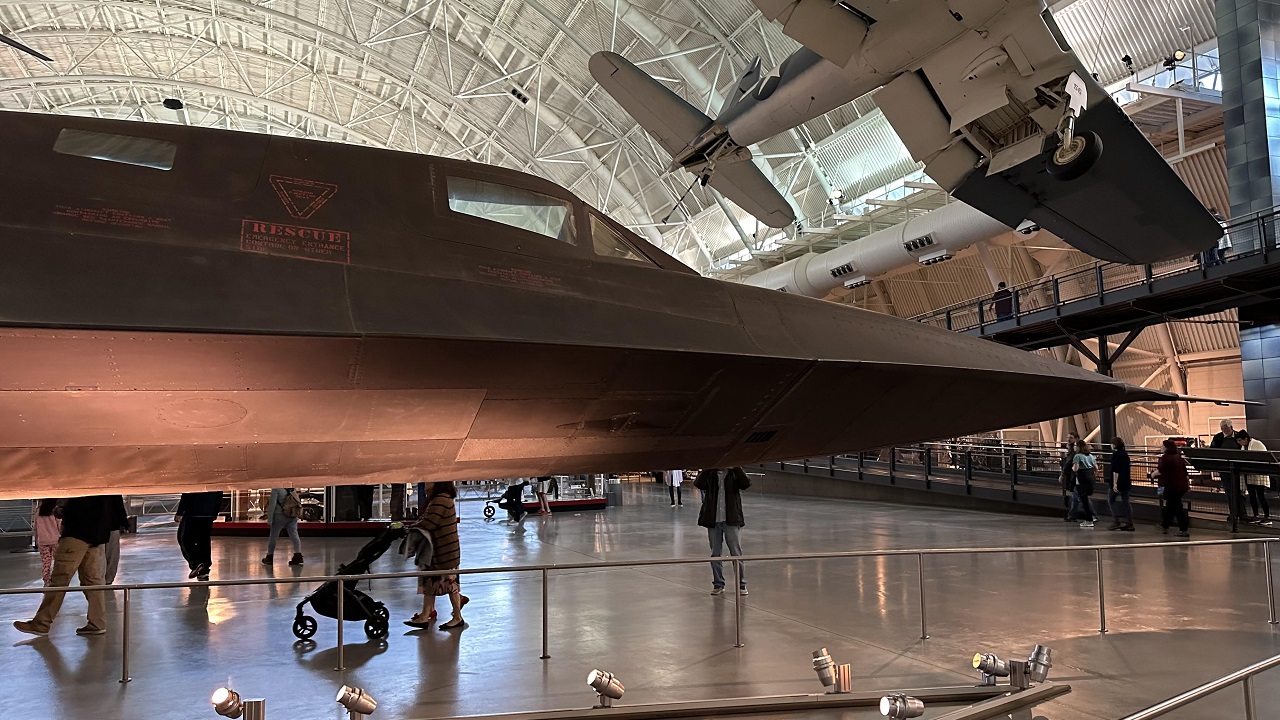
SR-71. SR-71 photo taken at the National Air and Space Museum. Taken by 19FortyFive on 10/1/2022.
An operational derivative could theoretically provide extremely rapid global transportation, reconnaissance, and even strike missions while another version would offer unprecedented aircraft-like access to orbit.
At the core of this project was the supersonic combustion ramjet (also known as a scramjet). A scramjet has no large rotating compressor-and-turbine assembly like a jet engine does.
Once the engine reached hypersonic speeds, the vehicle’s forward motion compressed incoming air before fuel was injected and burned, while airflow through the engine remained supersonic.
So, this design was theoretically more advantageous than traditional rockets.
Much of the oxygen needed for combustion could be drawn from the surrounding atmosphere rather than carried on board.
NASP wanted to take this scramjet concept beyond even that, though.
Under this design, then, the proposed aircraft’s shape became part of the propulsion system.
Its underside was intended to compress air entering the engines, while the expanding exhaust interacted with the rear of the vehicle to produce thrust.
Indeed, the concept art for the X-30 looks suspiciously like a larger version of the concept art for the Air Force’s proposed SR-72 “Son of Blackbird” reconnaissance plane that is supposedly under development right now.
Not Ready For Showtime
As with many advanced designs, the technology undergirding the X-30 was supposedly not ready for deployment.
Multiple engineering complications cropped up at once.
The development of the X-30 therefore became less about building a next-generation spaceplane and more about a series of engineering problem-solving exercises.
Undoubtedly, this was beneficial from a research standpoint. As a practical, taxpayer-funded, presidentially announced project, it was counterproductive and fundamentally disappointing.
For instance, flying at extreme speeds generated temperatures that exceeded what conventional aluminum aircraft construction could withstand.
Aluminum tends to melt at high heat levels, after all. Researchers then investigated carbon-carbon materials, titanium alloys, titanium aluminides, and other lightweight, heat-resistant structures.
Because of that, NASA credits NASP with significant advances in the development of new-age metamaterials that continue to push modern aerospace designs to their limits.
The biggest complication, though, came from the propulsion system.
There was no usable ground facility that could duplicate the conditions of the X-30 scramjet.
So engineers faced the uncomfortable prospect of eventually flight-testing an enormously expensive experimental aircraft whose propulsion system they couldn’t validate on the ground first.
Building without testing first is a seriously expensive prospect–that could end in disaster.
Plus, computer modeling for the engineering project was nowhere near what it is today, leaving many variables unaccounted for and adding to the expense and complications of designing a usable, reliable spaceplane.
A Waste of Money
Ultimately, the Government Accountability Office (GAO) projected in 1988 that the X-30 NASP would cost more than $3.3 billion through 1994.
By the 1990s, the NASP remained a theoretical exercise, in that no usable prototype had yet been built–and engineers were scoffing at the notion that a usable plane would be built anytime soon at that point.
So, the program was entirely unfeasible, despite the presidential announcement in 1986.
What’s more, the collapse of the Soviet Union and the end of the Cold War in 1991 essentially ensured that the budget and political interest in developing the X-30 NASP evaporated.
Despite the time, money, and political interest invested in the X-30, only a one-third-scale concept demonstrator was built.
Nevertheless, NASP did jump-start much research in the realm of metamaterials science that continues to prove valuable today. It clearly influenced the ongoing designs for military hypersonic systems.
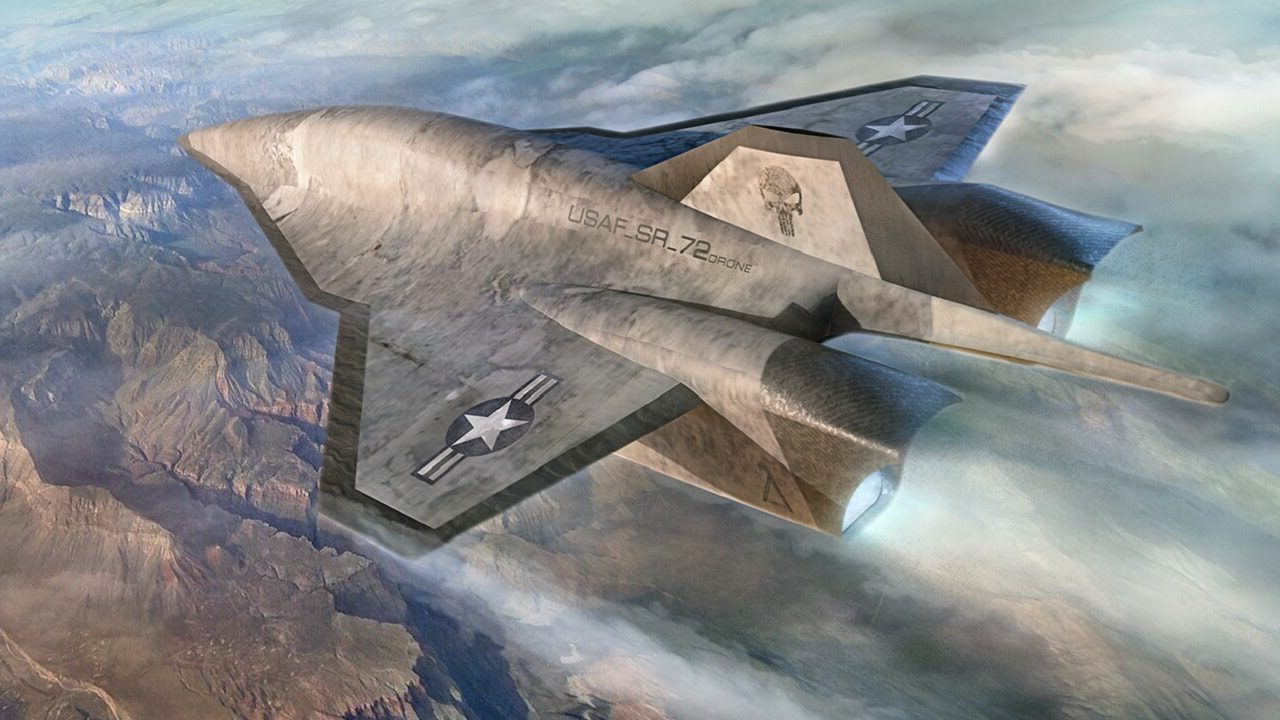
SR-72 Artist Rendering. Image Credit: Creative Commons.
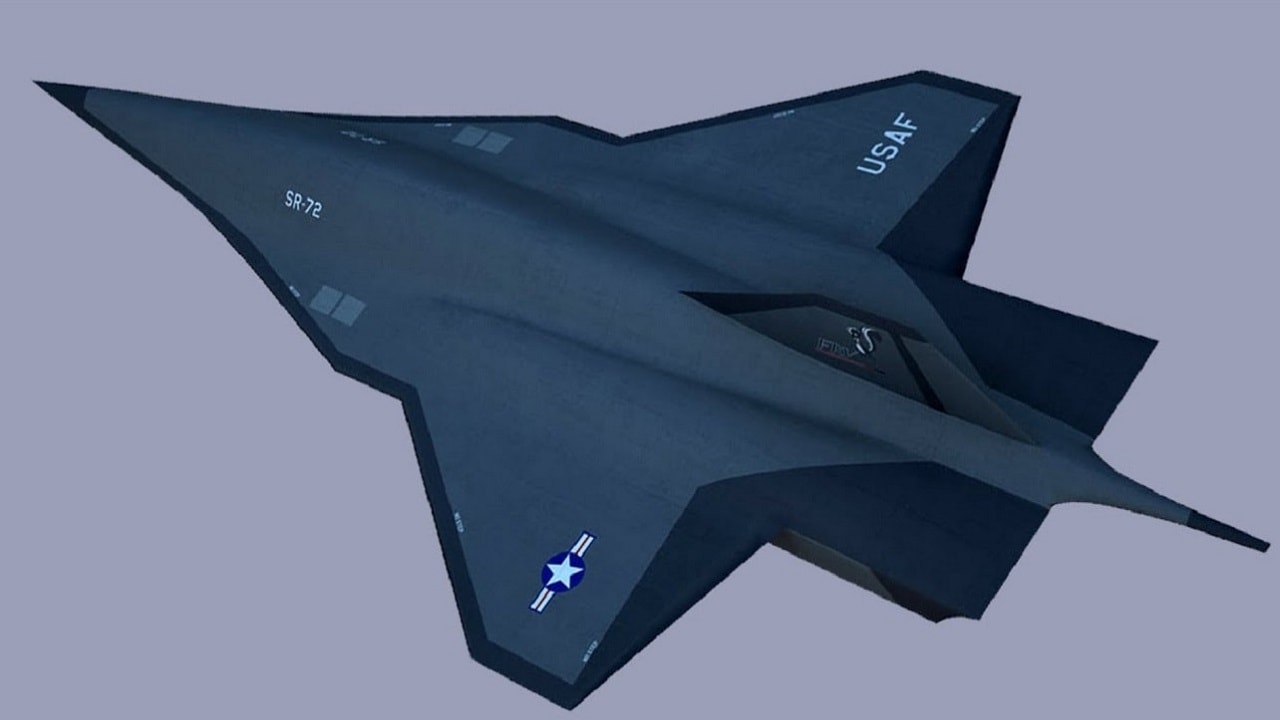
SR-72. Image Credit – Artist rendering.
Yet, it never eventuated in that two-hour spaceflight from Dulles to Tokyo.
Despite all the talk today about hypersonic technology, too, the US appears not much closer to developing these systems than they were in 1986–even as US rivals, like Russia, China, and even Iran, develop their own advanced hypersonic systems.
About the Author: Brandon J. Weichert
Brandon J. Weichert is the Senior National Security Editor at 19FortyFive.com. He also manages The Weichert Brief on Substack. Weichert also hosts “National Security Talk” on Rumble. He is the author of four bestselling national security books, the most recent of which is A Disaster of Our Own Making: How the West Lost Ukraine (Encounter Books). Follow him via Twitter/X @WeTheBrandon.