
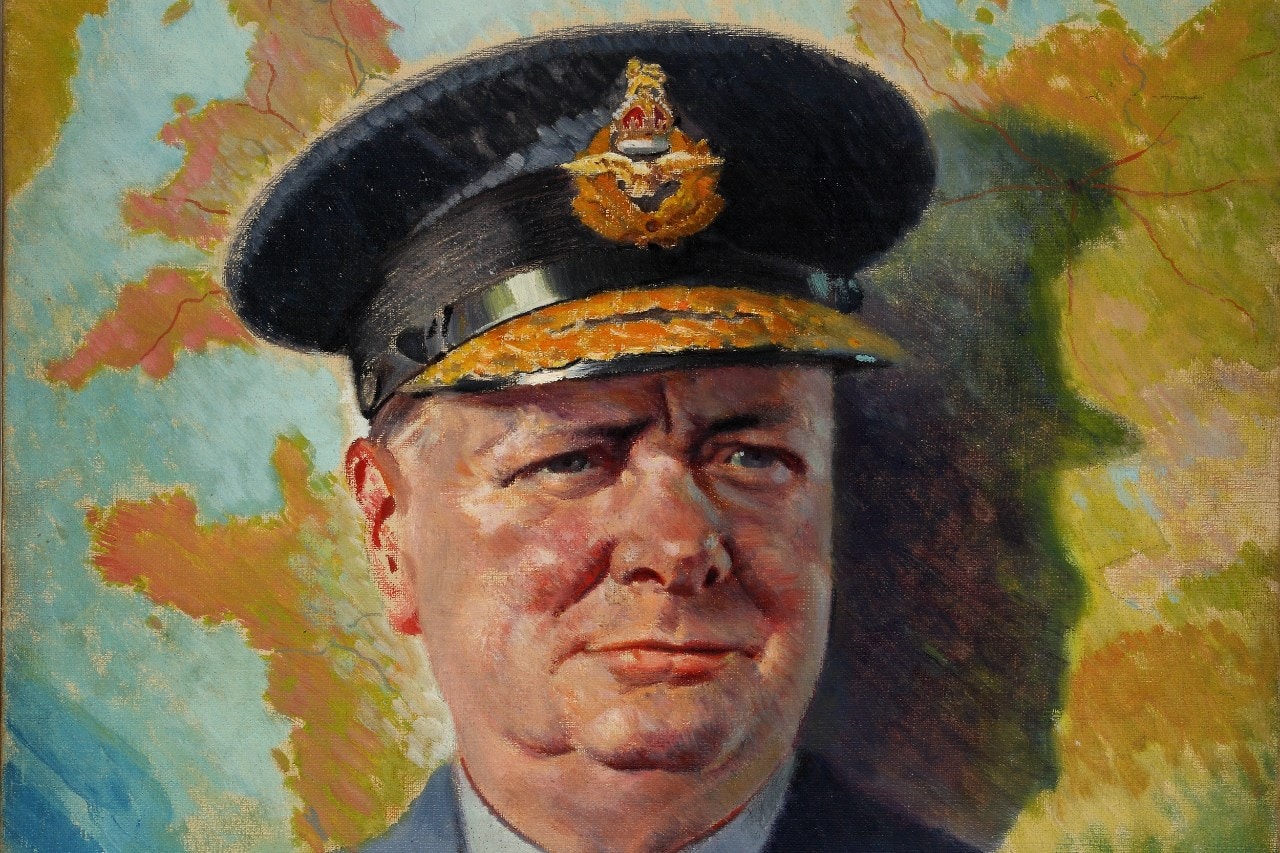
“I am fond of pigs. Dogs look up to us. Cats look down on us. Pigs treat us as equals.” It is one of the most familiar lines attributed to Winston Churchill, although the exact wording is not securely documented. Churchill’s private secretary, Sir Anthony Montague Browne, remembered a closely related version. The joke still captures the private Churchill: funny, sentimental, conscious of status, and more comfortable around animals than his public image suggests.
Winston Churchill Beyond the Quote: Guiding A Nation Struggling to Be an Equal
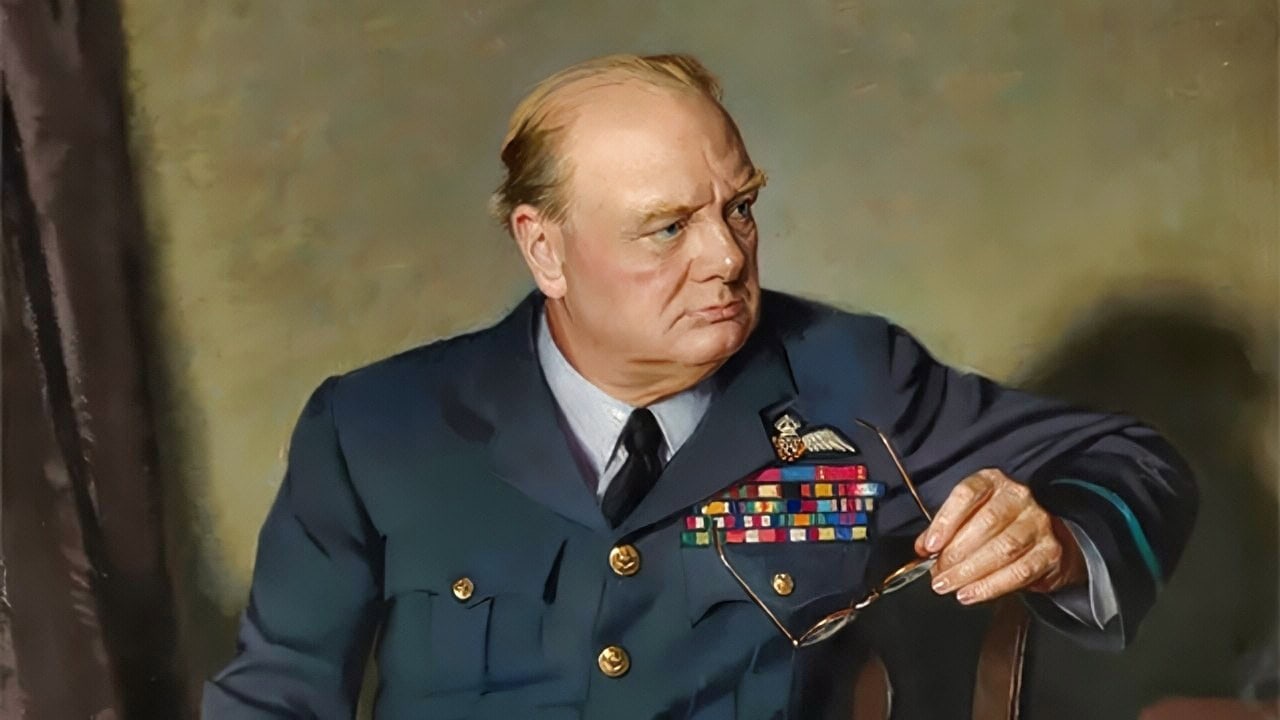
Winston Churchill Portrait. Image Credit: Creative Commons.
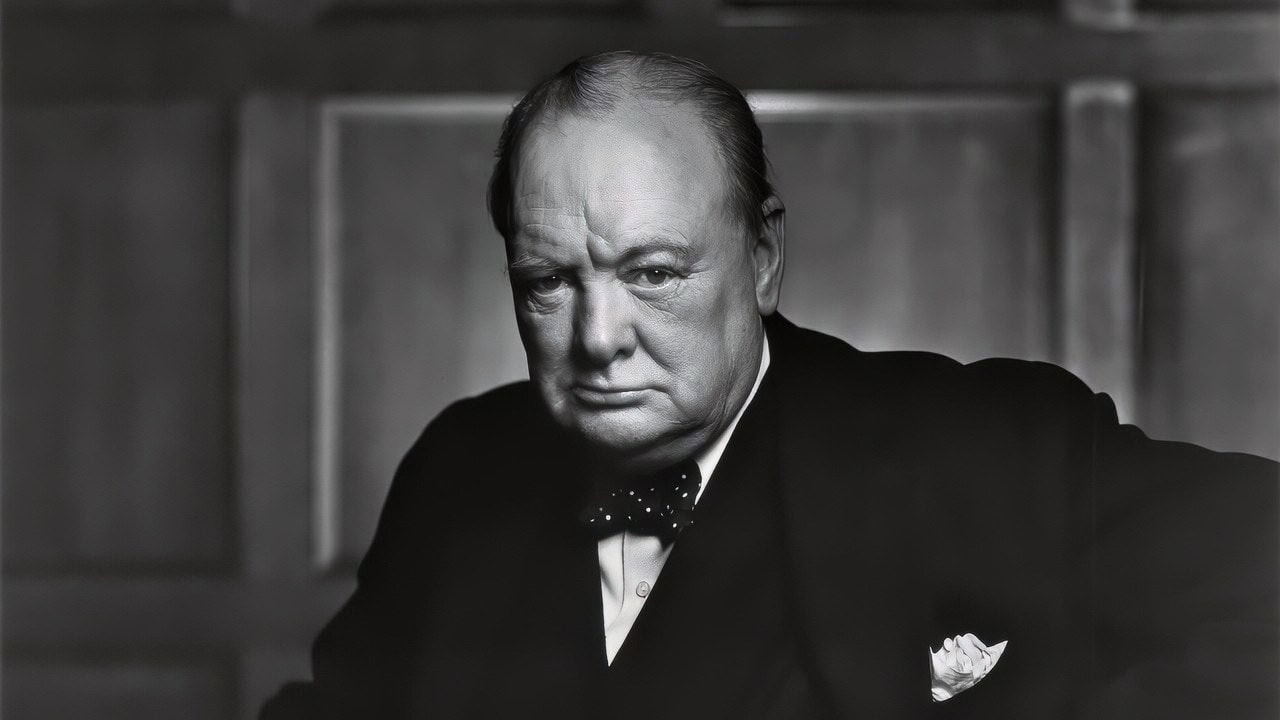
Sir Winston Churchill. Image Credit: Creative Commons.
Churchill kept pigs, cattle, sheep, birds, fish, dogs, and cats at Chartwell, his country home in Kent. He took their personalities seriously and often wrote about them to his wife, Clementine. Yet the idea of being treated as an equal also offers an unexpected opening into his World War II achievement. Churchill refused to let Adolf Hitler treat Britain as a defeated power in 1940. He later preserved Britain’s voice inside an alliance dominated by the far greater military and economic strength of the United States and the Soviet Union.
He returned to government as First Lord of the Admiralty when Britain entered the war in September 1939. Churchill had spent much of the 1930s warning about German rearmament, but he was hardly a safe political choice. Gallipoli still shadowed his record from World War I, and he shared responsibility for the failed Norwegian campaign of 1940. When the Norway Debate destroyed Neville Chamberlain’s authority, many Conservative leaders preferred Foreign Secretary Lord Halifax as the next prime minister.
Churchill took office on May 10, 1940, the day Germany invaded France, Belgium, Luxembourg, and the Netherlands. Within weeks, British and French armies were trapped near Dunkirk. Halifax favored exploring Italian mediation with Hitler. Churchill instead convinced the War Cabinet to continue fighting. He also formed a coalition, bringing Labour leaders Clement Attlee and Arthur Greenwood into the government. His first success was political: Britain entered its supreme military crisis with an administration representing nearly the entire House of Commons.
Churchill’s First Victory Was Keeping Britain in the War
Operation Dynamo evacuated more than 338,000 Allied personnel from Dunkirk between May 26 and June 4. The rescue preserved the core of the British Army, but Churchill refused to call an evacuation a victory. In his June 4 address to Parliament, he paired relief over the soldiers brought home with a warning about the invasion threat. His speeches worked because they did not promise an easy escape. They described the danger, named the objective, and demanded endurance.
Churchill did not win the Battle of Britain from Downing Street. Air Chief Marshal Hugh Dowding directed Fighter Command, while pilots, radar operators, mechanics, controllers, and ground crews defeated the Luftwaffe’s attempt to gain air superiority. Churchill’s contribution was to keep the government united, support aircraft production, and give the struggle a national purpose. The RAF victory made a German invasion increasingly impractical. Britain then survived the Blitz without abandoning the war.
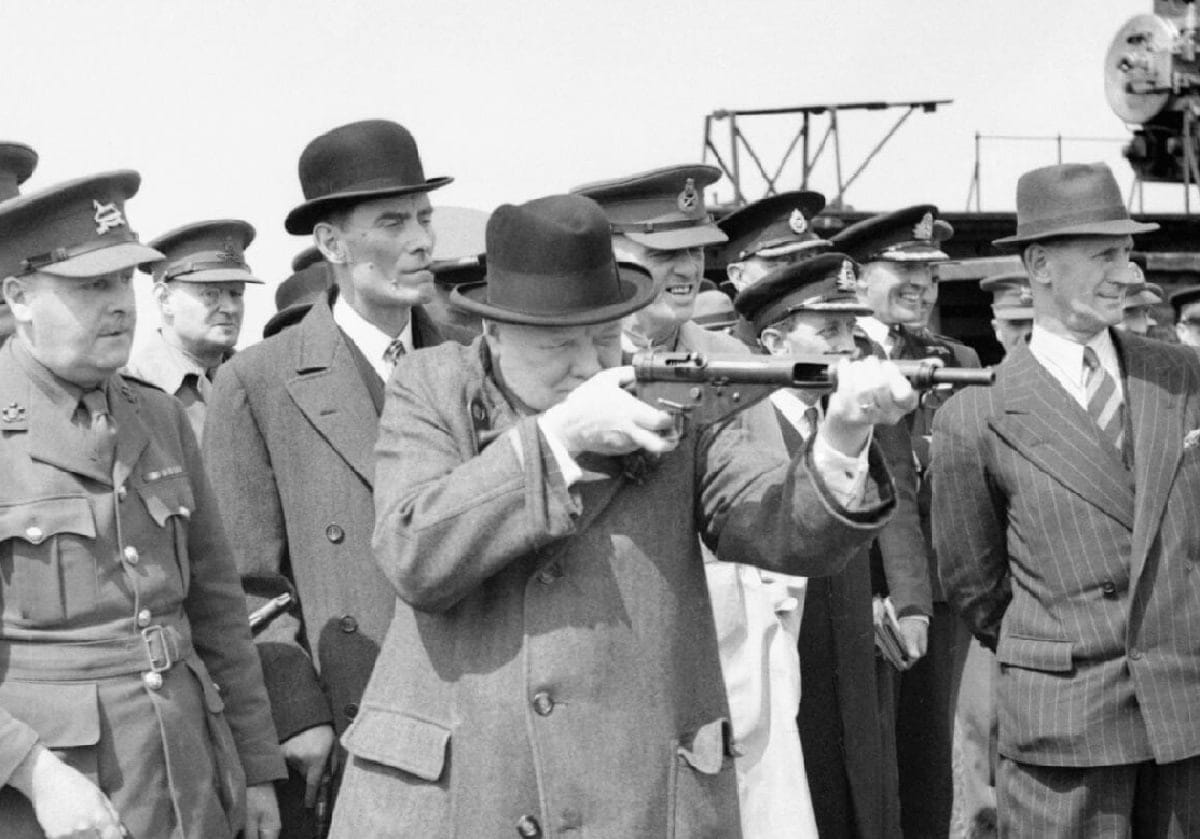
Winston Churchill. Image: Creative Commons.
Churchill Turned British Survival Into Coalition Warfare
Survival alone offered no route to Berlin. Britain needed American weapons, shipping, food and credit long before the United States formally entered the conflict. Churchill cultivated Franklin D. Roosevelt through letters, meetings, and personal appeals. The September 1940 destroyers-for-bases agreement transferred more than 50 aging American destroyers to Britain. After Churchill warned Roosevelt that Britain was running out of money, Lend-Lease opened a far larger supply channel. His public promise of “blood, toil, tears and sweat” was matched by a sustained diplomatic campaign to obtain the matériel Britain lacked.
Churchill met Roosevelt off Newfoundland in August 1941, producing the Atlantic Charter and a common statement of war aims. He also embraced an alliance with Joseph Stalin after Germany invaded the Soviet Union in June 1941, despite his long hostility toward communism. Japan’s attack on Pearl Harbor then brought the United States fully into the war. Churchill helped secure the “Germany First” strategy, keeping Nazi Germany ahead of Japan in Allied priorities. The same resolve examined through Churchill’s Battle of Britain leadership now served a different purpose: holding together governments with conflicting interests, ideologies and military demands.
El Alamein Gave Churchill the Battlefield Victory Britain Needed
Britain’s early land-war record was bleak. Greece ended in evacuation, Singapore fell in February 1942, and German forces captured Tobruk four months later. Churchill replaced the Middle East command team, appointing Gen. Harold Alexander while Lt. Gen.
Bernard Montgomery took control of the Eighth Army. At the Second Battle of El Alamein, fought from October 23 to November 4, 1942, Montgomery’s better-supplied army broke the Axis position. The National Army Museum describes El Alamein as the first clear-cut and irreversible British Army victory over the Axis.
Operation Torch followed on November 8, placing Anglo-American forces in Morocco and Algeria and forcing the Axis to fight across North Africa from two directions. Churchill understood the psychological importance of the shift. He also understood that one victory produced new demands, a point captured in his warning about the problems created by victory. North Africa led to Sicily, Italy’s surrender, and a long campaign up the Italian peninsula.
His wartime judgment was never flawless. Singapore was a strategic disaster. The Dieppe raid cost heavily. His enthusiasm for Mediterranean operations sometimes collided with American pressure for a direct invasion of France.
He interfered with commanders, flooded officials with memoranda and exhausted military chiefs with late-night demands. Churchill’s success did not rest on infallibility. It rested on recovering from reverses, replacing failed commanders, and keeping the central objective fixed even while strategy changed.
D-Day Confirmed the Power of the Alliance Churchill Helped Build
By the Tehran Conference in late 1943, Roosevelt, Stalin, and Churchill had committed to a cross-Channel invasion.
Britain was no longer the dominant Western power. Gen. Dwight D. Eisenhower became supreme commander; American forces supplied an increasing share of the manpower, and Washington held greater influence over strategy. Churchill accepted the altered balance because defeating Germany mattered more than preserving the appearance of British primacy.
Operation Overlord began on June 6, 1944. British forces landed at Gold and Sword beaches, Canadians at Juno, and Americans at Utah and Omaha. British warships, aircraft, landing craft, ports, railways and bases supported the largest amphibious invasion in history.
The operation demonstrated the central alliance lesson of D-Day: no single leader, service, or nation liberated Western Europe alone.
Germany surrendered unconditionally in May 1945. On May 8, Churchill addressed crowds in London and told them, “This is your victory.” The public answered that it was his.
Yet military victory did not protect him from electoral defeat. British voters wanted housing, employment, health care, and social reform after six years of sacrifice. Labour won the July election, and Churchill resigned on July 26.
He had been attending the Potsdam Conference with President Harry Truman and Stalin when the result arrived. Clement Attlee flew to Germany and took Churchill’s seat at the conference table. Japan had not yet surrendered.
About the Author: Harry J. Kazianis
Harry J. Kazianis (@Grecianformula) was the former Senior Director of National Security Affairs at the Center for the National Interest (CFTNI), a foreign policy think tank founded by Richard Nixon, based in Washington, DC. Harry has over a decade of experience in think tanks and national security publishing. His ideas have been published in the NY Times, The Washington Post, The Wall Street Journal, CNN, and many other outlets worldwide. He has held positions at CSIS, the Heritage Foundation, RealClearDefense, the University of Nottingham, and several other institutions related to national security research and studies. He is the former Executive Editor of the National Interest and the Diplomat. He holds a Master’s degree focusing on international affairs from Harvard University.