On January 8, 2005, the Los Angeles-class nuclear attack submarine USS San Francisco (SSN-711) collided with an undersea mountain while conducting undersea operations southeast of Guam. She was traveling at near flank, or a high rate of speed, when the collision occurred.
The impact caused severe damage to her sonar dome and forward ballast tanks and injured 98 crew members, one of whom died from his wounds a day later.
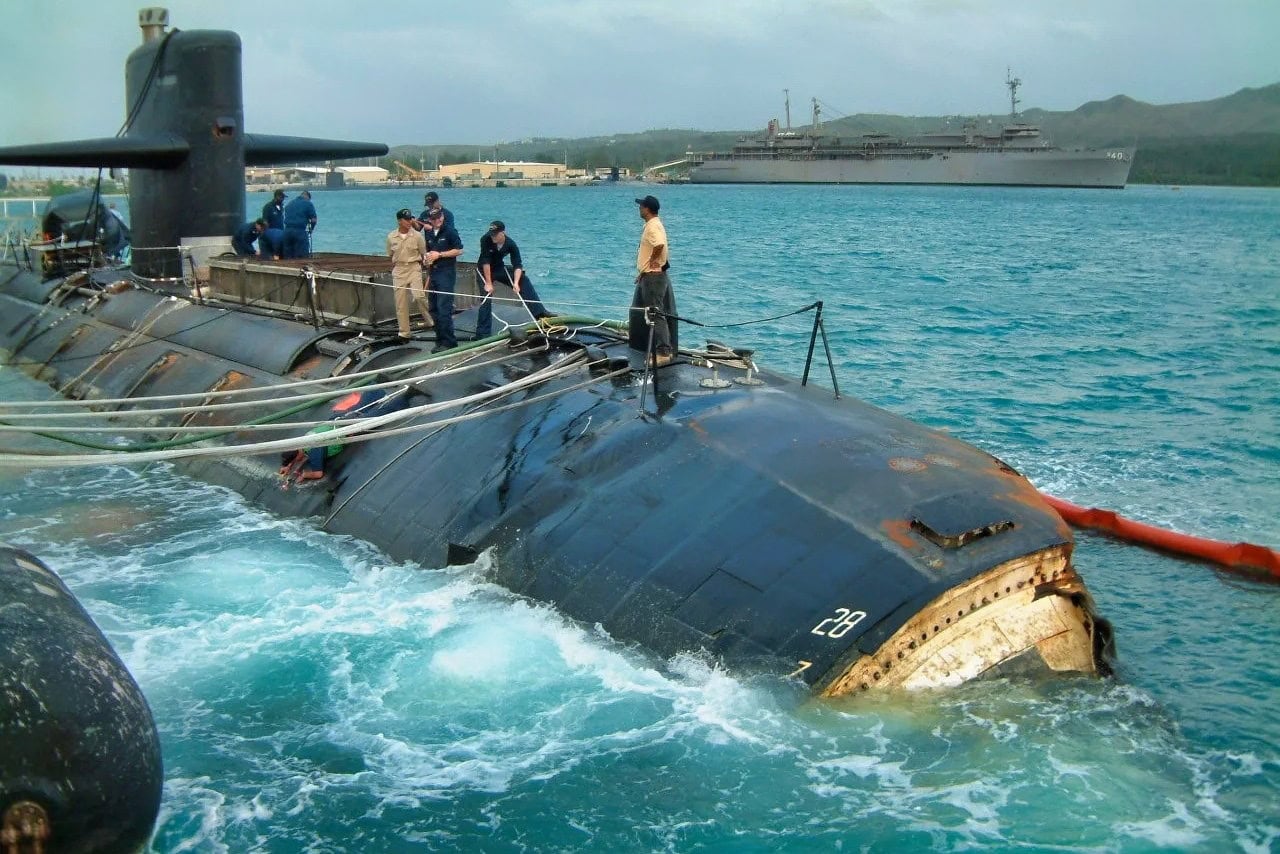
USS San Francisco US Navy Nuclear Submarine. Image Credit: Creative Commons.
Immediately after the incident, the U.S. Navy launched a thorough investigation, the results of which were eventually released, though heavily redacted for opsec reasons.
The report concluded that although some of the charts and data provided to the ship were outdated, ultimate responsibility for maintaining maximum readiness and safety falls on the captain and the crew.
A Nuclear Submarine Collides With a Seamount
San Francisco was operating in the vicinity of the Caroline Islands at the time, reportedly on her way to Brisbane, Australia, when she struck a seamount at roughly 500 meters below sea level.
The collision was catastrophically violent, injuring many enlisted personnel and officers alike.
Initial reports indicated that around 60 sailors suffered injuries, but subsequent investigations revealed that as many as 98 sailors were injured, suffering from spinal injuries and lacerations.
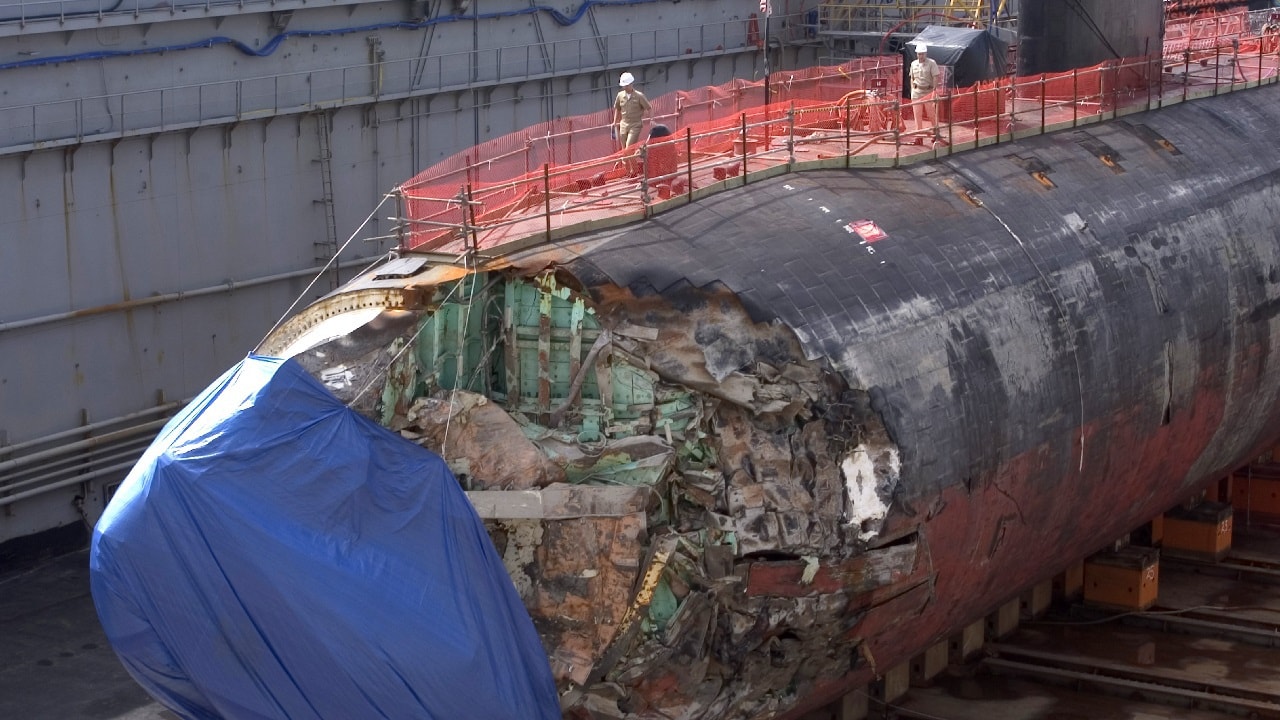
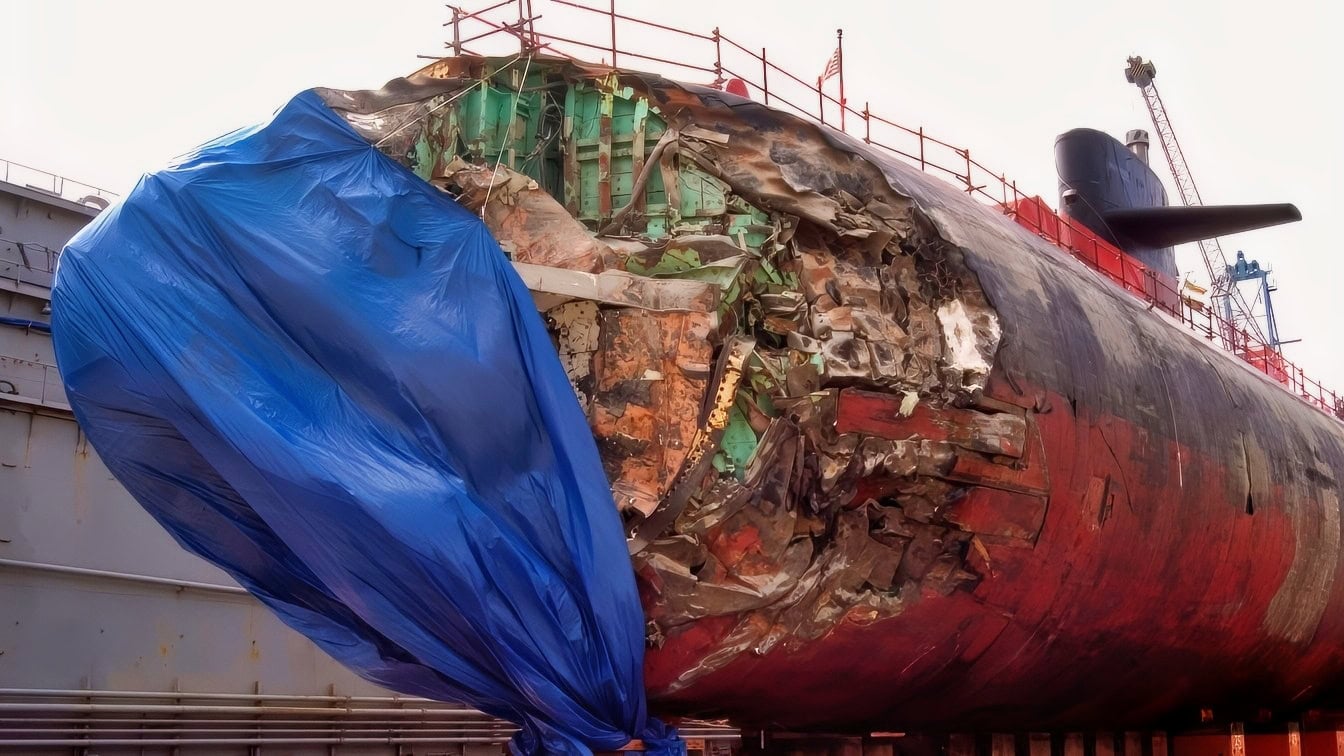
The Los Angeles-class fast-attack submarine USS San Francisco (SSN 711) in dry dock to assess damage sustained after running aground approximately 350 miles south of Guam Jan. 8, 2005. The Navy former dry dock known as ÒBig BlueÓ is capable of docking ships that weigh up to 40,000 Long Tons. The Navy certified Big Blue for the one-time docking of San Francisco. San Francisco is the second fast-attack submarine to be attached to the forward-deployed Submarine Squadron Fifteen, home ported on board Naval Base Guam. U.S. Navy photo by Photographer’s Mate 2nd Class Mark Allen Leonesio (RELEASED)
Several sailors were so severely injured that they were unable to stand.
Machinist’s Mate Second Class Joseph Allen Ashley, 24, received a severe head injury and died from his wounds on January 9.
The submarine suffered from severe external damage.
Thankfully, her hull pressure hull and nuclear reactor were fine, but her sonar dome and frontal ballast tanks were critically damaged.
On January 10, San Francisco surfaced and limped back to Guam, accompanied by USCGC Galveston Island, USNS GySgt Fred W. Stockham, and USNS Kiska, as well as several MH-60S Knighthawks and P-3 Orion maritime patrol aircraft.
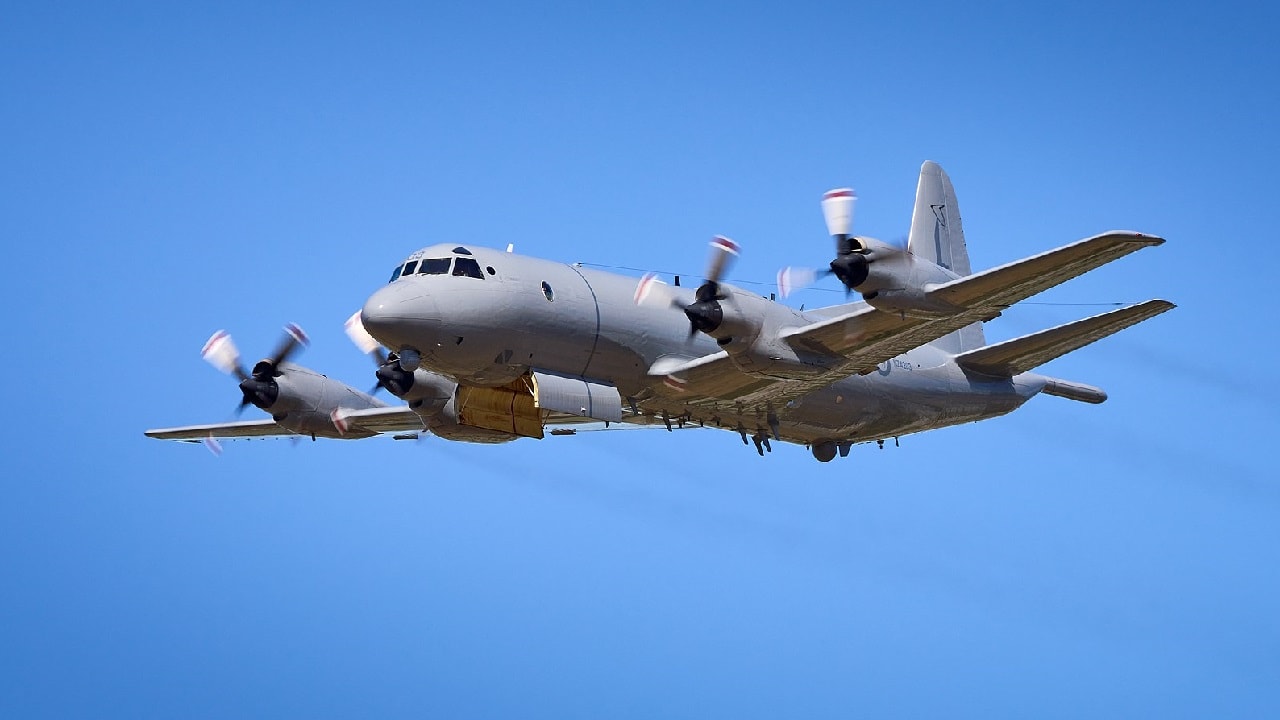
The Airborne Surveillance and Response Force (ASRF) is provided by No. 5 Squadron RNZAF. The Squadron is equipped with a total of six P-3K2 aircraft, each having undergone various airframe and mission system upgrades. The P-3K2 provides airborne surveillance and reconnaissance of New Zealand’s areas of economic interest, exclusive economic zone, the South Pacific, and the Southern Ocean including Antarctica in support of the Commission for the Conservation of Antarctic Marine Living Resources. They provide a range of services to Government agencies (including Ministry for Primary Industries, New Zealand Customs and Police, and Department of Conservation) and the community (including search and rescue missions, humanitarian relief and support in the event of natural disasters).
In Guam, the ship received emergency repairs to restore buoyancy and structural integrity, allowing her to return to the continental U.S. for more extensive repairs.
In August, 2005, she returned to Puget Sound Naval Shipyard, where she received full-scale repairs.
To repair her broken sonar dome, the Navy used the dome from the recently retired USS Honolulu (SSN-718). San Francisco later completed her sea trials and returned to service in 2009.
Aftermath and Investigations
In the immediate aftermath of the incident, the ship’s captain, CDR Kevin Mooney, was reassigned to a shore unit in Guam while the investigation was ongoing.
According to reports, Mooney had an excellent track record as a Naval officer up to that point, but subsequent investigations revealed several navigation errors under his command. As a result, he was relieved of command and issued a letter of reprimand.
Six other crew members received non-judicial punishment, letters of reprimand, and demotions.
However, some officers and enlisted men acted heroically during the incident, and as such, some 20 men received commendations, including the Navy and Marine Corps Achievement Medal, the Navy and Marine Corps Commendation Medal, and the Meritorious Service Medal.
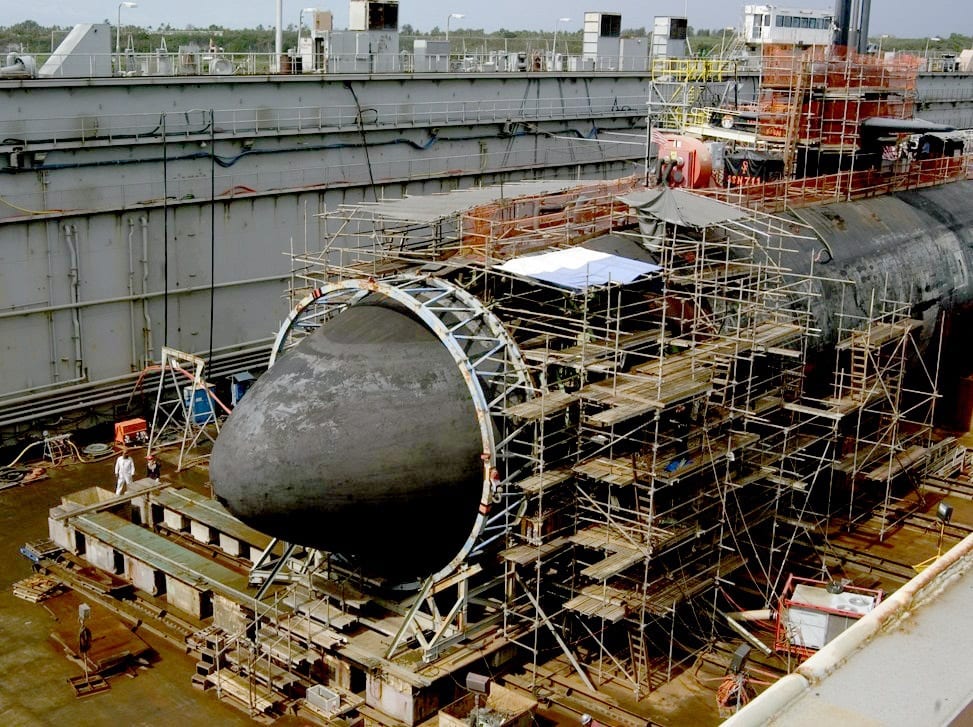
Apra Harbor, Guam (May 8, 2005) Ð The Los Angeles class submarine USS San Francisco (SSN 711) shown in dry dock is having repairs made on its damaged bow. A new large steel dome about 20 feet high and 20 feet in diameter was put in the place of the damaged bow. San Francisco ran aground 350 miles south of Guam Jan. 8, killing one crew member and injuring 23. U.S. Navy photo (RELEASED)
But how had this happened?
How could San Francisco, a state-of-the-art attack submarine with sophisticated instruments aboard, get blind sided by a seamount? Most, if not all, military submarines of the late Cold War were, and still are, equipped with a powerful active sonar array.
This system emits a powerful ping that detects ships and other objects all around the submarine.
The catch, however, is that this system is loud and often compromises the ship’s position to enemy sensors.
As a result, most submarines rely on passive sonar systems, which can only detect noise from ships or stationary objects.
In other words, despite the fact that San Francisco had the tools to detect the seamount, she deliberately kept them off to maintain secrecy.
What Went Wrong?
This practice is fairly typical across the Navy. The real problem, however, was the charts San Francisco relied on. According to subsequent investigations, the ship relied on old, outdated navigation charts originally charted in the 1960s.
Because the region near the Carolina Islands was not of high value to the U.S., the area had not been appropriately mapped in the old charts, and thus the seamount was not listed.
However, other charts available to San Francisco indicated an area of “discolored water” near the impact zone, which could have tipped the navigation crew off about the presence of a potential hazard, like, say, a seamount.
The Navy therefore concluded that the ship failed to follow proper protocol in determining its course and failed to consult all available resources.
However, an independent study of the incident by the University of Massachusetts Amherst suggested that not all of the blame can be placed on San Francisco’s crew.
Because the region was not a significant priority to the Defense Mapping Agency, even some of the Navy’s more recent charts did not give the crew enough information to definitively confirm the presence of the seamount.
Furthermore, San Francisco’s parent squadron had failed to adequately prepare the ship’s crew for navigation in the region and failed to identify any deficiencies in the ship’s navigation practices.
Additionally, the subnotes, the documents issued by the squadron regarding the ship’s route and speed, were delivered two and a half days before she set sail, and routed the ship through known hazardous waters.
While the responsibility ultimately lies with the ship’s captain for any mistakes, the Navy, particularly the ship’s squadron, was not exactly blameless either.
About the Author: Isaac Seitz
Isaac Seitz, a Defense Columnist, graduated from Patrick Henry College’s Strategic Intelligence and National Security program. He has also studied Russian at Middlebury Language Schools and has worked as an intelligence Analyst in the private sector.