
According to local media, Israel plans to request detailed information on the highly classified US Air Force (USAF) F-47 program.
The aircraft is designed as a 6th-generation fighter and to demonstrate a new generation of stealth technology, as well as a highly advanced adaptive-cycle propulsion system.
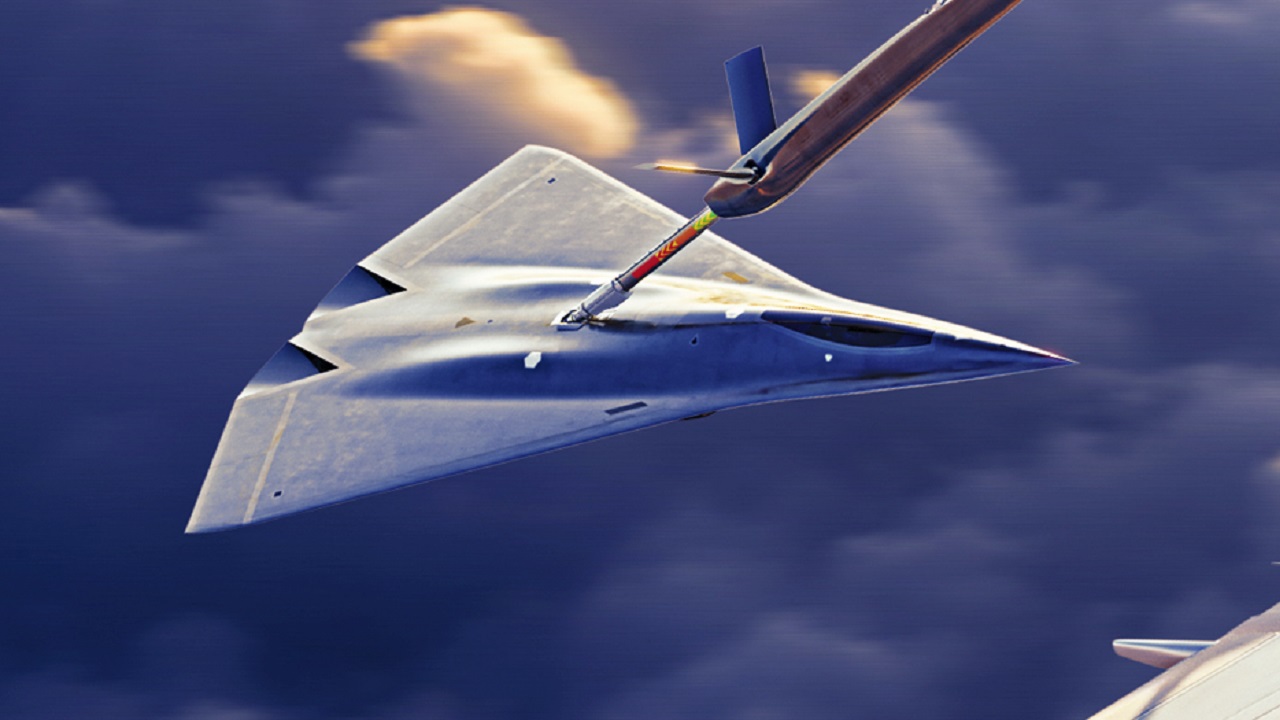
Lockheed Martin NGAD Fighter. Image Credit: Lockheed Martin.

Image: Lockheed Martin showing a refueling NGAD fighter.
Israeli sources report that the information is being requested as part of a preliminary review of available options that Israel might pursue for a future procurement.
As of today, Israel has made no formal request to the US and has no plan to purchase the aircraft.
Original reports of Israeli interest in the aircraft came from The Jerusalem Post, which cited a short report on the Israeli internet news site Walla.
The report pointed out that Israel’s Defense Ministry and the Israel Defence Forces (IDF) were considering the F-47 even though it is still in development and does not exist yet.
They are also still in the process of procuring the F-35 and the F-15EX. The latter is a new-generation, extensively modernized version of the 1970s-era fighter.
The IDF’s request for information on the F-47 is clearly part of a survey for future air power planning. But that survey involves more than an assessment of the aircraft’s performance and how much more advanced it is than the F-35’s 5th-generation capabilities.
The other issue is whether history might repeat itself.
For Want of the F-22, Israel’s F-15s Have Become Long in the Tooth
Israeli officials want to determine whether Washington’s policy for exporting the F-47 will take a different path than that which banned any foreign sales of the F-22 Raptor.
Like the USAF, the IDF saw the F-22 as the 5th-generation replacement for their F-15s.
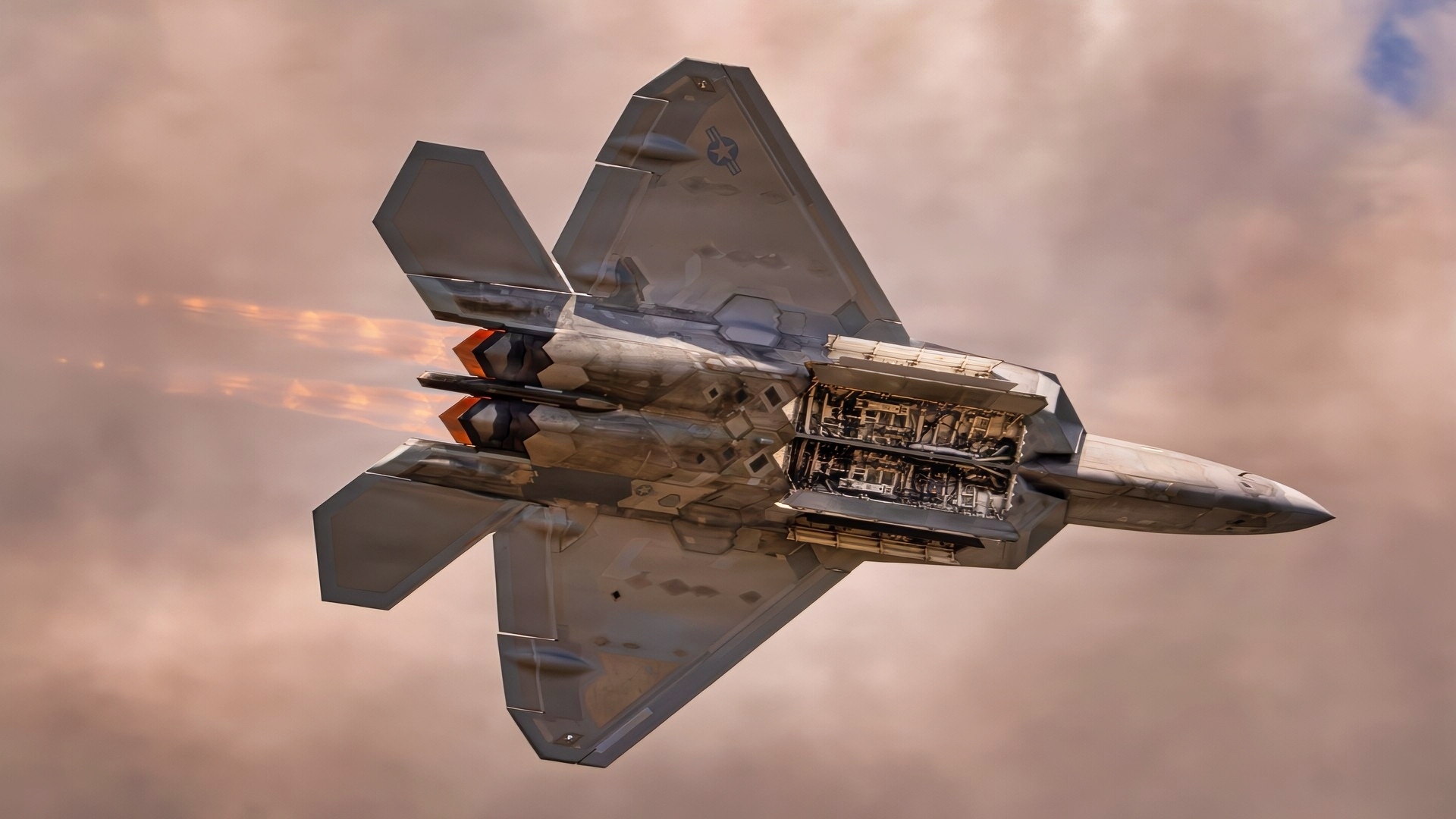
U.S. Air Force Capt. Nick “Laz” Le Tourneau, pilot and commander of the F-22 Raptor Aerial Demonstration Team, performs an aerial demonstration during the 52nd Annual SUN ‘n FUN Aerospace Expo in Lakeland, Florida, April 18, 2026. Capt. Le Tourneau showcased the unmatched capabilities of the F-22 to the SUN ‘n FUN crowds by performing multiple series of combat maneuvers. (U.S. Air Force photo by Staff Sgt. Mary Bowers)
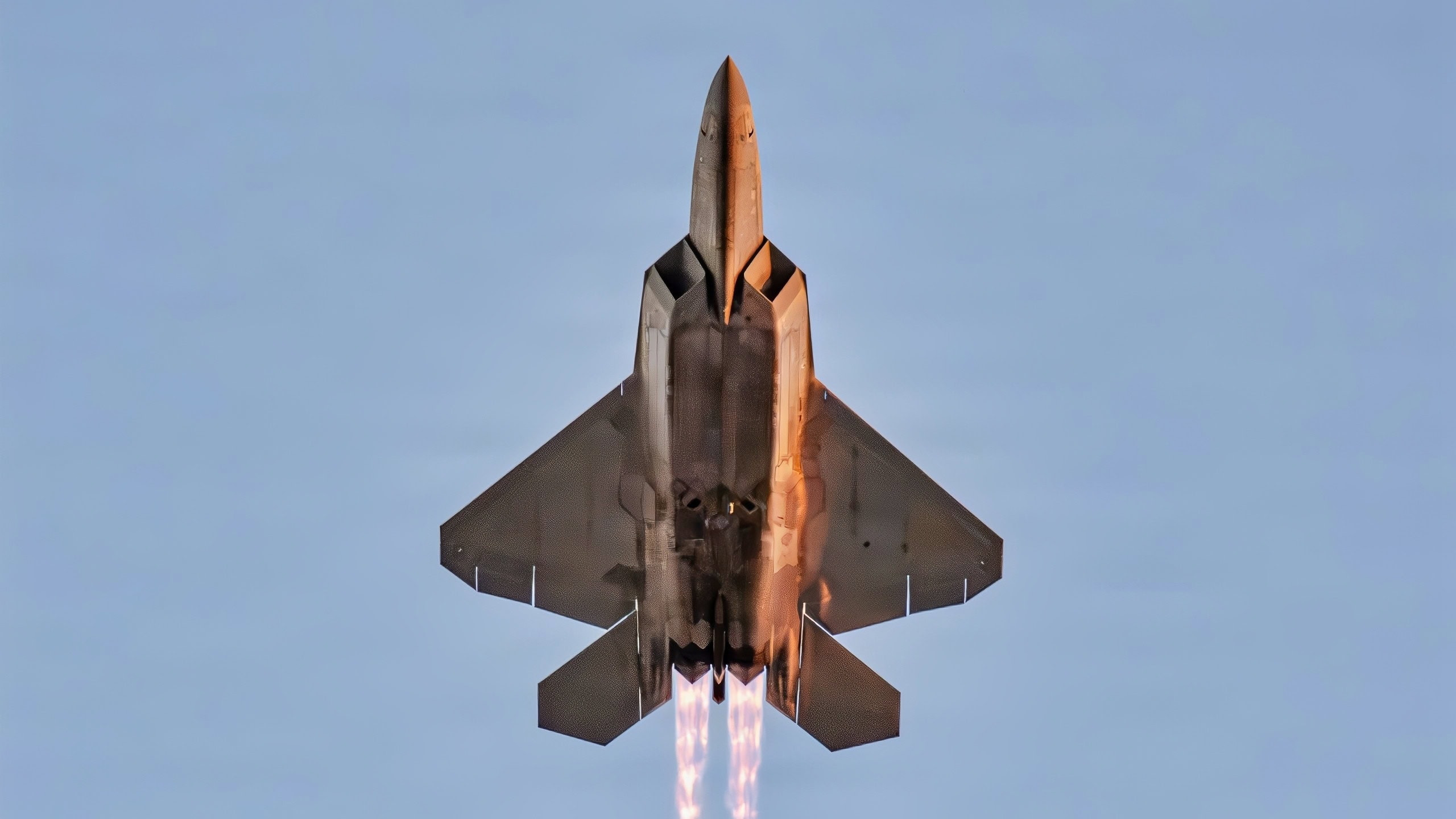
U.S. Air Force Capt. Nick “Laz” Le Tourneau, pilot and commander of the F-22 Raptor Aerial Demonstration Team, performs an aerial demonstration during the 52nd Annual SUN ‘n FUN Aerospace Expo in Lakeland, Florida, April 14, 2026. Capt. Le Tourneau showcased the unmatched capabilities of the F-22 to the SUN ‘n FUN crowds by performing multiple series of combat maneuvers. (U.S. Air Force photo by Staff Sgt. Mary Bowers)
But, due to US Congressional legislation that barred foreign sales, the nations that at the time were interested in acquiring the F-22 – Israel, Japan, and Australia, to name a few – came away empty-handed.
These air forces ended up having to make do with the platforms they were already operating.
Consequently, Israel now operates one of the oldest fleets of F-15s in the world, which is why it is planning to acquire a large number of the F-15EX model.
This also explains why the IDF is trying to replace its F-15s almost one-for-one.
In 2024, when news that Israel was being cleared by Congress through the US Defense Security and Cooperation Agency (DSCA) to purchase 50 of the latest versions of the F-15EX a Boeing official was asked if they would really procure that many of the aircraft. (Also included in the procurement would be 25 upgrade kits for some of the newer F-15s still in Israel’s inventory.)
“Their current F-15s are so old that they would buy 90 of them if they could,” he said. For that reason, Israel is already trying to join the queue of interested F-47 buyers.
Another concern for the Israelis is that while they currently operate a specialized and highly capable version of the F-35, this technological edge may not last forever.
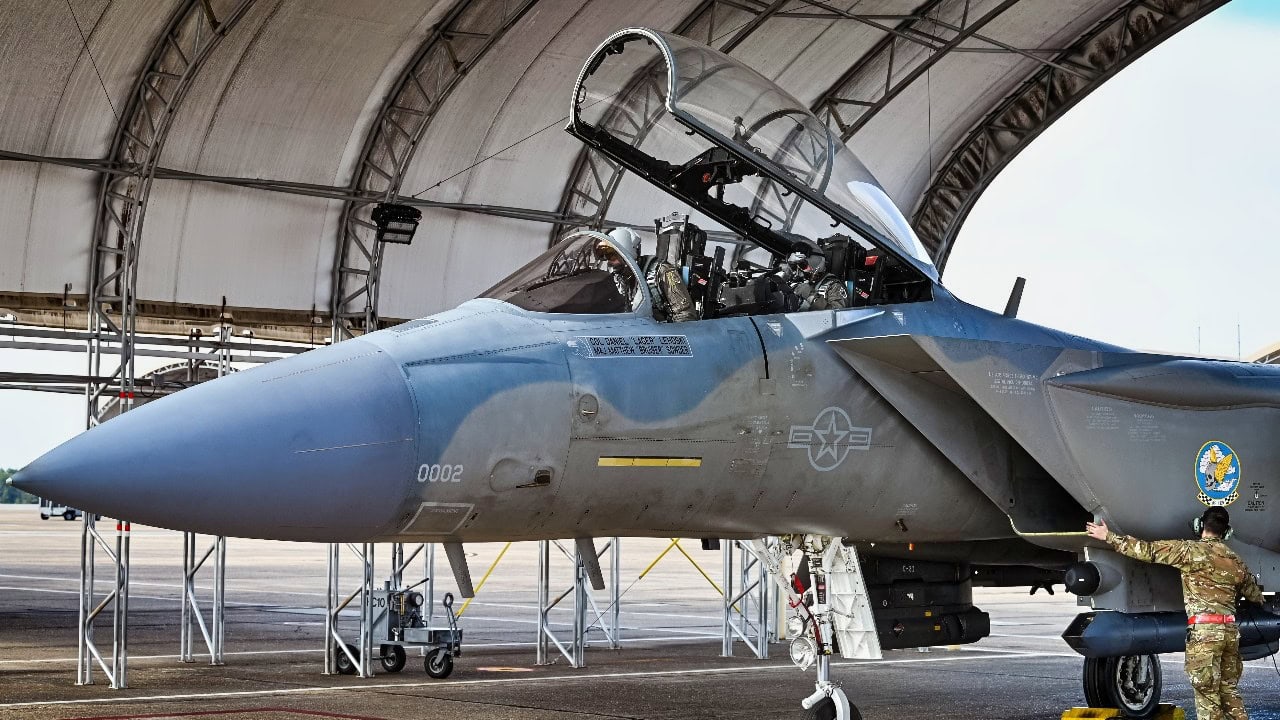
U.S. Air Force Maj. Aaron Eshkenazi, F-15EX Test Director for the 84th Test and Evaluation Squadron, performs preflight procedures for the F-15EX with Lt. Gen. Michael Koscheski, deputy commander of Air Combat Command, at Eglin Air Force Base, Florida, January 29, 2025. During his visit, Koscheski gained valuable insights from the 84th TES and 85th TES to help inform future decisions regarding the platform. The future F-15 fleet will complement 5th generation aircraft, bringing substantial additional capacity for over-sized long-range fires, sensors, and electronic warfare capabilities to defend critical locations in highly contested areas. (U.S. Air Force photo by 1st Lt. Rebecca Abordo)
What happens, some in the IDF are asking, when nations in the region that are not always necessarily friendly to Israel also purchase the aircraft. That moment might be only 5 years away, some Israeli military experts have suggested.
Timelines are also not fixed.
The first F-47s are supposed to fly in 2028, but it could be well into the mid-2030s at the earliest before export models are in production.
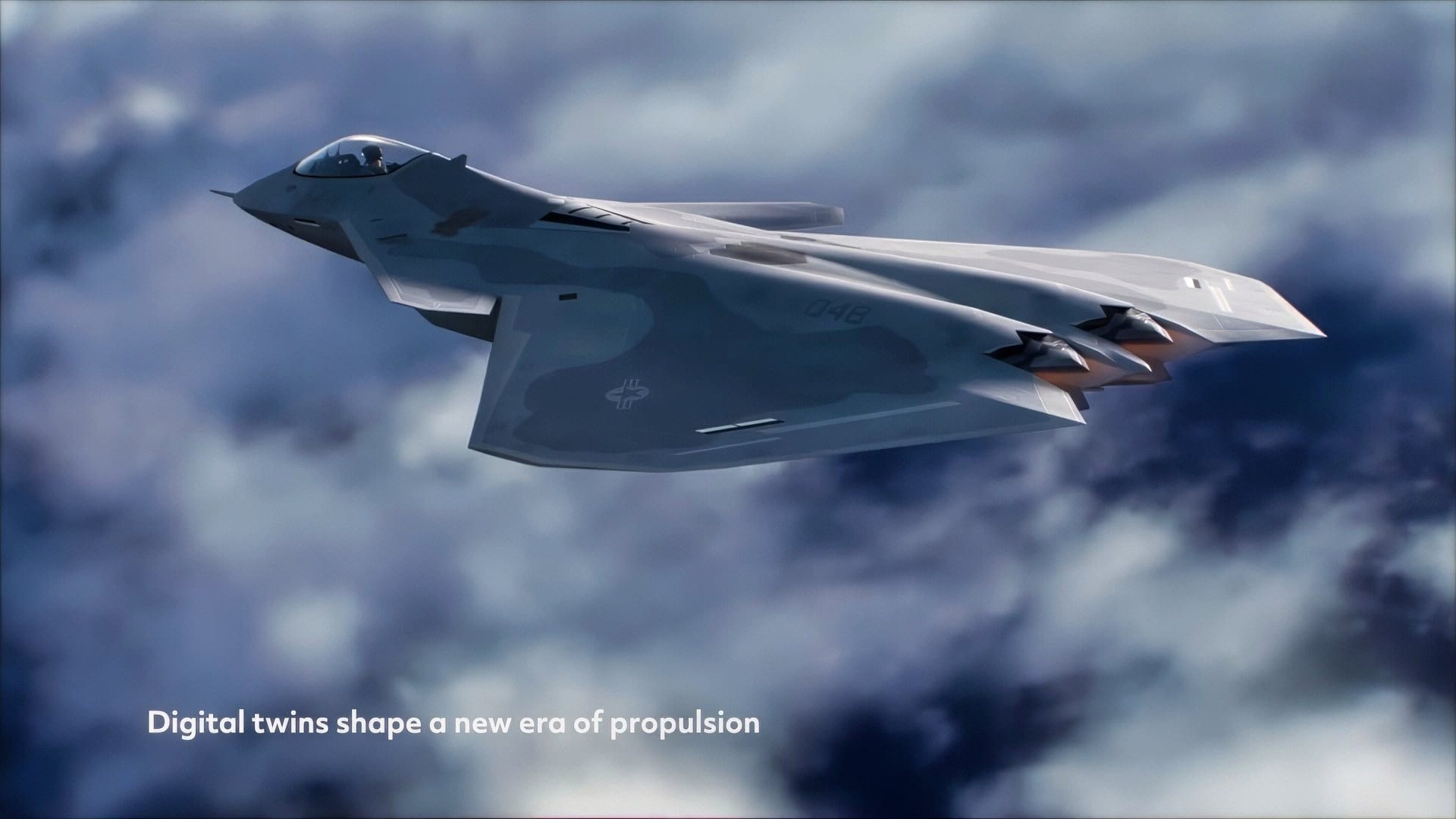
F-47 NGAD Fighter Possible Image. Image Credit: Screenshot.
A US Policy Shift? Boeing F-47 NGAD Maybe for Sale…
Whatever the accepted conventional wisdom was about foreign sales when the F-22 was in production, that orientation appears to be changing for the 6th-generation design that will replace it.
The issue of the F-47 being available for export to certain nations has been discussed openly since Boeing received the contract award.
US President Donald Trump said as much when he made the announcement from the Oval Office in March 2025.
At the time, he was speaking about possibilities connected to the interest expressed by several specific nations in becoming foreign customers. But he said friendly nations interested in partnering on the program could procure a version that would have some of the most sensitive capabilities slightly reduced – in comparison with the US versions.
Japan was later mentioned as a possible partner, which may now be academic considering that nation’s participation in the Global Combat Air Programme (GCAP) along with the UK, Italy and potentially also Germany.
But the extent to which the US would openly share the major technological advancements that make up the F-47 design remains undefined – and is likely to remain so for some years yet.

GCAP Fighter. Industry Handout Image.
About the Author: Reuben F. Johnson
Reuben F. Johnson has thirty-six years of experience analyzing and reporting on foreign weapons systems, defense technologies, and international arms export policy. Johnson is the Director of Research at the Casimir Pulaski Foundation. He is also a survivor of the Russian invasion of Ukraine in February 2022. He worked for years in the American defense industry as a foreign technology analyst and later as a consultant for the U.S. Department of Defense, the Departments of the Navy and Air Force, and the governments of the United Kingdom and Australia. In 2022-2023, he won two awards in a row for his defense reporting. He holds a bachelor’s degree from DePauw University and a master’s degree from Miami University in Ohio, specializing in Soviet and Russian studies. He lives in Warsaw.