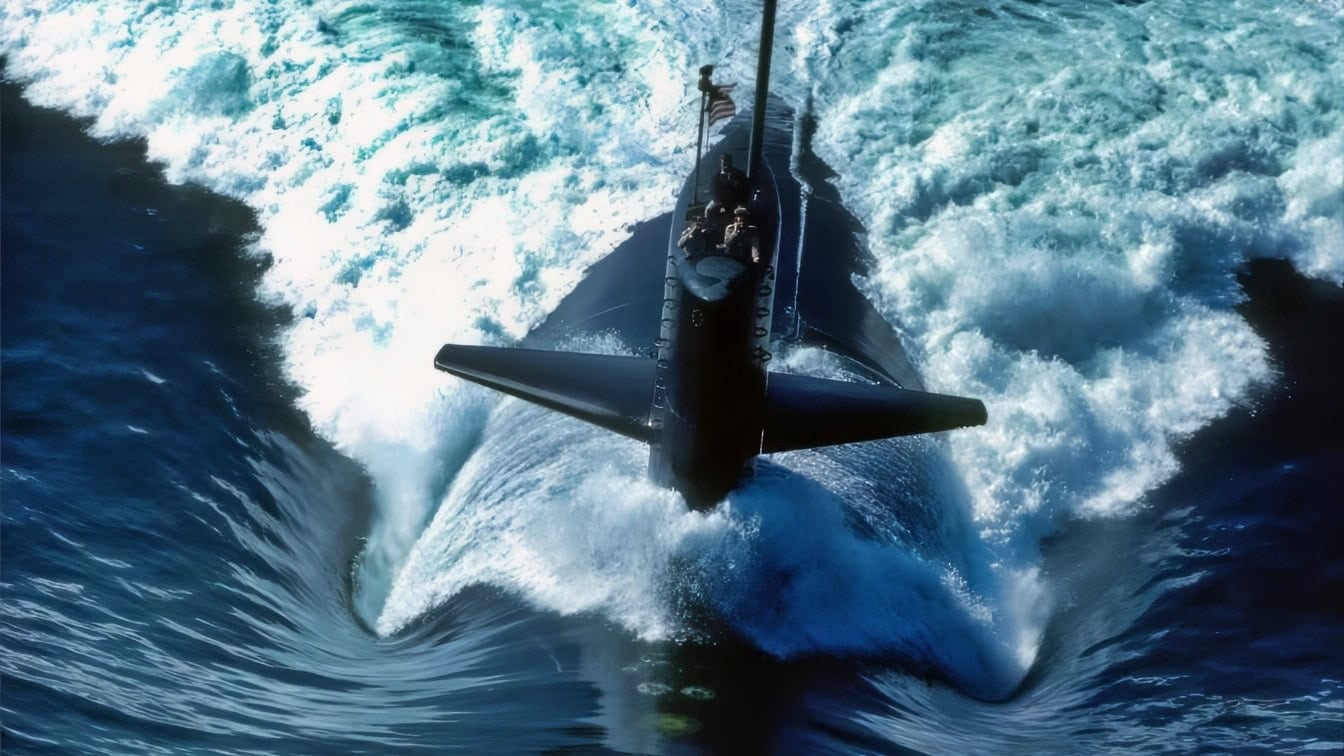
America’s nuclear submarine force is widely regarded as one of the most impressive technological assets of the modern United States Navy. But it hasn’t always been a cakewalk for the Navy. And mistakes do happen. On May 15, 1969, the US Navy lost a nuclear-powered attack submarine. The US didn’t lose this submarine to enemy attack. The Sturgeon-class attack submarine, USS Guitarro (SSN-665), was sunk while tied up at Mare Island Navy Shipyard in California.
The Background
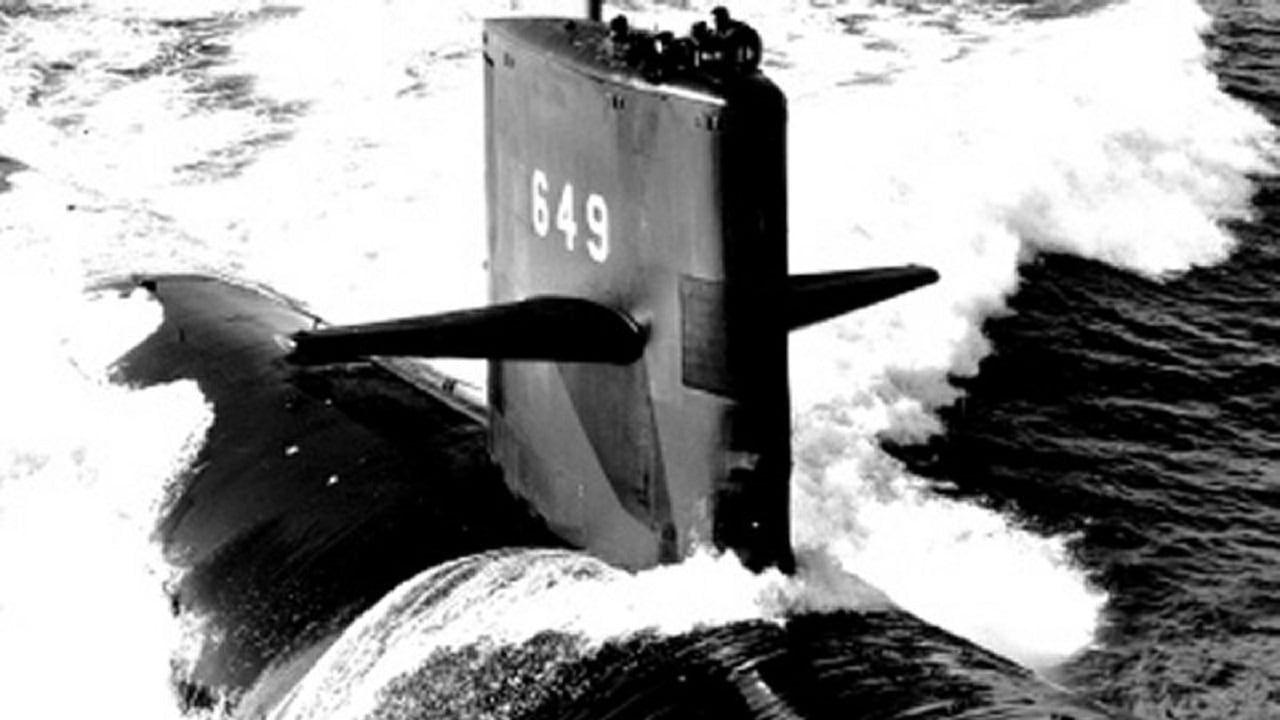
USS Sunfish SSN-649. Sturgeon-Class Submarine.
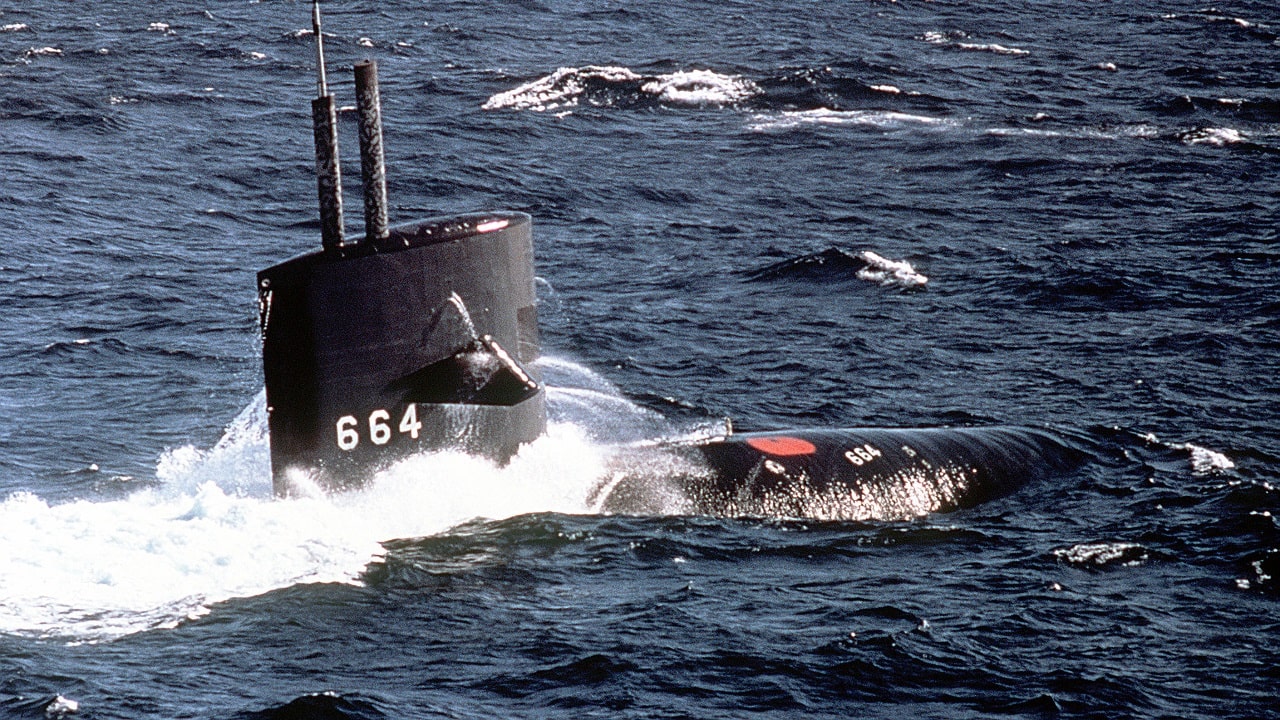
A starboard bow view of the nuclear-powered attack submarine USS SEA DEVIL (SSN-664) underway off the Virginia Capes.
In the case of the USS Guitarro, the submarine was still under construction.
That’s because two civilian work crews failed to coordinate the introduction of water into two separate parts of the submarine.
Because of that failure to coordinate such a risky undertaking during the construction of the nuclear submarine, the civilian workers are believed to have been responsible for sending the sub to the bottom of the drink.
Indeed, the Navy claimed that the accident was preventable.
The Sturgeon-class nuclear-powered attack submarine was designed mainly to hunt enemy submarines during the Cold War.
The class was also meant to conduct long-range intelligence missions, primarily against the Soviet Union.
Had the Guitarro not sunk while undergoing a routine fitting procedure at the Mare Island facility in California, it’d have joined a long line of powerful and impressive Sturgeon-class submarines serving at that time.
Unfortunately, the civilian nuclear construction crew that entered the submarine on that fateful day in 1969 was not coordinating.
Their work required flooding the submarine’s tanks with about 5 tons of water.
Half an hour later, however, another civilian work team arrived to conduct work on the forward portion of the Guitarro.
Their job was to correct a slight problem with the submarine’s trim. So, the second civilian team of engineers believed adding water to the forward tanks would correct that trim issue.
A Lack of Coordination
When building nuclear submarines, teams must coordinate carefully.
These tasks are not to be taken lightly.
And the reason is that if you have two teams, in two different sections of a submarine under construction–not communicating with each other–you create the very conditions that destroyed the Guitarro.
The two teams were essentially working at cross-purposes.
The nuclear engineering team in the aft section of the sub added water to the tanks while the second crew in the forward section of the submarine also added water to correct the flaw in the submarine’s trim.
So, for almost four hours, the two groups unwittingly flooded the submarine at both ends.
From outside of the submarine, around 7 pm local time, security forces observed that it sat much lower in the water than it should have.
Soon, the submarine sank so low that small waves broke over it and entered an open hatch in the forward section of the Guitarro.
Despite the security force’s warnings to workers on the submarine, the two crews kept working against each other, unaware of what the other team was doing, which worsened the flooding.
By 7:50 pm local time, the two crews had finished their work.
Forty minutes later, work crews on the submarine felt it was listing downward by the bow.
Soon, workers returning from their breaks found water entering the submarine through multiple hatchways the crews had left open to continue building it.
The Sinking
Then came the feverish attempts to save the submarine from sinking.
But that proved more difficult.
Sure, the submarine was designed with watertight bulkheads, and systems were in place to prevent flooding.
The problem workers faced was that their own equipment blocked the submarine’s safety features, preventing them from being used effectively to stop the sub from sinking.
Five minutes before 9 pm local time, the Guitarro sank while still moored to the pier at Mare Island.
Navy investigators ruled the incident as being the result of “culpable negligence” by the shipyard employees, paired with an inadequate coordination between the two construction teams.
There was nothing wrong with the basic construction or design of the Guitarro.
What’s more, workers failed to heed the warnings of outside observers who had cautioned the teams about the strange appearance of the Guitarro as she slowly sank while still tied to the pier.
To compound matters, the naval officer who was slated to serve as the submarine’s first commanding officer a few months earlier had gotten into an argument with the shipyard employees over what he perceived as a dangerous lack of coordination between construction crews on the submarine.
He proposed centralizing the authority between the teams to avoid such a disaster. Shipyard leaders refused the captain’s proposal.
Saving the Ship
Inevitably, the Guitarro was not a total loss.
She was put to sea after a 32-month delay because of the accident at Mare Island.
Crews refloated the submarine three days after it sank.
They replaced the systems.
In fact, the Guitarro was commissioned in January 1970 by the Navy, and she went on to have a storied career–even becoming the testbed for the Navy’s submarine-launched Tomahawk cruise missiles from 1977 to 1984.
She remained in active service until being decommissioned in 1992.
Nevertheless, the accident at Mare Island proved to be a formative moment in the Navy’s development of nuclear-powered submarines during the Cold War.
Naval shipyards would never again operate in such decentralized, uncoordinated ways.
About the Author: Brandon J. Weichert
Brandon J. Weichert is the Senior National Security Editor at 19FortyFive.com. He also manages The Weichert Brief on Substack. Weichert also hosts “National Security Talk” on Rumble. He is the author of four bestselling national security books, the most recent of which is A Disaster of Our Own Making: How the West Lost Ukraine (Encounter Books). Follow him via Twitter/X @WeTheBrandon.