
While Tehran’s air defenses have failed to protect its skies from American missiles, the country still maintains a mobile network of defense systems that prevents the U.S. from achieving total air dominance.
Prior to Operation Epic Fury, Iran maintained a strange hodgepodge of air defenses, ranging from older Soviet-era systems and newly developed domestic systems to several modern Russian/Chinese platforms.
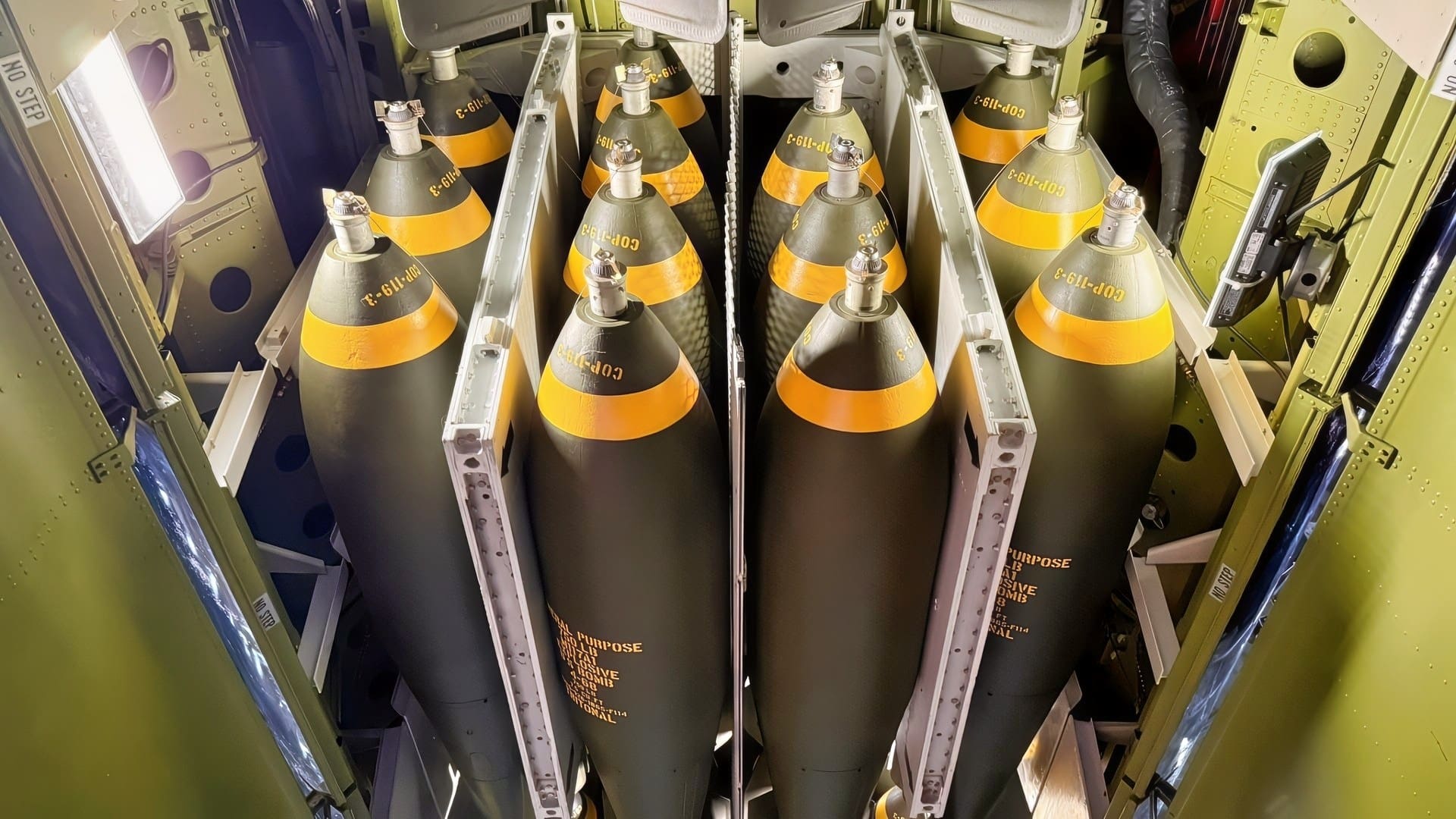
19FortyFive.com B-52 Bomber Bombs. By Harry J. Kazianis in 2025 from the National Museum of the Air Force.

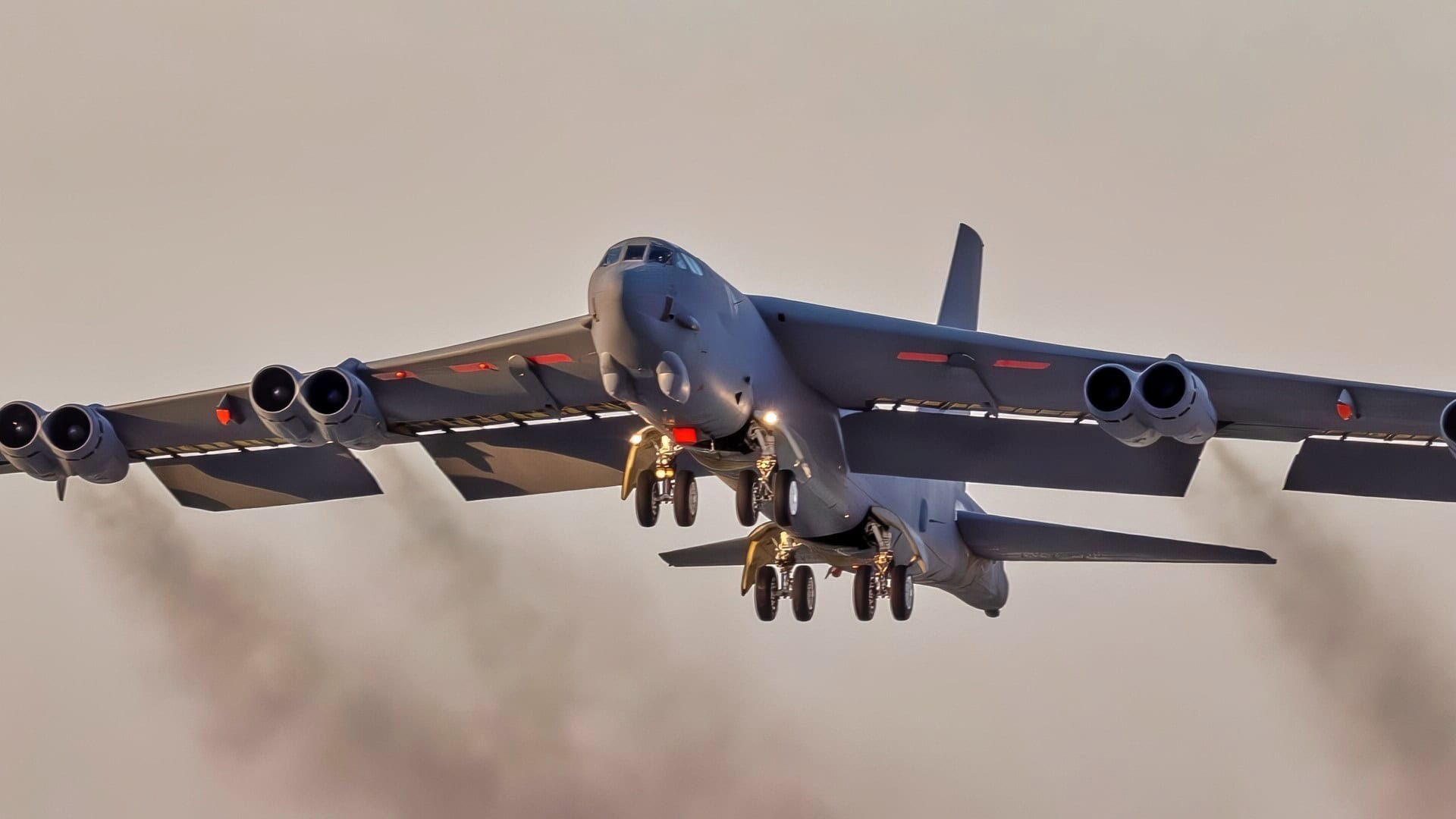
A B-52 Stratofortress assigned to the 2nd Bomb Wing takes off for a Red Flag 21-3 training mission at Nellis Air Force Base, Nevada, July 21, 2021. RF-Nellis 21-3 is unlike any previous Red Flags, as the 414th Combat Training Squadron builds upon the most challenging Red Flags in recent history. (U.S. Air Force photo by Tech. Sgt. Alexandre Montes)
On paper, Tehran boasted a heavily layered and integrated network of short-range and long-range air defense, but in practice, its defenses were far from ready for a protracted air campaign against Israel and the U.S.
The Composition of Iran’s Air Defenses
The Islamic Republic’s air defense arm originally centered on older Soviet-made systems such as the S-200. Over time, Iran phased out these older systems in favor of newer ones, such as the Sayyad family of missiles.
These missiles have a range between 60 and 400 kilometers, depending on the variant. Other systems, such as the Talash and the Khordad, were developed in the 2010s and serve as the backbone of Tehran’s domestically produced defense architecture.
The Bavar-373 was later introduced as a domestic alternative to the Soviet/Russian S-300 medium-range air defense system.
Its newest domestic platform, the Arman, was unveiled in 2024 and marketed as an anti-ballistic missile system.
All of Iran’s air defenses are designed for mobility and rapid operations, knowing full well they will be under constant surveillance in a war against Israel and the U.S.
While Iran prefers to build its own air defenses, Tehran has also purchased several foreign platforms, most notably the S-300 from Russia.
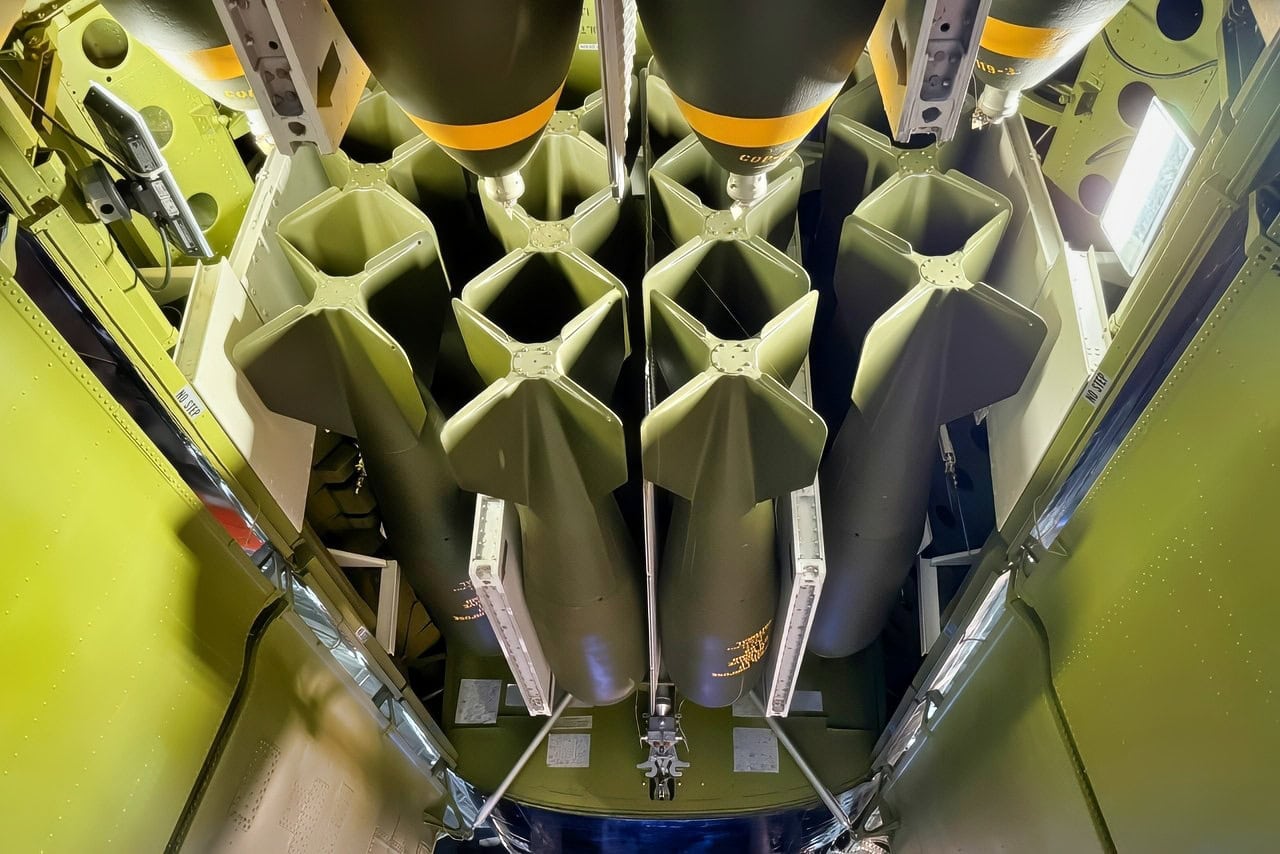
B-52 bombs. Image Credit: 19FortyFive.com Taken at the National Museum of the Air Force.
The S-300PMU-2 added proven, generally reliable modern air defense capabilities to Iran, along with a modern phased-array radar architecture.
The Iranians also bought several Tor-M1 missile systems from Russia to boost their short-range missile capabilities.
Additionally, Tehran operates several Chinese HQ-7 systems under the domestic name Herz-9, along with HQ-2J missiles (developed into the Sayyad family), and Chinese-made HN-5/6 MANPADS.
In the past, Russia has attempted to sell S-400 Triumf air defenses, but Tehran has promptly refused, stating that its domestic systems are superior in capabilities.
Later reports would claim that S-400s were delivered to Tehran, but by all indications, these reports were false.
Strengths and Limitations
Assessing the pre-war strength of Iran’s air defenses is a difficult ordeal due to the unreliability of the claims put out by all sides.
As Defense Express noted, it is nearly impossible to gauge the real strength of Iran’s defense structure due to the lack of independent verification and military secrecy.
According to some estimates, the Islamic Republic possesses thousands of launchers of all types, which would put the number of air defenses and missiles firmly above the combined strength of MANPADS and Russia, which is obviously absurd for a country as isolated and heavily sanctioned as Iran.
Granted, Iran has demonstrated real ingenuity and innovation in the face of its economic circumstances, but it is unlikely that its air defenses were ever as strong as it claimed.
When assessing Iran’s air defenses, it is also important to consider the country’s geography.
Iran’s topography is rugged and uneven, with its Western half comprised almost entirely of mountains, while its more populated regions are located in valleys and ravines.
This geography serves as a physical barrier to any invasion plans, but it also limits Tehran’s air defense options.
When placed in a valley, Iran’s radars are limited in their coverage, but when placed on high ground, they become easy targets for anti-radiation missiles. Consequently, despite having a layered defense structure on paper, Iran’s air defenses are constrained by their geography.
Battered and Degraded but Still a Threat
The first week of the war exposed many of the deficiencies in Iran’s air defenses.
Despite possessing excellent missile defenses on paper, its defenses were seemingly non-existent, which allowed the U.S. and Israel to bombard the country with seeming impunity.
This resulted in the assassination of Iran’s Supreme Leader along with many senior IRGC leaders. Against allied missiles and stand-off munitions, Iranian air defenses seemingly had no response.
Consequently, many of its most capable systems, like the Russian-made S-300 systems, were picked off by combined American and Israeli air strikes.
Despite constant strikes and their seeming ineffectiveness against long-range munitions, Iran’s air defenses still pose a significant threat to American aircraft.
Over the course of the war, Iran has managed to down dozens of MQ-9 Reaper UAVs, which typically perform strikes and reconnaissance over Iranian territory.
The U.S. also grew too confident after the initial weeks of the war and started moving its aircraft closer to Iranian territory.
As a result, the Air Force lost an F-15E (and several helicopters in the subsequent operation to rescue the aircraft’s weapons officer), and an A-10 Warthog. An F-35 stealth fighter was also struck by a missile while operating near Iranian territory.
While the aircraft managed to return to base, the pilot was injured by shrapnel, and the aircraft itself is unlikely to return to combat anytime soon.
Since then, the U.S. Air Force has operated at stand-off distances. Although Iran’s air defenses have taken a significant beating, they still pose a threat to American aircraft and continue to prevent the U.S. from achieving air dominance over the country.
While it can be argued that the U.S. has achieved air superiority over Iran, the mere existence of air defenses has forced the U.S. to think twice before approaching the country’s airspace and instead operate from further back while burning through its stock of valuable stand-off munitions.
About the Author: Isaac Seitz
Isaac Seitz, a Defense Columnist, graduated from Patrick Henry College’s Strategic Intelligence and National Security program. He has also studied Russian at Middlebury Language Schools and has worked as an intelligence Analyst in the private sector.