
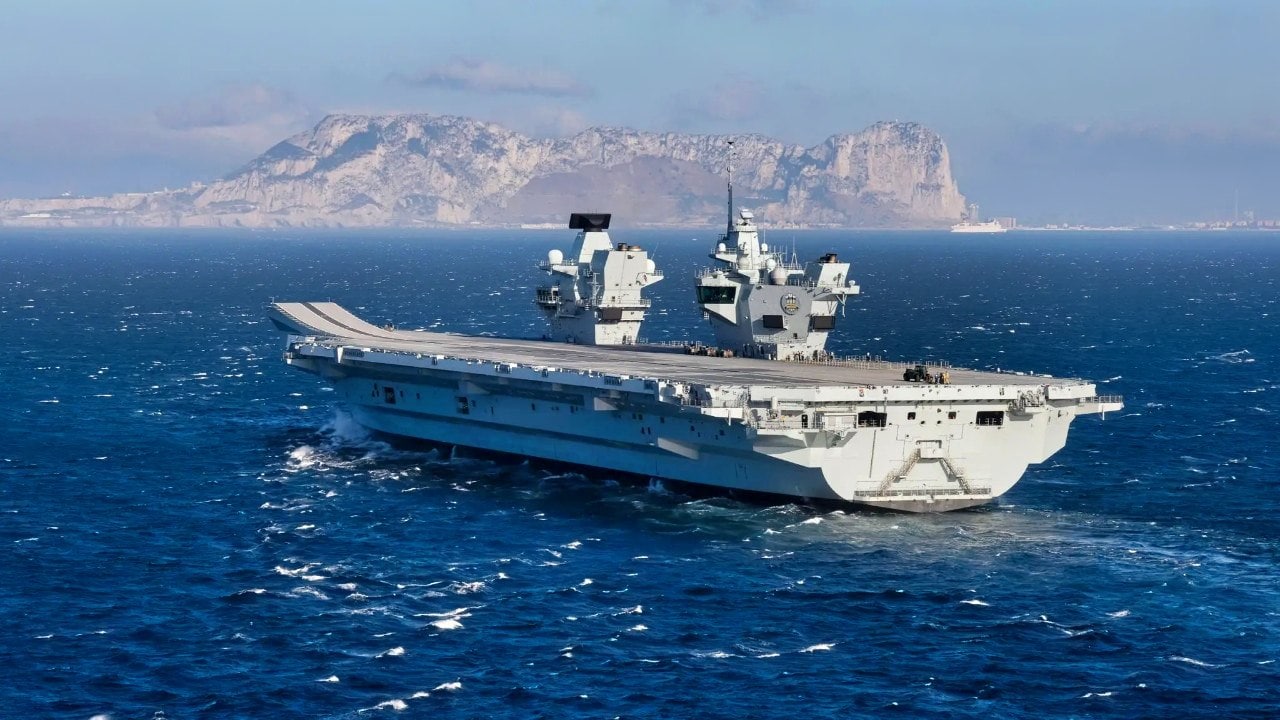
The Time Royal Navy Aircraft Carrier HMS Prince of Wales Broke Down Before Reaching the Atlantic – HMS Prince of Wales, a British Queen Elizabeth-class aircraft carrier, left Portsmouth for a deployment on August 27, 2022. It was meant to demonstrate the future of British carrier aviation, but it didn’t quite go to plan.
The Royal Navy had planned to operate F-35B fighters and drones alongside American forces off the U.S. East Coast, and the carrier was also due to host a high-profile U.K.-U.S. defense conference in New York.
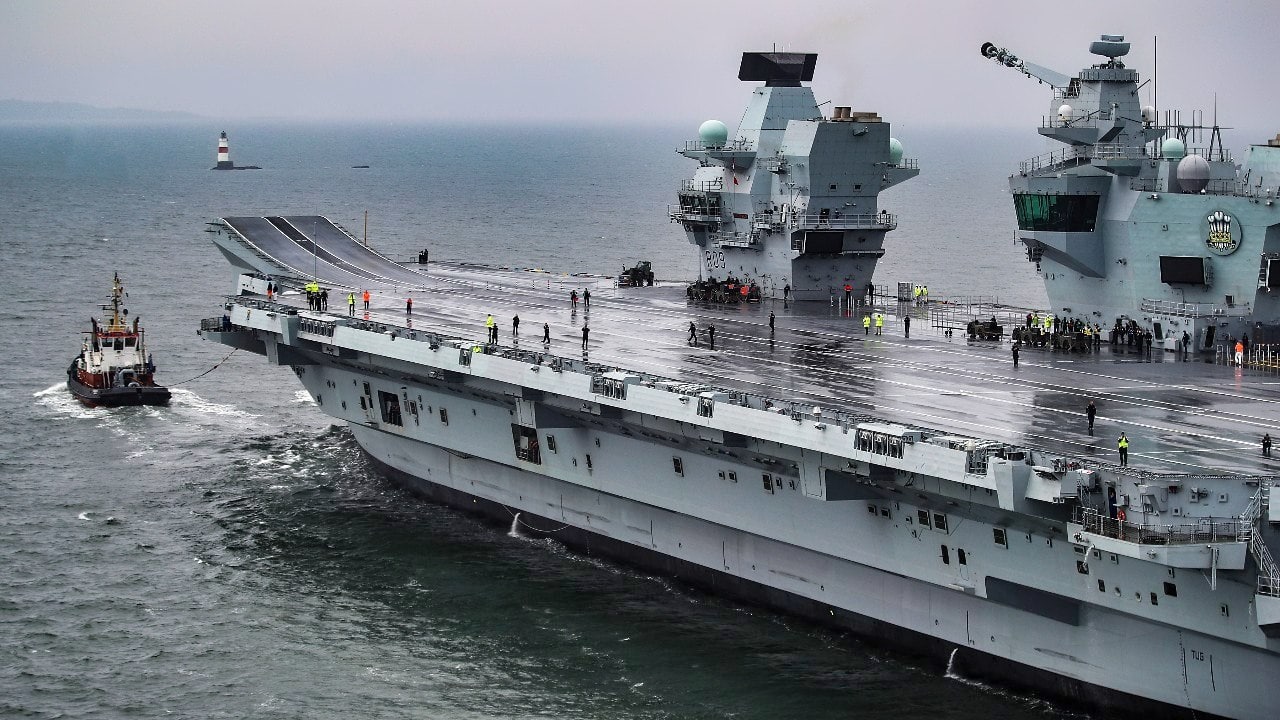
HMS Prince of Wales Aircraft Carrier Queen Elizabeth-Class Aircraft Carrier. Image Credit: Creative Commons.
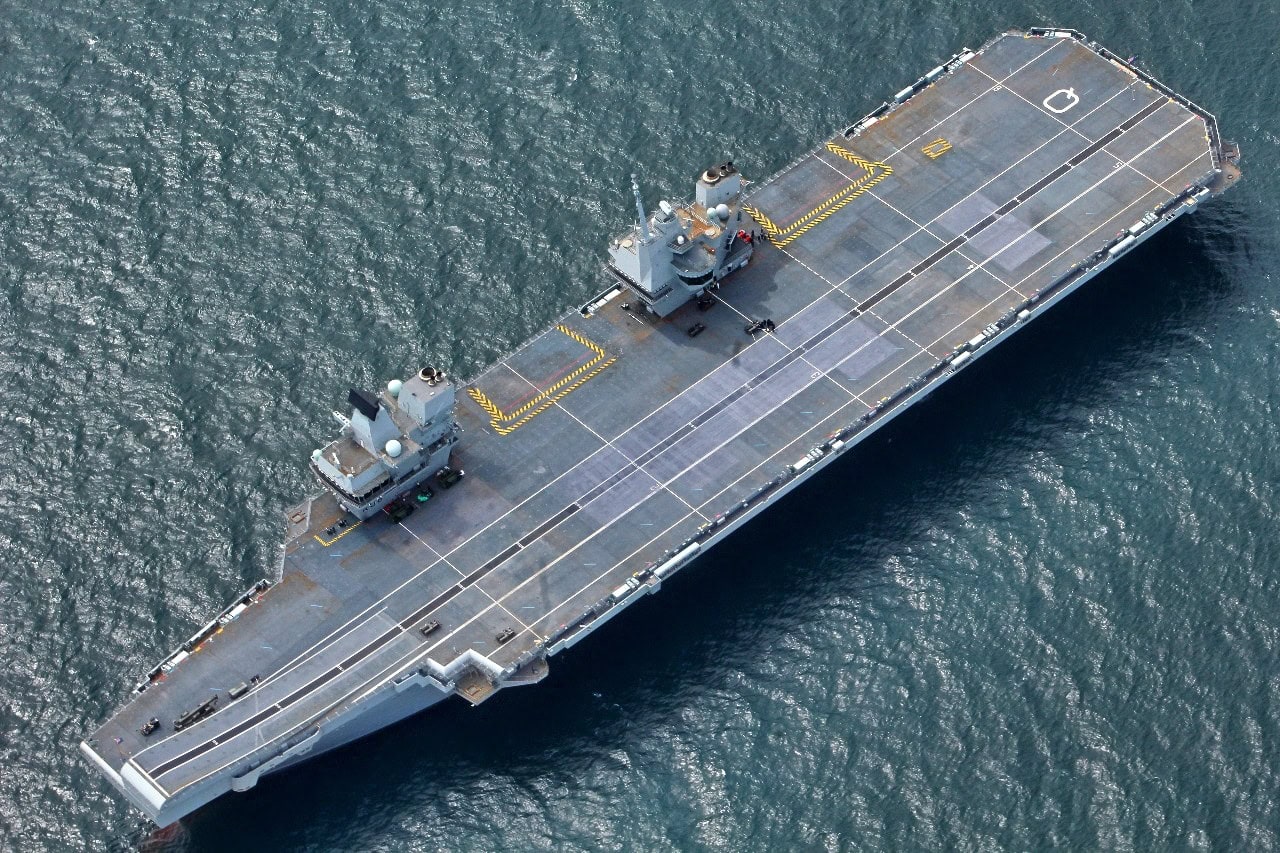
Pictured is an aerial view of HMS Queen Elizabeth as she conducts vital system tests off the coast of Scotland.
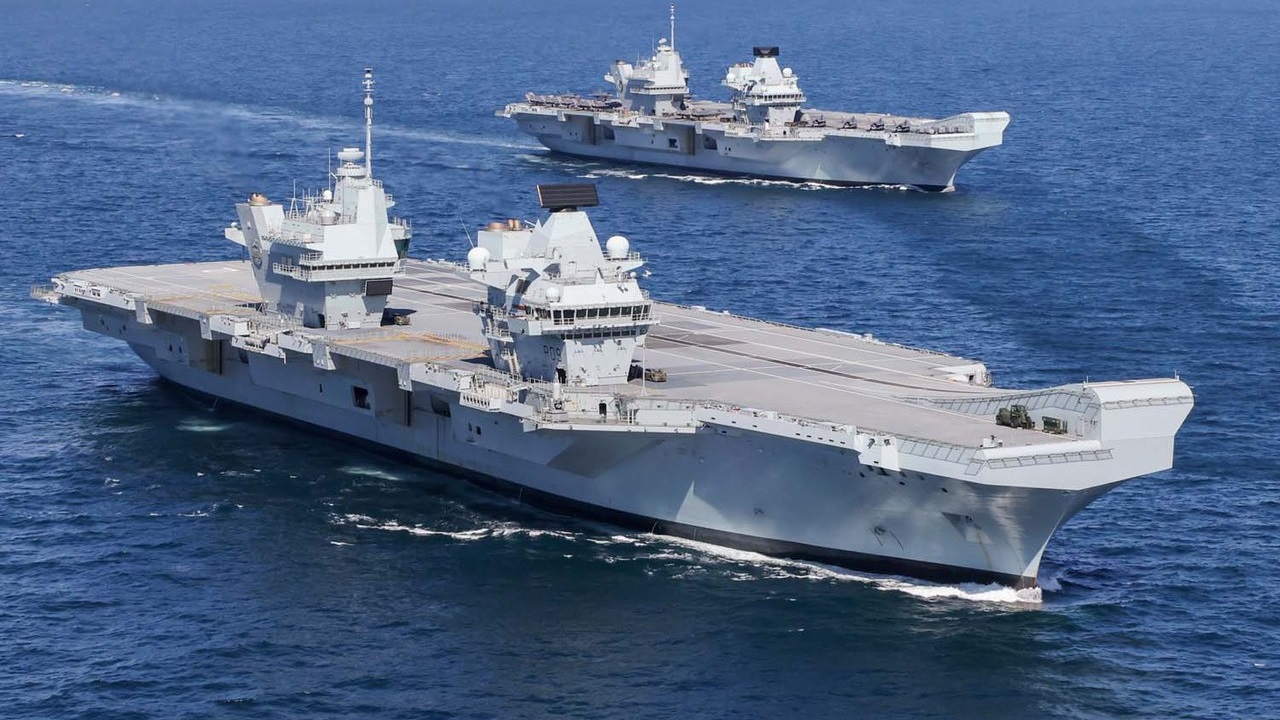
HMS Prince of Wales and HMS Queen Elizabeth pictured at sea for the first time…Wednesday 19 May 2021 saw a historic moment in Britain’s carrier renaissance as HMS Queen Elizabeth and HMS Prince of Wales met at sea for the first time. With two 65,000-ton carriers in operational service, Britain has a continuous carrier strike capability, with one vessel always ready to respond to global events at short notice. Image: Creative Commons.
HMS Prince of Wales, however, did not reach New York. It didn’t even reach across the Atlantic, either, because shortly after setting sail, a fault developed in the machinery that drove one of its main propellers.
How the Deployment Came to an Abrupt End
Britain’s 65,000-ton aircraft carrier was sailing with the HMS Richmond frigate and the tanker RFA Tideforce. It was also accompanied by an initial group of aircraft, with F-35Bs expected to join the carrier in North America. It was a highly publicized international deployment with allied aviation trials expected to be a part of it, along with a diplomatic event.
Prince of Wales, however, stopped off Britain’s south coast, near the Isle of Wight — extremely close to the British mainland. The British Ministry of Defense later told Parliament that the decision was made to stop the ship after a fault was discovered in its starboard shaft shortly after it departed. An initial assessment of the ship found that the coupling joining the final two sections of the shaft had failed.
The ship returned to Portsmouth in early September, where engineers worked to repair it.
What Exactly Went Wrong
The shaft carries power to the propeller, and the coupling joins sections of the shaft. When it failed, the entire ship failed, because without it, it can’t reliably move – even if the advanced systems onboard were fine.
The fault was initially described as unusual, but no one claimed to know the underlying cause. Teams of engineers, divers, and others soon examined the ship after it returned to port, and in October, Prince of Wales sailed to the Rosyth dockyard in Scotland for the repairs to begin. The Royal Navy said that its planned program off the U.S. East Coast had been rescheduled for the following year.
The damage, it turned out, was serious enough to keep the carrier out of its intended deployment entirely — because as investigators checked the machinery, they found it was worse than they had thought. Engineers discovered an alignment issue with the port shaft, and the Ministry of Defense decided to address it while the ship was already undergoing repairs.
What the Investigation Determined
In April 2023, the British Defense Procurement Minister sent Parliament the findings of an investigation by naval engineers, which noted the misalignment of the starboard shaft dating back to the ship’s original construction. The investigation also noted incorrect installation of key components.
During sea trials, both shafts were tested over thousands of nautical miles, and their vibration readings remained within permitted limits. That meant the ship could move forward and enter service in 2019. The minister’s letter to Parliament also stated that no abnormalities were reported during subsequent operations, including a NATO mission in June 2022. The checks had not revealed the installation problem before the coupling ultimately failed.
The minister also said that checks on sister ship HMS Queen Elizabeth had determined no abnormal shaft alignment, and that the investigation concluded that the defects were specific to Prince of Wales and not a problem across both carriers.
The estimated cost of the work was £25 million.
An Embarrassing Breakdown
The timing of the breakdown could not have been worse. On August 27, the Royal Navy announced that the Prince of Wales would travel to North America to conduct aviation trials and host the Atlantic Future Forum in New York.
Within days, HMS Queen Elizabeth had taken over some elements of the deployment and would instead host the Atlantic Future Forum. The aviation trials, however, could not be transferred with it. Prince of Wales had been scheduled to work with F-35Bs, U.S. Marine Corps MV-22 Ospreys, and drones off the American coast, so the Navy pushed that work to 2023.
The Royal Navy returned Prince of Wales to the water in July 2023, and the carrier ultimately sailed to the United States in the September that followed.
Its delayed trials included F-35B landings with heavier fuel and weapons loads, as well as the first takeoff and landing of a Mojave drone from a Royal Navy carrier.
Prince of Wales then returned to Portsmouth on December 11, 2023.
About the Author: Jack Buckby
Jack Buckby is a British researcher and analyst specializing in defense and national security, based in New York. His work focuses on military capability, procurement, and strategic competition, and he produces and edits analysis for policy and defense audiences. He brings extensive editorial experience, with a career output spanning over 1,000 articles at 19FortyFive, and has previously authored books and papers on extremism and deradicalization.