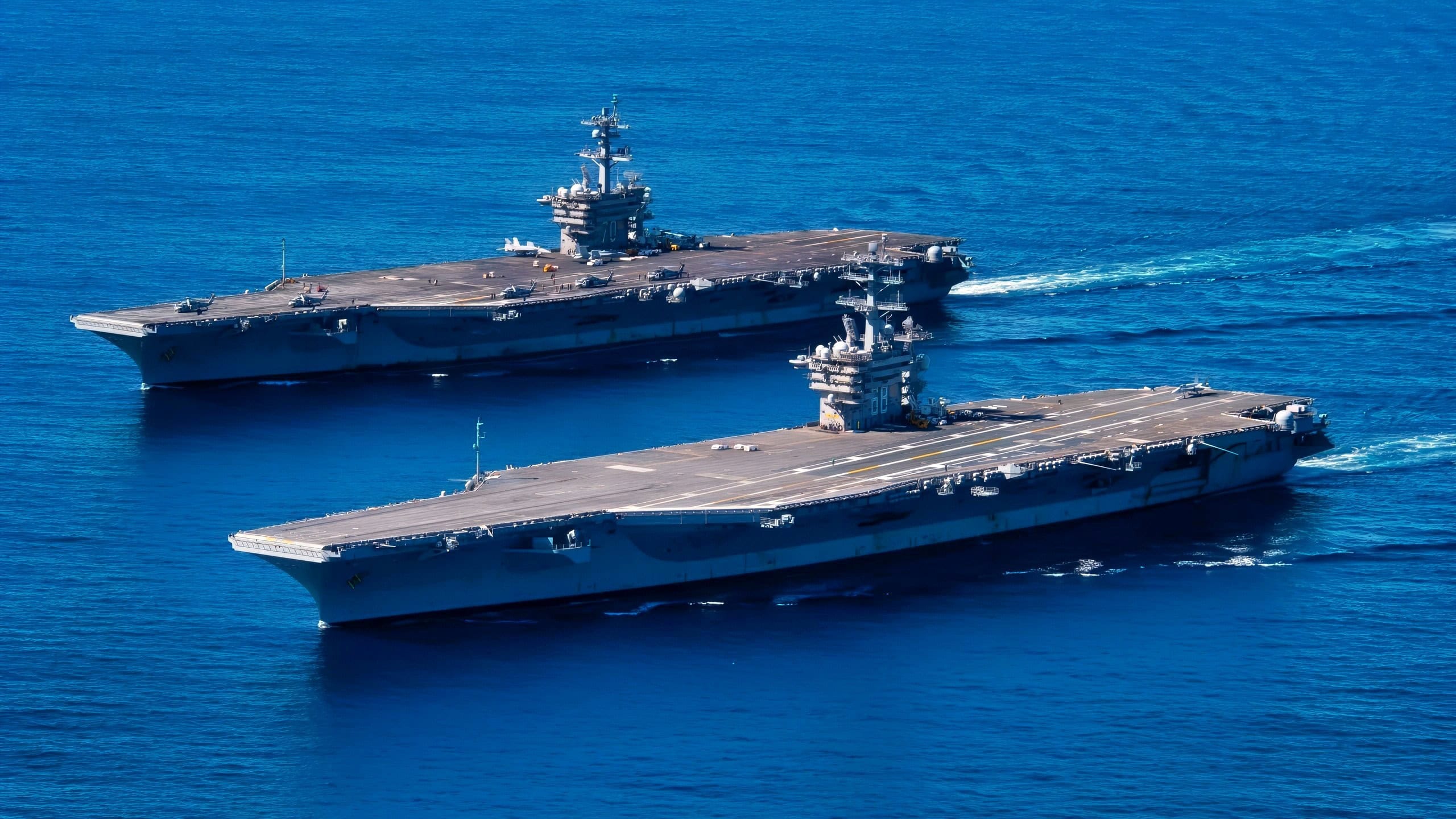
Summary and Key Points: Some naval strategists now ask whether the U.S. Navy’s aircraft carriers, the centerpieces of American sea power for more than 80 years, can still survive a war with China. Beijing has spent years building weapons meant to answer that question for them, starting with the DF-26, a ballistic missile designed to hit carriers from 2,000 nautical miles away. The Navy, which by law must keep 11 carriers, is answering with dual-carrier operations in the Pacific, stealthier air wings, and submarine hunters. Here is what each threat can do, and what the fleet can do about it.
US Navy Aircraft Carriers: Obsolete?
U.S. Navy carriers project global power, protect vital ocean waterways, and transport the potential to launch and sustain a massive air attack against any enemy.
The large ships continue to prove their worth and command attention as massive pillars of American power.
The One Word: Vulnerability
The Navy is required by statute to operate 11 carriers. It performs dual-carrier operations in the Pacific to leverage breakthroughs in networking technology that, if needed, could enable an integrated two-carrier-attack.
However, despite their indisputable worth, carriers are increasingly vulnerable to a new generation of enemy weapons. Some navalists argue that carriers have become too vulnerable and may even be obsolete in a modern threat environment.
Many a Pentagon analyst surely stays up late many a night pondering ways to counter the various methods China might employ to destroy U.S. Navy aircraft carriers.
“Carrier-Killer” Missiles
Chinese government-backed media regularly refers to testing and production of China’s much-discussed “carrier-killer” DF-26 and DF-21D anti-ship missiles.
These projectiles were expressly designed to destroy aircraft carriers thousands of miles offshore.
The arrival and continued production of the missiles have provoked discussion within the U.S. military about the Navy’s future maritime strategy and concepts of operation.
In large measure this is due to the simple, somewhat self-evident reality that carriers might not be able to survive fast-moving, precision-guided anti-ship missiles such as the DF-26—which has a range of 2,000 nautical miles.
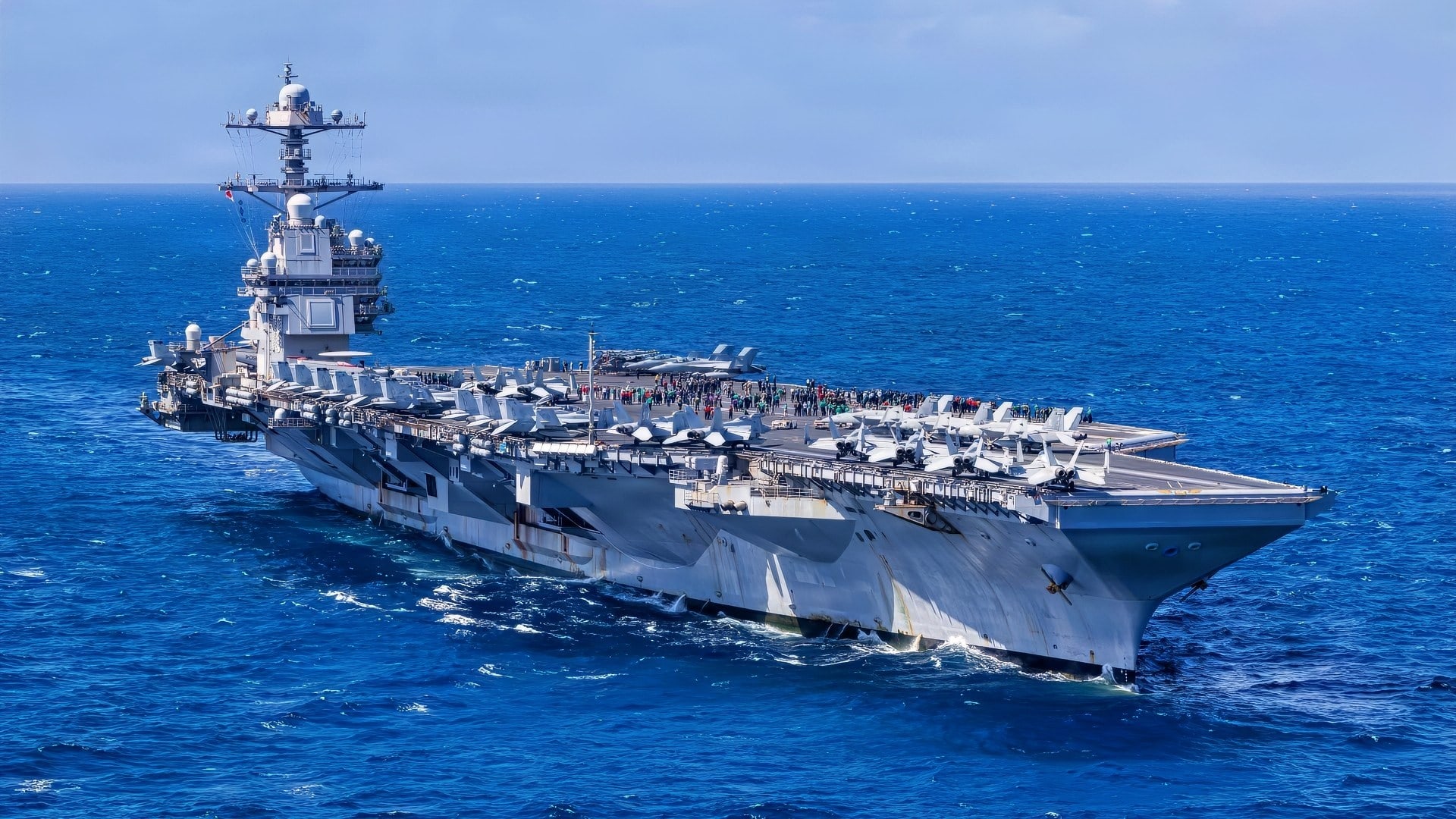
The world’s largest aircraft carrier, Ford-class aircraft carrier USS Gerald R. Ford (CVN 78), transits the Caribbean Sea during Carrier Air Wing 8’s aerial change of command ceremony, Jan. 19, 2026. U.S. military forces are deployed to the Caribbean in support of the U.S. Southern Command mission, Department of War-directed operations, and the president’s priorities to disrupt illicit drug trafficking and protect the homeland. (U.S. Navy photo)
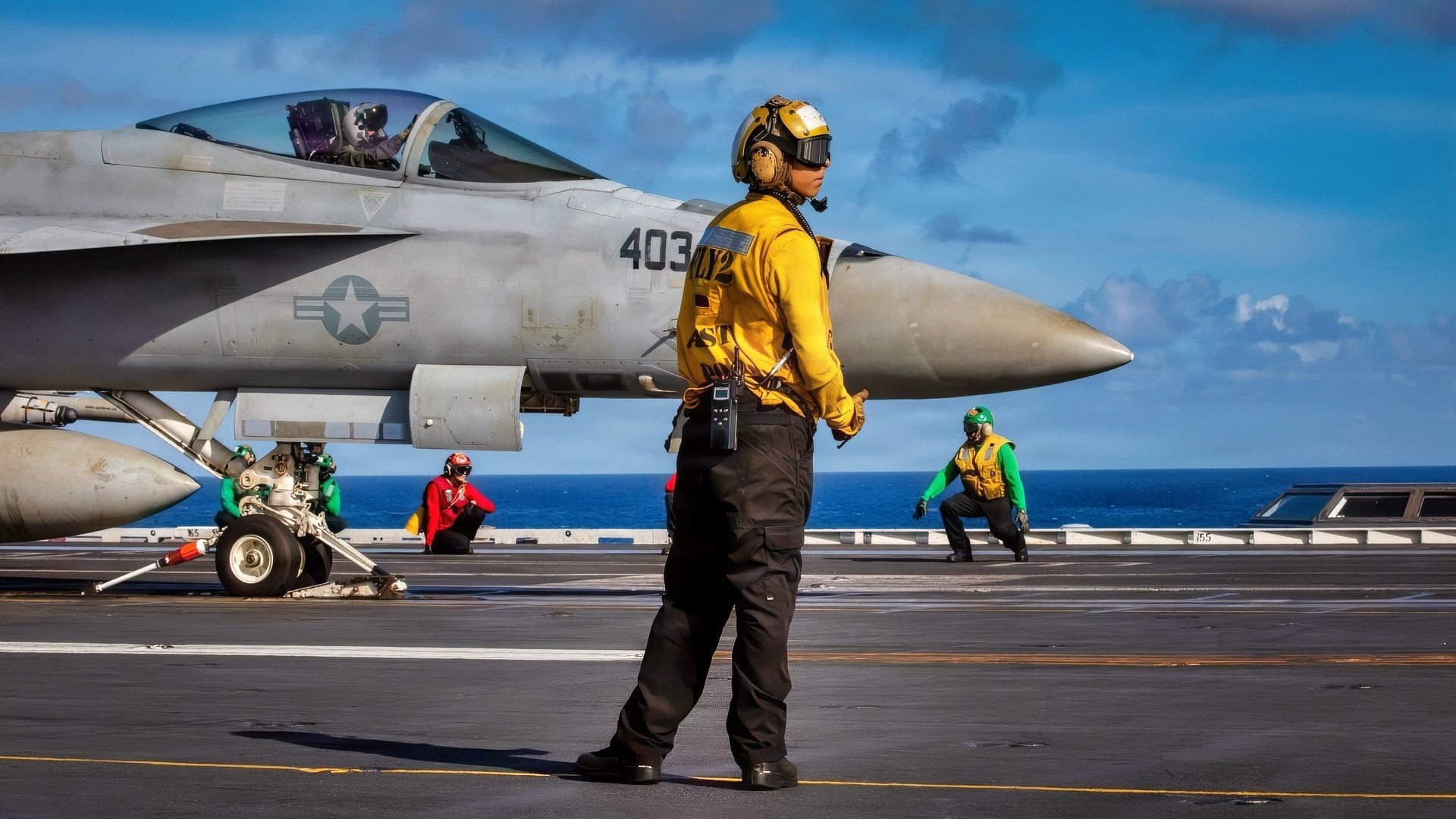
A U.S. Sailor signals to an F/A-18E Super Hornet aircraft, attached to Strike Fighter Squadron 87, during flight deck operations on the flight deck of the world’s largest aircraft carrier, Ford-class aircraft carrier USS Gerald R. Ford (CVN 78), while underway in the Caribbean Sea, Jan. 3, 2026. U.S. military forces are deployed to the Caribbean in support of the U.S. Southern Command mission, Department of War-directed operations, and the president’s priorities to disrupt illicit drug trafficking and protect the homeland. (U.S. Navy photo)
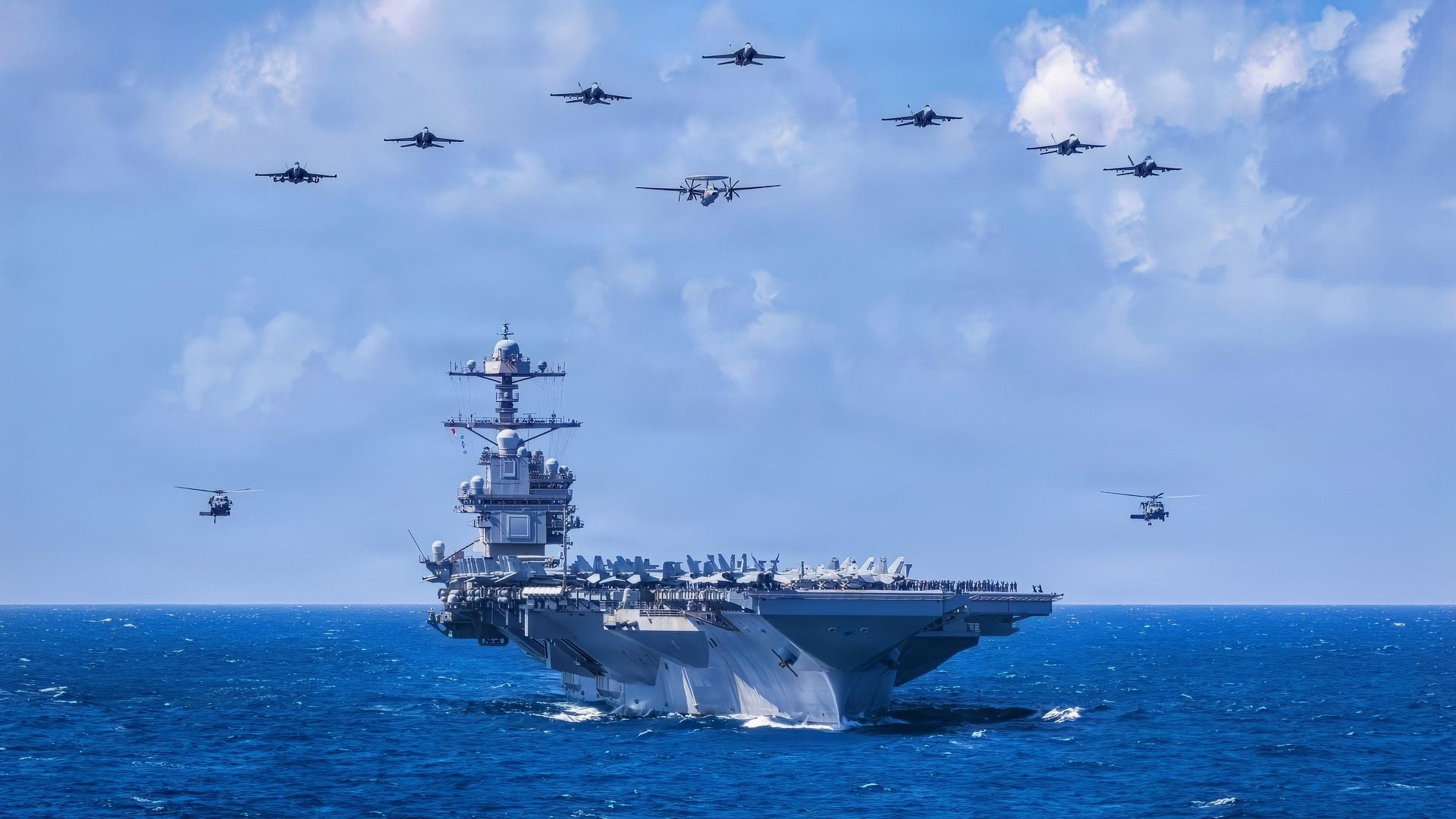
USS Ford Supercarrier U.S. Navy. Image Credit: U.S. Navy.
In tactical terms, this means carriers could be forced to operate thousands of miles offshore.
From such distances, a Carrier Air Wing would be unable to strike without using non-stealthy, highly vulnerable aerial refuelers. The Navy continues to take aggressive steps to mitigate the risks from these People’s Liberation Army (PLA) weapons.
The threat of the PLA’s shore-fired, carrier-destroying anti-ship missiles is thus changing U.S. Navy strategies and concepts of operation.
PLA AF J-35
There is little question that stealthy fifth-generation ocean-launched stealth fighters such as China’s J-35 add another layer of threat.
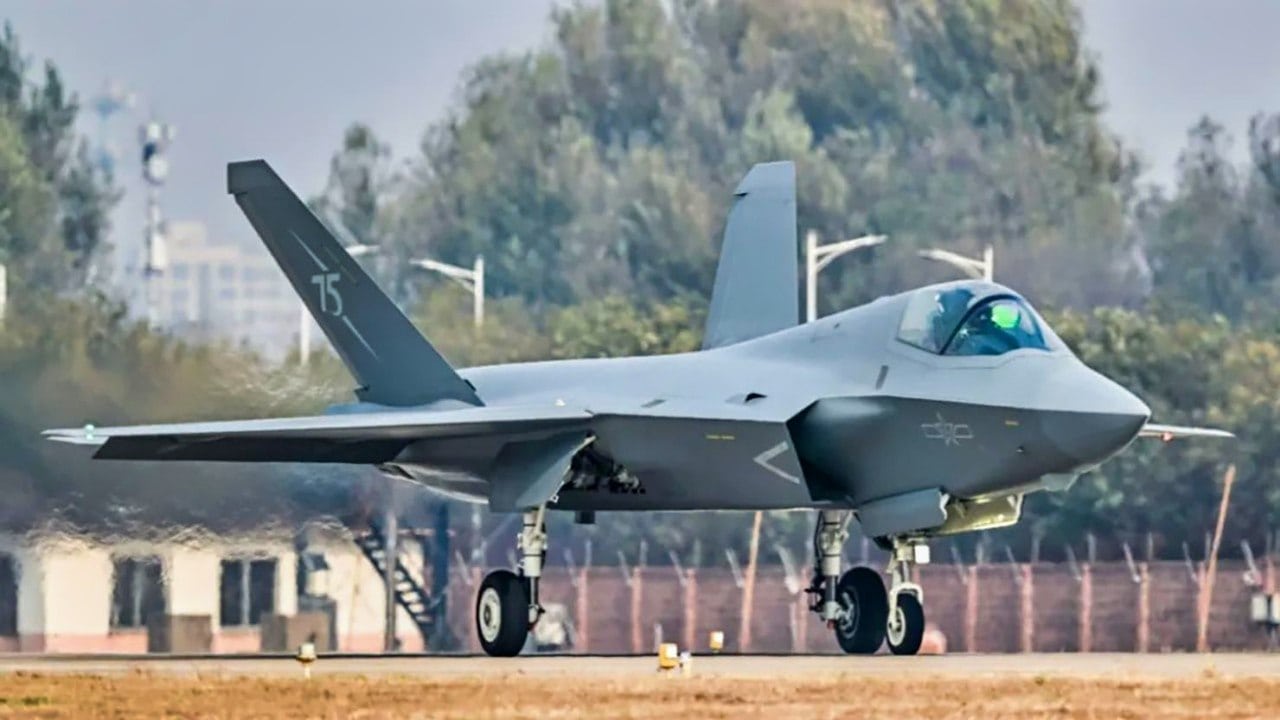
J-35A Fighter from China. Image Credit: Chinese Military
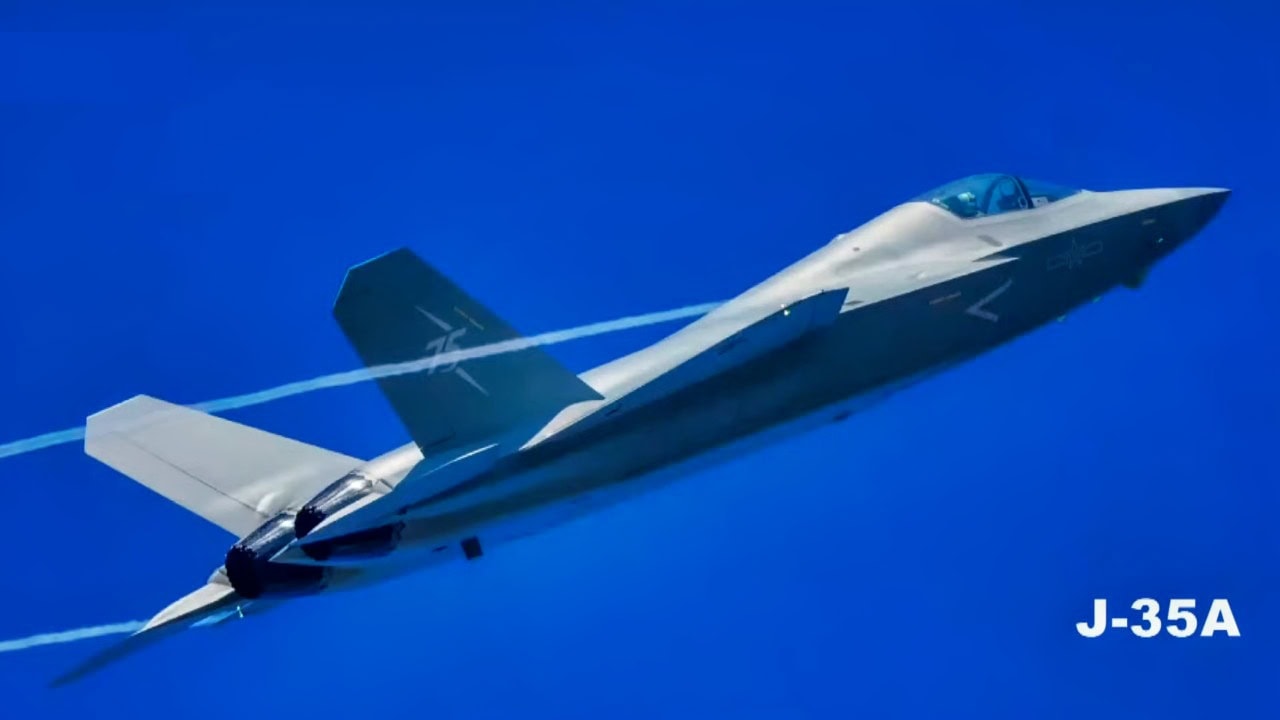
China J-35 Fighter. Image Credit: Creative Commons.
The J-35 may be capable of sensing, tracking, and destroying carriers in the Pacific. Even if protected by the heavily armed destroyers and cruisers of its Carrier Strike Group (CSG), a U.S. Navy carrier could be quickly destroyed by a rapid succession of air-to-surface missiles fired by one or more J-35s.
Defending against such a strike might be too much for the carrier defenses—long-range, ship-integrated radar, deck-mounted guns, and interceptor weapons—and might require a CSG to preeminently establish air superiority using the carrier-launched F-35C.
In essence, a superior Carrier Air Wing could use surveillance aircraft such as the E-2D Hawkeye, drones, and armed fighters such as the stealthy F-35C to establish air superiority, eliminating any immediate threat posed by the J-35.
PLA Navy Submarines and Aircraft Carriers
Even with air superiority established, People’s Liberation Army Navy (PLAN) attack submarines would pose another significant threat to U.S. carriers. Chinese subs are designed to operate quietly in the undersea domain and maneuver into position to destroy large surface warships with torpedoes.
The U.S. Navy not only has its stealthy Virginia-class attack submarines to detect and monitor this threat, but it also operates undersea surveillance drones, surface-launched sonobuoys, and towed-array sonar systems.
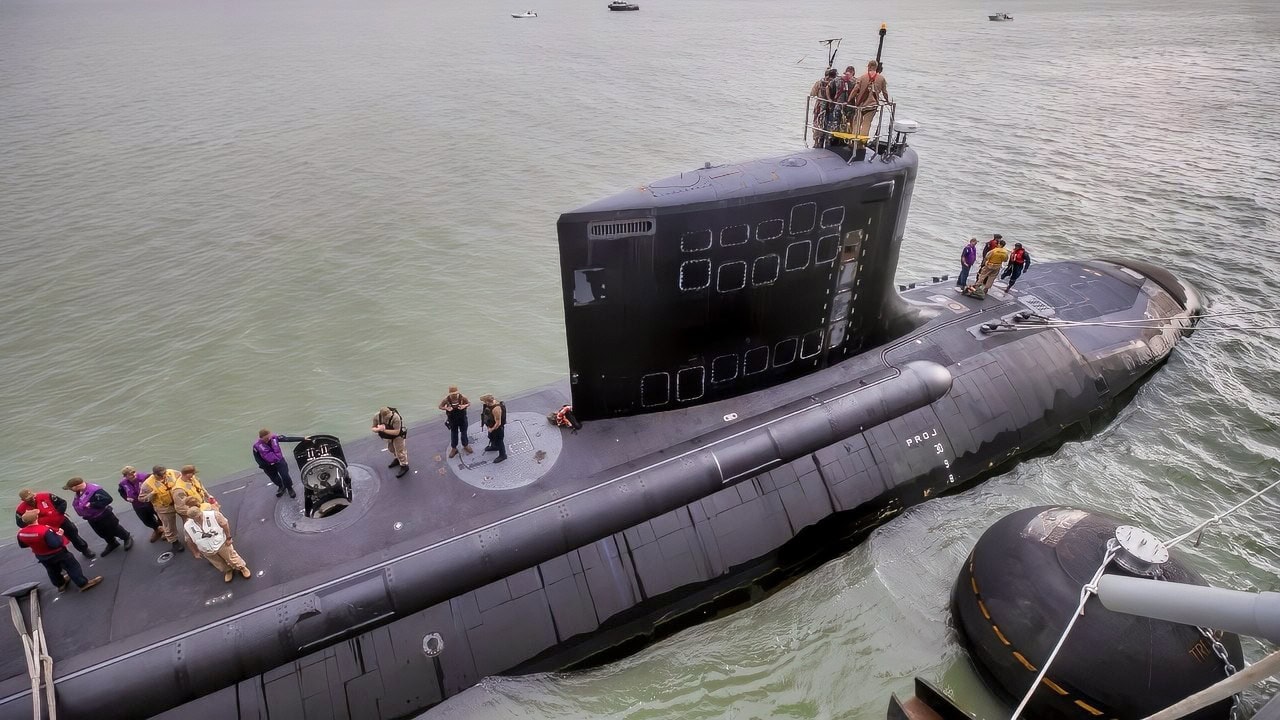
DARWIN, Northern Territory, Australia (March 31, 2025) – The Virginia-class fast-attack submarine USS Minnesota (SSN 783) departs from the submarine tender USS Emory S. Land (AS 39) after a scheduled port visit at Darwin, Northern Territory, Australia, Mar. 31, 2025. Darwin is Emory S. Land’s 17th port call since it departed on deployment May 17, 2024. Emory S. Land and Minnesota are operating in U.S. 7th Fleet, the U.S. Navy’s largest forward deployed numbered fleet, operating with allies and partners in preserving a free and open Indo-Pacific region. (U.S. Navy photo by Mass Communication Specialist Seaman Mario E. Reyes Villatoro)
However, should one of China’s new Type 039A Yuan-class submarines maneuver into an attack position without being detected, U.S. Navy carriers would be at risk.
The Yuan-class in particular is likely to present risks to carriers, because it uses ultra-quiet diesel-electric technology and a super-stealthy undersea technology known as Air Independent Propulsion (AIP). Non-nuclear submarines with AIP can operate without atmospheric oxygen.
AIP submarines could remain less detectable while they patrol areas to attack large surface ships such as carriers.
Surface Warship Threat vs. Aircraft Carriers
There is also the risk from simple, old-fashioned naval surface threats such as cruise missiles, deck-mounted guns, or other surface-to-surface methods of attack, including small-boat swarms. The PLAN is known to possess advanced surface-fired weapons on its fast-emerging Type 055 destroyers.
Recent innovations now enable deck-mounted guns and missiles to strike with much greater range and precision than before.
Ship-launched PLA hypersonic missiles are a new threat—the PLAN successfully test-fired its YJ-20 hypersonic missile from a surface warship.
About the Author: Kris Osborn
Kris Osborn is the President of Warrior Maven – Center for Military Modernization. Osborn previously served at the Pentagon as a highly qualified expert in the Office of the Assistant Secretary of the Army—Acquisition, Logistics & Technology. Osborn has also worked as an anchor and on-air military specialist at national TV networks. He has appeared as a guest military expert on Fox News, MSNBC, The Military Channel, and The History Channel. He also has a Masters Degree in Comparative Literature from Columbia University.