
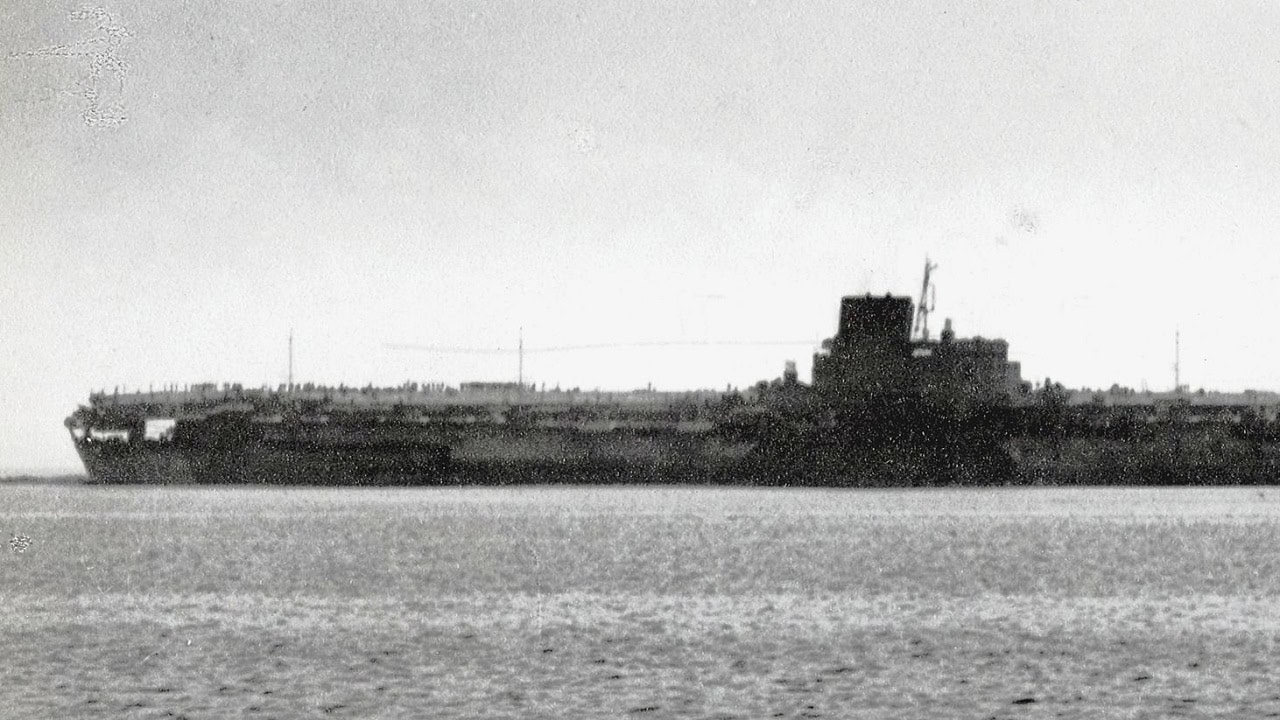
Shinano began its service life as Hull No. 110, the third planned Yamato-class battleship. Laid down at Yokosuka in May 1940, she was intended to join the Yamato and Musashi as one of the most heavily armed and armored battleships in the world. Instead, Japan converted Shinano into an aircraft carrier and commissioned her that way on November 19, 1944. The vessel’s service life was abbreviated, lasting just ten days before the USS Archerfish sank her with four torpedoes. The Shinano sank on November 29, taking 1,400 sailors down with her.
The distinction is hard to ignore: the fact that the Shinano was roughly 72,000 tons fully loaded—one of the largest aircraft carriers ever built—yet she lasted less than two weeks into her first voyage.
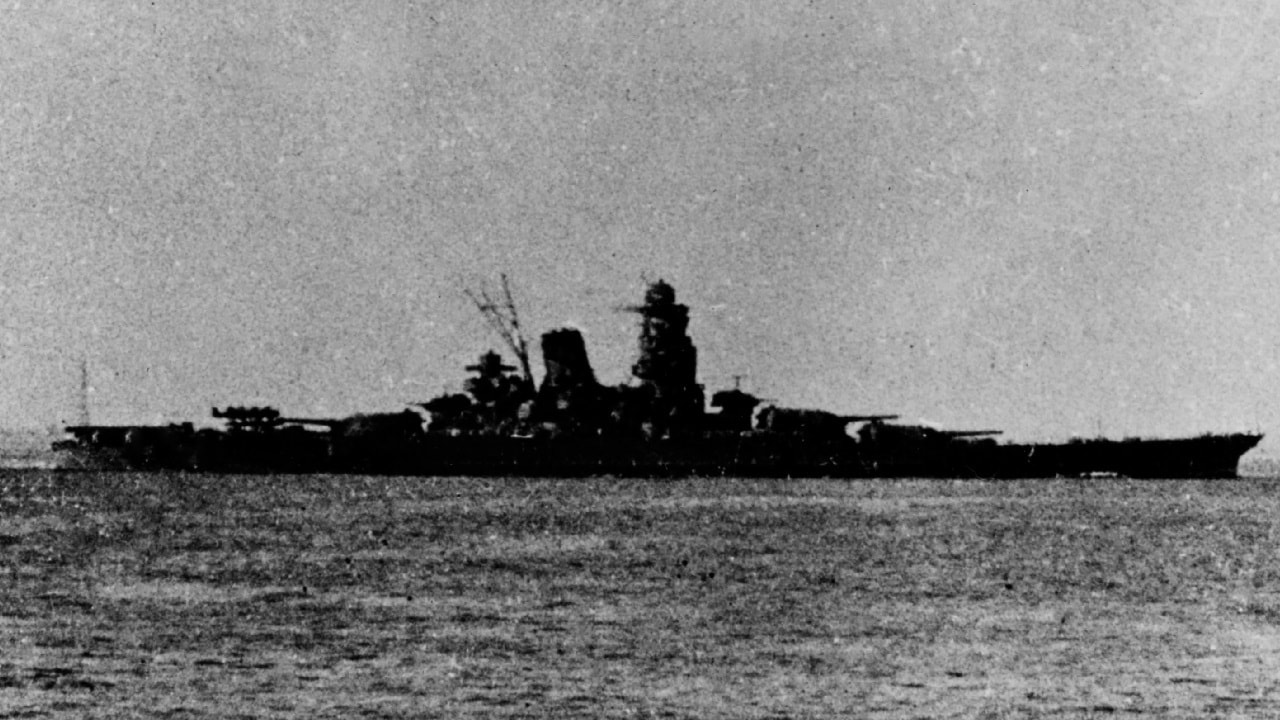
Yamato-class battleship Yamato. Image Credit: Creative Commons
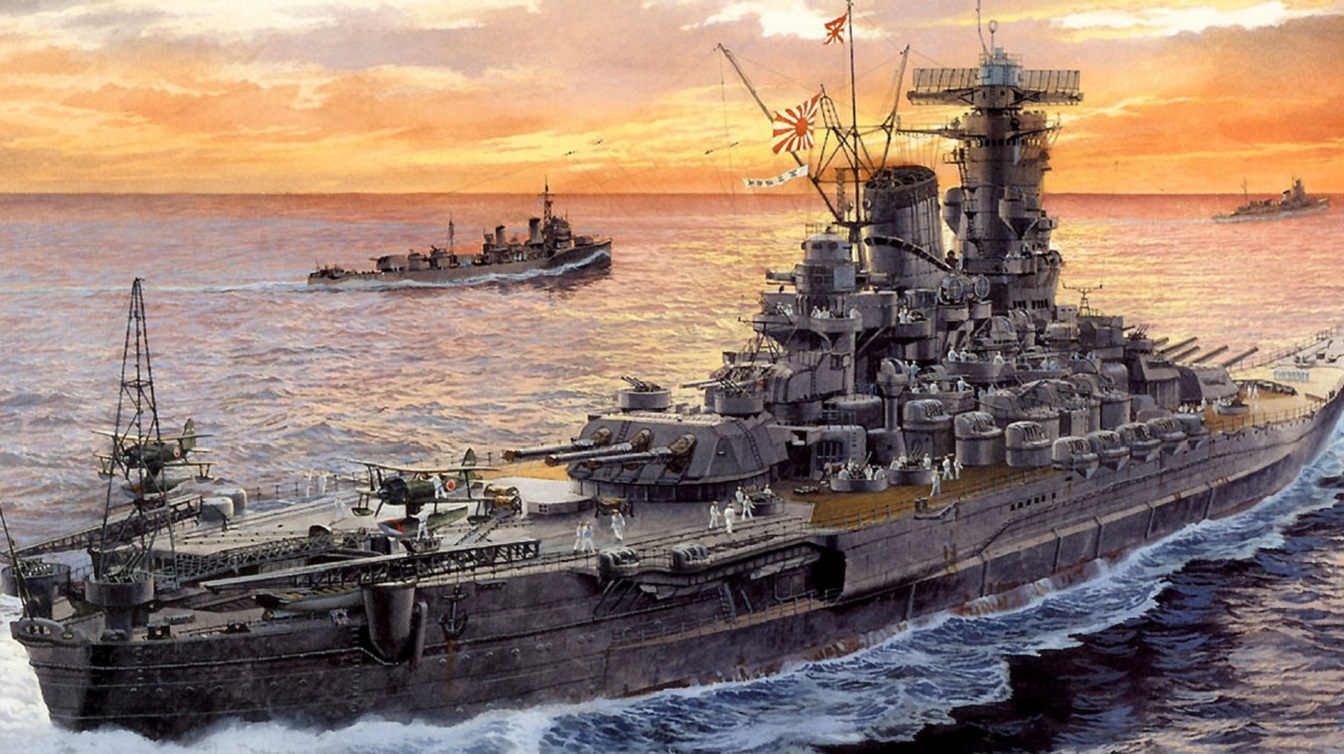
Battleship Yamato. Image Credit: Creative Commons.
So the question is: why would Japan take such an expensive battleship, convert it into a flawed carrier, and send her to sea unfinished?
Abandoning the Battleship
When construction on the Shinano began, Japanese naval doctrine still held a place for decisive surface battles.
The plan was for the Shinano to finish American vessels, which Japanese submarines and aircraft had harassed across the Pacific, with enormous 18.1-inch guns.
Accordingly, Shinano inherited the basic Yamato hull, approximately 860 feet long, with an enormous beam, a massive armored citadel, and extraordinarily thick waterline protection. But then Midway happened. Japan lost the Akagi, Kaga, Soryu, and Hiryu carriers in a single battle.
The battle was a watershed moment, demonstrating that the decisive naval weapon wasn’t the surface vessel but the aircraft that could be launched from hundreds of miles away. Japan decided, with desperation, that it needed more aircraft carriers. So the decision was made to take the half-completed Yamato hull and, rather than scrap the massive investment, convert her into an aircraft carrier.

Shinano Aircraft Carrier from Japan.
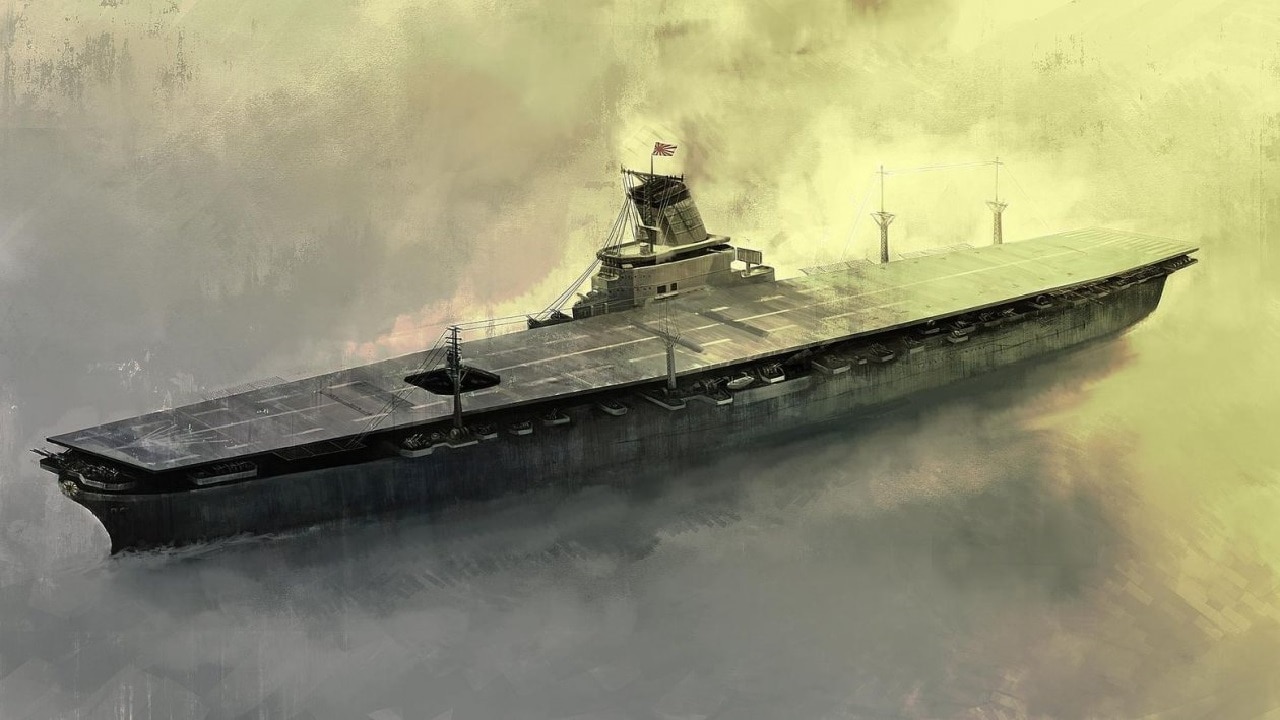
Aircraft Carrier Shinano. Image Credit: Creative Commons.
Easier Said Than Done
Battleships and aircraft carriers feature fundamentally different internal architectures.
While the battleship concentrates armor, magazines, and machinery inside a strong armored hull, the carrier needs enormous open internal volume for aircraft, elevators, fuel, maintenance, and weapons.
The problem was that the Shinano’s lower hull was already substantially complete; designers couldn’t just rearrange everything into a more proper carrier configuration.
Compromises were made.
Despite being an enormous vessel, the Shinano could carry only 40–50 aircraft. By comparison, the significantly smaller American Essex-class could routinely operate 90 aircraft, depending on the period and configuration.
Deploying the Shinano
The Japanese were forced to adapt to the Shinano’s compromised architecture.
Accordingly, the vessel evolved into something like an armored carrier-support ship rather than a true carrier. She could carry replacement aircraft, aviation fuel, bombs, and torpedoes, and was generally used to replenish other true carriers.
The Shinano’s own aircraft could provide some defensive and offensive capabilities, while the ship itself functioned more as a mobile aviation logistics base. The logic makes sense—but it was also odd that the world’s largest carrier had such limited striking power.
The Upside of Conversion
Converting the Shinano from a battleship did feature one distinct advantage: protection. Shinano retained much of the battleship’s enormous underwater and side protection.
Designers also added an armored flight deck, reflecting Japan’s recognition that carriers had to withstand air attacks as well as launch aircraft. The end result represented a hybrid, with battleship-scale hull protection below, armored carrier architecture above, and comparatively small aviation capacity inside. In theory, Shinano could absorb punishment that would have crippled lighter, true aircraft carriers.
The irony, of course, is that the Shinano was destroyed after ten days at sea—a concrete demonstration that armor only gets you so far.
Unfinished Business for Shinano Aircraft Carrier
Shinano was sent to sea before she was finished.
Why?
Because by November 1944, Japan’s strategic situation was collapsing. The Marianas had fallen, and B-29s were now attacking the Japanese home islands.
Japanese commanders were reasonably concerned that Shinano could be destroyed at port before ever being deployed.
The decision was made to move her to Kure, where fitting-out could continue.
But she sailed with major work still unfinished, i.e., watertight fittings incomplete, pumps and damage control equipment inadequately tested, bulkheads insufficiently sealed. She wasn’t ready for war, and she wasn’t really going to war, just relocating.
But the USS Archerfish intercepted her, destroying the nascent battleship before she was ever really finished.
About the Author: Harrison Kass
Harrison Kass is a writer and attorney focused on national security, technology, and political culture. His work has appeared in Tablet, City Journal, The Hill, The Spectator, and The Cipher Brief. He holds a JD from the University of Oregon and a master’s in Global & Joint Program Studies from NYU. More at harrisonkass.com.