
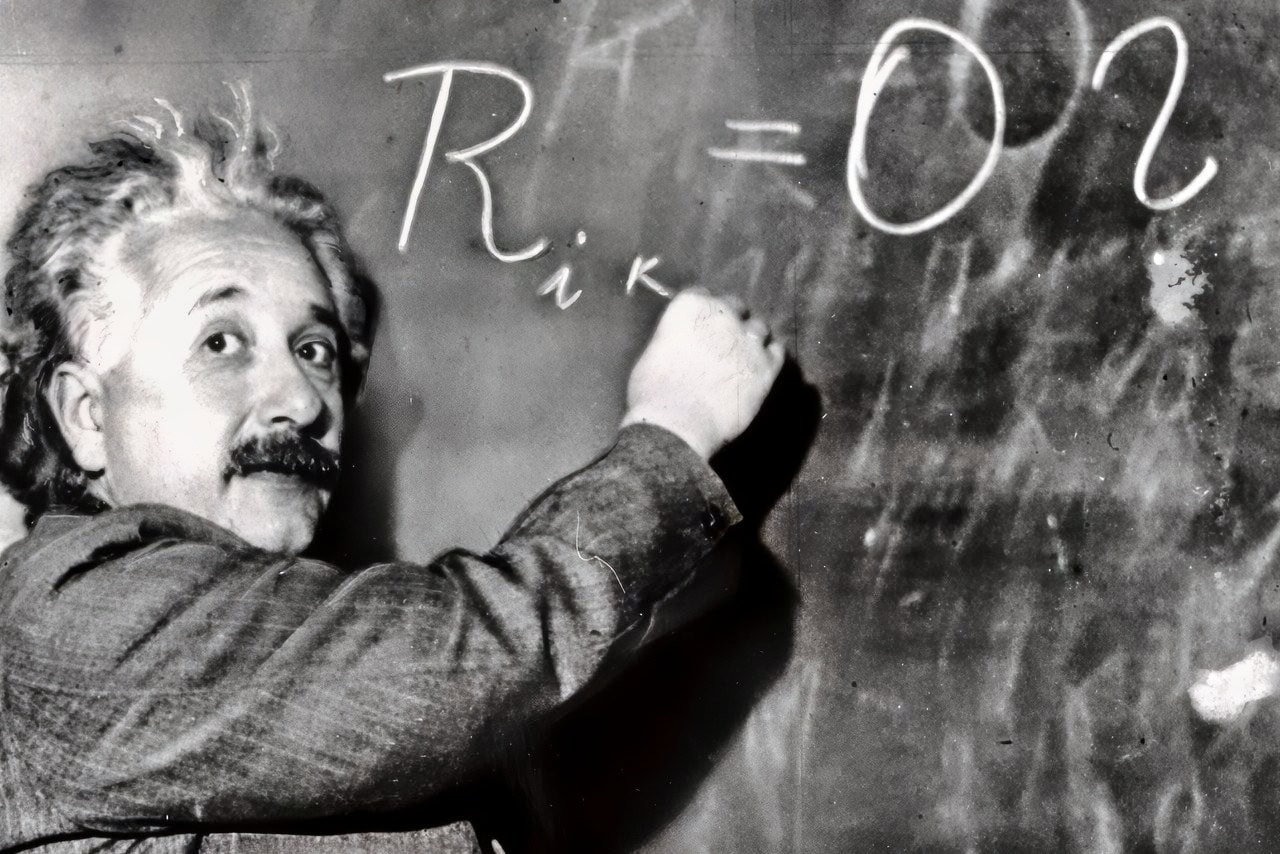
Summary and Key Points: The most famous warning about World War III is commonly credited to Albert Einstein: whatever weapons the next war is fought with, the one after it will be fought with sticks and stones. The line traces to a 1949 interview with Alfred Werner published in Liberal Judaism, and it fits the man Christopher Nolan’s Oppenheimer put on screen, the scientist whose letter to Roosevelt helped start the Manhattan Project and who spent the rest of his life trying to prevent the wars it made possible.
-But the sticks-and-stones idea was in the air after Hiroshima, and Einstein was far from the only one saying it.
Quote of the Day: “I know not with what weapons World War III will be fought, but World War IV will be fought with sticks and stones.”- Albert Einstein
Anyone who saw Christopher Nolan’s movie Oppenheimer, back in 2023, likely remembers the role Albert Einstein played in the proceedings.
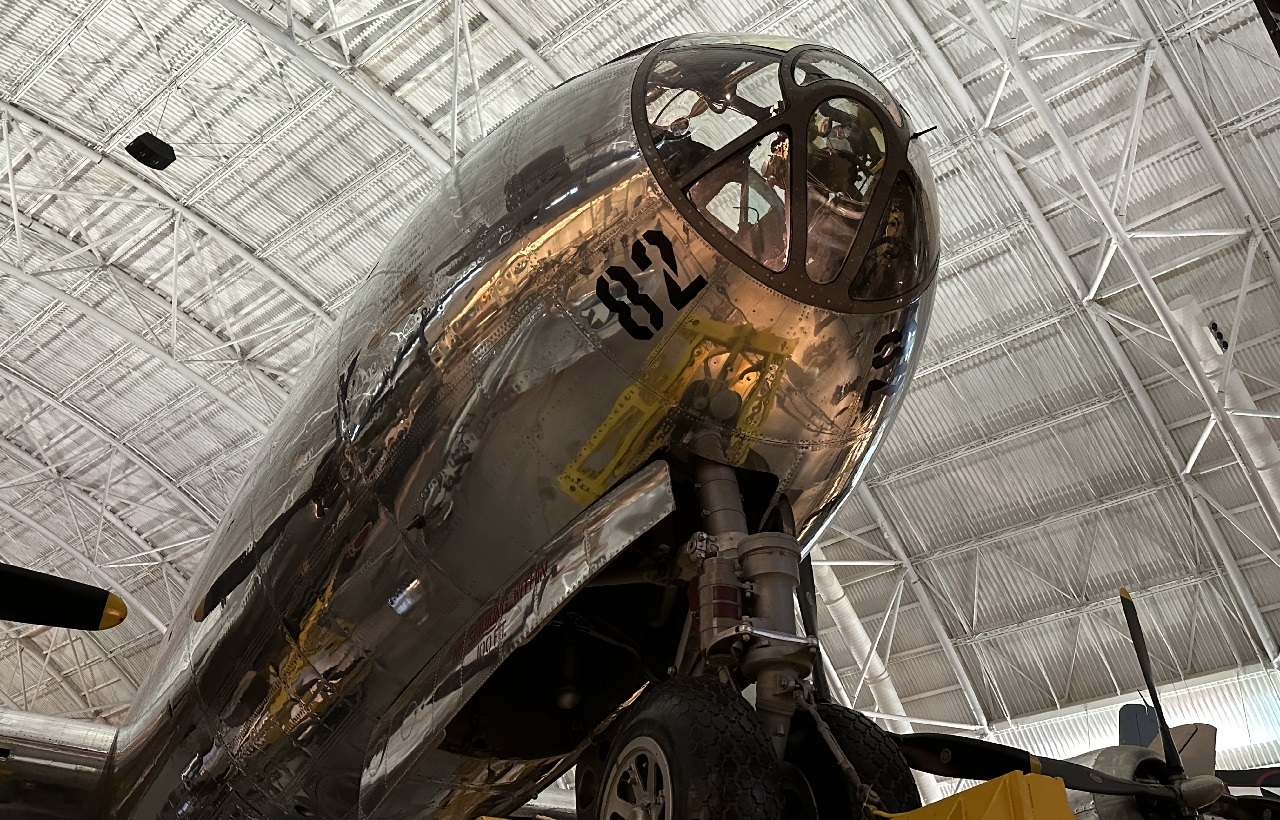
Enola Gay B-29. Image was taken on October 1, 2022. Image Credit: 19FortyFive.com
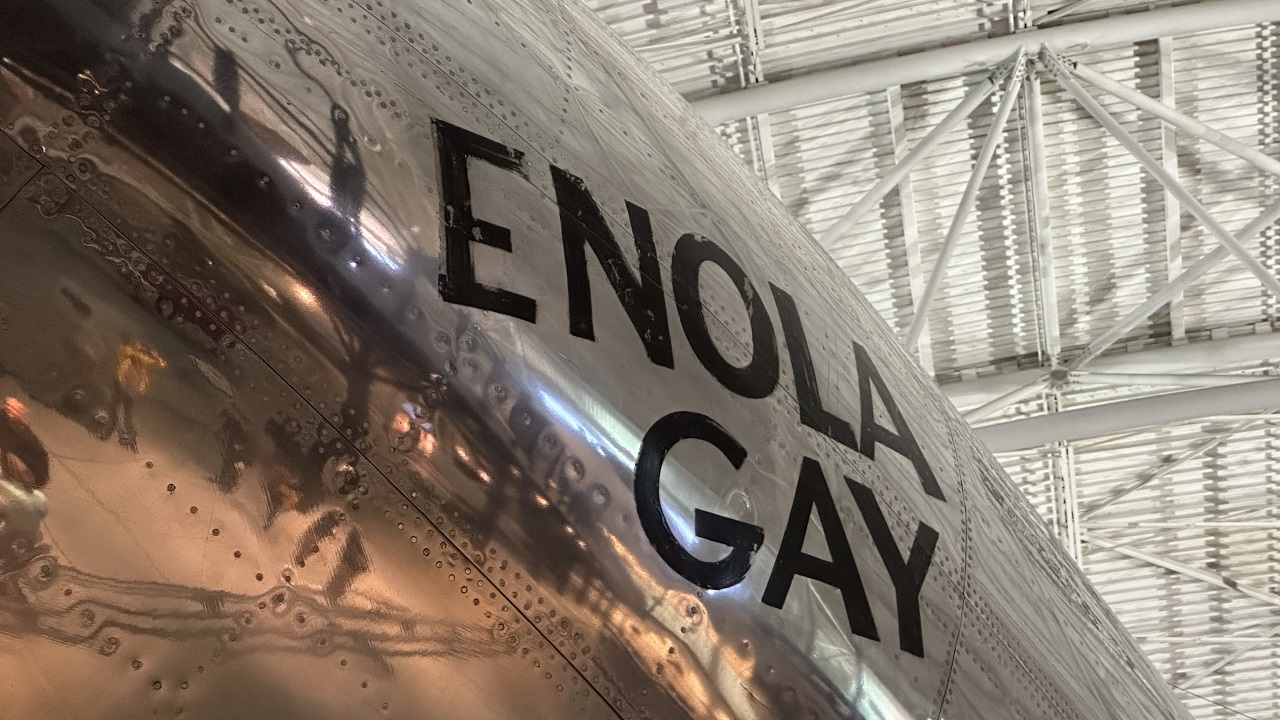
Enola Gay B-29. Image was taken on October 1, 2022. Image Credit: 19FortyFive.com

Enola Gay B-29. Image was taken on October 1, 2022. Image Credit: 19FortyFive.com
Einstein, played by Tom Conti in the film, is presented as a sort of mentor figure of J. Robert Oppenheimer, and his colleague at the Institute for Advanced Study in Princeton. A conversation between Oppenheimer and Einstein after the war proves pivotal to the film.
In the film’s final third, Lewis Strauss is going through a confirmation hearing in the 1950s, and his earlier undermining of Oppenheimer becomes an issue. Strauss later says he’s angry at Oppenheimer for having “turned the scientists” — implicitly, Einstein — against him.
The final scene of the film, set in 1947, adds context to this: Einstein walked by Strauss, looking upset, not because he was mad at Strauss, but because Oppenheimer had said to him that the atomic bomb could set off a chain reaction that would “destroy the entire world”- and that “I believe we did.”
The truth is not quite as the film depicted it, as that conversation didn’t quite take place that way. But Einstein indeed had some complicated thoughts about war.
Albert Einstein and War
An article published in October by Citizens for Global Solutions looked at how Einstein spent a lot of time in his life “grappling with the problem of war.”
“Europe, in her insanity, has started something unbelievable,” Einstein reportedly told a friend in 1914, after the onset of World War I. “In such times one realizes to what a sad species of animal one belongs.”
Einstein signed on to the anti-war movement during that war. What’s known as the Einstein-Nicolai statement said that “nationalist passions cannot excuse this attitude which is unworthy of what the world has heretofore called culture.”After the war, while still in Germany, Einstein became known as “one of the Weimar Republic’s most influential pacifists and internationalists.”
“I believe the world has had enough of war,” Einstein told an American journalist during the Weimar period, per the Citizens for Global Solutions article. “Some sort of international agreement must be reached among nations.”
Per that article, Einstein had a complex relationship with the Zionist movement, wishing for cooperation between Jews and Arabs so that they could find a way to live in the land together.
He said in 1938 that he would “much rather see reasonable agreement with the Arabs on the basis of living together in peace than the creation of a Jewish state.”
Einstein vs. the Nazis
Of course, the Nazis soon rose in Germany. And while still nominally a pacifist, the great scientist supported Europe defending itself against an aggressive Nazi Germany.
“[As long as] Germany persists in rearming and systematically indoctrinating its citizens in preparation for a war of revenge, the nations of Western Europe depend, unfortunately, on military defense.” Einstein then left Germany and decamped to the United States.
In 1939, before the U.S. entered the war, Einstein wrote a letter to President Roosevelt, warning of the possibility of the Germans developing a nuclear program, which led to the launch of Oppenheimer’s Manhattan Project. However, by the end of the war, Einstein was opposed to the actual use of nuclear weapons, as well as the subsequent nuclear arms race.
Einstein would later state that the 1939 letter to Roosevelt was “ the worst mistake of his life.”After the war, Einstein was outspoken about wanting to prevent war itself.
“The only salvation for civilization and the human race,” Einstein said in a 1945 interview, “lies in the creation of a world government, with security of nations founded upon law… “As long as there exist sovereign states, each with its own, independent armaments, the prevention of war becomes a virtual impossibility.”
Einstein continued this anti-war quest until he died in 1955. He was the chairman of the Emergency Committee of Atomic Scientists, which aimed to prevent nuclear war.
The Quote
The most common version of the quote has Einstein predicting that a future war will be fought with “sticks and stones”; other versions have him predicting “rocks” will be the primary weapon.
Various sources provide an exact time and venue when Einstein said this: In an interview with Alfred Werner, in Liberal Judaism 16, published in April-May 1949. This is often cited in collections of Einstein’s quotations.
However, similar versions of the quote have been attributed to others, although almost entirely in the years after World War II. The idea is that, following a nuclear calamity, all that will be left as weapons will be sticks, stones, rocks, and other more primitive weapons.
Per Quote Investigator, others have attributed a version of the quote to Gen. Omar Bradley, who allegedly said in 1949 that “If we have World War III, then World War IV will be fought with bows and arrows.”

A U.S Air Force B-2 Spirit aircraft is shown on the flight line at Pease Air National Guard Base, New Hampshire, Sept. 20, 2025. The aircraft is the first operated by the 509th Bomb Wing to land at Pease ANGB, formerly Pease Air Force Base, since the 509 BW, formerly 509th Bombardment Wing, was stationed at Pease AFB and the active-duty base closed nearly 35 years ago. The lineage of the 509th BW traces back to the World War II Era when the 509th Composite Group dropped the atomic bombs on Japan. (U.S. Air Force photo by Staff Sgt. Joshua Hastings)
The site found that Walter Winchell, the influential columnist at the time, often quoted people using versions of the quote as early as 1946, including an Army lieutenant stationed at Bikini Atoll who said, “I dunno,” he said, “but in the war after the next war, sure as Hell, they’ll be using spears!”
Another version of the quote was attributed to Dean Arthur L. Beeley, director of the University of Utah’s Institute of World Affairs.
“Unless the free people of the earth unite to avert World War III,” Beeley said, per QI, “it is probable—as some sage recently prophesied—that World War IV will be fought with bows and arrows.”
Who is the “some sage,” Einstein or someone else? We may never know the answer.
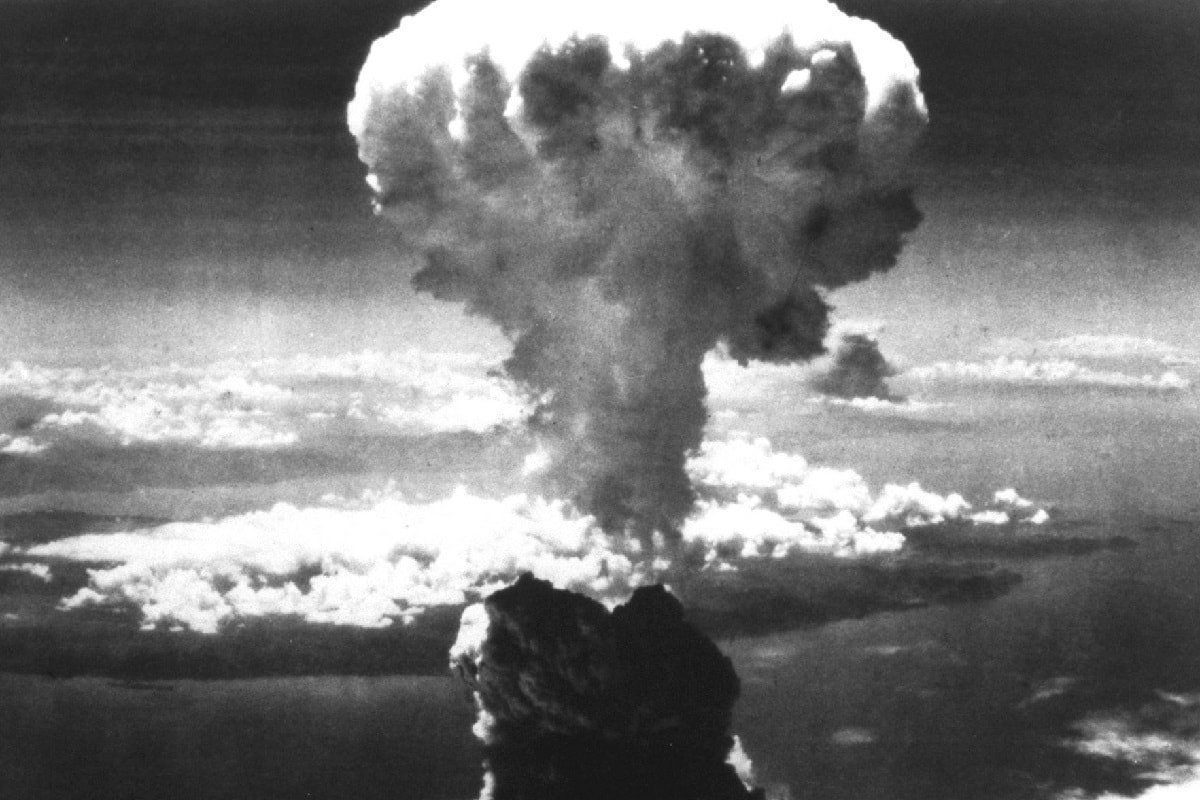
Hiroshima. Image Credit: Creative Commons.
It’s also possible that, around the time of the first use of nuclear weapons in war, a lot of people came up with the same analysis at around the same time.
About the Author: Stephen Silver
Stephen Silver is an award-winning journalist, essayist, and film critic, and contributor to the Philadelphia Inquirer, the Jewish Telegraphic Agency, Broad Street Review, and Splice Today. The co-founder of the Philadelphia Film Critics Circle, Stephen lives in suburban Philadelphia with his wife and two sons. For over a decade, Stephen has authored thousands of articles that focus on politics, national security, technology, and the economy. Follow him on X (formerly Twitter) at @StephenSilver, and subscribe to his Substack newsletter.