
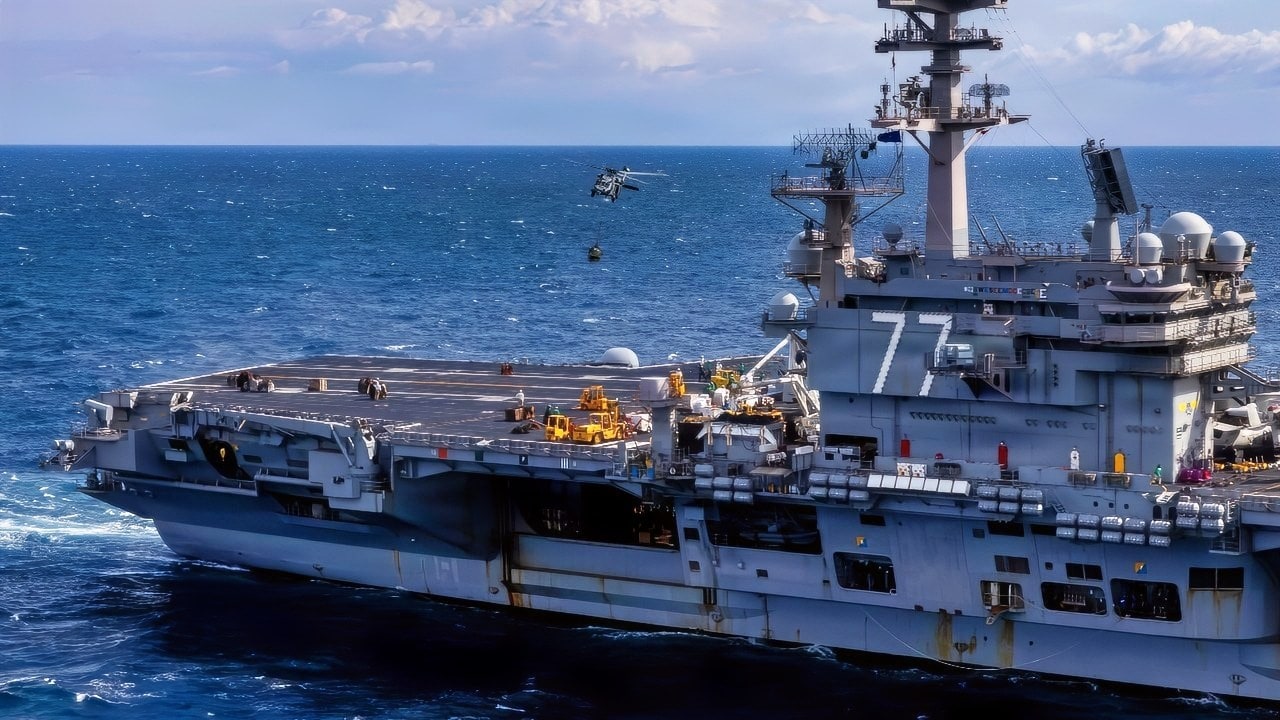
Summary and Key Points: Dr. Brent M. Eastwood, a defense analyst and former US Army Infantry officer, evaluates the critical delays affecting the USS John C. Stennis (CVN-74) at Newport News Shipbuilding.
-Currently undergoing its mid-life Refueling and Complex Overhaul (RCOH), the Stennis has been sidelined by a degraded steam turbine generator and chronic labor shortages.
-This 19FortyFive report analyzes how this 14-month slip impacts the Chief of Naval Operations’ ability to relieve the overextended USS Gerald R. Ford, exploring the lessons learned from the USS George Washington mental health crisis and the industrial bottlenecks threatening U.S. naval superiority in 2026.
The Stennis Stall: Why a 14-Month RCOH Delay is Crippling U.S. Aircraft Carrier Math
The U.S. Navy is frustrated by the lack of full aircraft carrier readiness. The USS Gerald R. Ford supercarrier is on another mission against Iran that could stretch it to the breaking point.
The Chief of Naval Operations is concerned about the Gerald R. Ford and how this extended deployment and strain could negatively affect the crew, aircraft, and systems on board.
But that’s not the worst news. The Nimitz-class USS John C. Stennis carrier is out of action until October.
This comes at a time when a high operational tempo is needed to face down Iran, China, Russia, and North Korea, not to mention transnational criminal threats in the Western Hemisphere and terrorism in the Middle East.
Time for a Midlife RCOH Maintenance Period
The John C. Stennis is in port for a Refueling and Complex Overhaul (RCOH) at Newport News Shipbuilding in Virginia, which has rendered it combat-ineffective since 2021. That was five years ago, and the overall delay has now reached 14 months.
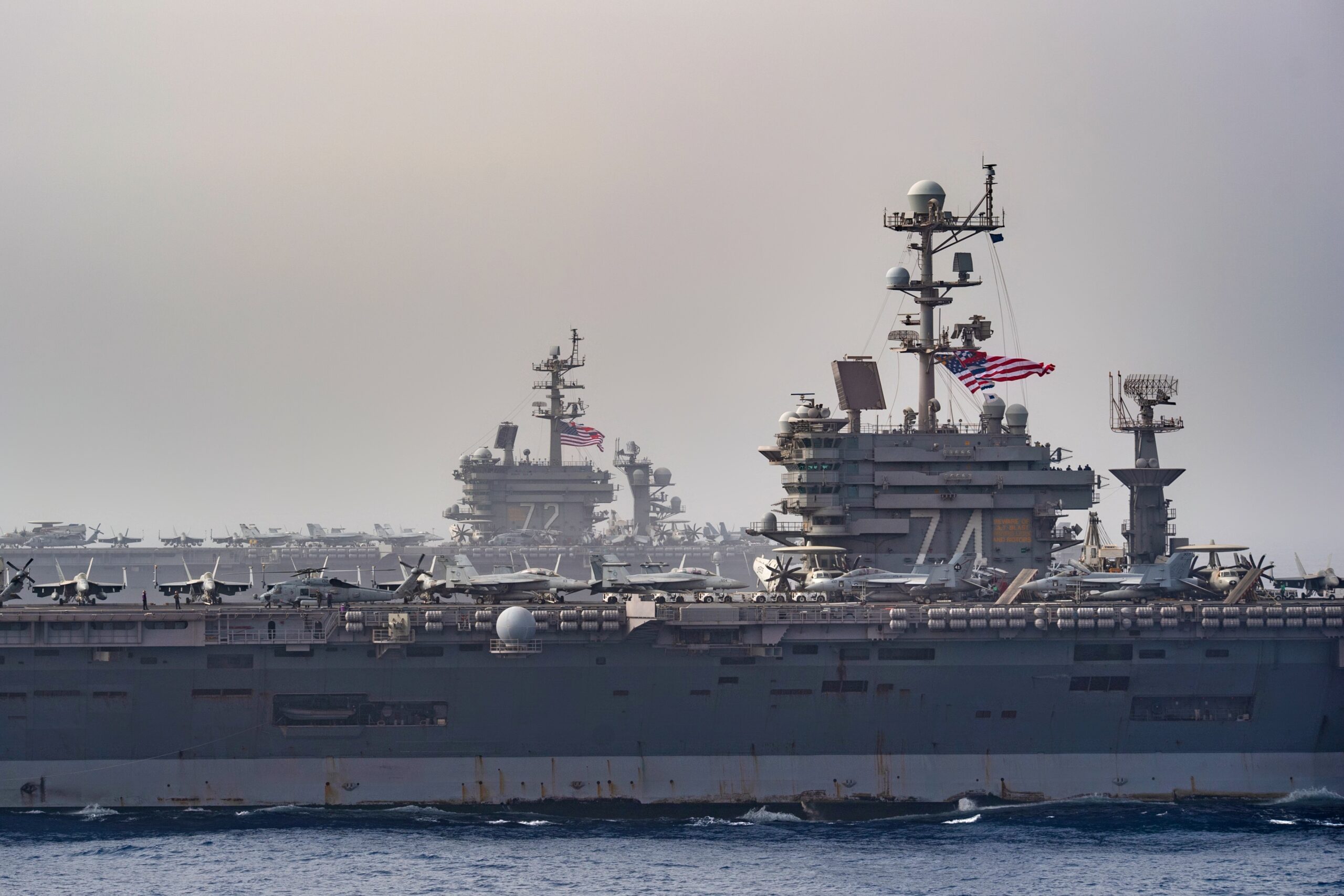
The aircraft carrier USS John C. Stennis (CVN 74) steams alongside the aircraft carrier USS Abraham Lincoln (CVN 72), background, in the Mediterranean Sea, April 24, 2019. The John C. Stennis Carrier Strike Group (CSG) 3 and Abraham Lincoln Carrier Strike Group (CSG) 12 are conducting dual carrier operations, providing opportunity for two strike groups to work together alongside key allies and partners in the U.S. 6th Fleet area of operations. John C. Stennis is underway in the Mediterranean Sea as part of the John C. Stennis Carrier Strike Group (JCSCSG) deployment in support of maritime security cooperation efforts in the U.S. 6th Fleet area of responsibility. (U.S. Navy photo by Mass Communication Specialist 3rd Class Grant G. Grady)
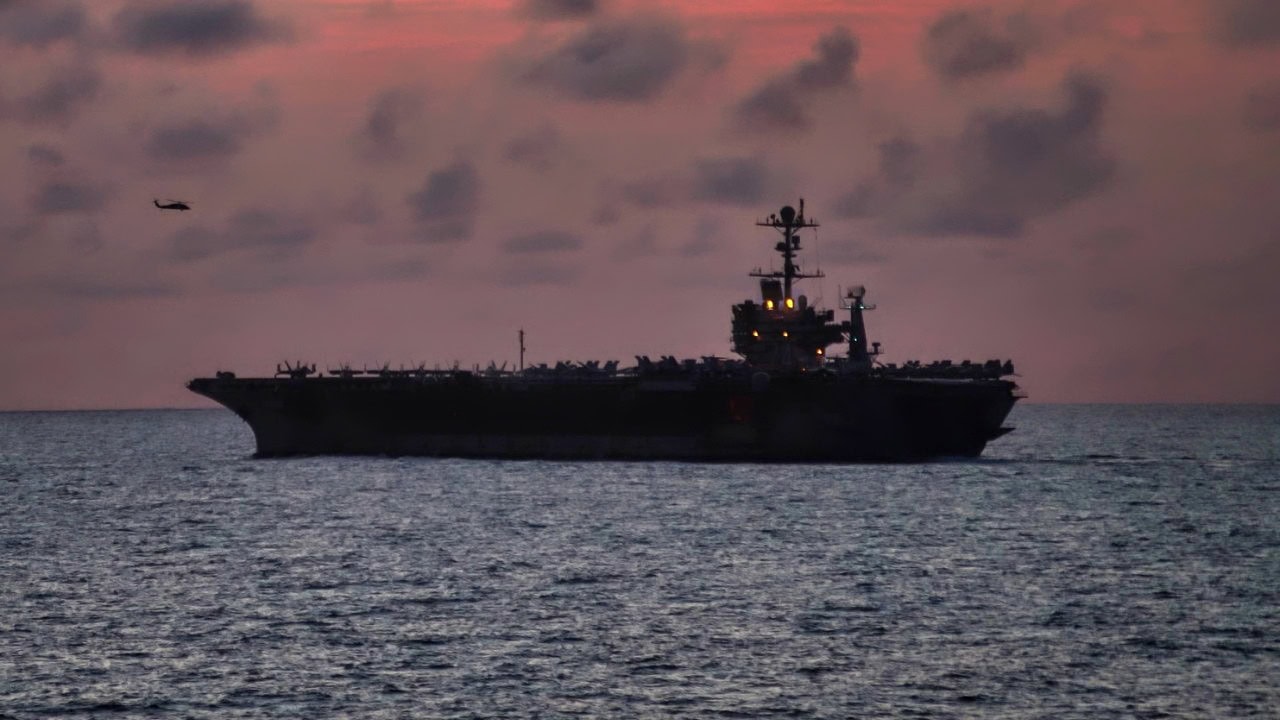
USS John C. Stennis Aircraft Carrier. Image Credit: Creative Commons.
RCOHs are difficult procedures for shipyard workers and sailors. This process can take tens of millions of man-hours. All systems are checked and double-checked. Spare parts and components are ordered. The nuclear propulsion-system is transformed into a modern marvel. Weapon systems are overhauled.
No space in the carrier is left unchecked.
Is This a Repeat of the USS George Washington Saga?
The Stennis delay reminds one of the nearly six-year RCOH of the USS George Washington that spent so long in port its crew suffered from mental health anguish that led to 11 suicides. The Navy expected the RCOH delays to be resolved by now.
The pandemic is long over, following the difficult times of 2020 and 2021. The Navy has determined that it has resolved the quality-of-life issues that plagued sailors aboard the George Washington.
There should have been lessons learned from the George Washington RCOH that mitigated the delays and inaction that plagued it for so long. The Stennis was delayed by supply chain issues during that period, but another long delay during the maintenance period is unsatisfactory.
More Carriers Are Needed on Active Duty
RCOHs are a painstaking process, but should take four years, not five or six. We understand the challenges posed by stop-work orders and COVID-19 quarantines, but the shipyard workers and shipmates must work together steadfastly to get this carrier back in the water. The geopolitical threat landscape is as dangerous as ever. No one wants the Gerald R. Ford crew to languish in their jobs due to overuse and fatigue.
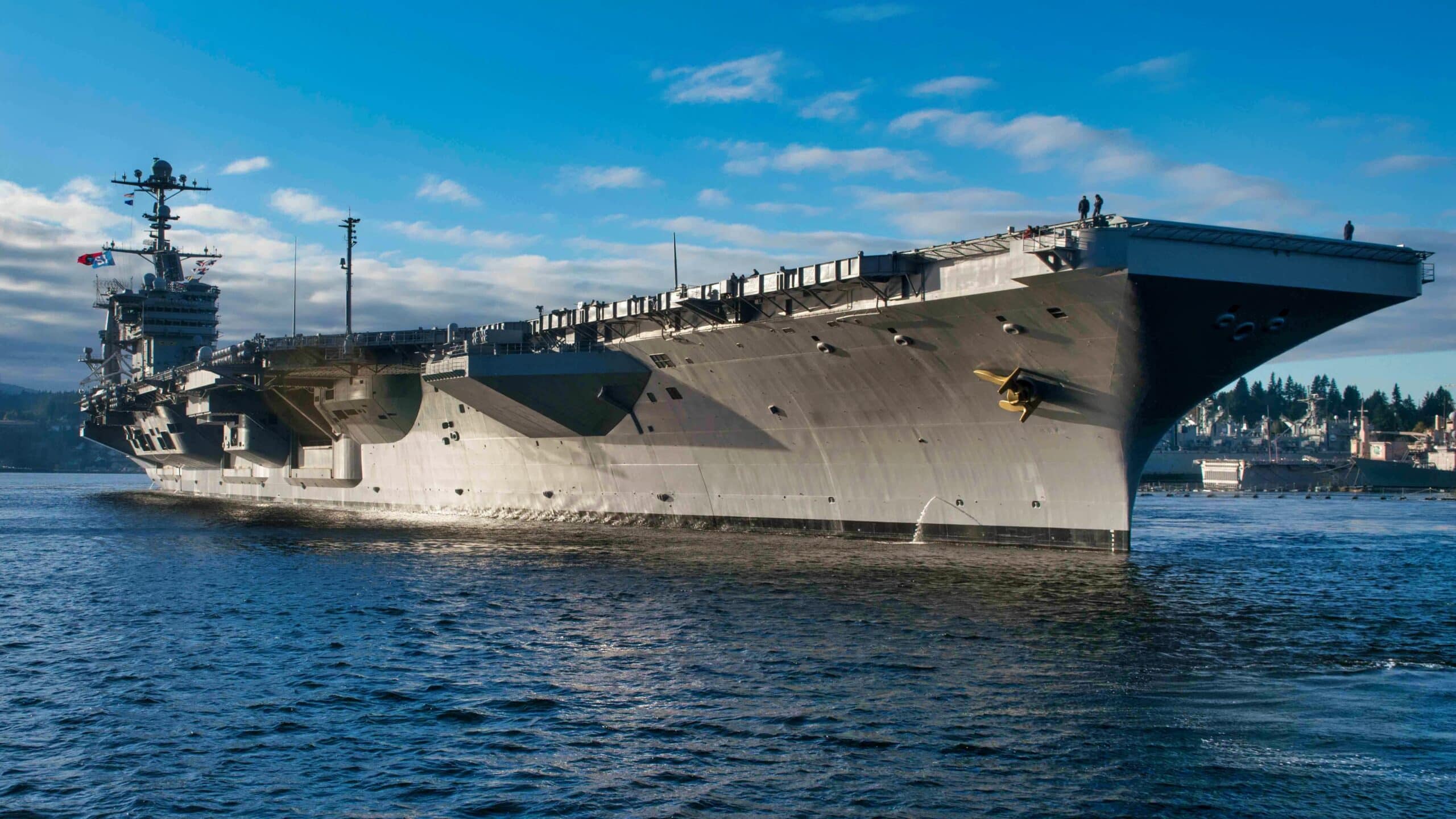
USS John C. Stennis Aircraft Carrier. Image Credit: Creative Commons.
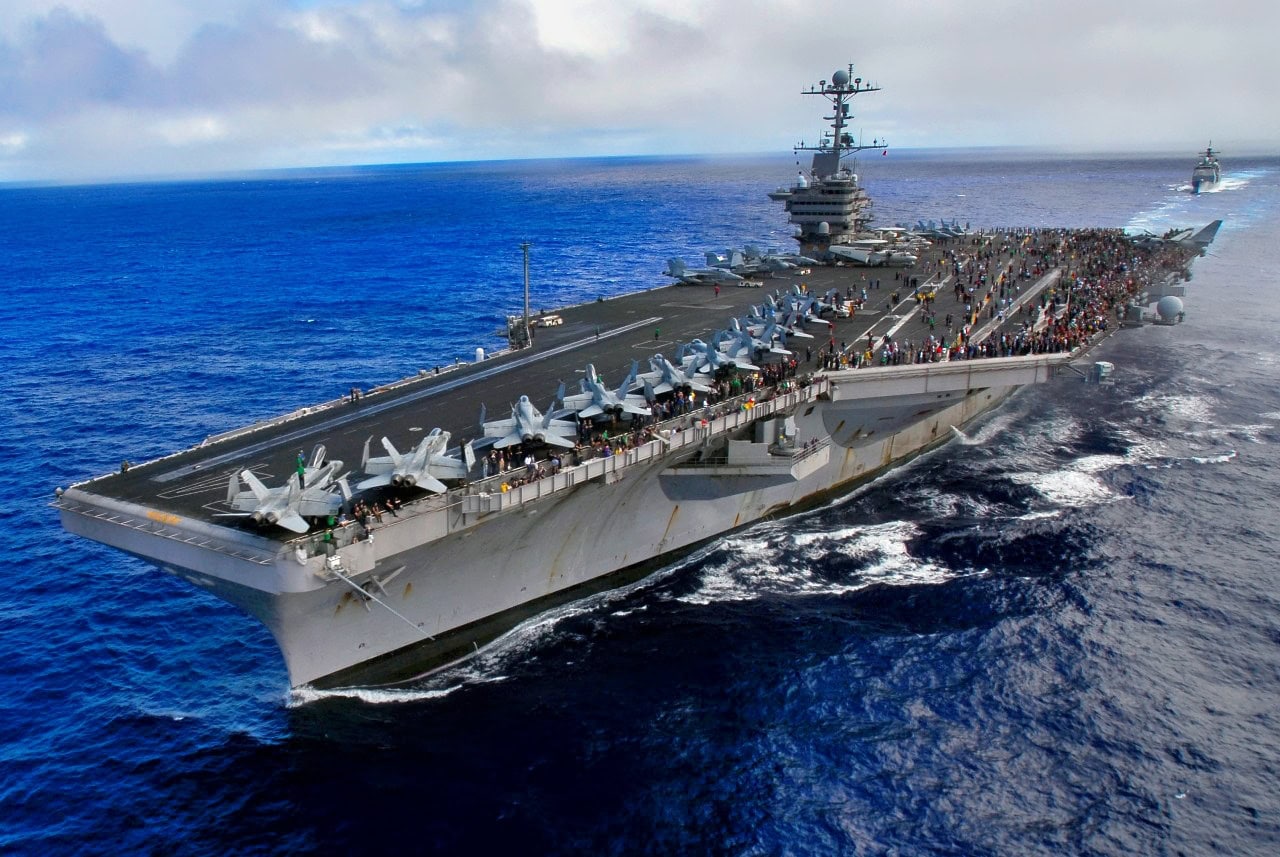
Nimitz class aircraft carrier USS John C. Stennis (CVN 74) leads guided-missile cruiser USS Antietam (CG 54) prior to conducting an air power demonstration. The air power demonstration showed the capability of Stennis and Carrier Air Wing 9 to service members’ family and friends who were invited to get underway with the ship. Stennis is returning to the United States after a 7 month long deployment promoting peace, regional cooperation and stability, and supporting the global war on terrorism.
The Work Must Be Done
But RCOHs are a fact of life and must be conducted at the 25-year mark of a carrier’s lifespan if the flat-top is to serve for 50 years, which is the objective. All U.S. shipyards are affected by worker shortages. There are just not enough welders, electricians, and technicians to accomplish all the requirements of an RCOH.
A Steam Generator Is on the Fritz
However, that shortage was not the only problem affecting the Stennis. During their initial inspections, workers identified several mechanical issues that could have led to failure at sea. This would have been disastrous, and these systems could have made any further deployments difficult to execute. It was a good time to take the ship out of service and give it tender loving care.
“One of the ship’s eight steam turbine generators, which are essential for converting nuclear energy into usable mechanical and electrical power, was found to be significantly degraded,” my colleague Isaac Seitz wrote.
Less Electrical Power Equals Big Problems
This was going to affect all the systems on board. Electricians were concerned that the ship would not be able to power the weapons and computers required for combat operations and carrier control. These damages are added to the RCOH. The work is ongoing, but it is a frustrating process for all involved. The steam turbine generator must be refurbished or replaced. This bad news set the timeline back and added to the cost of the complex overhaul.
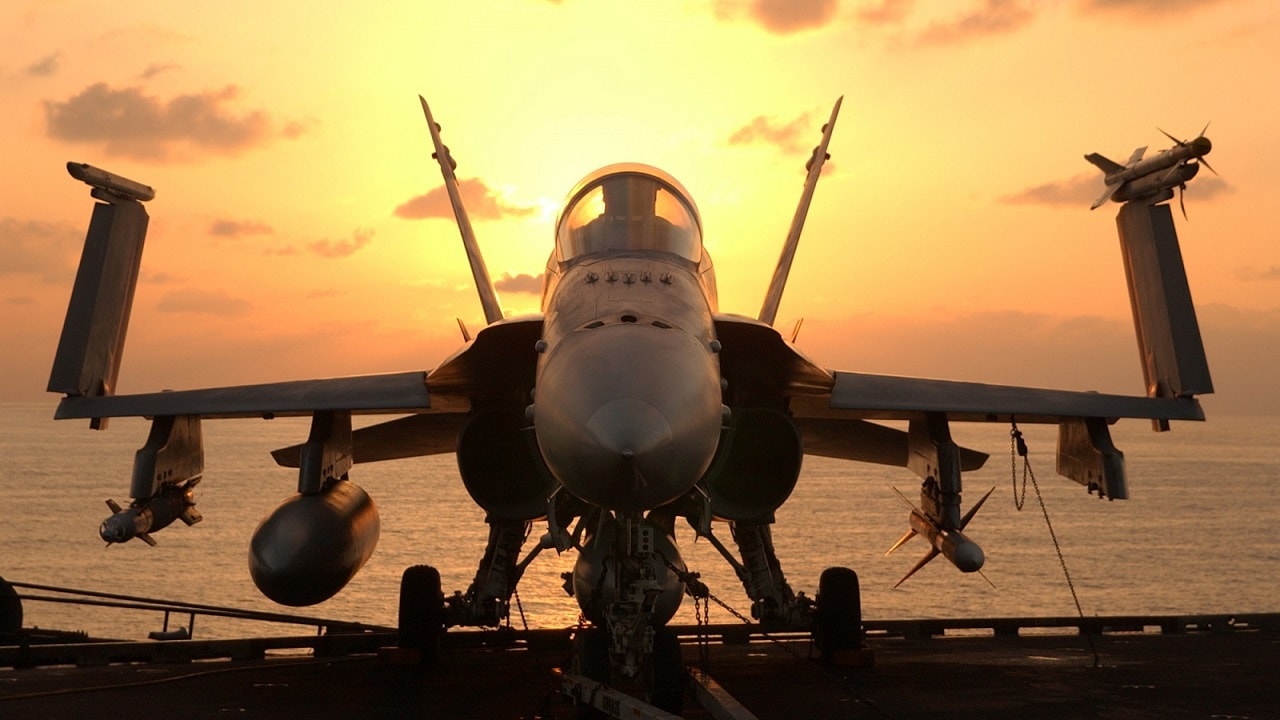
At sea aboard USS John C. Stennis, December 18, 2001 – After an early morning round of flight operations, an F/A-18 Hornet awaits the next round of combat flight operations aboard the USS John C. Stennis (CVN 74). Stennis and her embarked Carrier Air Wing Nine (CVW-9) are supporting Operation Enduring Freedom. U.S. Navy photo by Photographer’s Mate 3rd Class Jayme Pastoric
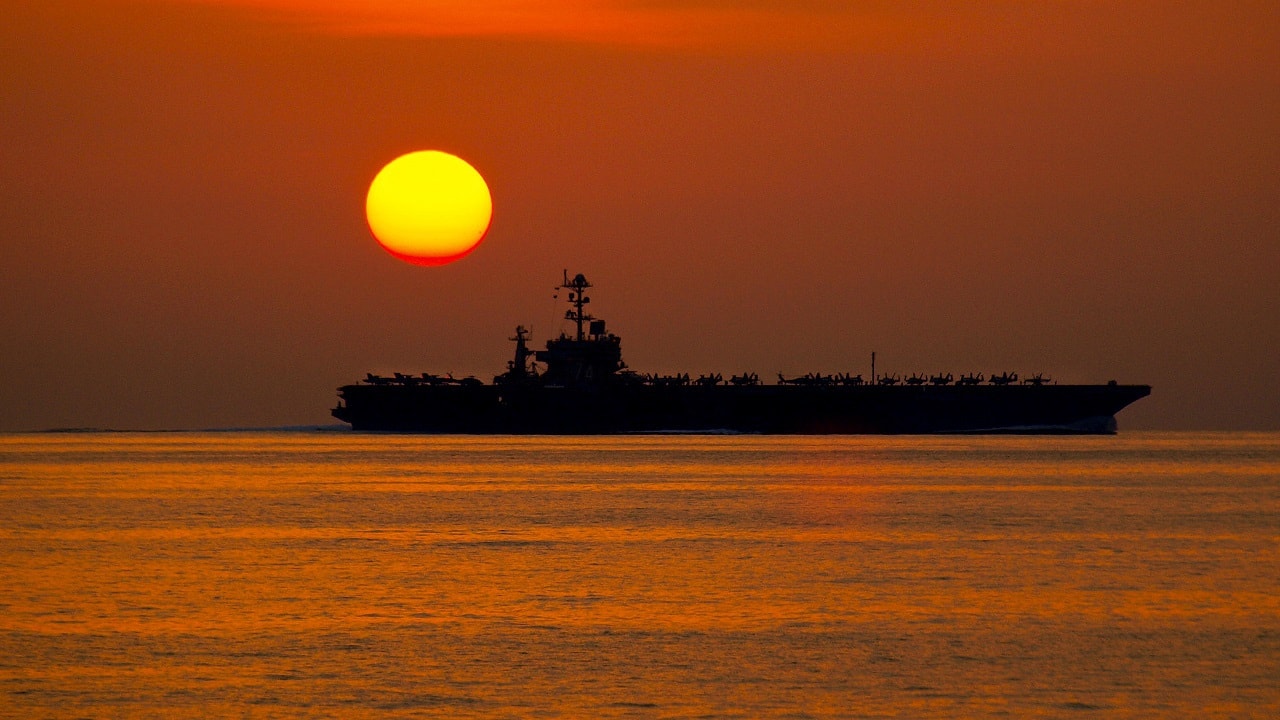
U.S. 5TH FLEET AREA OF RESPONSIBILITY (Jan. 5, 2012) The Nimitz-class aircraft carrier USS John C. Stennis (CVN 74) operates in the Arabian Sea during sunset. John C. Stennis is deployed to the U.S. 5th Fleet area of responsibility conducting maritime security operations, theater security cooperation efforts and support missions for Operation Enduring Freedom. (U.S. Navy photo by Yeoman 3rd Class James Stahl/Released)
Improve The Lives of Sailors During a RCOH
The Navy is aware of the cost overruns and has sought to earmark additional funds for maintenance periods to prevent a recurrence of the USS George Washington saga. Sailors have received better mental health support, food quality has improved, gyms are available to alleviate stress, and housing quality of life has improved.
It’s Time to Make Sacrifices
Despite these improvements, the generator problem still keeps the Stennis from entering active duty. Hopefully, the delays will not last past this fall. If there is any way to reduce the duration of this maintenance period, the Navy is all ears.
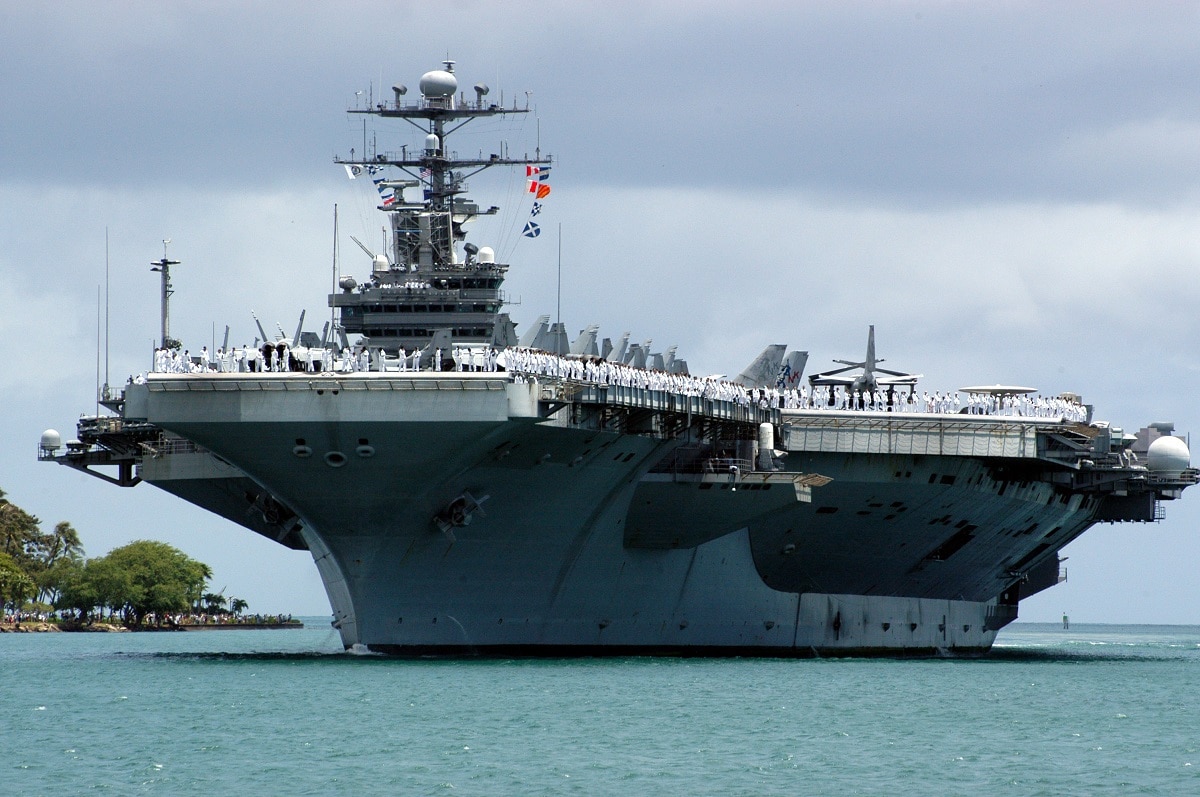
PEARL HARBOR, Hawaii (June 29, 2004) image of USS John C. Stennis. Image Credit: Creative Commons.
But the maritime branch wants perfection in its carriers. That means no stone can be left unturned during the maintenance process. If the Stennis could be made whole by the summer, that would alleviate the carrier math problem, which requires at least three or four flat-tops to be in the water at all times.
Relief for the Gerald R. Ford
The Gerald R. Ford will need to head back to port – likely after this deployment to the Middle East. If Stennis can be ready to relieve the Ford, that would be good news for a Navy that must contend with many hot spots around the world.
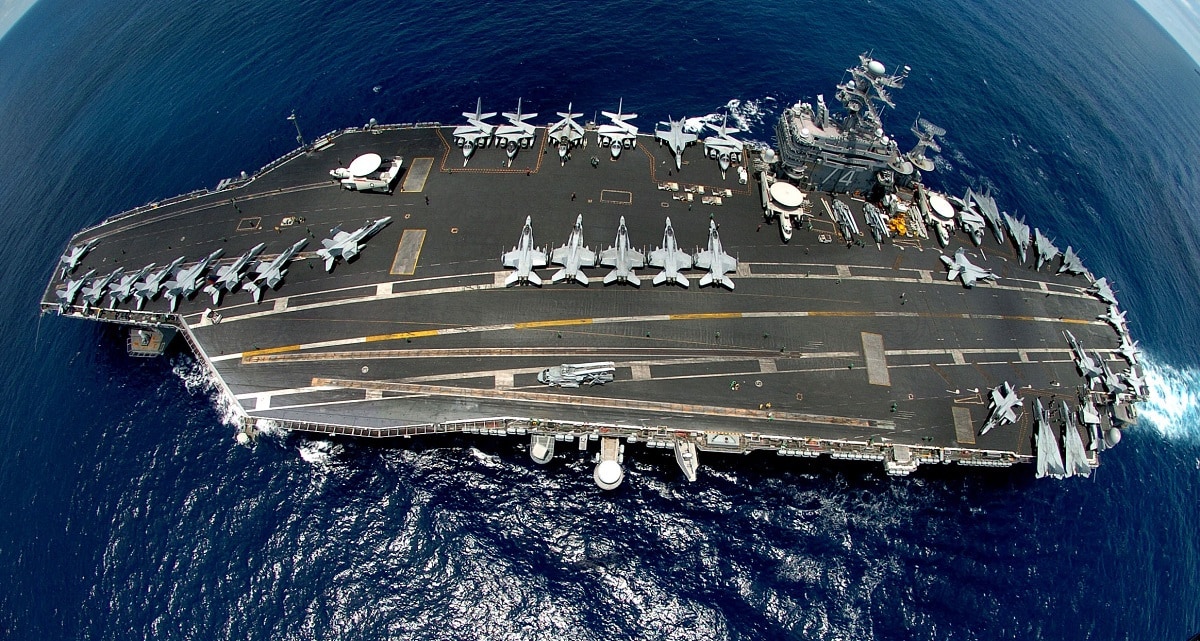
Pacific Ocean (June 25, 2004) – The Nimitz-class aircraft carrier USS John C. Stennis (CVN 74) underway the Pacific Ocean during a multi-national photo exercise. Canada and the United States participated in the eight-ship formation. Stennis and embarked Carrier Air Wing Fourteen (CVW-14) are at sea on a scheduled deployment and is expected to participate in Rim of the Pacific Exercise (RIMPAC) 2004. RIMPAC is the largest international maritime exercise in the waters around the Hawaiian Islands. This years exercise will include eight participating nations; Australia, Canada, Chile, Japan, Peru, South Korea, Britain and the United States. RIMPAC is intended to enhance the tactical proficiency of participating units in a wide array of combined operations at sea, while enhancing stability in the Pacific Rim region. U.S. Navy photo by Photographer’s Mate 2nd Class Jayme Pastoric (RELEASED)
Carriers must fly the flag high and ensure freedom of navigation at sea, but when they are off duty, the Department of Defense becomes concerned. These are presidential assets, after all, and the White House can deploy a carrier strike group to address complex political problems and conduct combat operations without requiring boots on the ground. Let’s hope the USS John C. Stennis can return to operations this year.
About the Author: Brent M. Eastwood
Author of now over 3,000 articles on defense issues, Brent M. Eastwood, PhD, is the author of Don’t Turn Your Back On the World: a Conservative Foreign Policy and Humans, Machines, and Data: Future Trends in Warfare, plus two other books. Brent was the founder and CEO of a tech firm that predicted world events using artificial intelligence. He served as a legislative fellow for US Senator Tim Scott and advised the senator on defense and foreign policy issues. He has taught at American University, George Washington University, and George Mason University. Brent is a former US Army Infantry officer. He can be followed on X @BMEastwood.