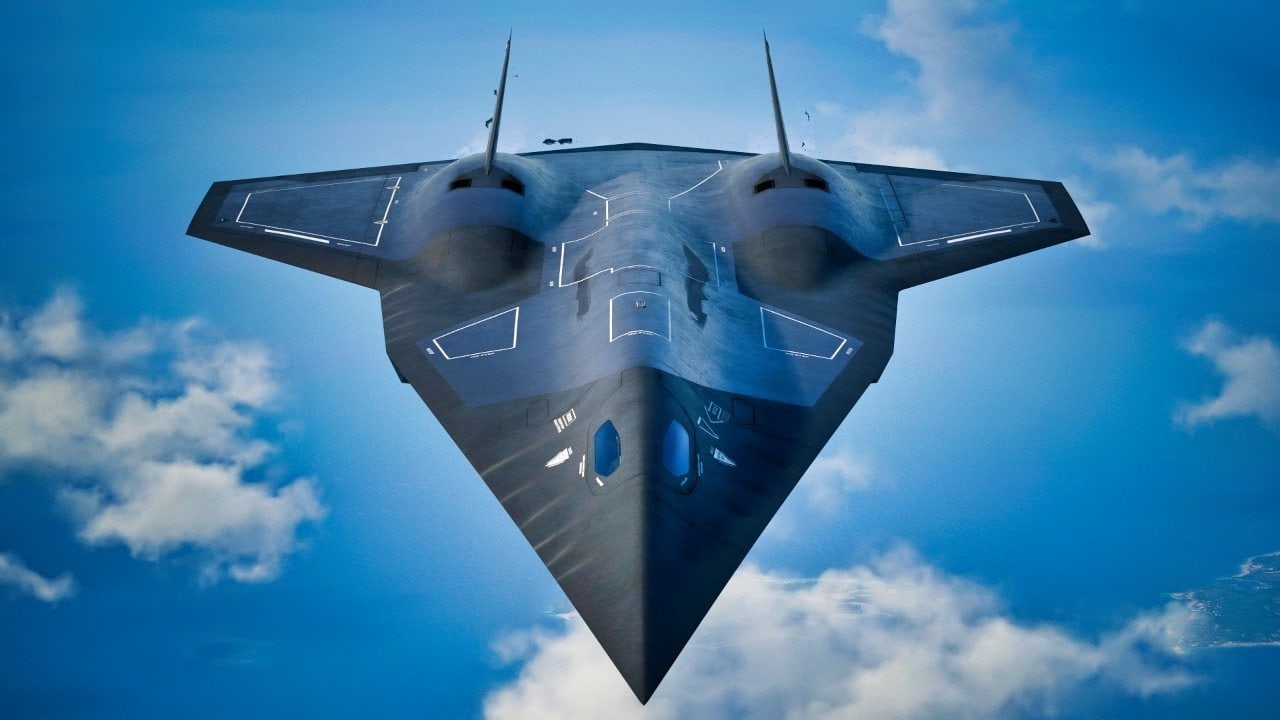
Summary and Key Points: The MiG-41’s (also known as the PAK DP) problem is not ambition but capacity. The Royal United Services Institute finds that Russian air power has improved under wartime pressure by favoring proven designs and keeping deliveries of the Su-34, Su-35S, Su-30SM, and Su-57 moving, rather than betting on clean-sheet aircraft. A new interceptor to replace the MiG-31 Foxhound would have to compete with those production lines for engineers and factory space, and Russia’s aircraft industry is already stretched keeping its current fleet flying. Unless the war in Ukraine ends, sanctions are lifted, and the Kremlin commits the resources, the MiG-41 is likely to stay more signal than aircraft.
The MiG-41 or PAK DP: Destined to Stay on the Drawing Board
In 2021, Rostec Corporation, the Russian state development agency, announced that a new aircraft was to be built. That aircraft would be the successor to the MiG-31 Foxhound interceptor and was provisionally dubbed the PAK DP, or MiG-41. But in the five years since that aircraft was first described, no prototypes have been built. Here’s why.
The MiG-41 is more of a signaling project than a program with a clear path to production. Given the state of the war in Ukraine, the odds of Russia building even a small number of MiG-41s before the end of this decade are low, and in larger numbers, lower still.
One assessment of Russian air power and aircraft production numbers by the Royal United Services Institute, Britain’s leading defense and security think tank, finds that Russian air power has improved under current wartime pressure, but in favor of proven systems rather than radical, clean-sheet designs.
The VKS has kept deliveries of the modern Su-34, Su-35S, Su-30SM, and Su-57 moving, while combat experience has improved tactics, weapons employment, and integration with ground-based air defenses.
Within that context, a hypothetical MiG-41 would compete for engineering talent and production capacity against the aforementioned projects that already have production lines and wartime utility.
The Prospects for a MiG-41
A MiG-41 would likely be justified as a long-range interceptor built around Russia’s strongest actual need — defending its vast airspace, especially against cruise missiles, bombers, drones, and reconnaissance aircraft.
Perhaps the most credible potentiality for a MiG-41 would not necessarily be a sixth-generation, cutting-edge stealth aircraft, but rather a successor to the MiG-31 that offers better range, speed, missile loadout, and sensor suite, but with limited stealth characteristics, if any.
Some Russian claims about near-space performance, laser weapons, or extremely high Mach numbers are entirely speculative, unverified, and aspirational.
Part of the core issue is Russia’s current industrial state. Russia has managed to sustain, and even boost, production of some established aircraft during that war, but that should not be confused with spare industrial capacity for new classes of interceptors.
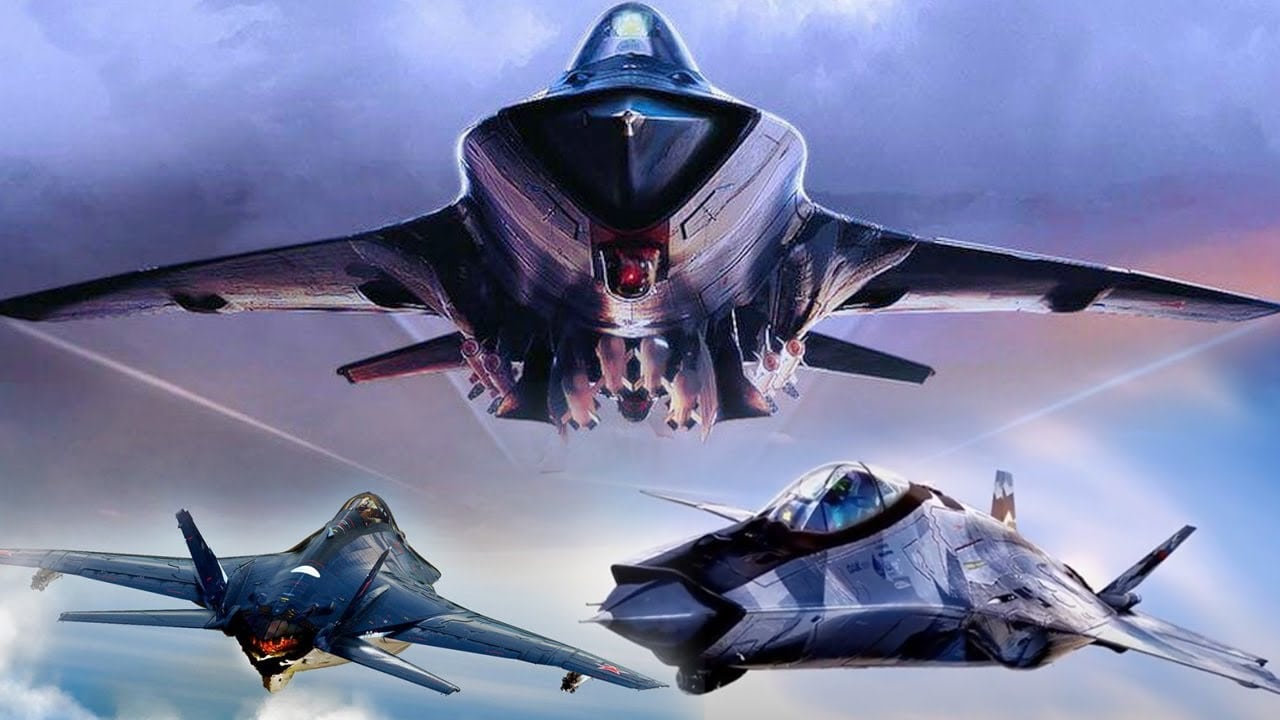
MiG-41. Image Credit: YouTube Screenshot.
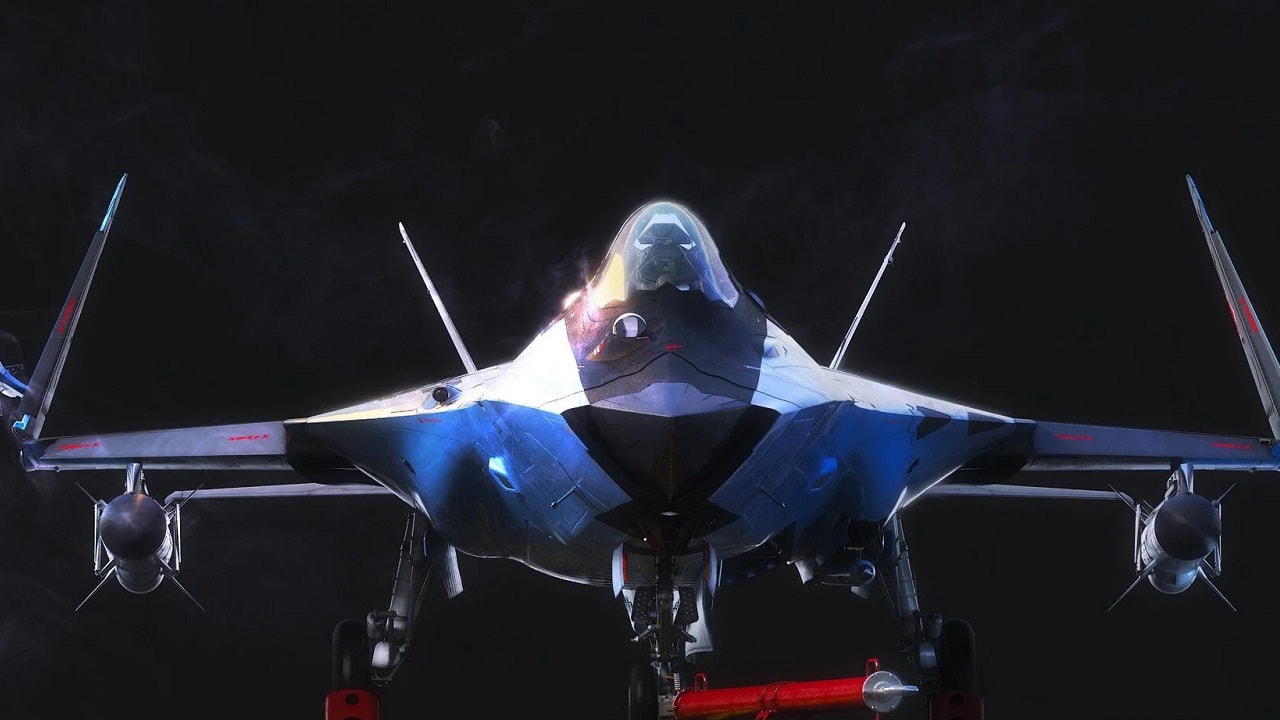
MiG-41 Artist Rendering. Image Credit: Creative Commons.
Instead, it suggests that Russia’s aircraft production is stretched to the limit to sustain its current fleet. The ongoing war in Ukraine also rewards aircraft that can be built and employed now, not a platform whose first prototype could still be years away.
A reasonable estimate is that Russia could, in theory, keep the MiG-41 idea alive, in part as a design bureau project and propaganda item, perhaps even building a prototype or demonstrator aircraft in the future, but serial production is unlikely in the near term.
A small run of aircraft does become slightly more conceivable if the war in Ukraine finds an end, sanctions on Russia are lifted, and the Kremlin allocates resources to the MiG-41 project.
But barring a dramatic end or ceasefire in Ukraine, the MiG-41 is unlikely to be realized anytime soon.
What the MiG-41 Could Be
If the MiG-41 or PAK DP were built, it would likely be a heavy interceptor rather than a dogfighter. A larger radar aperture, long-range datalinks, and a design that emphasizes speed and endurance, with sufficient internal volume to carry oversized air-to-air missiles. A hypothetical MiG-41 would be more of a missile truck rather than a stealth fighter.
Within the Russian military more broadly, it would hold a symbolic role rather than an operational one, and offer Moscow a platform that suggests technological continuity with the older MiG-31.
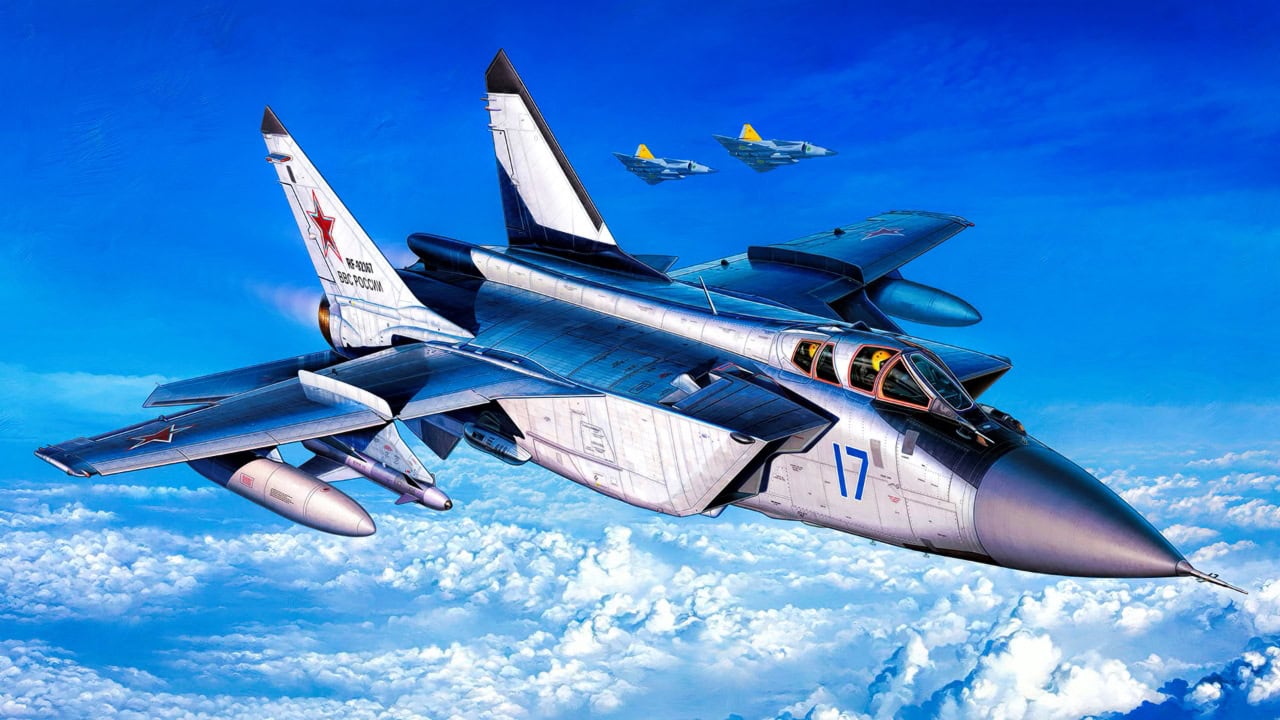
MiG-31 Fighter. Image Credit: Creative Commons.
But symbolic roles are far less useful than operational roles, and Russia’s air power production situation is one currently defined by constraints rather than myriad opportunities for new platforms.
Other Aircraft Besides the MiG-41 and the Future
For other Russian aircraft, production prospects are better, but only modestly.
RUSI research shows that Russian aircraft are iterative derivatives of proven, familiar designs, with a focus on honing their weaponry rather than making revolutionary leaps forward.
In the near term, Russian air fleets are more likely to see more Su-34s, Su-35Ss, and, eventually, modest numbers of Su-57s produced, rather than any quantity of MiG-41s.
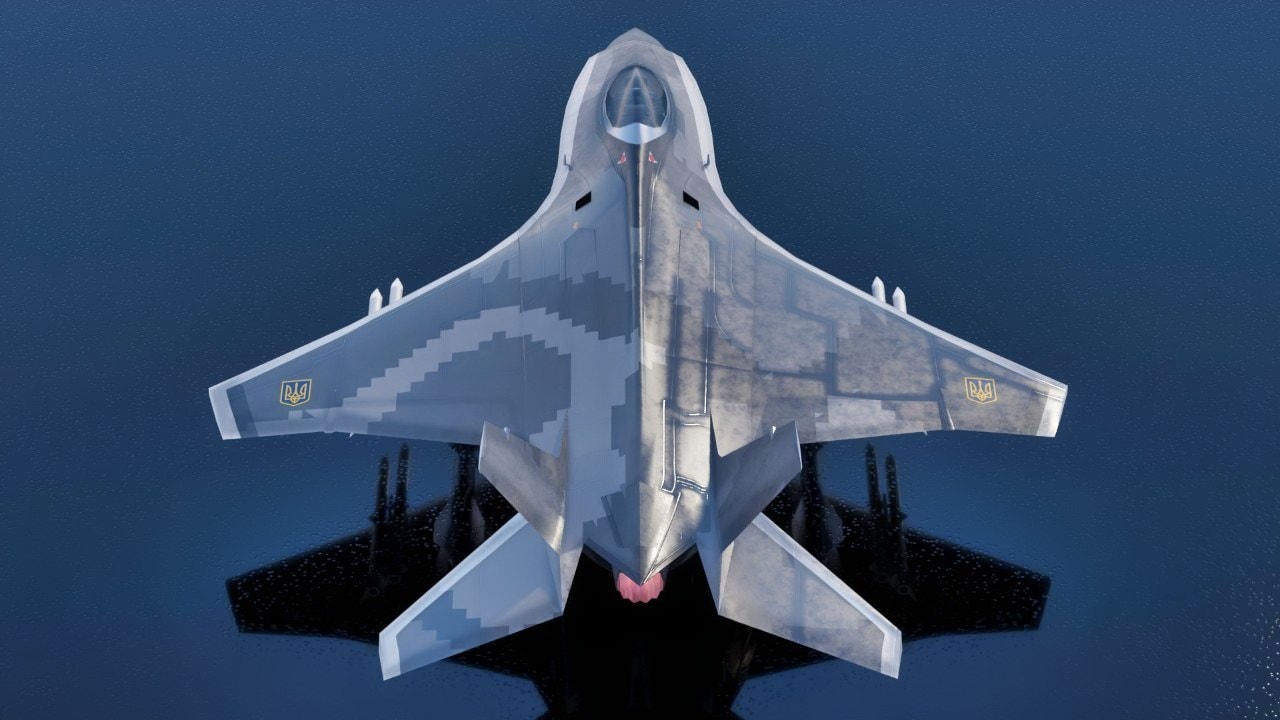
MiG-41 Fighter. Image Credit: Artist Rendition.
About the Author: Caleb Larson
Caleb Larson is an American multiformat journalist based in Berlin, Germany. His work covers the intersection of conflict and society, focusing on American foreign policy and European security. He has reported from Germany, Russia, and the United States. Most recently, he covered the war in Ukraine, reporting extensively on the war’s shifting battle lines from Donbas and writing on the war’s civilian and humanitarian toll. Previously, he worked as a Defense Reporter for POLITICO Europe. You can follow his latest work on X.