
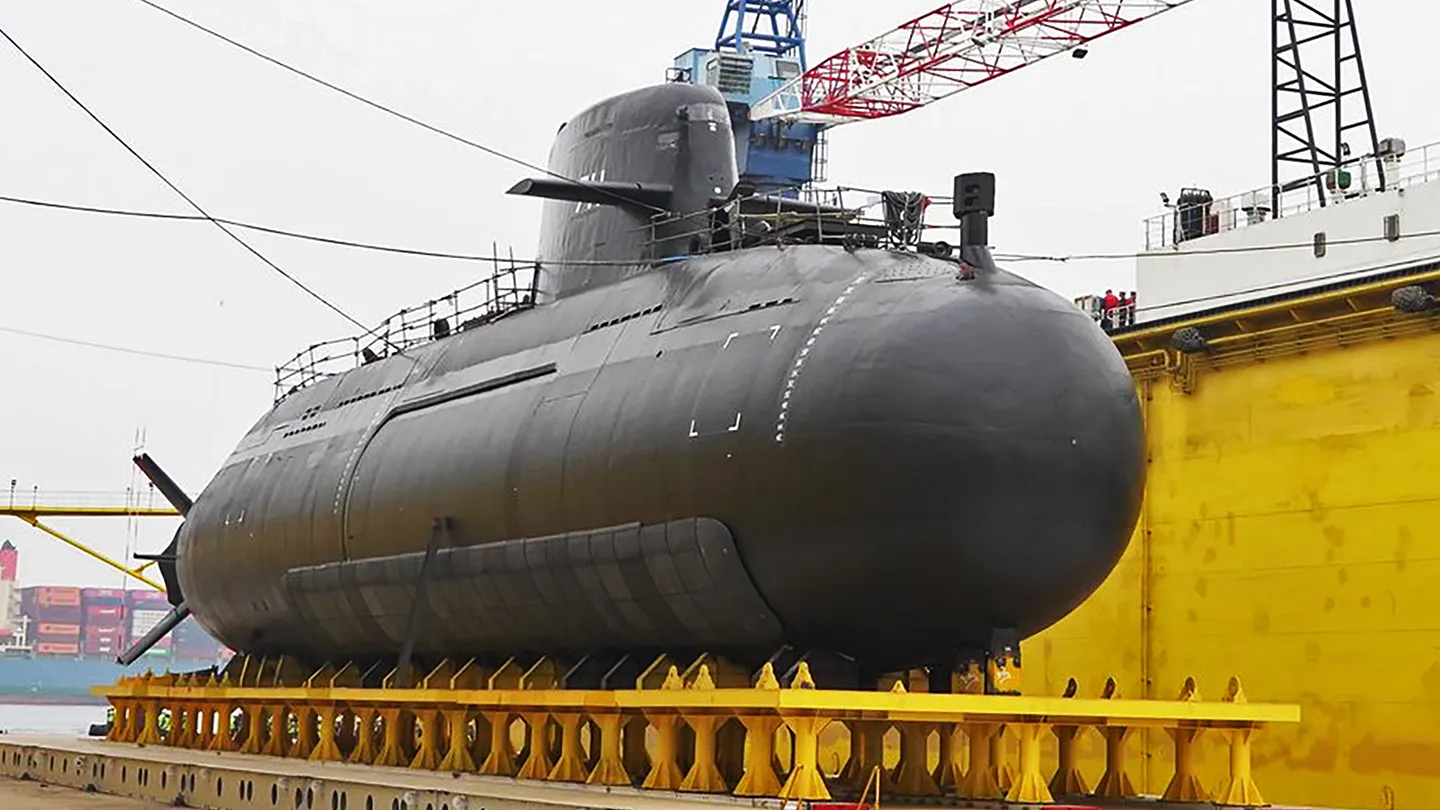
Summary and Key Points: Taiwan’s submarine force consists of four submarines, two of which were built during the Second World War. The Hai Kun class is the replacement and the first Taiwanese submarine ever built at home: laid down at CSBC in 2021 and in sea trials since January, with unconfirmed reports pointing to service in 2027
Taiwan’s Hai Kun-Class Submarines Are Nearly Ready
The Republic of China (Taiwan) operates a modest fleet of four diesel-electric submarines.
However, these ships are old and in desperate need of replacement.
The Hai Kun-class (or Narwhal) is that replacement.
The Hai Kun-class is Taiwan’s first domestically built submarine, manufactured by CSBC Corporation, Taiwan.
The program has accelerated remarkably quickly, with the lead ship, Hai Kun, currently undergoing sea trials despite being laid down in 2021.
Overall, the Republic of China Navy (ROCN) plans to field eight submarines of the class, doubling its current fleet.
The ships are expected to enhance Taiwan’s undersea deterrence, especially as China ramps up its submarine production capabilities.
Taiwan’s First Domestic Submarine
As an island nation, establishing firm naval capabilities has always been in Taiwan’s strategic interest, especially since Communist China lies just a stone’s throw away.
However, with a smaller shipbuilding industry, the ROCN has historically relied upon older foreign, especially American-built models.
For example, Taiwan’s current submarine force consists of two Dutch-built Hai Lung-class (originally based on the Zwaardvis-class) submarines and two American GUPPY submarines, originally built during the Second World War.
Since the turn of the century, Taiwan has been actively seeking to bolster its undersea deterrence capabilities, reviewing designs from Italy, Japan, and even India.
In 2014, the Taiwanese Ministry of Defense announced that it would build its own submarine, with help from the United States, under the Indigenous Defense Submarine (IDS) program.
In 2018, the U.S. officially approved the technology transfer, which enabled Taiwan to build its own submarines.
Although the U.S. offered to build submarines for the ROCN, Taiwan declined, preferring smaller, cheaper diesel-electric submarines (the U.S. Navy stopped building diesel-electric submarines in the 1950s and shifted to a fully nuclear-powered fleet).
After the technology transfer, the ROCN spent the next year selecting the ship design before unveiling the finalized design in 2019.
Specs and Capabilities
In 2024, Hai Kun, the lead ship of the class, took to the sea for the first time during tests before being towed back to dry dock.
These brief tests gave naval analysts their first glimpse of Taiwan’s first indigenous submarine.
The ship is approximately 70 meters (229 feet) long, with an estimated displacement of roughly 2,500 tons.
Based on images from its time in dry dock, the ship is equipped with six 533 mm torpedo tubes capable of launching Harpoon anti-ship missiles, along with torpedo countermeasure dispensers and passive sonar arrays.
Some analysts have noted that Hai Kun is based heavily on the Dutch Zwaardvis-class, which makes sense, as Taiwan is intimately familiar with the class.
The ship shares the same double-single hull structure but features a more refined X-form rudder layout, as seen on the Japanese Sōryū-class and the Dutch Walrus-class.
While the Hai Kun-class design seems perfectly capable, it is not quite as modern as many of its contemporaries.
As many have noted, the ship lacks Air-Independent Propulsion (AIP), which is not nearly as much of a deal-breaker as some make it out to be.
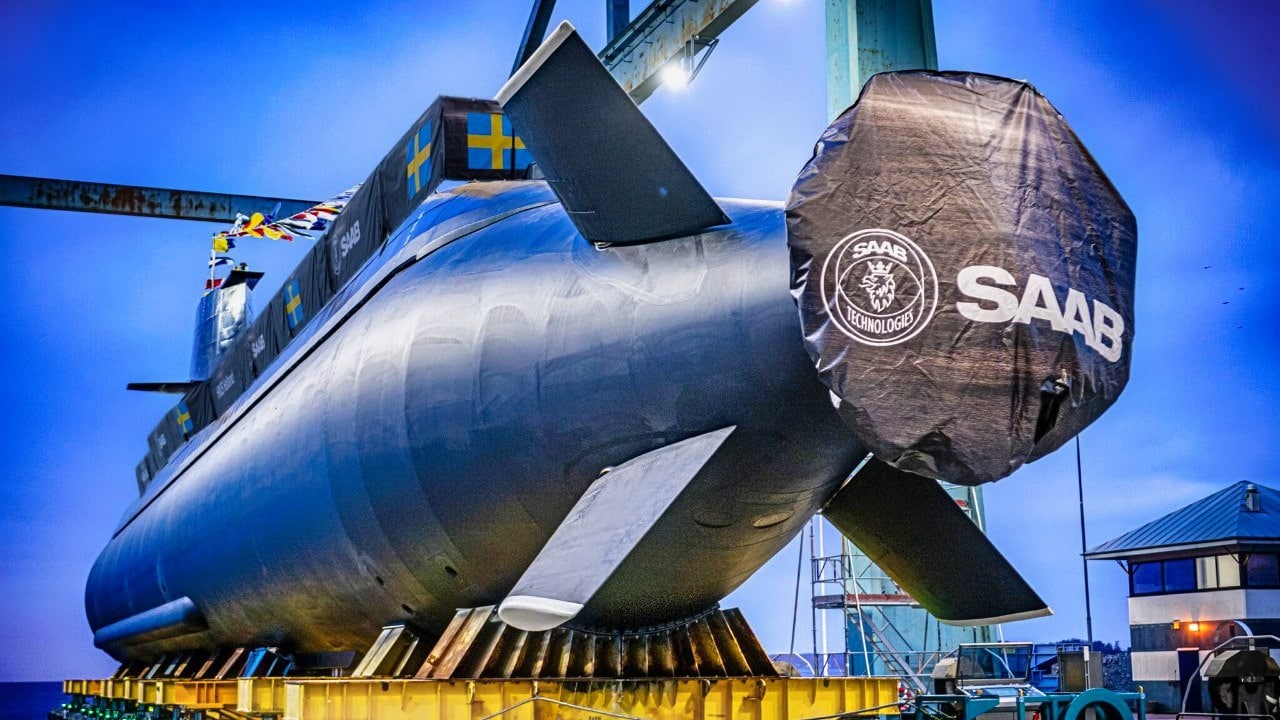
Gotland-Class. Image Credit: Saab.
Some reports say the submarine instead uses lithium-ion batteries for its diesel generators. Some experts believe that lithium-ion batteries provide better endurance than some AIP systems.
In Japan, for instance, the JMSDF has begun replacing some AIP systems in its Sōryū-class submarines with lithium-ion batteries, believing them to be superior.
Whether this belief is actually true is a debate that time will settle.
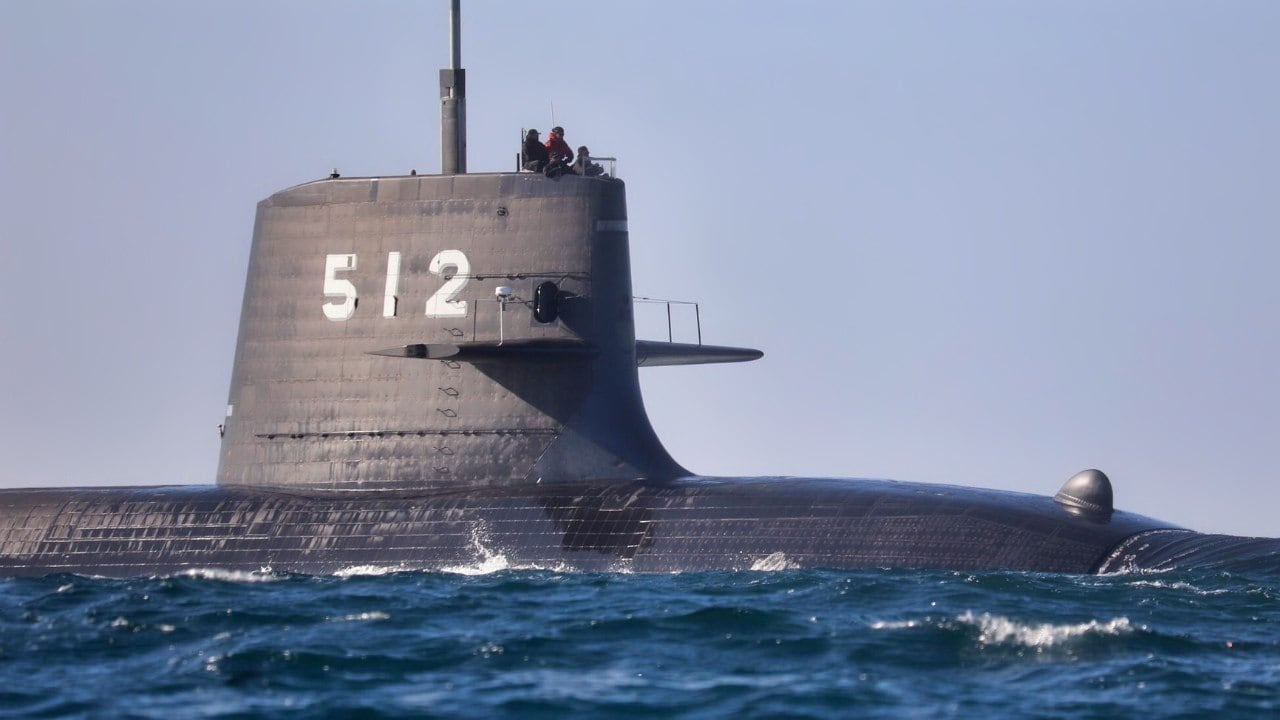
Soryu-Class Japan Submarines. Image Credit: Creative Commons.
Returning to Hai-Kun, however, it is also worth noting that the ship lacks vertical launch tubes or anechoic coatings, which makes sense, considering it is the first of its class.
Future ships in the class are expected to receive refinements as the design matures.
A Rough Start For Taiwan’s First Submarine
In January, Hai Kun completed her first submerged tests.
The ship is still conducting sea trials and, according to some unconfirmed reports, is expected to enter service in 2027.
The ROCN currently has an ongoing order for two more ships of the class.
However, the government has delayed funding for further ships until Hai Kun completes her trials.
Because the class is Taiwan’s first indigenously built submarine, there is still a great deal of risk associated with the project.
The program has already suffered a multitude of delays and technical difficulties, which do cast doubt on its long-term prospects, but growing pains are to be expected for the country’s first domestic submarine project.
While the Hai Kun-class is not as advanced as some of its peers, the ship is still a notable improvement over the ROCN’s current inventory.
Regardless of whether the ship has AIP, Taiwan needs subs, especially with mounting pressure for reunification with mainland China.
As a result, the Hai Kun-class is instrumental to the island nation’s national security. While the program has experienced its fair share of difficulties, it is strategically necessary if Taiwan hopes to field any credible undersea assets.
About the Author: Isaac Seitz
Isaac Seitz, a Defense Columnist, graduated from Patrick Henry College’s Strategic Intelligence and National Security program. He has also studied Russian at Middlebury Language Schools and has worked as an intelligence Analyst in the private sector.