
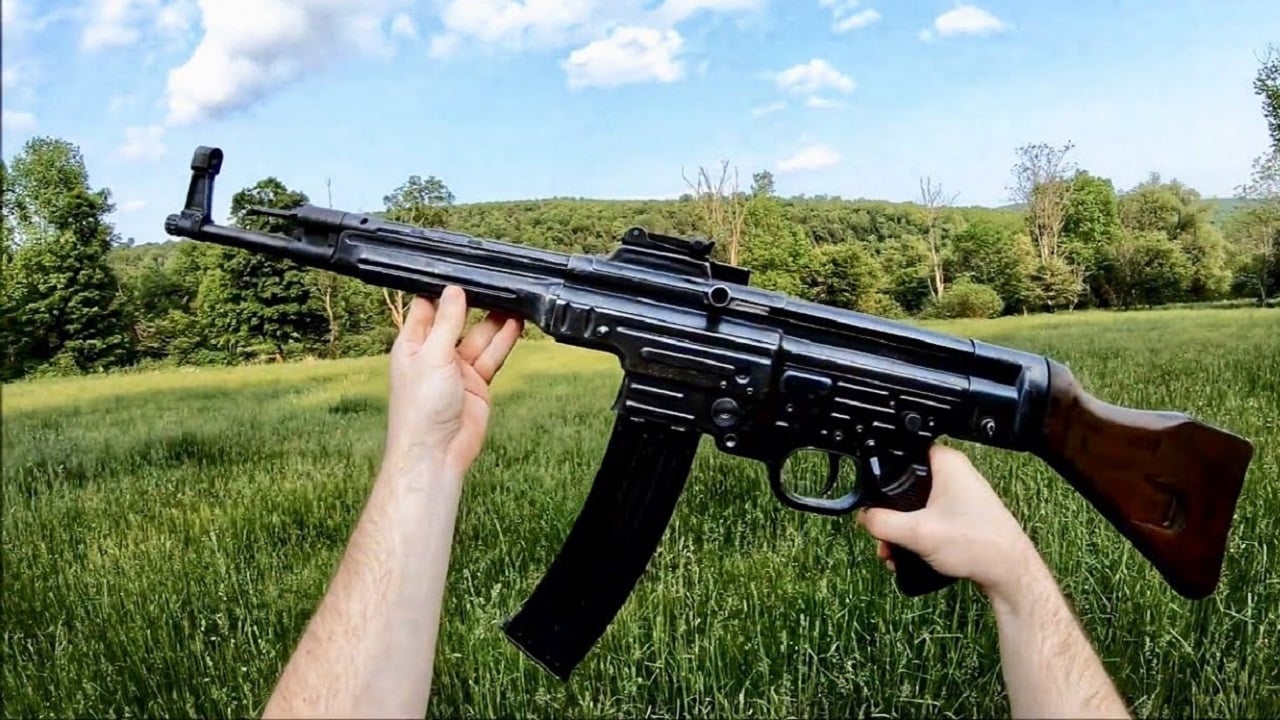
The StG-44: The Rifle That Changed Infantry Weapons Forever – Every modern infantry rifle owes a debt to a German weapon that showed up too late to matter. The Sturmgewehr 44, better known as the StG-44, didn’t win the war for the Wehrmacht. It didn’t come close.
However, it changed how armies think about the individual rifleman, and soldiers on every continent still carry that change today.
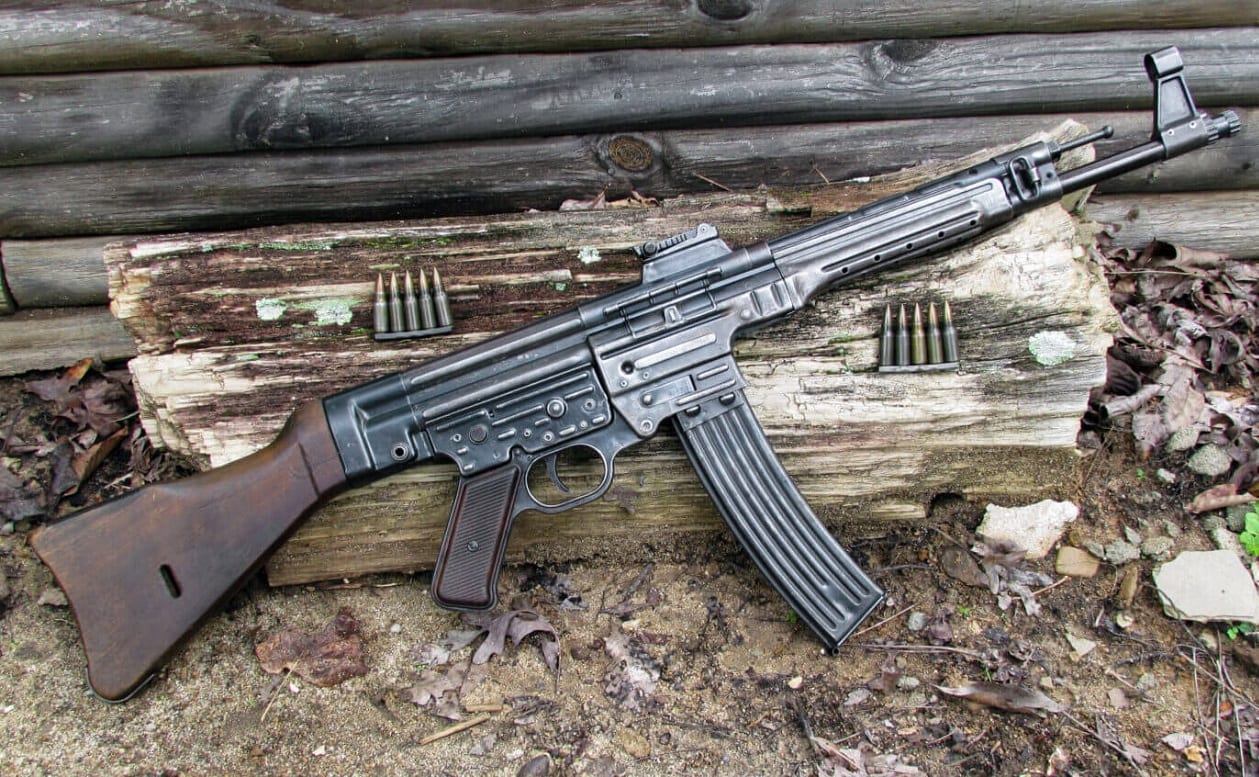
StG-44: Image: Creative Commons.
Say what you want about the regime that built it. That’s beside the point. The StG-44 was the first true assault rifle fielded in meaningful numbers, and its DNA runs straight through the AK-47 and nearly every select-fire rifle that followed.
The Problem The Germans Were Trying To Solve
By the late 1930s, German planners had figured out what infantrymen already knew. Most firefights happened inside 300 to 400 meters. The standard 7.92x57mm Mauser round fired from the Kar98k was built to reach far beyond that, and it brought the recoil and weight to match.
On the other end, the MP 40 in 9mm was handy up close but ran out of steam at distance. The rifleman had too much cartridge. The submachine gunner had too little.
The answer was an intermediate round. The 7.92x33mm Kurz, approved in 1941, chopped the Mauser case down to 33mm. From the StG-44’s 16.5-inch barrel, it pushed a bullet at roughly 2,247 feet per second. Less recoil meant a weapon that could be controlled on automatic, at least in short bursts. Lighter ammunition meant a soldier could carry more of it.
That’s the whole concept in a nutshell. Enough gun for the fights soldiers were actually in.
Hitler Hated It, So They Called It Something Else
Hugo Schmeisser and his team at C.G. Haenel led the design effort. Their MKb 42(H) went head-to-head with a Walther competitor, and the Haenel design won out. Then it ran headlong into the Führer himself.
Hitler wanted no part of a new rifle program and ordered development halted. So the ordnance people did what bureaucrats everywhere do. They changed the name. The rifle was reclassified as a submachine gun, the MP 43, and production quietly kept going.
After a successful 1944 demonstration, Hitler gave it a new name of his own: Sturmgewehr, or “storm rifle.” The propaganda label stuck, and it handed the world the term “assault rifle.”
The rifle itself was built for mass production. Stamped and pressed sheet steel replaced most of the expensive machining. It fed from a curved 30-round box magazine, cycled at 550 to 600 rounds per minute, and was effective out to about 400 meters. Troops on the Eastern Front praised its reliability in brutal cold.
The STG-44 Was Heavy, And Difficult To Control Firing On Automatic
None of that made it perfect. The StG-44 weighed about 10.5 pounds empty, roughly the same as an M1 Garand and nearly twice the M1 Carbine. When U.S. Ordnance got its hands on captured examples, testers weren’t impressed.
They reported that it heated up rapidly and climbed so badly on automatic that it couldn’t stay on target, even in short bursts. A sergeant from the 506th Parachute Infantry Regiment put it bluntly, saying it “proved no match for the M1 rifle.”
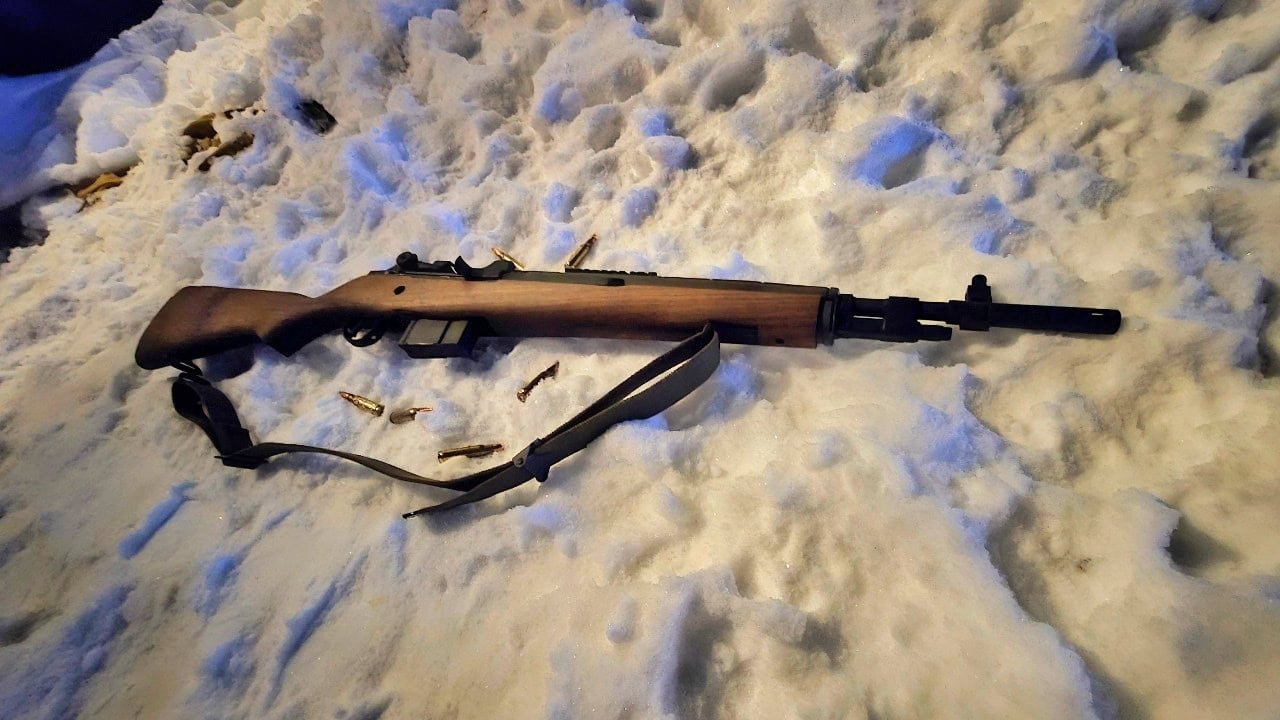
M1A Rifle by Corey Ritter.
I did get to handle one, and it had some heft, but I never actually fired it, which was a huge disappointment.
Then there was the Krummlauf, a curved barrel attachment meant to let soldiers shoot around corners and from inside tanks. The 90-degree version was nearly uncontrollable. Barrels eroded quickly, and bullets came out badly distorted. You get the idea.
The bigger problem was numbers. Germany ordered about 1.5 million of them and built 425,977. Too few, too late.
Where It Went After The War
The rifle outlived the Reich that built it. Schmeisser was interrogated by the Americans and then taken to the Soviet Union, where he worked from 1946 to 1952 before returning to Germany. He died in Suhl in 1953. During that same window, a young Soviet sergeant named Mikhail Kalashnikov was developing the AK-47.Over the years,
Kalashnikov gave conflicting accounts of how much the German rifle influenced him. Mechanically, the two are different animals. The AK uses a rotating bolt, while the StG-44 used a tilting bolt.
However, the concept is the same: an intermediate cartridge, a curved detachable magazine, and select-fire in a rifle a conscript can carry all day. The Soviets even built their 7.62x39mm round around the same basic idea.
Kalashnikov especially liked the idea of the short cartridge to “put a machine gun in every soldier’s hands” and adopted the 7.62×39 cartridge for his design.
In 1946, Kalashnikov sent his drawings for a new gas-operated rifle based on the 7.62×39 cartridge to the Main Artillery Commission in Moscow. The commission gave him the go-ahead to create a prototype.
From 1946 to 1948, the Kalashnikov rifle progressed. In 1949, the Soviet Army accepted one of his rifles, the Avtomat Kalashnikova (Automatic Kalashnikov) Obrazets 1947, and quickly dubbed it the AK-47.
While the AK-47 is much more famous, both the AK-47 and the M-16 owe a great deal to the StG-44, or the MP-44 as it was sometimes called. Interestingly enough, the Army’s report on the captured German MP-44 as to its pros and cons sounds very similar to those of the AK-47.
Captured StG-44s went to East German police, who used them into the 1960s, and to client states including Syria, Lebanon, and Egypt. They never fully went away.
In 2012, Syrian fighters posted video of what they claimed was a cache of 5,000 StG-44s in excellent condition. Seventy years after the war.
America Was Slow To Learn The Lesson
U.S. Ordnance largely dismissed the intermediate cartridge after the war. Instead, the Army went with the M14 and the full-power 7.62 NATO round, which put the American rifleman right back where the German planners started: too much cartridge for most fights.
It took Vietnam and the M16 in 5.56mm for the U.S. to fully accept what the Germans had worked out two decades earlier.
In my opinion, that’s one of the bigger doctrinal misses of the postwar era. The evidence was sitting in captured weapons depots in 1945.
The StG-44 was built to give the rifleman enough gun for the fight he was actually in. Every major army on earth eventually agreed. The Germans just got there first.
About the Author: Steve Balestrieri
Steve Balestrieri is a National Security Columnist. He served as a US Army Special Forces NCO and Warrant Officer. In addition to writing for 19FortyFive, he covers the NFL for PatsFans.com and is a member of the Pro Football Writers of America (PFWA). His work was regularly featured in many military publications.