
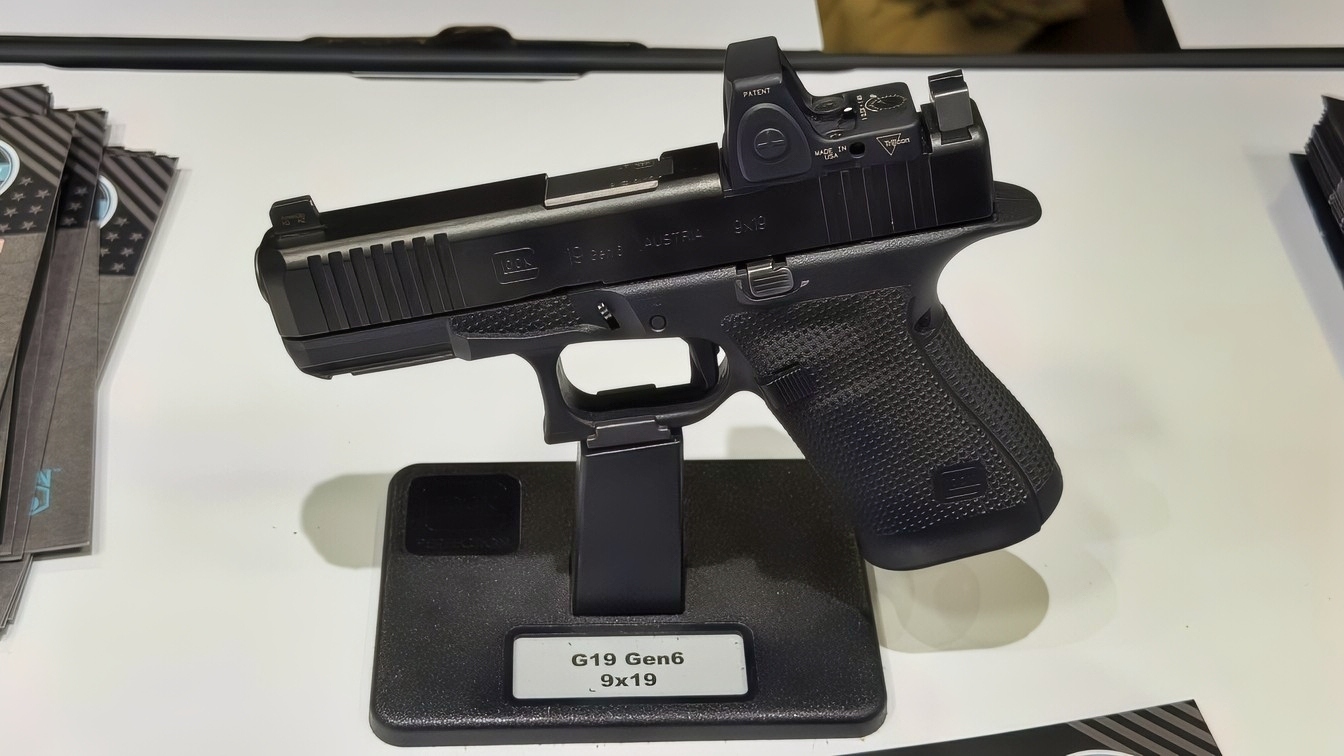
Summary and Key Points: Gaston Glock put the safety in the trigger: a blade that must be pressed, a plunger that blocks the striker until the trigger bar is fully back, and a drop safety that holds the firing pin, all re-engaging the instant you let go, behind roughly 5.5 pounds and half an inch of pull on a Glock 17. Retired Army Special Forces NCO Steve Balestrieri explains why roughly 65 percent of US law enforcement agencies, the FBI’s 19M and SOCOM’s 2016 Glock 19 buy all skipped the thumb safety, and why the real safety is your trigger finger and a rigid holster.
The Glock and That Safety Debate

Glock AUSA Photo from 19FortyFive
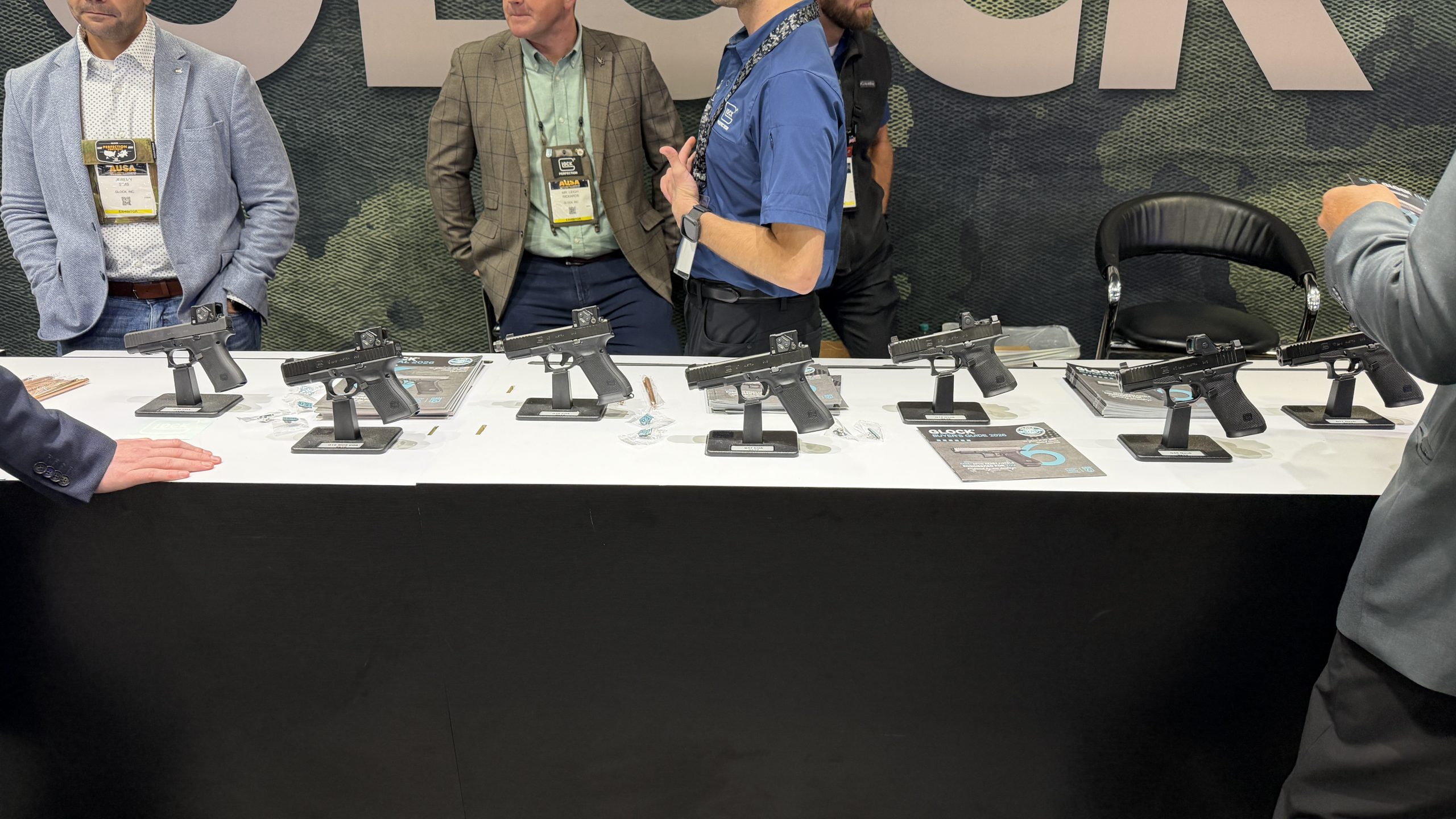
Glock AUSA Photo from 19FortyFive

Glock AUSA Photo from 19FortyFive
The Glock doesn’t need a thumb safety. It never did. Yet every so often, the argument gets recycled like dirty laundry and ends up on social media. Someone picks up a Glock 19, looks for an issue, finds none, and declares the most popular police pistol in America an accident waiting to happen.
Frankly, the argument is older than some of the people making it.
However, it falls apart the moment you look at how the pistol was designed, how it actually works, and how people actually get hurt.
The Glock Has Three Built-In Safeties Already
Gaston Glock put the safety in the trigger.
Glock calls it the Safe Action System, and it consists of three passive, independent mechanical safeties built into the fire control group.
The first is the trigger safety, the small blade in the center of the trigger face. Unless your trigger finger depresses that blade, the trigger won’t travel rearward.
The second is the firing pin safety, a spring-loaded plunger that physically blocks the striker channel until you push the trigger bar all the way to the rear.
The third is the drop safety, which holds the rear of the firing pin and won’t release it until you press the trigger all the way through.
It will not fire if you drop, jostle, or even strike the weapon hard.
Let go of the trigger, and all three built-in safeties re-engage automatically.
That’s three mechanical interlocks, and none of them depends on the shooter remembering to flip anything. A stock Glock 17 takes roughly 5.5 pounds of pressure over about half an inch of travel to fire.
It doesn’t go off when it’s dropped. It doesn’t go off because a door slammed. It goes off when something presses the trigger.
Guns Don’t Go Off By Themselves
Which brings us to the real safety.
The late Col. Jeff Cooper boiled firearms handling down to four rules, and the third matters here.
Keep your finger off the trigger until your sights are on the target.
In The Art of the Rifle, Cooper blamed violations of that single rule for the large majority of firearms mishaps.
His rules were deliberately redundant.
If the muzzle drifts somewhere it shouldn’t, but the finger is straight along the frame, nothing happens.
The National Shooting Sports Foundation tells new shooters flatly not to rely on a gun’s mechanical safety for the same reason.
Think about what a thumb safety actually does in a defensive draw.
You sweep it off as the gun clears the holster, well before the sights are on target.
From that point forward, the pistol is exactly as “unsafe” as a Glock.
If your finger is inside the trigger guard when it shouldn’t be, the lever is already off.
Say what you want about manual safeties.
That’s beside the point.
While this dramatizes real events, it drives the point home. Your trigger finger is your safety.
The Holster Is Part Of The Safety System
Most Glock negligent discharges share the same cause: a finger on the trigger during reholstering, or a pistol riding in a pocket or a soft, collapsible holster where a drawstring, a jacket toggle, or a set of car keys can work into the trigger guard.
Safariland calls it trigger ingress, and the fix is simple.
Use a rigid holster that fully covers the trigger guard.
Shooting Illustrated puts it more bluntly: avoiding an ND on the draw or reholster is a training problem, and no holster will save a shooter who won’t keep his finger straight.
Holster slowly.
Look the gun in.
Clear clothing away from the holster mouth first.
None of that is glamorous.
All of it works.
The People Who Carry For A Living Already Voted
So if the Glock is so dangerous, why do the people under the most stress keep choosing it?
As of 2018, Glock said its pistols were the duty gun for roughly 65 percent of US law enforcement agencies.
Among the reasons they use Glocks, law enforcement agencies cite Glock’s mechanical reliability, durability, lightweight polymer frame, three-tiered safety design, and low maintenance costs.
The NYPD went to Glocks in the 1990s, and when Bill Bratton later ran the LAPD, he pushed the Police Commission to let every officer carry one.
The FBI’s Glock 19M is a standard Glock with no manual safety.
Then there’s my old community.
Army Special Forces spent years writing a concealable-pistol requirement that fit the Glock 19 like a glove (some will say it was written specifically for the G19), and in 2016 SOCOM adopted it outright.
SOFREP covered that rollout as it happened.
Under stress, fine motor skills are the first thing to go.
A lever you forget to sweep off is a failure point. Glock simply left it out.
These are organizations that investigate every discharge and get sued over every one.
They wouldn’t keep issuing a pistol that went off on its own.
The Unforgiving Training Trade-Off
That said, the Glock is unforgiving.
The old “Glock leg” jokes exist for a reason.
A Glock will do exactly what you tell it to, including the stupid things.
There’s no lever between a careless finger and a loud noise. And that, as we used to say, comes down to “operator headspace and timing.”
However, that’s a training problem with a training solution. Glock has even built factory thumb-safety Glock 17s for at least one police contract.
They never caught on.
However, if a manual safety makes you more comfortable, buy a pistol with one and train until sweeping it off is automatic.
That’s a legitimate choice.
Personally, I’d rather spend the money on a quality holster and the ammunition to practice drawing from it.
The Glock has a safety. It’s at the end of your arm…your trigger finger.
About the Author: Steve Balestrieri
Steve Balestrieri is a National Security Columnist. He served as a US Army Special Forces NCO and Warrant Officer. In addition to writing on defense, he covers the NFL for PatsFans.com and is a member of the Pro Football Writers of America (PFWA). His work was regularly featured in many military publications.