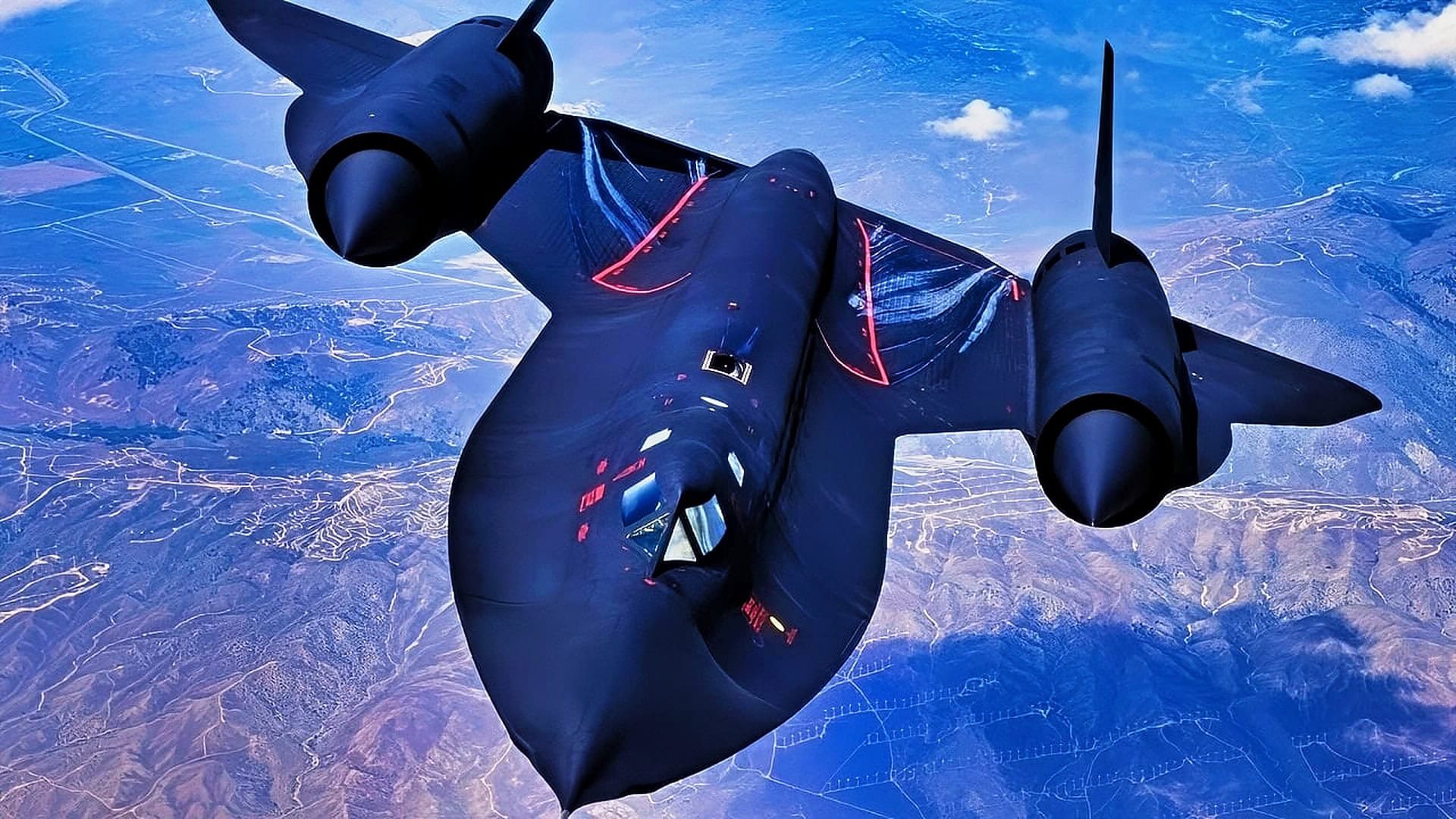
Summary and Key Points: Caleb Larson reports, using satellite imagery, that NASA moved an SR-71A on display at its Armstrong Flight Research Center at Edwards, and NASA is asking former Blackbird engineers about restoring it to flight, possibly for X-plane research. Former test engineer Mike Relja notes engines once rotated every 90 days have now sat 30-plus years; 2007’s destruction of spare parts, missing ground carts, and sand-and-water ballast make museum SR-71s the likeliest parts source.
The Great Lockheed SR-71 Blackbird Comeback?
The SR-71 is one of the most storied aeronautical engineering marvels of the Cold War era. Built as a high-speed, fast-response reconnaissance aircraft, the jet, known as the Blackbird, was used by the United States to snap film rolls over some of the world’s most sensitive locations. Capable of Mach 3-plus speeds, the jet photographed sites in the Soviet Union, Vietnam, China, North Korea, Cuba, and elsewhere during its more than three decades of service.
Countless reams of paper and ink have been dedicated to details about the Blackbird, not all accounts of which are necessarily rooted in fact. Given the Blackbird’s incredible feats, this is perhaps understandable. But thanks to recent reporting by Aviation Week & Space Technology, a bi-weekly defense- and aerospace-focused magazine, one SR-71 might be returning to the skies.
Aviation Week obtained satellite imagery indicating that an SR-71A on permanent display at the Armstrong Flight Research Center on Edwards Air Force Base in California has been moved—and NASA has asked some former SR-71 support and engineering staff about the possibility of giving the Blackbird its wings again.
SR-71 Blackbird Makes Aviation History: A Return to the Skies?
Why NASA would like to get an SR-71 back into flightworthy status after decades on display was not immediately clear.
One potential reason could be to use it as a test and research aircraft for NASA’s experimental X-plane program. That group of test aircraft isn’t pre-production prototypes, but single-build aircraft used to test and evaluate new flight concepts. However, when asked directly about the SR-71, NASA demurred.
“We recognize the interest in the SR-71 and its remarkable history at NASA but have no additional information to share regarding the aircraft at this time,” a spokesperson told Aviation Week, responding to a question about the Blackbird’s removal from its previous display location.
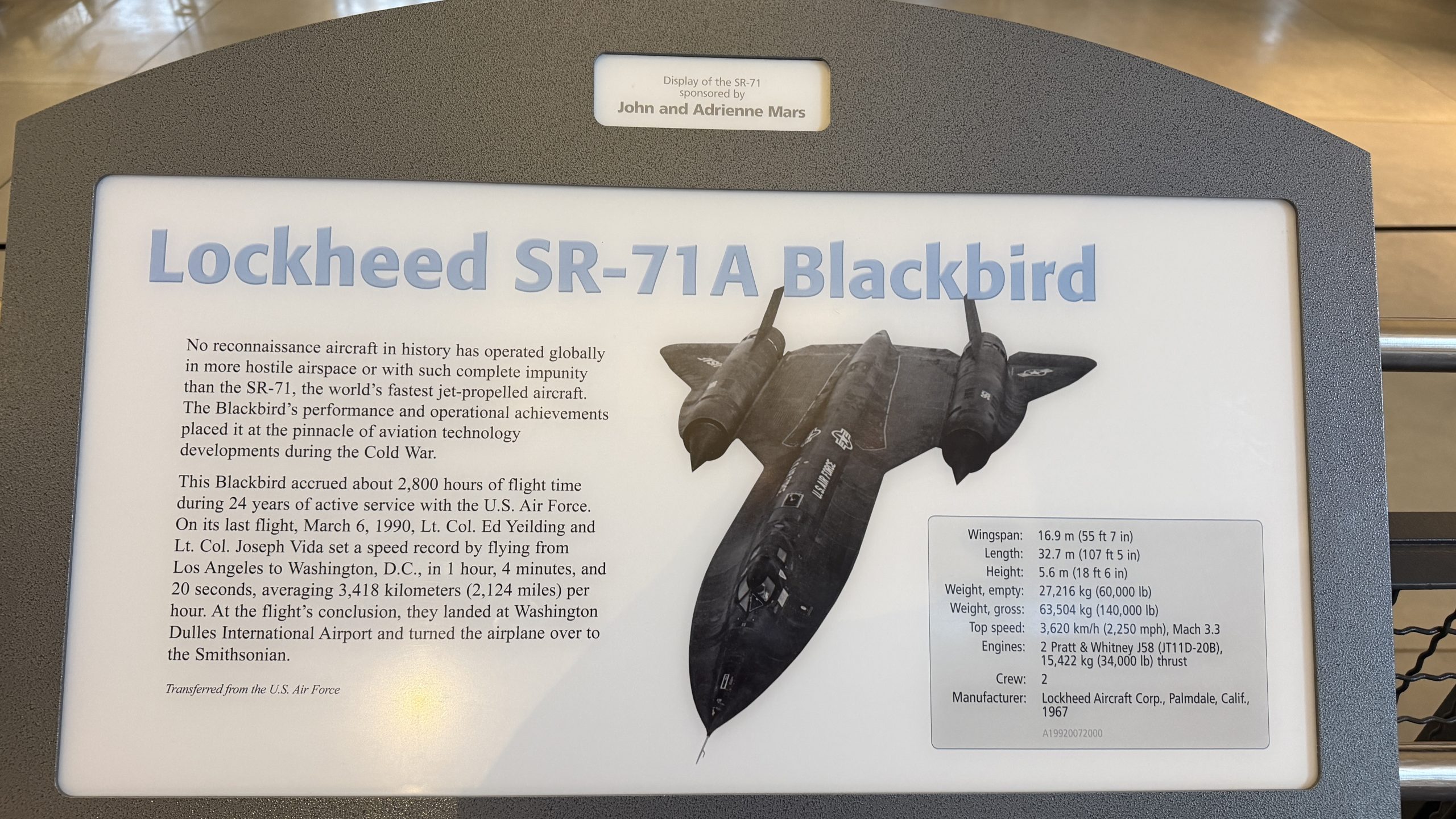
SR-71 Blackbird Sideview. Smithsonian Display Photo Taken by 19FortyFive on 9/30/2026.
No Easy Feat of Engineering then — or Now
Putting a long-retired aircraft back into a flight-worthy state would be a momentous task for any airplane.
But for one as high-performance as the SR-71, it would be massively complex.
The Blackbird first flew almost 60 years ago, and while this particular SR-71 is newer than the first Blackbird, it has been on display for nearly three decades. Compounding the issue is the SR-71’s spare-parts production line and other consumable components that need periodic replacement, which has long been shuttered.
A second issue is a knowledge gap. During the SR-71’s active service lifetime, a small army of support personnel and mechanics with knowledge of the Blackbird’s upkeep serviced the entire fleet of spy planes. But many of those individuals are long since retired, leaving a potential knowledge gap in getting the jet airworthy again.
As Aviation Week reports, some internal spaces within the Blackbird formerly on display were likely ballasted with water and sand to simulate the jet’s internally-held fuel, presenting a potential maintenance issue. In addition, the jet’s enormously powerful jet engines have simply sat unused and unserviced the entire time the plane has been on display.
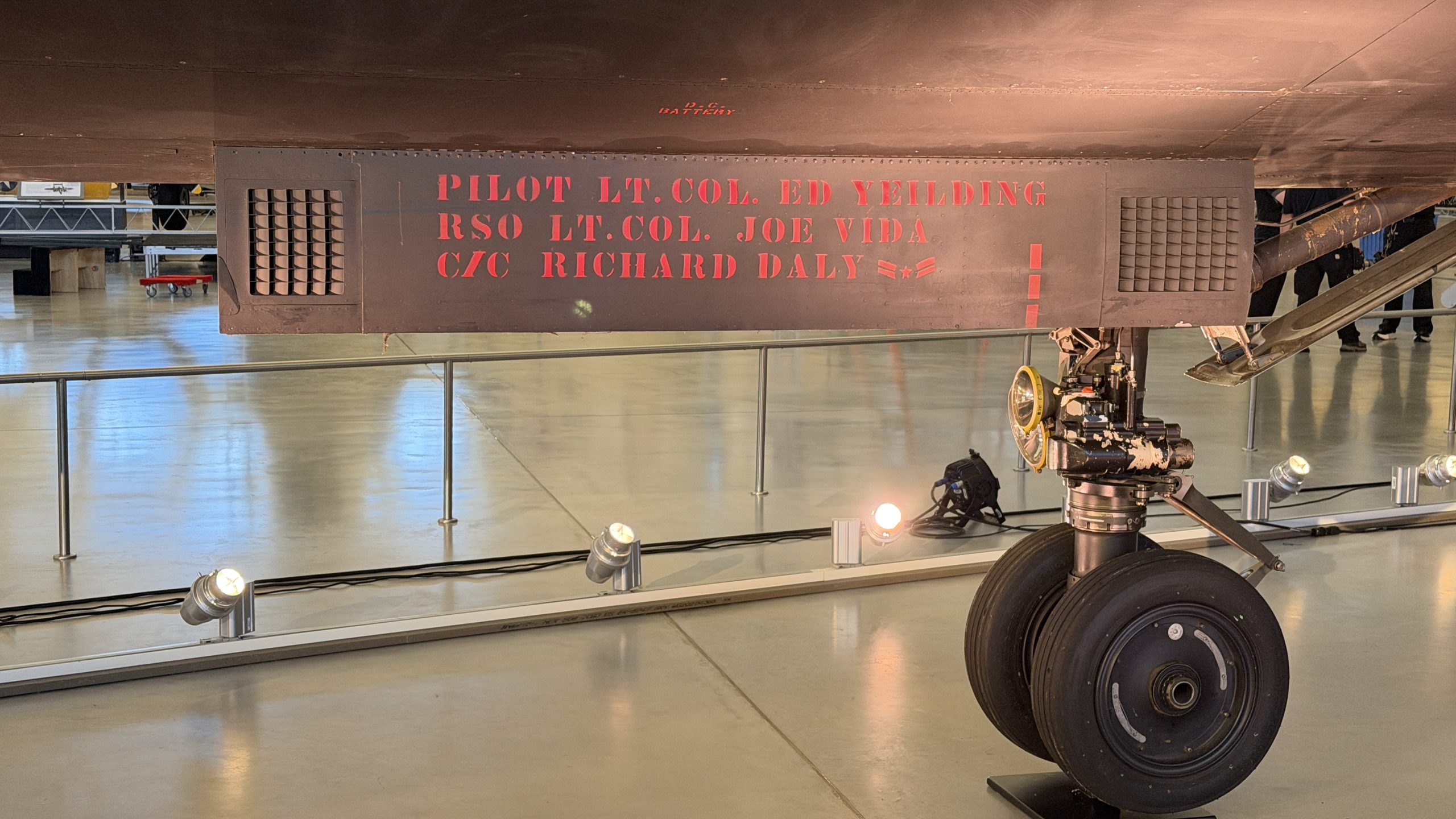
SR-71 Blackbird. Smithsonian Display Photo Taken by 19FortyFive on 9/30/2026.
“When we were operational, if we had a spare engine, every 90 days we had to rotate the engine,” Mike Relja, formerly a test engineer for NASA and the United States Air Force, explained to Aviation Week.
“Every 180 days, we had to run it to keep it as a ready spare. Now you’re talking about engines that have been sitting for 30-plus years.”
However, strong evidence suggests neither NASA nor the United States Air Force ever intended to put the blackbird fleet back in the air. In 2007, the decision was made to destroy the stockpile of SR-71 spare parts that remained after the fleet’s retirement.
From a storage and cost-savings standpoint, it was logical, though it certainly complicates the fleet’s upkeep today.
Back to the Skies?
Getting an SR-71 back in the air would be no easy feat, and more complicated than simply refurbishing its two jet engines. “To raise the wing, you need a cart,” Relja told Aviation Week. “To get the engine out, you need a cart. You need equipment to pull the [engine] spikes, pull the [ejection] seat. All that stuff is gone.”
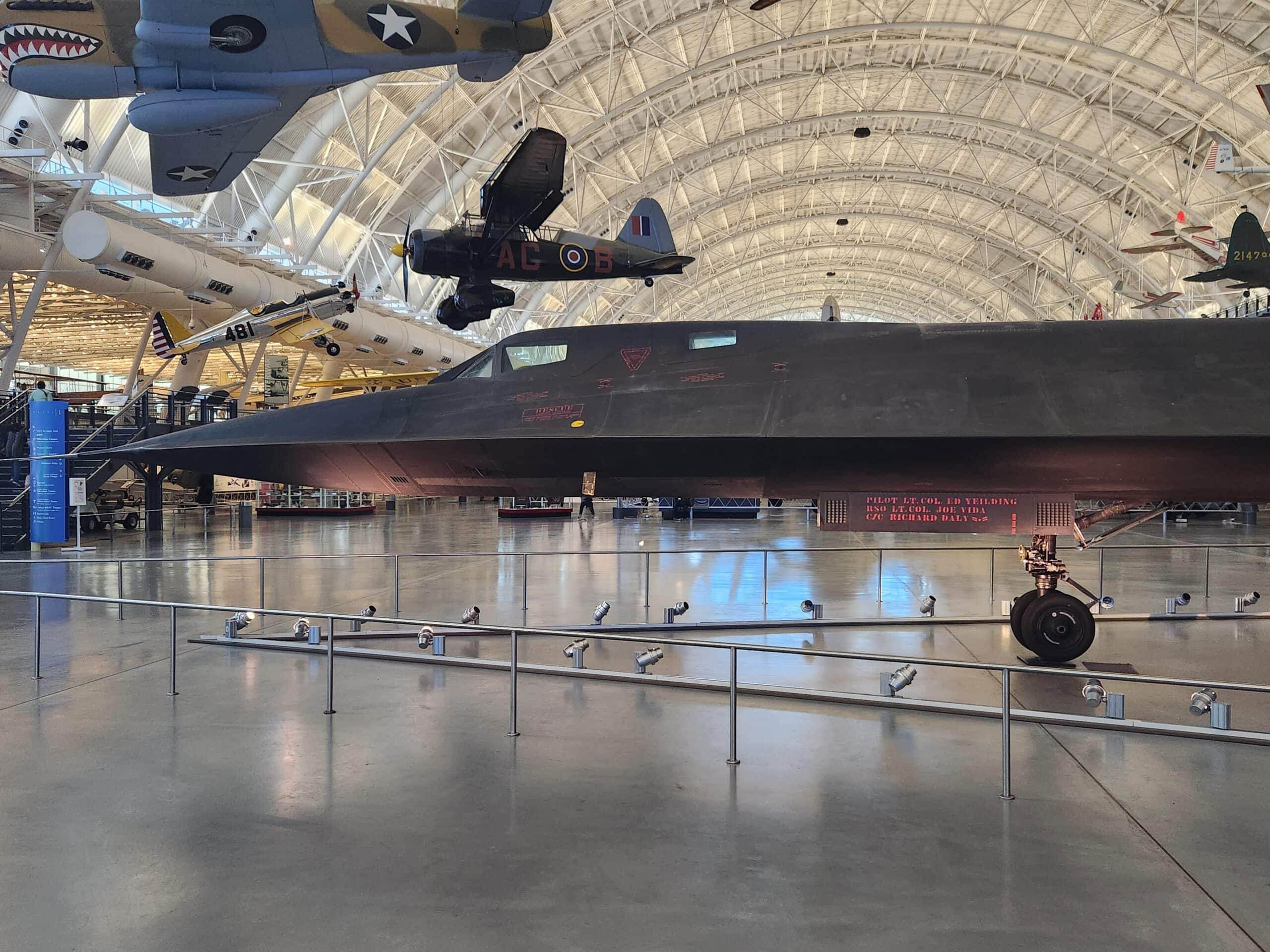
SR-71 from 19FortyFive.com original picture archive. Image taken at the Smithsonian.
However, one potential source of serviceable spare parts remains: a stockpile that could be leveraged to get the jet airworthy again—other SR-71s. Those aircraft on display at aviation museums across the country could be the best hope of getting the Blackbird flying again.
About the Author: Caleb Larson
Caleb Larson is an American multiformat journalist based in Berlin, Germany. His work covers the intersection of conflict and society, focusing on American foreign policy and European security. He has reported from Germany, Russia, and the United States. Most recently, he covered the war in Ukraine, reporting extensively on the shifting battle lines in Donbas and the war’s civilian and humanitarian toll. Previously, he worked as a Defense Reporter for POLITICO Europe. You can follow his latest work on X.