
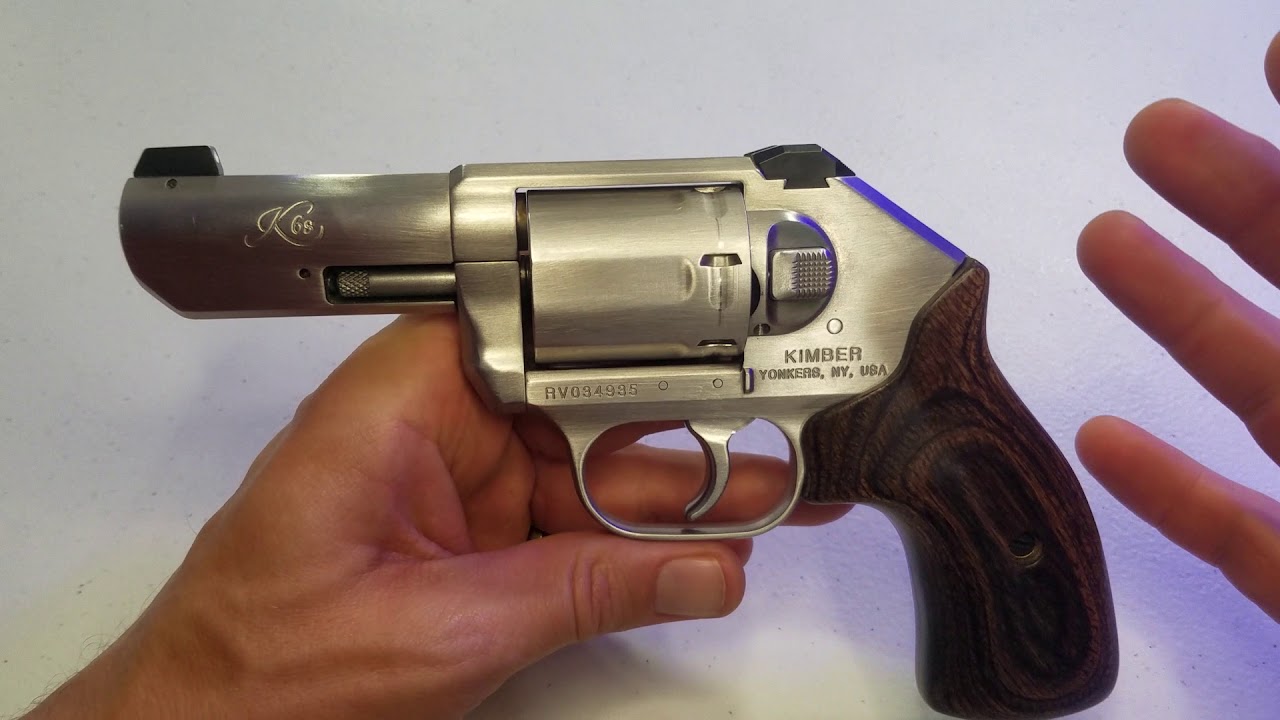
Summary and Key Points: Expert Steve Balestrieri, a retired Army Special Forces NCO, traces Kimber’s K6S from its SHOT Show 2016 debut to a full revolver family: a 23-ounce stainless six-shot .357 Magnum with a 2-inch barrel, 1.39-inch cylinder, Grant Cunningham-influenced 9.5-to-10-pound DAO trigger, internal hammer and user-changeable sights, later joined by 3-inch, CDP and Deep Cover models and the 15.9-ounce, $679 aluminum-frame K6XS .38 +P in 2023. Trade-offs: a $985 MSRP, 23 ounces of steel, and slippery factory grips.
Kimber K6 Revolver Explained
Kimber is known for making automatics, especially the 1911 .45, an outstanding pistol, though opinions vary widely. However, the company had no business building a revolver…right?
In 2016, the company was known almost entirely for its 1911s.
Then at SHOT Show that January, it rolled out the K6, its first production revolver. Lucky Gunner’s Chris Baker called it a big gamble for Kimber at the time.
Nearly a decade later, the K6 has grown into a full family of revolvers and remains one of the most talked-about carry wheelguns on the market.
So how did a 1911 shop pull it off?
Kimber K6: Six Rounds Where Everyone Else Gave You Five
For decades, carrying a small-frame .357 snub meant you had only five rounds.
The Smith & Wesson J-frame and the Ruger SP101 set the standard, and if you wanted six, you were forced to step up to a bigger, heavier frame.
Lucky Gunner put it plainly in its preview: a concealable six-shot .38/.357 is hard to come by.
Kimber’s answer was a stainless steel six-shot revolver weighing 23 ounces, with a 2-inch barrel and a 1.39-inch-diameter cylinder.
The company billed it as the world’s lightest production six-shot .357 Magnum.
That’s a 20 percent bump in capacity in a gun that still carries like a small-frame snub.
One more round doesn’t sound like much.
However, if you’re carrying a revolver with no reload on your belt, that matters.
The Trigger Was Built By People Who Actually Shoot Revolvers
Kimber’s engineers built the K6S as a clean-sheet design, with input from noted wheelgun expert Grant Cunningham.
You can feel that influence the moment you press the trigger.
Cunningham spoke about this with OnTarget magazine. “It started when a representative from Kimber contacted me and said, ‘We want to make a revolver. Would you like to help?’ Naturally, I said yes! They asked what my ‘ideal concealed carry revolver’ would look like.
“I told them it should be the size of a Detective Special, have a 6-round cylinder, the best factory trigger available, good sights, a concealed hammer, and fit small hands well. From there we spent the next 3 years getting the details ironed out, shooting prototypes, etc.”
It’s a double-action-only, non-stacking trigger with a factory pull of 9.5 to 10 pounds.
That’s not light.
However, it’s smooth and consistent from start to break, and that’s what counts on a DAO gun.
The hammer is internal, and the edges are rounded and blended to prevent snagging on the draw.
No hammer spur catching on your cover garment.
Kimber also skipped the usual gutter-in-the-topstrap rear sight.
The original K6S came with real, user-changeable sights.
The Firearm Blog found the gun easy to shoot even with full-power defensive .357 Magnum loads.
I’ve always felt that a gritty, stacking double-action trigger was the Achilles’ heel of most snub-nosed guns, which is why I steered clear of them.
Kimber fixed that problem first.
A K6S For Every Taste And Budget
So why did it catch on so fast? Part of the answer is that Kimber kept building variations.
One year after launch, the lineup already included the K6S Stainless at $899, the night-sight K6S Stainless (NS) at $919, the Crimson Trace-equipped K6S Stainless (LG) at $1,177, the rosewood-gripped DCR at $1,088, and a mirror-polished First Edition at $2,039.
The company later released a 3-inch model, a Custom Defense Package (CDP), and a Deep Cover version. Athlon Outdoors reported the .357 snub quickly became hard to find as sales surged.
Then in 2023, Kimber began shipping the K6XS.
It’s a .38 Special +P with an aluminum alloy frame that weighs just 15.9 ounces empty, more than 7 ounces lighter than the steel K6. It still holds six rounds.
Kimber’s Ron Dudzic said the pistol was designed to beat the common five-round revolvers in its class. And at an MSRP of $679, it also brought the K6 within reach of buyers who balked at a thousand-dollar snub.
RevolverGuy’s testing found the K6xs sights regulated to put light defensive loads at point of aim.
The Honest Trade-Off
None of this comes cheap. The base K6 carried an MSRP of $985 by 2023, and that’s very expensive for a 2-inch revolver.
Weight is the other knock.
At 23 ounces, some critics argue it’s too heavy for everyday carry.
However, that steel is exactly what makes a .357 out of a 2-inch barrel tolerable.
Lucky Gunner noted recoil is what you’d expect from a small steel-frame revolver and called it perfect for .38 +P defensive ammo.
Personally, I’d opt for .38 +P in the cylinder for concealed carry and save the magnums for the range. Your wrists will thank you.
The grips aren’t for everyone, either.
Many owners and reviewers note that the factory wood or slim grips can be slippery or lack sufficient traction for heavy .357 Magnum recoil, often requiring an upgrade to rubber aftermarket grips (like Hogue).
Why It Still Sells
Say what you want about Kimber’s pricing.
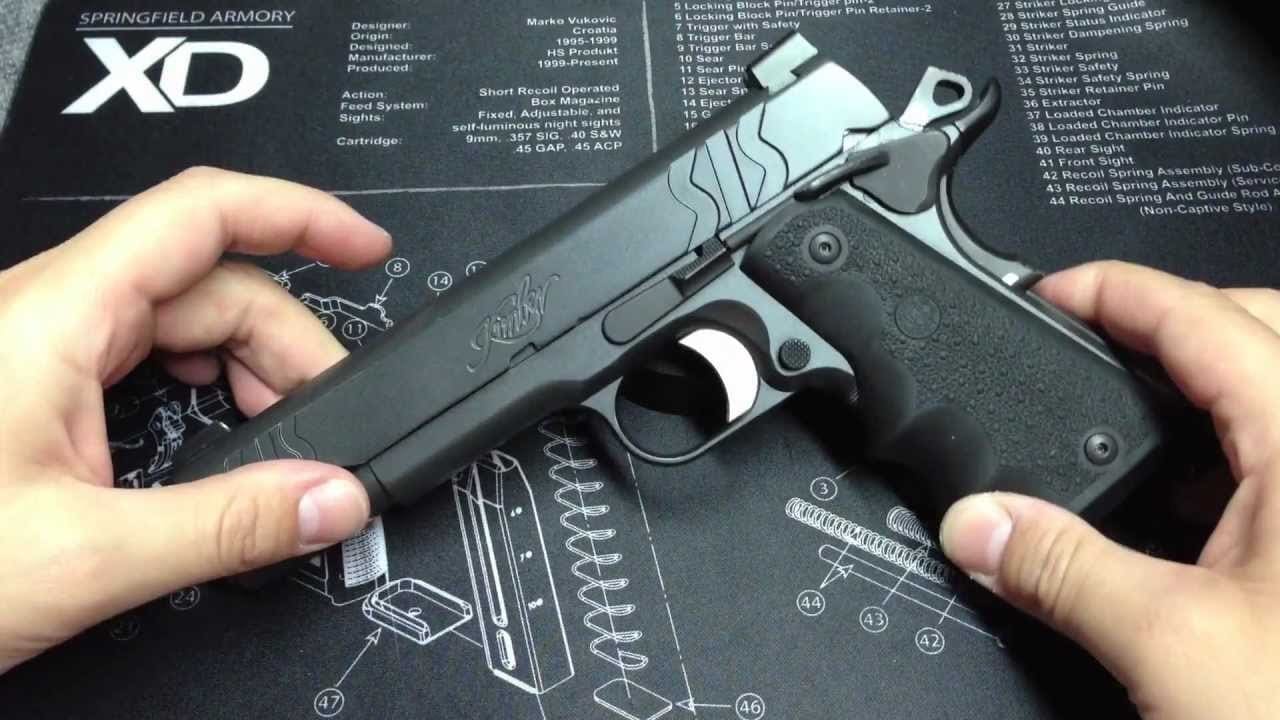
Kimber LAPD SIS M1911A1 .45 Caliber Pistol. Image Credit: YouTube Screenshot.
That’s beside the point.
Buyers who hand over the money get six rounds, a genuinely good trigger, real sights, and a snag-free profile in a gun that rides comfortably on the belt.
Very few snub revolvers check all four boxes.
Kimber had no business building a revolver, especially as a Kimber 1911 fan.
It built one of the best carry revolvers of the last decade anyway.
About the Author: Stephen Balestrieri
Steve Balestrieri is a National Security Columnist. He served as a US Army Special Forces NCO and Warrant Officer. In addition to writing on defense, he covers the NFL for PatsFans.com and is a member of the Pro Football Writers of America (PFWA). His work was regularly featured in many military publications.