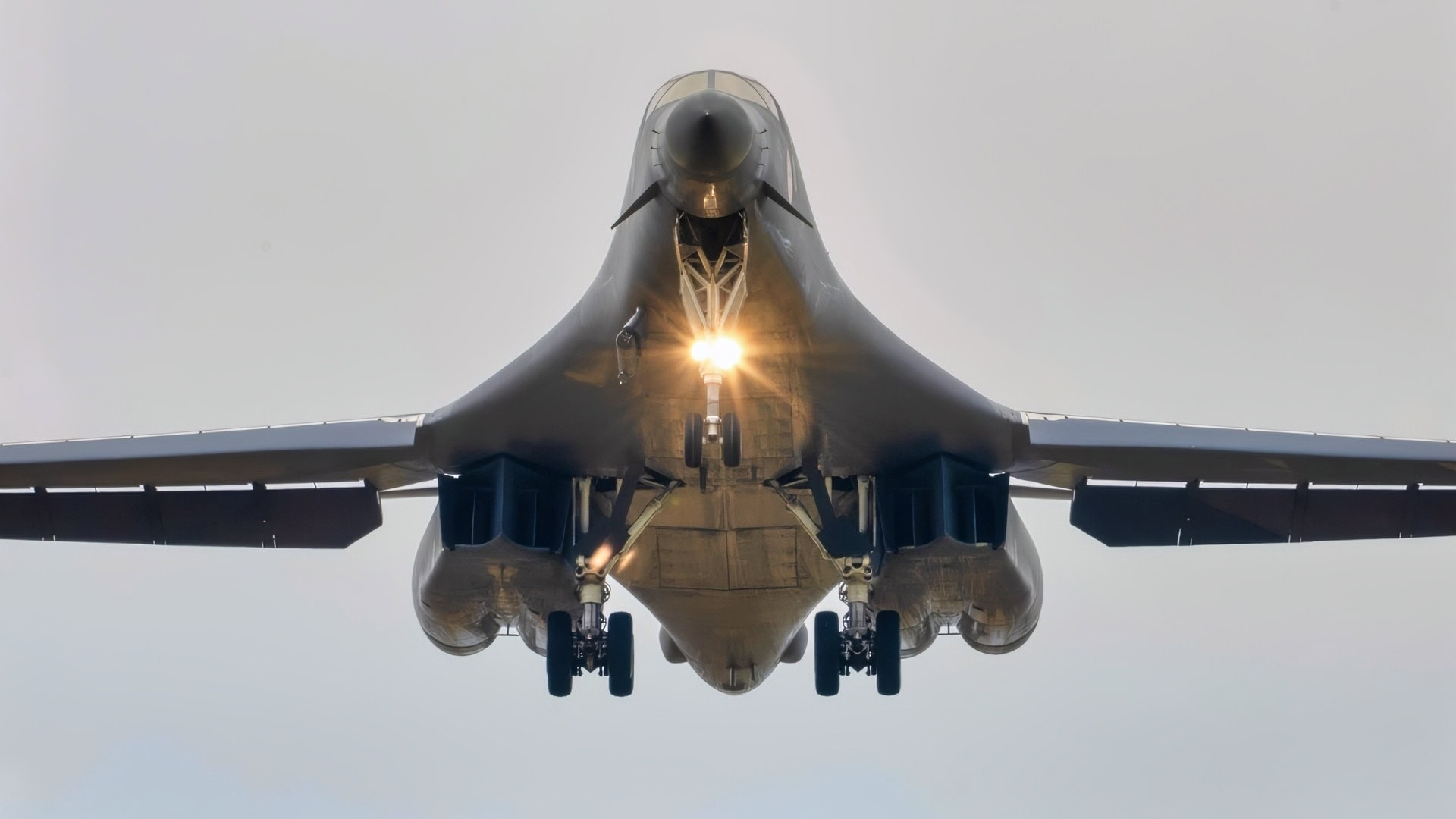
Summary and Key Points: When START came into force, the US Air Force had to prove the B-1B could no longer carry nuclear weapons, so the six external hardpoints under its wings were mechanically disabled. Those stations are coming back. And rather than restoring them to carry one missile each, the Air Force is fitting Load Adaptable Modular pylons that hold six apiece — thirty-six externally, on top of the twenty-four the aircraft already carries across three internal bomb bays. Sixty cruise missiles on one airplane. Loaded with Long-Range Anti-Ship Missiles, a single B-1B could throw sixty weapons at one naval formation and have a serious chance of saturating its defenses. The program is called BEAST, for B-1 Embracing Agile Scheduling, and the Air Force is doing it within the aircraft’s existing maintenance windows rather than pulling jets off the line—one airframe was modified in six days.
The B-1B Lancer Won’t Go Away
The Air Force wants to retire the B-1B Lancer, but it can’t yet.
Its replacement, the B-21 Raider, a strategic stealth bomber, is on time and mostly on budget, but will not arrive until 2021.
The Air Force’s order of 100 Raiders will take time to arrive and become fully operational in squadrons. That could take a decade.
In the meantime, the Air Force will keep the B-1B Lancer, or “Bone,” in service, and upgrade it to a terrifying standard of lethality.
Politics And Technology Could Not Kill The BEAST
The Lancer was supposed to replace the apparently irreplaceable B-52 Stratofortress, but technology and politics kept trying to replace the Bone instead.
Each B-1B cost a fortune at the time; the B-2 Spirit was in development, and the nuclear-armed Tomahawk cruise missile could reach B-1B targets without risking a bomber and its crew.
The B-1B program was canceled in 1977, with only prototypes built.
Then, in 1981, the Lancer program restarted, except the B-1B would now fly subsonic at low altitude, carrying the Tomahawks that tried to cancel it.
The Air Force got the one hundred it originally ordered.
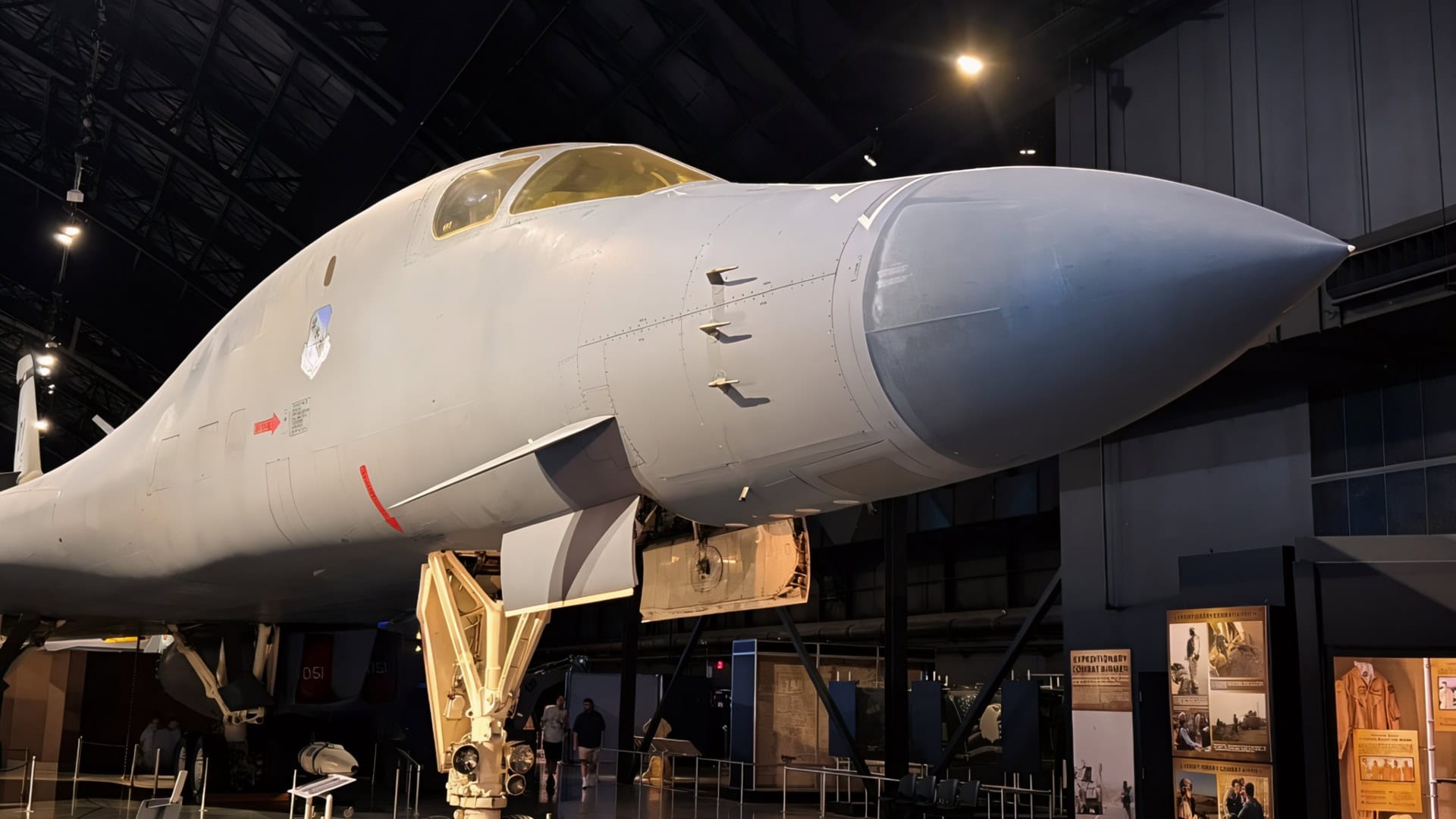
B-1B Lancer Bomber 19FortyFive Photoshoot Photo from National Museum of the U.S. Air Force
Then, in 1994, the B-1B lost its job again when the START-1 talks eliminated its nuclear-bomber role.
Since then, the Lancer has served as a conventional, low-altitude bomber.
The Air Force would like to send the Bone to the boneyard, but it still needs it as a stopgap until the new Raider arrives over the next ten years.
So, if you’re going to do that, you might as well make it even more lethal, right?
The B-1B BEAST
The Air Force is now converting its B-1B to BEAST mode, or the B-1 Embracing Agile Scheduling program.
The Beast upgrade starts with reactivating the six external underwing hardpoints for cruise missiles. Hardpoints that were mechanically rendered unusable by the requirements of the START treaty (the Soviets really feared the B-1B).
In typical US fashion, instead of making these six hardpoints capable of carrying a single Tomahawk, they are installing six Load Adaptable Modular (LAM) pylons, each able to carry six missiles for a total of thirty-six loaded externally.
This is in addition to the twenty-four it can carry inside its three bomb bays.
That makes a single B1B Lancer the hardest-hitting bomber in existence, capable of launching sixty AGM-158 Joint Air-to-Surface Standoff Missiles against land targets, Long-Range Anti-Ship Missiles (LRASM), or a combination of both.
A single B1B carrying sixty anti-ship cruise missiles could attack an entire naval task force by itself, with a very good chance of overwhelming its defenses and sinking them all in a single attack.
This modification also allowed the B-1B platform to lead testing of the Raytheon AHM-4 Hypersonic Attack Cruise Missile (HACM). So the Bone here will develop the weapon the new B-21 Raider will use later on.
The Air Force Got The BEAST Mods Done On The Quick
There is also a story about getting these modifications done quickly and on budget. Instead of pulling the B-1B out to do this upgrade separately, they did it within the Lancer’s normal maintenance schedule.
With all necessary parts and personnel on hand and staged in advance, Air Force personnel completed these modifications on a B-1B in just six days.
To Support A Missile Arsenal, the BEAST Needs Better Comms
As you might expect, they will install other modifications to handle this staggering missile load.
They will install a modernized Identification Friend or Foe system to ensure those missiles don’t target friendly ships, and encrypted communications will harden the guidance data sent from the B-1B to the missiles in flight.
The B-1B will also get new Defensive Avionics Systems, an intentionally obscure term for electronic warfare and countermeasures that detect and defeat incoming missiles and anti-aircraft fire.
The BEAST is here, and it looks like it will be serving into the 2040s and perhaps beyond.
About the Author: Sean Spoonts
Sean Spoonts is the former Editor-In-Chief of SOFREP.com. He is a military analyst, writer, and commentator whose work has appeared in Newsweek, CNS News, Ukrinform, and various military/veteran media networks and professional publications, including the Military Intelligence Professional Bulletin. He is a U.S. Navy veteran, having served as an Aviation Anti-Submarine Warfare Operator and Search and Rescue Helicopter Aircrewman.