Learning from the Germans… at Sea? – In 1898, the head of the German Navy Ministry, Admiral Alfred von Tirpitz, developed a seductive rationale for building a massive German battlefleet. Previously, Germany’s most-likely adversaries had been France and its recent ally, Russia. Starting in 1891, Tirpitz had urged his colleagues to shift from building cruisers to protect German merchant ships to battleships that would destroy their French and Russian rivals and secure Germany’s littoral waters and imports. After 1897, however, Tirpitz shifted his attention to another nation that was not yet a rival – Great Britain. Tirpitz was influenced by the U.S. naval theorist, Alfred Thayer Mahan, and believed that sea power was a foundation for a nation’s economic prosperity through overseas trade. He expected that, as commercial rivals, Germany and Britain would eventually come to blows. But building a large fleet right now to challenge Britain did not make sense. Germany was a land power, and Britain was not an enemy with a shared border, like France or Russia. Consequently, Germany could never build enough ships to challenge Britain’s command of the seas.
But Tirpitz hit upon a clever – perhaps too clever – idea. Rather than build a fleet that would destroy the Royal Navy, he merely wanted the German fleet to be large enough that, if it confronted the Royal Navy, it would inflict such damage upon the British that any victory of theirs would be pyrrhic. Consequently, Britain would have to fear that another surviving naval power could challenge the remnants of the Royal Navy for control of the sea. Rather than risk fighting a costly battle against Germany, once Britain made a cost-benefit analysis, it would instead seek an accommodation with Germany. In other words, even building a weaker fleet would increase Germany’s attractiveness as an ally for either Russia or Britain (which were rivals until 1907) and discourage Britain from challenging Germany’s acquisition of colonies.
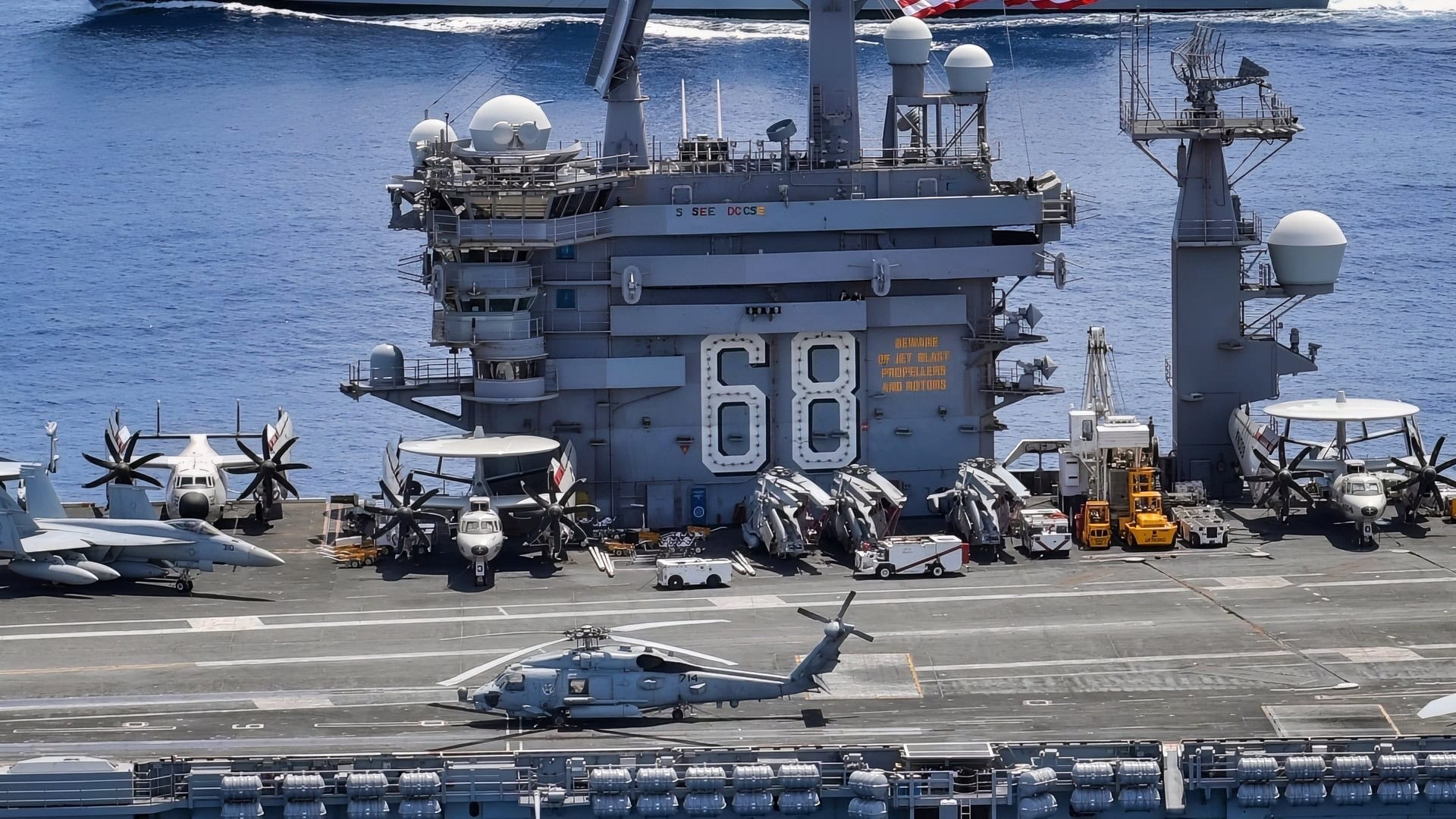
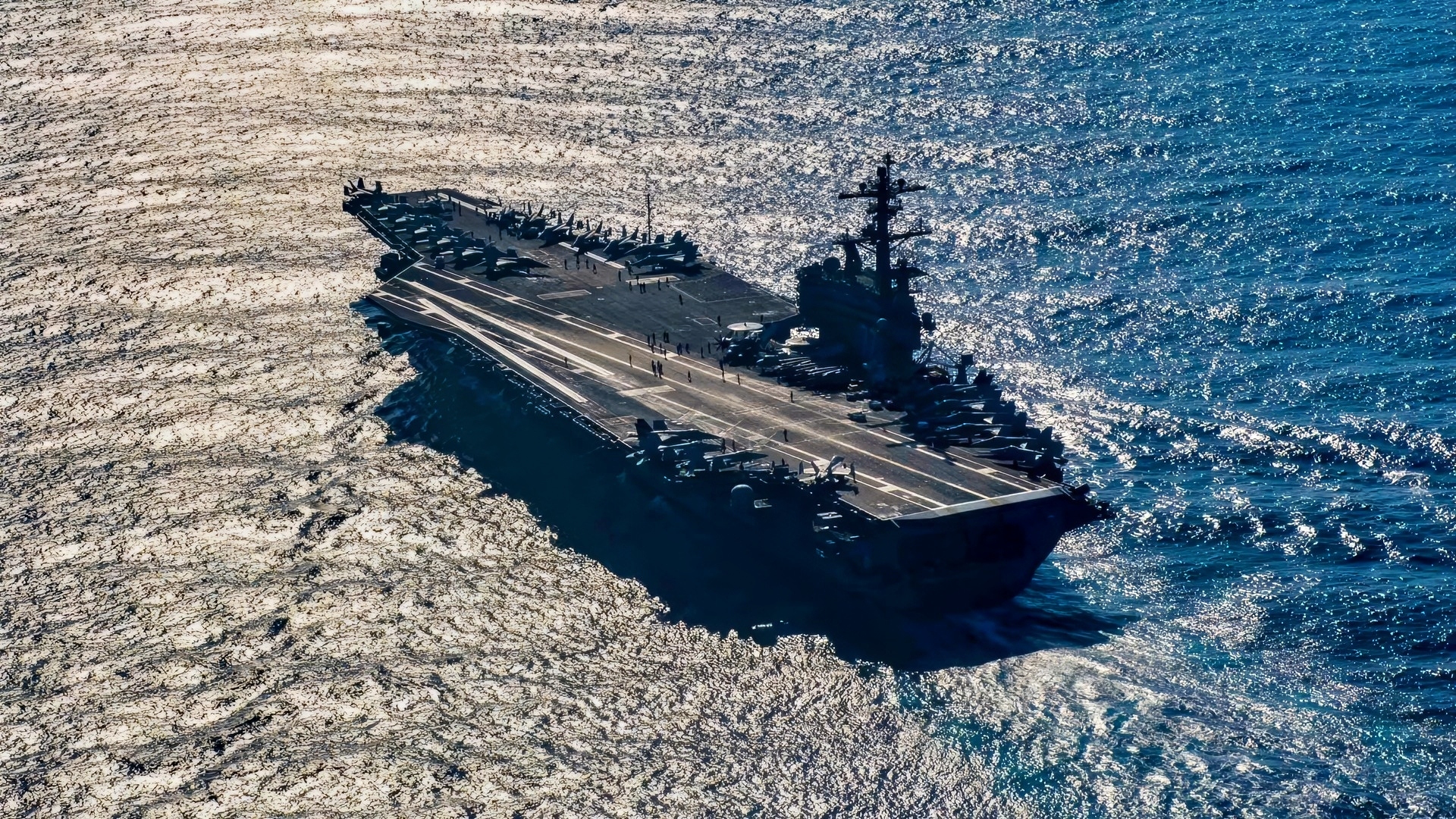
INDIAN OCEAN (July 20, 2020) The Nimitz Carrier Strike Group, consisting of flagship USS Nimitz (CVN 68), Ticonderoga-class guided missile cruiser USS Princeton (CG 59), and Arleigh Burke-class guided missile destroyers USS Sterett (DDG 104), and USS Ralph Johnson (DDG 114), along with Indian Navy ships Rana, Sahyardi, Shivalik and Kamorta, steam in formation during a cooperative deployment in the Indian Ocean July 20. (U.S. Navy photo by Mass Communication Specialist 3rd Class Jose Madrigal)
There was just one, gaping hole in Tirpitz’s logic (what he called the “risk theory”) – his plan depended on Britain’s willingness to seek battle with the German Navy once the war began. But what if, as one of Tirpitz’s predecessors warned, the British Navy did not come out to fight? What if, instead of charging into German waters, the British merely maintained a distant blockade of Germany? The Germans, including Tirpitz, knew this was a possibility but they had no response – their whole force structure and strategy was based on the idea that the British would come to them, and not the other way around. Accordingly, when war began in August 1914, the German Navy sat paralyzed when it might have sallied forth and challenged the deployment of the British Expeditionary Force to France. The Germans eventually resorted to terror attacks against British coastal towns in the hope that they could destroy small elements of the Royal Navy, but this soon proved futile. In desperation, the Germans turned to their U-boats to starve Britain, while the magnificent ships they had built rusted at anchor until the crews refused to obey their mutinous officers who had defied their government’s orders to stand down and intended instead to wage one last suicidal battle to restore the Navy’s “honor.”
It is tempting to think that the nation following Germany’s path is China. The latter’s anti-Navy is obviously supposed to hold our fleet at risk, but China is also building a conventional blue-water Navy for the period after it secures command of the seas. In other words, it does not have to make the sorts of choices that Tirpitz or the modern U.S. Navy confronts. For the latter, there are at least two lessons worth recalling. First, many critics of the Navy have warned that it has spent the last several decades building the wrong sort of fleet to survive in the current environment – i.e. a fleet built around carriers and manned aircraft to conduct short-range precision strike against an enemy with long-range precision strike capability augmented by layers of defensive forces. Where are seeing some of the consequences of the U.S. Navy’s choices during the current war with Iran. But what if there is a larger lesson – what if the U.S. Navy is preparing for the wrong war? Just as the entire rationale for Germany’s cost fleet was a psychological necessity that the Royal Navy would behave in a specific fan, many in the United States, both critics and supporters of the Navy, are arguing over the current force mix to defeat a Chinese invasion of Taiwan. But what if the PLAN never comes? What if China’s preparations to coerce Taiwan were a cost-imposition strategy against the United States? Within the United States, there is already considerable doubt over its capacity to defend Taiwan, which feeds the reluctance of many in Taiwan to seek a peaceful accommodation with China, which further reduces U.S. incentive to defend Taiwan, and so forth.
And yet, navalists and their critics seem not to have grappled with the possibility that the adversary may not be interested in waging the war that the U.S. Navy is determined to wage. If the PLAN never comes out, what then will the U.S. Navy do in either peace or wartime? After 1914, the Germans flailed to use their expensive fleet effectively and eventually settled on a path of escalating the war through unrestricted submarine warfare that ultimately doomed Germany. If the United States is to avoid such catastrophic escalation if its fleet proves useless, it needs to develop a new strategy.
After World War I, German naval theorists argued that Germany grabbed territory for easier access to the high seas. By threatening Britain’s SLOCs, Germany could force the Royal Navy into a decisive battle. Just like the dog that caught the car, these theorists had no answer for overcoming Britain’s quantitative and qualitative superiority at sea. What exactly the U.S. Navy will do in a world where it has given up on the fantasy of power projection ashore, at least from non-stealthy ships, is something we still have to consider. The recent move toward re-emphasizing sea control by protecting Pacific SLOCs is a welcome development, but it is not enough. Tirpitz and Mahan both assumed some sort of magical connection between naval and economic power – the former clearly depended on the latter but it has never been entirely clear how the former underpins the latter beyond bromides of “freedom of the seas.”
If navalists cannot see a role for the U.S. Navy in a world beyond fighting contingencies that are either beyond its capacity or unlikely to occur, it seems a criminal waste of resources at a time when resource constraints will demand sacrifices from our defense establishment.
About the Author: Anand Topriani
Anand Toprani is a Jeane Kirkpatrick Fellow at the American Enterprise Institute. He is the author of The Man in the Middle: John Lehman, Naval Power, and the End of the Cold War (Stanford University Press, 2027).