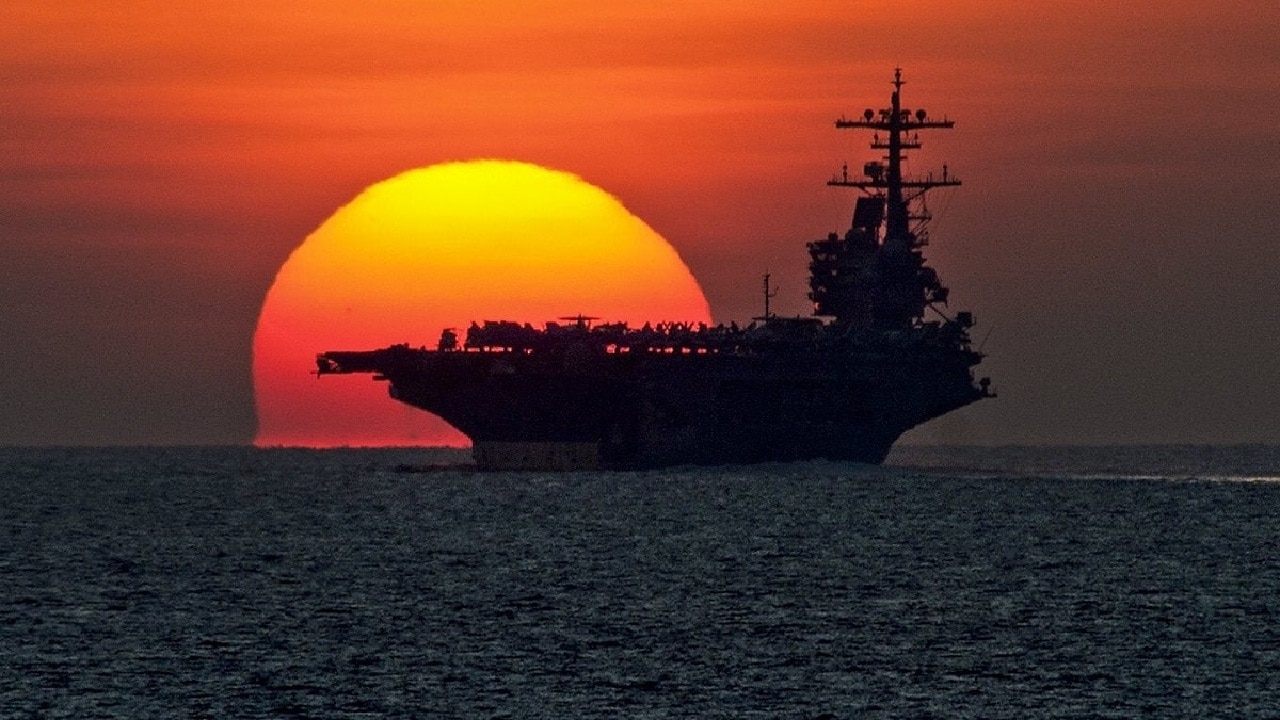
In December 2005, the Swedish submarine HSwMS Gotland came to periscope depth and took three “kill-shot” photos of the aircraft carrier USS Ronald Reagan.
At the time, the Nimitz-class carrier was a $6 billion nuclear carrier being sunk by a sub valued, again, in those years’ dollars, at around $100 million.
The photos were taken within range of Gotland’s torpedoes, and the sub went undetected by Reagan’s screen, which presumably included a US attack submarine trying to listen for its approach.
When this information was released publicly months later, it made worldwide news. And even today, nearly 21 years later, it still does
The invulnerability of US Navy Carrier Strike Groups had seemingly been shattered by a Swedish submarine.
It also caused quite a stir within the US Navy too.
The Physics Of Silence: Engineering the Gotland-class As A Ghost In Green Water.
The 3 Gotland-class submarines have served with the Swedish Navy since 1995.
Two Kockums V4-275R Stirling engines power them in an air-independent propulsion system that runs on kerosene fuel and liquid oxygen.
Two diesel-electric MTU engines provide auxiliary propulsion.
Stirling engines are very quiet and allow the Gotland to run submerged for up to 2 weeks without surfacing, though cruising speeds of 5 kts are the norm, with short-duration sprints on battery power up to 20kts.
While US nuclear submarines are made to span the world’s oceans at high speed at deep operating depths, the Gotland is made for extreme acoustic and magnetic invisibility with built-in structural sound dampening, vibration-absorbing mounts for equipment, sound-absorbing coatings, and as many as 27 electromagnets in the hull to reduce detection by magnetic anomaly detection gear carried by ASW aircraft.
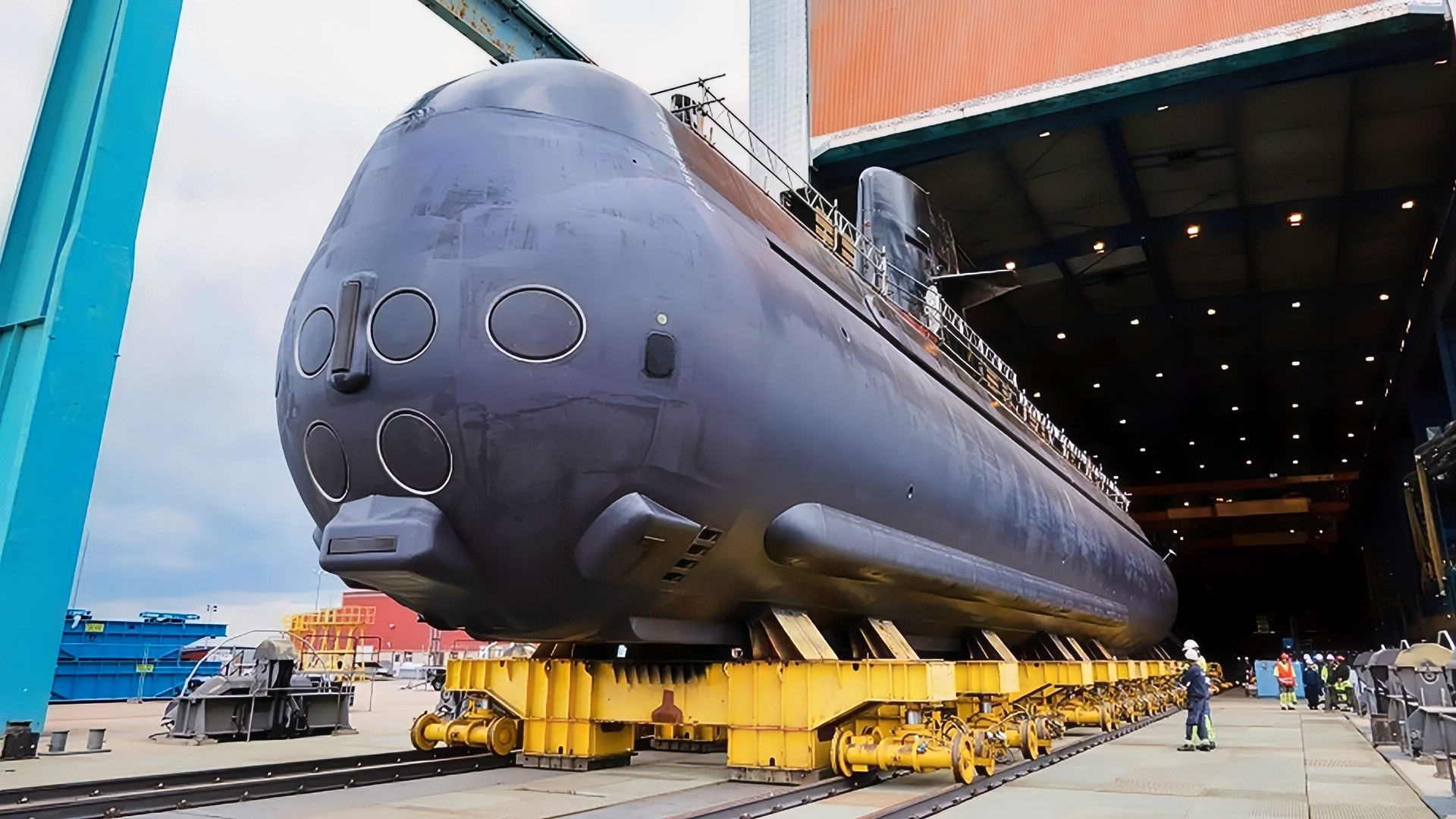
Gotland-class Submarine SAAB File Photo
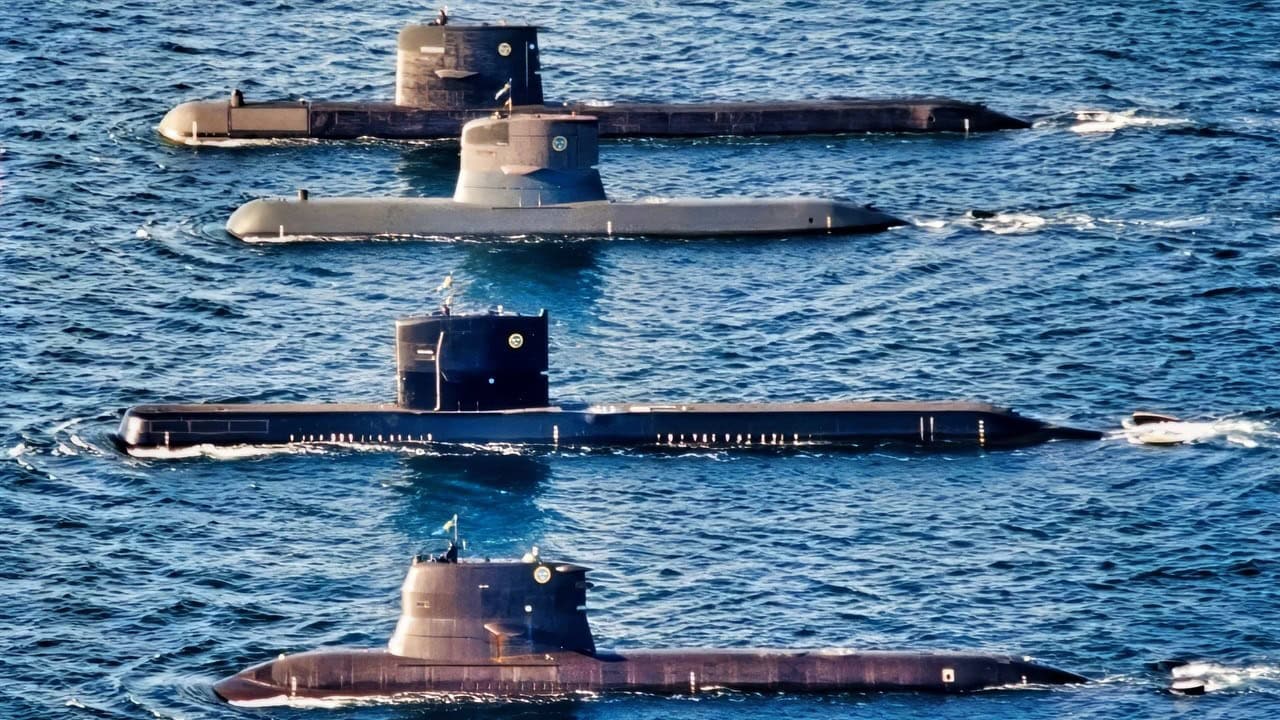
Gotland-Class Fleet of Submarines. Image Credit: Creative Commons.
Its test depth is just 500 feet, and it is designed to slowly pick its way through the boundary layer in thermoclines to further reduce its chances of detection.
Answering The Wake-up Call
The major takeaways for the US Navy from this exercise involving the Gotland were that its anti-submarine warfare capabilities had badly atrophied since the collapse of the Soviet Union, and its massive submarine fleets were either confined to port or being broken up for lack of money to operate them.
It also seemed that technologically dense, expensive strategic assets like carrier strike groups were vulnerable to cheap, mass-producible submarines.
It suggested that asymmetrical warfare threats represented by the Gotland, mines, and drones could punch well above their weight in a future conflict.
While the Navy certainly had experience and expertise in hunting subs in the blue waters of the ocean, “green water” threats represented by Gotland in this exercise would have to be dealt with too.
Rewriting The Tactical Playbook: How The US Navy Reformed Its Carrier Strike Group Defense Against Submarines
Rather than relying purely on advanced sensor warning of an approaching threat, the Navy returned to the tried-and-true method of frequent, unpredictable course and speed changes to disrupt the firing solutions of any submarines trying to target them.
It also redesigned and upgraded its Variable Towed Array Sonar and underwater sensors to better detect quieter, conventionally powered submarines.
ASW doctrine would shift to a layered, networked system coordinating ship sonars, dipping active sonars used by helicopters, and sonobuoys dropped by fixed-wing aircraft.
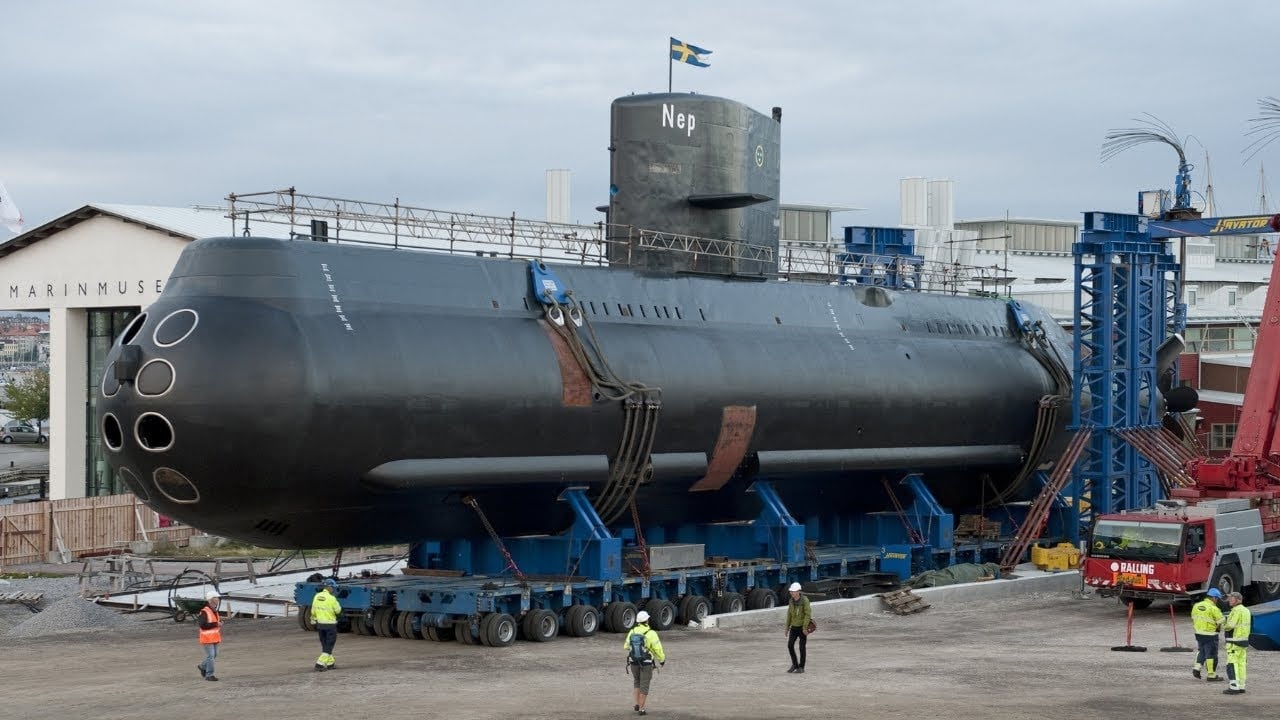
Gotland-class submarine. Image Credit: Creative Commons.
This likely expanded the Undersea Warfare Officer’s role in the strike group, bringing it all together into a coherent plan for defending against submerged threats.
The US Navy already knew it had deficiencies in these areas.
It leased Gotland and its crew from Sweden for two years to conduct a series of tests and exercises out of San Diego, using the sub as an aggressor to be hunted by US Navy ships, subs, and aircraft to develop tactics and countermeasures against coastal patrol submarines.
The 2005 exercise occurred six months after the lease began. The Navy was already testing itself when Gotland penetrated the Reagan strike group’s screen.
Exercise vs. Reality
Twenty years later, could Gotland return and penetrate the screen of the USS Ronald Reagan again?
Yes, probably.
Exercises are not real-world combat.
When the US Navy conducts these exercises, they aren’t to look good, but to reveal flaws in sensors, weapons, and tactics that need refinement.
In 2005, Gotland was essentially set up to win by the Navy’s scenario, which placed the Reagan close to shore in waters that favored Gotland’s capabilities.
In a real shooting war, the Navy would recognize this and not take a carrier into restricted shallow waters where coastal patrol submarines are expected to be lurking below the surface.
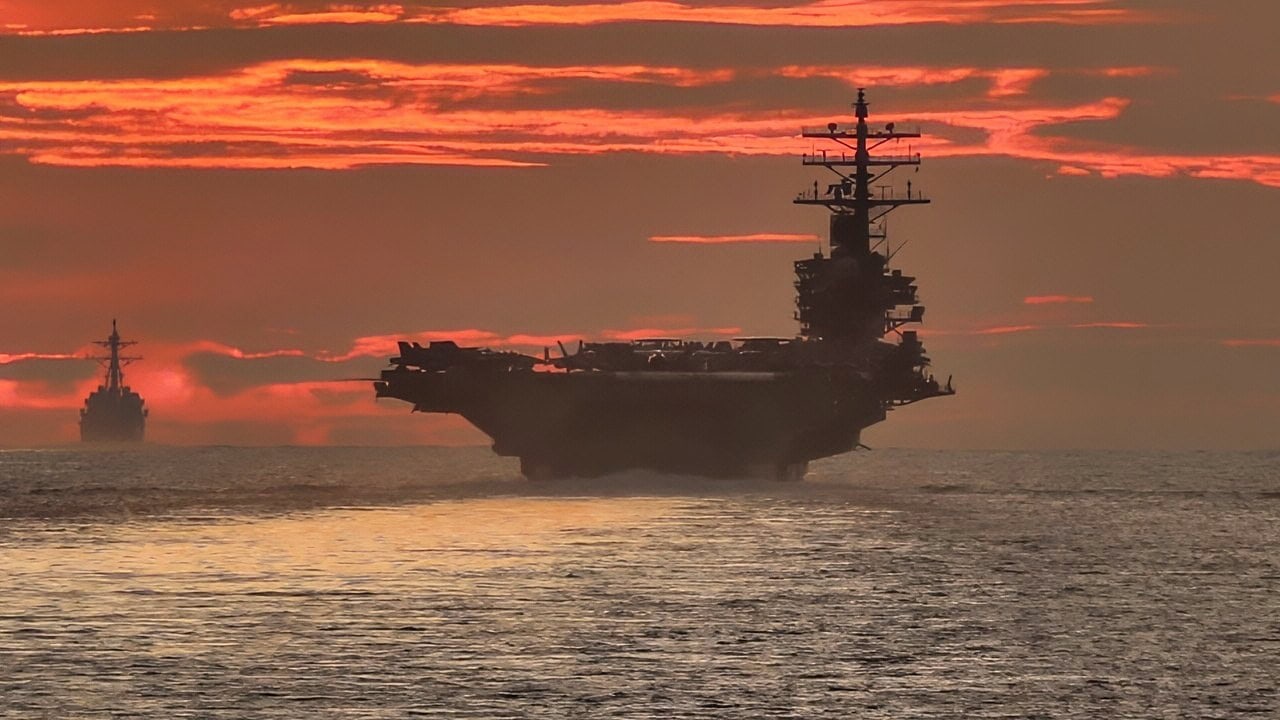
210618-N-JW440-2165 STRAIT OF MALACCA (June 18, 2021) As seen from the Ticonderoga-class guided-missile cruiser USS Shiloh (CG 67), the Navy’s only forward-deployed aircraft carrier USS Ronald Reagan (CVN 76) transits the South China Sea with the Arleigh Burke-class guided missile destroyer USS Halsey (DDG 97). The ships are part of Task Force 70/Carrier Strike Group 5, conducting underway operations in support of a free and open Indo-Pacific. (U.S. Navy Photo by Mass Communication Specialist 1st Class Rawad Madanat)
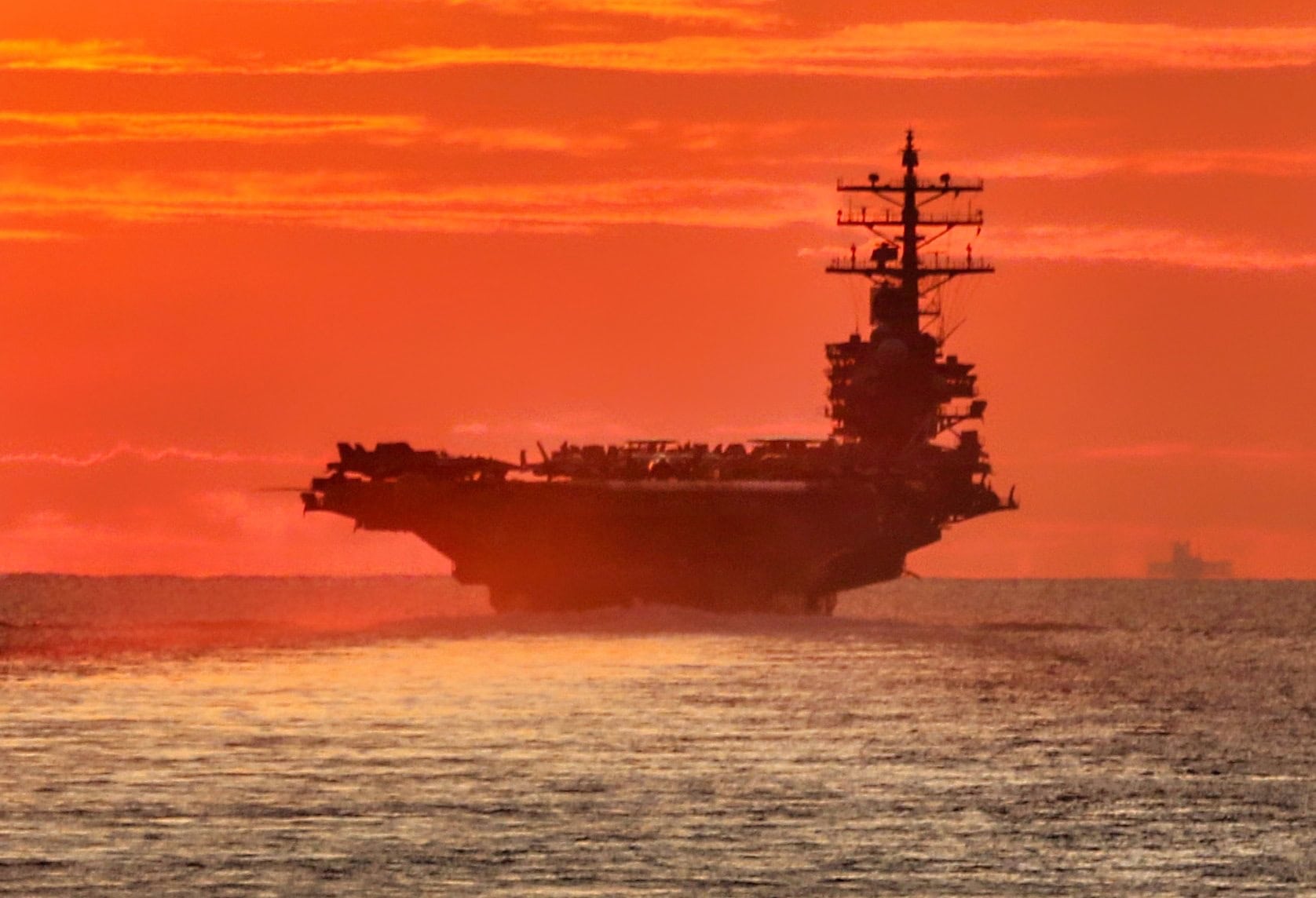
(June 18, 2021) As seen from the Ticonderoga-class guided-missile cruiser USS Shiloh (CG 67), the Navy’s only forward-deployed aircraft carrier USS Ronald Reagan (CVN 76) transits the Strait of Malacca with the Arleigh Burke-class guided missile destroyer USS Halsey (DDG 97). The ships are part of Task Force 70/Carrier Strike Group 5, conducting underway operations in support of a free and open Indo-Pacific. (U.S. Navy Photo by Mass Communication Specialist 1st Class Rawad Madanat)
In a real war, Gotland might not have taken that shot at the Reagan in the first place.
Any submarine commander who detects a heavily protected target like a US carrier will know that firing three torpedoes at it will provoke a furious, determined response from her escorts.
They will fan out, with their active sonars banging away; their ASW helicopters will launch with acoustic-homing torpedoes as well.
A US fast-attack submarine with that carrier will hear the three torpedoes in the water and be on its way at high speed with torpedoes of its own to launch.
Before he ever takes that shot, that submarine skipper will have a reasonable plan to escape retaliation that is very likely to sink him as well.
Or he will not attack until he has a reasonable chance of escaping afterward. Submarine commanders are favored for their aggressiveness, not for having suicidal tendencies.
About the Author: Sean Spoonts
Sean Spoonts is the former Editor-In-Chief of SOFREP.com. He is a military analyst, writer, and commentator whose work has appeared in Newsweek, CS News, Ukrinform, and various military/veteran media networks and professional publications, including the Military Intelligence Professional Bulletin. He is a U.S. Navy veteran, having served as an Aviation Anti-Submarine Warfare Operator and Search and Rescue Helicopter Aircrewman.