
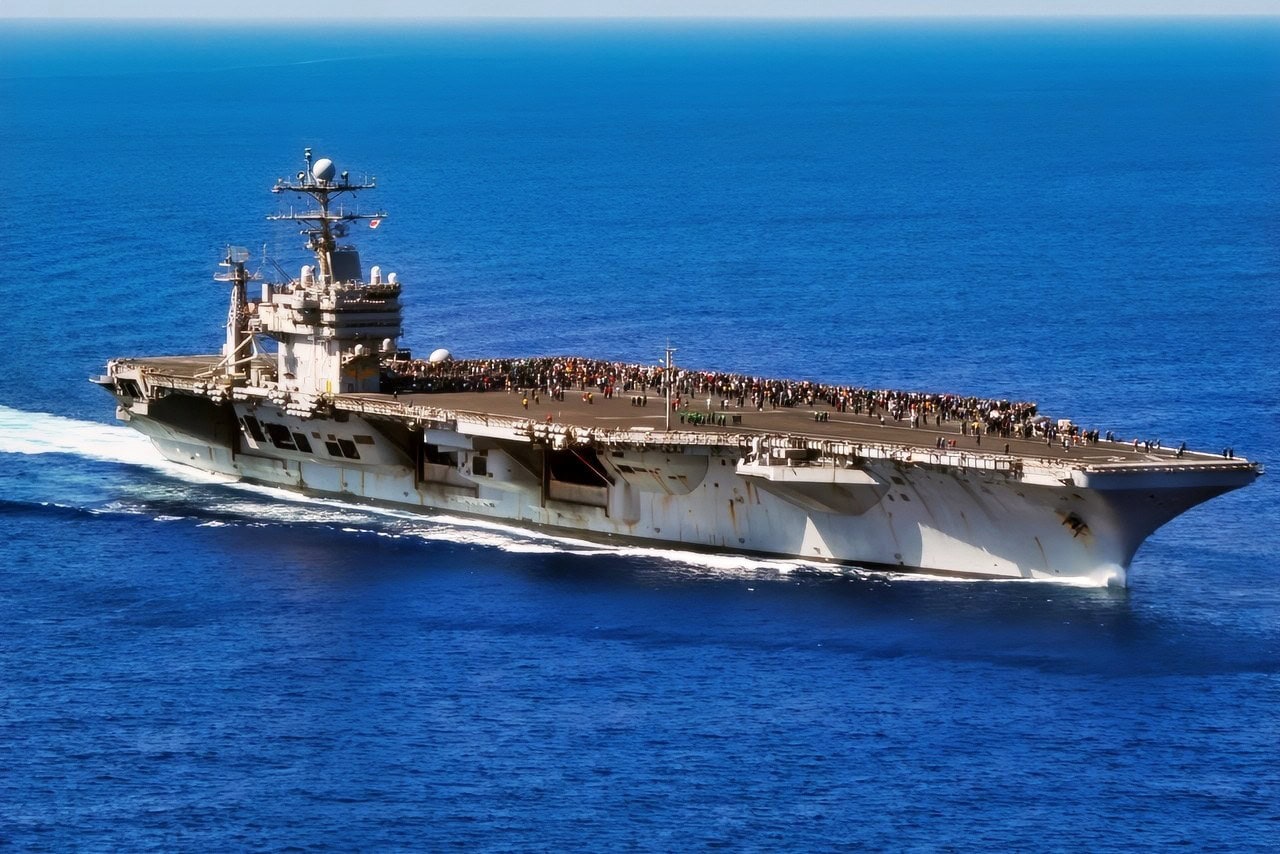
USS Abraham Lincoln Has A Message For Iran: A U.S. Supercarrier Heads To CENTCOM
The United States Navy has ordered the nuclear-powered supercarrier USS Abraham Lincoln (CVN-72) and its carrier strike group to transit from the South China Sea toward the Middle East, entering the U.S. Central Command (CENTCOM) region in response to rising tensions and growing unrest inside Iran.
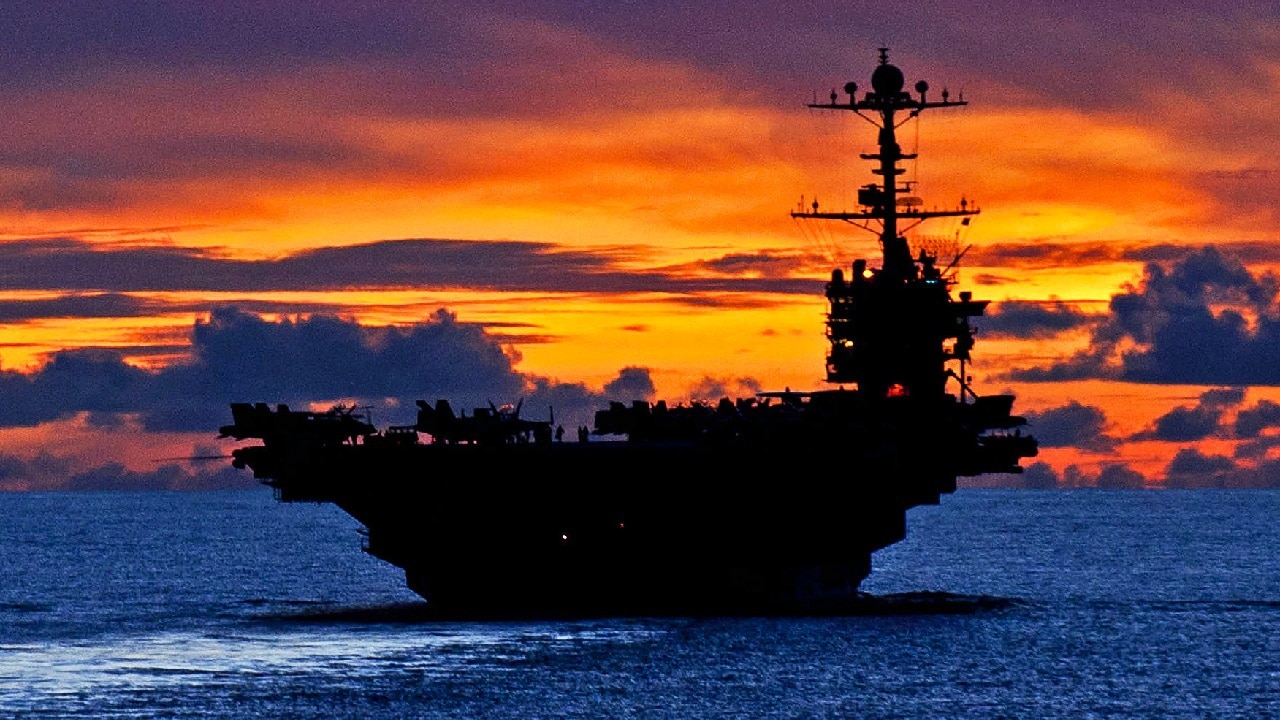
The aircraft carrier USS George Washington sails through calm seas near Guam at sunset while under way in the Pacific Ocean, Sept. 8, 2012. The George Washington is the centerpiece of Carrier Strike Group 5, the US Navy’s only continuously forward deployed carrier strike group, based out of Yokosuka, Japan. Carrier Strike Group 5 is currently on a routine Western Pacific patrol.
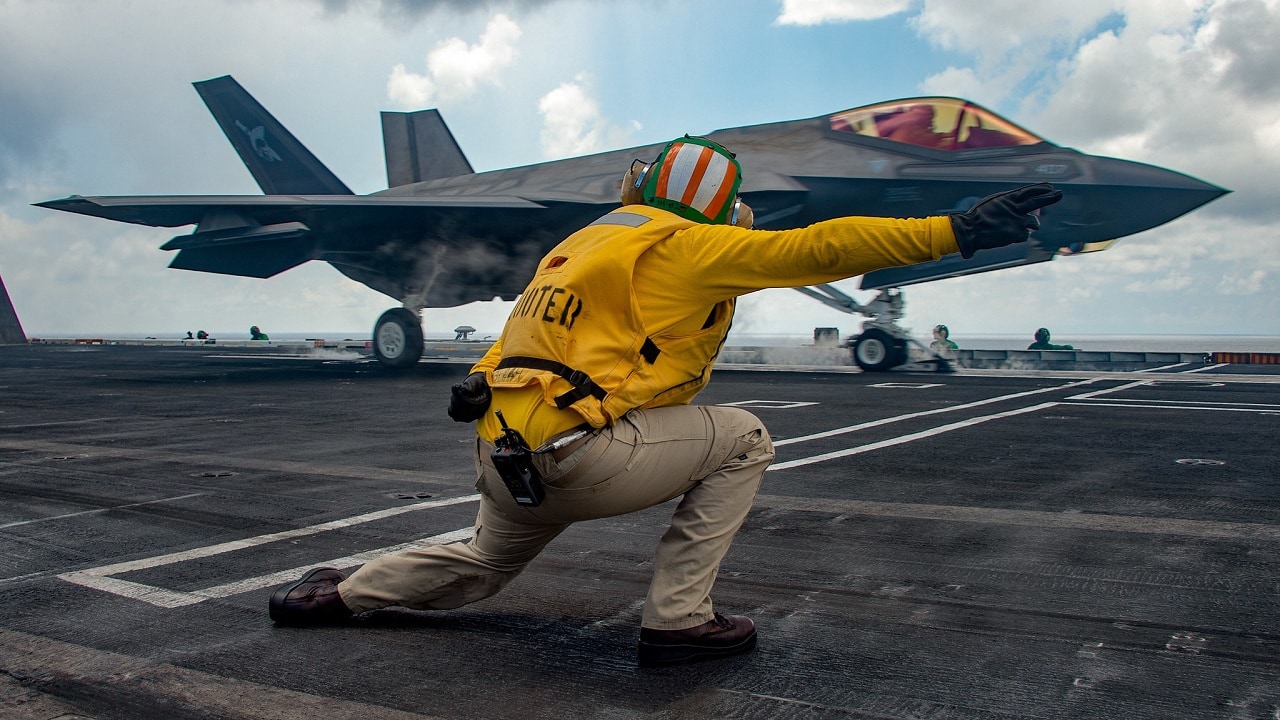
SOUTH CHINA SEA (Oct. 25, 2021) Lt. Nicholas Eppler, from Exeter, Calif., directs flight operations as an F-35C Lightning II assigned to the “Argonauts” of Strike Fighter Squadron (VFA) 147 launches from the Nimitz-class aircraft carrier USS Carl Vinson (CVN 70), Oct. 25, 2021. The Carl Vinson Carrier Strike Group is on a scheduled deployment in the U.S. 7th Fleet area of operations to enhance interoperability through alliances and partnerships while serving as a ready-response force in support of a free and open Indo-Pacific region. (U.S. Navy photo by Mass Communication Specialist Seaman Emily Claire Bennett) 211025-N-TY704-1241
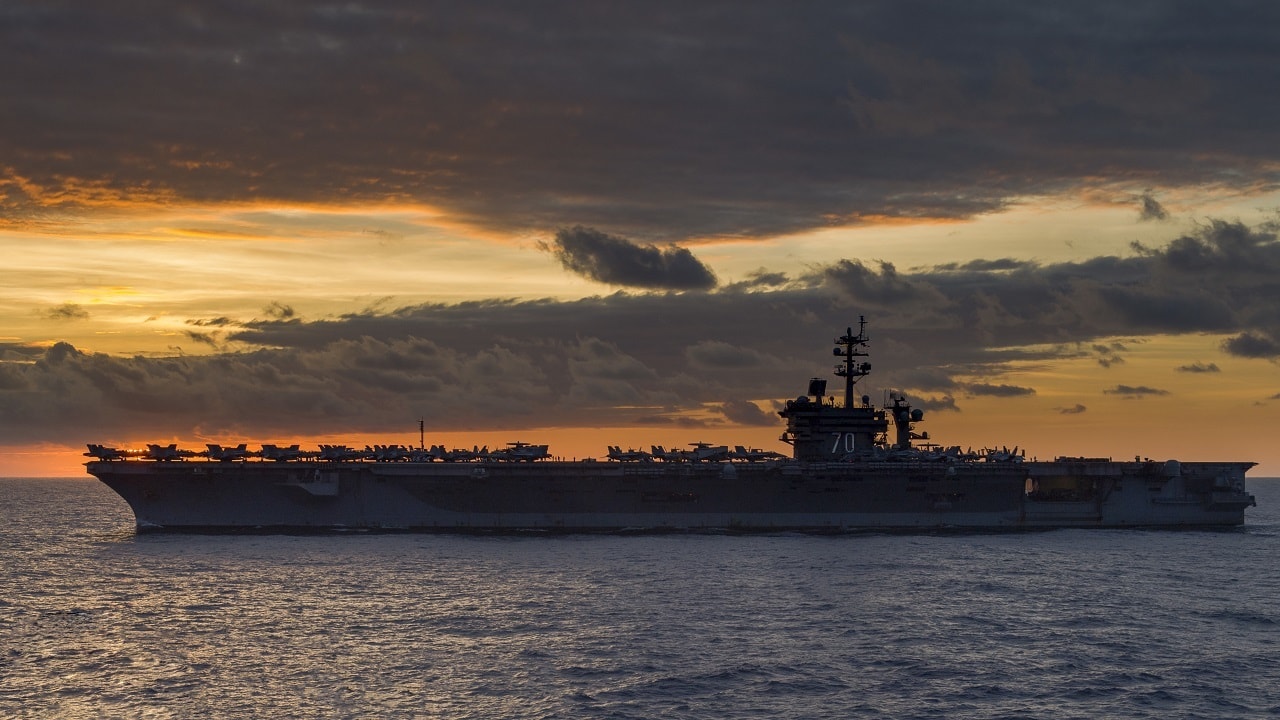
(Feb. 10, 2018) The Nimitz-class aircraft carrier USS Carl Vinson (CVN 70) transits the South Chna Sea. The Carl Vinson Strike Group is currently operating in the Western Pacific as part of a regularly schedule deployment. (U.S. Navy photo by Mass Communication Specialist Third Class Jasen Morenogarcia/Released)
The redeployment was reported by Western media outlets as well as Chinese state-linked news outlet, the South China Morning Post, which noted the aircraft left its homeport of San Diego in November and has been in the South China Sea since December, “operating for at least two weeks in the resource-rich waterway claimed by various countries in the region.”
Defense officials have confirmed that the Lincoln strike group – comprising the aircraft carrier, its embarked air wing, and surface escorts – is underway from the South China Sea toward the Middle East amid escalating threats and diplomatic pressures tied to Iran.
NDTV and other sources have noted that the transit to CENTCOM, which spans more than four million square miles across the Middle East and adjacent regions, is expected to take about a week at sustained speed.
Pentagon officials have not publicly detailed all operational objectives for the redeployment, but the decision comes amid heightened U.S. concern over internal instability in Iran and the potential need to bolster deterrence near critical waterways and allied states. The redeployment also fills a deterrence gap: for much of January 2026, U.S. Navy carrier strike groups were absent from the Middle East – a rare occurrence that constrains U.S. options in the event of a regional crisis.
The Lincoln’s movement and redeployment also shows how carrier scheduling and global posture are adapting to a number of simultaneous pressures across different theaters, with warnings having already been issued by Adm. Daryl Caudle, the Chief of Naval Operations (CNO), about the dangers of redeploying USS Gerald R. Ford, which is currently deployed in the U.S. Southern Command (SOUTHCOM) region, specifically operating in the Caribbean and South American waters as part of an ongoing effort to stabilize Venezuela following the arrest of President Nicolas Maduro.
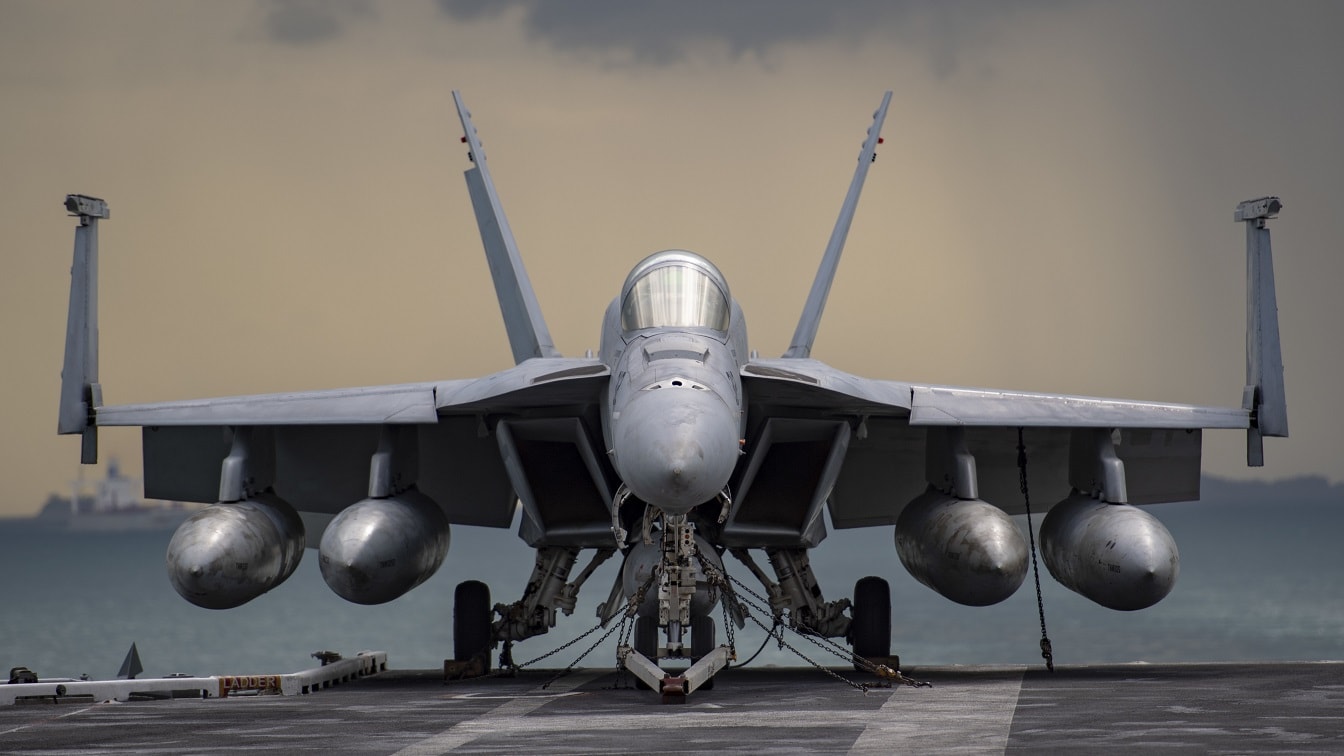
A (Feb. 5, 2021) An F/A-18E Super Hornet, from the “Kestrels” of Strike Fighter Squadron (VFA) 137, rests on the flight deck of the aircraft carrier USS Nimitz (CVN 68) during a strait transit. Nimitz is part of the Nimitz Carrier Strike Group and is deployed conducting maritime security operations and theater security cooperation efforts. (U.S. Navy photo by Mass Communication Specialist 3rd Class Elliot Schaudt/Released)
The Lincoln’s redeployment, however, is reigniting debates over whether the U.S. Navy’s supercarrier fleet is being stretched too thin.
Supercarriers, which have long been central to U.S. maritime strategy, are in constant demand across the Indo-Pacific, the Middle East, and, increasingly, other theaters. With only 11 active large carriers and fixed rotational schedules for maintenance and training, deploying one across multiple crises inevitably impacts readiness.
Abraham Lincoln’s redeployment comes as the Navy continues to grapple with carrier availability issues – and those pressures, which include the recent delays to the USS George Washington’s return to operational service after major maintenance overruns, mean that accepting risk in another theater is the price that must be paid for moving the Lincoln.
U.S. defense planners appear to judge that trade-off as justified, however, given the severity of the situation with Iran and the potential consequences of failing to respond with sufficient naval presence.
About the Author:
Jack Buckby is a British researcher and analyst specialising in defence and national security, based in New York. His work focuses on military capability, procurement, and strategic competition, producing and editing analysis for policy and defence audiences. He brings extensive editorial experience, with a career output spanning over 1,000 articles at 19FortyFive and National Security Journal, and has previously authored books and papers on extremism and deradicalisation.