The “Black Hole” Myth: Is Russia’s Kilo-Class Submarine Actually Stealthy?
Russia’s Kilo-class is among the most prolific submarines Moscow has exported. It is in service with China, India, Algeria, Vietnam, Iran, Myanmar, Poland, and Romania.
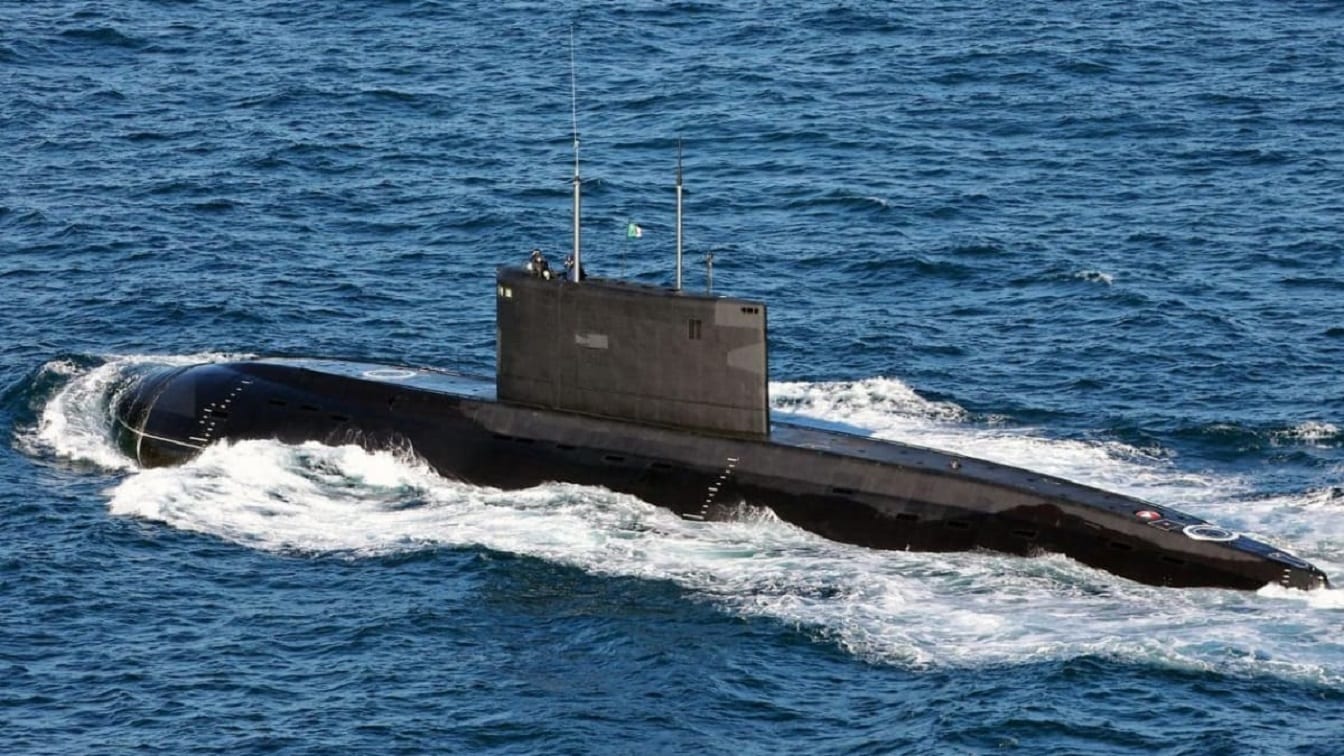
Iran’s Navy Has Kilo-Class Submarines. Image Credit: Creative Commons.
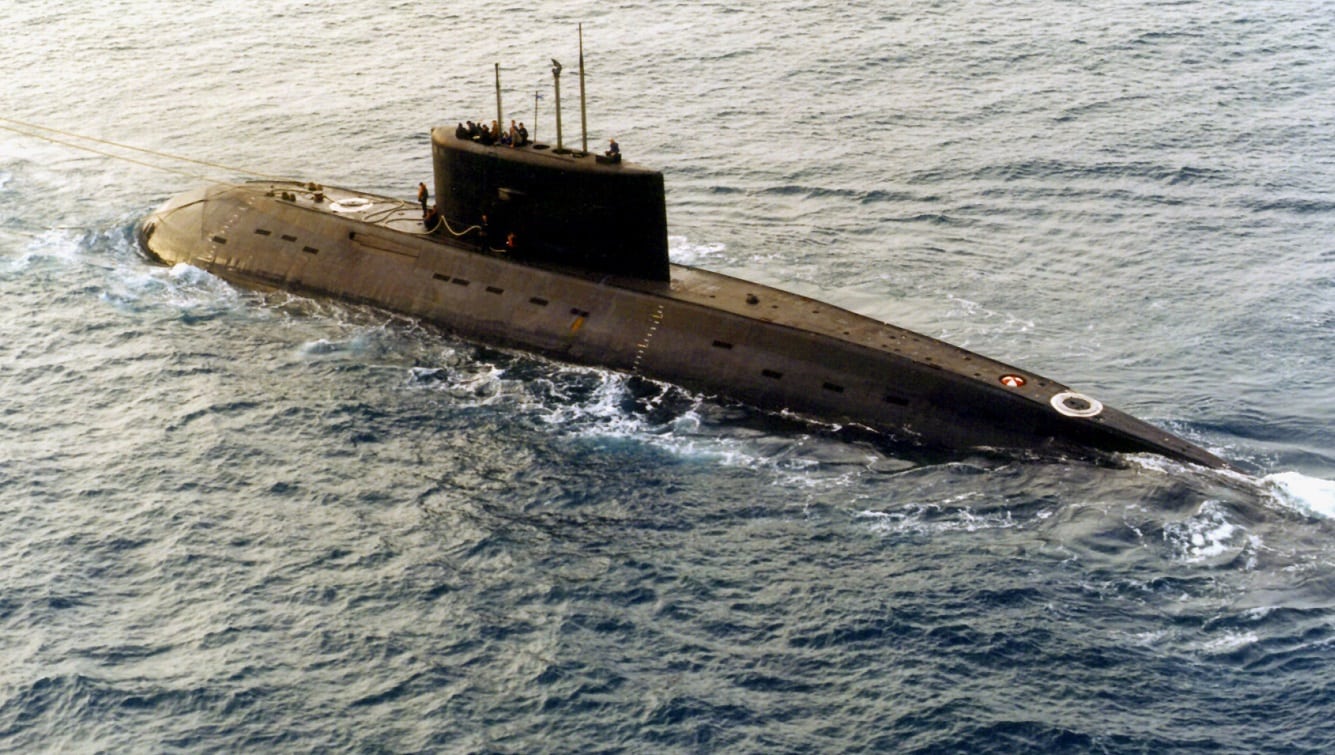
A Russian-built, Kilo-class diesel submarine purchased by Iran, is towed by a support vessel in this photograph taken in the central Mediterranean Sea during the week of December 23. The submarine and the support ship arrived at Port Said, Egypt, on Tuesday and were expected to begin transiting the Suez Canal today, Jan. 2, 1996. Ships and aircraft from the U.S. NavyÕs Sixth Fleet are tracking the submarine, which has been making the transit on the surface. This is the third Kilo-class submarine the Iranians have purchased from Moscow. DoD photo
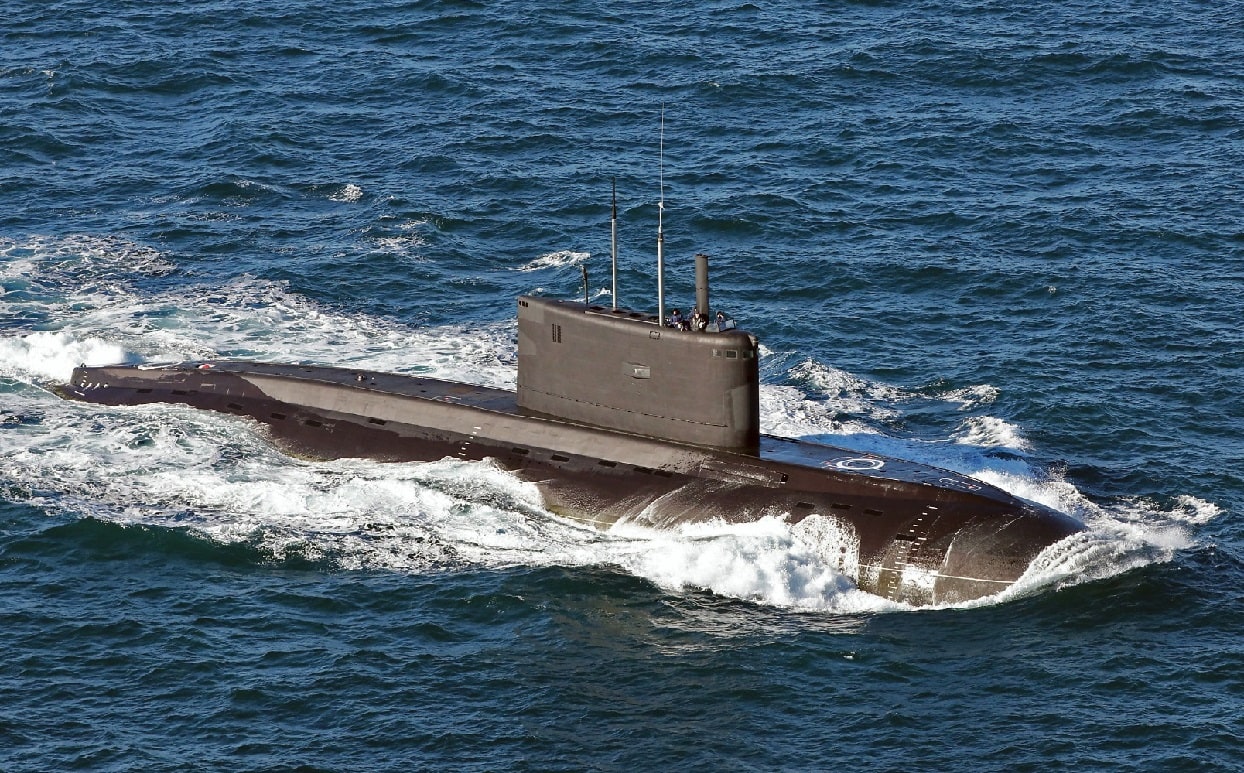
Kilo-class Submarine. Image Credit: Creative Commons.
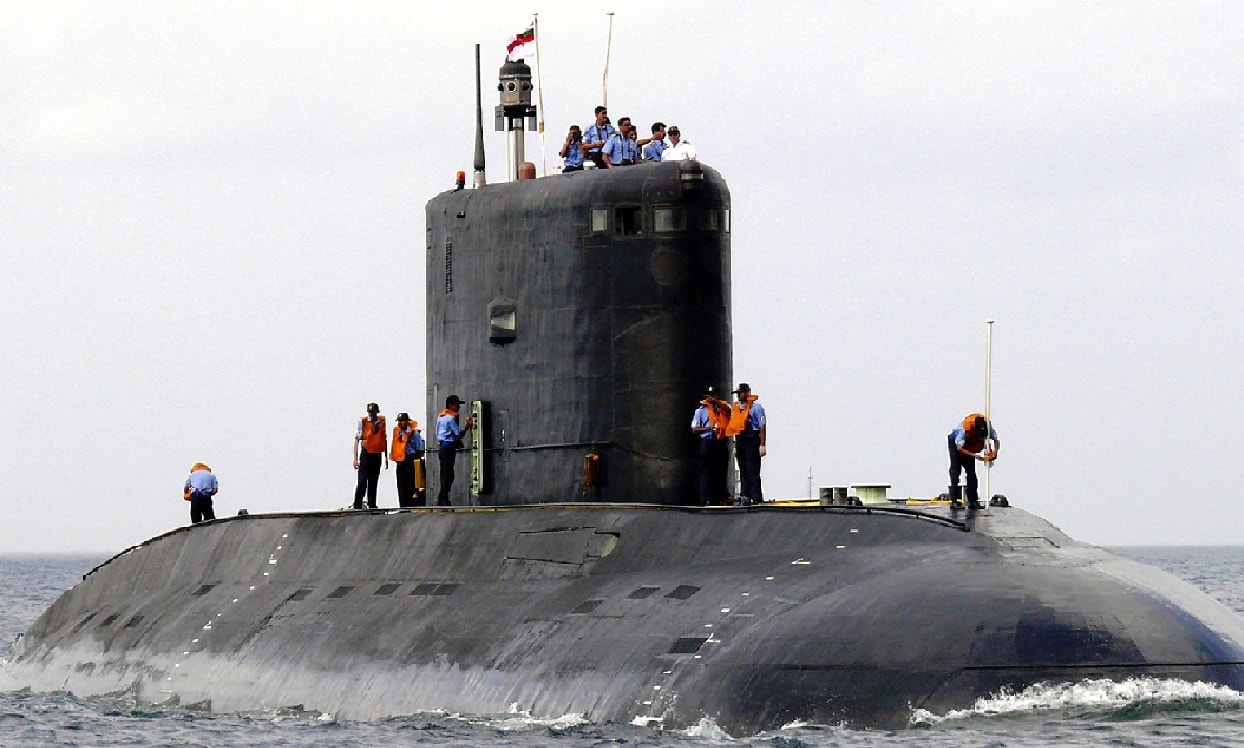
Kilo-class Submarine.
The class owes much of its export success to its small size—which makes it a good choice for navies with modest submarine experience—and its relative sophistication.
The Kilo-class is an attractive option for any country needing a capable submarine optimized for operations in relatively shallow coastal waters.
Originally intended as a submarine hunter and anti-surface-warfare ship, the Kilo-class was optimized for those tasks.
But perhaps its most noteworthy characteristic is the class’s relatively low acoustic signature, designed to allow the subs to stay undetected by their expected adversary: U.S. Navy carrier strike groups. But while the class was certainly a step up from previous Soviet conventionally powered submarine designs, its capabilities often are exaggerated.
Incremental Improvements
The Kilo-class has several significant branches. Improvements on the original design introduced sophisticated technologies as they became available.
The first iteration, called Project 877 by the Soviets, was meant for the Soviet Navy only, and not for export. The following Project 636 further reduced the submarine’s acoustic signature and prioritized automation when possible—propulsion also improved. That submarine has been called the Kilo II-class or Improved Kilo.
The last variant, and the most advanced, is called Project 363.3. It did not differ greatly from the previous variants, but it did enjoy an expanded role in the Russian Navy following cost overruns and delays to the Lada-class.
There is a single-ship Kilo-class variant, the B-871, that was given the name the Alrosa. This one-off build served as a testbed for a new kind of propulsion: pumpjet technology.
This is unusual for a non-nuclear submarine, since pump jets are generally optimal for higher underwater speeds, HI Sutton, the naval affairs analyst and expert, explains.
Writes Sutton: “Possibly it was for testing since similar pumpjets are fitted to some Russian ballistic missile submarines. Although its use aboard Alrosa is questionable, it remains fitted after the submarine’s recent (and protracted) refit. It remains the only diesel-electric submarine with a pump jet.”
Often Used Misnomer
The Kilo-class has a strong reputation for being difficult to detect. “During the Cold War the then-new submarine [the Kilo-class] gained a reputation for stealth, sometimes with the nickname ‘black hole’. The term is still used and much is made of its stealth even today,” HI Sutton details.
But the submarines are far from invisible, as Sutton explains.
“But that was relative. Older Russian submarines, still widespread when the KILO was introduced, were incredibly noisy. Although exact details are naturally not available, there os [sic] no reason to suppose that the KILO family is any quieter than the latest western non-nuclear submarines. In fact, the lack of AIP (air independent power) will limit overall stealth. That’s not to say it’s noisy, Russia is experienced at noise reduction and has excellent anechoic tiles. But the ‘black hole’ label has become a bit of a myth.”
While the submarines are not sonar-absorbing black holes, they are nonetheless more sophisticated and capable than the submarines that came before them—and they are in fact more difficult to detect. More powerful sonar arrays granted the submarines improved underwater eyesight, and improved anechoic tiling made them more difficult to detect.
The submarines also improved living conditions for the crew, reducing fatigue—an important consideration during long deployments.
Combat in Ukraine
The Russian Navy’s Project 636.3 are among the more advanced ships in the Black Sea. Russia called upon them during the early stages of the invasion of Ukraine.
Despite Ukraine having virtually no navy, Russia has suffered a surprising number of surface ship losses, perhaps most prominently the loss of the Moskva, the flagship of the Russian Navy’s Black Sea Fleet, which was sunk by Ukrainian Neptune anti-ship missiles.
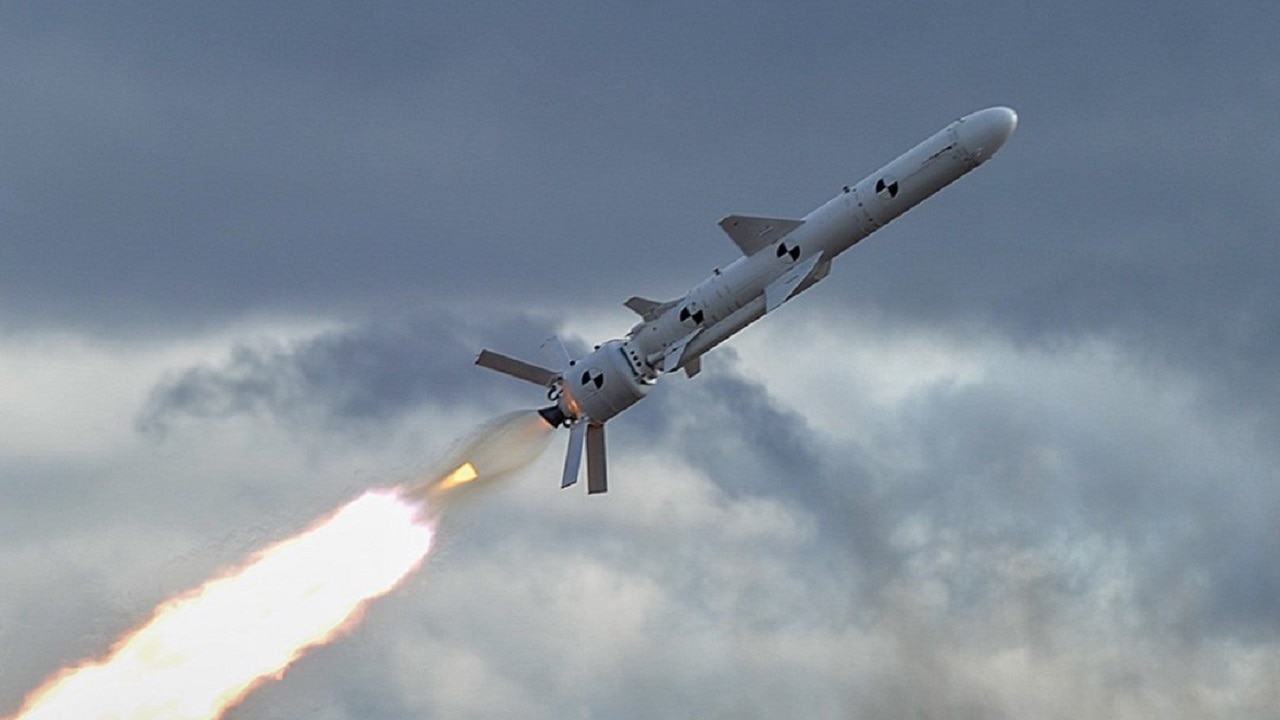
Neptune Anti-Ship Missile. Image Credit: Creative Commons.
Submarines, on the other hand, are impervious to anti-ship weaponry when submerged—though it should be noted that Ukraine has nonetheless scored several notable hits on submarines while docked at port.
But in the Black Sea, Russia’s Kilo-class submarines have put their cruise missiles to use, launching Kalibr missile strikes against a variety of Ukrainian land-based targets. One of the ship’s shortcomings, however, is its relatively modest cruise-missile magazine capacity of just four Kalibr missiles.
Some Bought, and Some Sold
Although the Kilo-class enjoyed some success on the export market—particularly in the heady years following the dissolution of the Soviet Union, when much of what had been the Soviet war machine was for sale—the class’s sunset may be on the horizon.
China was an early buyer of the Kilo-class, and it still has some Kilos in service. But given China’s improving domestic designs, it seems unlikely that their Kilo-class submarines will remain in service for much longer.
About the Author: Caleb Larson
Caleb Larson is an American multiformat journalist based in Berlin, Germany. His work covers the intersection of conflict and society, focusing on American foreign policy and European security. He has reported from Germany, Russia, and the United States. Most recently, he covered the war in Ukraine, reporting extensively on the war’s shifting battle lines from Donbas and writing on the war’s civilian and humanitarian toll. Previously, he worked as a Defense Reporter for POLITICO Europe. You can follow his latest work on X.