
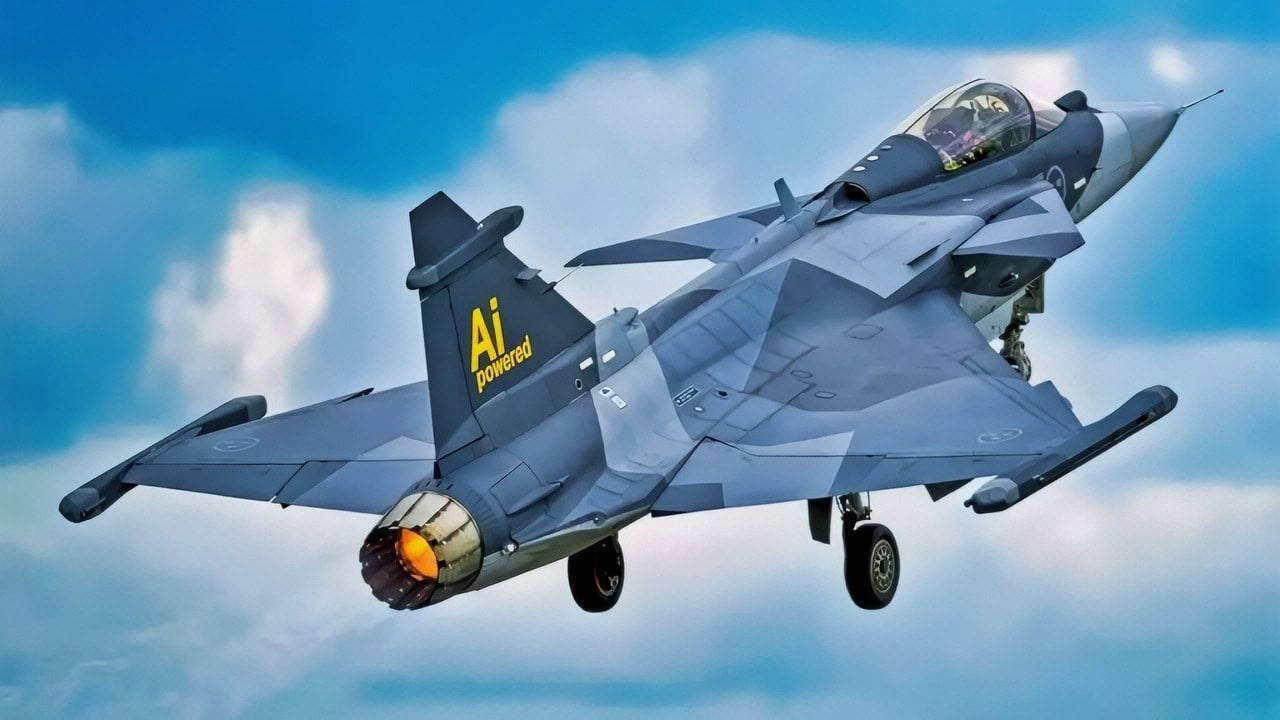
Summary and Key Points: The prospect of Canada abandoning its F-35 commitment for the Saab Gripen E is being framed as a “sovereignty” play, but the technical reality tells a different story.
-Even if Prime Minister Mark Carney pivots the remaining 72-jet order to Sweden, Canada is already locked into an initial 16-plane F-35A contract that requires massive U.S.-managed infrastructure.
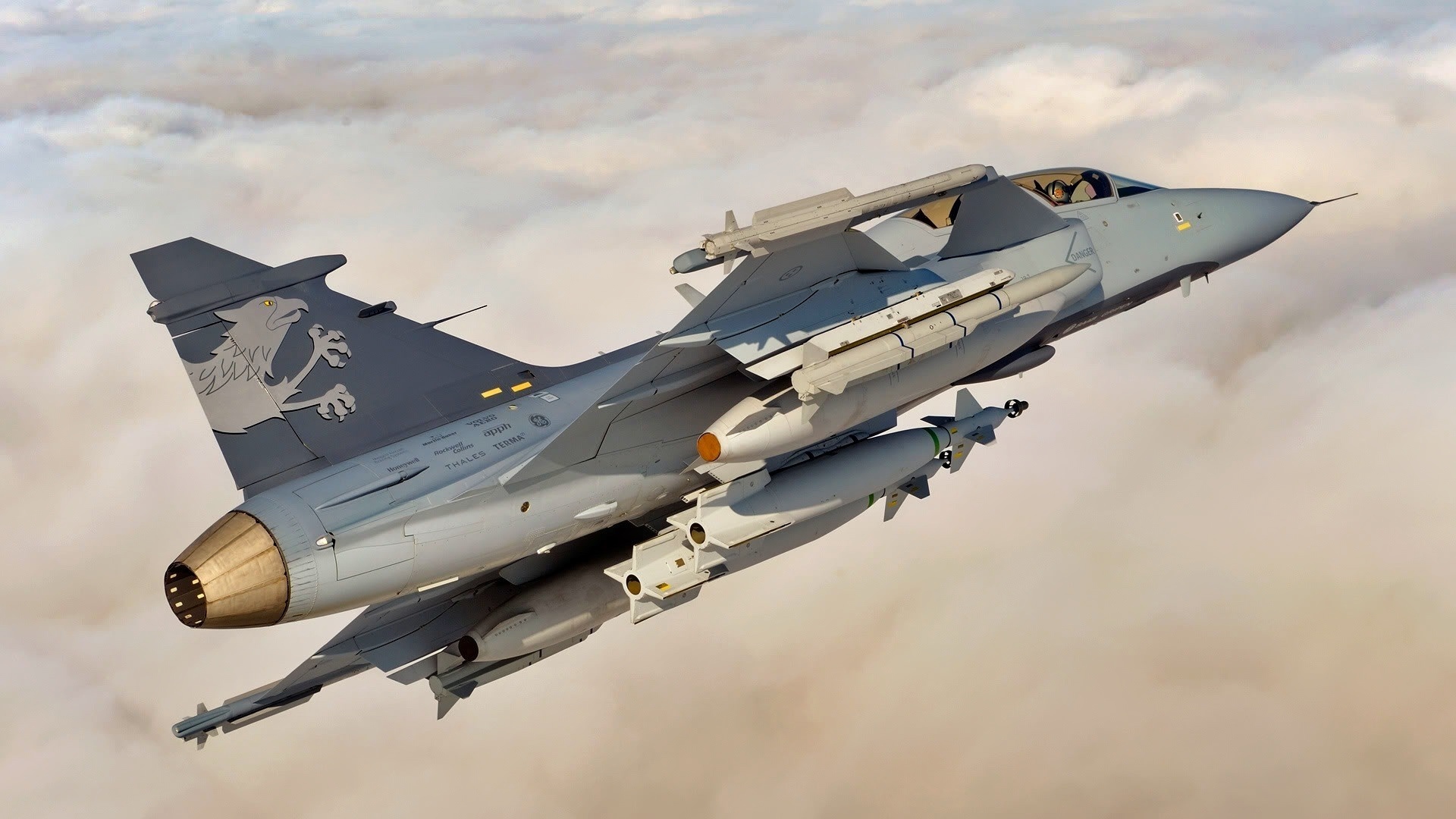
JAS 39. Image Credit: Creative Commons.
-Furthermore, the Gripen itself relies on American engines and flight systems subject to U.S. export controls.
-Ultimately, a mixed fleet would likely increase costs and logistical complexity without achieving the “clean break” from Washington that proponents of the Gripen promise.
Canada May Choose the JAS 39 Gripen – But Some Things Won’t Change
As Canada reviews plans to purchase 88 Lockheed Martin F-35As, reports indicate that Prime Minister Mark Carney is leaning toward Saab’s Gripen E offer.
Much of the argument in favor of the Swedish alternative has centered on sovereignty.
Choosing the 4.5-generation Gripen platform would mean a clean break from the United States, advocates of the platform say – alongside industrial benefits and jobs.
But is it really as simple as that? Can Canada break its ties with the United States by operating a mixed fleet of fighters?
Chances are, no; after nearly two decades of indecision over what will replace its aging CF-18 fleet, Canada doesn’t have any options left that would truly provide the clean break Carney’s government may argue it needs.
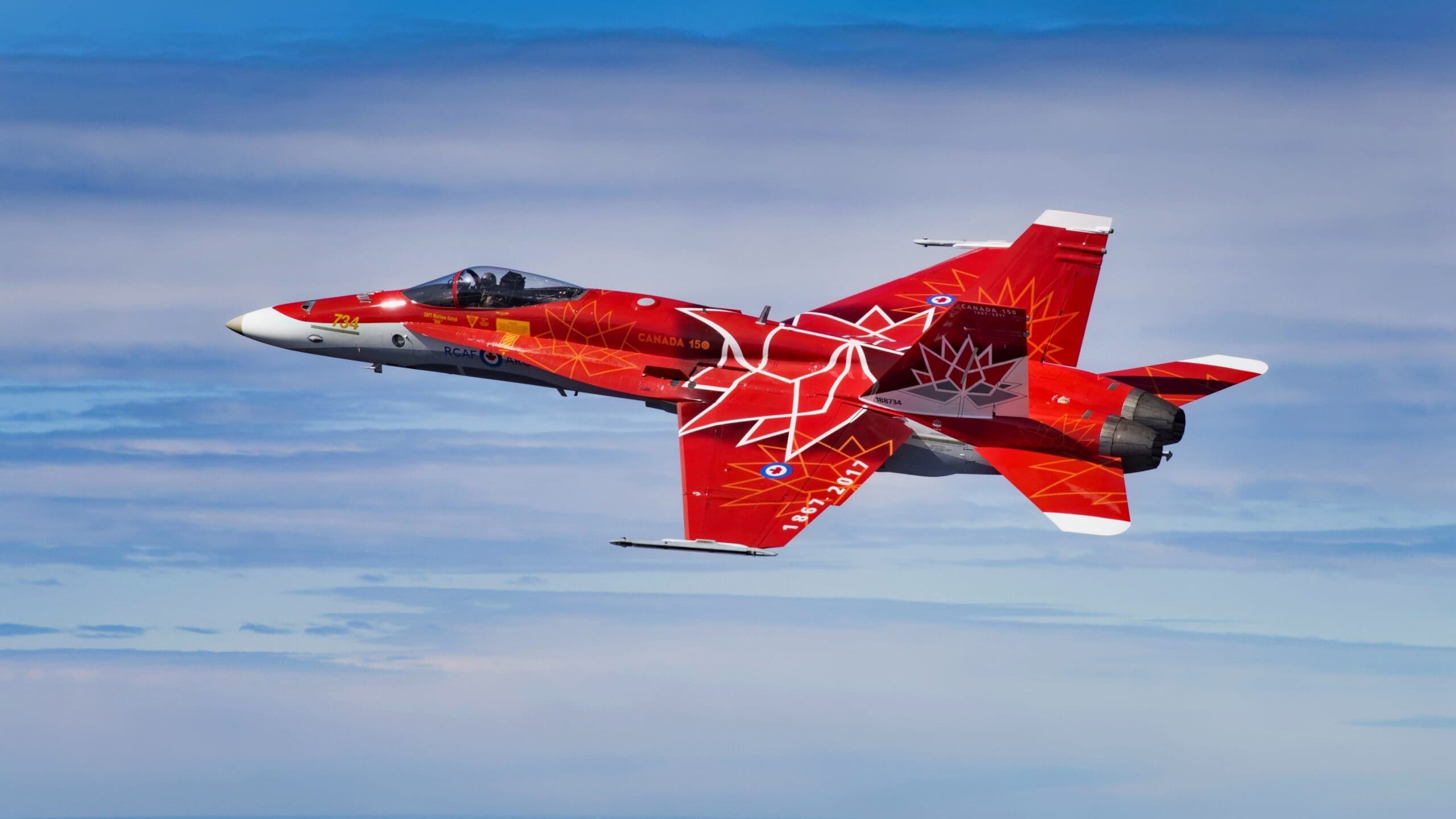
CF-18 Fighter from Canada. Image Credit: Creative Commons.
What’s more, Canada will still need to cater to the unique demands of the F-35s it has already purchased.
The F-35 Commitment Canada Can’t Undo
Whatever decision Ottawa ultimately makes on the remaining 72 aircraft, Canada has already crossed a point of no return with the F-35A Lightning II.
In January 2023, the Canadian government formally signed contracts to acquire 88 F-35As, with funding and production locked in for an initial tranche of 16 aircraft through the U.S. Foreign Military Sales (FMS) process.
The first 16 jets are scheduled for delivery beginning in 2026, with the initial aircraft expected to be based in the United States, where pilot training will take place, beforebeing transferred to Canada later in the decade.
Royal Canadian Air Force pilots and maintenance teams will train alongside U.S. and allied forces at Luke Air Force Base, the main international F-35 training hub.
That reality comes with some burdens and many benefits. On the burden side, Canada must invest in secure mission-planning facilities and classified data infrastructure to operate the platform.
Additionally, hardened storage is required to protect the F-35’s sensitive stealth coatings. The aircraft’s logistics ecosystem also requires persistent connectivity to U.S.managed sustainment networks.
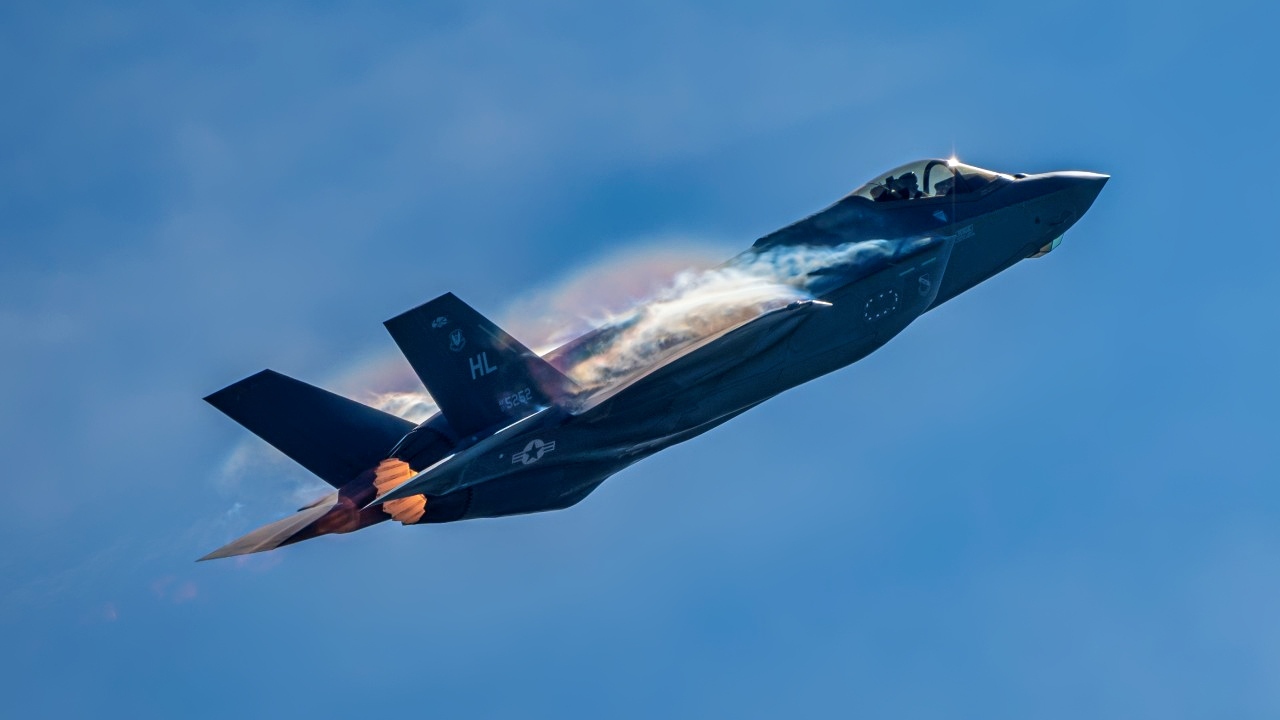
U.S. Air Force Maj. Kristin “BEO” Wolfe, F-35A Lightning II Demonstration Team commander and pilot, flies during a demonstration rehearsal at Hill Air Force Utah, April 28, 2021. The F-35A Lightning II Demonstration Team is part of the first operational F-35A wing for the Air Force, the 388th Fighter Wing, and flies over the Hill Air Force Base runway to practice and prepare for upcoming air shows around the world. (U.S. Air Force photo by Capt. Kip Sumner)
In turn, the Royal Canadian Air Force benefits from the F-35’s sensor fusion capabilities, which significantly exceed those of legacy fourth-generation fighters, enabling pilots to integrate radar, infrared, electronic warfare, and other data into a single tactical picture.
That data is then shared seamlessly with U.S. and allied forces operating across all domains – an advantage that directly supports Canada’s obligations under NATO and NORAD operations.
Canada’s 16 F-35As carry these burdens, regardless of the manufacturer of the next 72 fighter jets in the fleet.
Still Dependent on the U.S.
Even if Canada were to somehow field a fleet entirely made up of JAS 39 Gripen fighters, there would still be no clean break; the Saab Gripen supply chain depends heavily on the United States, with some analysts approximating as much as one-third of its components originate from American firms.
The biggest single-point dependency on the United States is the aircraft’s engine. The Gripen E is powered by the GE F414 family (F414G/F414-GE-39E), meaning that the aircraft’s engine spares and core propulsion are tied to an American prime contractor (GE Aerospace) and U.S. production and support pipelines.
With that engine choice, there are also export controls: a U.S.-origin defense article (any military item designed and owned by a U.S. company) is regulated under the International Traffic in Arms Regulations (ITAR).
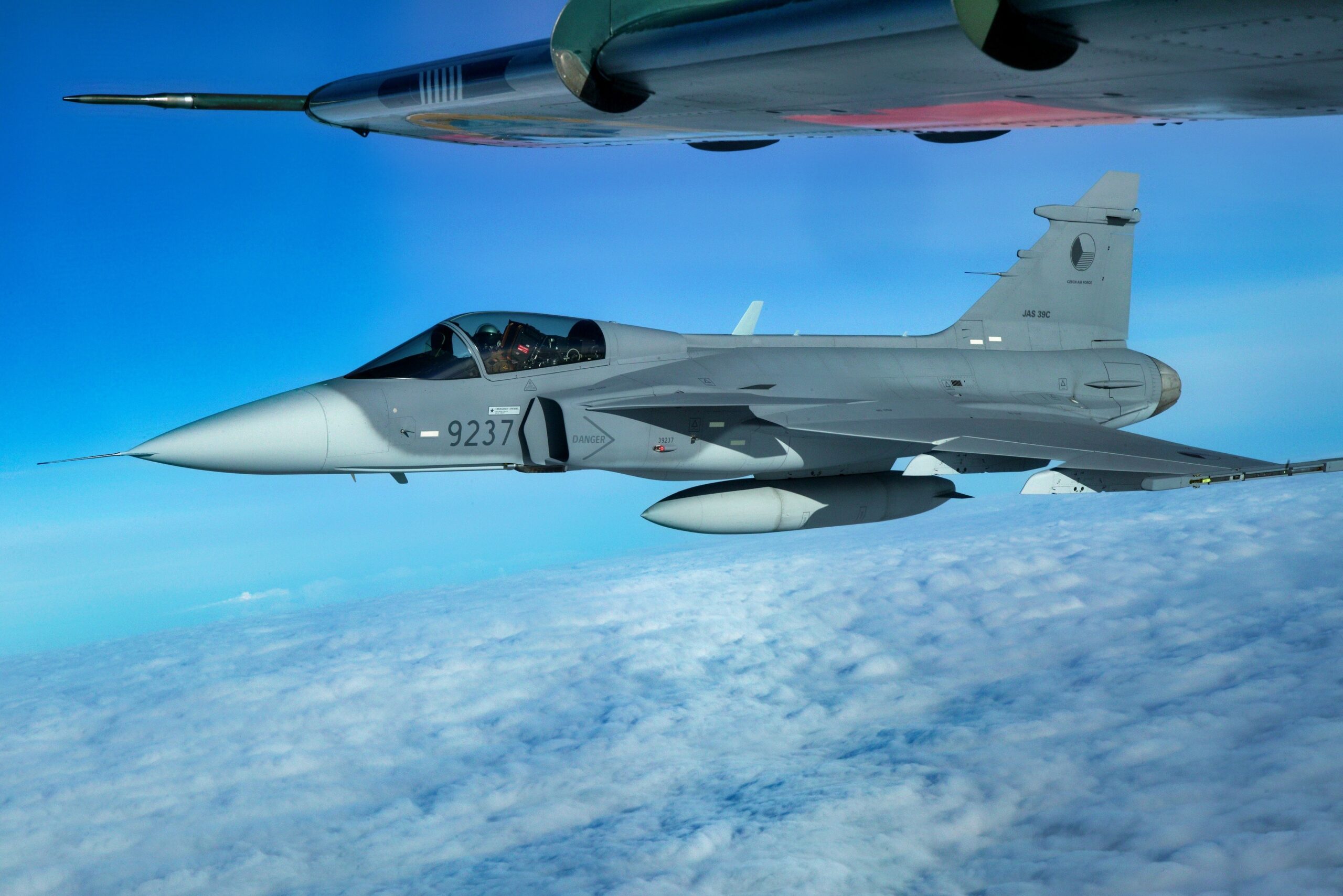
JAS 39 Gripen. Image Credit: Saab.
Even though the aircraft is Swedish, key components may require U.S. approvals for the movement, support, and use of the U.S.-origin component.
And then there are the weapons. Saab has been tested with U.S. air-to-air missiles such as the AIM-9X and AIM-120 AMRAAM. Should a customer field U.S. weapons on Gripen, it would impose additional U.S. supply-chain and approval requirements for missiles, software interfaces, spares, and related orders.
MORE – The U.S. Army’s New 60-Ton M1E3 Abrams ‘Super’ Tank Has Just 1 Mission
The idea that Canada is strengthening its resilience to U.S. supply chains and regulations by opting for the Gripen platform is, therefore, a myth. Not only does the Gripen still depend heavily on the United States, but its most advanced fighter assets – the 16 F-35s already purchased – still depend almost entirely on American infrastructure.
There may be sound political arguments for the Gripen, but sovereignty is not one of them.
About the Author: Jack Buckby
Jack Buckby is a British researcher and analyst specialising in defence and national security, based in New York. His work focuses on military capability, procurement, and strategic competition, producing and editing analysis for policy and defence audiences. He brings extensive editorial experience, with a career output spanning over 1,000 articles at 19FortyFive and National Security Journal, and has previously authored books and papers on extremism and deradicalisation.