
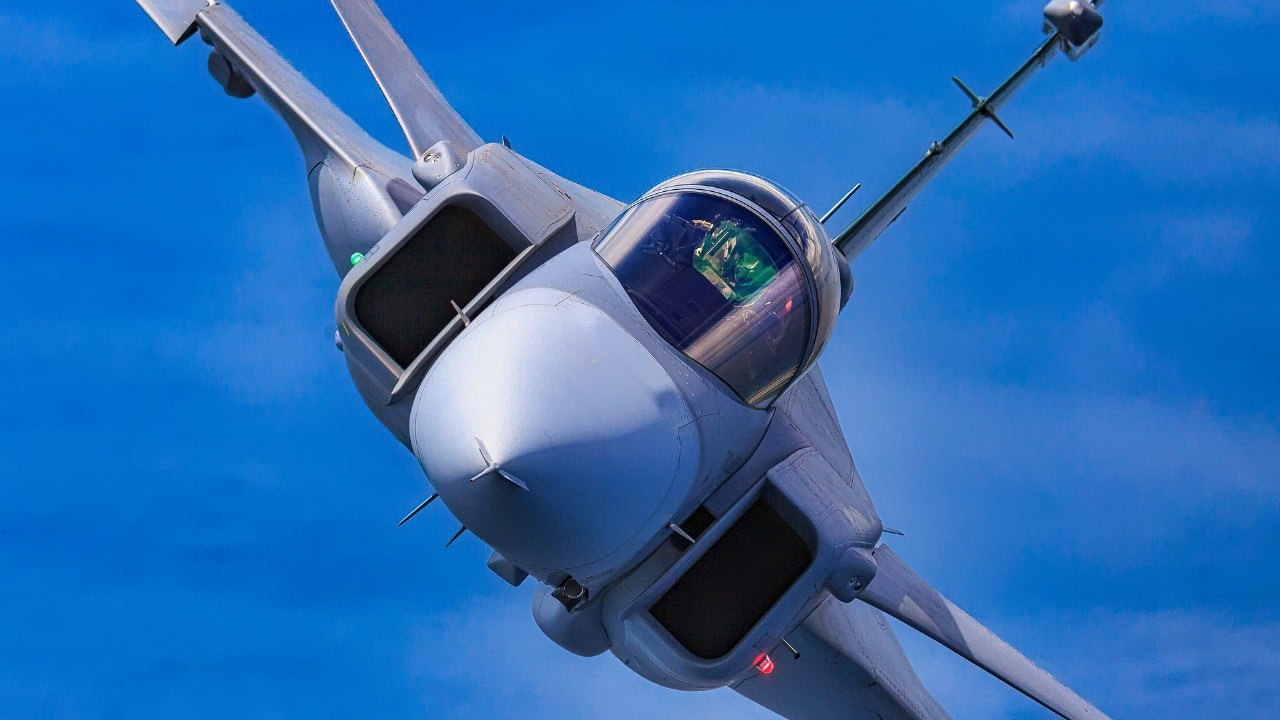
Summary and Key Points: The Saab Gripen E isn’t a minor refresh—it’s a re-architected fighter built around Sweden’s Cold War logic of survivability under constraint.
-The airframe is enlarged with more fuel, a GE F414 engine, and a modern sensor-and-computing stack emphasizing situational awareness, AESA radar, IRST, and sensor fusion.
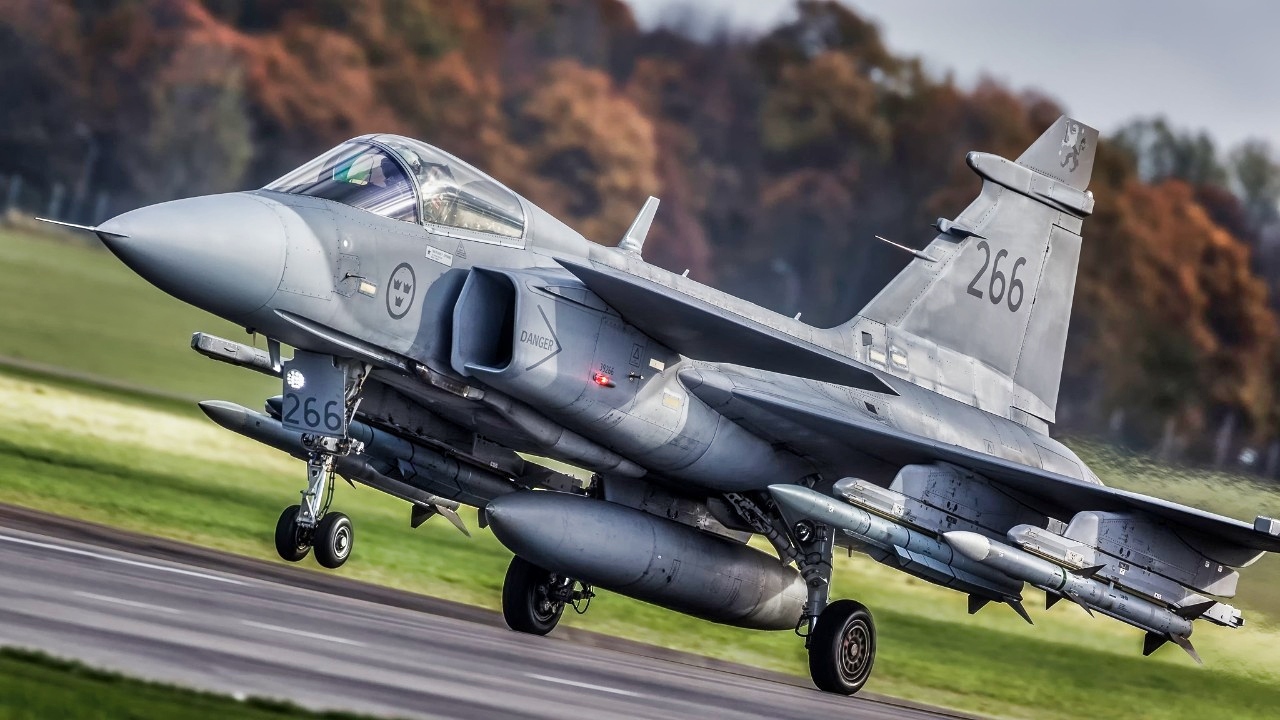
JAS 39 Gripen. Image Credit: Creative Commons.
-Electronic warfare is central, not bolted on, with integrated self-protection and deception designed for contested environments.
-Gripen E’s defining edge is operational: dispersed basing from short runways and roads, quick turnaround with small crews, and low operating costs that sustain sortie generation.
-It’s not a stealth penetrator, but it’s durable, networked, and built to keep fighting.
JAS 39 Gripen E Isn’t a “Cheap Fighter” — It’s Sweden’s Smart Answer to Modern Air War
The Saab JAS 39 Gripen E is often misunderstood as a modest refresh of a light fighter.
In reality, Gripen E represents a fundamental re-architecture of the Gripen concept. While the new Gripen is not a prestige platform, it has been optimized for modern, contested warfare under resource constraints, making it a valuable platform.
Sweden’s Philosophy
Sweden’s Cold War defense posture shaped the development of the Gripen. Namely, Sweden expected to fight alone with limited resources and wanted something with high survivability. So, an aircraft was built with an emphasis on dispersed basing, rapid turnaround, and high availability. Now, the Gripen E continues this Cold War logic into the sensor- and missile-dominated era.
Updating the JAS 39 Gripen E
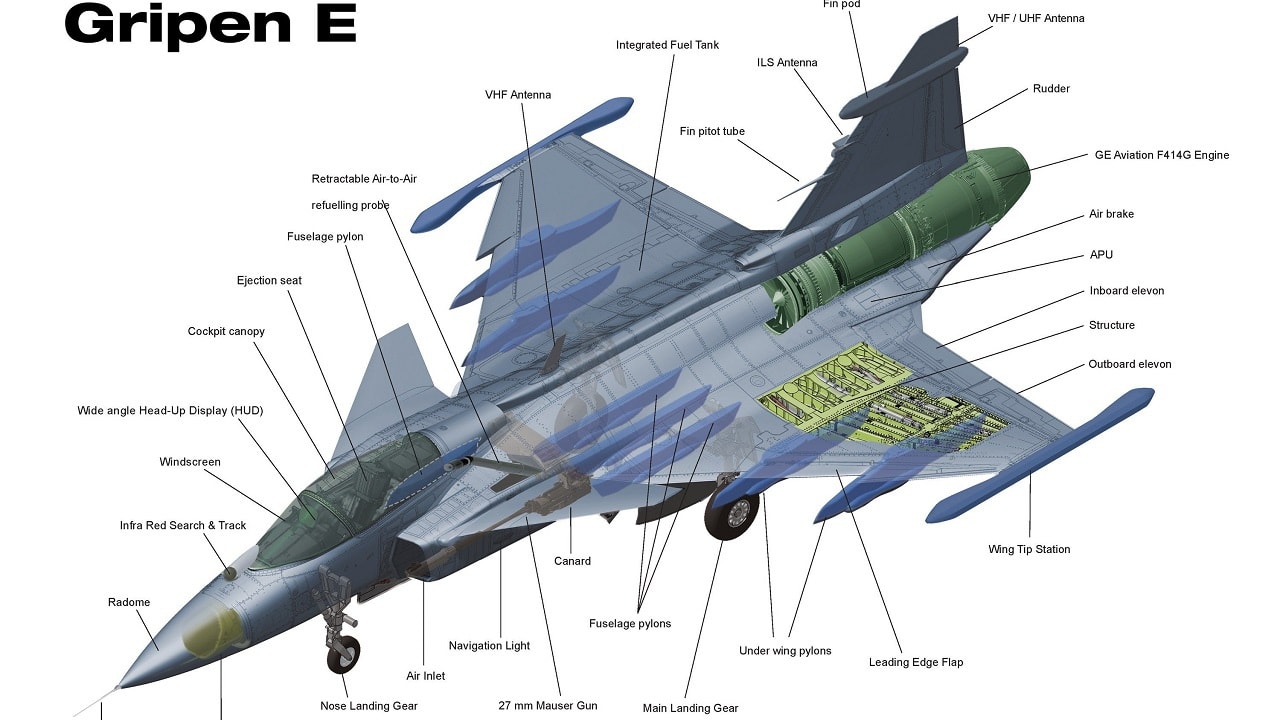
Gripen E is not a simple avionics refresh of the earlier Gripen. Rather, the airframe was enlarged, more internal fuel was added, a new engine and new sensors and computers were installed—essentially, the E is a new aircraft in many respects.
The updated GE F414 engine provides more thrust, better growth margins for sensors and weapons, and improved hot-and-high performance. It was not designed for extreme speed, but for sustained combat relevance.
The sensors installed prioritized situational awareness over kinematic dominance, a decision that reflects trends in modern air combat.
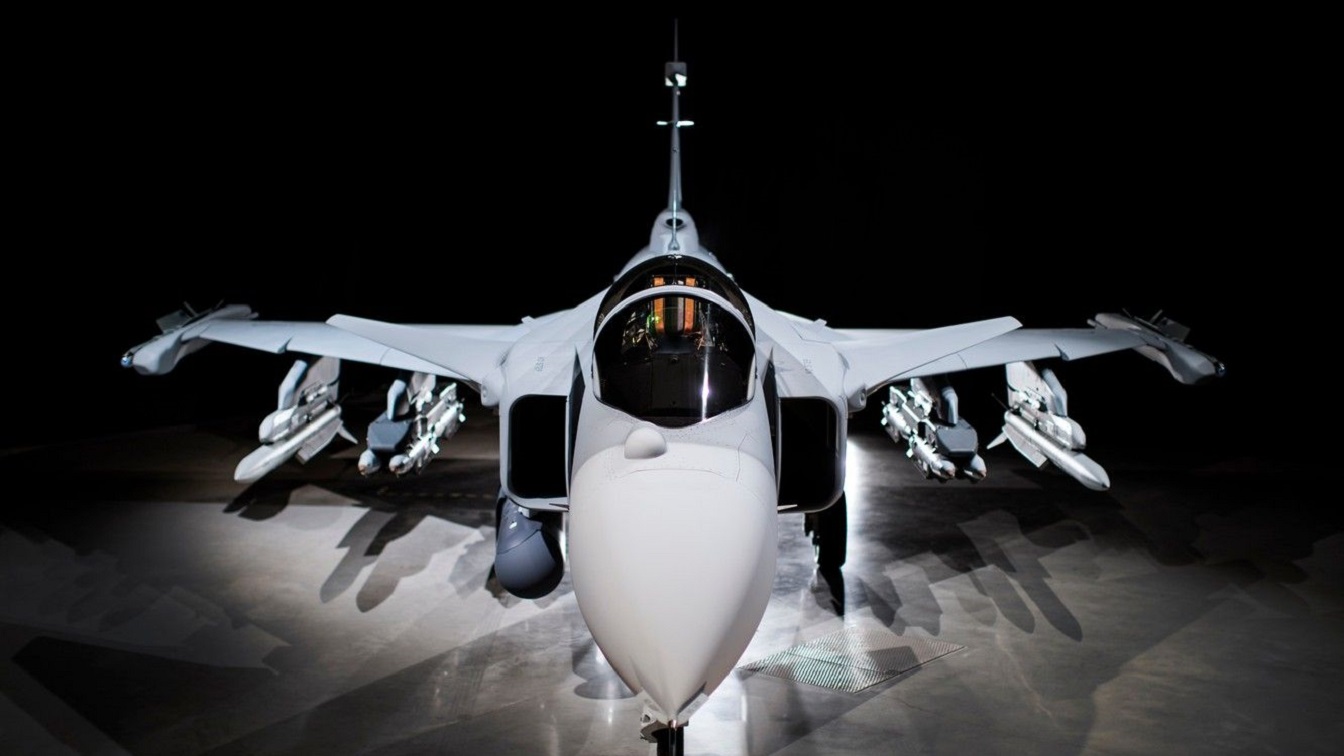
JAS 39. Image Credit: Creative Commons.
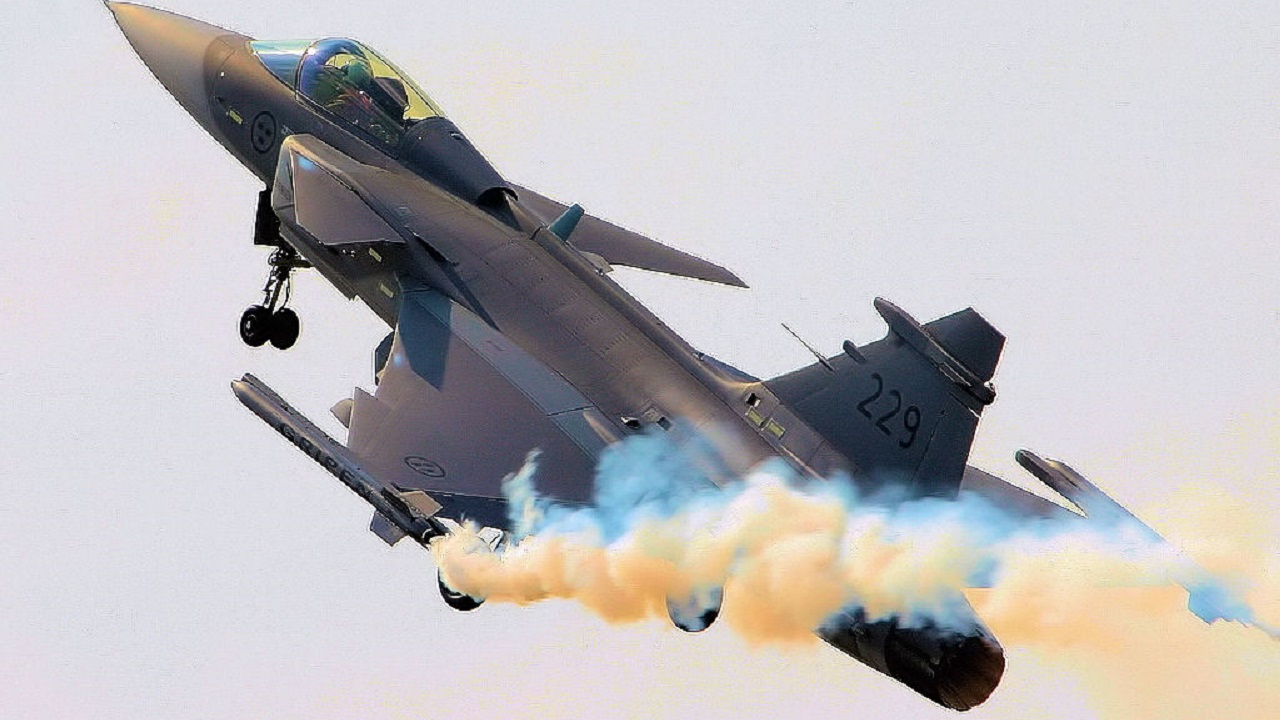
JAS 39 Gripen. Image Credit: Creative Commons.
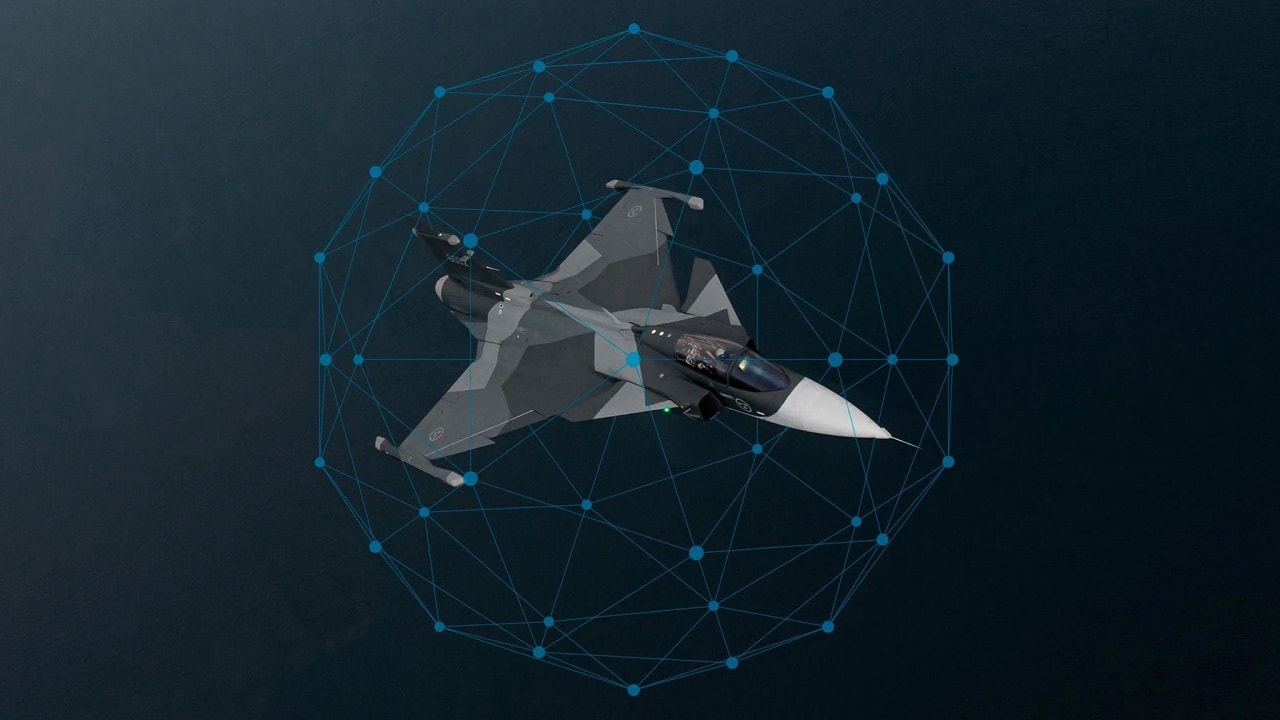
The key features are an AESA radar with a wide field of regard and an infrared track-and-search (IRST) system. And now sensor fusion allows the Gripen pilot to detect first, track multiple targets simultaneously, and engage cooperatively as part of a larger network.
Electronic Warfare Upgrades
In the Gripen E, electronic warfare was not an afterthought—it was a central feature. Integrated electronic attack, self-protection, and deception systems were all embedded in the new platform, which was designed to survive against advanced air defenses and disrupt adversary sensors and missiles. This approach reflects the modern reality in which information denial can be just as valuable as destroying targets.
Similarly, the Gripen E was built for data sharing with other fighters, with ground-based sensors, with naval assets—this enables distributed targeting and cooperative missile engagements. The E can now act as a shooter, sensor, or command node in a larger network.
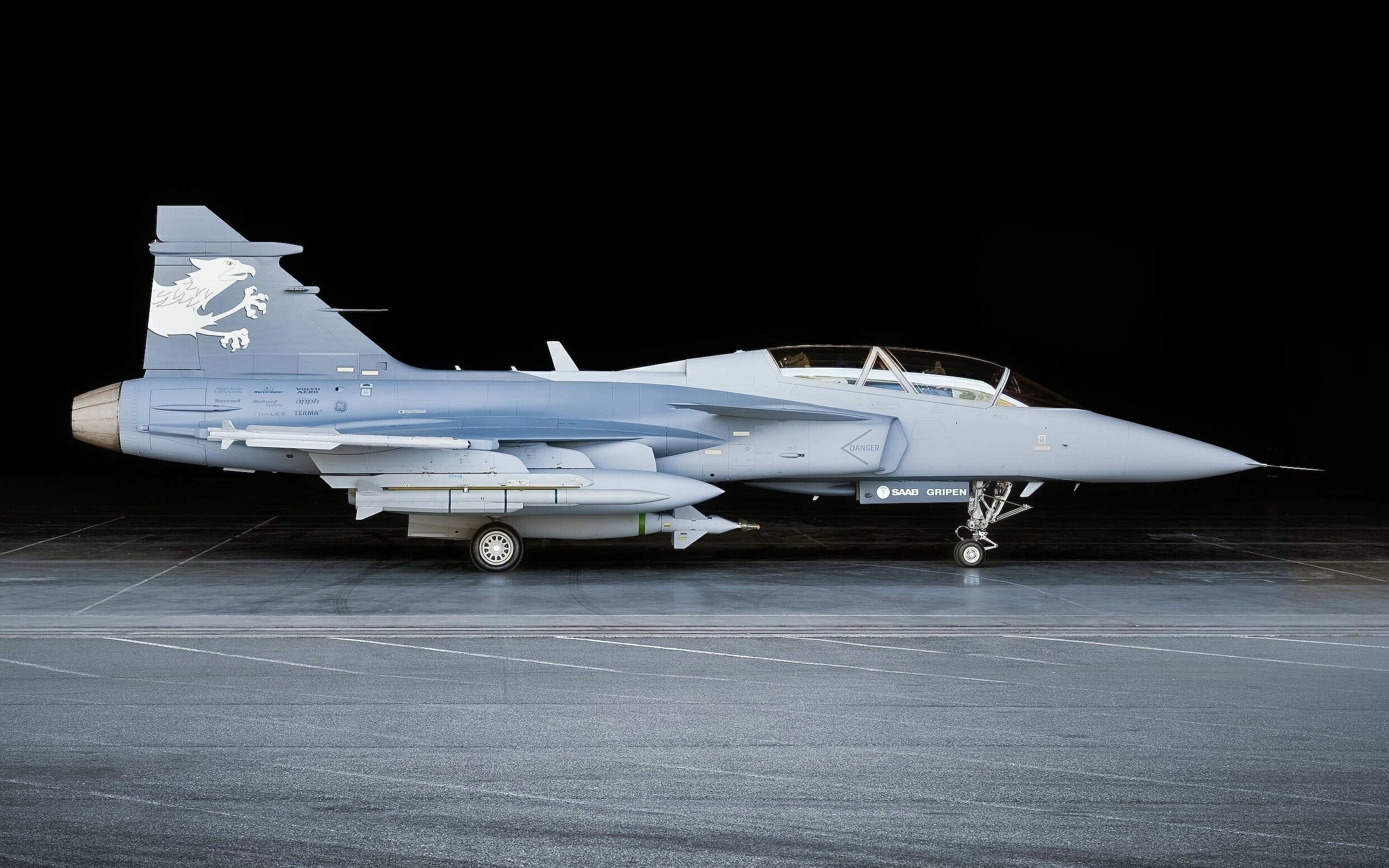
And while Sweden designed the Gripen during the Cold War with the understanding that it would have to fight alone as a non-NATO state, the E variant is compatible with a wide range of Western munitions, with an emphasis on long-range air-to-air missiles and precision-guided strike weapons. The E was designed for flexible loadouts rather than maximum payload. This reflects a multirole doctrine without compromising air defense focus.
Dispersed Basing Concept
One of the Gripen E’s most distinctive features is the ability to operate from short runways, roads, and austere bases. Unlike most modern fighters, which need a groomed two-mile-long runway, the Gripen can operate from just about anywhere—even highways. This allows for rapid turnaround times with only small ground crews—and it complicates enemy targeting while improving force survivability.
JAS 39 Gripen. Image Credit: Creative Commons.
JAS 39 Gripen. Image Credit: Creative Commons.
Similarly, the Gripen E emphasizes low operating costs, high sortie rates, and simplified maintenance. This approach is about sustainability in wartime, enabling air forces to fly more, train more, and remain combat-ready longer.
Tactical Employment
The Gripen E was optimized for defensive counter-air, interception, and attrition warfare under heavy ISR; the Gripen is not a penetrator. Instead, the Gripen enables smart, networked, and durable fighting.
The Gripen E differs from heavier fighters in that it is not stealthy and lacks a large payload. It instead relies on EQ, networking, and agility in basing and operations. This offers a different answer to modern air combat problems entirely.
Strategically, the E reflects a European, sovereignty-focused approach to air power, something attractive to states that expect to fight near home, cannot assume air superiority, and need something resilient. The Gripen E offers high-end capability without requiring maximum size or cost.
JAS 39 Gripen. Image Credit: Creative Commons.
But the Gripen E’s limitations are real. Non-stealth aircraft are increasingly being relegated to the margins. The aircraft’s internal fuel is low, limiting the range. And the platform is dependent on networks, which can be contested.
Still, the JAS 39 Gripen E is a capable aircraft, built for constrained realities, making the design inherently pragmatic. While not a prestige aircraft, the Gripen E is survivable and sustainable, the result of a disciplined design vision.
About the Author: Harrison Kass
Harrison Kass is an attorney and journalist covering national security, technology, and politics. Previously, he was a political staffer and candidate, and a US Air Force pilot selectee. He holds a JD from the University of Oregon and a master’s in global journalism and international relations from NYU.
More From 19FortyFive
USS Nimitz Could Become a Drone Supercarrier