Synopsis: As of February 2026, the Pentagon faces a systemic acquisition crisis defined by “requirements creep” and industrial fragility.
-Major programs like the M10 Booker and M1 Abrams SEPv4 have been sidelined or scrapped due to excessive weight and aging architectures.
-While the USS Zumwalt has found a new purpose as a hypersonic strike platform, the broader shift is moving toward “Attritable” systems—mass-produced, low-cost drones.
-The challenge remains: the U.S. defense base is currently optimized for a Cold War pace, while the 2026 battlefield demands software-driven adaptability and rapid iteration.
Acquisition Crisis for the U.S. Army 2026: Why the M10 Booker’s Weight Problem Finally Killed the Program
Across almost every U.S. military service, new equipment takes too long to develop, costs far more than expected, and often enters service with compromised capabilities or trade-offs.
Recent examples of this pattern include the Army’s M10 Booker light tank, the Navy’s Littoral Combat Ship, and the Zumwalt-class destroyer.
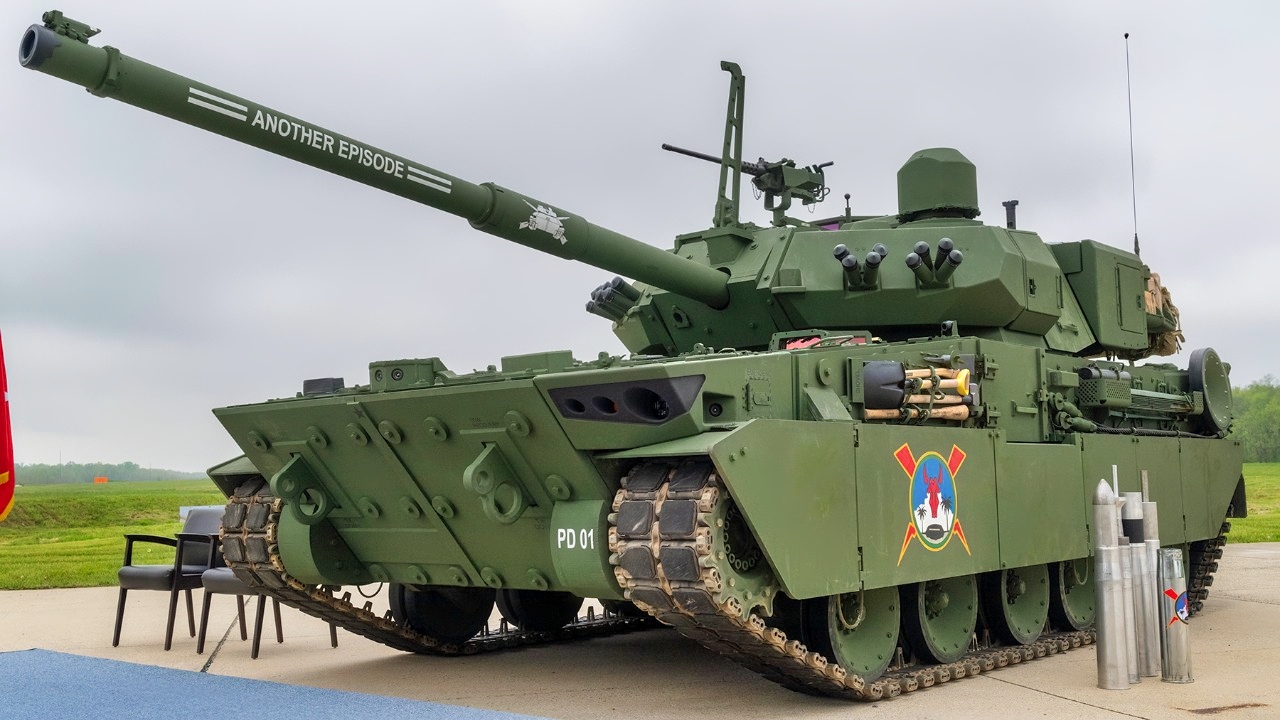
The M10 Booker displayed at it’s dedication ceremony at Aberdeen Proving Ground in Aberdeen, Md., April 18, 2024. As part of the dedication of the M10 Booker Combat Vehicle in their name, Pvt. Booker, a Medal of Honor recipient, and infantryman, assigned to the 133rd Infantry Regiment, 34th Infantry Division, during World War II, and Staff Sgt. Stevon A. Booker, a Distinguished Service Cross recipient, and tank crewman, assigned to Alpha Company, 1st Battalion, 64th Armor Regiment, 3rd Infantry Division, in support of Operation Iraqi Freedom, will be recognized and honored for their ultimate sacrifice, heroism and commitment to service and the country, represented by family members during the ceremony. (U.S. Army photo by Christopher Kaufmann).

M10 Booker is part of a static display while a live segment for FOX and Friends is being filmed at Fort Liberty, N.C., May, 21, 2024. The M10 Booker Combat Vehicle is named after two American service members: Pvt. Robert D. Booker, who posthumously received the Medal of Honor for actions in World War II, and Staff Sgt. Stevon A. Booker, who posthumously received the Distinguished Service Cross for actions during Operation Iraqi Freedom. Their stories and actions articulate the Army’s need for the M10 Booker Combat Vehicle, an infantry assault vehicle that will provide protection and lethality to destroy threats like the ones that took the lives of these two Soldiers. (U.S. Army Photo by Sgt. Jacob Bradford)
There have also been challenges with upgrades such as the M1 Abrams SEP v4 and the fully cancelled Future Combat Systems program. These struggles are not isolated failures, but rather characteristic of problems that plague large platform acquisitions for the Pentagon.
The modern battlefield is indeed changing quickly—but that alone does not explain the difficulty. A mix of risk aversion, bureaucratic complexity, industrial base fragility, and unrealistic expectations have doomed or delayed too many programs.
It is also difficult to rapidly integrate next-generation technologies or innovations into a mass-producable platform.
Technological ambition can generate developmental challenges, a dynamic that held back the development of the USS Gerald R. Ford (CVN-79). One of the core issues is that U.S. military programs are often expected to do too much at once. New platforms are rarely designed to fill a narrow role.
Instead, they are asked to be revolutionary leaps forward, replacing multiple systems while anticipating threats years into the future.
What Happened to LCS & Zumwalt
The Littoral Combat Ship (LCS) is a classic example. The LCS was intended to be fast, modular, affordable, and adaptable to missions ranging from mine warfare to anti-submarine combat. In practice, it struggled to do any of these well.
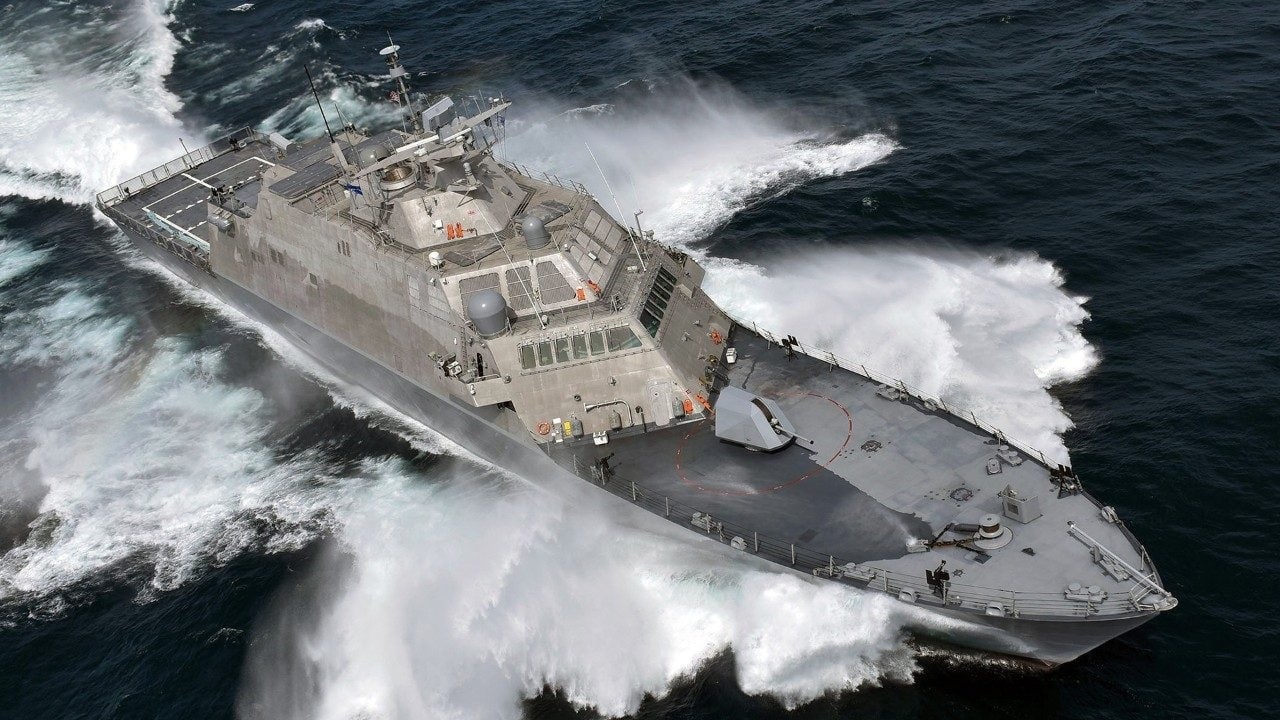
Littoral Combat Ship. Image Credit: Creative Commons.
Modular mission packages proved difficult to swap quickly, survivability was questioned, and costs ballooned. The desire for flexibility ended up producing fragility.
The same logic affected the Zumwalt-class destroyer, which attempted to combine stealth, land-attack dominance, advanced power systems, and a revolutionary gun system. When the ammunition for those guns became unaffordable, the ship was left without a primary mission.
The technology worked in isolation, but the integration of too many novel systems magnified risk.
The U.S. defense acquisition system is designed to avoid failure, but it can unintentionally generate failed efforts. Layers of oversight, requirements reviews, congressional mandates, and inter-service compromises slow development to a crawl.
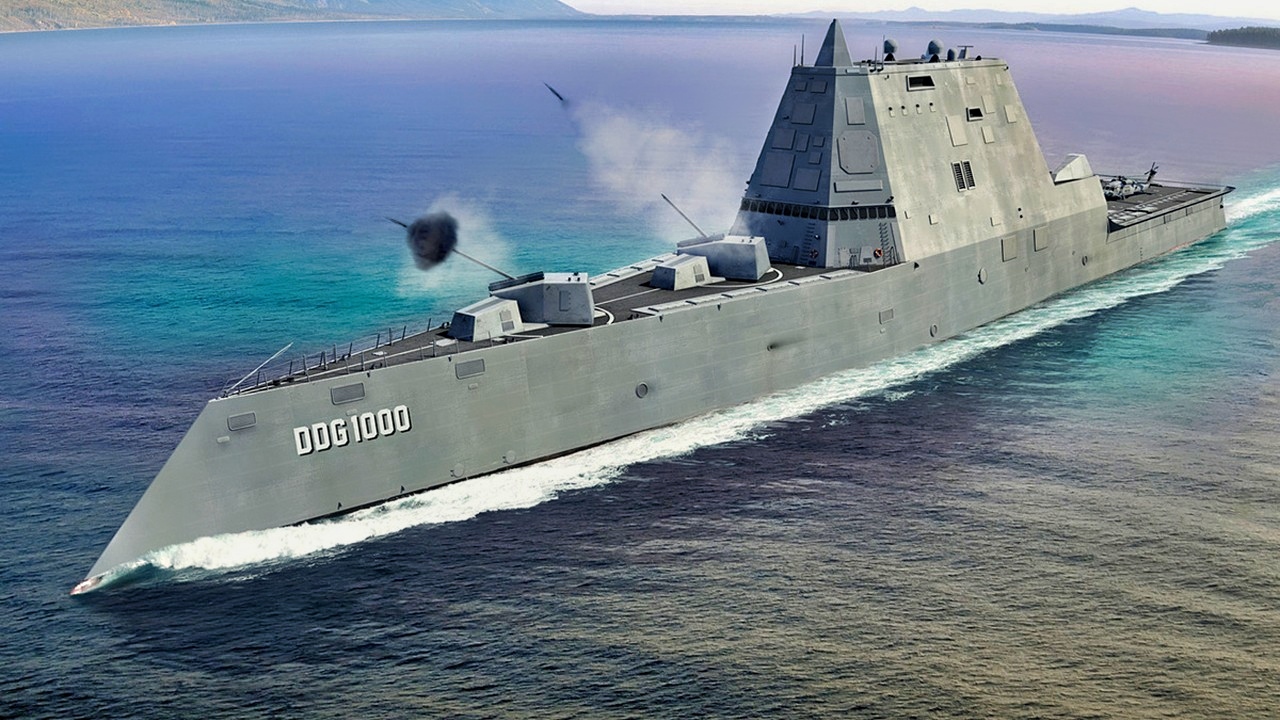
Zumwalt-Class U.S. Navy Destroyer. Image Credit: Creative Commons.
Programs are locked into specifications years before they enter production, even as technology and threats evolve.
Industrial Base
Another underappreciated factor is the erosion of the U.S. defense industrial base. During the Cold War, the U.S. maintained multiple competing manufacturers for tanks, ships, aircraft, and subsystems. Today, consolidation has left only a handful of prime contractors in each sector.
At the same time, modern military systems depend on commercial electronics, which evolve on civilian timelines that do not align with decades-long military programs. By the time hardware is certified for military use, it may already be obsolete or discontinued in the civilian market.
Pace of Threat
The problem is not that tanks, ships, or aircraft are suddenly irrelevant.
It is that warfare is becoming more transparent, networked, and lethal. It is driven by drones, sensors, electronic warfare, and long-range precision weapons. Survivability now depends as much on software, data fusion, and integration as on armor or firepower.
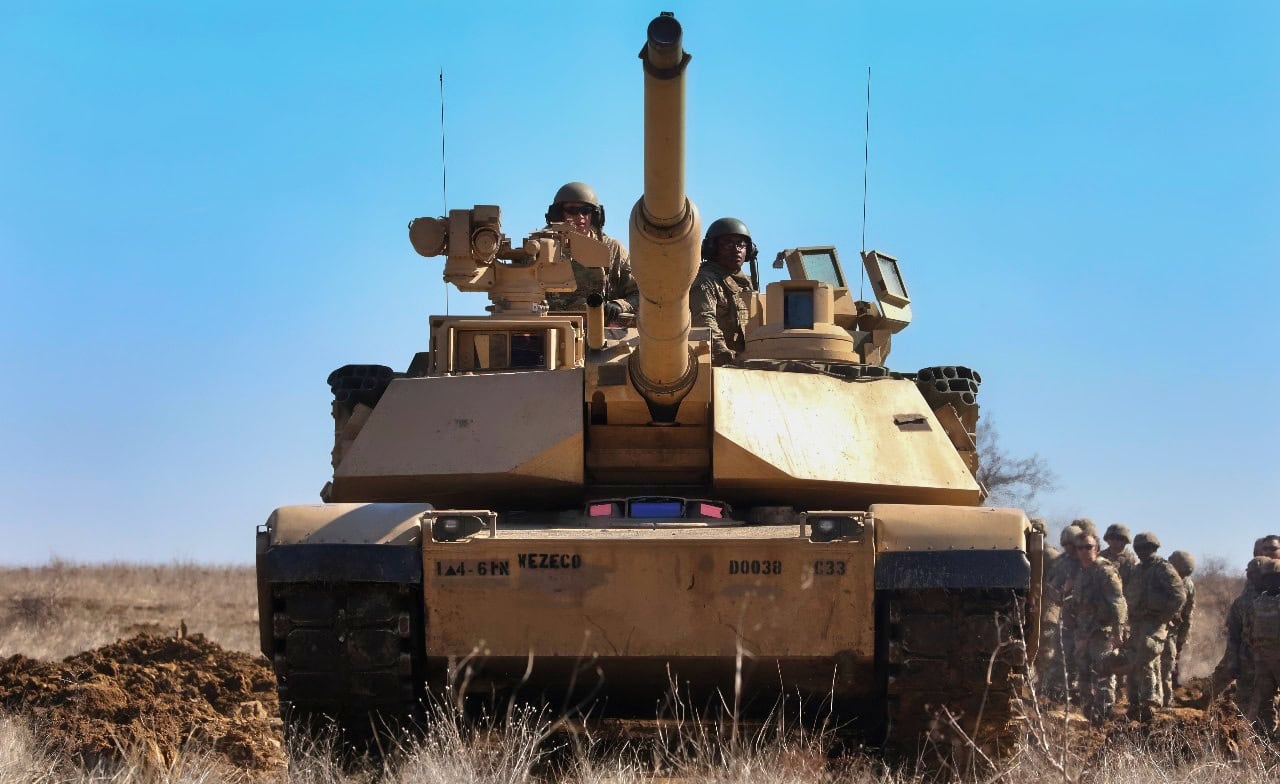
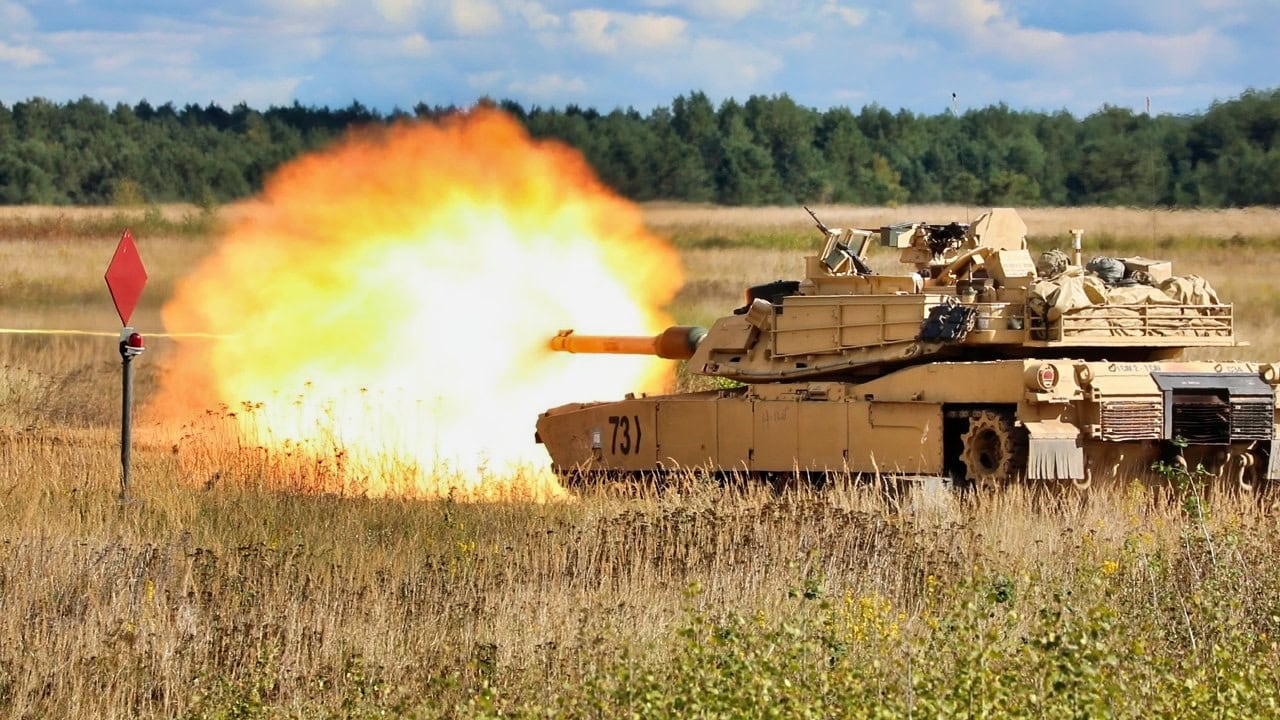
A U.S. Army M1 Abrams, assigned to 4th Battalion, 6th Infantry Regiment, 3rd Armored Brigade Combat Team, 1st Armored Division, fully emerges from the tank firing point to engage the simulated enemy at Novo Selo Training Area, Bulgaria, March 5, 2025. 1st Armored Division, a rotational force supporting V Corps, conducts training with engineers and tank operators in the European Theatre to maintain readiness and instill fundamental Soldier skills that are vital in maintaining lethality. (U.S. Army photo by Spc. Kyle Kimble)
Traditional acquisition programs struggle with this reality because they treat platforms as static objects rather than evolving systems.
The M1 Abrams tank remains lethal, but integrating active protection systems, networking, and electronic warfare capabilities is more challenging than upgrading armor or guns. Software updates move faster than hardware procurement, yet acquisition rules are built around physical platforms.
Time to Take Risks
The U.S. military’s difficulty in building new gear is not simply a failure of engineering or foresight.
It is the result of a system designed for an earlier era—one during which threats evolved slowly, budgets grew predictably, and technological leaps could be planned decades in advance.
Today’s battlefield rewards adaptability, iteration, and speed, but U.S. acquisition has historically been too averse to risk-taking and too afraid of the kind of short-term failure that can result.
Until that tension is resolved, the pattern may continue.
About the Author: Kris Osborn
Kris Osborn is the President of Warrior Maven – Center for Military Modernization. Osborn previously served at the Pentagon as a highly qualified expert in the Office of the Assistant Secretary of the Army—Acquisition, Logistics & Technology. Osborn has also worked as an anchor and on-air military specialist at national TV networks. He has appeared as a guest military expert on Fox News, MSNBC, The Military Channel, and The History Channel. He also has a Master’s Degree in Comparative Literature from Columbia University.