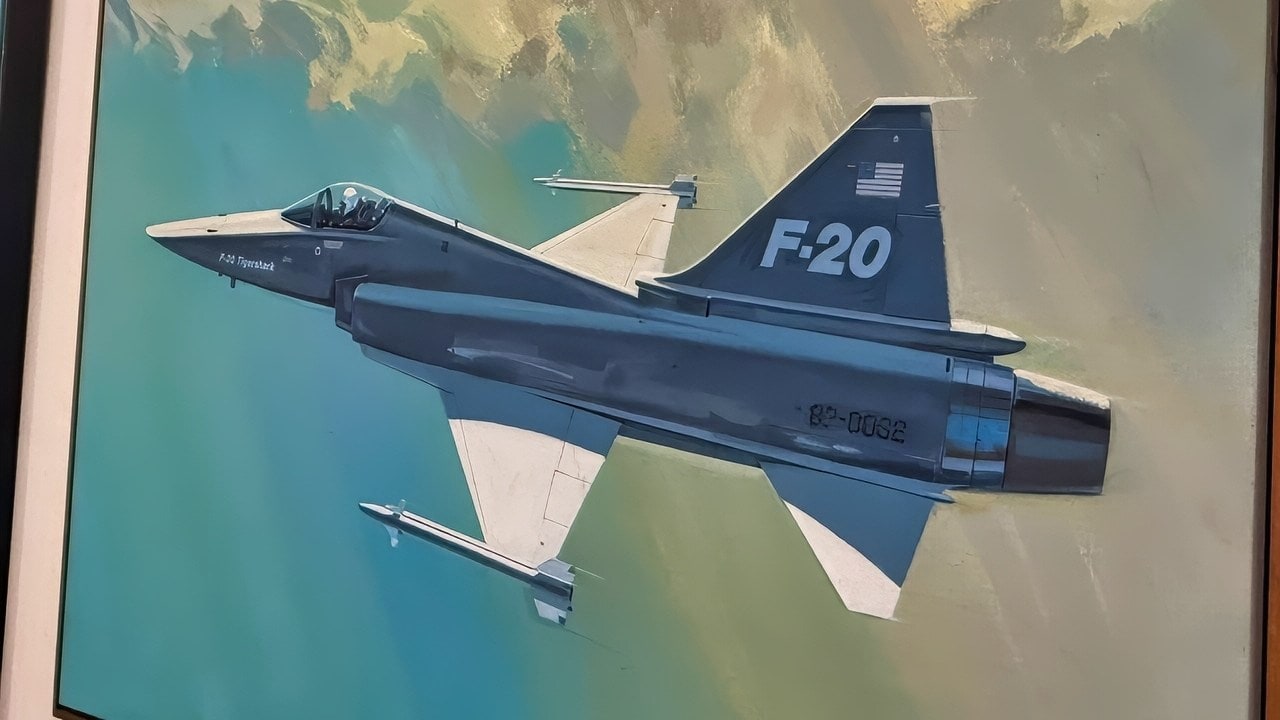
Summary and Key Points: A masterclass in agile fighter design, the F-20 Tigershark was Northrop’s Mach 2 gamble that the world’s allies wanted a high-tech, low-cost interceptor.
-Developed as a private venture, the Tigershark featured a digital cockpit and a unique “shark nose” profile that provided low-observable benefits long before stealth became a requirement.
-However, the F-20’s fate was sealed by a 1980s policy shift that allowed the F-16 to compete directly for the same export customers.
-Despite shattering performance records and earning pilot praise, the program was canceled in 1986 after two prototypes were lost to G-LOC accidents, leaving the Tigershark as a $1.2 billion “ghost” of Cold War ingenuity.
Why U.S. Allies Ignored the F-20: The $1.2 Billion Gamble That Failed
The 1980s-era F-20 Tigershark light high-speed jet may have been set aside in favor of export variants of the F-16—but this innovative design was an extremely capable fighter.
Initially conceived of as a Foreign Military Sales option for U.S. allies, the F-20 wound up collecting dust—friendly nations instead rushed to acquire export variants of the F-16 once these were approved and available.
But the F-20 Tigershark had plenty of technological merits and strong performance parameters. It was armed with two 20-mm cannons, seven hardpoints, and one YF404-GE-100 turbofan engine.
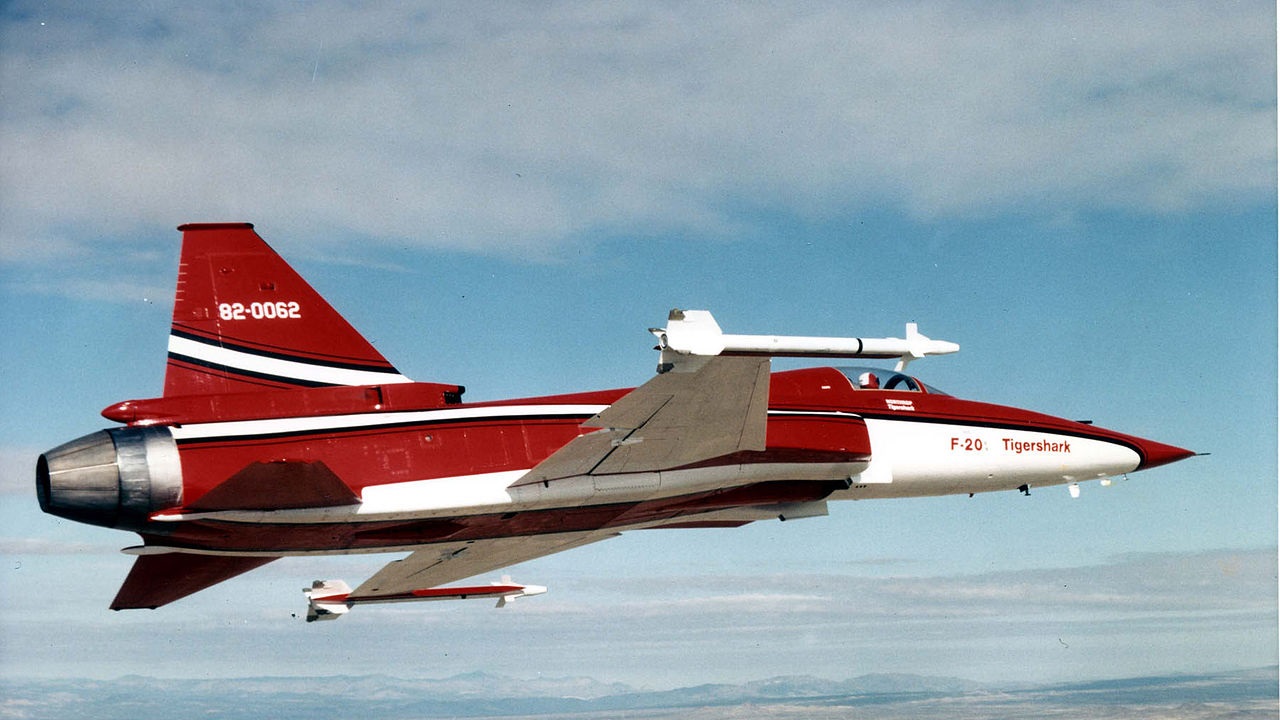
Northrop F-20 (S/N 82-0062) in flight. (U.S. Air Force photo)
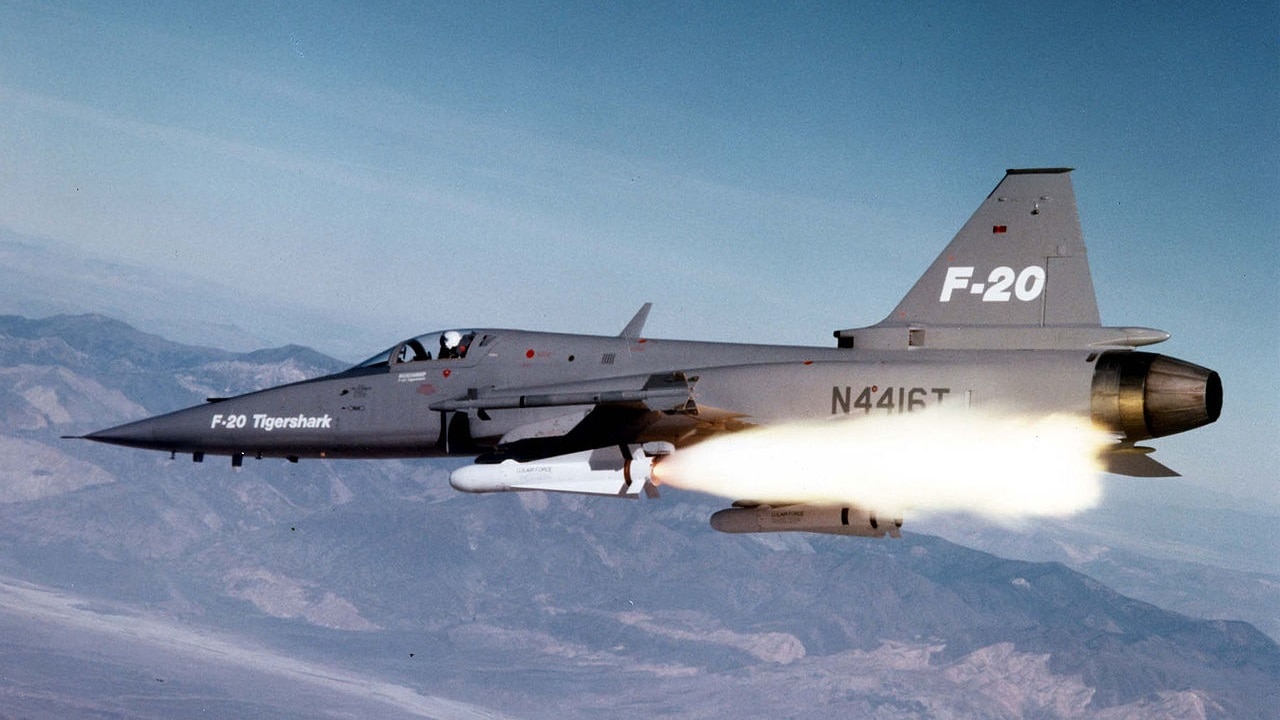
An F-20 launching an AGM-65 Maverick missile.
The F-20 was capable of hitting speeds as fast as Mach 2.0 and, according to The National Interest, was engineered with a digital cockpit and a host of air-to-air and air-to-ground weapons, including the AiM-9 and AIM-7.
What Made the F-20 Tigershark Fighter Special
The most significant element of the F-20, arguably, was its configuration.
The F-20 almost looks a little stealthy, with a sleek, rounded fuselage and a very slight blended wing-body configuration.
The shape and contours of the Tigershark might lead one to expect a somewhat stealthy aircraft—unlike the F-16, a non-stealthy fourth-generation platform with many jagged edges and protruding structures likely to generate a return signal to ground radar systems.
Of course actual stealth—or the extent of low radar cross-section characteristics—relies on variables beyond the external configuration.
These include heat-signature-reducing and radar-absorbent coating materials. The F-20 is almost entirely rounded, and although it does not have an internal weapons bay, the aircraft does appear as though it is less likely to generate as much of a return signal as the F-16.
The F-16 of course became wildly popular as an international aircraft, in large measure due to a series of Lockheed-U.S. Air Force upgrades and service life extension programs.
Lockheed also took the initiative to engineer a special meant-for-export “V” variant of the F-16 with a host of key upgrades including Active Electronically Scanned Array radar and improved electronics.
But with the F-20’s attributes, one might wonder why only three prototypes of the aircraft were built, and why the effort drew zero international customers.
The National Interest wrote that pilots regarded the aircraft as both agile and maneuverable, attributes enabled by an effective thrust-to-weight ratio.
However, U.S.-allied nations are more inclined to purchase an aircraft than the U.S. Air Force itself has chosen to acquire.
The Fighter Legacy
The F-20 joins a number of highly capable aircraft over the years that have either been overlooked, dismissed, dropped, cancelled, or replaced due to a competitive procurement decision.
Northrop’s YF-23 Black Widow II, a stealth aircraft that lost out to Lockheed’s F-22, suffered a similar fate.
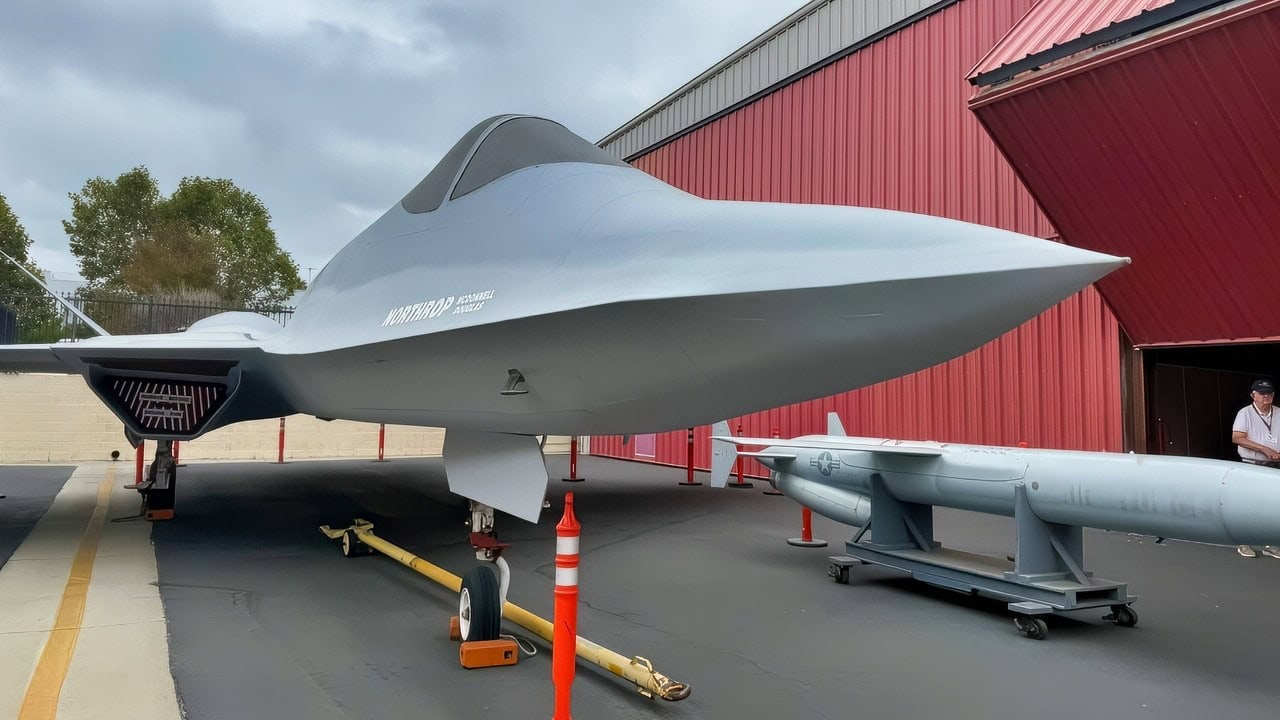
YF-23. Image Credit: 19FortyFive.com
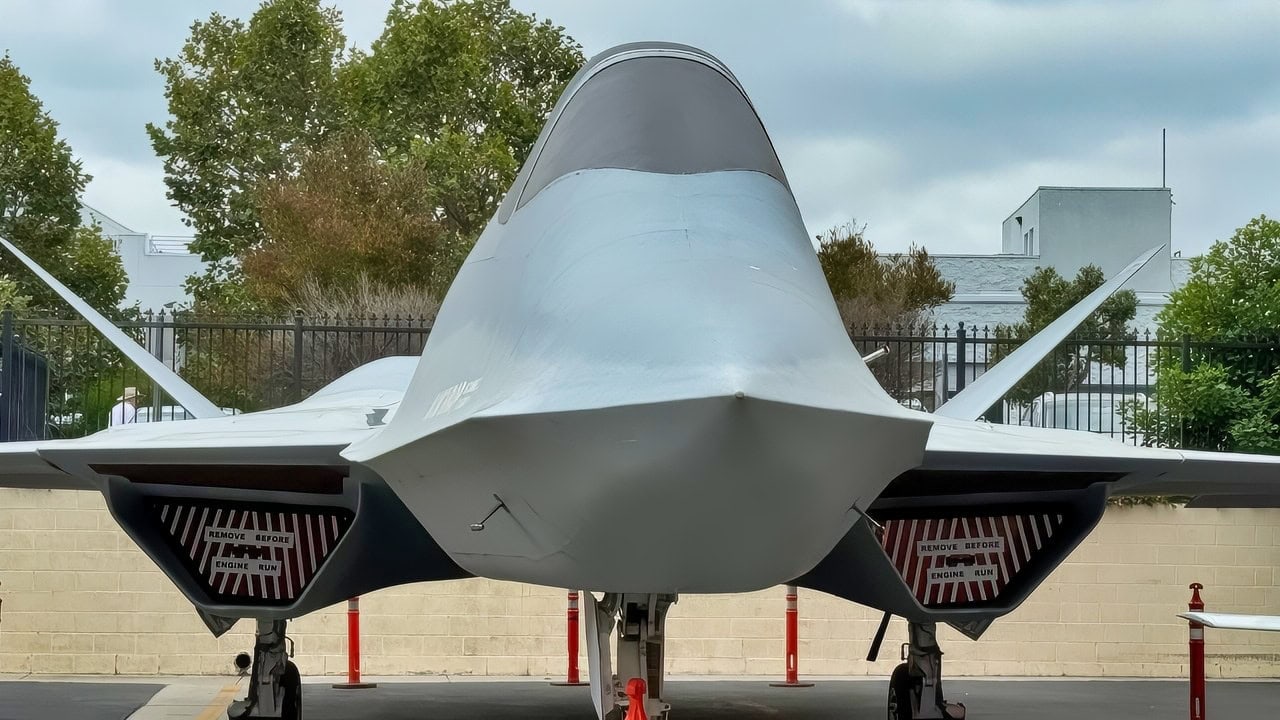
YF-23 at Western Museum of Flight. Image: 19FortyFive.com
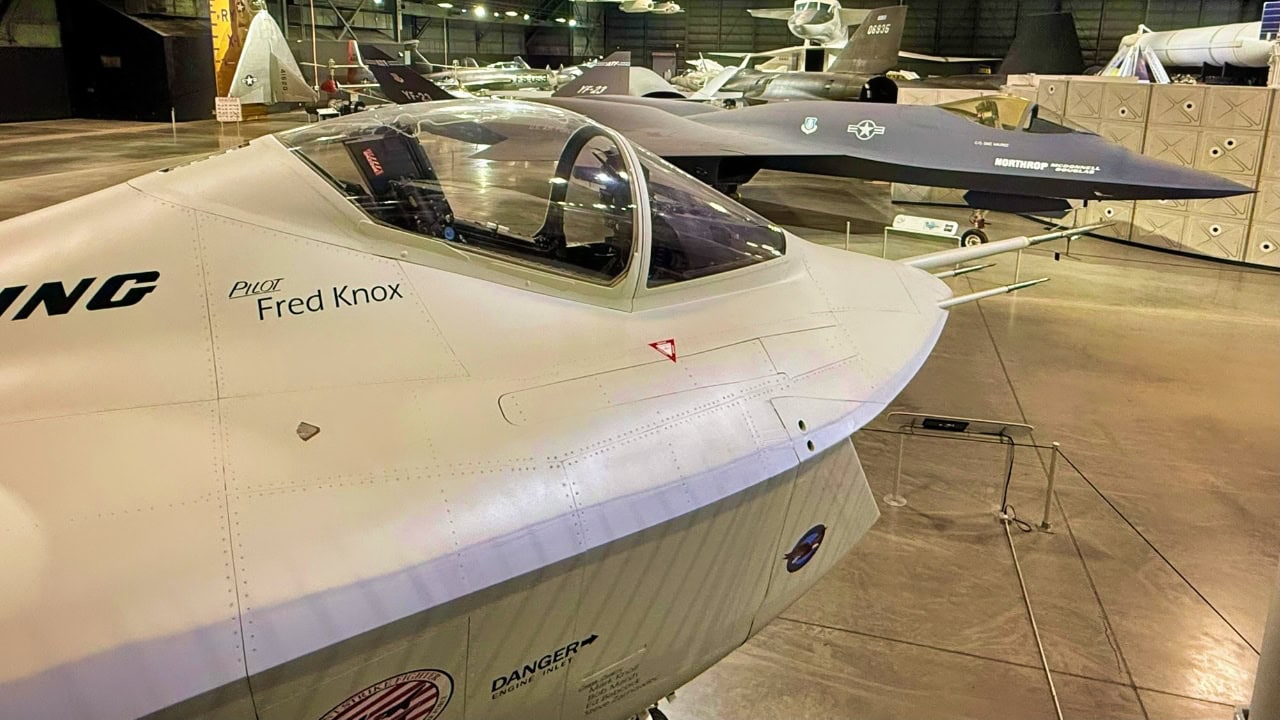
X-32 and YF-23 Together at U.S. Air Force Museum. 19FortyFive.com Image.
It was not chosen, but the aircraft’s speed and stealth properties remain highly heralded to this day. Some even speculated that the Y-23 might make a comeback, or at very least influence thinking and engineering related to future stealth aircraft.
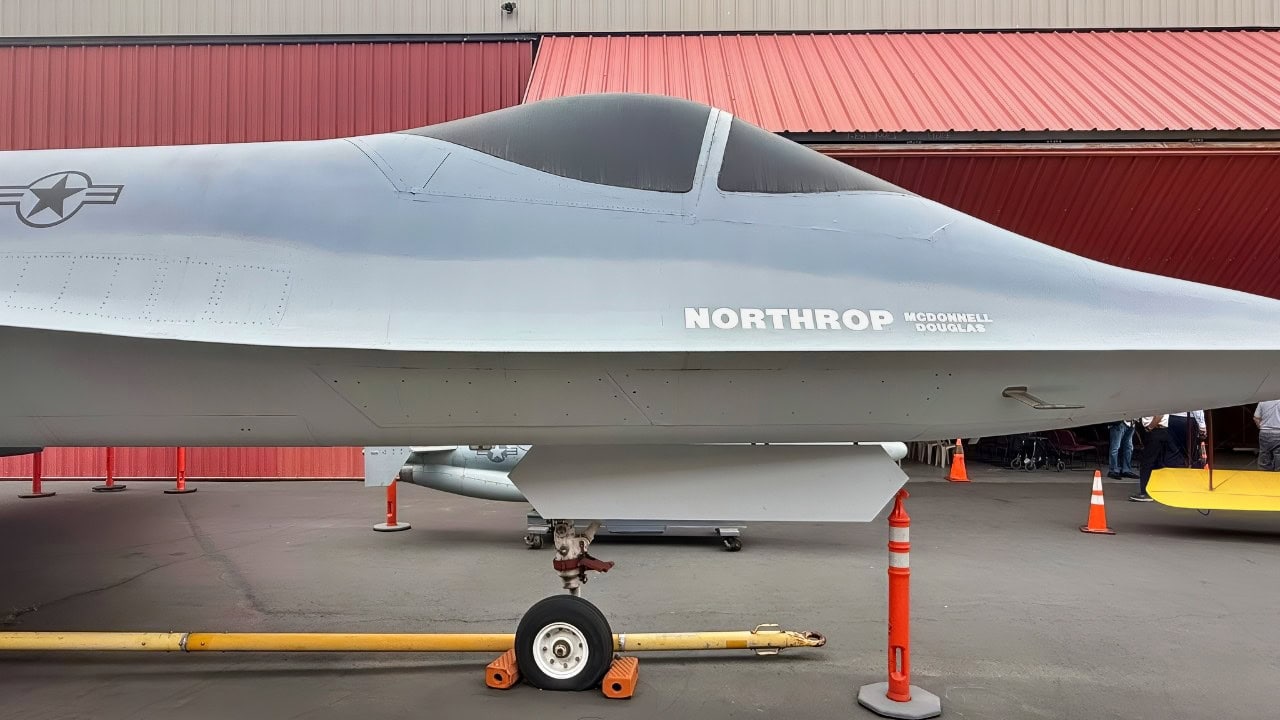
YF-23A Black Widow II 19FortyFive Image Taken by Harry J. Kazianis.
In subsequent years, Northrop may have come to question the wisdom of its decision to design, engineer, and build a project of this magnitude before customers had been clearly established.
The investment and ingenuity used to envision and create the F-20 wound up generating no immediate financial return, yet the innovations and creativity woven into the Tigershark are certain to have influenced high-speed light attack in the decades that followed.
About the Author: Kris Osborn
Kris Osborn is the President of Warrior Maven – Center for Military Modernization. Osborn previously served at the Pentagon as a highly qualified expert in the Office of the Assistant Secretary of the Army—Acquisition, Logistics & Technology. Osborn has also worked as an anchor and on-air military specialist at national TV networks. He has appeared as a guest military expert on Fox News, MSNBC, The Military Channel, and The History Channel. He also has a Masters Degree in Comparative Literature from Columbia University