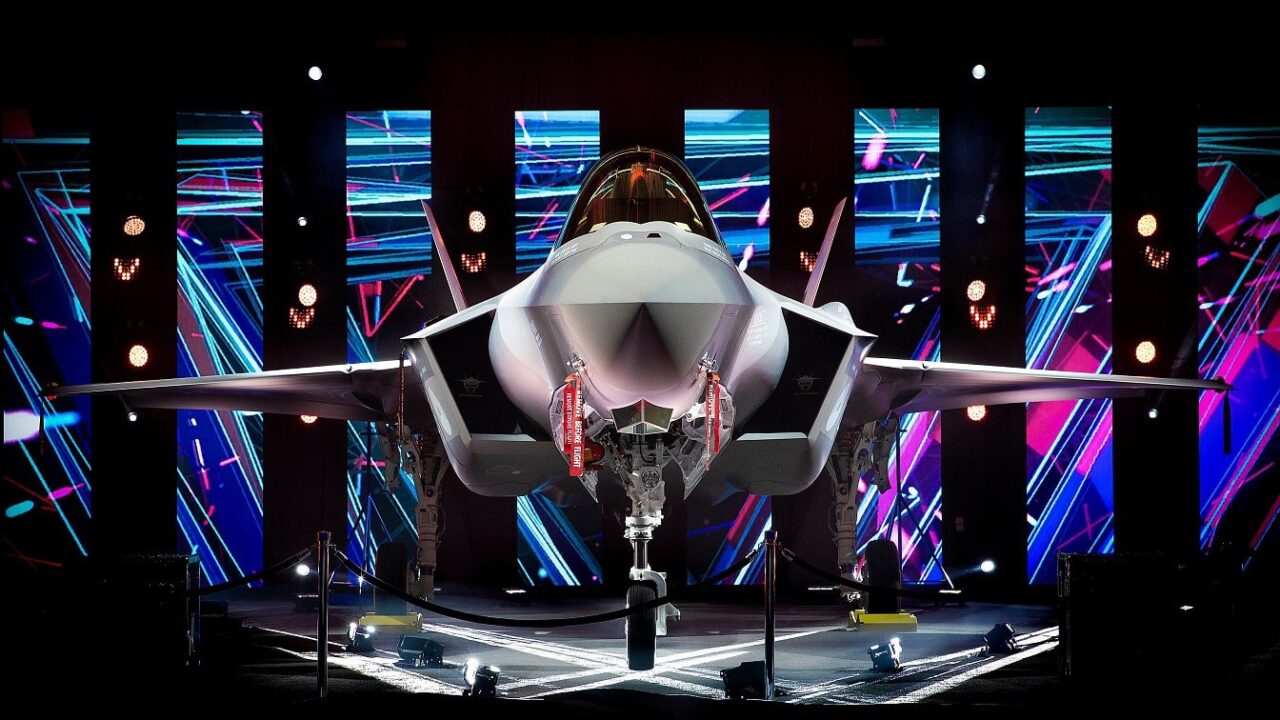
Summary and Key Points: On February 11, six U.S. Air Force F-35A stealth fighters—callsigns “Tabor 41-46″—were spotted departing RAF Lakenheath for the Middle East.
-Originating from the Vermont Air National Guard’s 158th Fighter Wing, the aircraft appeared to have their “VT” tail markings masked to obscure their origin.
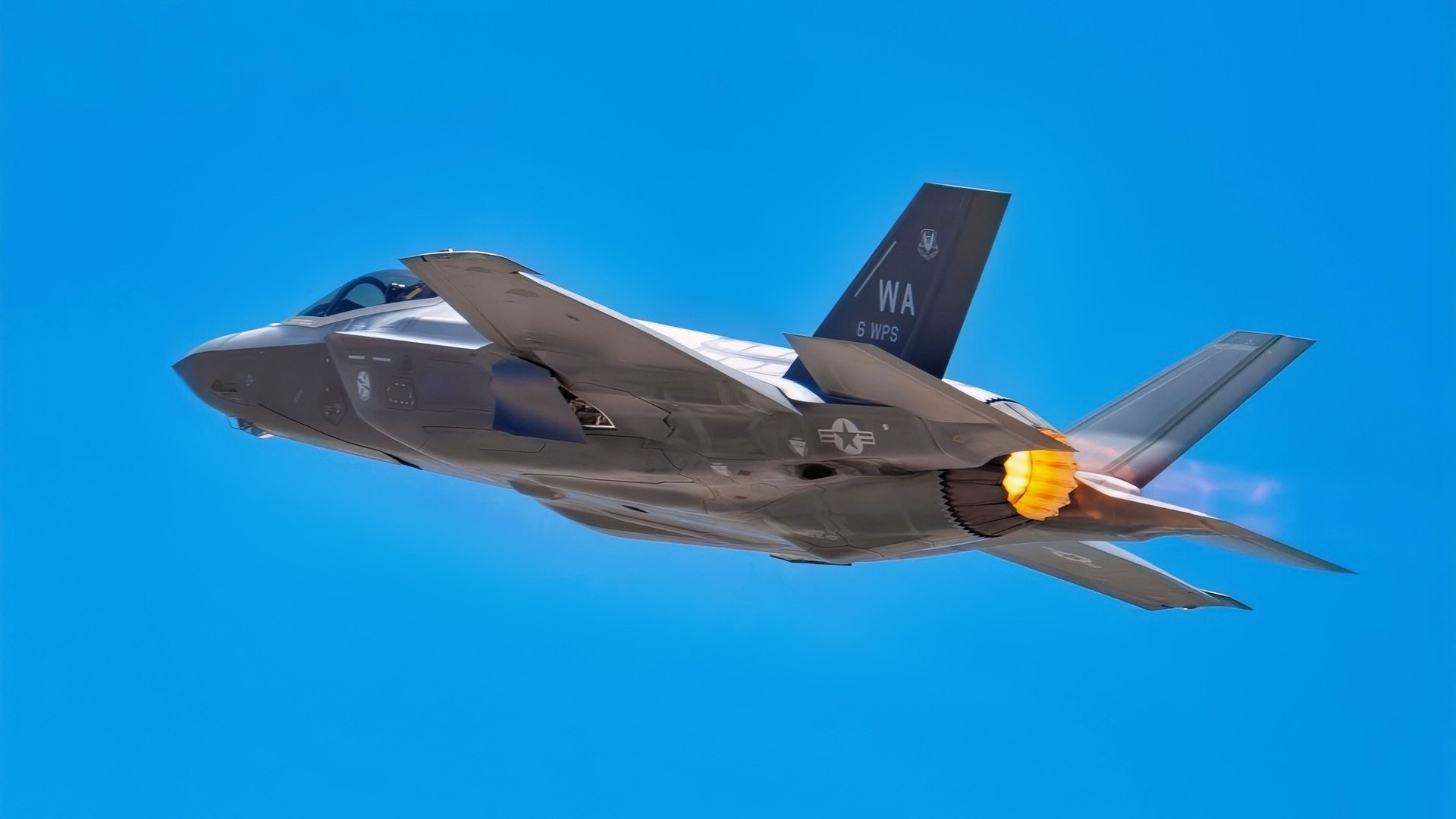
An F-35A Lightning II fighter jet, 6th Weapons Squadron (WPS), takes off from Nellis Air Force Base, Nev., July 18, 2019. The 6th WPS is the only squadron under the U.S. Air Force Weapons School exclusively training on the F-35A. (U.S. Air Force photo by Airman 1st Class Bryan Guthrie)
-This deployment coincides with President Trump’s warning of a potential large-scale attack on Iran if nuclear and ballistic missile negotiations fail this week.
-With the USS Abraham Lincoln already on station and the USS George H.W. Bush strike group potentially following, a massive military armada is now massing to pressure Tehran.
Why the F-35 Deployment Makes a New Iran Attack Likely
U.S. Air Force F-35A stealth fighter aircraft were observed on February 11 flying toward the Middle East.
Based on information reported in other outlets, these aircraft appear to be part of the U.S. force structure being deployed to the region by the Trump administration.
While Washington has issued no ultimatums, it is clear the administration is seriously weighing the costs and benefits of a large-scale attack on Iran. The White House has threatened to launch air raids on the Islamic Republic if negotiations with Tehran do not result in an agreement this week.
What the administration wants is an end to Iranian efforts to develop weapons-grade nuclear material and ballistic missile systems. The F-35s and the other assets being sent to the Middle East are all about forcing Iran to meet these U.S. demands.
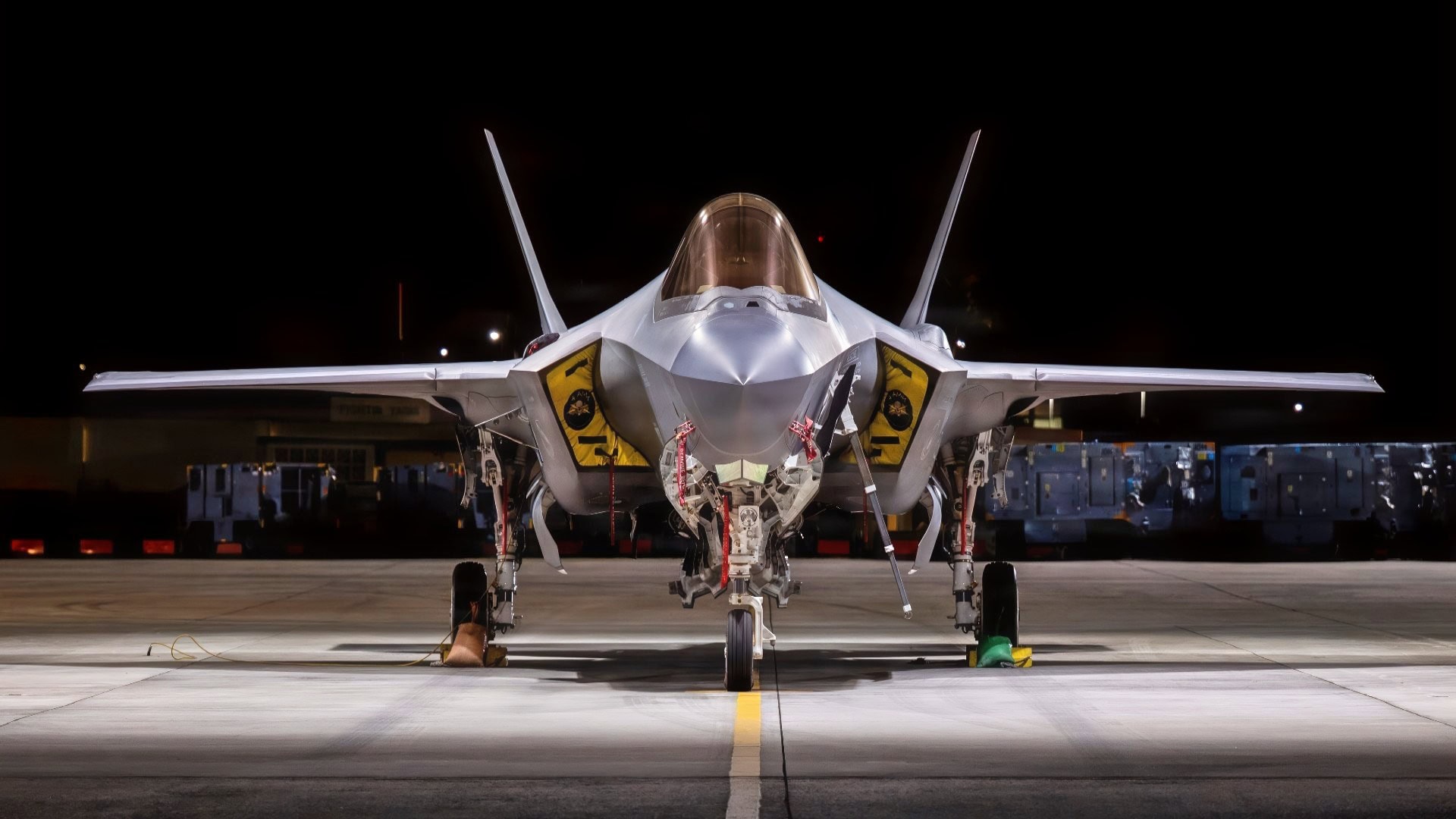
An F-35A Lightning II assigned to the 4th Expeditionary Fighter Squadron, deployed to Kadena Air Base, sit on the flight line during base-wide operational readiness exercise BH 26-1 at Kadena Air Base, Japan, Nov. 3, 2025. Kadena serves as a critical element in deterring potential adversaries through its demonstrated strength and commitment to regional security.
(U.S. Air Force photos by Senior Airman Jonathan Sifuentes)
The F-35s headed toward the Middle East are identical to the aircraft that deployed from the United States to RAF Lakenheath in the United Kingdom on February 9. Lakenheath in the past has been pressed into service as a stopover point for U.S. aircraft headed to forward bases in the Middle East. In fact, the British airbase has been a springboard for U.S. aircraft for decades.
These six F-35A fighters were following a similar itinerary as previous redeployment missions when they departed Lakenheath, according to information from local aircraft spotters and analysis of air traffic control communications.
Lightning Strikes on Iran from Vermont F-35 Fighters?
The F-35A airframes in this group were identified as “Tabor 41” through “Tabor 46,” which are the same callsigns they used while crossing the Atlantic from Vermont on February 9. These F-35s were dispatched from the Vermont Air National Guard 158th Fighter Wing and are identified by the “VT” tail ID and the serial numbers painted on aircraft.
But for whatever reason, the Air Force has decided to mask the true origin of these aircraft. According to the same tail spotter reports, one or more of the F-35As had been repainted with the information about their home base in Vermont.
Photos taken on February 11, as the aircraft took off from UK, show their vertical tails no longer displaying this identifying information.
The fighters flew in a formation with three KC-135 Stratotankers that took off separately from RAF Mildenhall in the United Kingdom. They were then seen airborne on a course over the Mediterranean. According to flight tracking data, the aircraft were headed to the Middle East, although their final destination was still not known.
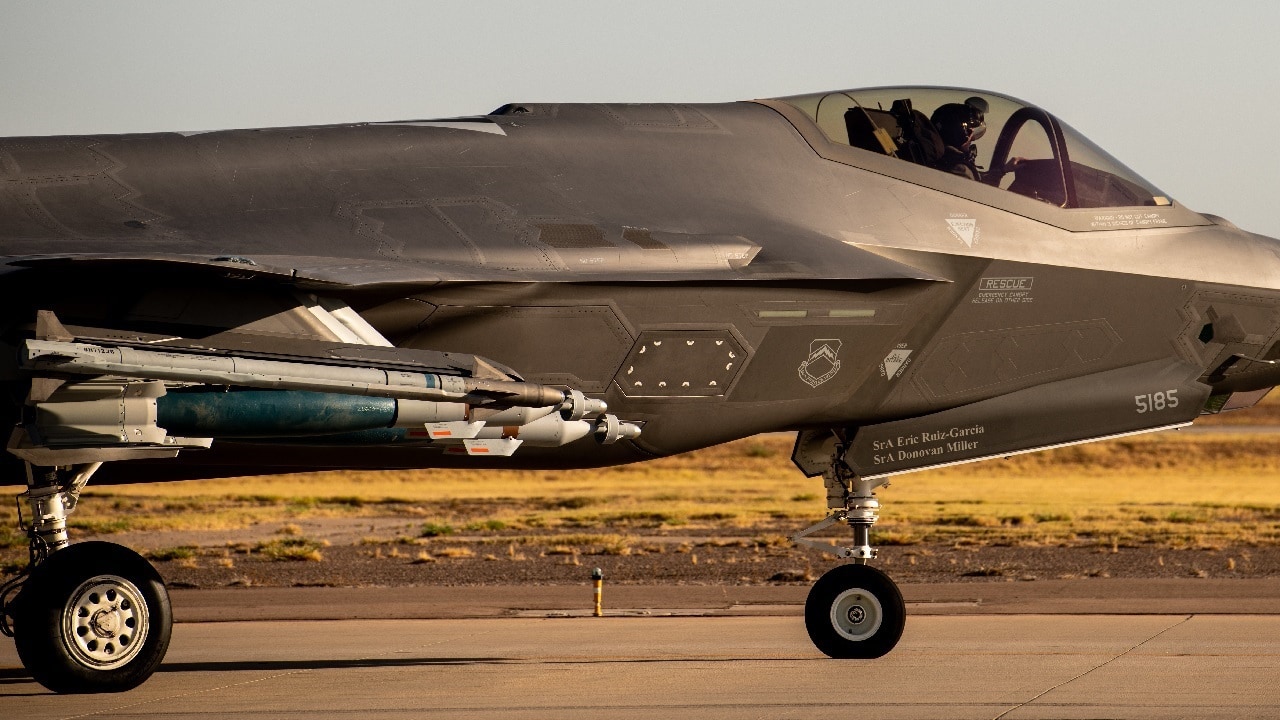
An F-35A Lightning II taxis down the flightline in a Beast Mode weapons configuration July 22, 2020, at Luke Air Force Base, Ariz. The weapons configuration consists of six inert GBU-12 bombs, four mounted onto the wings and two loaded into the weapons bay, as well as an AIM-9X air-to-air training missile. The Beast Mode weapons configuration provides F-35 B-Course student pilots with the additional training and experience needed for potential combat sorties and helps train the world’s greatest F-35 pilots and combat ready Airmen. (U.S. Air Force photo by Staff Sgt. Alexander Cook)
U.S. military operations in the Middle East are under the control of U.S. Central Command, which declined to comment on the F-35s’ mission. Lakenheath also has its own unit of F-35As that are part of the base’s 48th Fighter Wing, but there was no sign that these assets would also be deploying to the Middle East.
Beyond the Sea
On February 10, U.S. President Donald Trump told Axios that negotiations with Iran would be resumed this week.
“We have an armada that is heading there, and another one might be going,” Trump said. “Another one” is assumed to be in reference to the George H.W. Bush aircraft carrier strike group (CSG), which would join the USS Abraham Lincoln CSG already in the region.
“Either we will make a deal, or we will have to do something very tough like last time,” Trump told Axios, referring to last summer’s Operation Midnight Hammer attack on Iran’s underground nuclear-weapon sites.
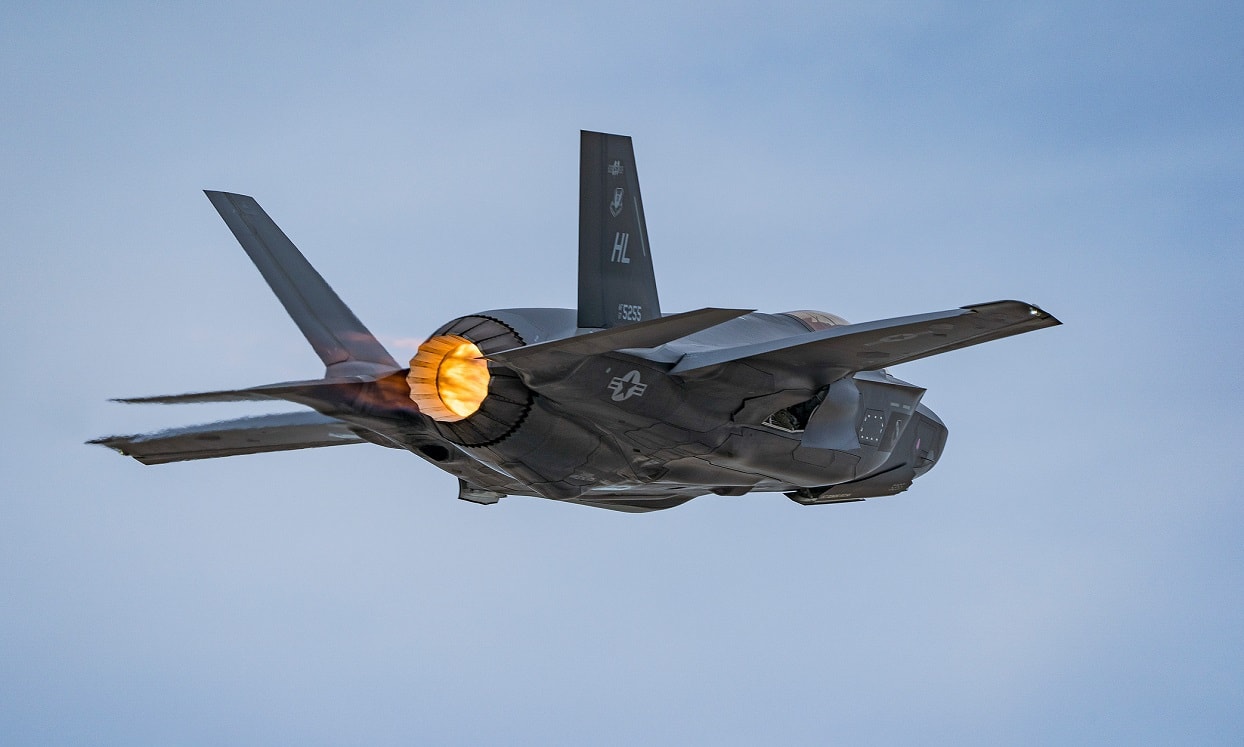
An F-35A Lightning II fighter jet assigned to the 421st Fighter Squadron, takes off during Red Flag 20-1 at Nellis Air Force Base, Nevada, Feb. 5, 2020. The F-35A, with its aerodynamic performance and advanced integrated avionics, will provide next-generation stealth, enhanced situational awareness and reduced vulnerability for the United States and allied nations. (U.S. Air Force photo by William R. Lewis)
Trump was meeting with Israeli Prime Minister Benjamin Netanyahu at the White House on February 11 regarding the Iran negotiations.
The Israeli government is lobbying the Trump administration to not only turn off the Iranian nuclear program, but also force Iran’s ballistic missile program to shut down.
Israel also wants Tehran’s commitment to cease its support for proxy groups in the region, rather than just a pact that only restricts the Islamic Republic’s programs of mass destruction.
About the Author: Reuben F. Johnson
Reuben F. Johnson has thirty-six years of experience analyzing and reporting on foreign weapons systems, defense technologies, and international arms export policy. Johnson is the Director of Research at the Casimir Pulaski Foundation. He is also a survivor of the Russian invasion of Ukraine in February 2022. He worked for years in the American defense industry as a foreign technology analyst and later as a consultant for the U.S. Department of Defense, the Departments of the Navy and Air Force, and the governments of the United Kingdom and Australia. In 2022-2023, he won two awards in a row for his defense reporting. He holds a bachelor’s degree from DePauw University and a master’s degree from Miami University in Ohio, specializing in Soviet and Russian studies. He lives in Warsaw.