
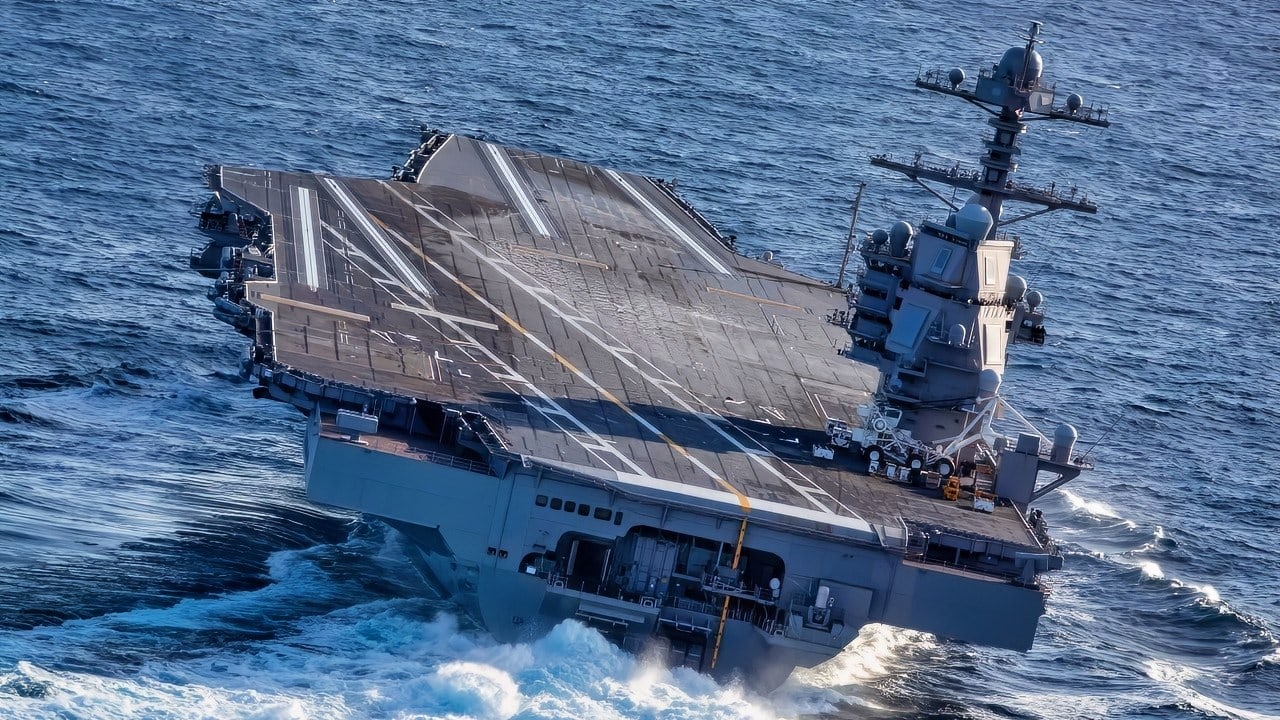
Summary and Key Points: The USS Gerald R. Ford is currently transiting the Mediterranean, ending its mission in the Caribbean following the arrest of Nicolás Maduro to reinforce U.S. Central Command.
-This move places the Ford on track to break post-Vietnam deployment records, potentially exceeding 300 days at sea.
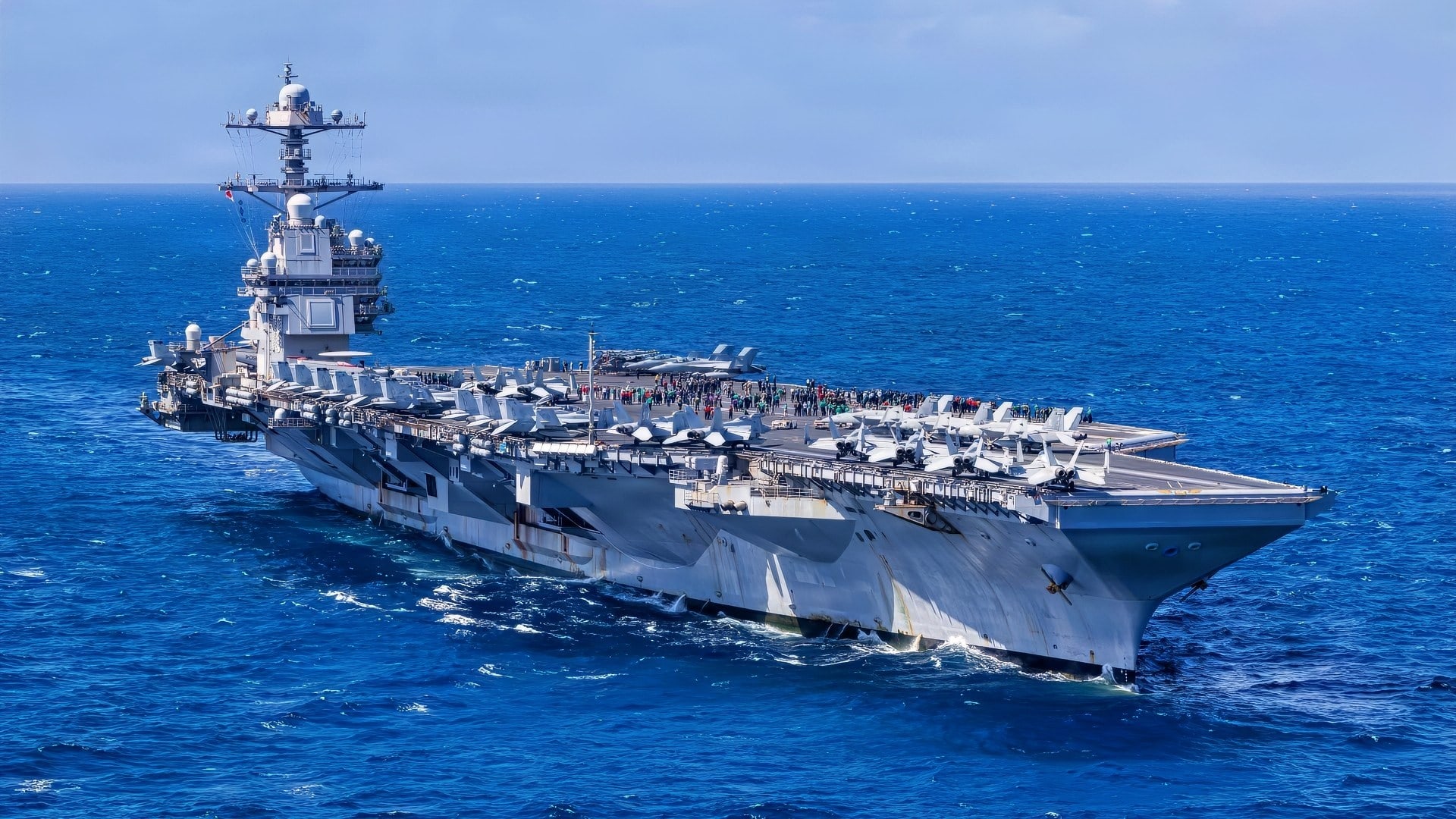
The world’s largest aircraft carrier, Ford-class aircraft carrier USS Gerald R. Ford (CVN 78), transits the Caribbean Sea during Carrier Air Wing 8’s aerial change of command ceremony, Jan. 19, 2026. U.S. military forces are deployed to the Caribbean in support of the U.S. Southern Command mission, Department of War-directed operations, and the president’s priorities to disrupt illicit drug trafficking and protect the homeland. (U.S. Navy photo)
-The deployment comes amid escalating threats from Iranian Supreme Leader Ayatollah Khamenei and reports that the Trump administration is weighing “sustained operations” against Tehran.
-While military assets are being positioned for a potential strike as early as this weekend, negotiators led by Jared Kushner remain hopeful for a nuclear breakthrough.
USS Gerald R. Ford Aircraft Carrier Headed Towards Iran
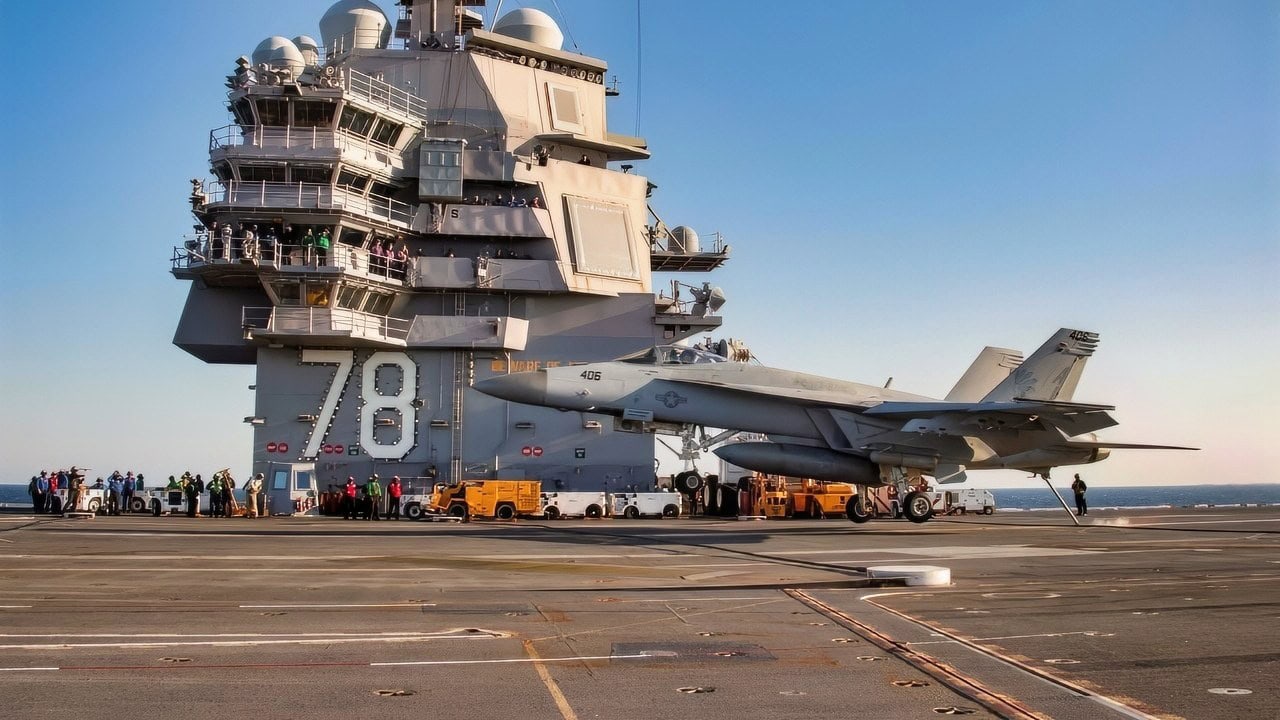
USS Gerald R. Ford Supercarrier Flight Deck. Image Credit: Creative Commons.
According to a USNI News report earlier this week, the USS Gerald R. Ford (CVN-79) and its escorts are “operating in the Atlantic Ocean as they sail to U.S. Central Command amid tensions with Iran.”
A Navy official confirmed to the outlet that the Gerald R. Ford carrier strike group was crossing the Atlantic.
The carrier had been in the Caribbean for the last several months, starting with the military buildup before the U.S. operation to arrest Venezuelan President Nicolas Maduro in early January.
“Ford is now en route to the Middle East to join the Abraham Lincoln Carrier Strike Group, which is currently operating in the Arabian Sea, as the U.S. negotiates with Iran over its nuclear program. Ford deployed in June from Naval Station Norfolk, Va., and was extended to sail to the Middle East,” USNI News reported.
Indeed, the Ford is Now in the Mediterranean Sea.
The BBC posted pictures of the Gerald R. Ford passing through the Strait of Gibraltar and arriving in the Mediterranean.
“The images – taken from Gibraltar – show the world’s largest warship as it headed east from the Atlantic into the Mediterranean. We’ve also confirmed using ship-tracking that one of the ships in the Ford’s carrier strike group, USS Mahan, passed through the strait,” the BBC report said.
A Record-Long Deployment?
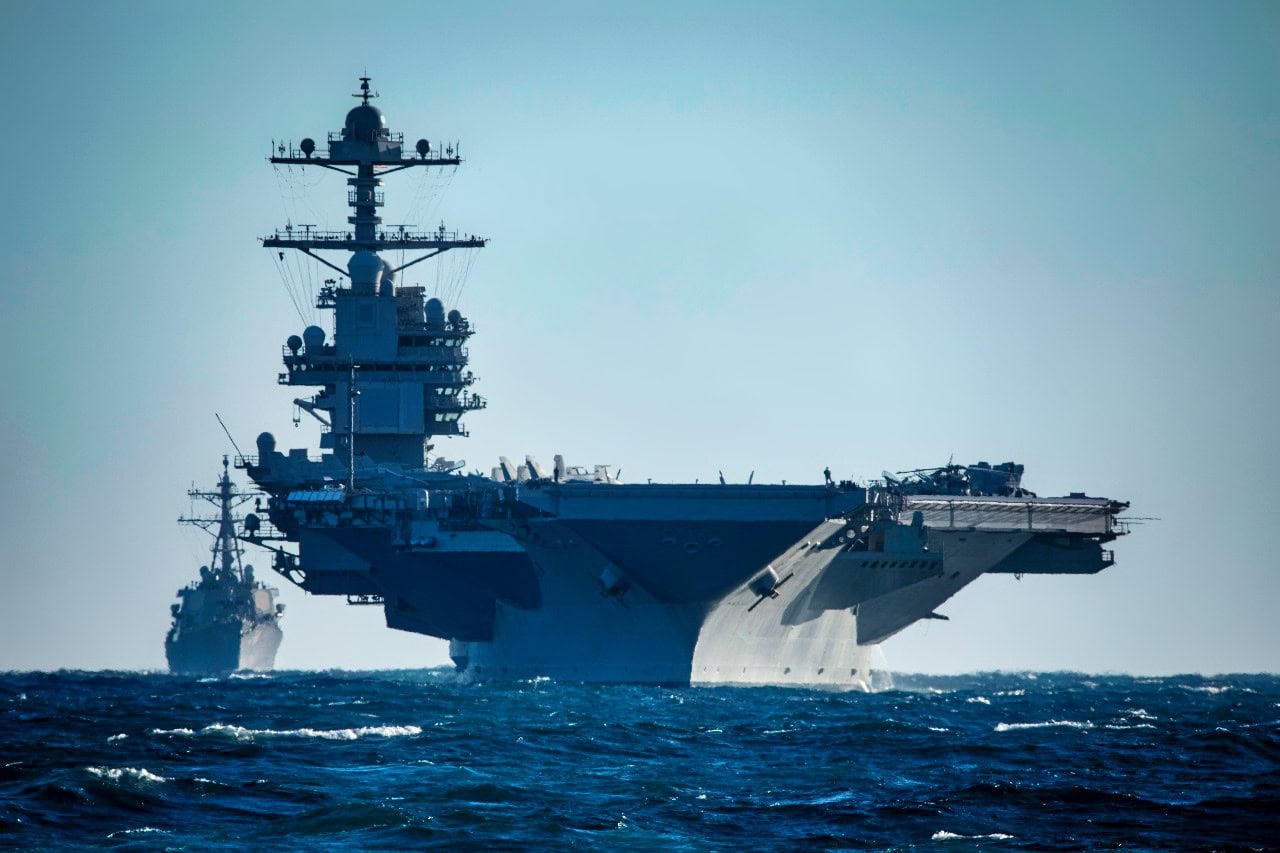
A view from the Ticonderoga-class guided missile cruiser USS Normandy (CG 60) of the first-in-class aircraft carrier USS Gerald R. Ford (CVN 78) and the Arleigh Burke-class guided missile destroyers USS Thomas Hudner (DDG 116), USS Ramage (DDG 61) and USS McFaul (DDG 74) as the ships steam in formation during a drill while underway as part of the Gerald R. Ford Carrier Strike Group March 5, 2023. Ford Carrier Strike Group is underway in the Atlantic Ocean executing its Composite Training Unit Exercise (COMPTUEX), an intense, multi-week exercise designed to fully integrate a carrier strike group as a cohesive, multi-mission fighting force and to test their ability to carry out sustained combat operations from the sea. As the first-in-class ship of Ford-class aircraft carriers, CVN 78 represents a generational leap in the U.S. Navy’s capacity to project power on a global scale. (U.S. Navy photo by Mass Communication Specialist 2nd Class Malachi Lakey)
The move toward the Middle East could make for a record-long carrier deployment.
“Should Ford remain deployed until mid-April, it would have broken the post-Vietnam War 294-day record for carrier deployments – a record USS Abraham Lincoln (CVN-72) set in 2020,” USNI News reported. “If the carrier is out until early May, it would match the 300-day-plus deployments that carriers conducted to the Gulf of Tonkin during the Vietnam War.”
A Warning From the Supreme Leader
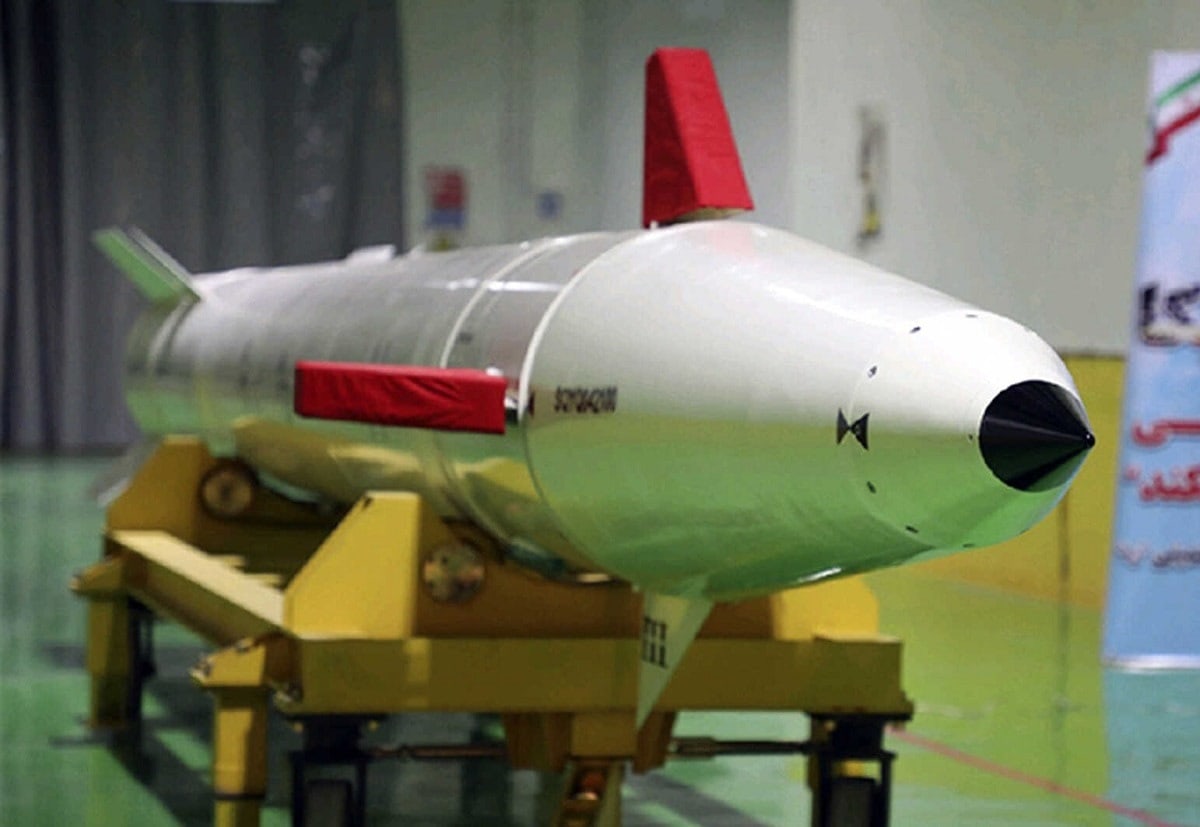
Iranian ballistic missiles. Image: Creative Commons.
According to The Hill, Iran’s Supreme Leader, Ayatollah Ali Khamenei, has threatened to sink aircraft carriers “to the bottom of the sea.”
“The Americans constantly say that they’ve sent a warship toward Iran. Of course, a warship is a dangerous piece of military hardware. However, more dangerous than that warship is the weapon that can send that warship to the bottom of the sea,” the Ayatollah said on X.
Sen. Lindsey Graham (R-SC) quoted Khamenei’s threat, stating, “See you at the movies. Oh I forgot, you don’t have movies.” The senator appears unaware that Iran has a significant cinematic tradition and that many leading dissidents against the regime are filmmakers.
Options for an Attack on Iran
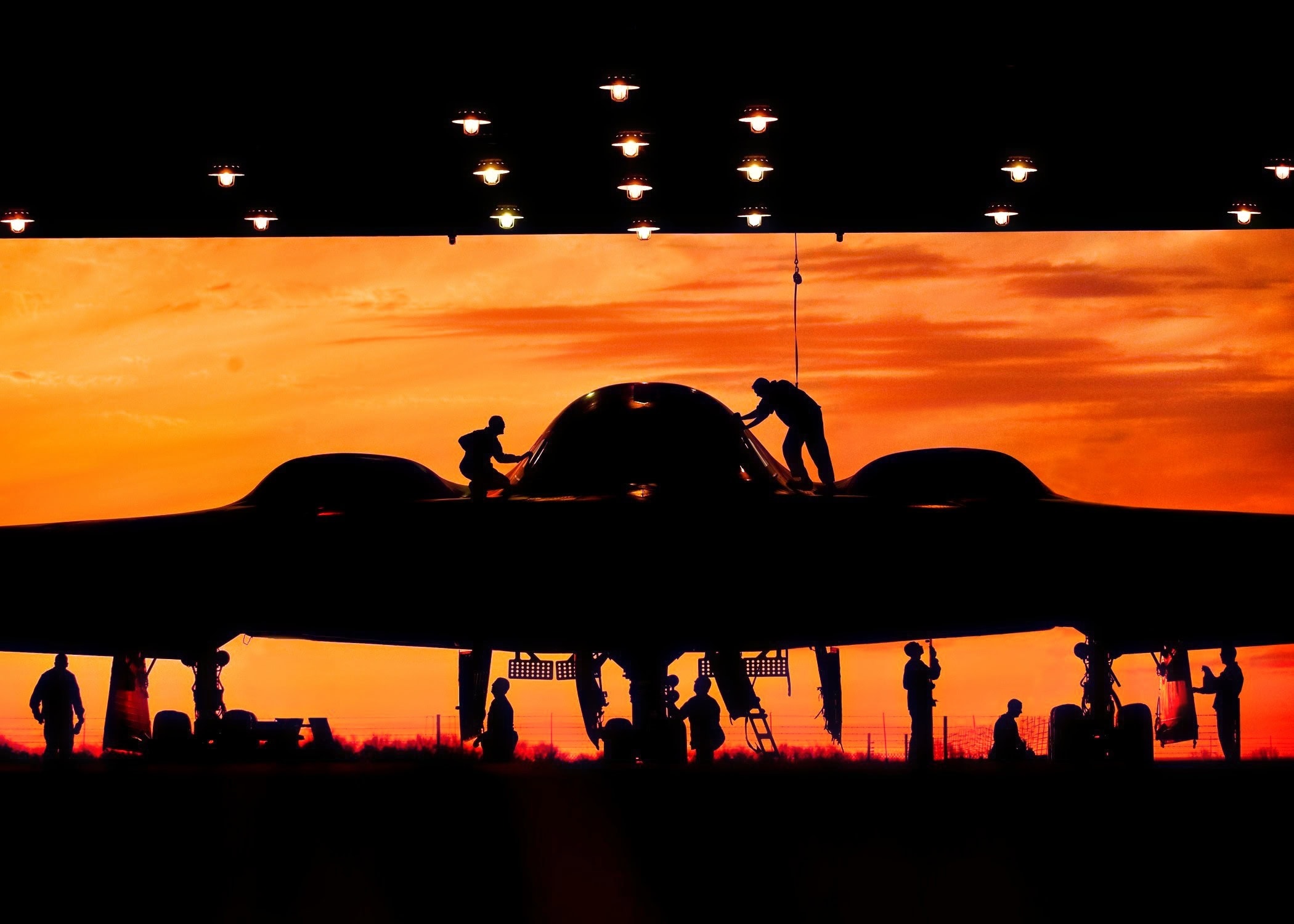
B-2 Spirit Bomber. Image Credit: Creative Commons.
Last summer, amid Israel’s war with Iran, the United States bombed Iran’s nuclear facilities. No protracted war followed between the countries. Trump claimed on multiple occasions that the Iranian facilities were “obliterated,” although it’s not clear if they actually were.
Will there be a war in Iran? CNN reported on Thursday about the different things that might happen next.
“If [Trump] decides to go ahead with an attack on Iran, his options now range from more targeted strikes to sustained operations that could potentially last for weeks, according to people familiar with the matter,” CNN reported. “Some include plans to take out Tehran’s leaders. Many would be on a much larger scale than the hourslong bombing run that targeted Iranian nuclear facilities last summer, according to people familiar with the plans.”
There’s also the question of how soon an attack could happen.
“People familiar with the plans said the US military could be ready as soon as this weekend to strike Iran, but US officials and regional diplomats with knowledge of the diplomatic talks with Tehran do not expect strikes to come that soon,” CNN reported. “Middle East envoy and Trump’s son-in-law Jared Kushner — who has helped lead the US negotiating team — is among a number of Trump advisers who are hopeful that they can reach a nuclear deal with Iran, according to a source familiar with his thinking.”
The report added that a target list had not yet been drawn up for a potential attack.
Trump, who rose in politics while railing against the Iraq War and the general concept of open-ended wars aimed at regime change, has also spent much of his second presidency demanding to be awarded the Nobel Peace Prize.
What About Congress?
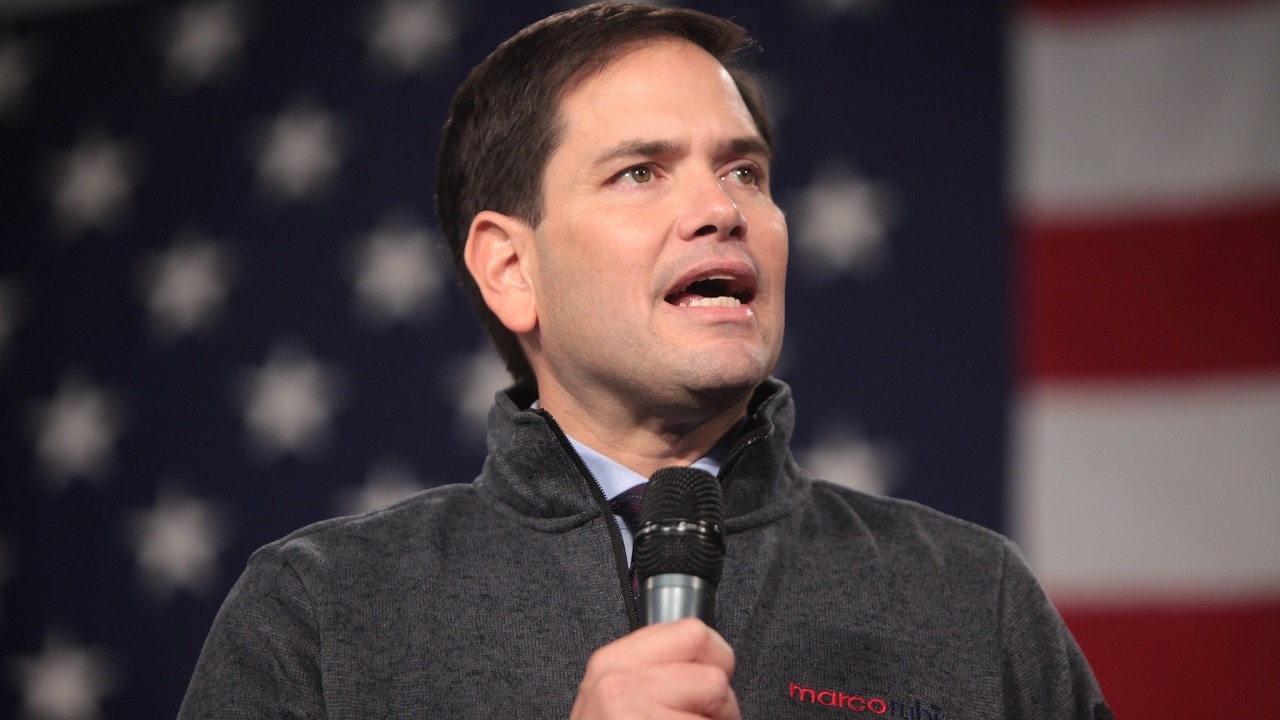
By Gage Skidmore: U.S. Senator Marco Rubio speaking with attendees at the 2015 Iowa Growth & Opportunity Party at the Varied Industries Building at the Iowa State Fairgrounds in Des Moines, Iowa.
Per CNN, “Trump, so far, has not publicly laid out everything he is hoping to achieve by launching a new war. Nor has he made serious attempts to gain the buy-in either from the American public or members of Congress, who have been away from Washington this week as he mulls his options. And experts remain skeptical Iran would make the concessions that Trump has publicly demanded, like giving up uranium enrichment entirely.”
Some voices in Congress are expressing skepticism about an Iran attack, as well as about the president’s power to unilaterally launch one.
Per Axios, War Powers Act resolutions have been introduced by Rep. Ro Khanna (D-CA). Rep. Thomas Massie (R-KY), who often bucks Trump, said he would support such a vote, but it doesn’t appear other Republicans have signed on to that idea.
What’s Next in Iran?
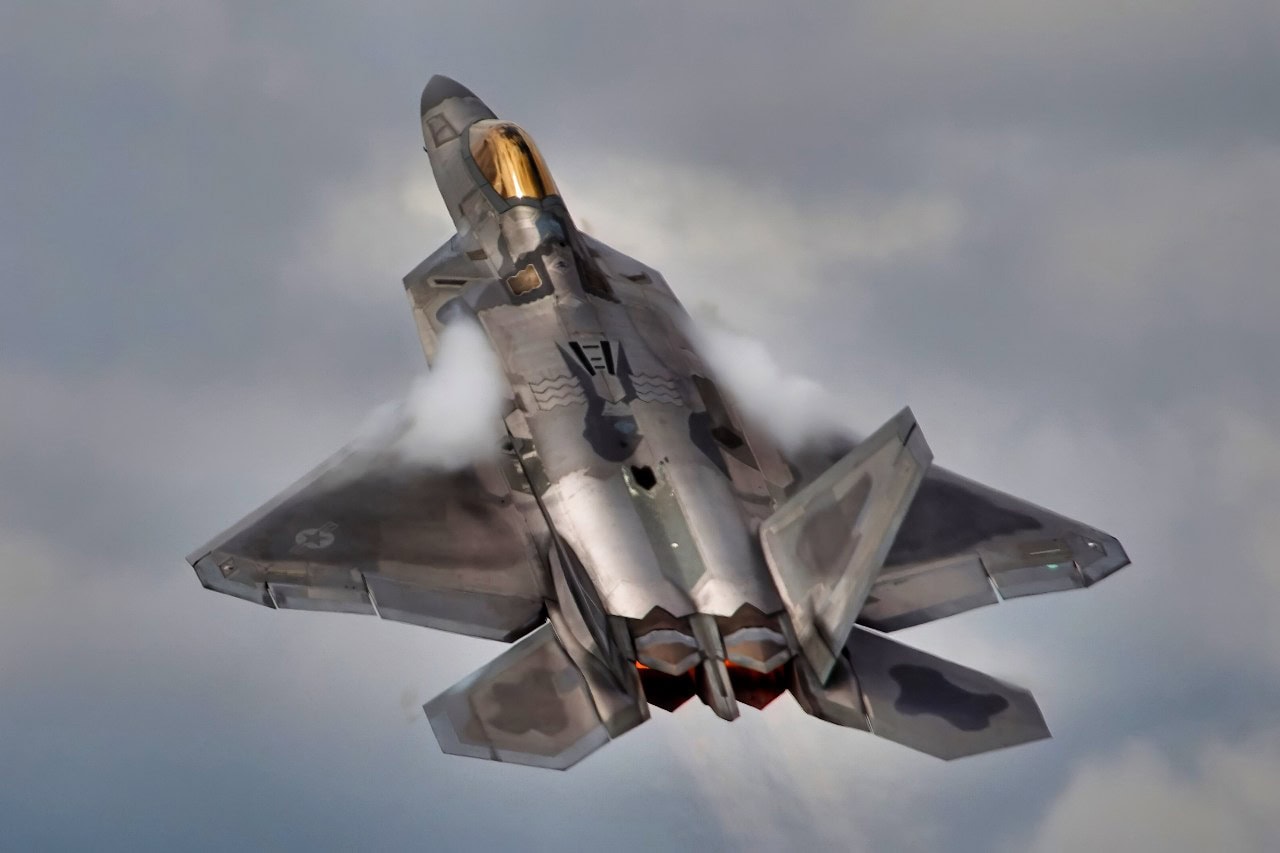
F-22 Raptor in Flight Back in 2017. Image Credit: Creative Commons.
If the regime in Iran falls, it’s not clear what would come next.
“Trump has hinted at a desire for regime change in Iran, but there is little clarity inside the administration of what might happen if the leadership in Tehran falls,” CNN reported. “Secretary of State Marco Rubio said during congressional testimony last month that no one really knows who might replace Supreme Leader Ali Khamenei if he was ousted.”
About the Author: Stephen Silver
Stephen Silver is an award-winning journalist, essayist, and film critic, and contributor to the Philadelphia Inquirer, the Jewish Telegraphic Agency, Broad Street Review, and Splice Today. The co-founder of the Philadelphia Film Critics Circle, Stephen lives in suburban Philadelphia with his wife and two sons. For over a decade, Stephen has authored thousands of articles that focus on politics, national security, technology, and the economy. Follow him on X (formerly Twitter) at @StephenSilver, and subscribe to his Substack newsletter.