
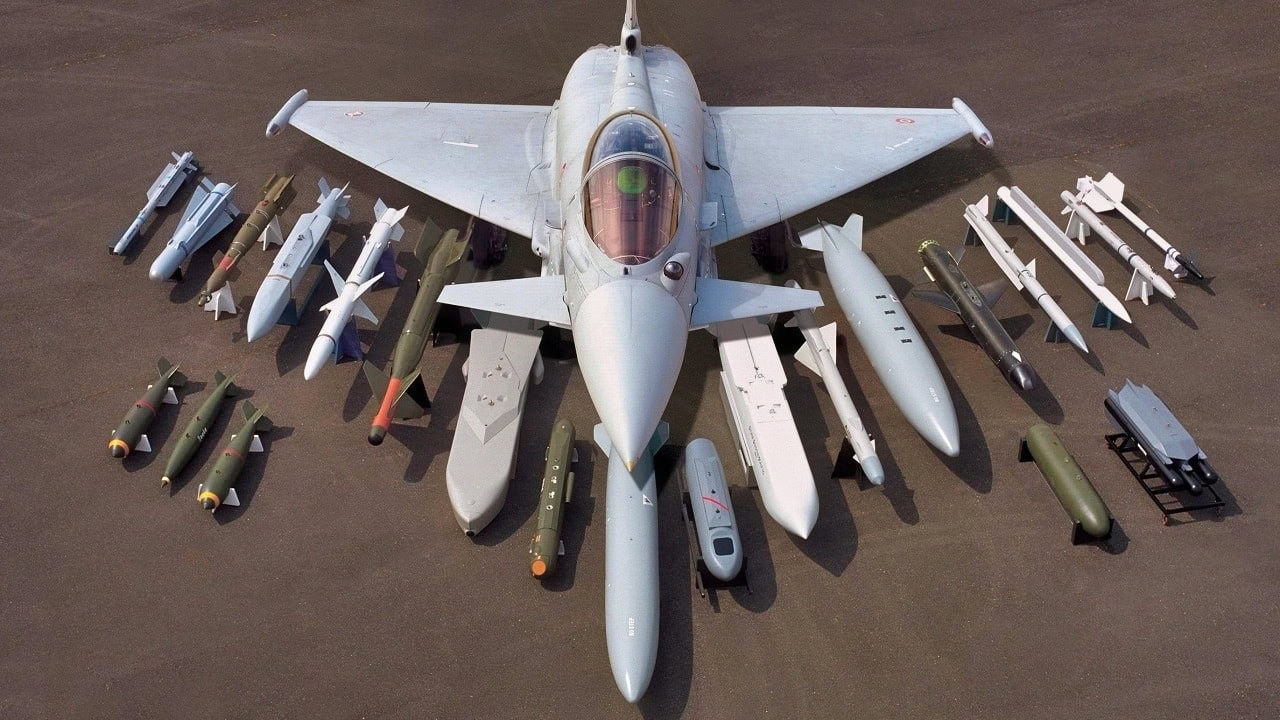
Summary and Key Points: Harrison Kass, a JD and former U.S. Air Force pilot selectee, breaks down the strategic evolution of the Eurofighter Typhoon. Designed in the Cold War to intercept MiG-29 and Su-27 formations, the Typhoon now bridges the gap between 4th and 5th-generation warfare.
-Integrating the CAPTOR-E AESA radar and the ramjet-powered Meteor missile, the platform serves as a high-performance “missile truck” for the F-35.
-The Typhoon’s lack of stealth is offset by its Defensive Aids Sub-System (DASS) and its emerging role in the Future Combat Air System (FCAS) through the 2030s.
Obsolete at Birth: The Eurofighter Typhoon’s $100 Billion Fight Against Stealth Obsolescence
The Eurofighter Typhoon was conceived in the late Cold War. The original purpose was to achieve air superiority against Soviet fighters and to defend European airspace from Warsaw Pact incursions. Accordingly, the airframe was designed for speed, agility, and high-altitude interception.
But by the time the Eurofighter entered service in the early 2000s, the USSR was long gone. So how does a Cold War air-dominance platform remain relevant in an era of stealth, drones, and networked warfare?
Through incremental but significant upgrades, the Typhoon has evolved into a capable multirole fighter, yet it remains shaped by its original Cold War purpose.
Countering the Soviet Threat
Developed by the UK, Germany, Italy, and Spain, the Eurofighter Typhoon was built to counter the MiG-29, Su-27, and Soviet bomber fleets.
The Eurofighter’s core design priorities were a high thrust-to-weight ratio, supercruise capability (limited but achievable), excellent energy-to-maneuverability, and beyond-visual-range missile employment. The delta wing and canard layout was optimized for agility and high instantaneous turn rates, appropriate for the intended air superiority (not ground attack) primary mission set.
The Threat Disappears
Yet by the early 2000s, the Soviet Union had dissolved. There were no mass bomber formations to counter. Instead, the West pivoted toward counterinsurgency and expeditionary wars—for which the Eurofighter was ill-suited.
The early Typhoons lacked mature strike capability, advanced targeting pods, and deep precision-strike integration, and compared unfavorably to the F-15E or the F/A-18E/F. Initially, the Eurofighter was seen as overbuilt and misaligned for the post-9/11 world.
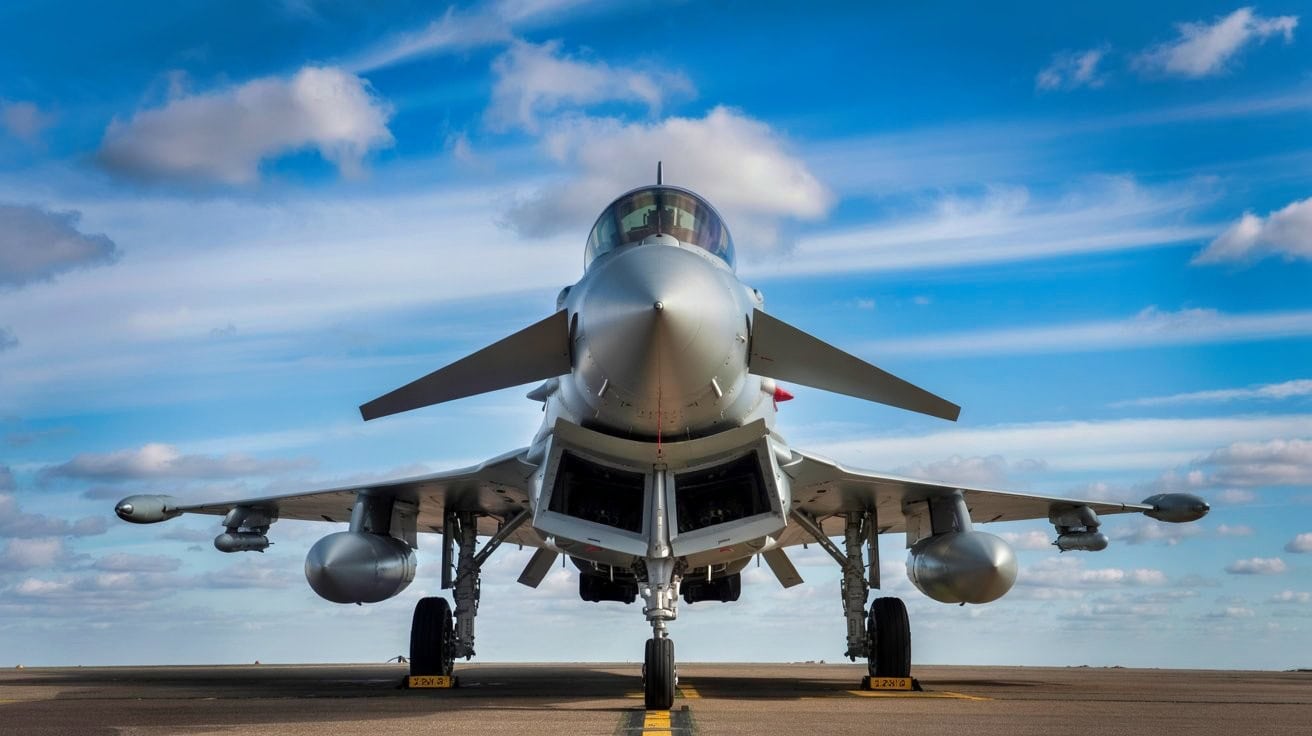
Eurofighter Typhoon. Image Created by Ideogram.
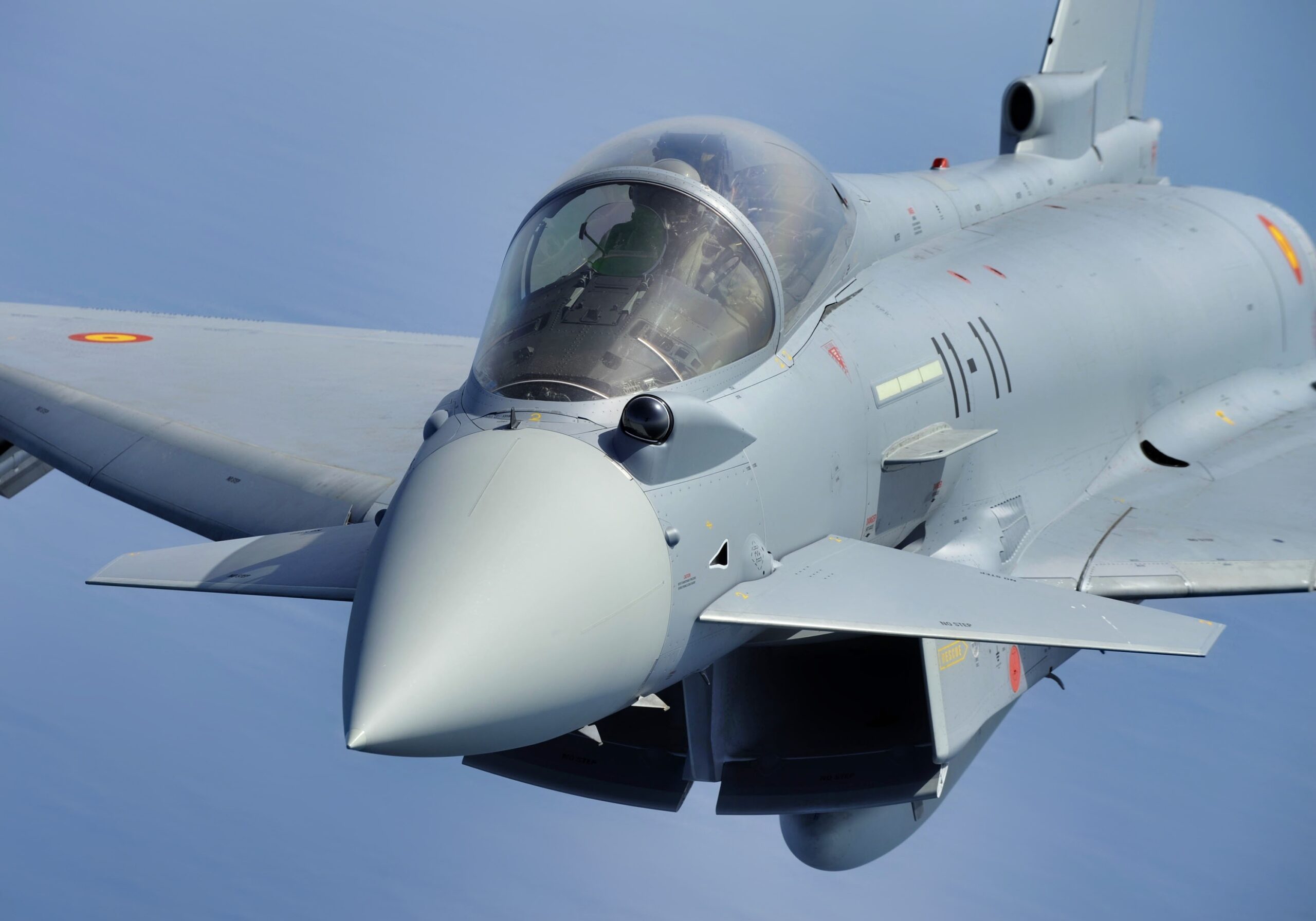
Eurofighter Typhoon Fighter. Image Credit: Creative Commons.
Adapting to Fight
To re-align with the reality on the ground, the Eurofighter was put through an incremental upgrade path. The software was upgraded; advanced targeting pods were added; the mission set was expanded to include ground-attack. Gradually, the Eurofighter was adjusted from a pure interceptor to a swing-role fighter.
One particularly important upgrade was the CAPTOR-E AESA radar, which improved detection range, multi-target tracking, and electronic attack potential—and brought the Eurofighter closer to modern sensor standards. The Defensive Aids Sub-System (DASS) was important, too, offering an advanced EW suite, missile approach warning, and towed decoys—all key to surviving in contested airspace.
Staying Lethal
Various weapons integration was an important upgrade for the Eurofighter. The Meteor missile, for example, gave the Eurofighter sophisticated long-range BVRAAM, with ramjet propulsion and a high no-escape zone—arguably the most advanced BVR missile in the world. The Storm Shadow gives the Eurofighter deep strike capability and precision stand-off attack. The Brimstone offers an anti-armor and anti-ship capability. In sum, the Eurofighter, through weapons integration, became a credible platform for air superiority, precision strike, and maritime strike.
Tactical Relevance
Against near-peer competitors, the Eurofighter would be at a disadvantage due to its lack of stealth. But the high-performance, advanced missiles and strong EW package would work well in a mixed fourth/fifth-generation formation, as a missile truck, or in leveraging the Meteor missile at range. In the NATO context, these functions enable air policing, Baltic deployments, and quick reaction alert missions, among others. And the Ukraine war has reinforced the need for high-end air superiority platforms.

Eurofighter Typhoon. Image Credit: Creative Commons.
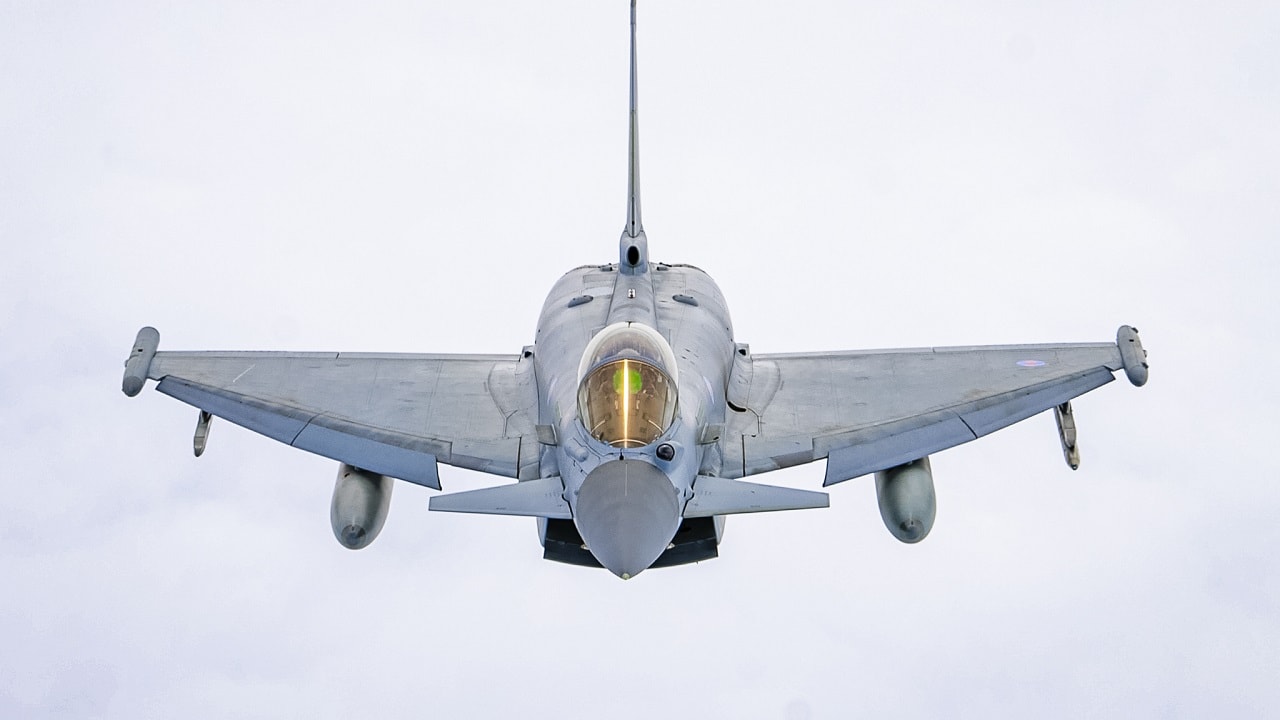
A UK Eurofighter Typhoon flies above the Baltics on 25 May 2022. UK and Czech fighter jets have been taking part in air defence training over the Baltic region. UK Eurofighter Typhoons, F-35s and Czech Gripens were involved in an exercise as part of Neptune Shield 22 (NESH22), a multinational maritime vigilance activity. NESH22 has seen a range of multi-domain activities between air, land and maritime assets across Europe and in the Baltic and Mediterranean Seas. It runs from 17 to 31 May 2022.
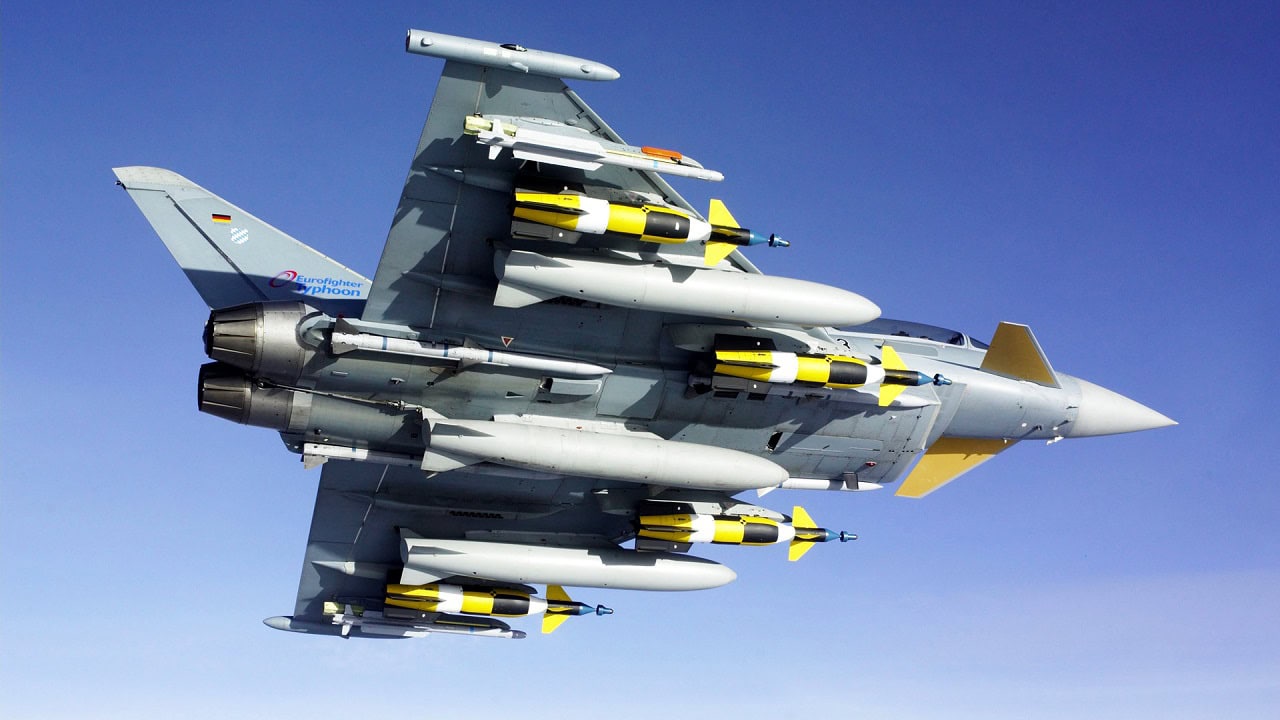
Eurofighter Typhoon. Image Credit: Creative Commons.
But the Eurofighter is not a stealth fighter capable of penetrating dense IADS. In a high-end fighter, the Eurofighter would likely depend on the F-35 for initial suppression and stand-off weapons for engagement beyond contested zones.
So, the Eurofighter’s design DNA still limits application; the jet was built to dominate airspace but was less optimized for deep strike in heavily contested zones.
Strategic Significance
The Eurofighter, as the name suggests, is a symbol of European defense cooperation, offering industrial base sustainment and reducing reliance on US platforms.
The jet has proven an export success, too, with orders placed to Saudi Arabia, Qatar, and Kuwait. But more importantly, the Eurofighter helps Europe maintain its sovereign air power.
Expect upcoming enhancements, such as expanded EW capacity, loyal wingman compatibility, network-centric upgrades, and potential integration into the Future Combat Air System (FCAS).
But limitations remain; the airframe will never become stealth and will always be limited relative to fifth-generation aircraft (and emerging sixth-generation aircraft). So the Eurofighter will increasingly serve as a high-performance complement to stealth, rather than the primary penetration asset.
Eurofighter Typhoon Bottom Life: Can It Survive in the F-35 Stealth World?
The world the Eurofighter was designed for ended before the aircraft could be built, yet it has retained relevance through incremental upgrades and adaptability, squeezing value from a concept that was obsolete from birth.
About the Author: Harrison Kass
Harrison Kass is an attorney and journalist covering national security, technology, and politics. Previously, he was a political staffer and candidate, and a US Air Force pilot selectee. He holds a JD from the University of Oregon and a master’s in global journalism and international relations from NYU.