
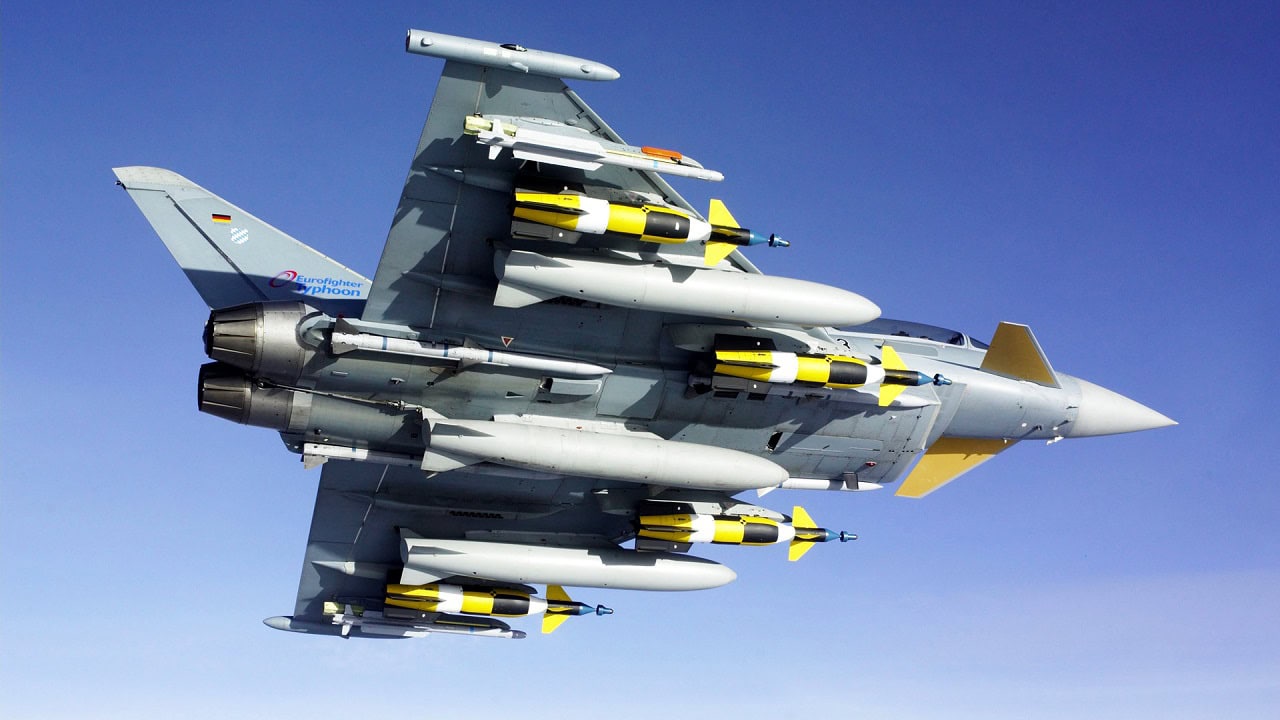
Summary and Key Points: Canada’s CF-18 replacement effort once included the Eurofighter Typhoon, a highly capable NATO fighter that fit Ottawa’s earlier priorities: air sovereignty patrols, quick-reaction alert missions, and coalition deployments.
-The Typhoon’s appeal faded as Canada’s requirements shifted toward deeper integration with U.S. air and missile defense—especially under NORAD—where stealth, sensor fusion, and secure data-sharing became central.
-Canada’s early participation in the F-35 program also raised the political and industrial cost of walking away.
-As the competition matured, the Typhoon lost ground on capability, interoperability, and long-term pathway arguments, leaving the F-35 and cheaper alternatives to dominate the debate.
Canada Once Looked at the Eurofighter Typhoon—So Why Did It Disappear?
Canada’s effort to replace its aging CF-18 fighter fleet has become one of the longest-running and most politically contentious defense procurements in the Western world. While today’s debate centers around the Lockheed Martin F-35 and the Saab JAS 39 Gripen E, Canada once seriously explored another option: the Eurofighter Typhoon.
In the late 2000s and early 2010s, the Typhoon was a credible candidate, promoted as a high-performance NATO fighter capable of meeting Canada’s domestic air defence and expeditionary requirements.
But the Typhoon eventually disappeared from Canada’s shortlist. So, what happened?
Canada’s Early CF-18 Replacement Search
The search for a replacement for Canada’s CF-18 fleet began in the 1990s, and the early days of that search occurred in a strategic environment very different from today’s.
The Royal Canadian Air Force was focused on replacing an aging fleet while maintaining its ability to conduct continental air defense through NORAD and participate in NATO operations overseas. At the time, Ottawa had not yet concluded that stealth and fifth-generation networking were essential for all future missions.
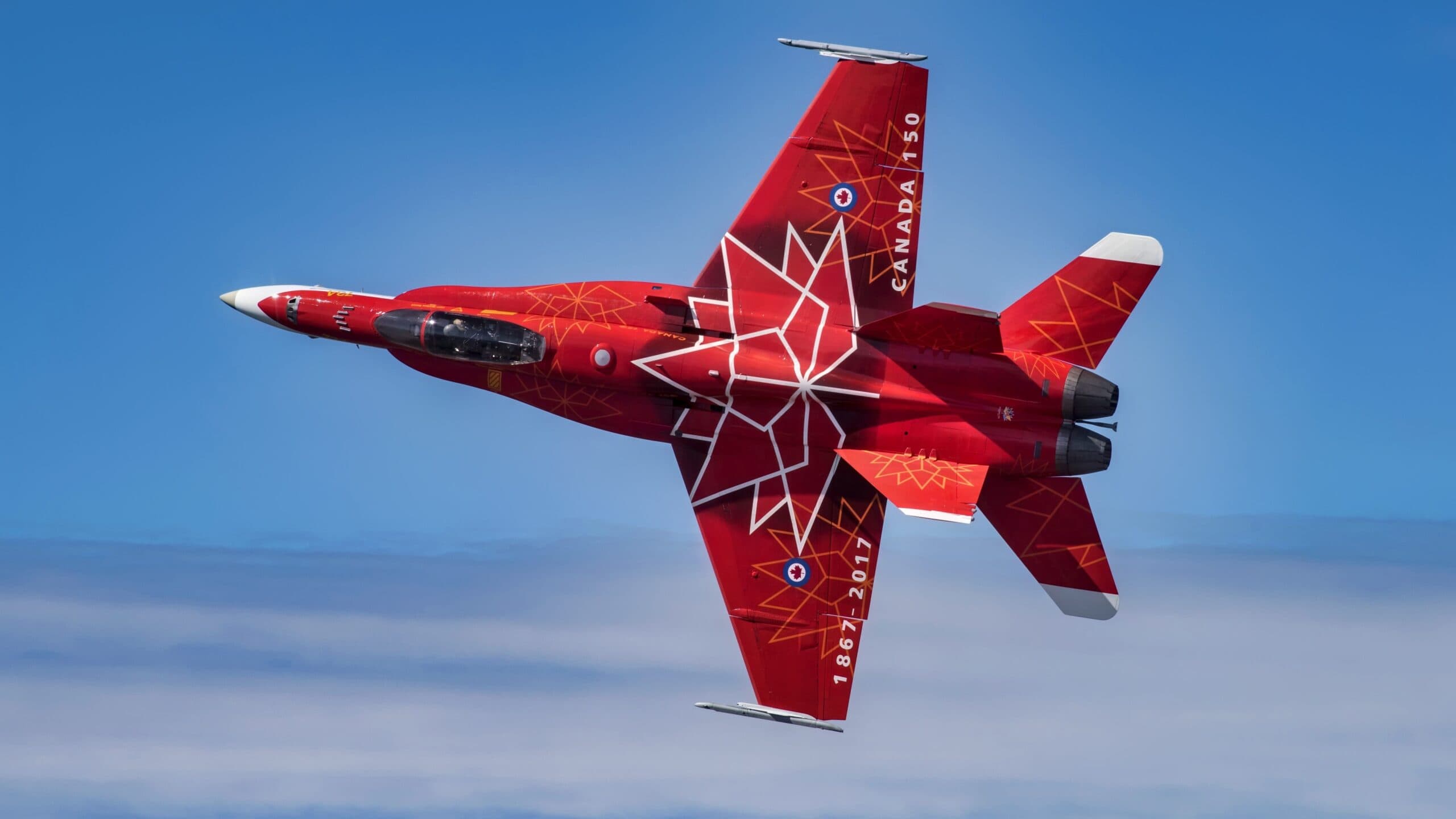
CF-18 Fighter from Canada.
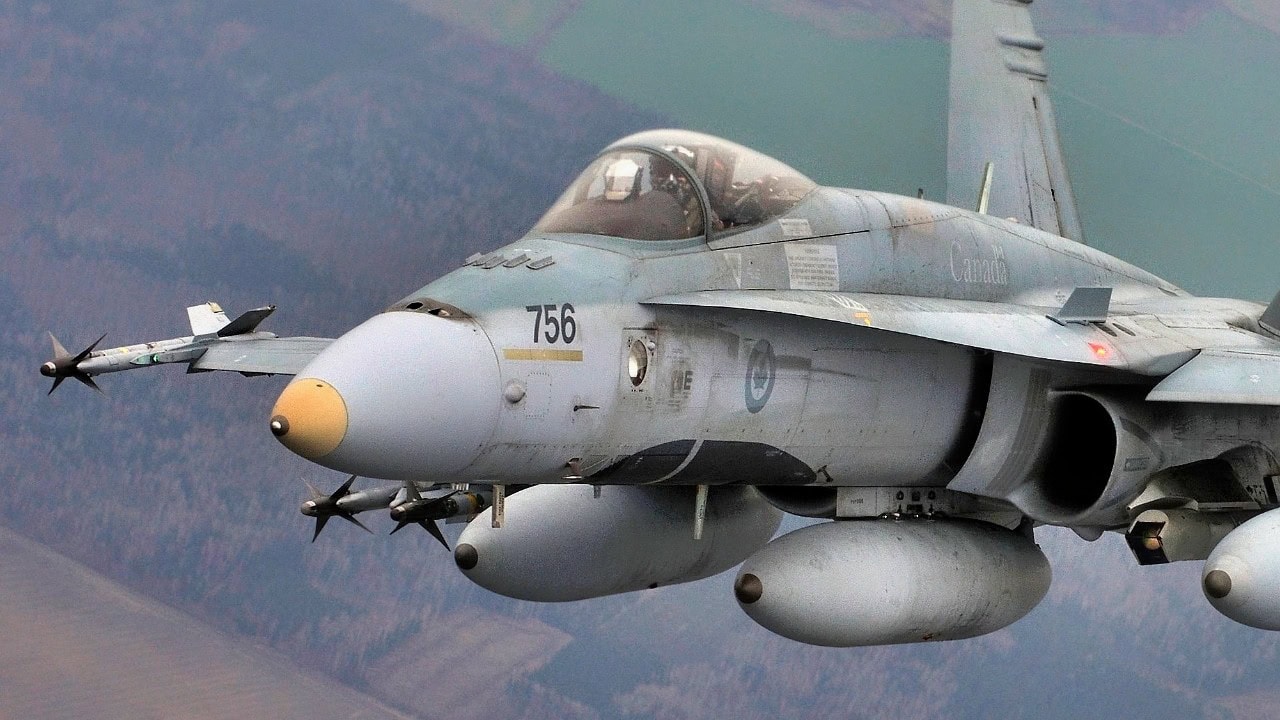
A CF-18 Hornet from the Canadian Air Task Force Lithuania flies over Lithuania on November 20, 2014 for the NATO Baltic Air Policing Block 36 during Operation REASSURANCE.
The CF-18 fleet, first delivered in the 1980s, was already showing some signs of fatigue by the mid-2000s, despite multiple life-extension programs. Defense planners were considering a range of fourth- and 4.5-generation fighters that could be fielded relatively quickly and integrated into existing NATO structures. Canada’s participation in coalition operations in the Balkans and later in Afghanistan demonstrated that interoperability was crucial, but it had not yet mandated stealth as a core requirement.
In that context, alternatives to Lockheed Martin’s F-35 – including the Eurofighter Typhoon – were still politically and operationally plausible.
Why the Typhoon Was Attractive
The Eurofighter Typhoon was marketed as one of the most capable non-stealth fighters in service, offering exceptional air-to-air performance, modern sensors, and proven combat credentials with multiple NATO air forces. Operated by the United Kingdom, Germany, Italy, and Spain, the aircraft were designed for seamless integration with allied air forces, with which Canada regularly trained and deployed.
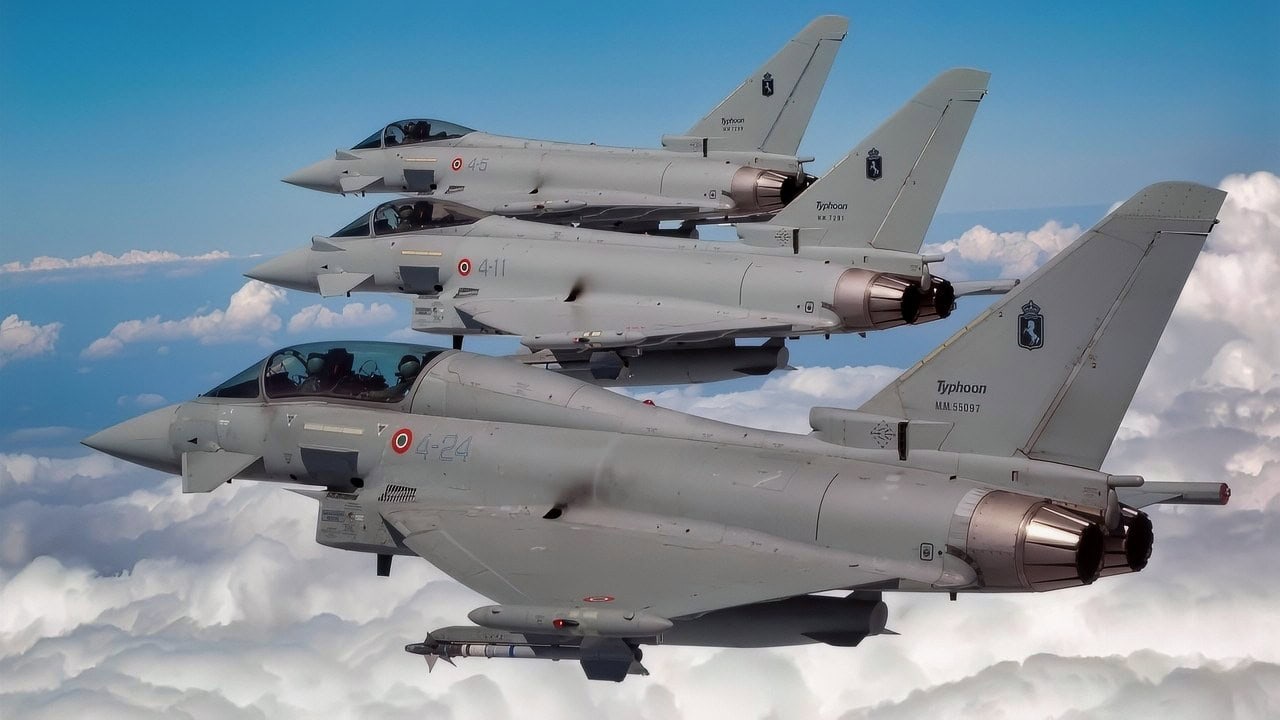
Eurofighter Typhoon Aircraft NATO. Image Credit: Creative Commons.
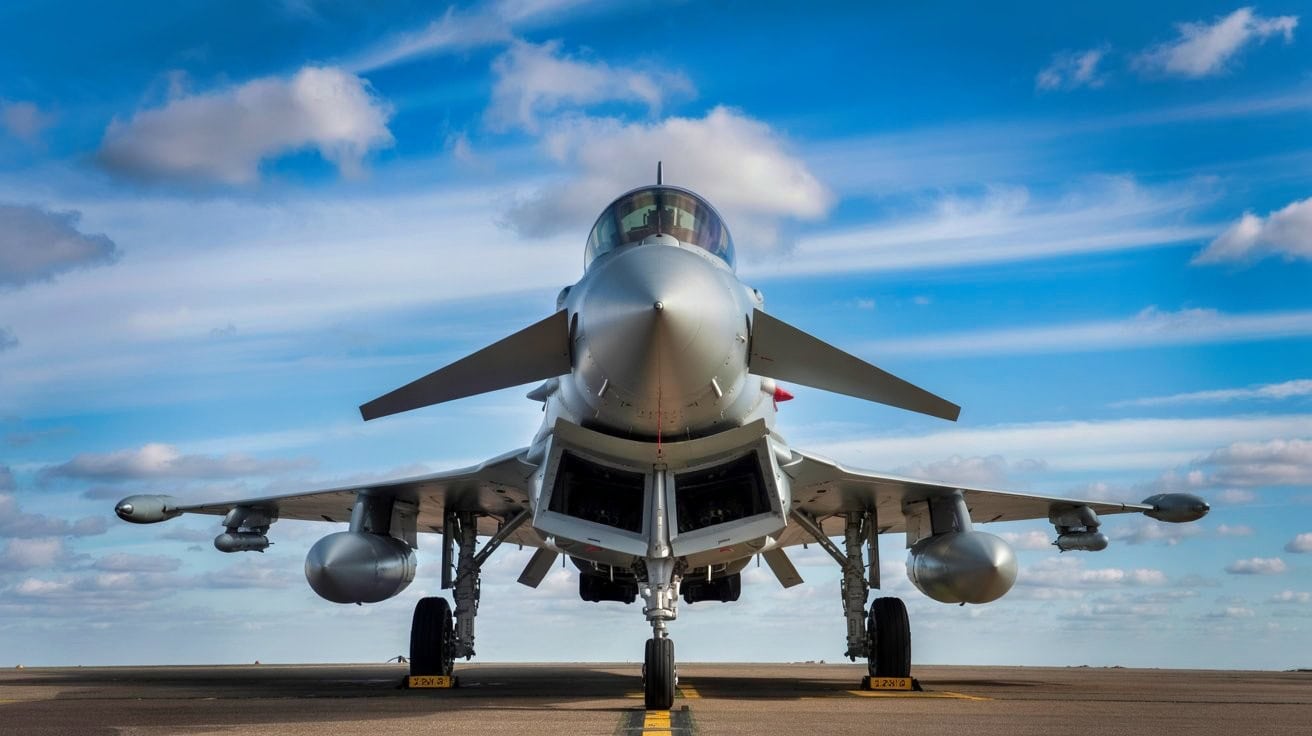
Eurofighter Typhoon. Image Created by Ideogram.
For Canadian planners, the Typhoon’s strengths fit its long-standing priorities at the time: air sovereignty patrols and quick-reaction missions, and expeditionary deployments. At the time, planners knew that the absence of stealth could be remedied through coalition support – an attitude that has since returned, now that Canada is looking to Saab’s Gripen E jet to replace plans to field a full fleet of 88 F-35s.
At the time it was being considered, the Typhoon appeared to offer a good balance between performance and political acceptability. It was advanced, but not so advanced as to be experimental, indicating it was a reliable platform. It was combat-proven, but it wasn’t dependent on U.S.-controlled stealth technologies; indeed, it was backed by close NATO allies rather than by a single foreign government.
Why It Never Happened
The prospects of Canada choosing the Eurofighter began to fade as Canada’s strategic assumptions (and therefore requirements) began to change. By the early 2010s, Ottawa had already committed to keeping a deeper level of integration with U.S. air and missile defense systems, particularly under the NORAD agreement. The change meant that secure data sharing, sensor fusion, and stealth became more important, and the F-35 held a decisive advantage across all of those fronts.
Canada’s early participation in the F-35 program further complicated the picture. As a Level 3 partner, Canada gained access to industrial opportunities directly tied to F-35 production and sustainment, contingent on continued participation.
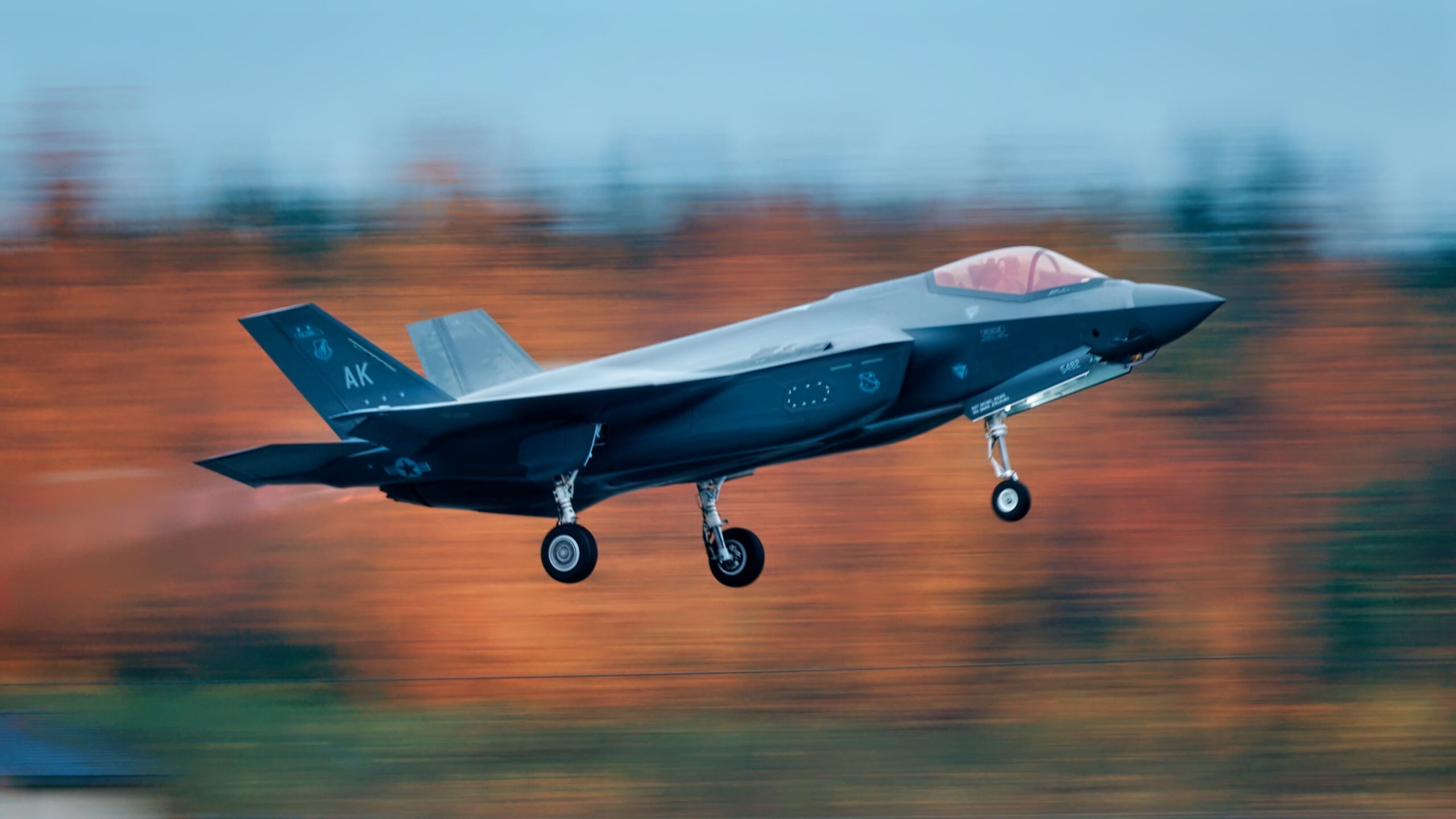
A F-35 Lightning lll assigned to the 354th Fighter Wing takes off from Eielson Air Force Base, Alaska September 19, 2024. The F-35 was participating in a multiple aircraft exercise for the 354th FW. (U.S. Air Force Photo by Senior Sean Lamb)
Walking away from the program would have carried major political and economic consequences, particularly for Canadian firms already embedded in the supply chain.
At the same time, the Canadian government increasingly pitched the fighter replacement program as a long-term investment in a future warfare asset, rather than a near-term replacement for the CF-18.
Fifth-generation capabilities, therefore, became central requirements. And in that environment, the Typhoon’s advantages began to disappear. It’s ironic, of course, that in 2026 the Canadian government is considering a 4.5-generation platform from Saab amid political and economic friction with Washington.
As Canada refined its criteria, the competition narrowed to platforms that could either fully meet fifth-generation expectations or be positioned as lower-cost alternatives with clear domestic and alliance benefits.
By the time Canada launched its formal Future Fighter Capability Project competition, the Typhoon was no longer considered competitive with the F-35 in capability, nor was it as politically attractive as other non-U.S. options, such as the Saab Gripen, which offered extensive industrial benefits and explicit promises tied to Canadian sovereignty.
Cost concerns and questions about long-term upgrade pathways also arose, and interoperability limitations relative to U.S. systems precluded the Typhoon as an option.
Today, Canada’s requirements are shifting once again, with Ottawa seriously considering the Saab JAS 39 Gripen platform that originally lost out to the F-35, despite many of its limitations mirroring those of the Eurofighter Typhoon.
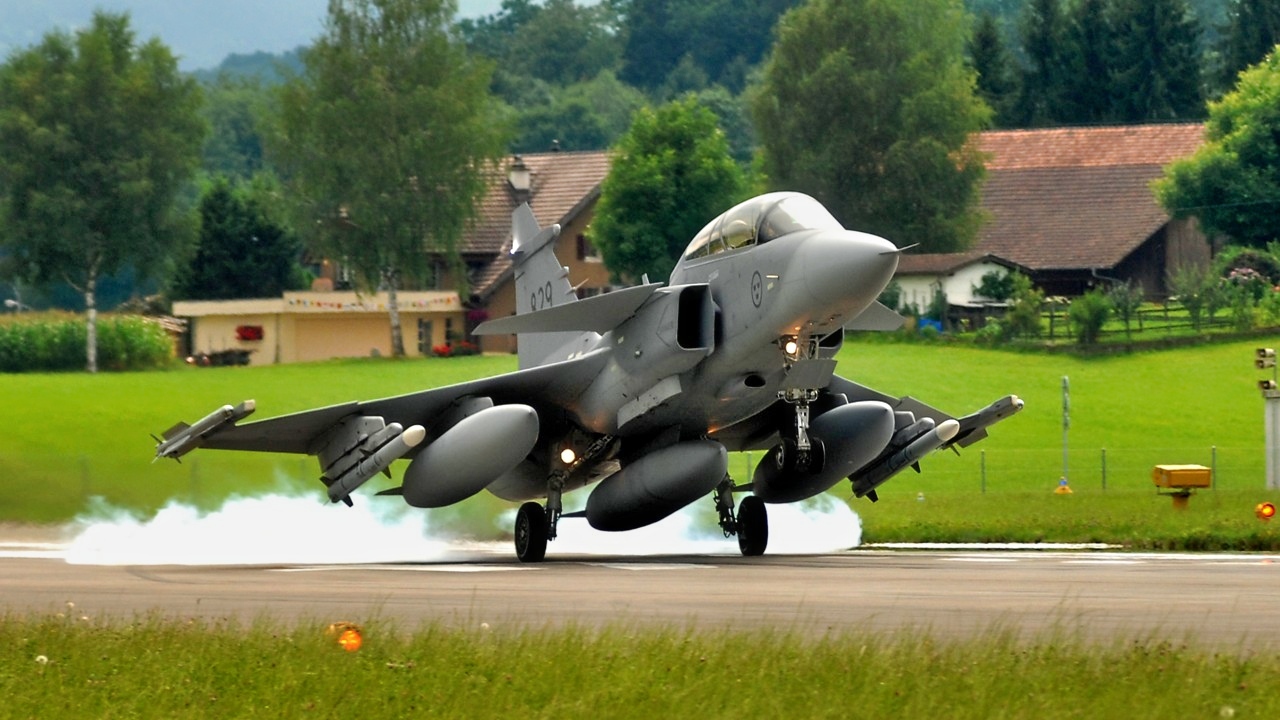
JAS 39 Gripen Fighter. Image Credit: Creative Commons.
About the Author:
Jack Buckby is a British researcher and analyst specialising in defence and national security, based in New York. His work focuses on military capability, procurement, and strategic competition, producing and editing analysis for policy and defence audiences. He brings extensive editorial experience, with a career output spanning over 1,000 articles at 19FortyFive and National Security Journal, and has previously authored books and papers on extremism and deradicalisation.
More From 19FortyFive
USS Nimitz Could Become a Drone Supercarrier