Summary and Top Points You Need to Know: Caleb Larson, a veteran security journalist, evaluates the B-21 Raider’s transition from prototype to the cornerstone of the U.S. Nuclear Triad.
-Unlike the B-2 Spirit, which operated in near-total radio silence, the B-21 is engineered as a CJADC2 node, vacuuming and transmitting battlespace data similar to the F-35 Lightning II.
-This 19FortyFive report analyzes the Raider’s 132-foot wingspan, its specialized radar-absorbent skin, and the Northrop Grumman digital ecosystem that enables rapid software updates, ensuring the 509th Bomb Wing can penetrate the world’s most advanced integrated air defense systems.
The Raider Ascendant: Why the B-21 is the World’s First True Sixth-Generation Aircraft
The upcoming B-21 Raider is the U.S. Air Force’s stealthy strategic bomber of the future.
It will also be the world’s first sixth-generation aircraft. Though the Raider has not yet entered service with the Air Force, and most of the bomber’s characteristics are classified, some information about the Raider can be gleaned from open-source reporting. There are clues about how this aircraft will differ from the B-2 Spirit bomber it will replace.
Christened after the Doolittle Raiders of the Second World War, the B-21 Raider will be significantly more capable than the B-2, thanks largely to its more stealthy design. Some of the photographs of the B-21 show the bomber’s skin is extremely smooth, with no large gaps between panels.
The bomber’s air intakes reduce the likelihood of adversary radar bounce-back.
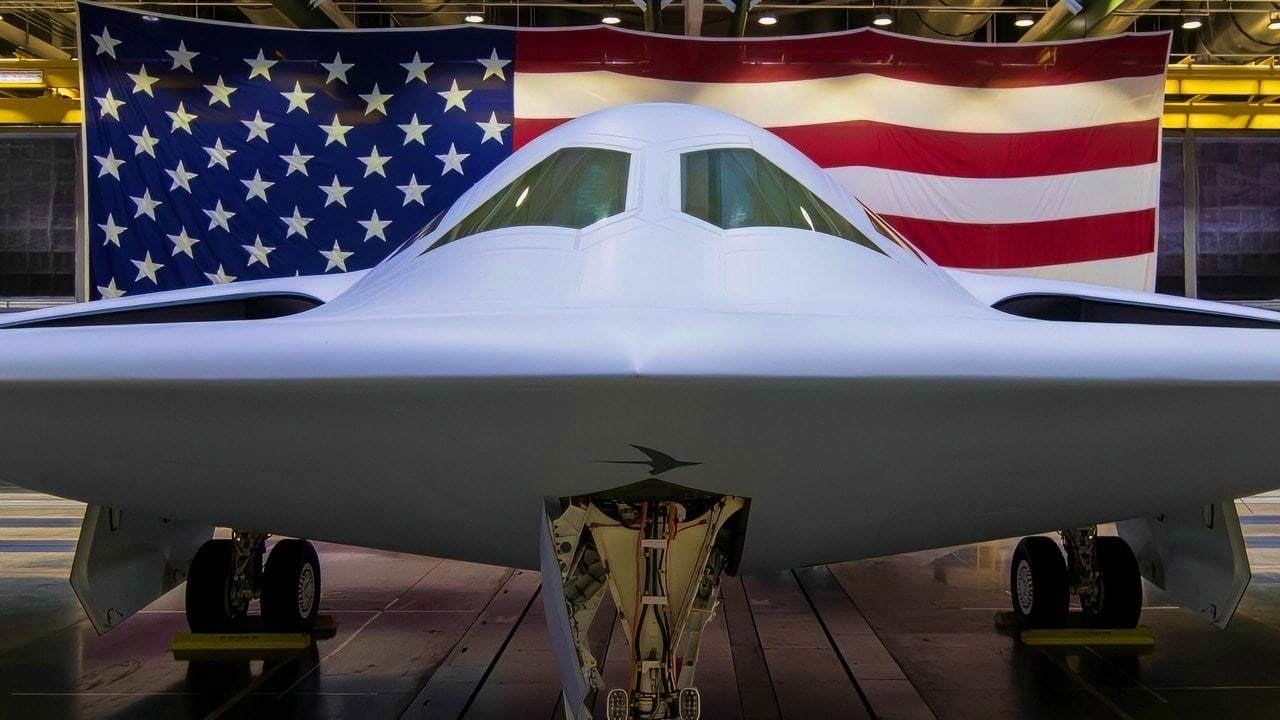
The B-21 Raider was unveiled to the public at a ceremony December 2, 2022 in Palmdale, Calif. Designed to operate in tomorrow’s high-end threat environment, the B-21 will play a critical role in ensuring America’s enduring airpower capability. (U.S. Air Force photo)
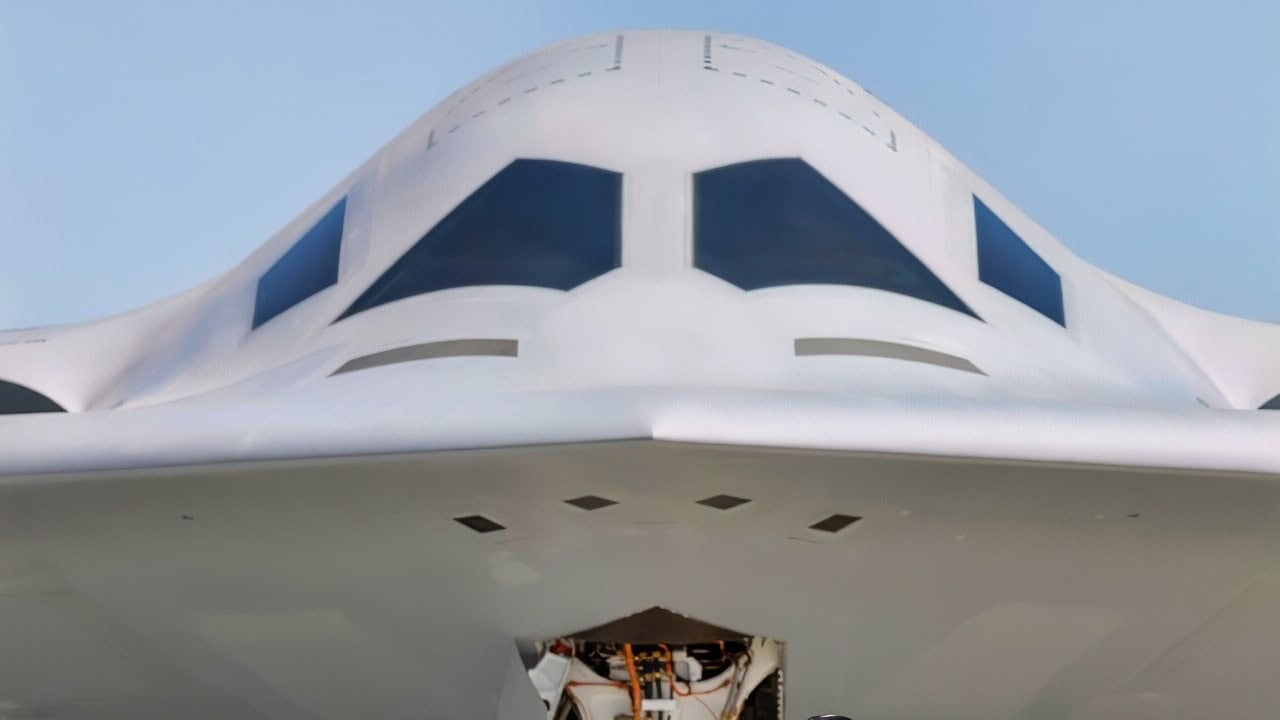
U.S. Air Force Airmen with the 912th Aircraft Maintenance Squadron prepare to recover the second B-21 Raider to arrive for test and evaluation at Edwards AFB, Calif., Sept. 11, 2025. The arrival of a second test aircraft provides maintainers valuable hands-on experience with tools, data and processes that will support future operational squadrons. (U.S Air Force photo by Kyle Brasier)
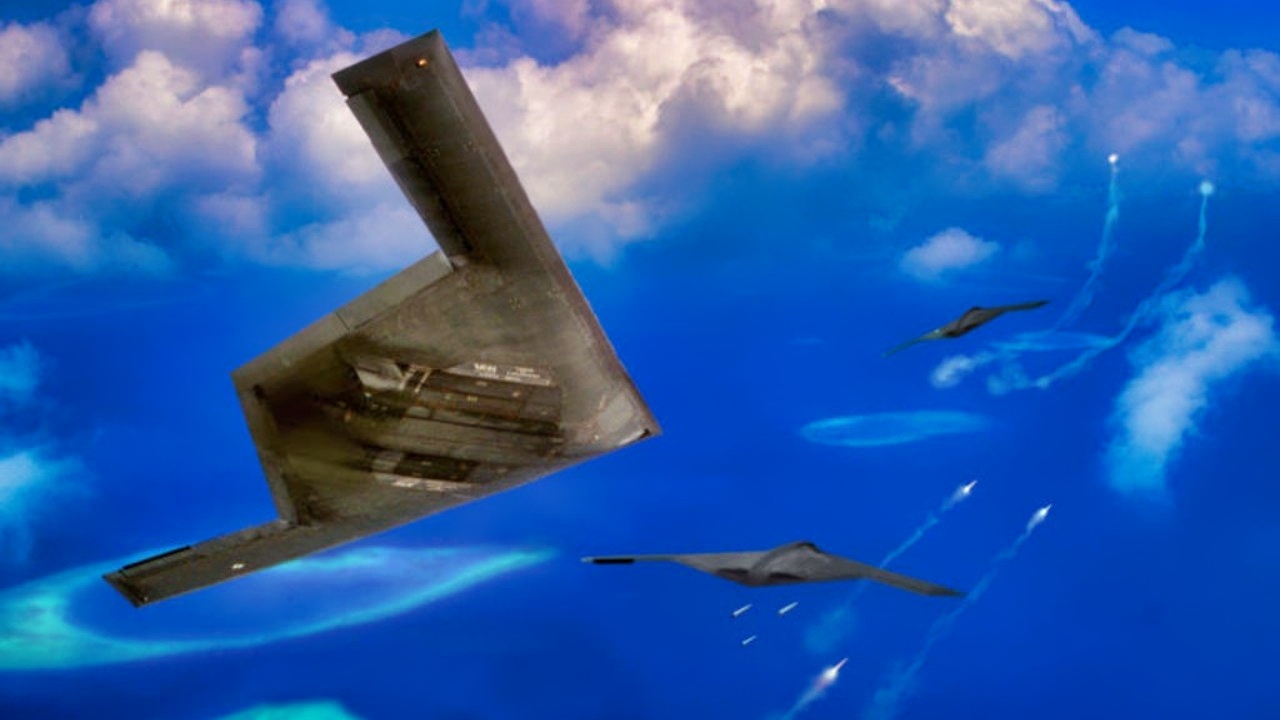
B-21 Raider Bomber. Artist Rendition/Creative Commons.
Though the B-21’s fuselage is shaped to defeat enemy radar, its designers also gave thought to reducing the bomber’s infrared and acoustic signatures. The bomber’s air intakes fare buried within the airframe and hide the jet’s turbine blades—a significant source of radar bounce-back.
And while details about the skin are not publicly known, it is assumed to be significantly more radar-absorbent than the B-2’s.
The bomber’s skin resiliency, with its lower servicing requirements, should help sustain that platform and increase its sortie rate. Northrop Grumman, the aerospace firm behind both the B-2 and B-21, explains, “by embracing the benefits of advanced manufacturing, Northrop Grumman invested in a digital ecosystem for the B-21 throughout the aircraft’s lifecycle.
From training and augmented reality tools allowing technicians to visualize tasks and solve problems before ever touching the plane, to easing integration of supplier parts on the aircraft, these advancements have reduced risk, supported efficiency and cultivated expertise throughout the manufacturing workforce.”
B-21’s Role in the Nuclear Triad
The B-21 will take over the airborne leg of the U.S. nuclear triad, and like its predecessor in that role, the Spirit, the Raider will be tasked with penetrating highly contested airspace and surviving to drop conventional or nuclear ordnance on important military or political targets.
B-2 and B-21: Crucial Differences
One of the most obvious points of departure between the two aircraft is their size: The B-21 is a smaller bomber than the B-2, a design choice seemingly aimed at keeping costs low.
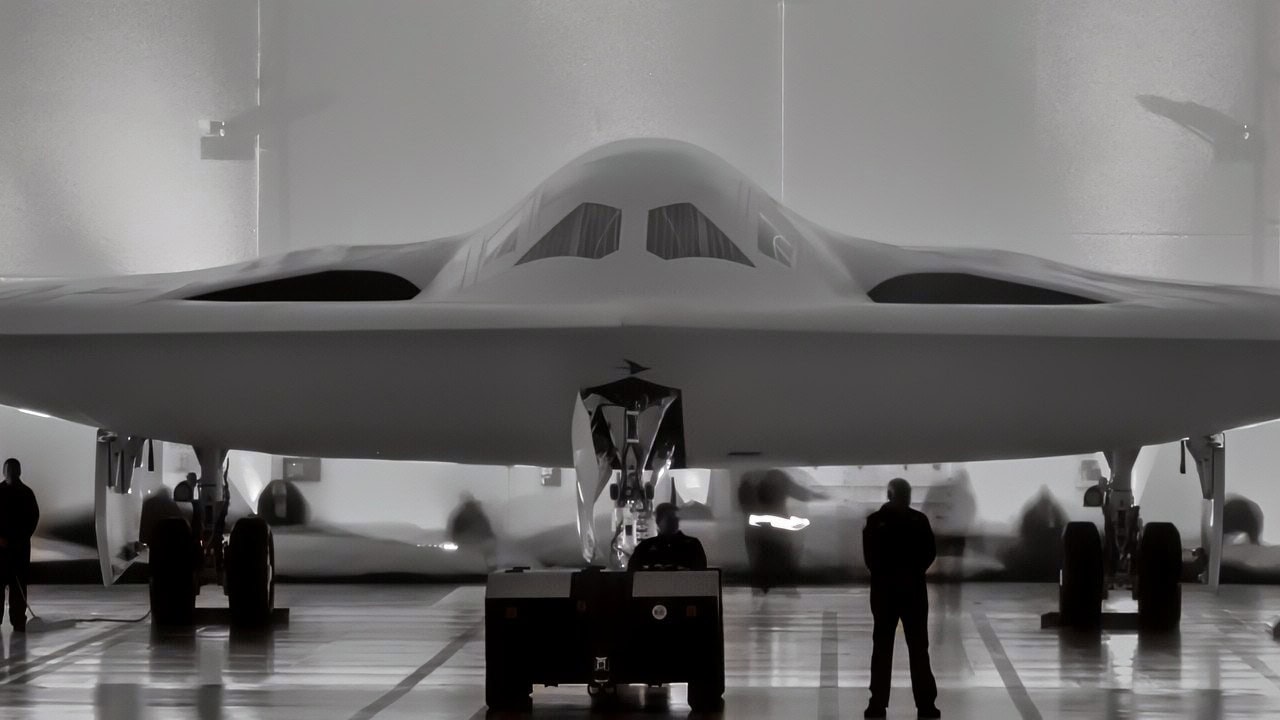
A B-21 Raider is unveiled at Northrop Grumman’s manufacturing facility on Air Force Plant 42 in Palmdale, California, Dec. 2, 2022. The B-21 will be a long-range, highly survivable, penetrating strike stealth bomber capable of delivering both conventional and nuclear munitions. (U.S. Air Force photo by Airman 1st Class Joshua M. Carroll)

U.S. Air Force Airmen with the 912th Aircraft Maintenance Squadron prepare to recover the second B-21 Raider to arrive for test and evaluation at Edwards AFB, Calif., Sept. 11, 2025. The arrival of a second test aircraft provides maintainers valuable hands-on experience with tools, data and processes that will support future operational squadrons. (U.S Air Force photo by Kyle Brasier)
“The design of Northrop Grumman’s B-21 Raider points to a conservative approach on the part of the U.S. Air Force’s Rapid Capabilities Office.
The B-21’s resemblance to the original B-2 bomber design is close, but it is a smaller aircraft, with a wingspan estimated at 132 ft. compared with the B-2’s 172 ft., and is approximately half the empty weight,” Aviation Week wrote.”The planform itself is driven by the need to accommodate complex inlets and exhausts and a large weapon bay within the flying-wing profile,” Aviation Week adds, “while staying within a maximum thickness-to-chord ratio compatible with efficient flight above Mach 0.8.”
The B-2 Spirit was primarily designed to penetrate adversary airspace — that of the Soviet Union — but, crucially, it was not intended to liaise with other aircraft while in flight. Instead, it seeks to preserve its stealth and avoid emitting electronic communications.
The B-2 would maintain radio silence and stay alive.
In contrast, the B-21 was designed from the outset to vacuum up information relevant to the battle space and transmit it onward to other assets, much like the F-35 does. Advanced communications systems make this possible and will help the B-21 paint a picture of the battlefield—the B-2 was never designed for such a task.
Acquisition Numbers
Like what happened to the F-22 Raptor, the B-2 Spirit’s numbers were sharply reduced by the abrupt end of the Cold War and the dissolution of the Soviet Union. There are a paltry 19 operational B-2 bombers—but the Air Force may acquire hundreds of B-21 Raiders.
It seems likely that at least 100 B-21s will be bought and built for the U.S. Air Force, if not many more.

B-21. Image Credit: Northrop Grumman
Still, the sun has not yet set on the B-2 Spirit. A recent upgrade, the Adaptable Communications Suite 4.0, will outfit the B-2 fleet with “cutting-edge technology to operate efficiently within the Combined Joint All-Domain Command and Control (CJADC2) environment,” according to SNC, the company providing the update.
“The ACS provides a secure, open mission system computing environment, crucial for seamless interoperability and integration with other military systems. This ensures the B-2 remains at the forefront of strategic deterrence and operational readiness.”
About the Author: Caleb Larson
Caleb Larson is an American multiformat journalist based in Berlin, Germany. His work covers the intersection of conflict and society, focusing on American foreign policy and European security. He has reported from Germany, Russia, and the United States. Most recently, he covered the war in Ukraine, reporting extensively on the war’s shifting battle lines from Donbas and writing on the war’s civilian and humanitarian toll. Previously, he worked as a Defense Reporter for POLITICO Europe. You can follow his latest work on X.