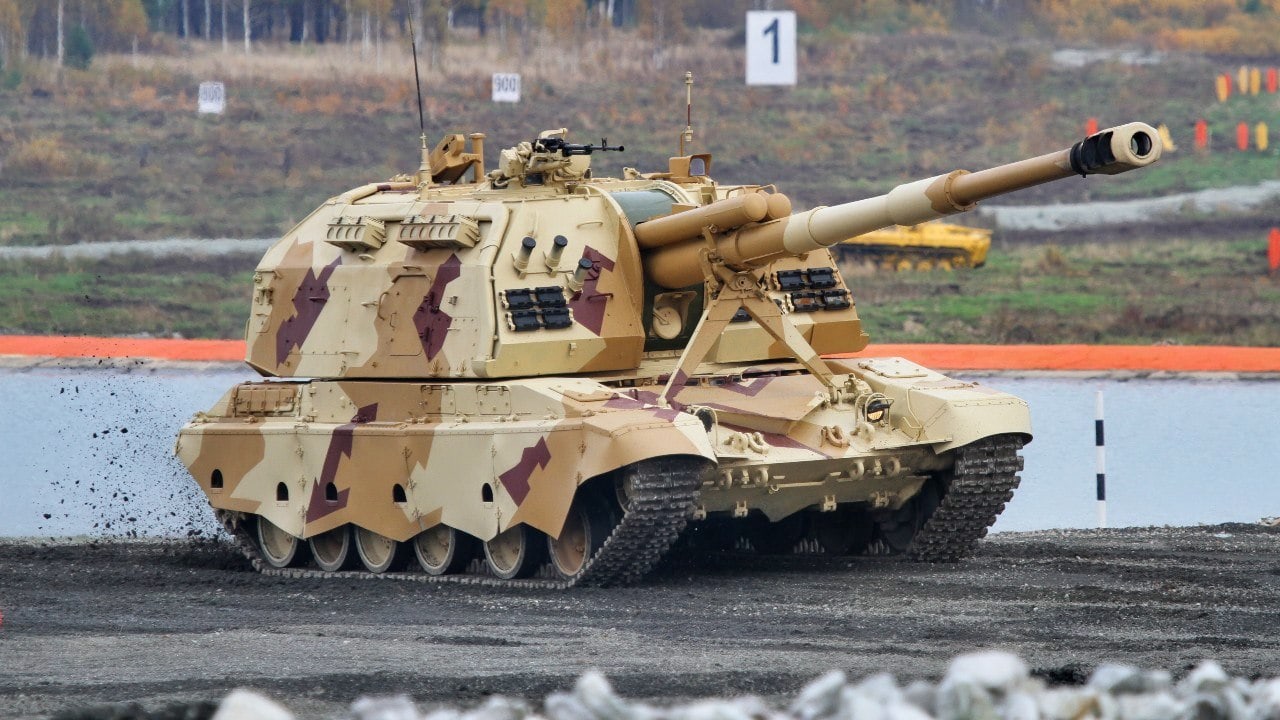
Summary and Key Points: Reuben F. Johnson, Director of Research at the Casimir Pulaski Foundation, evaluates the “strategic fiction” of an inevitable Russian victory in the Ukraine war.
-Despite a successful charm offensive targeting U.S. President Donald Trump, the Russian military faces a net loss of manpower, with fatalities reaching 40,000 per month by early 2026.
-This 19FortyFive report analyzes ISW data showing Russia captured only 0.6% of Ukraine in 2025, exploring the essential role of North Korean Storm Corps troops and Chinese industrial support in preventing a total Kremlin collapse amidst soaring inflation and a 22% VAT hike.
The Inevitability Myth: Why Putin’s “Steamroller” Narrative Fails the 2026 Reality Test in the Ukraine War
Russian President Vladimir Putin has become famous for claiming that Russia’s victory on the battlefield is inevitable. The only difficulty with this often-repeated declaration is that there is no evidence of it.
Putin’s only victory after four years of war in Ukraine has been his success in the war of narratives. This has been demonstrated in his constant dialogue with U.S. President Donald Trump. An endless number of phone calls and other interactions pass for a charm offensive in KGB training . This strategy has now convinced the Trump that the Ukraine cause is lost and its president, Volodymyr Zelenskiy, needs to make a deal with the Kremlin by June, “before it’s too late.”
The good news for Ukraine is that Putin’s narratives are completely false and do not stand up to real facts and the light of day. The bad news is that, at least regarding Trump, the narrative has been working—and it has been working better than ever since the famous Alaska meeting between the U.S. and Russian heads of state last August.
Since that most recent face-to-face meeting with Putin, Trump has shifted his position from demanding that Putin agree to an immediate ceasefire, to instead pressuring Kyiv to hand over territory to Moscow that Putin’s military has failed to take in more than ten years of fighting.
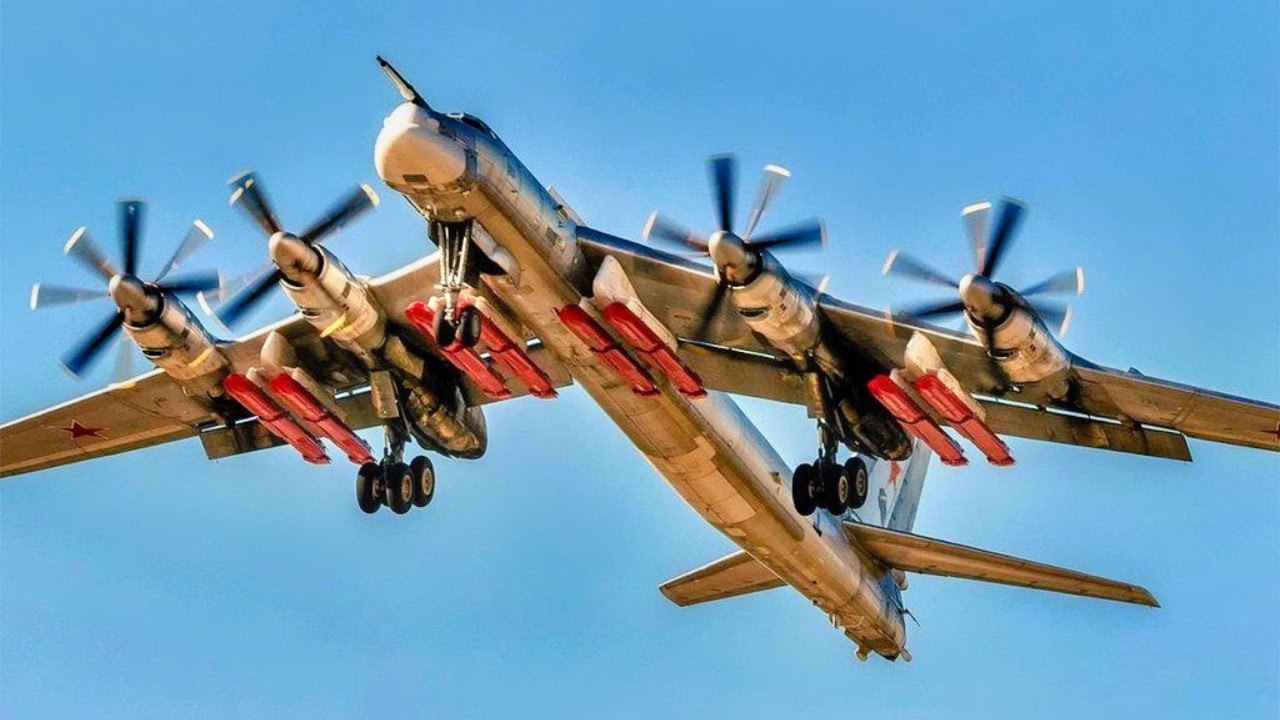
Tu-95 Bomber from Russia. Image Credit: Creative Commons.
Putin has been able to plant the false idea in the American president’s head that Russia is bound to win. “They’re much bigger. They’re much stronger,” Trump has said, and he is convinced this gives Russia the “upper hand” in the Ukraine conflict.
Knocking Down The Multiple Myths
Putin’s continuous, unrelenting narrative of an inevitable Russian victory rests entirely on sets of completely false claims. In no particular order:Ukraine’s front line is on the verge of collapse and
Putin’s armies will achieve a massive breakthrough “any day now.” This has not happened since the war began, and, especially as Putin’s ability to recruit new manpower diminishes, no collapse is in the offing at all.
Russia will capture the territories it claims, and its troops will occupy the territory it is trying to capture. In the same vein as above, if it has not happened by now, it is never going to.
Russia has the manpower and resources to sustain the war indefinitely. This flies in the face of growing reports that Russia is losing more soldiers per month than it is able to recruit replacements. Moreover, Russian battlefield losses keep climbing. One year ago, Moscow’s military suffered 14,000 killed in one month. In the middle of 2025 that figure had climbed to 35,000. The latest numbers are 40,000 and climbing, which means Moscow will continue to suffer a net loss of manpower—a shrinking army.
Russia’s economic capacity allows it to support a “forever war.” The assumption that Russia can fight on indefinitely is false. The war has imposed high and compounding costs on the economy. In January, Russia raised its value-added tax to 22 percent to offset record military spending and to compensate for falling oil and gas revenues. In November, it began selling gold reserves as its sovereign wealth fund continued to shrink. A month earlier, Russia began preparing for compulsory mobilization. Facing a labor shortage, Russia now plans to recruit tens of thousands of Indian migrant workers.
Ukraine cannot defeat the Russian military. This myth is followed by Putin invoking the memory of the Soviet Red Army’s defeat of the German Wehrmacht in World War II. What this particular myth does not tell you is that the Kremlin is asking us to accept that today’s much-smaller Russian military is another unstoppable steamrollerof many millions of enslaved, collective farm workers-turned soldiers that cannot possibly lose.
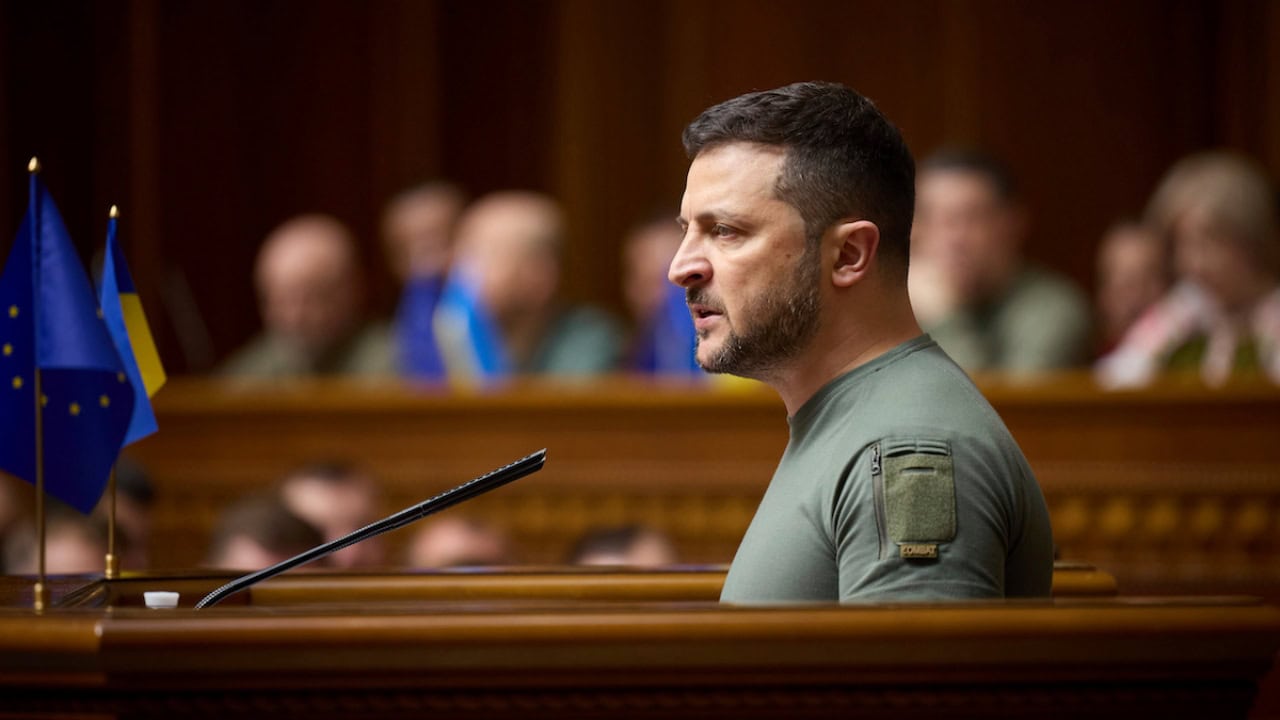
President Zelensky of Ukraine. Image Credit: Creative Commons.
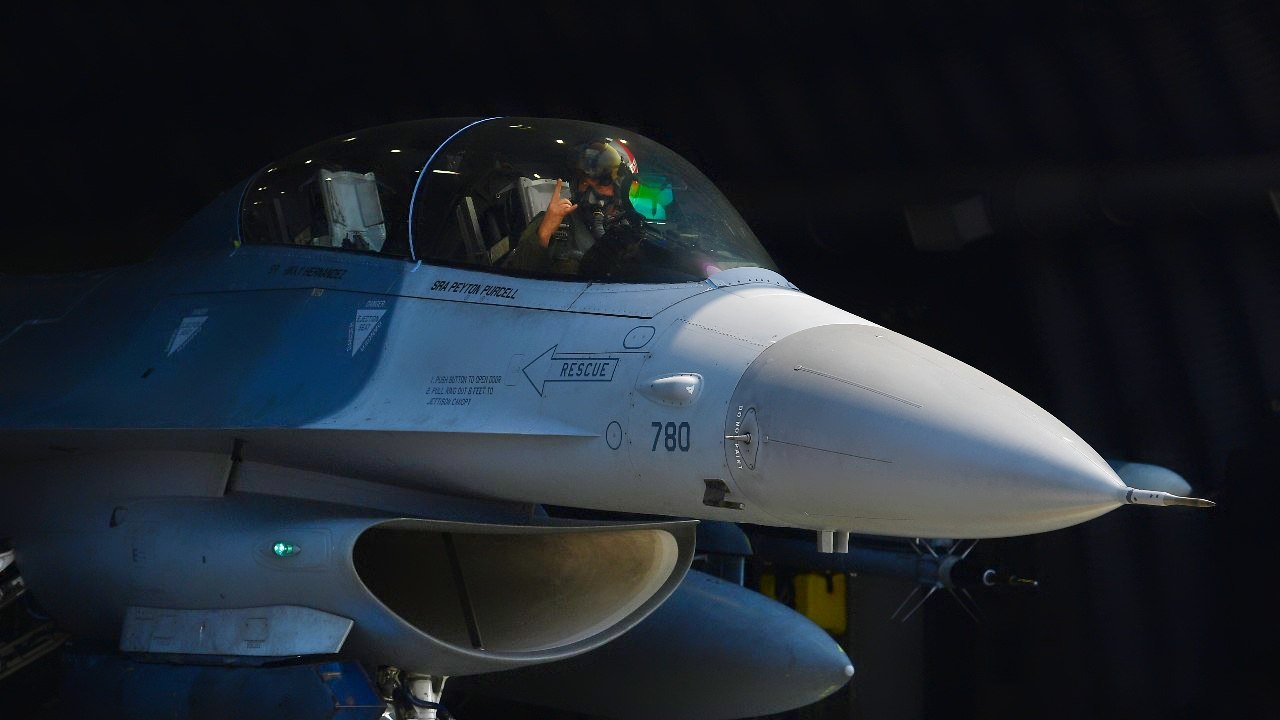
Capt. Michael Terry, 36th Fighter Squadron F-16 pilot, prepares to launch at Osan Air Base, Republic of Korea, July 9, 2020. The 36th Aircraft Maintenance Unit and the flight line operators wokred to make this aircraft mission-capable after being grounded for 186 days. (U.S. Air Force photo by Senior Airman Noah Sudolcan)
These endless and tiresome claims by Putin that victory in his war against Ukraine is inevitable are all part and parcel of an old, well-known Russian speciality called disinformation. Putin is able to keep repeating his lies, and there is no rebuttal because of the rigidly controlled and censored media outlets in Russia.
His constant promises that victory is at hand are designed to boost domestic morale within Russia, to attempt to demoralize Ukraine, and to influence Western, particularly American, public opinion to reduce support for Kyiv. The evidence until now indicates that Russia is not winning a swift or decisive victory, but rather engaging in a costly war of attrition with minimal territorial gains.
The Institute for the Study of War, which has conducted some of the most detailed, in-depth analysis of the conflict, put it very simply in an op-ed written by its Chairman of the Board in October 2025:
“Russian dictator Vladimir Putin claims that victory in Ukraine is inevitable, and rejects any peace deal that doesn’t give him total control of the eastern part of the country, the Donbas. Don’t believe it: Russia is not winning its war.”
Data Points and Indicators in the Ukraine War
ISW Chairman Jack Keane, a retired Army general, also addresses multiple indicators that make it clear that not only is Russia not winning the war, but it could be very well on the way to losing it. Writing in same op-ed, he details that:
Russia has failed to conquer a smaller and poorer adversary despite nearly four years of campaigning.
Its military is severely underperforming, and Ukraine’s defenseshave slowed Russian’s rate of advance to a literal footpace.
Russia has seized 0.6 percent of Ukraine this year and has lost 1,000 soldiers per day doing it.
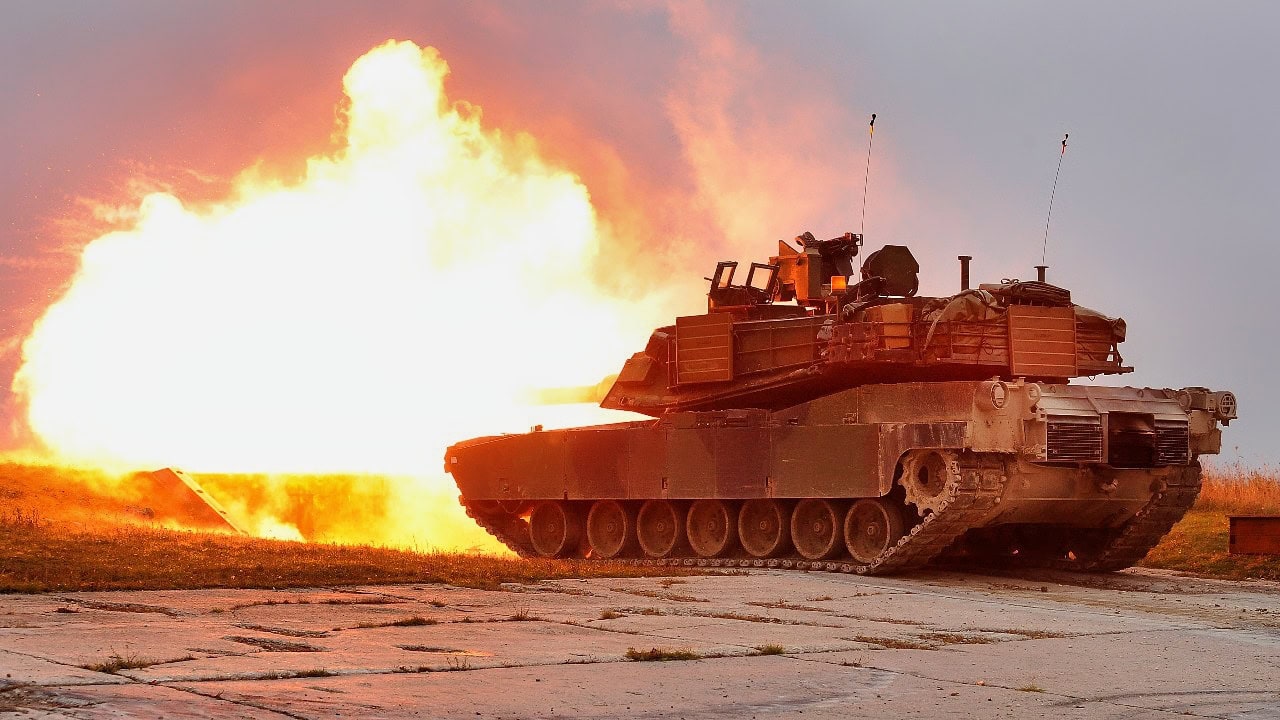
U.S. Soldiers, assigned to the 1st Battalion, 64th Armor Regiment, 1st Armored Brigade Combat Team, 3rd Infantry Division, conduct gunnery with M1A2 Abrams tanks during exercise Combined Resolve V at 7th Army Joint Multinational Training Command in Grafenwoehr, Germany, Oct. 8, 2015. Combined Resolve is designed to exercise the U.S. Army’s regionally aligned force to the U.S. European Command area of responsibility with multinational training at all echelons. Approximately 4,600 participants from 13 NATO and European partner nations will participate. The exercise involves around 2,000 U.S. troops and 2,600 NATO and Partner for Peace nations. Combined Resolve is a preplanned exercise that does not fall under Operation Atlantic Resolve. This exercise will train participants to function together in a joint, multinational and integrated environment and train U.S. rotational forces to be more flexible, agile and to better operate alongside our NATO Allies. (U.S. Army photo by Visual Information Specialist Gertrud Zach/released)
The Russians cannot maneuver or advance rapidly.
They’ve taken no major Ukrainian cities since 2022.
They are fighting for fields and small towns at extravagant losses that they can’t sustain.
Putin is only still in the game because of Chinese, North Korean and Iranian support.
Putin, he concludes, has only succeeded in convening “an axis of evil” and has “put himself at the center of our enemies, strengthening them all.”
Putin’s constant false narratives are “more than propaganda,” reads the beginning of another recent assessment. His diatribes, the authors say, are “a system of cognitive warfare designed to shape Western leaders’ assumptions and push them toward decisions that benefit Russia and disadvantage Ukraine.”
“Moscow aims to persuade its audience that the only sensible outcome is a final settlement on Russia’s terms. Surrendering to Russia, the steamroller narrative suggests, is humane because it would spare the lives of soldiers and civilians who would otherwise be crushed. Putin has effectively injected the steamroller narrative into the international information space and US-Russia negotiations,” while the U.S. and others do not take notice of just how badly Moscow continues to perform in the conflict.
Putin and his lieutenants are also effectively masking the reality that while Russian forces at times make small gains, they are advancing literally at a snail’s pace. These small gains are also made at huge and unsustainable costs.
The 0.6 per cent of Ukraine’s territory Russia captured in 2025 is far below typical rates in any modern mechanized warfare. Some of the most infamous and costly trench warfare battles in World War I produced more rapid overall advances, making Putin’s army one of the most underperforming militaries in history.
It is calculated that even if Russia’s military could maintain its current tempo, which is unlikely given its manpower problems, Moscow would need until August 2027 to seize the rest of Donetsk oblast, and then until April 2029 to seize Donetsk along with the remaining parts of Zaporizhzhia and Kherson.
These are the three regions Russia declared it had officially annexed in 2022—it still does not control them. At this rate of advance, again assuming it could be sustained, seizing all of Ukraine’s territory would require roughly an entire century of warfare. Not even Putin could live this long.
Final Factors
If all these above indicators were not enough, then there is the stark reality that Putin’s military is anything but a modern force. It is actually becoming more antiquated, and it is incapable of supplying materiel to the troops it has left. Russia is no longer self-reliant in almost any aspect of its war economy.
Severe military degradation is a feature of the Russian military. Contrary to the false image of a superior and sophisticated, high-tech military, the war has destroyed most of the modern-day hardware that existed in 2022.
Under its economic strains and weaknesses, Russia is unable to replace much of its modern-design hardware. This is due to high inflation and interest rates that make defense enterprises unprofitable, and increasing labor shortages that leave factories short-handed, all due to the cost of the war.
Russia’s ongoing military effort is sustained not by its own strengths and industrial might, but by support from Iran, North Korea, and China. Their help is the only reason the Russian military effort has not collapsed to date.
North Korea has sent millions of artillery shells and other munitions. Because 14,000 or more North Korean soldiers were sent to the front, Russia was able to retake territory that it lost in the Kursk region. The majority of North Korean troops are believed to be from Pyongyang’s elite special forces unit—the 11th Corps of the Korean People’s Army, or Storm Corps—which is trained to infiltrate and sabotage enemy operations and assassinate targets.
North Korea has also sent thousands of laborers to support Russia’s war effort. In June 2025, after a meeting between North Korean leader Kim Jong Un and Russian Defense Minister Sergei Shoigu, Kim agreed to send five thousand construction workers. He dispatched 1,000 combat engineers to Kursk to assist with demining the region, among other functions. Without these laborers, and other support personnel, many Russian munitions plants would not be able to meet production targets.
Russia Can’t Take Ukraine By Force
The narrative of a victorious, unstoppable Russian military is a strategic fiction. It is designed to mask a faltering, failing, high-cost, and unsustainable offensive that has failed to achieve any of its initial objectives and continues to demonstrate that it will never be able to take Ukraine—not even in a century.
About the Author: Reuben F. Johnson
Reuben F. Johnson has thirty-six years of experience analyzing and reporting on foreign weapons systems, defense technologies, and international arms export policy. Johnson is the Director of Research at the Casimir Pulaski Foundation. He is also a survivor of the Russian invasion of Ukraine in February 2022. He worked for years in the American defense industry as a foreign technology analyst and later as a consultant for the U.S. Department of Defense, the Departments of the Navy and Air Force, and the governments of the United Kingdom and Australia. In 2022-2023, he won two awards in a row for his defense reporting. He holds a bachelor’s degree from DePauw University and a master’s degree from Miami University in Ohio, specializing in Soviet and Russian studies. He lives in Warsaw.