
Summary and Key Points: This article examines General Atomics’ proposal to install a 32-megajoule electromagnetic railgun on the Trump-class guided-missile battleship.
-Following the Surface Navy Association’s (SNA) annual symposium, Buckby explores how the USS Defiant provides the necessary integrated power systems—leveraging EMALS technology—to overcome previous barrel wear and energy storage failures.
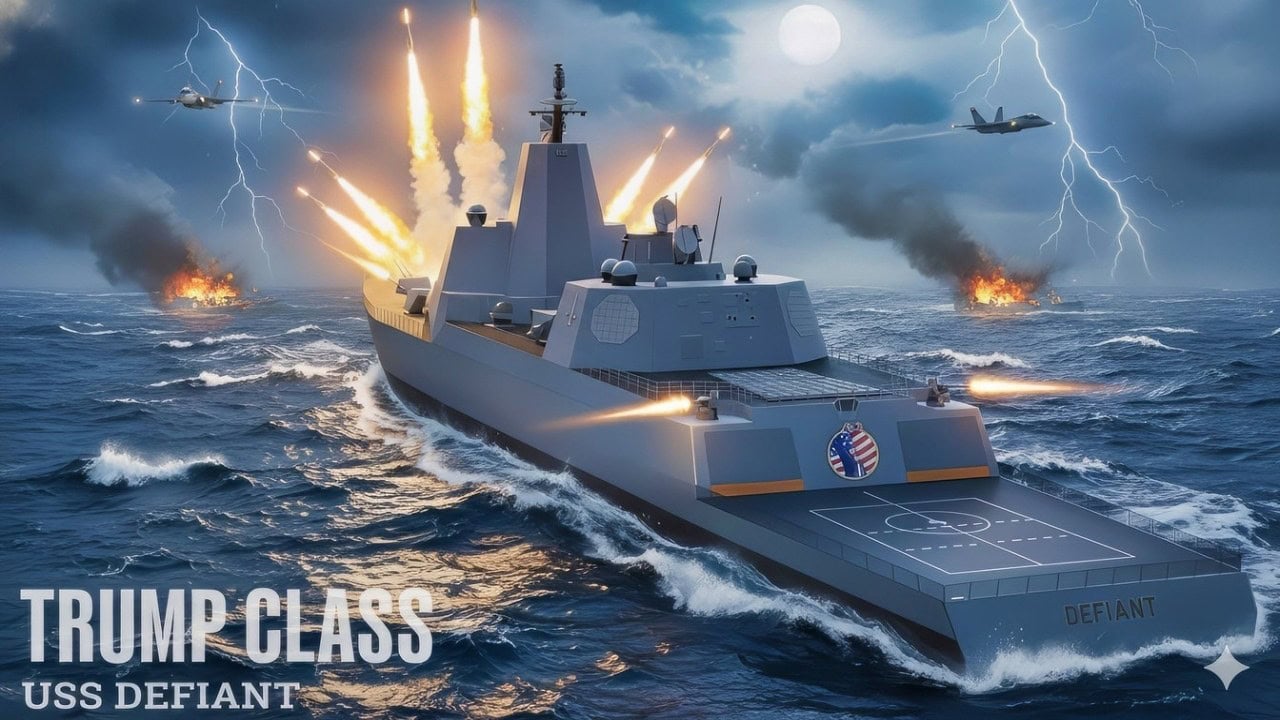
Trump-Class Battleship Image Mockup 16:9. Created Using Nano Banana.
-This 19FortyFive report evaluates the strategic shift toward kinetic “slugs” for air defense, comparing U.S. progress with recent Japanese at-sea firing trials and the growing A2/AD threat from China and Russia.
The Railgun Resurrection: General Atomics Confirms Trump-Class Battleship May Feature 32MJ Launcher
On January 15 at the Surface Navy Association’s annual symposium in Arlington, Virginia, General Atomics confirmed it is in discussions with the U.S. government about installing a railgun on the proposed Trump-class guided-missile battleship.
Speaking to Naval News, Nick Bucci, the vice president of Defense Systems & Technologies at General Atomics Electromagnetic Systems, said that the company “didn’t really give up” on railgun development, despite the U.S. Navy ending its formal railgun program in 2021. The Navy’s cancellation of that program followed years of research and more than half a billion dollars in investment without achieving operational deployment.
Bucci’s comments are relevant for two reasons. First, they suggest that electromagnetic railguns are no longer technologically or politically dead. Second, they tie the concept directly to a new class of large surface combatant that may be designed with the electrical generation capacity that railguns previously lacked.
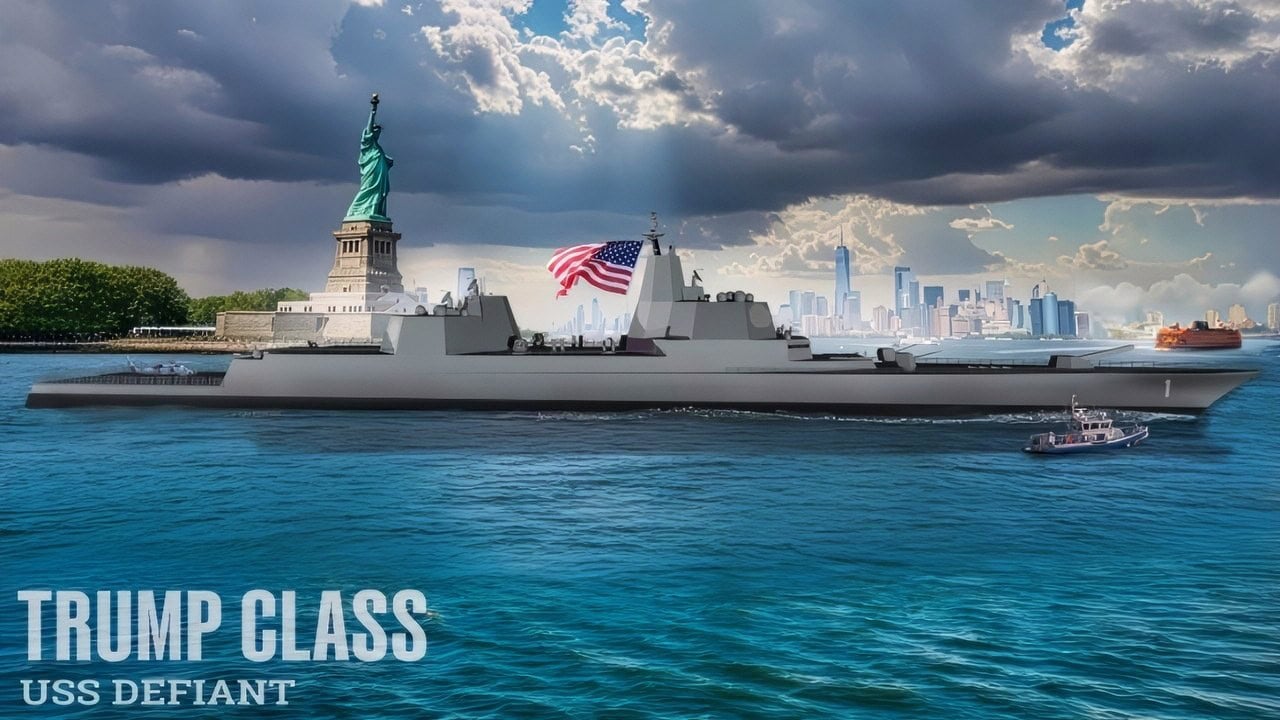
Trump-Class Battleship. Image Credit: Creative Commons/White House.
What General Atomics Said – and What It Means
Bucci at the symposium said that General Atomics continued working behind the scenes on railgun-related technologies even after the Navy ended its program.
“We’ve been working kind of behind the scenes with some of those other companies and countries to keep the technology moving forward to some level, some of it we kind of have put on the back shelf, but it’s ready to be pulled back out. We’ve used some of that technology in other areas of our portfolio, and so we can easily pull some of that back,” Bucci told reporters.
The Trump-class concept includes what the Navy has described as a 32-megajoule railgun mounted on the front of the ship. That matches with U.S. Office of Naval Research aims to fire projectiles at hypersonic speeds using electromagnetic force rather than chemical propellants.
Bucci appeared to suggest that General Atomics is now looking for clarity from the Navy about the intended mission for the railgun on the USS Defiant, the proposed first ship of the Trump-class. Earlier General Atomics statements indicate that the system could support air- and missile-defense roles, including terminal defense missions designed to destroy incoming ballistic missiles in the final phase of their trajectory.
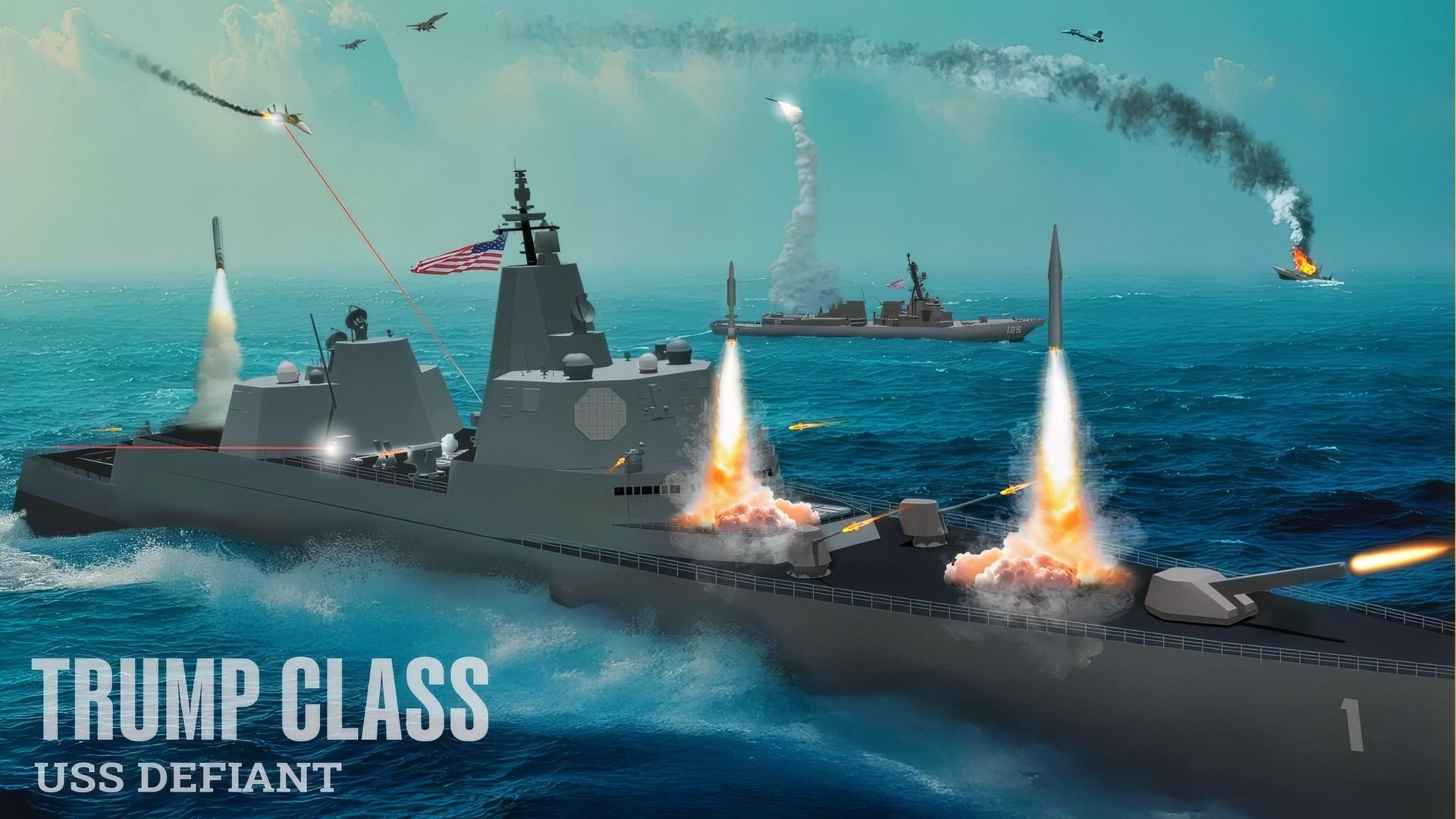
Trump-Class Battleship USS Defiant. Image Credit: Creative Commons.
He also referenced technological advances derived from programs such as the electromagnetic aircraft launch system (EMALS) and advanced arresting gear (AAG), both of which are currently operational on Ford-class aircraft carriers and rely on high-powered electromagnetic systems. The comments imply that the problems that limited railgun technology a decade ago—power management and electronics durability—are perhaps less severe today, because similar challenges have been solved elsewhere. These technologies may finally make their way to a next-generation vessel.
General Atomics is not claiming that the Navy has made a decision, but the company does appear to be signaling that if the service defines a requirement to them, they could field a working system.
Why the Navy Killed the Railgun in 2021
The Navy formally halted its railgun program in 2021 and redirected funding to other technologies, including hypersonic weapons and directed energy systems.
The program had aimed to develop a weapon using electromagnetic acceleration to fire projectiles faster than Mach 7. However, significant technical barriers made the program unfeasible. Among the most persistent problems were barrel and rail wear. The immense currents required to accelerate a projectile created severe erosion and thermal stress, limiting the ability to sustain fire. Additionally, integrating a high-energy pulsed power system into existing surface combatants proved difficult, because those ships were simply not designed to accommodate the technology.
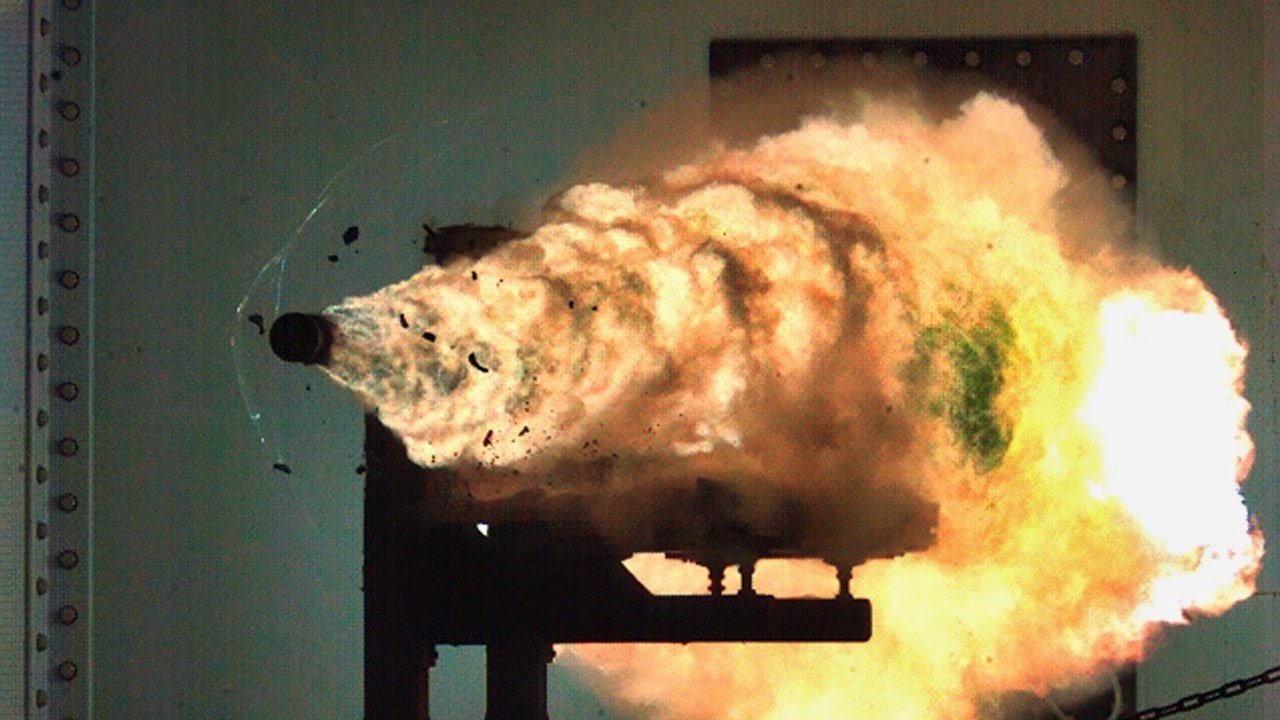
(Jan. 31, 2008) Photograph taken from a high-speed video camera during a record-setting firing of an electromagnetic railgun (EMRG) at Naval Surface Warfare Center, Dahlgren, Va., on January 31, 2008, firing at 10.64MJ (megajoules) with a muzzle velocity of 2520 meters per second. The Office of Naval Research’s EMRG program is part of the Department of the Navy’s Science and Technology investments, focused on developing new technologies to support Navy and Marine Corps war fighting needs. This photograph is a frame taken from a high-speed video camera. U.S. Navy Photograph (Released)
Specifically, existing destroyers were not designed with the electrical capacity required to support repeated railgun firing cycles. What’s more, the Navy’s increased investment in hypersonic missiles has further reduced the urgency to deploy weapons like the railgun. At the time, the service judged that other technologies offered a more immediate path to operational capability.
Why the Trump-Class Changes Matters
The proposed Trump-class guided-missile battleship would be significantly larger than current destroyers. Their planned design reportedly includes an expansive weapons suite and greater onboard power generation capacity, meaning it would be possible to fit a number of proposed advanced weapon systems onto the vessel.
Railguns are one weapon system that could be included. A larger hull with integrated power systems, similar in concept to those used on Ford-class carriers for EMALS, could sustain a 32-megajoule launcher.
In other words, this is no longer a matter of whether railguns work, but whether there is political will to install them on a next-generation surface combatant.
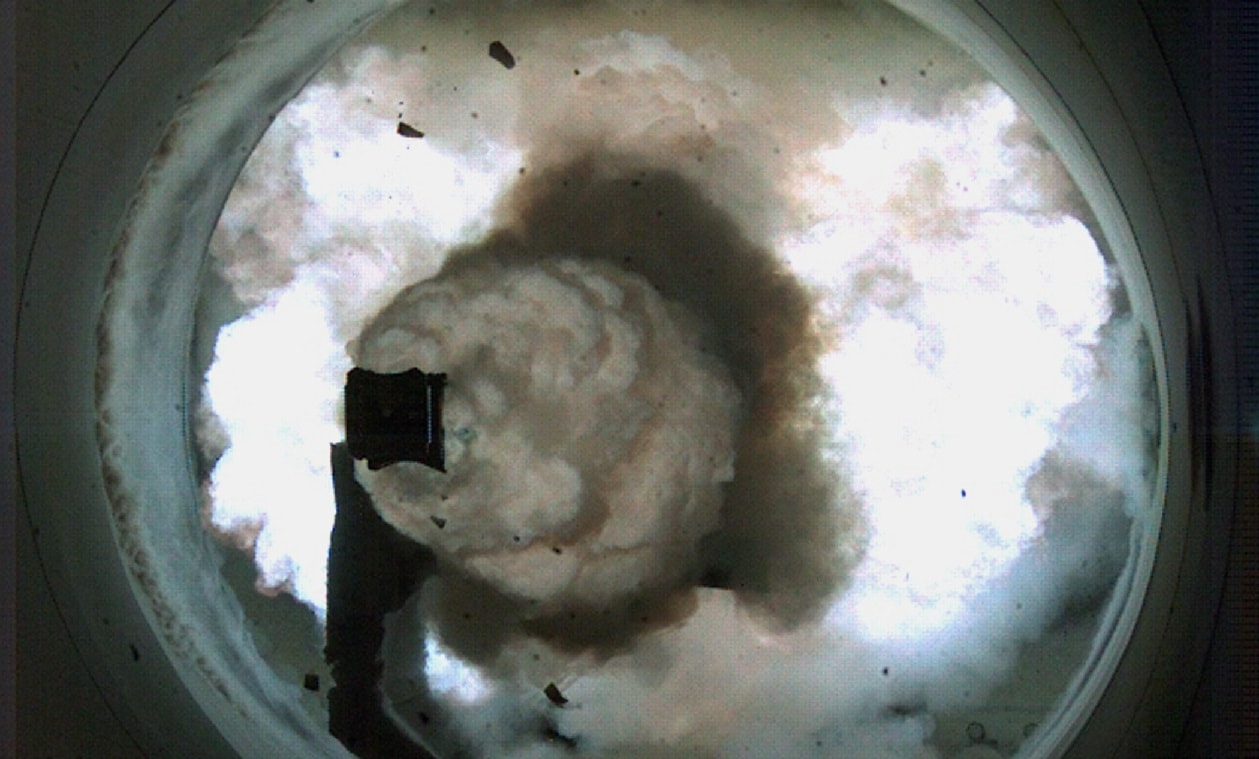
DAHLGREN, Va. (Dec. 10, 2010) High-speed camera image of the Office of Naval Research Electromagnetic Railgun located at the Naval Surface Warfare Center Dahlgren Division, firing a world-record setting 33 mega-joule shot, breaking the previous record established Jan. 31, 2008. The railgun is a long-range, high-energy gun launch system that uses electricity rather than gunpowder or rocket motors to launch projectiles capable of striking a target at a range of more than 200 nautical miles with Mach 7 velocity. A future tactical railgun will hit targets at ranges almost 20 times farther than conventional surface ship combat systems. (U.S. Navy photo/Released)
Allies Never Stopped Working On Railguns
While the U.S. Navy halted its program, other nations continued railgun research. Japan conducted at-sea firing trials of its electromagnetic railgun system, demonstrating sustained firing improvements and solid technical progress in 2024. There has also been ongoing cooperation between Japan, France, and Germany to accelerate railgun development.
The fact that major U.S. allies are continuing their work on the technology strengthens General Atomics’ argument that it need not be abandoned. After all, if competitors and allies field operational systems first, the U.S. would lose its early lead.
How the Dynamics Have Changed
While the program was officially canceled some years ago, the backdrop has changed enough that the service could well change course. For example, China and Russia have advanced long-range missile systems and hypersonic capabilities, and that’s increasing pressure on U.S. naval forces operating in contested environments.
One argument for railguns is the cost per shot. Unlike interceptor missiles that may cost hundreds of thousands or millions of dollars, a railgun projectile is essentially a kinetic “slug,” meaning that they are easier and cheaper to produce and are just as effective at taking out projectile threats.

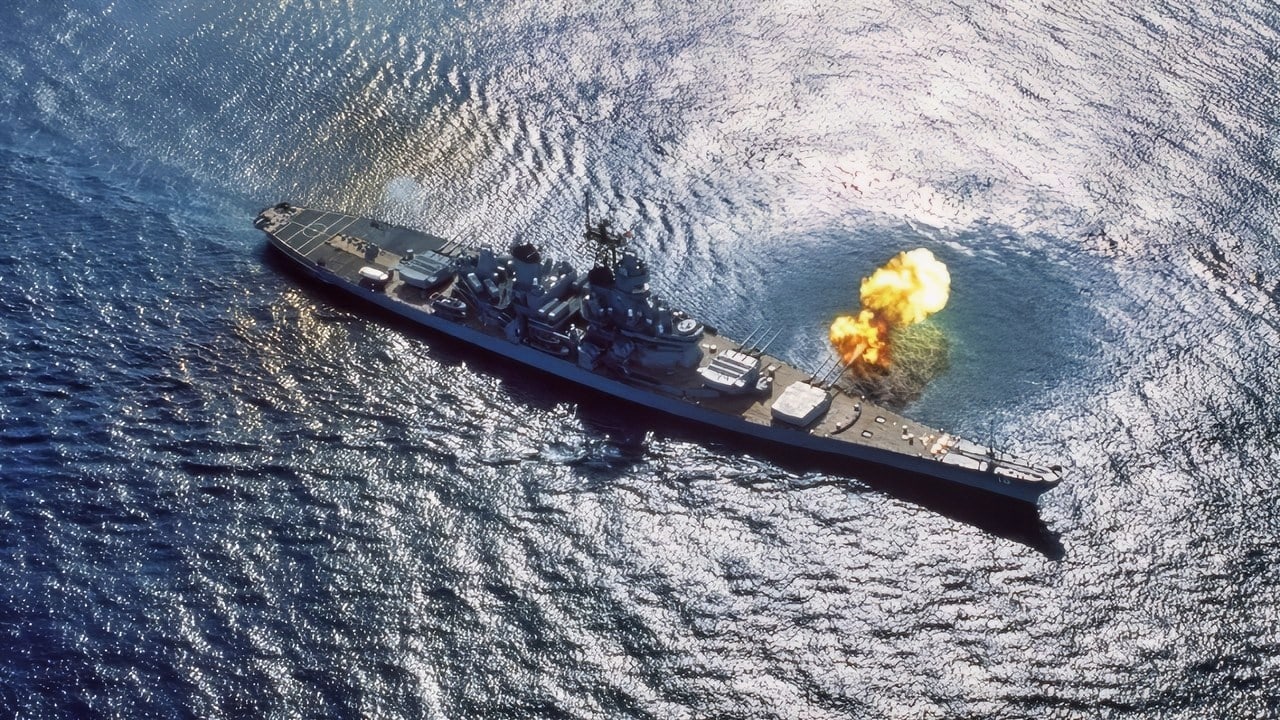
USS Iowa Seal 19FortyFive.com Original Image Taken By Harry J. Kazianis Onboard Battleship USS Iowa in 2025.
If the Trump-class were tasked with protecting high-value assets or forward bases, including U.S. territories in the Pacific, the ability to fire repeated high-velocity projectiles without relying solely on expensive interceptors could prove attractive. At the same time, these new developments do not eliminate the coming challenges with reliability or integration.
So, Is It Happening?
The Trump-class battleship, though technically in the works, is still conceptual and faces competition from other surface combatant programs, including the DDG(X) next-generation destroyer. The platform could be abandoned or scrapped in the future.
Whether Congress authorizes and funds the Trump-class in its proposed configuration might determine whether a 32-megajoule railgun moves into production.
General Atomics’ public comments, however, are a good sign that the technology could be used on the platform if it gets the go-ahead, and if it remains in development long enough to become a reality. The Navy, however, has not publicly commented on the prospects of restarting the program.
All that’s different now is the context: There is renewed great-power competition and momentum among allied nations for electromagnetic research. Combine that with the possible development of a Trump-class ship designed to generate the electric power that railguns require, and it seems like the technology would be the logical next step for the Navy. But only time will tell.
About the Author:
Jack Buckby is a British researcher and analyst specialising in defence and national security, based in New York. His work focuses on military capability, procurement, and strategic competition, producing and editing analysis for policy and defence audiences. He brings extensive editorial experience, with a career output spanning over 1,000 articles at 19FortyFive and National Security Journal, and has previously authored books and papers on extremism and deradicalisation.