
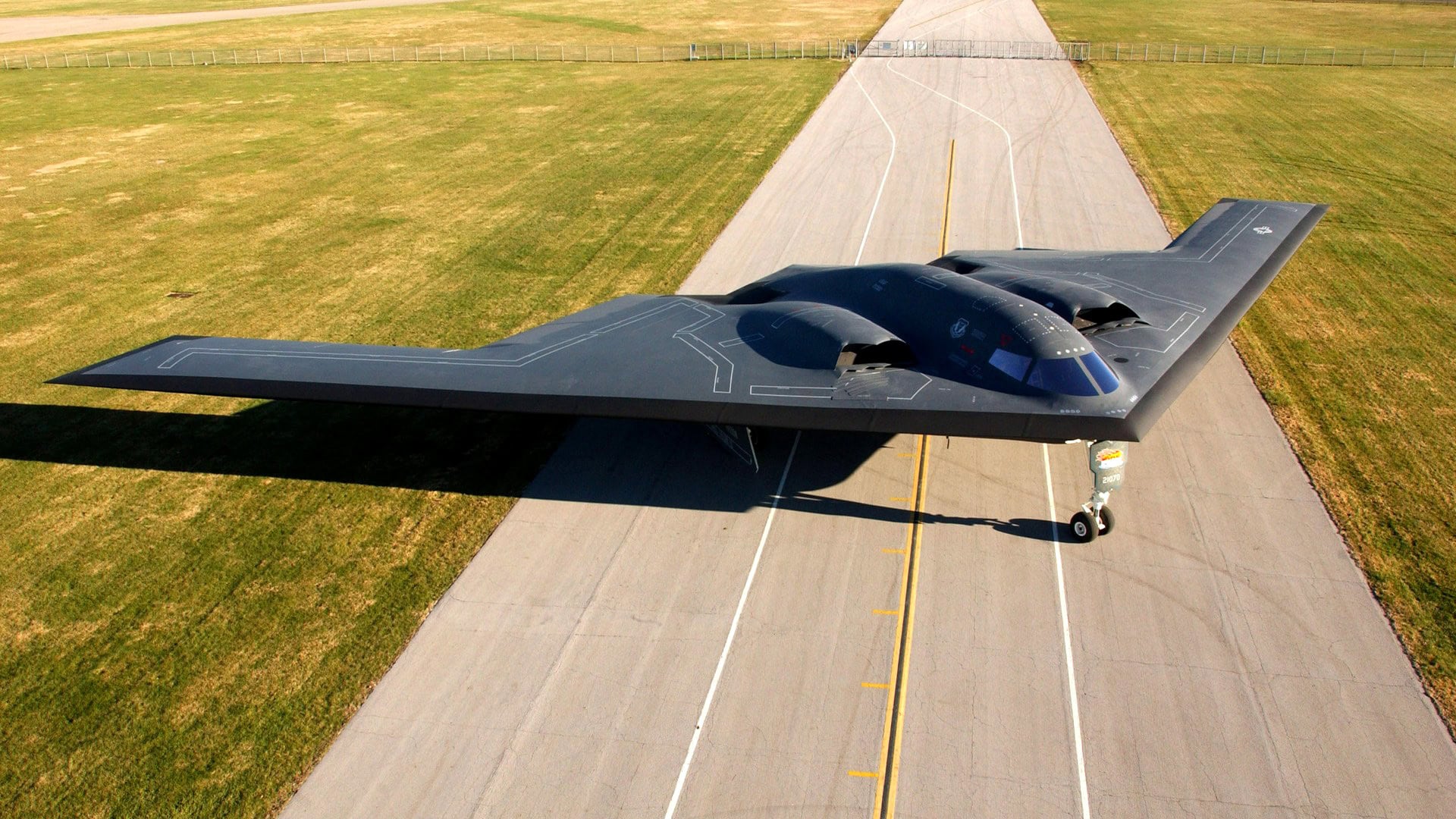
Summary and Key Points: Stephen Silver, an award-winning national security journalist, evaluates the strategic link between California’s maritime strike exercises and the B-2 Spirit stealth bomber strikes in Operation Epic Fury.
-Utilizing Carrier Air Wing 11 and the Theodore Roosevelt Carrier Strike Group, the Navy validated the AIM-174B “Gunslinger” (air-launched SM-6) to counter Chinese A2/AD threats.
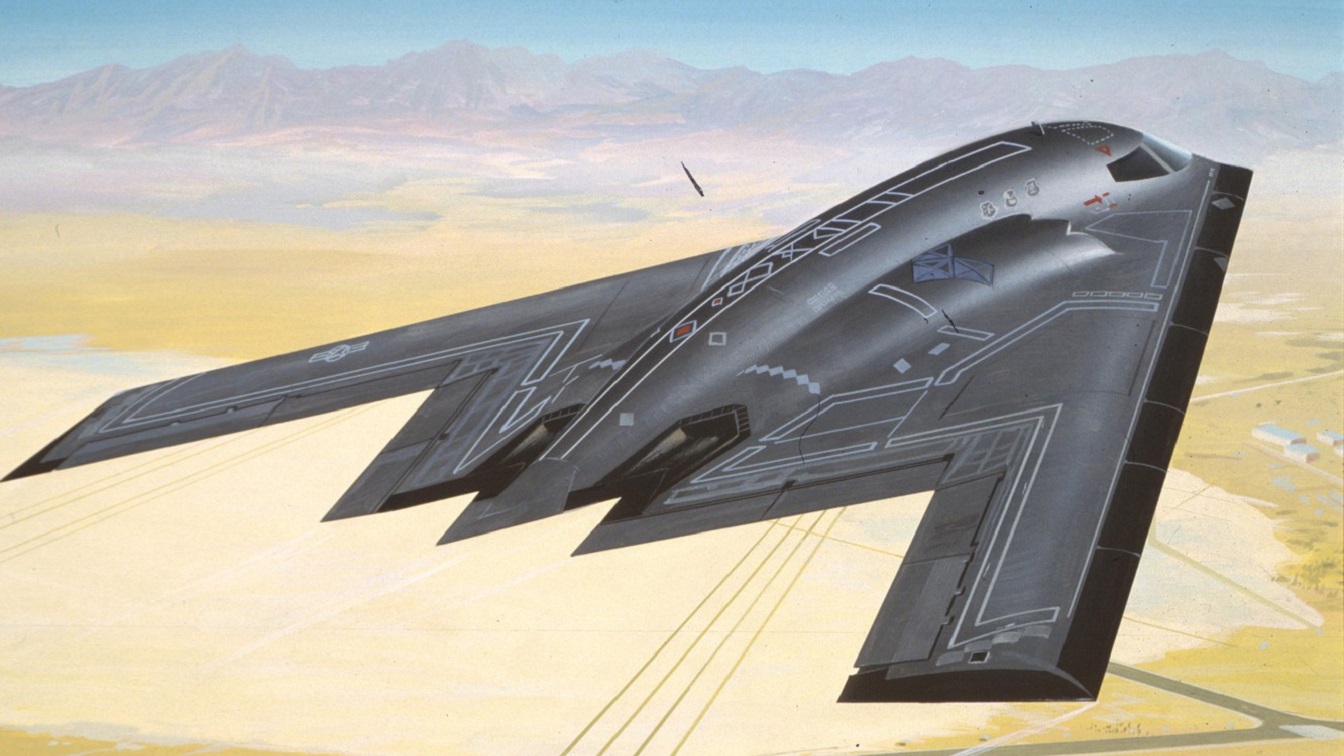
B-2 Bomber. Image Credit: Artist Rendition.
-This 19FortyFive report analyzes how the 509th Bomb Wing transitioned from these Pacific drills to striking Iran’s “missile caves” with 2,000-pound munitions, while simultaneously tracking the French FS Charles De Gaulle’s high-intensity ORION 26 deployment in the Atlantic.
The Gunslinger Debut: Why the Navy’s New AIM-174B Missile is a Game-Changer for Pacific Deterrence
Not long before the U.S. military launched an actual military attack on Iran, Navy and Air Force planes carried out an unrelated rehearsal off the coast of California.
According to USNI News, “U.S. naval aviation equipped with long-range air-to-air missiles and a B-2 stealth bomber held an integrated maritime strike exercise off California.” The report did not disclose when the exercise took place, but it was announced last Tuesday, just four days before the launch of the attack on Iran.
The exercise off of California involved fighters from Carrier Air Wing (CVW) 11, described as “the naval aviation component of the Theodore Roosevelt Carrier Strike Group,” and at least one Spirit bomber from 509th Bomb Wing, which had flown in from Whiteman Air Base.
“While the two branches regularly train in long-range maritime strike missions off the West Coast, the publicized drills highlighted the Navy’s new AIM-174B ‘Gunslinger’ missiles and the increased involvement of strategic bombers in anti-ship applications. Two F/A-18E/F Super Hornets fielded the air-launched SM-6s during the drill,” the USNI story said.
Per USNI, the exercise must be seen through the prism of what’s going on with China.
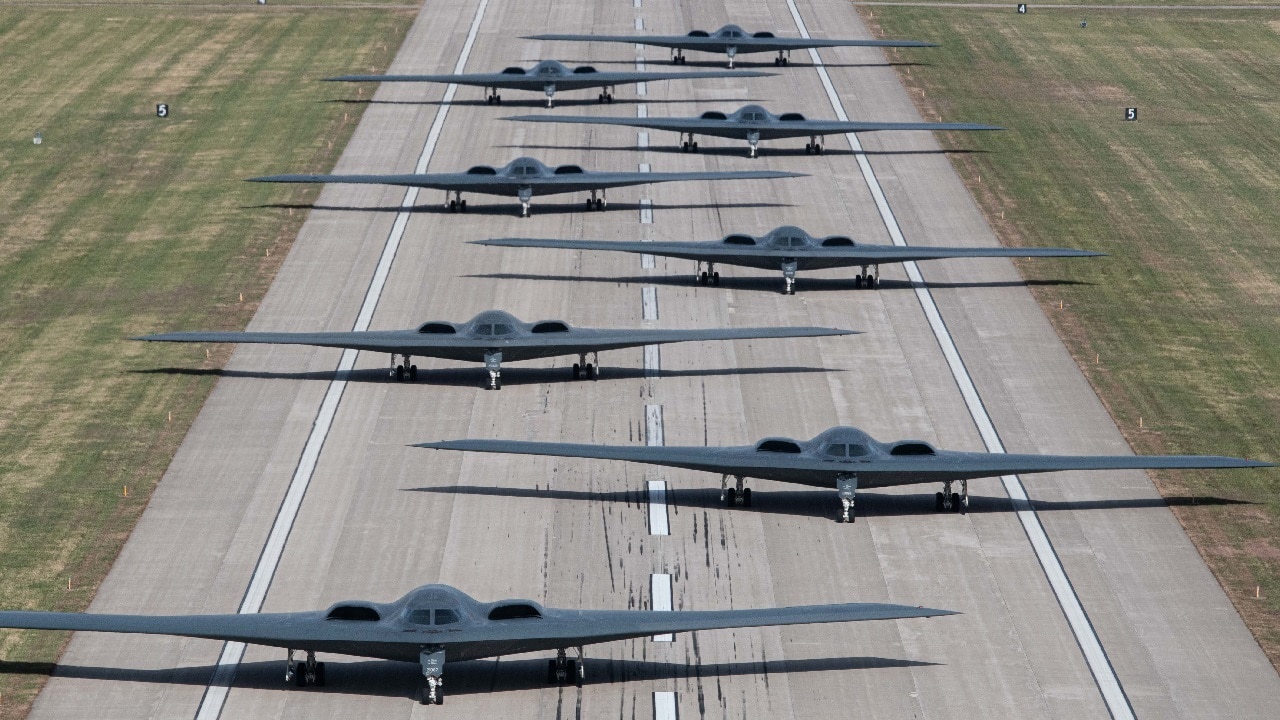
B-2 Spirit stealth bombers assigned to Whiteman Air Force Base taxi and take-off during exercise Spirit Vigilance on Whiteman Air Force Base on November 7th, 2022. Routine exercises like Spirit Vigilance assure our allies and partners that Whiteman Air Force Base is ready to execute nuclear operations and global strike anytime, anywhere. (U.S. Air Force photo by Airman 1st Class Bryson Britt)
“The long-range munition came as China developed increasingly sophisticated fighters, bombers and missiles – threats to American aircraft carriers. Since Washington’s deployment of carriers to the Third Taiwan Strait Crisis, and Beijing’s inability to counter them, People’s Liberation Army area denial forces operating from mainland bases have evolved to extend their reach across the first island chain,” the report said. “An air-launched SM-6 will enable the U.S. Navy’s mainstay carrier fighters to better counter these threats at extended ranges.”
This followed news, also from USNI News, that the French Carrier Strike Group (CSG) led by aircraft carrier FS Charles De Gaulle (R91), was headed to the North Atlantic and Baltic Sea.
“After its participation in the large-scale ORION 26 exercise, the Carrier Strike Group will continue its deployment to the North Atlantic and the Baltic Sea before transiting to the Mediterranean,” a French Ministry of Armed Forces and Veterans Affairs announcement, cited by USNI News, said.
Per Naval News, ORION 26 was “a joint and combined high-intensity warfare exercise set to take place in the Atlantic.”
“The focus for the escort of the CSG during ORION 26 seems to be on air defense, with three dedicated air defender vessels, which is somewhat unusual and noteworthy,” Naval News wrote of the exercise. “As usual, a nuclear-powered attack submarine (SSN) is likely part of the CSG as well.”
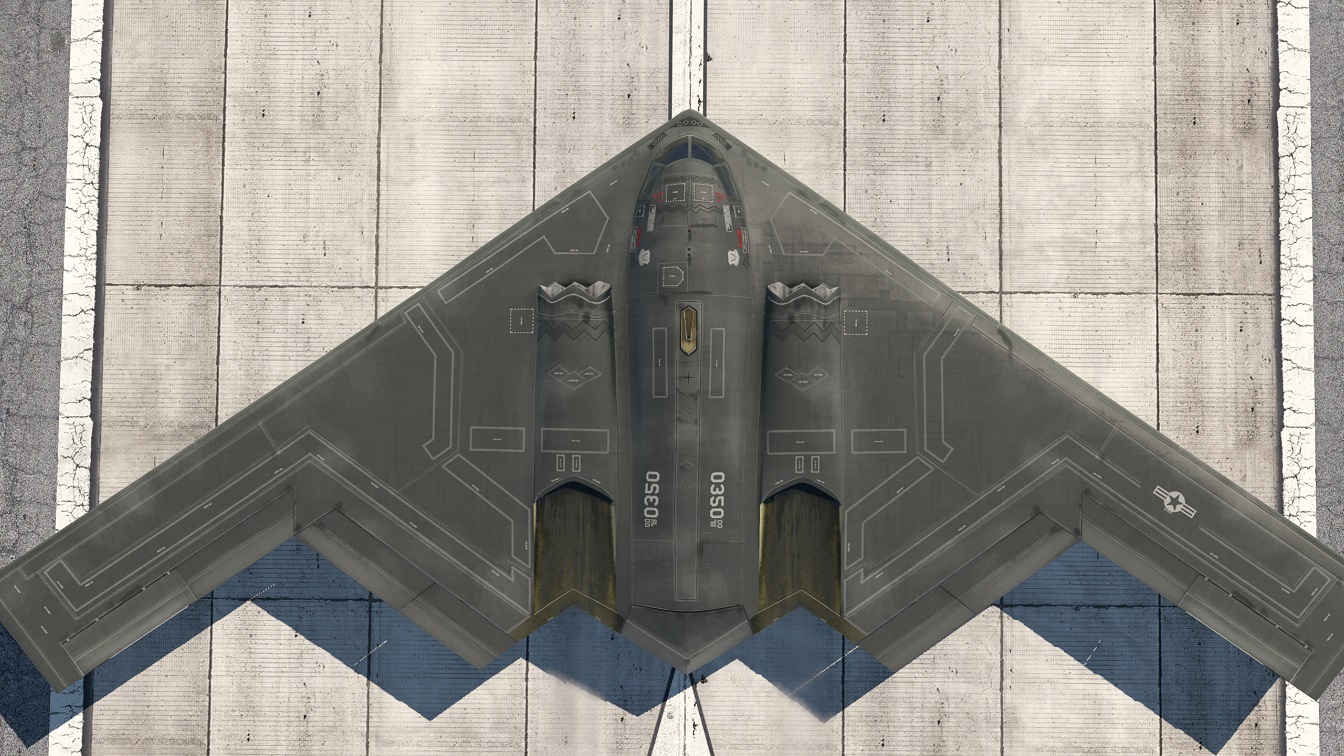
B-2 Bomber. The B-21 Raider will look very similar. Image Credit: Creative Commons.
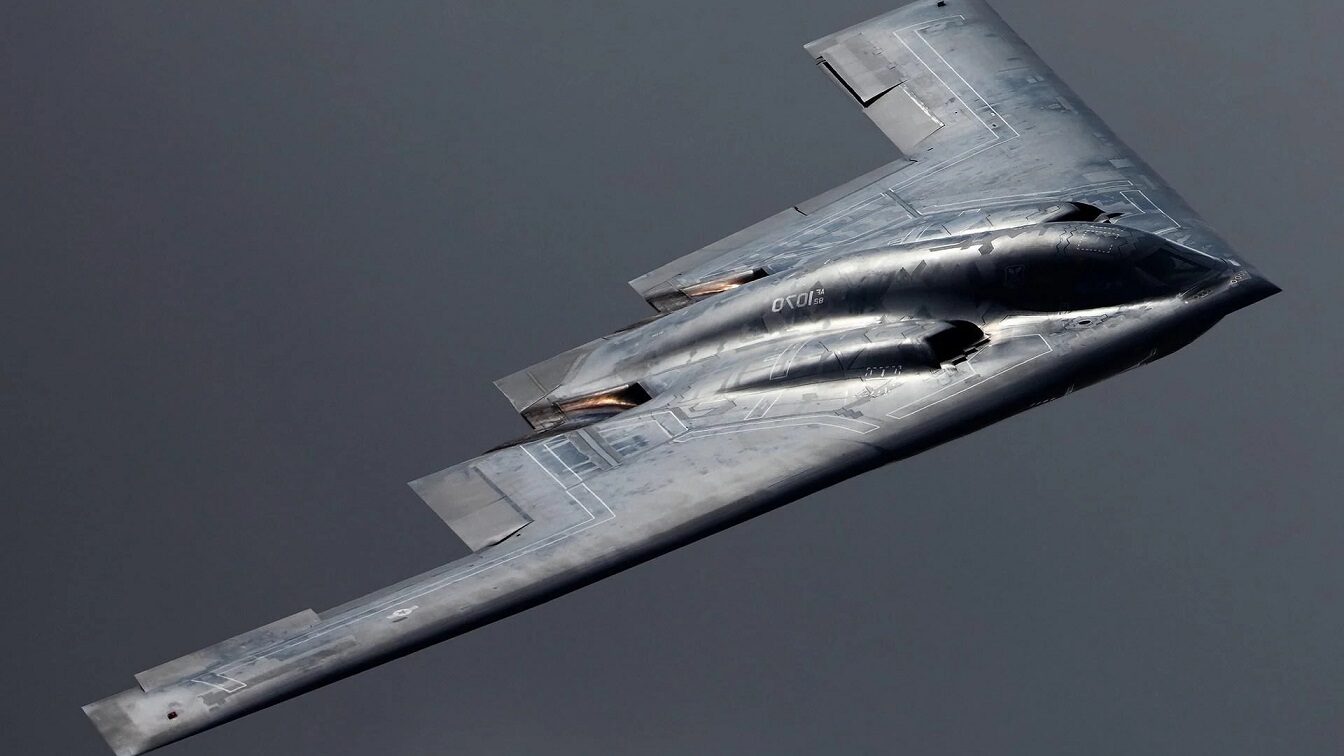
Artist image of B-2 Spirit. The B-21 Raider will look similar.
“ORION 26 aims to test the French armed forces’ ability to conduct high-intensity operations in a joint and combined environment, encompassing all types of conflict zones and environments,” the French Navy said in a statement, per Naval News. “The CSG’s participation in ORION 26 will test its operational capabilities within a complex deployment. This deployment contributes to the preparation of French armed forces and to the support of a large-scale operational maneuver conducted on the national territory and in its immediate vicinity”.
B-2s in Iran
B-2 Spirit bombers, like the ones in the California exercise, were used in the attack on Iran, per The War Zone. The U.S. had also utilized B-2 bombers in the attack on Iran’s nuclear facilities in the summer of 2025.
It’s not clear if any of the same planes from the exercise were used in the Iran operation.
“Flying global airpower missions from their home base in Whiteman, Missouri, America’s stealth bombers arrived over Iranian airspace in the early morning hours and targeted Iran’s missile caves. These facilities are built deep under mountains and are primarily used for storage, but some of them actually have the ability to launch ballistic missiles through fissures in their ceilings,” TWZ reported Monday.
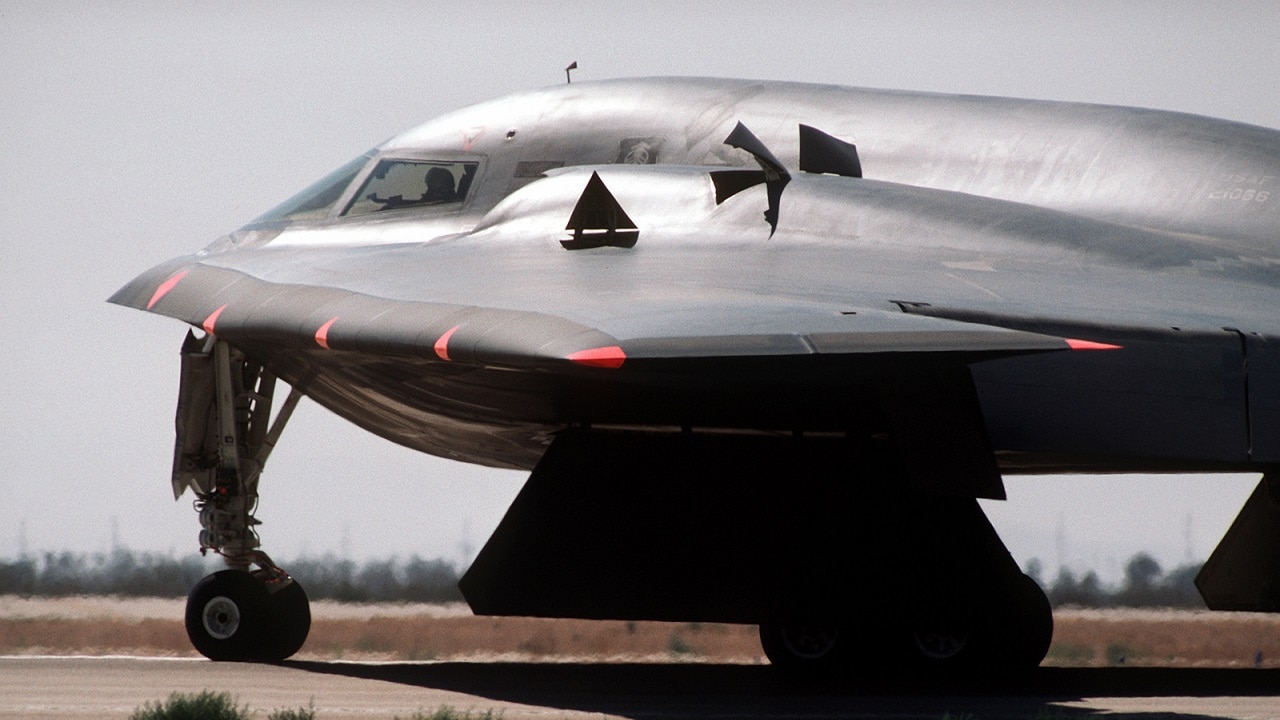
A left side view of the front of a B-2 advanced technology bomber aircraft as it prepares for its first flight, at the Air Force Flight Test Center.
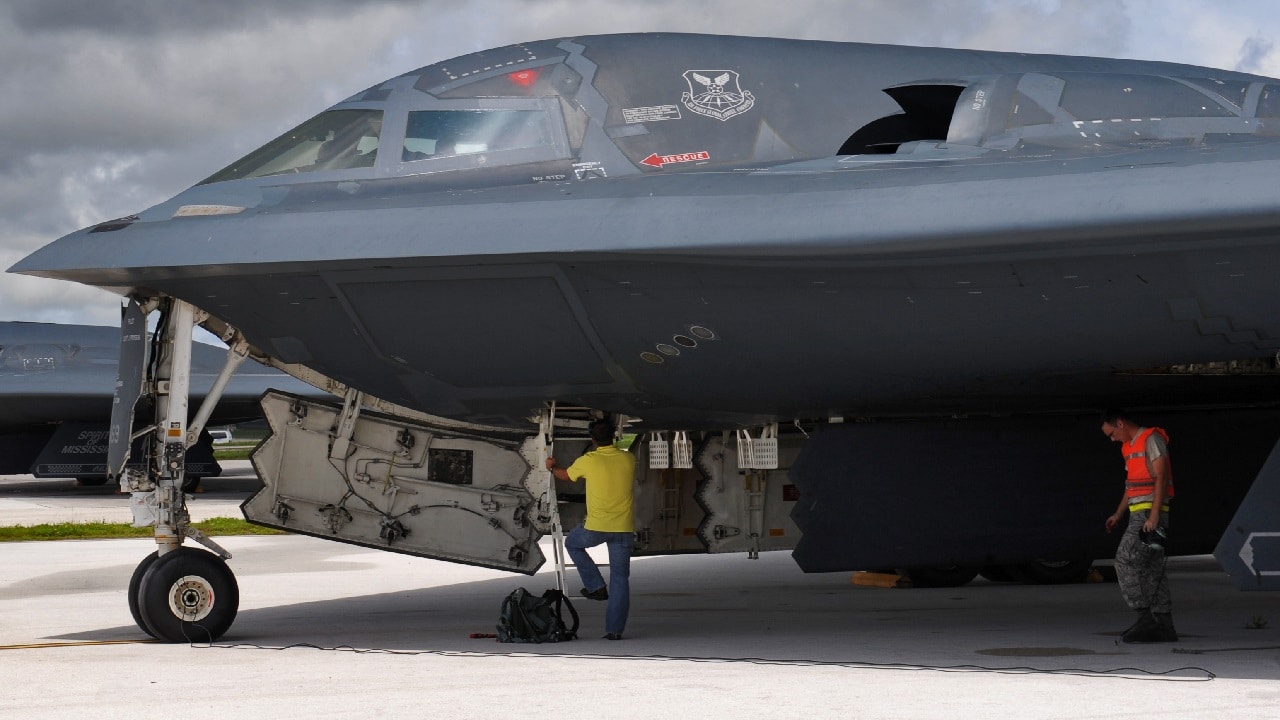
U.S. Air Force B-2 Spirit aircraft undergo pre-flight inspections prior to take off at Andersen Air Force Base, Guam, Aug. 11, 2016. More than 200 Airmen and three B-2s deployed from Whiteman Air Force Base, Mo., to conduct local sorties and regional training and integrate with regional allies in support of Bomber Assurance and Deterrence missions. (U.S. Air Force photo by Tech. Sgt. Miguel Lara III)
The TWZ noted that there had been indications in the days before that the B-2s were heading to Iran.
“Prioritizing missile cave complexes as a target for America’s ‘silver bullet’ stealth bomber force is an obvious decision,” the report said. “As we have stated for years, destroying these complexes is challenging. They are made up of different chambers that can be sealed off from one another. So very complex weaponeering and a large quantity of specialized munitions would be needed to even attempt destroying them completely.”
There can be complications, however.
“There is one complicating factor when trying to put these facilities out of action — some of them have apertures in their ceilings that allows ballistic missiles to be launched without them leaving the facility. Some even have automated rapid-loading systems to fire the missiles off quickly,” TWZ said. “This means that missiles can still be fired from them even if the entrances are temporarily sealed. The good news is that the overhead doors that protect the launch bays can be penetrated, and the bays themselves destroyed. This would specifically be a good job for the B-2.”
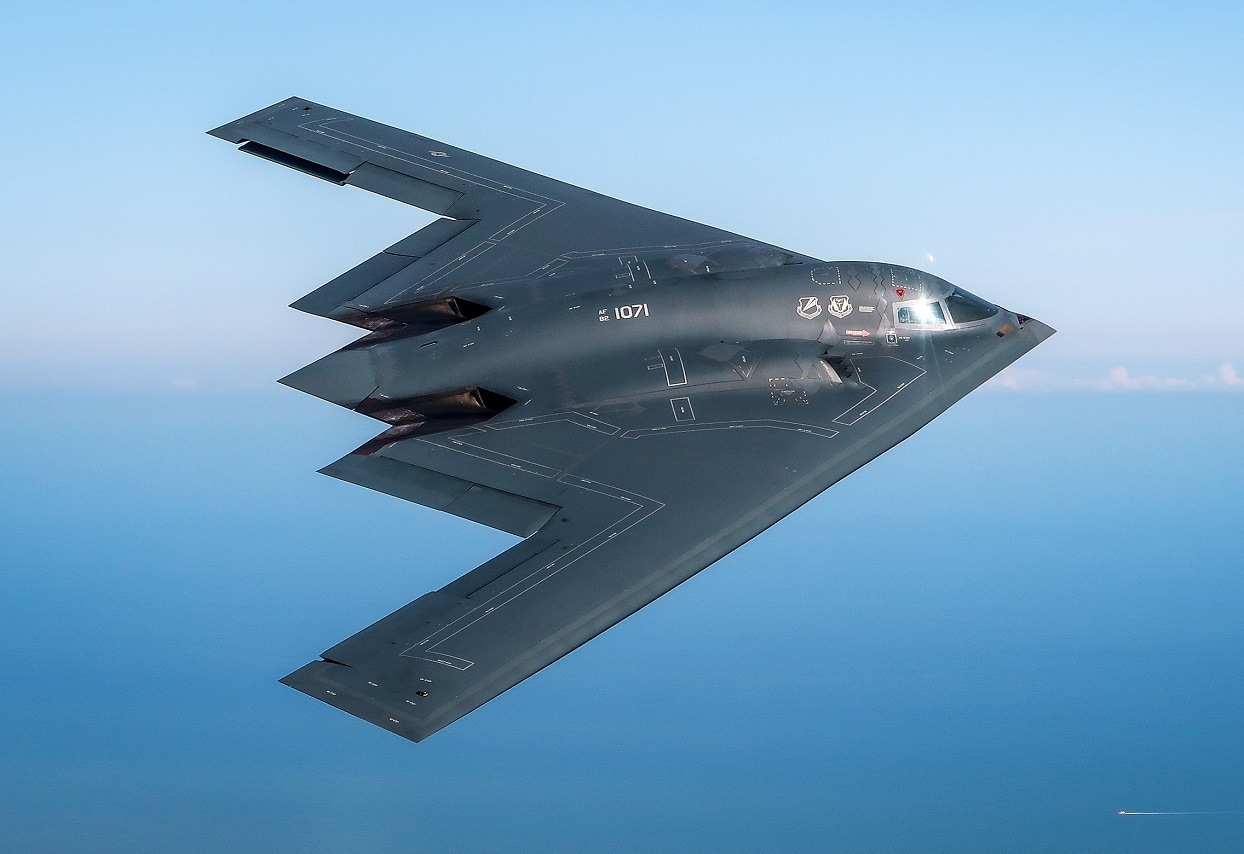
B-2 Bomber. Image Credit: Creative Commons.
More B-2 Details
The Hill reported some additional details about the use of B-2s in the Iran attack, citing CENTCOM.
“Last night, U.S. B-2 stealth bombers, armed with 2,000 lb. bombs, struck Iran’s hardened ballistic missile facilities. No nation should ever doubt America’s resolve,” CENTCOM said in an X post on March 1.
“The strike marks the second time the aircraft, which can reach an altitude of more than 50,000 feet and fly 6,000 nautical miles without refueling, has been used in an operation against Iran,” The Hill reported about the strikes.
“Last June, seven B-2 Spirit stealth bombers, which took off from Whiteman Air Force Base in Missouri, dropped 14 30,000-pound GBU-57 massive bunker-busting bombs on Iran’s nuclear sites at Fordow, Isfahan and Natanz.”
B-2 Spirit Lives: Not Shut Down By Iran
Meanwhile, while rumors circulated online over the weekend that a B-2 had been shot down, “there is no evidence as of now, nor any confirmation from the authorities, that it was a B-2 bomber. Iran has strong incentives to publicise such a loss if it had occurred,” WIO News reported.
About the Author: Stephen Silver
Stephen Silver is an award-winning journalist, essayist, and film critic, and contributor to the Philadelphia Inquirer, the Jewish Telegraphic Agency, Broad Street Review, and Splice Today. The co-founder of the Philadelphia Film Critics Circle, Stephen lives in suburban Philadelphia with his wife and two sons. For over a decade, Stephen has authored thousands of articles that focus on politics, national security, technology, and the economy. Follow him on X (formerly Twitter) at @StephenSilver, and subscribe to his Substack newsletter.