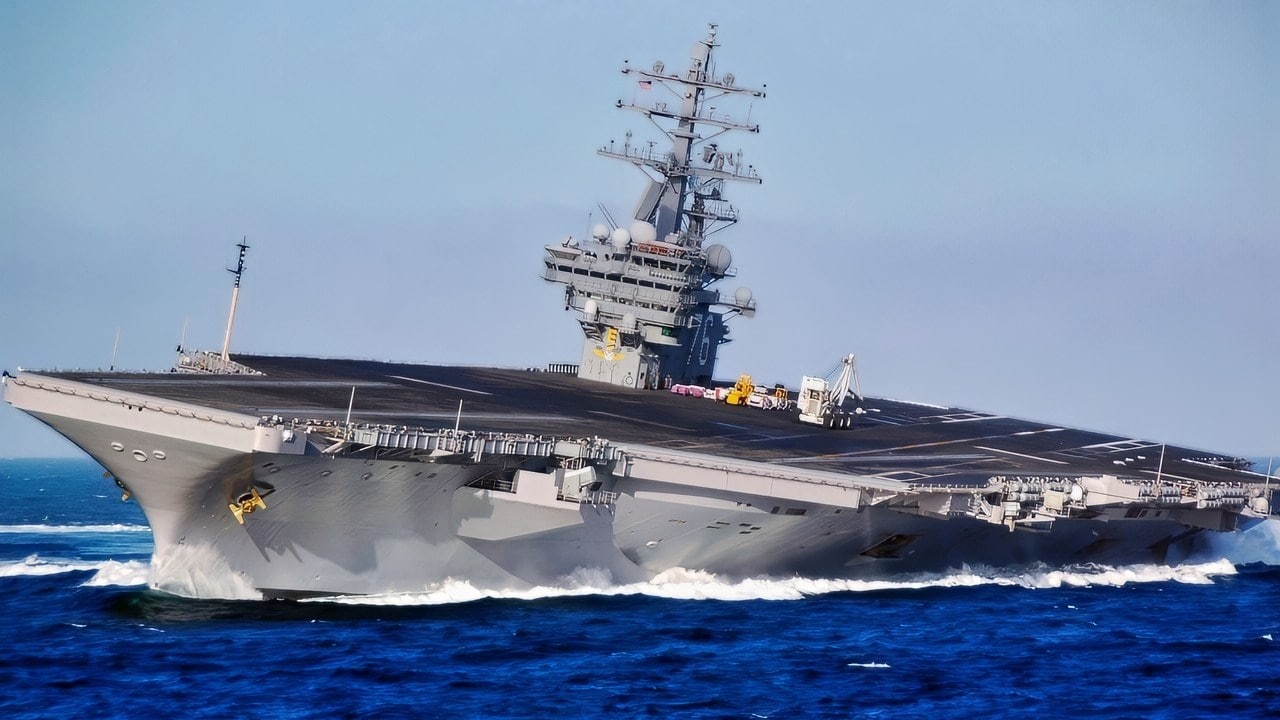
Summary and Key Points: China Invades Taiwan with the U.S. Locked in the Iran War?
-Defense analyst Reuben F. Johnson evaluates the strategic stability of the Indo-Pacific amid the U.S. military’s multi-theater commitments in Iran, Venezuela, and Cuba.
-Despite the redeployment of the USS Abraham Lincoln, a new report suggests Xi Jinping is deterred by the “accuracy shock” of U.S. strikes in Iran and the rapid build-up of Japanese and Australian capabilities.
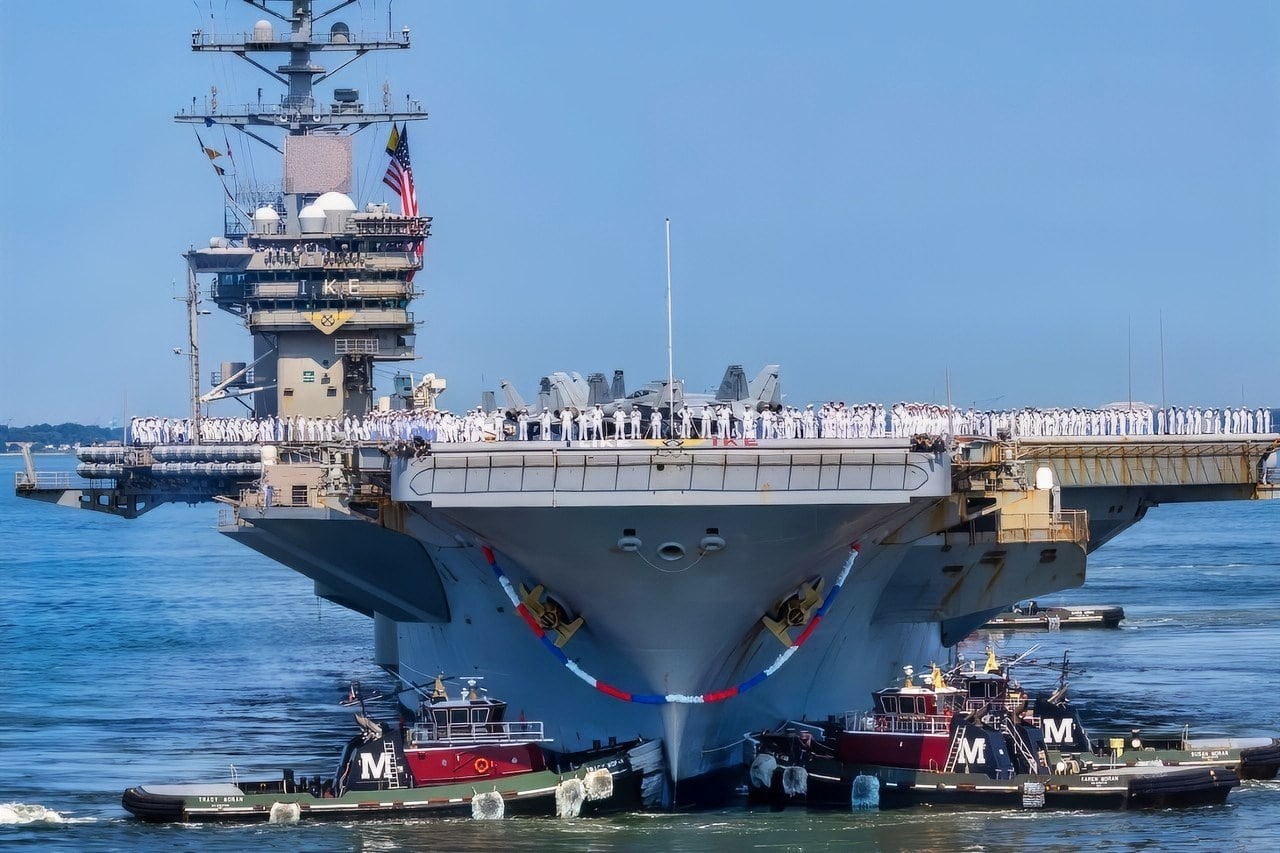
Aircraft Carrier U.S. Navy Photo. Image Credit: Creative Commons.
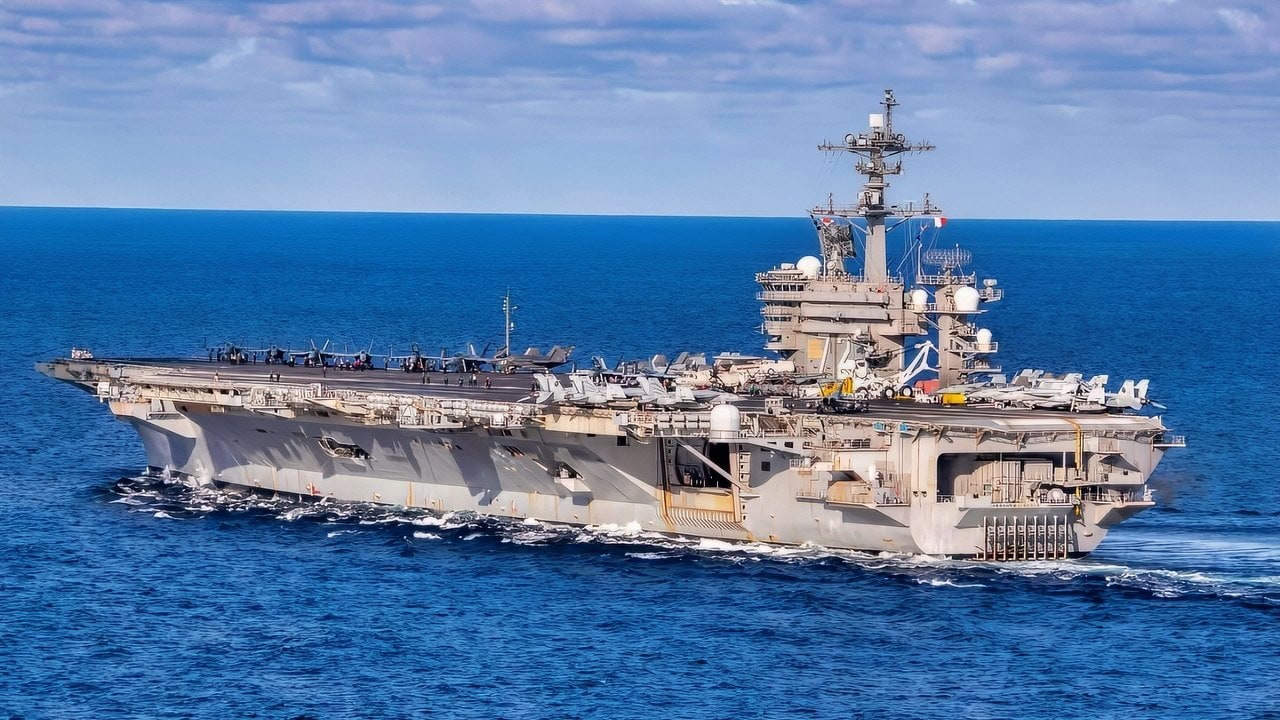
Nimitz-Class Aircraft Carrier At Sea. Image Credit: Creative Commons.
-This report analyzes the role of Japan’s 150 F-35s, the operationalization of the JS Kaga, and the upcoming Trump-Xi Summit.
-Johnson concludes that unless U.S. munitions stocks are exhausted, China is unlikely to gamble on a cross-strait invasion.
Deterrence Paradox: Why Global U.S. Interventions are Failing to Trigger a Chinese Move on Taiwan
The Trump administration has set a record for foreign interventions against dictators with a habit of causing problems for the United States. An operation in January removed President Nicolas Maduro from Venezuela. The U.S. Navy and law enforcement agencies are enforcing an oil blockade that is intended to collapse Communist Party rule in Cuba. And the U.S. military has embarked on a major military operation in Iran designed to topple the Islamist regime.
That raises the worry that the U.S. military could become overextended. The Navy even redeployed the USS Abraham Lincoln aircraft carrier strike group from East Asia to participate in the Iran operation. The United States’ commitment to so many major operations could create an irresistible opportunity for China to consider making a move to seize Taiwan.
But an assessment released this month by one of Switzerland’s major asset management firms suggests Beijing might not be willing to proceed with a large-scale military operation against the island. The report cites two restraints.
U.S. Military Might in Asia
First, the United States has not been standing still in Asia, and in the last decade, allies in the region have built up their capabilities. Specifically, Japan, Australia, and the Philippines have acquired extensive military capabilities from the United States.
These more modern weapon systems are not deployed in quantities sufficient keep the Chinese military at bay indefinitely, but they could be enough of a deterrent; Beijing should be under no illusion that it could roll through Taiwan without encountering meaningful resistance.
Both Japan and South Korea have considerable stocks of major weapon systems, particularly fighter aircraft. Japan is on track to operate more than 150 F-35 fighters—some of which will be the carrier-capable, short take-off and vertical landing F-35B version. The Japanese military thus fields the largest number of F-35s outside of the United States, as well as some of the more advanced versions of the F-15.
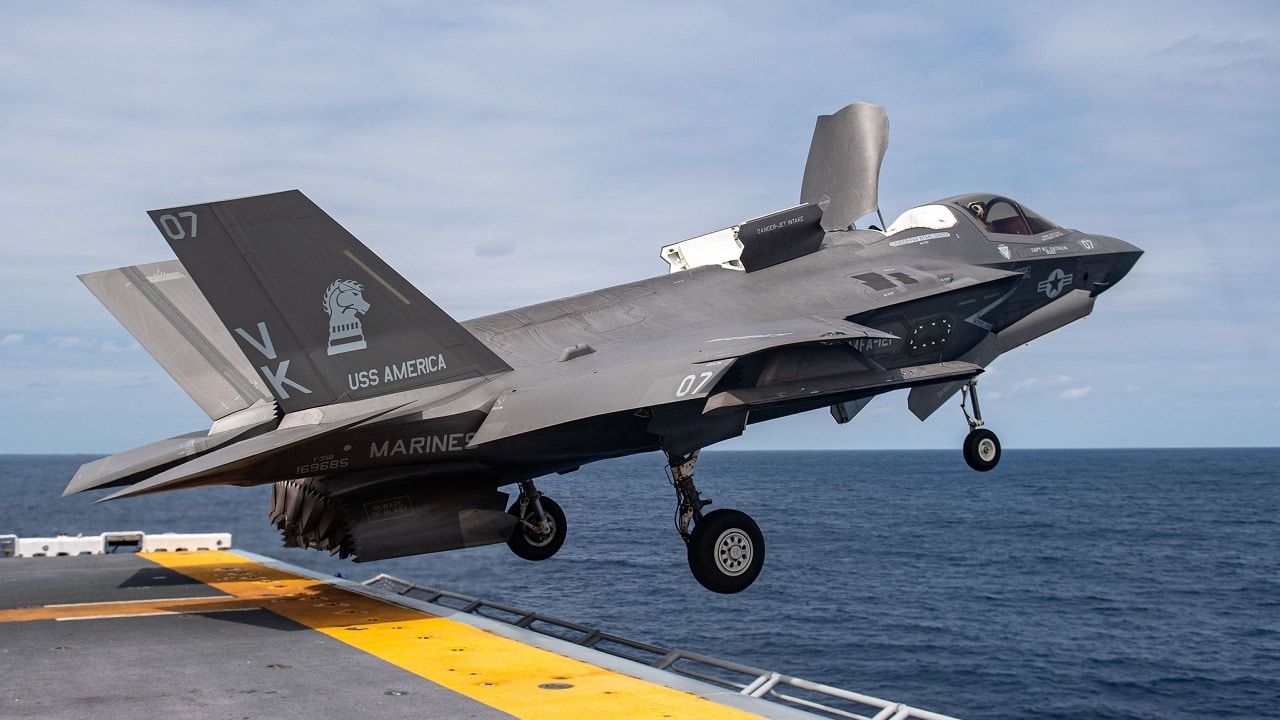
PHILIPPINE SEA (Feb. 9, 2022) An F-35B Lightning II fighter aircraft from the 31st Marine Expeditionary Unit (MEU) launches from the forward-deployed amphibious assault ship USS America (LHA 6) during joint Exercise Noble Fusion. Noble Fusion demonstrates that Navy and Marine Corps forward-deployed stand-in naval expeditionary forces can rapidly aggregate Marine Expeditionary Unit/Amphibious Ready Group teams at sea, along with a carrier strike group, as well as other joint force elements and allies, in order to conduct lethal sea-denial operations, seize key maritime terrain, guarantee freedom of movement, and create advantage for US, partner and allied forces. Naval Expeditionary forces conduct training throughout the year, in the Indo-Pacific, to maintain readiness. (U.S. Navy photo by Mass Communication Specialist 3rd Class Thomas B. Contant) 220209-N-BX791-1299
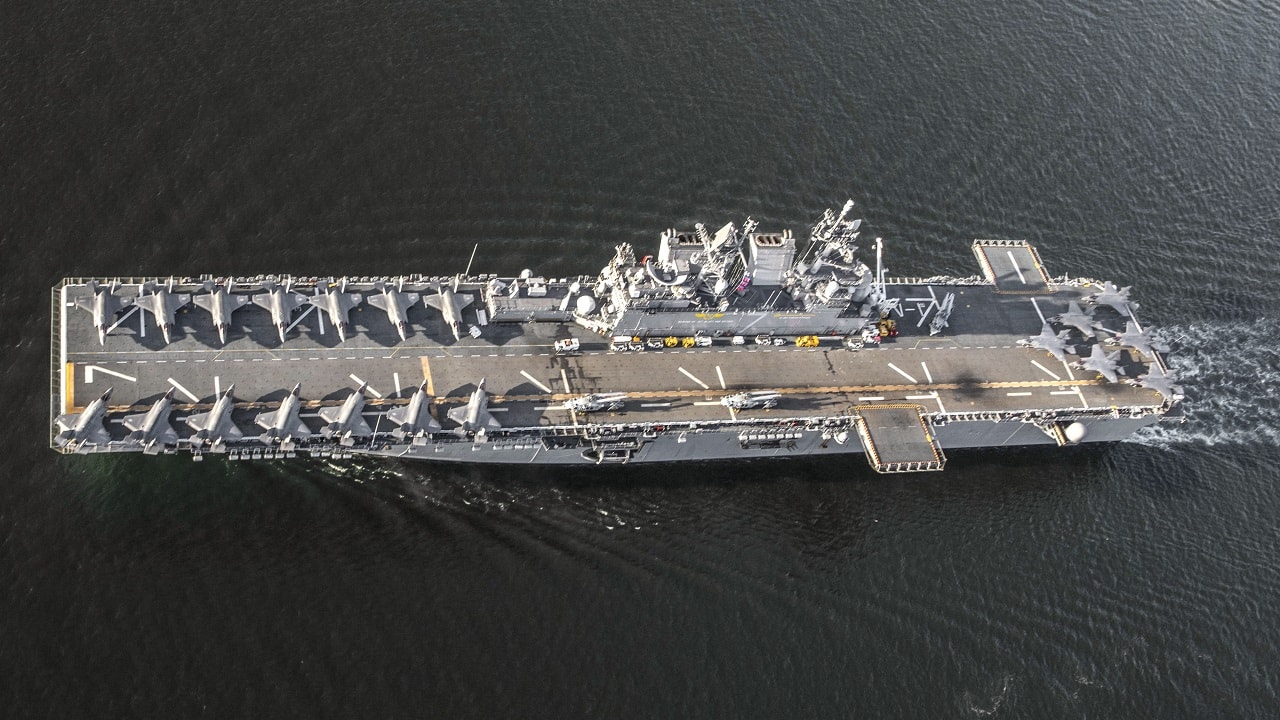
Amphibious assault ship USS Tripoli (LHA- 7) , departs Naval Air Station North Island, Calif., April 7, 2022. Tripoli completed flight deck operations with 20 F-35B Lightning II jets from Marine Fighter Attack Squadrons 211 and 225, Marine Aircraft Group 13, and 3rd Marine Aircraft Wing, as well as Marine Operational Test and Evaluation Squadron 1, as part of the U.S. Marine Corps’ Lightning carrier concept demonstration. The Lightning carrier concept demonstration shows Tripoli and other amphibious assault ships are capable of operating as dedicated fixed-wing strike platforms when needed, capable of bringing fifth generation Short Takeoff/Vertical Landing aircraft wherever they are required. (U.S. Marine Corps photo by Sgt. Samuel Ruiz)
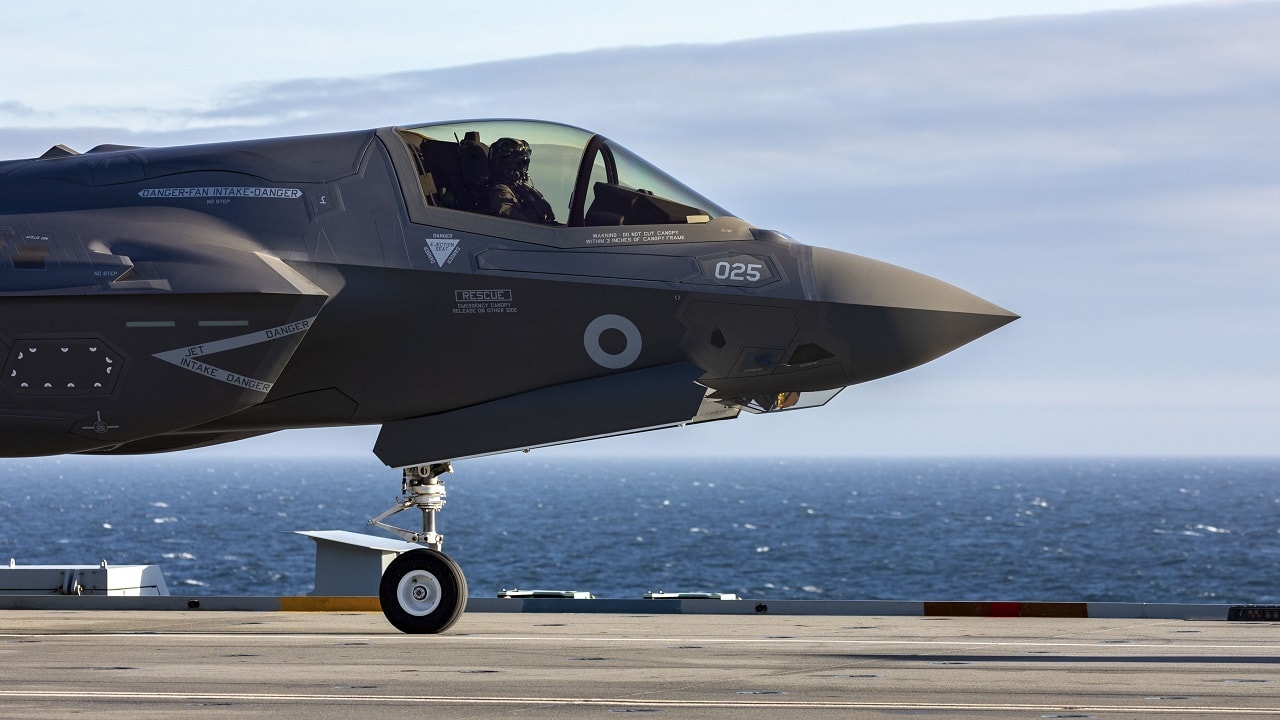
Image Credit: Royal Navy.
South Korea not only operates substantial numbers of those aircraft, but it also produces its own highly capable aircraft.
Japan also has two light aircraft carriers in its fleet—the JS Kaga and JS Izumo—plus nine military bases with troops and equipment deployed in the Philippines. Japan supports the Philippines with carrier cover—a role once performed by the United States.
US Performance and Allied Actions
The other factor is the performance of the U.S. military and its allies in action against Iran. Having seen just how accurate the latest generation of U.S. air-launched weapons is might give China’s leadership pause before they decide to take Taiwan by force.
If the U.S. operation bogs down, or the U.S. military appears to be running low on munitions stocks, the opposite effect could come to pass. Even so, however, China’s military leadership is likely discouraged by the way Iranian radar and air-defense systems that are similar in capability to Beijing’s were almost completely ineffective against U.S. and Israeli airpower.
Three events in the coming months will also have a significant effect on Chinese calculations.
First is an upcoming summit between the countries’ political leaders, Xi Jinping and Donald Trump, at the end of March. A great deal depends on how the meetings between the two are concluded and how steadfast Trump seems to be regarding Taiwan’s defense.
Second is the resolution of a U.S.-Taiwan arms deal that is currently suspended.
Third is the question of Japan’s post-election plans for increased defense spending.
If China concludes that the United States and Japan are bent on altering the status quo in East Asia, Beijing may take action. But direct military action might create more problems for Xi than it solves. Barring concrete signs that the United States is weaker than before the Iran conflict, China is unlikely to gamble on a Taiwan invasion.
About the Author: Reuben F. Johnson
Reuben F. Johnson has thirty-six years of experience analyzing and reporting on foreign weapons systems, defense technologies, and international arms export policy. Johnson is the Director of Research at the Casimir Pulaski Foundation. He is also a survivor of the Russian invasion of Ukraine in February 2022. He worked for years in the American defense industry as a foreign technology analyst and later as a consultant for the U.S. Department of Defense, the Departments of the Navy and Air Force, and the governments of the United Kingdom and Australia. In 2022-2023, he won two awards in a row for his defense reporting. He holds a bachelor’s degree from DePauw University and a master’s degree from Miami University in Ohio, specializing in Soviet and Russian studies. He lives in Warsaw.