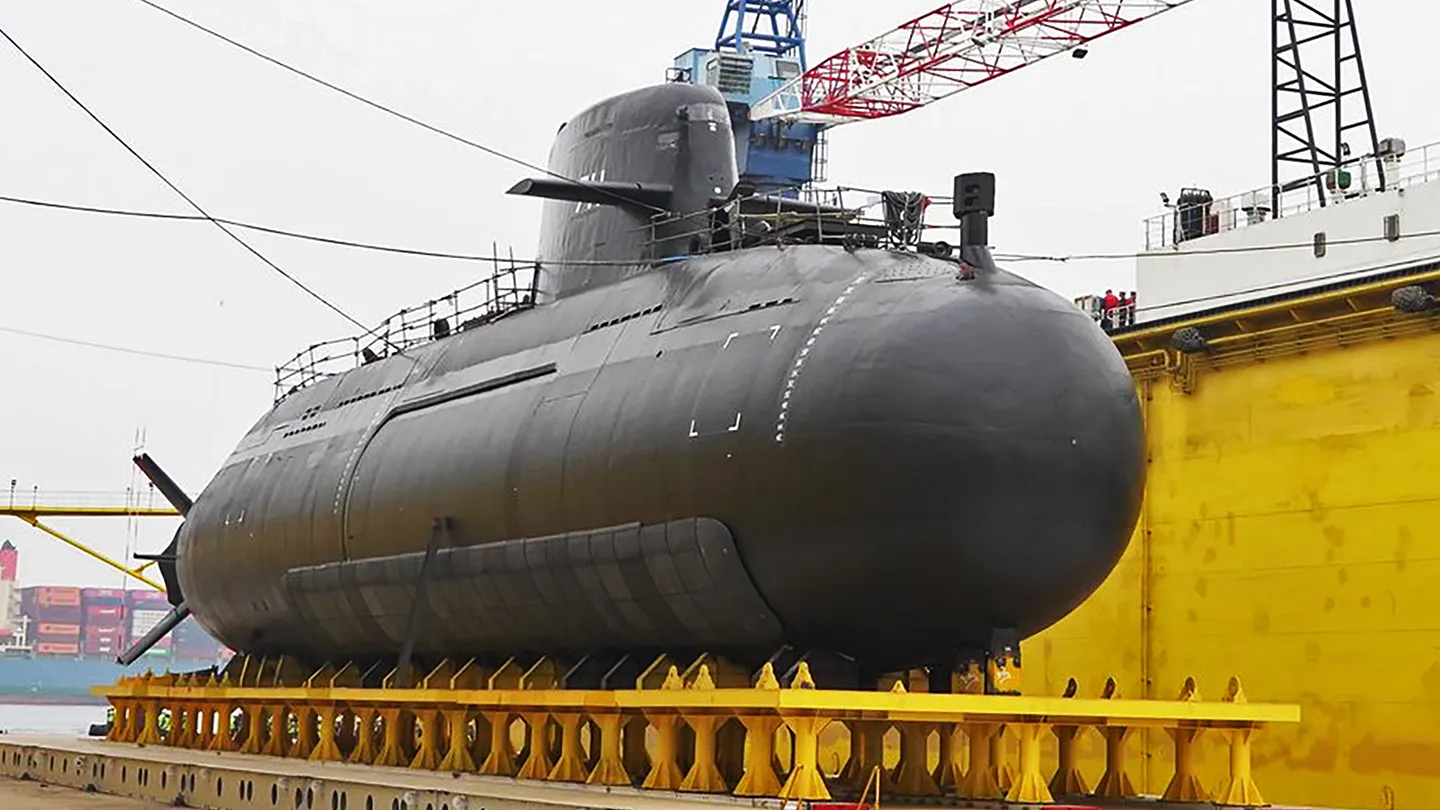
Summary and Key Points: Defense expert Kris Osborn evaluates the ROCS Hai Kun (SS-771), Taiwan’s indigenous diesel-electric attack submarine.
-Designed to contest the Taiwan Strait, the Hai Kun utilizes an X-shaped stern rudder for superior navigation in complex seabed terrain and a sophisticated passive sonar suite for long-range detection without signal emission.
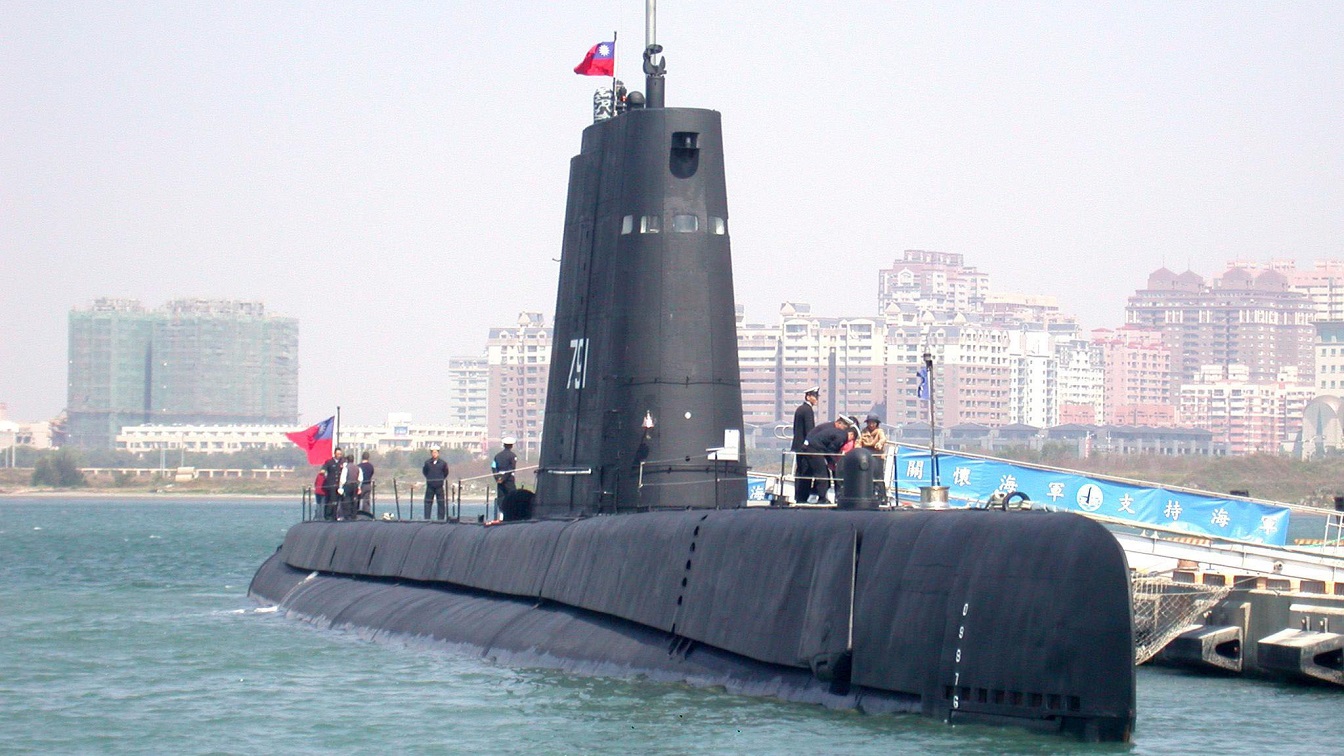
Taiwan’s World War II-era Submarines. Image Credit: ROC Navy.
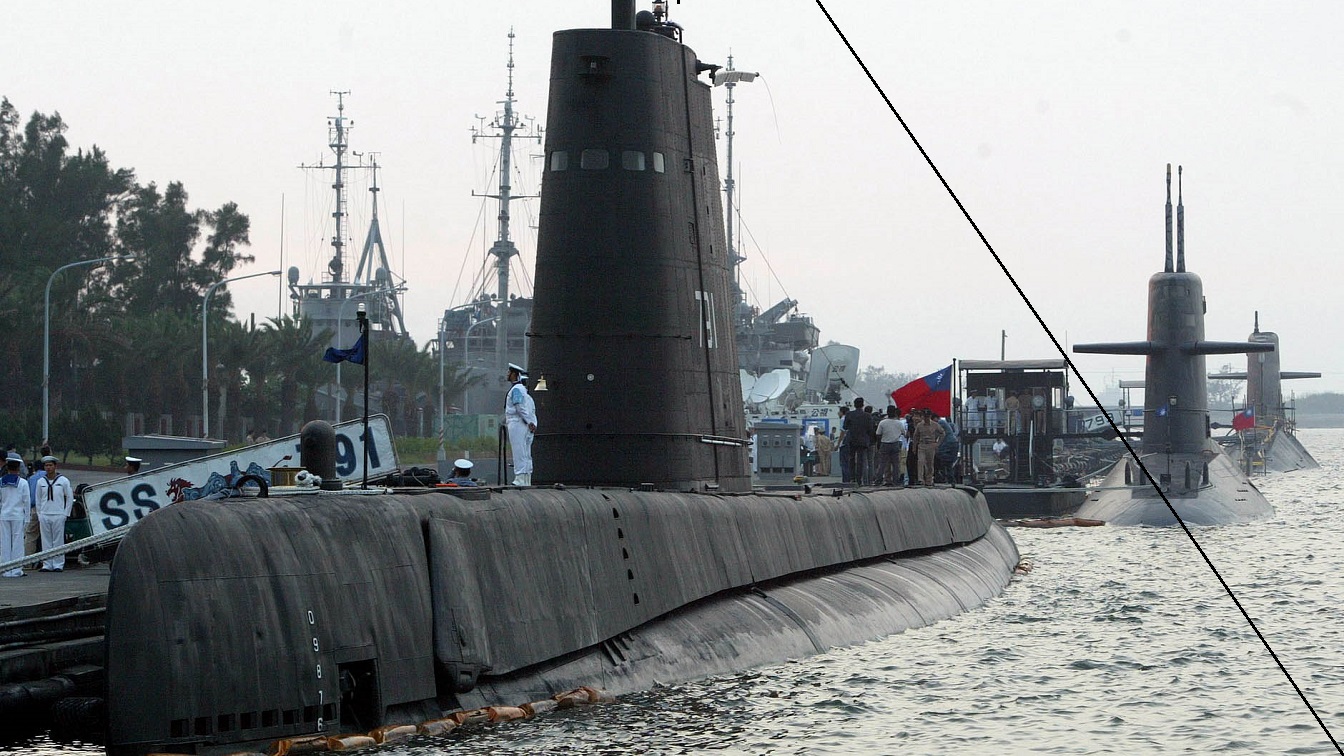
Hai Shih-class submarines from Taiwan. Image Credit: Creative Commons.
-This report analyzes its combat management system—integrating Mark 48 torpedoes and Harpoon anti-ship missiles—and its role in ISR (Intelligence, Surveillance, and Reconnaissance).
-Osborn concludes that the submarine’s ultra-quiet acoustic signature provides a “forward presence” capable of neutralizing an amphibious fleet before it reaches the coastline.
Taiwan’s New Hai Kun-Class Submarines, Explained
Surface warships are easy to detect from the air with drones and satellites. The same defense systems also detect helicopters and warplanes. But stealthy submarines lurking beneath the surface to defend against amphibious assault represent an entirely new category of maritime defense.
When it comes to Taiwan, submarines may be one of the few defensive interventionist options capable of saving the island from a Chinese invasion. Should torpedo-armed attack submarines be quietly patrolling under the surface in the Taiwan Strait, the “forward presence” of undersea firepower could potentially destroy People’s Liberation Army Navy (PLAN) warships seeking to close in on and take over the island.
This strategic dynamic is likely a main reason why Taiwan is now surging forward with its first domestically built submarine, the ROCS Hai Kun (SS-771). The submarine combines domestically produced components with advanced foreign technologies, resulting in a modern diesel-electric attack submarine capable of conducting surveillance, sea denial, and anti-ship operations. One of the most important technological elements of the submarine is its diesel-electric propulsion system.
Diesel-Electric Propulsion
Unlike nuclear submarines, diesel-electric boats rely on diesel generators to charge large battery banks, which then power an electric motor for underwater movement.
This design allows the submarine to operate quietly when submerged because the electric motor produces far less noise than conventional engines.
A reduced acoustic signature is critical for submarines, as stealth determines their ability to avoid detection and ambush enemy ships.
The propulsion system in the Hai Kun drives a single propeller shaft. It is designed to support long submerged operations while minimizing noise, according to an interesting essay in Army Recognition. The submarine may also use advanced battery technology to increase endurance and efficiency during submerged missions.
The submarine also uses an X-shaped stern rudder rather than a traditional cross-shaped tail.
This design provides better maneuverability in shallow or confined waters and allows more precise control when navigating coastal environments.
Such maneuverability is particularly important for Taiwan because the island’s surrounding waters include narrow straits, complex seabed terrain, and heavily trafficked sea lanes.
Interestingly, the U.S. Navy’s Columbia-class submarine operates with both an X-shaped stern and ultra-quiet diesel-electric propulsion.
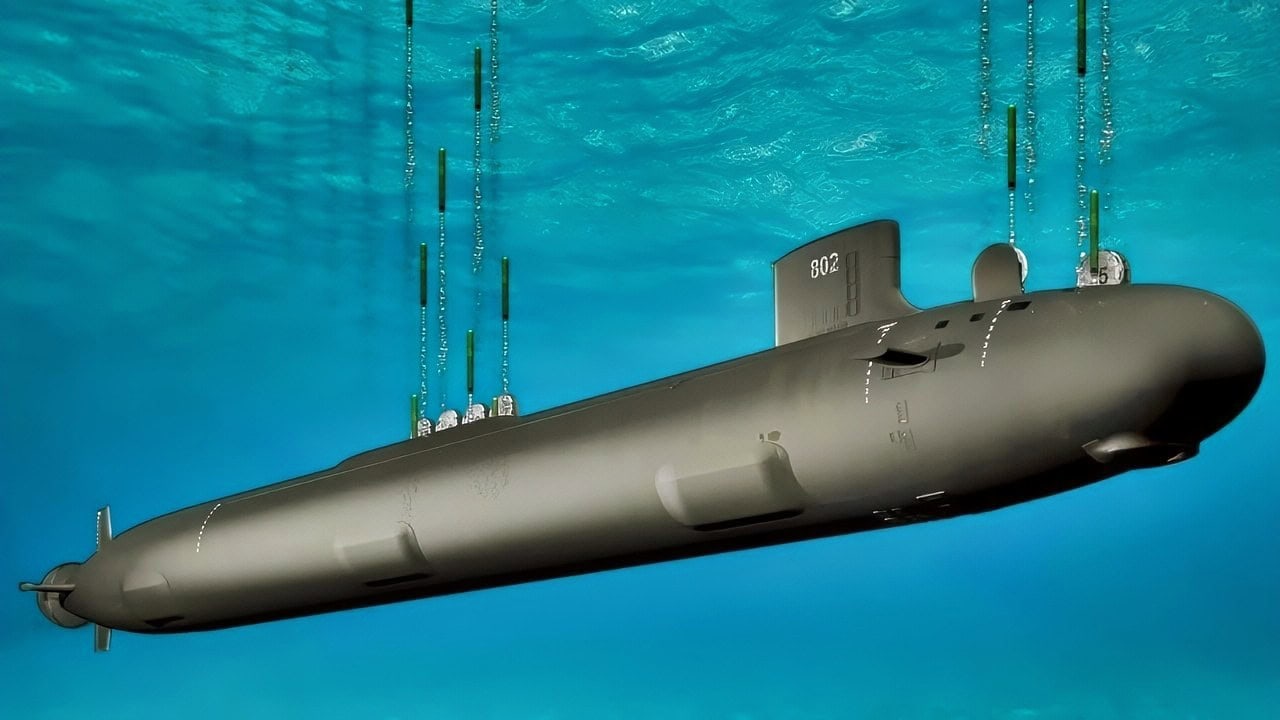
Columbia-Class SSBN USN. Image Credit: Creative Commons.

An artist rendering of the future U.S. Navy Columbia-class ballistic missile submarines. The 12 submarines of the Columbia-class will replace the Ohio-class submarines which are reaching their maximum extended service life. It is planned that the construction of USS Columbia (SSBN-826) will begin in in fiscal year 2021, with delivery in fiscal year 2028, and being on patrol in 2031.
Passive Sonar
Another key technological component is the sensor and sonar suite, which enables the submarine to detect enemy vessels while remaining hidden. The Hai Kun reportedly carries a sophisticated sonar system that includes a bow-mounted sonar array and flank arrays along the hull’s sides.
These sensors allow the submarine to passively detect the sound signatures of ships and submarines over long distances. Passive sonar is especially valuable because it allows the submarine to listen for targets without emitting detectable signals. Modern sonar systems can analyze acoustic patterns and identify specific vessel types based on their noise characteristics.
The Army Recognition essay also explains how the submarine is equipped with an advanced combat management system that integrates information from sensors, navigation systems, and weapons. This digital command system processes sonar and sensor data, tracks potential targets, and assists the crew in selecting appropriate weapons.
In the Hai Kun, the combat system links the submarine’s sonar arrays, periscopes, navigation instruments, and weapons into a single operational interface.
This integration allows operators to evaluate threats and coordinate attacks quickly. Modern combat systems can also calculate firing solutions for torpedoes or missiles, improving accuracy and reducing the time needed to engage targets. It would not be surprising if the Hai Kun operated with technology similar to the U.S. Navy’s “fly-by-wire” computerized navigational system.
Hai Kun Torpedoes
The submarine’s weapons systems enable it to engage both surface ships and enemy submarines.
The Hai Kun carries six 533-millimeter torpedo tubes capable of launching heavyweight torpedoes such as the Mark 48.
These torpedoes are guided weapons designed to track targets using active or passive sonar, making them effective against submarines and large surface vessels. In addition to torpedoes, the submarine can launch submarine-launched anti-ship missiles such as the Harpoon.
These missiles allow the submarine to strike enemy warships at greater distances and from concealed positions beneath the surface. The submarine may also deploy naval mines to block strategic waterways or deter enemy fleets from approaching Taiwan’s coast.
Another mission is intelligence, surveillance, and reconnaissance, as attack submarines are increasingly being used for ISR. Submarines can covertly monitor enemy naval movements, track shipping routes, and collect electronic intelligence.
By observing Chinese naval exercises or deployments, Taiwan could gain valuable early warning of potential military operations. Submarines are well-suited for such missions because they can remain hidden underwater for extended periods while observing targets from a distance.
About the Author: Kris Osborn
Kris Osborn is the President of Warrior Maven – Center for Military Modernization. Osborn previously served at the Pentagon as a highly qualified expert in the Office of the Assistant Secretary of the Army—Acquisition, Logistics & Technology. Osborn has also worked as an anchor and on-air military specialist at national TV networks. He has appeared as a guest military expert on Fox News, MSNBC, The Military Channel, and The History Channel. He also has a Masters Degree in Comparative Literature from Columbia University.