

Summary and Key Points: Defense analyst Dr. Brent M. Eastwood evaluates the application of Carl von Clausewitz’s theories to the 2026 war in Iran.
-Despite the elimination of Ali Khamenei, the transition to his son Mojtaba has increased strategic friction.
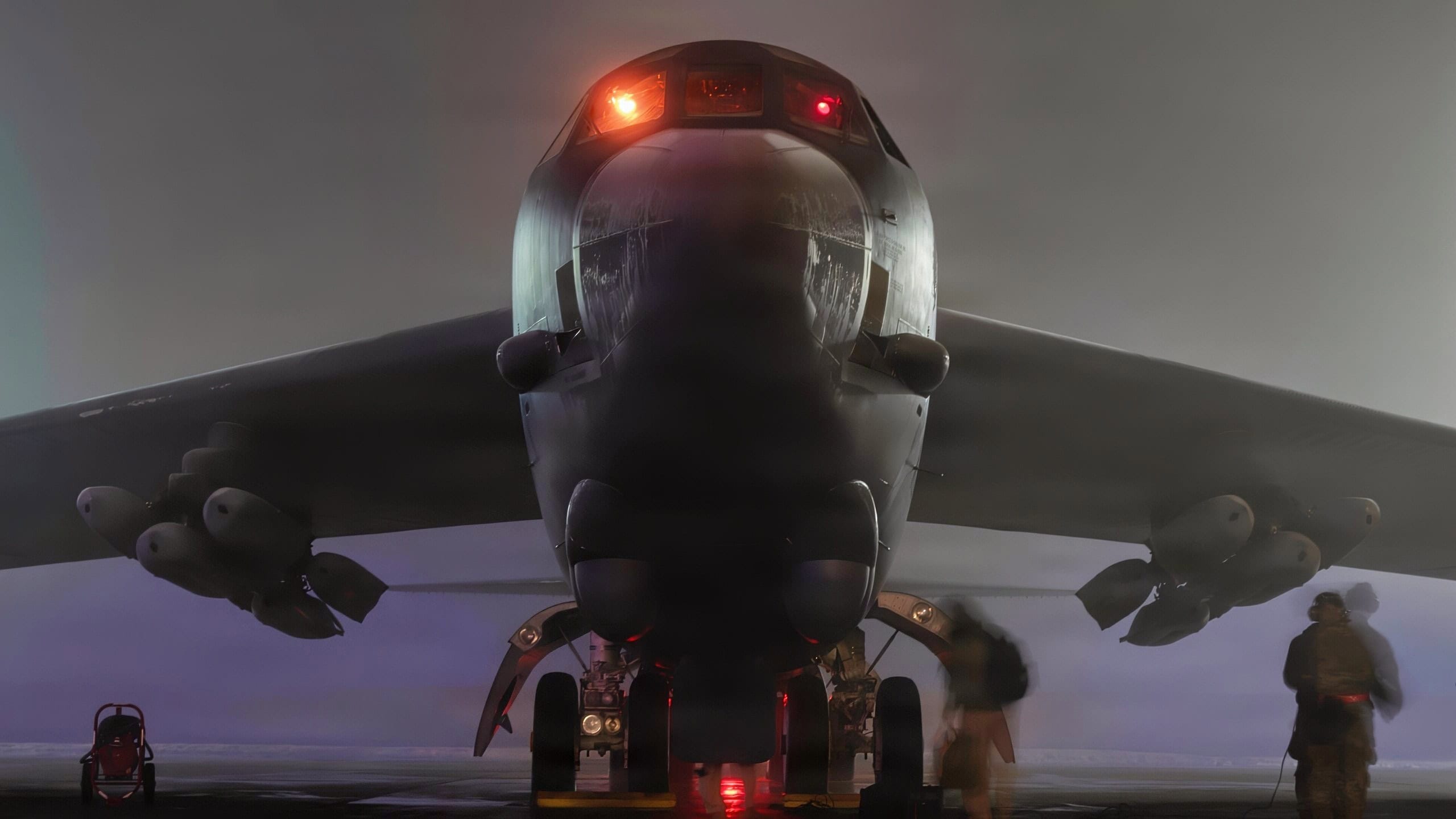
Aircrew members board a B-52H Stratofortress prior to taking off in support of Operation Epic Fury, March 4, 2026. (U.S. Air Force photo)
-This report analyzes the Islamic Revolutionary Guard Corps (IRGC) and the Basij paramilitary as competing Centers of Gravity.
-Eastwood explores how the Fog of War persists despite modern ISR, concluding that Clausewitz’s “natural aim of overthrow” is hindered by a decentralized enemy that utilizes drones and ballistic missiles to deny a decisive 19th-century-style end state.
Military Quote of the Day and the Iran War, Thanks to Carl von Clausewitz
“The natural aim of military operations is the enemy’s overthrow.” – Carl von Clausewitz
The great Prussian sage and grand strategist Carl von Clausewitz continues to influence military thinking to this day.
I taught Clausewitz at the George Washington University Elliott School of International Affairs and at George Mason University Schar School.
My students did fairly well under this tutelage, and it gave them a small taste of what Clausewitz was thinking as he wrote his classic work On War.
U.S. Military Personnel Cannot Escape Clausewitz
Clausewitz is also taught at the various staff officer training centers and war colleges in the U.S. military.
He is seen as an indispensable source for military science and strategic thought.
I speak German and can read some of On War in the original, but many of his stratagems are murky in translation.
Clausewitz is also a land warfare adherent, and he did not foresee the transformation of warfare through joint air and sea battle, along with the transition to modern weapons systems for land armies.
Fog of War and Friction
Clausewitz is also known for his concept of the “fog of war.”
Conflict is filled with unknowns and a lack of clarity. Warfare has a stubborn, ambiguous nature that confuses information collection and dissemination.
This is a thrilling feature for teaching students who have not directly experienced combat, and for showing how plans for warfare suffer at the hands of what Clausewitz called “friction.”
This can entail the negative effects of weather, poor communication, prolonged fighting, heavy casualties, asymmetric tactics by the enemy, and the unknowns of warfare that create a literal and figurative foggy haze on the battlefield.
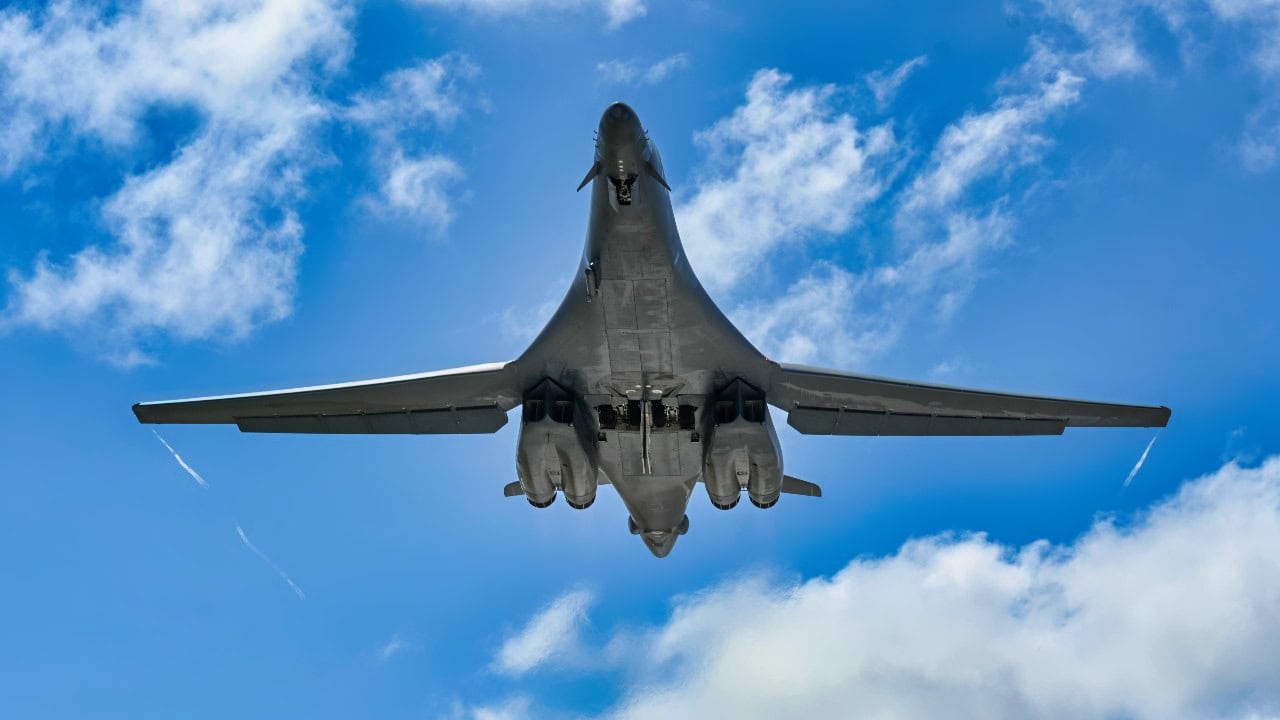
A U.S. Air Force B-1B Lancer assigned to the 34th Expeditionary Bomb Squadron takes off for a mission in support of Bomber Task Force 25-1, at Andersen Air Force Base, Feb. 16, 2025. Bomber Task Force missions demonstrate lethality and interoperability in support of a free and open Indo-Pacific. (U.S. Air Force photo by Airman 1st Class Alec Carlberg)
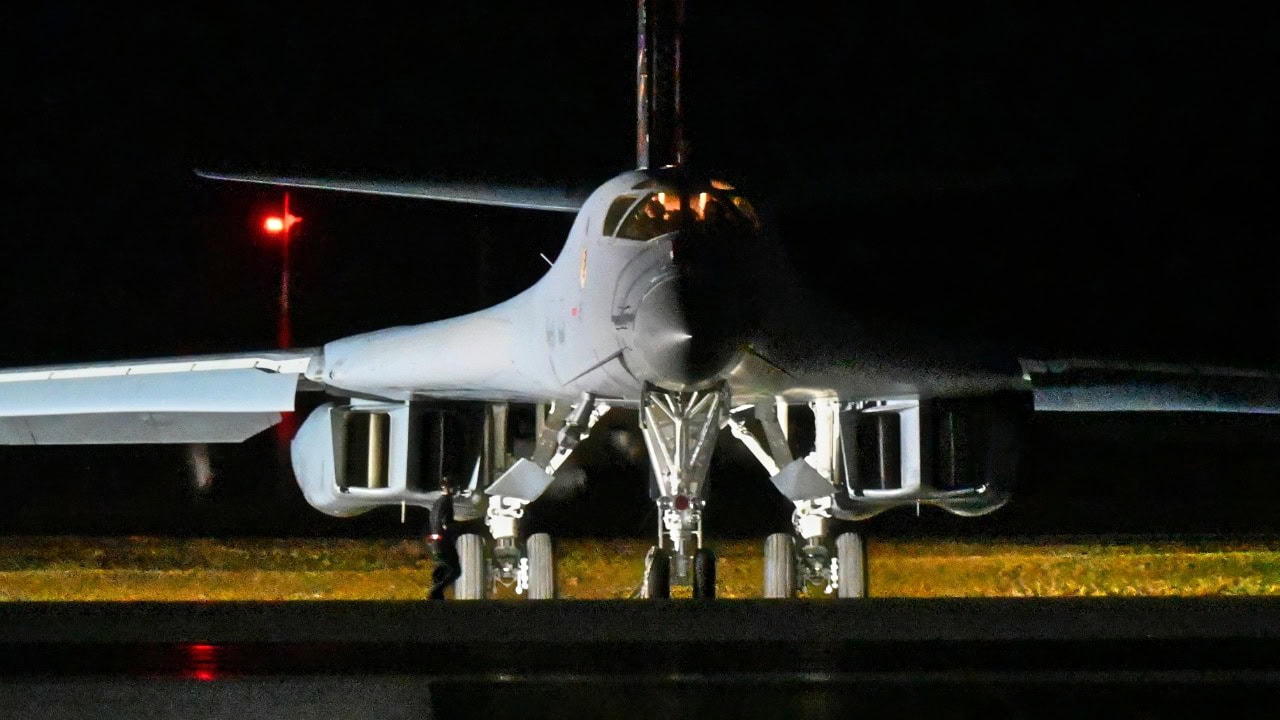
A U.S. Air Force B-1B Lancer assigned to the 34th Expeditionary Bomb Squadron, Ellsworth Air Force Base, S.D., runs final checks before takeoff of a training mission in support of Bomber Task Force 25-1 at Andersen Air Force Base, Guam, Feb. 24, 2025. The BTF missions are designed to showcase the Pacific Air Force’s ability to deter, deny, and dominate any influence or aggression from adversaries or competitors. (U.S. Air Force photo by Tech. Sgt Robert M. Trujillo)
What Is the Center of Gravity?
Clausewitz was also adept at describing an enemy’s “center of gravity.” This may have been Clausewitz’s most important contribution to the military canon of literature. This is what he described as “the hub of all power and movement, on which everything depends.” The center of gravity has much relevance to the current war in Iran for the United States and Israel.
Where can friendly forces strike to eliminate the Iranian center of gravity and overthrow its military?
Decisive Point of Enemy Overthrow in Iran
And if the center of gravity can be removed, will this really end the war in a clear victory or what Clausewitz calls the “enemy’s overthrow” at a decisive point in the conflict? One aspect of an eventual win in Iran is regime change, and the early elimination of Iran’s Supreme Leader Ali Hosseini Khamenei was a good start to the campaign.
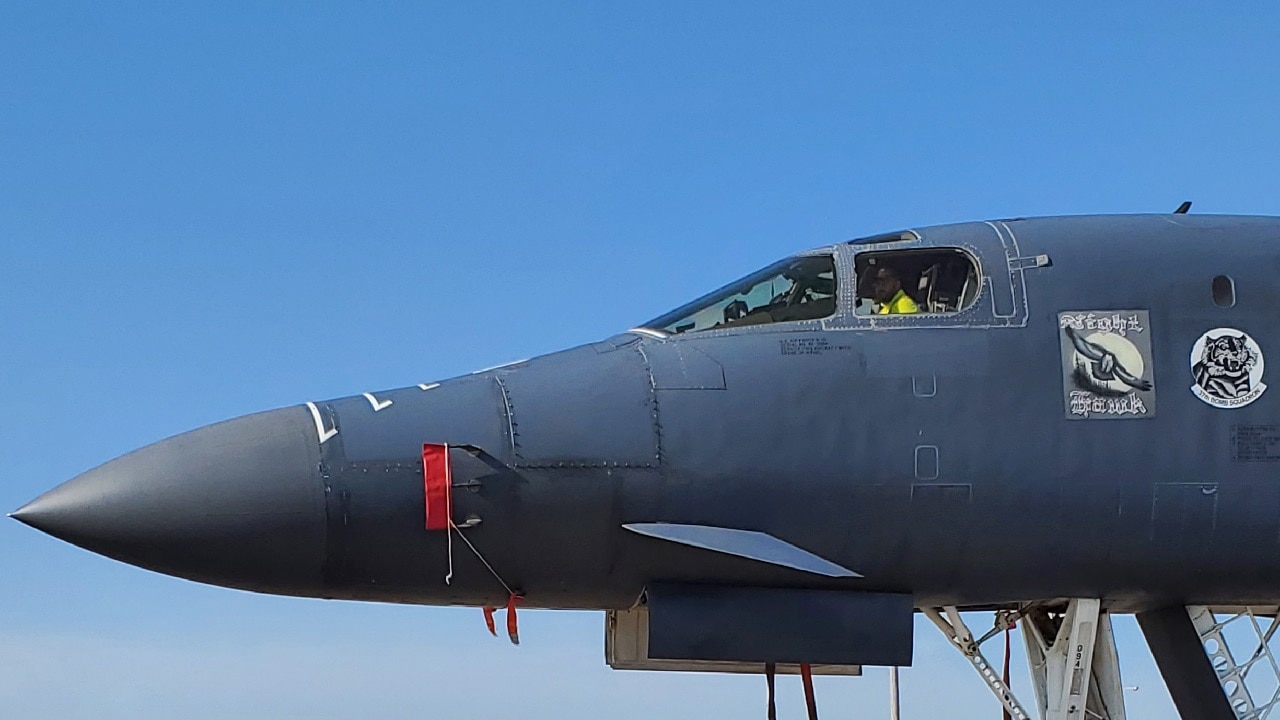
A B-1B Lancer, tail number 86-0094, is moved across Douglas
Blvd. to the Maintenance Repair and Overhaul Technology Center (MROTC) to receive an initial portion of Gate 1 of programmed depot maintenance April 21. 567th AMXS personnel will perform three days of maintenance which include single system checks on 40 individual actuators validating voltage outputs as
well as interrogating each actuator for hydraulic leaks. After single systems are completed, the horizontal stabilizers will be removed from the aircraft. This is the first time that horizontal stabilizers have ever been removed at the MROTC. Once complete, the aircraft and horizontal stabilizers will be brought back across Douglas to the 569th AMXS strip facility for plastic media blasting. Once stripped, the horizontal stabilizers will be routed to the 76th Commodities Maintenance Group for overhaul and repairs. (U.S. Air Force photo/Kelly White)
However, the new Supreme Leader, Khamenei’s son Mojtaba, may be even more effective, hardline, violent, and resolute than his father (if Mojtaba is alive and well).
Regime change that results in a friendly government is not assured.
Islamic Revolutionary Guard as a Center of Gravity
Another center of gravity is the Islamic Revolutionary Guard Corps which has the most military power and capability in the country. The IRGC has been degraded but not completely destroyed, and ending this entity would require the force’s full elimination.
The Pesky Basij Volunteer Militia
Also, a minor but important center of gravity is the Basij Resistance Force paramilitary group that makes sure that all edicts of Iranian Islamist theocratic ideals are followed by ordinary citizens. These are voluntary militia inside the IRGC, and the Basij are particularly nasty individuals who may have killed thousands during popular protests against the regime. There have been some American drone strikes that have tried to eliminate Basij personnel during the war.
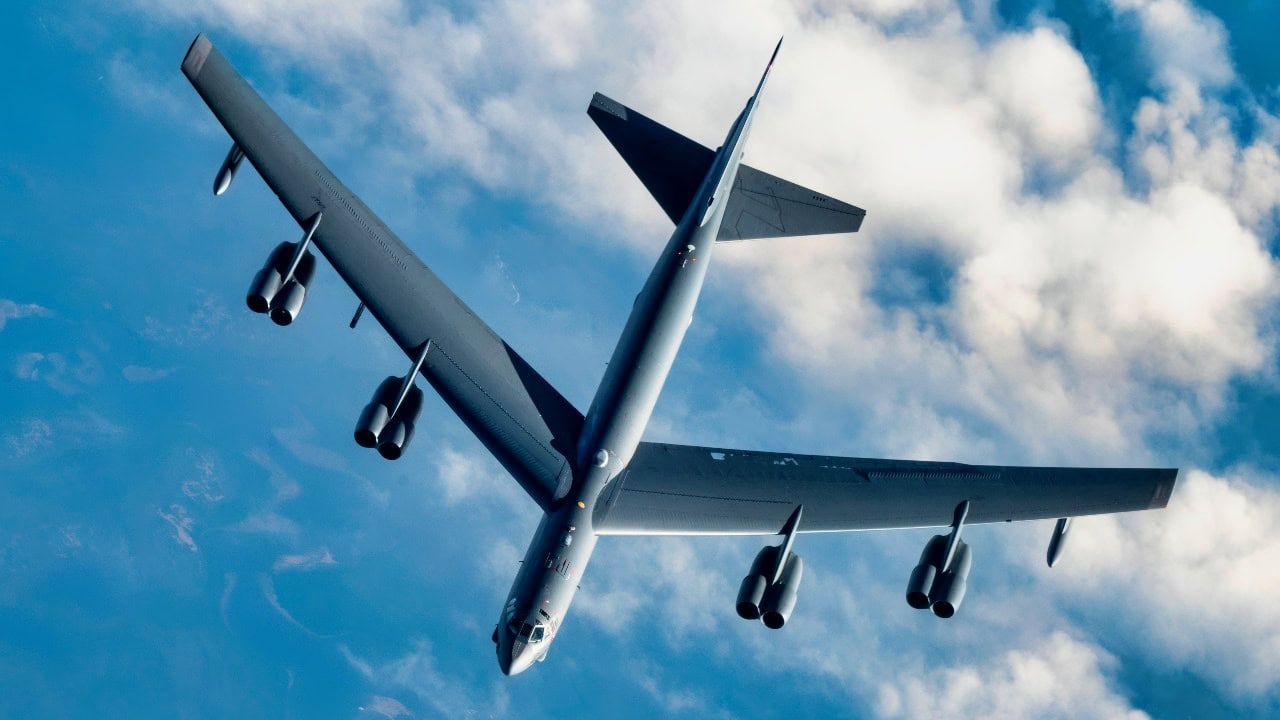
A U.S. Air Force B-52 Stratofortress departs after being refueled by KC-135 Stratotanker over the Pacific Northwest July 18, 2024. The 92nd Air Refueling Wing and 141st ARW’s ability to rapidly generate airpower at a moment’s notice was put to the test when Air Mobility Command’s Inspector General team conducted a no-notice Nuclear Operational Readiness Inspection, July 16–18, 2024. During the NORI, Airmen demonstrated how various capabilities at Fairchild AFB enable units to generate and provide, when directed, specially trained and equipped KC-135 Stratotanker aircrews to conduct critical air refueling of U.S. Strategic Command-assigned strategic bomber and command and control aircraft. (U.S. Air Force photo by Staff Sgt. Lawrence Sena)
Biography of Clausewitz
Clausewitz did not have to deal with all of these different centers of gravity when he was a soldier and theorist. He was born in 1780 near Magdeburg, Prussia. He joined the Prussian army in 1792 and fought the French during the War of the First Coalition, the campaign against Revolutionary France.
Clausewitz participated in an officer’s group after that fight and began thinking deeply about theoretical military affairs. He spent three years studying with this organization and found a mentor named Gerhard Johann David von Scharnhorst, who greatly influenced his thinking.
Clausewitz became a military aide to a Prussian prince and fought as a staff officer during the Battle of Jena-Auerstädt in 1806. Prussia ended up losing the war to France, and the young adjutant was taken prisoner by Napoleon’s forces. In 1807, Clausewitz had used his time in captivity effectively. He had grand ideas about military reform and worked to institute changes in the Prussian forces. He then became an instructor at a military academy, which allowed him to shape his views on strategy and military science, leading to his writings that would become On War after his death.
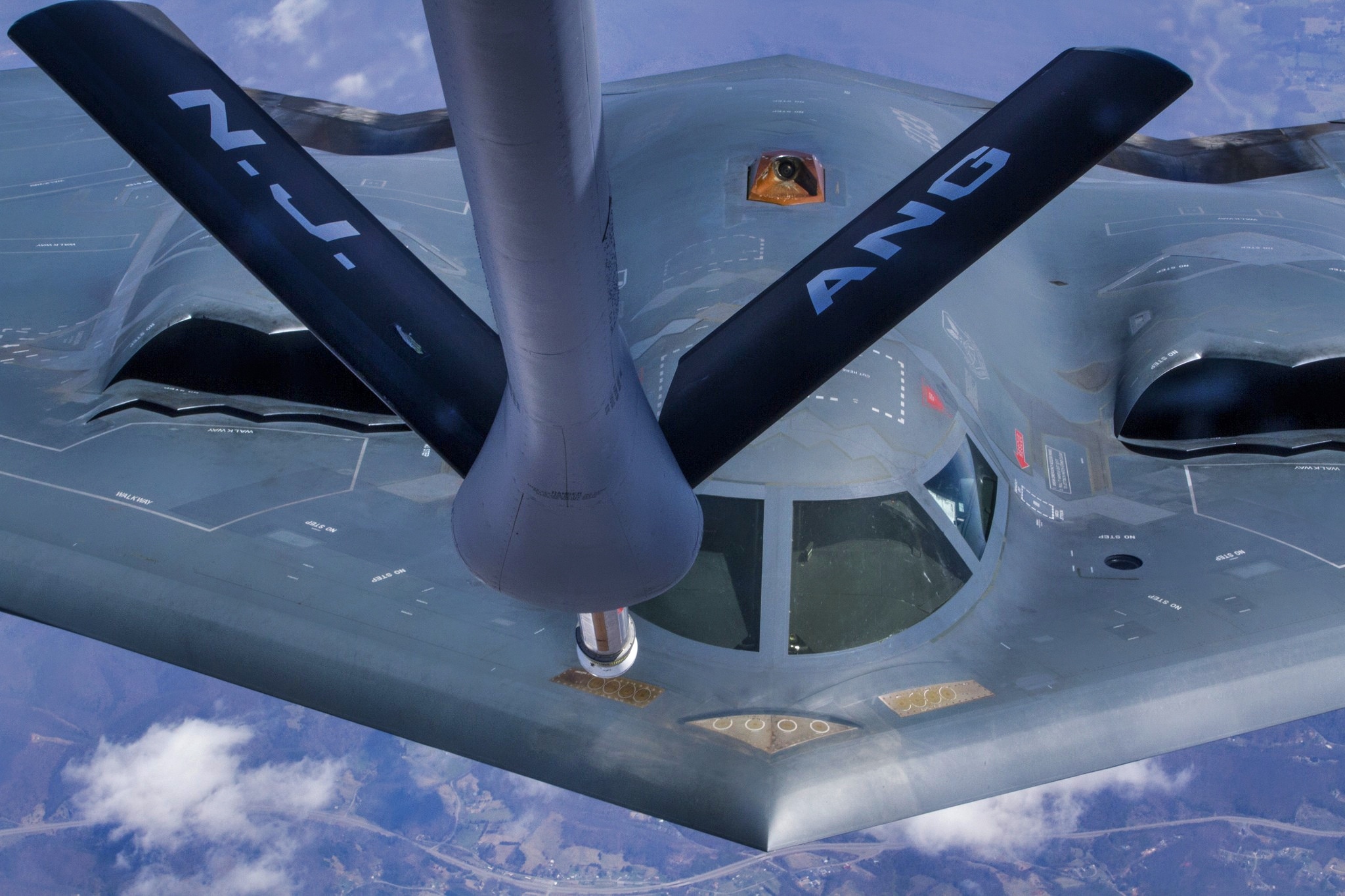
B-2 Spirit Stealth Bomber. Image Credit: Creative Commons.
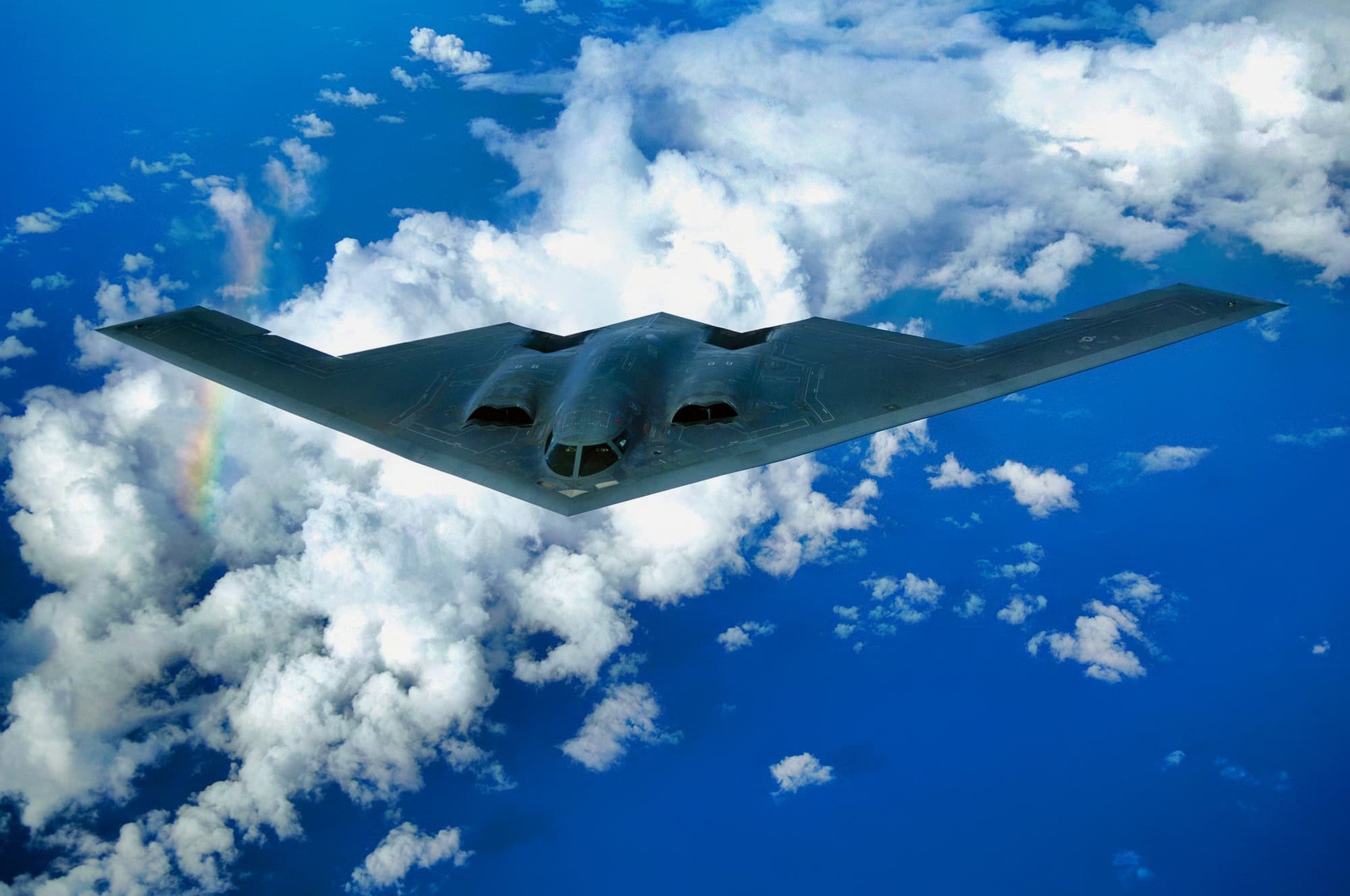
A B-2 Spirit soars after a refueling mission over the Pacific Ocean on Tuesday, May 30, 2006. The B-2, from the 509th Bomb Wing at Whiteman Air Force Base, Mo., is part of a continuous bomber presence in the Asia-Pacific region. (U.S. Air Force photo/Staff Sgt. Bennie J. Davis III)
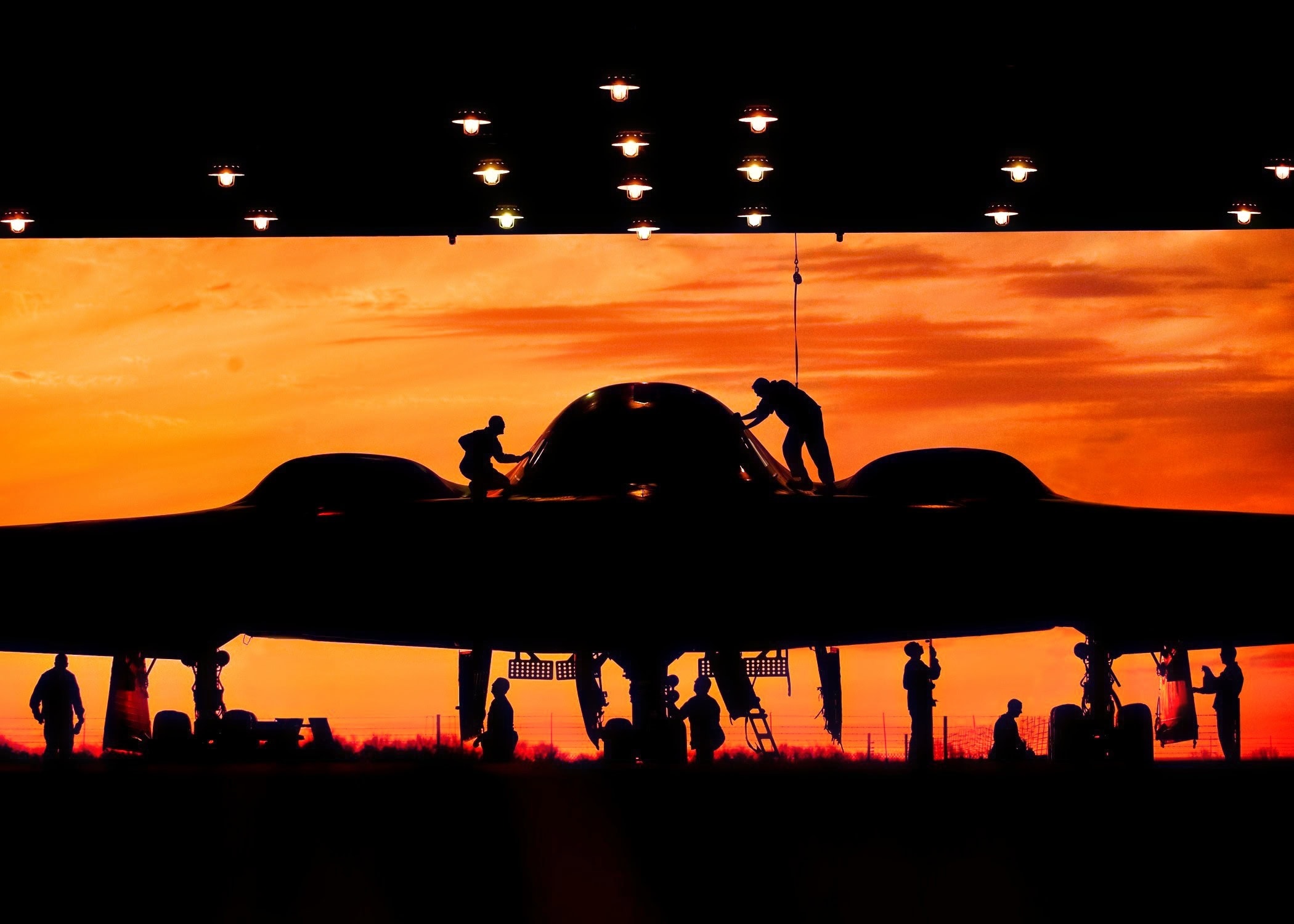
B-2 Spirit Bomber. Image Credit: Creative Commons.
Iran Is No Easy Case Study
Clausewitz would have difficulty analyzing the war in Iran today. He did not foresee such a revolution in military affairs, in which ballistic missiles and drones would play such a huge role in 21st-century warfare.
However, he would easily recognize the fog of war problems, increased friction, and a lack of a clear center of gravity for victory.
Yes, he would still recommend overthrowing the enemy, but he would not be aware of the best way to achieve such a clear, victorious end state as the United States enjoyed during Operation Desert Storm.
Limited Victorious End State
Perhaps Clausewitz would call for a more limited end state versus Iran. One in which the United States and Israel would degrade the enemy into further inaction in the future. This would be just as good as an overthrow, but perhaps not completely end the war in a way that would please 19th-century uniformed military and civilian government leaders.
Clausewitz still has much value today. His concepts of fog of war and friction are still relevant. He would not foresee how difficult it would be in 2026 to create a decisive end to fighting a foe that has no intention of giving up.
We can learn from Clausewitz to see which of his theories remain true, but all adherents of the famed Prussian should also understand the limitations and constraints of his strategic principles for the 21st century.
Military overthrows may not be possible with several resistant and effective centers of gravity.
About the Author: Brent M. Eastwood
Author of now over 3,000 articles on defense issues, Brent M. Eastwood, PhD is the author of Don’t Turn Your Back On the World: a Conservative Foreign Policy and Humans, Machines, and Data: Future Trends in Warfare plus two other books. Brent was the founder and CEO of a tech firm that predicted world events using artificial intelligence. He served as a legislative fellow for US Senator Tim Scott and advised the senator on defense and foreign policy issues. He has taught at American University, George Washington University, and George Mason University. Brent is a former US Army Infantry officer. He can be followed on X @BMEastwood.