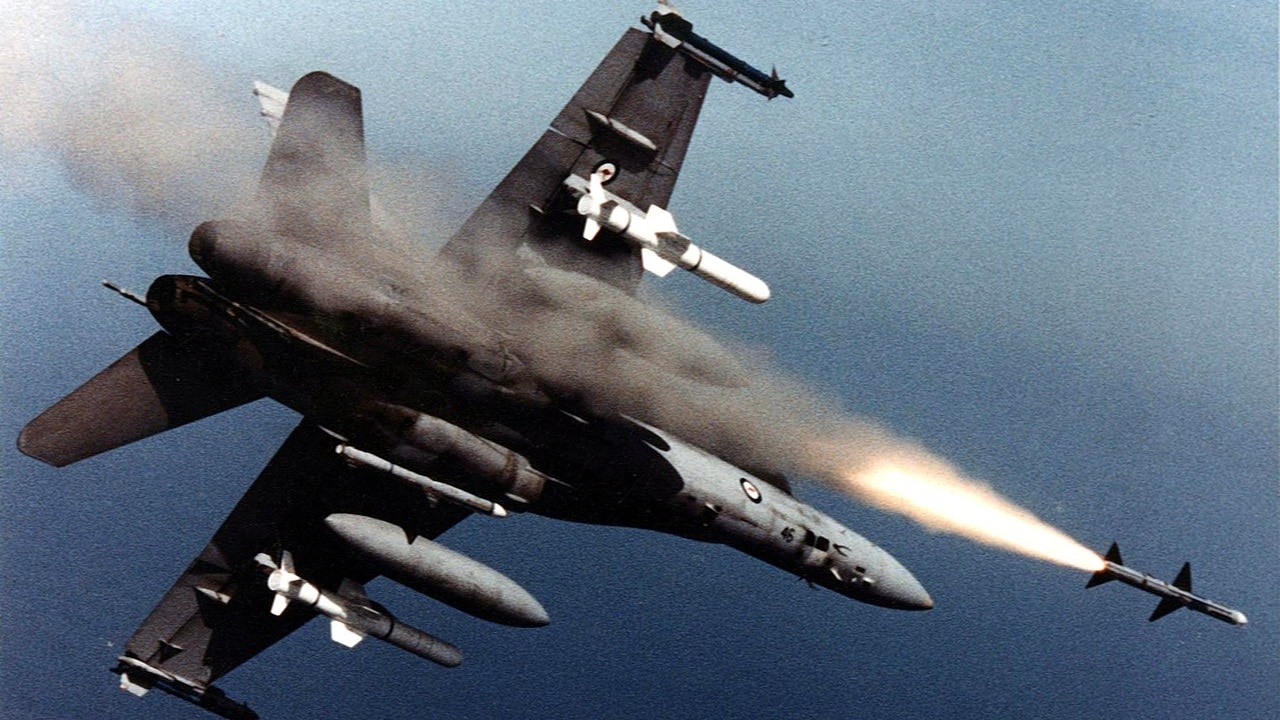
Summary and Key Points on the Gunslinger Missile: Caleb Larson, an American defense journalist based in Berlin and former POLITICO Europe reporter, evaluates the strategic “reach” of the U.S. Navy’s newest air-to-air asset.
-As the Navy balances the high-intensity air war over Iran with the long-term requirements of the Indo-Pacific, the AIM-174B Gunslinger has emerged as the definitive solution to the “Phoenix Gap.”
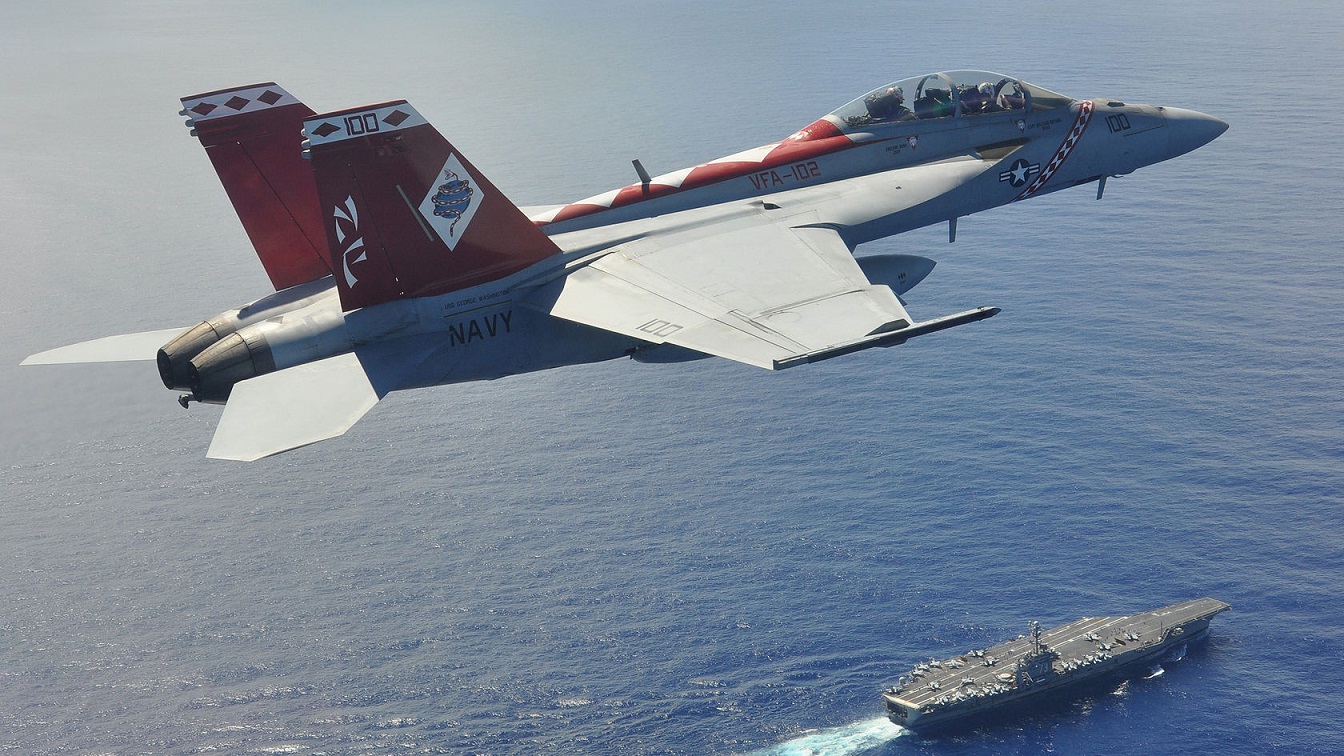
Block III Super Hornet. A U.S. Navy F/A-18F Super Hornet aircraft assigned to Strike Fighter Squadron (VFA) 102 flies past the aircraft carrier USS George Washington (CVN 73) in the Philippine Sea Aug. 21, 2013. The George Washington was underway in the U.S. 7th Fleet area of responsibility supporting maritime security operations and theater security cooperation efforts.
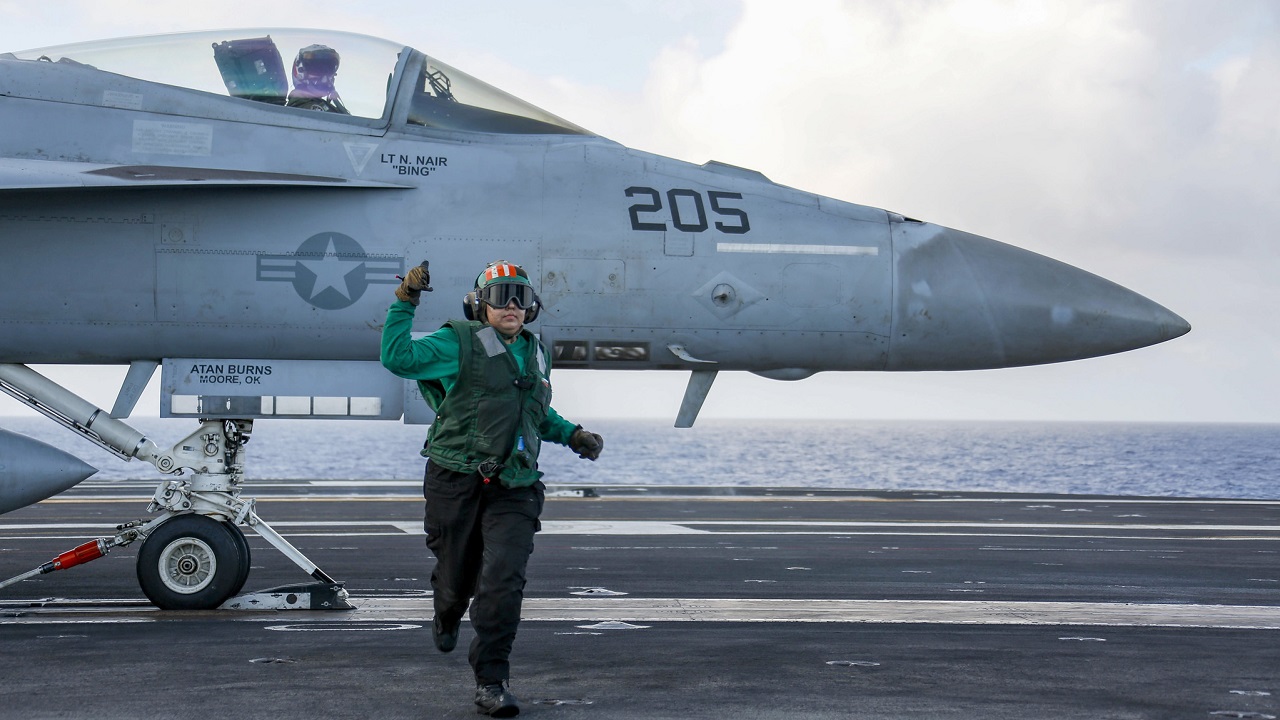
Aviation Boatswain’s Mate (Equipment) 3rd Class Anatalia Zamora, from Midland, Texas, runs to a safe distance before an F/A-18E Super Hornet assigned to the “Tophatters” of Strike Fighter Squadron (VFA) 14 launches from the flight deck of the Nimitz-class aircraft carrier USS Abraham Lincoln (CVN 72). The Abraham Lincoln Carrier Strike Group is on a scheduled deployment in the U.S. 7th Fleet area of operations to enhance interoperability through alliances and partnerships while serving as a ready-response force in support of a free and open Indo-Pacific region. (U.S. Navy photo by Mass Communication Specialist 3rd Class Michael Singley) 220228-N-MM912-1137
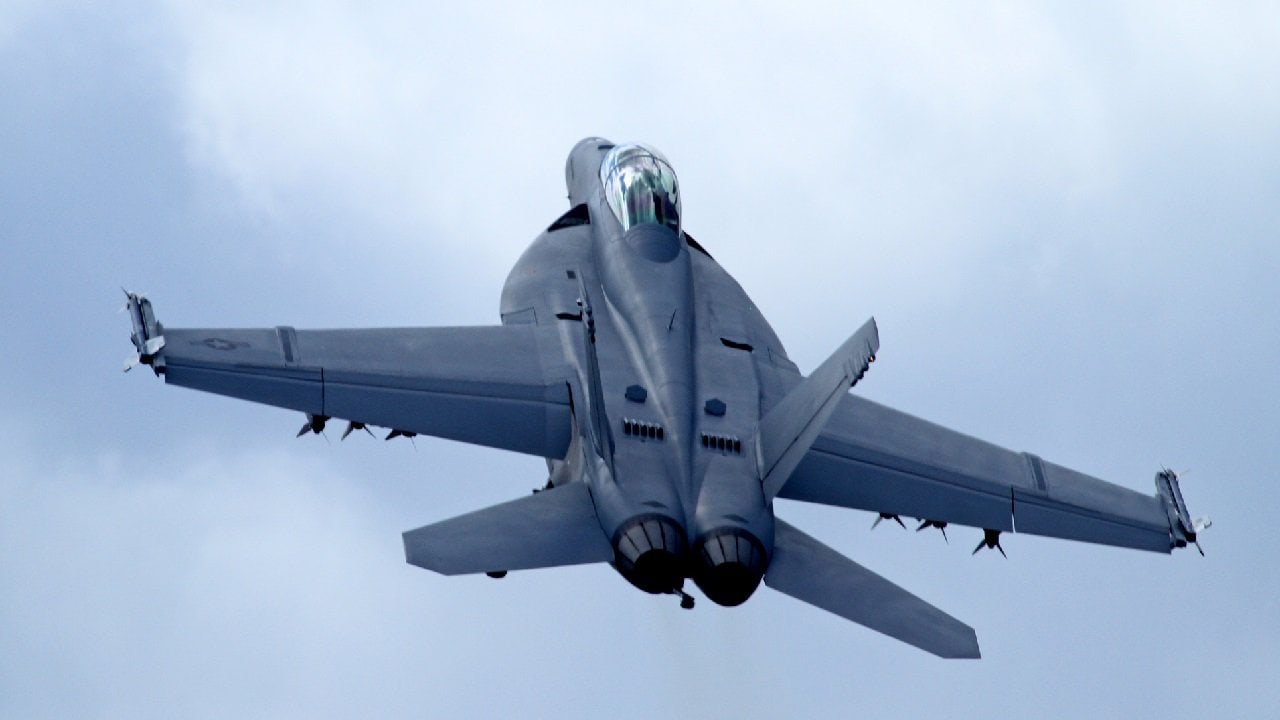
Block III F/A-18 Super Hornet.
-This report analyzes the missile’s SM-6 heritage, its role in “out-sticking” 5th-generation adversaries, and the tactical synergy between the F-35C and the F/A-18E/F Super Hornet.
Gunslinger and Stealth: Evaluating the F-35 and Super Hornet “Tag-Team” Strategy for 2026
Even as war rages in the Middle East, one of the U.S. Navy’s enduring priorities is being ready to fight and win a war in the Indo-Pacific.
Potential conflict with a peer rival in that area of the world weighs on the Navy’s logistics.
Such a conflict would play out over immense stretches of open ocean that warships would have to travel.
Sustainment requirements, particularly for ammunition and food, would be substantial.
Like the other services, the Navy would like to extend its engagement ranges and have the advantage of shooting first.
Thanks to a new air-to-air missile, it may get that advantage.
By incorporating the long–range capability of a Standard Missile (SM)-6 into a missile modified for under-wing carriage, Navy pilots will significantly extend their engagement envelope.
In development for several years, the Navy is now rolling out that missile more broadly: the AIM-174B Gunslinger.
Fire as They Bear
The introduction of the AIM-174B plugs a gap that emerged in Navy pilots’ engagement ranges after the retirement of the AIM-54 Phoenix, a long-range air-to-air missile, and the F-14 Tomcat in 2004.

F-14 Tomcat at Aviation Museum of Kentucky. Taken on March 1, 2026. By Christian D. Orr.
Though noted for its extended 100 nautical mile-plus engagement ranges, the AIM-54 Phoenix was not replaced after retirement. Instead, the Navy opted to leave that capability unfilled for quite some time.
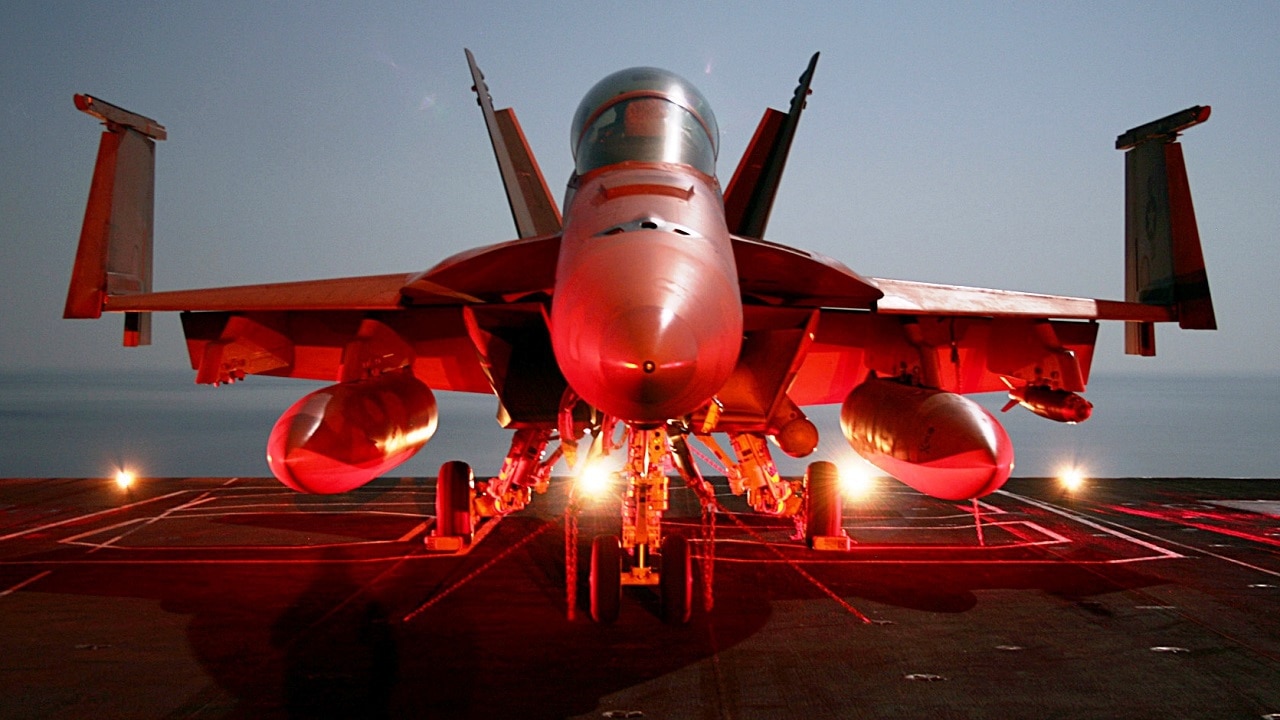
An F/A-18F Super Hornet Strike Fighter Squadron 103 is parked on the flight deck of the aircraft carrier USS Dwight D. Eisenhower (CVN 69) as the ship operates in the Arabian Sea on Dec. 5, 2006. The Eisenhower is in the Arabian Sea in support of maritime security operations.
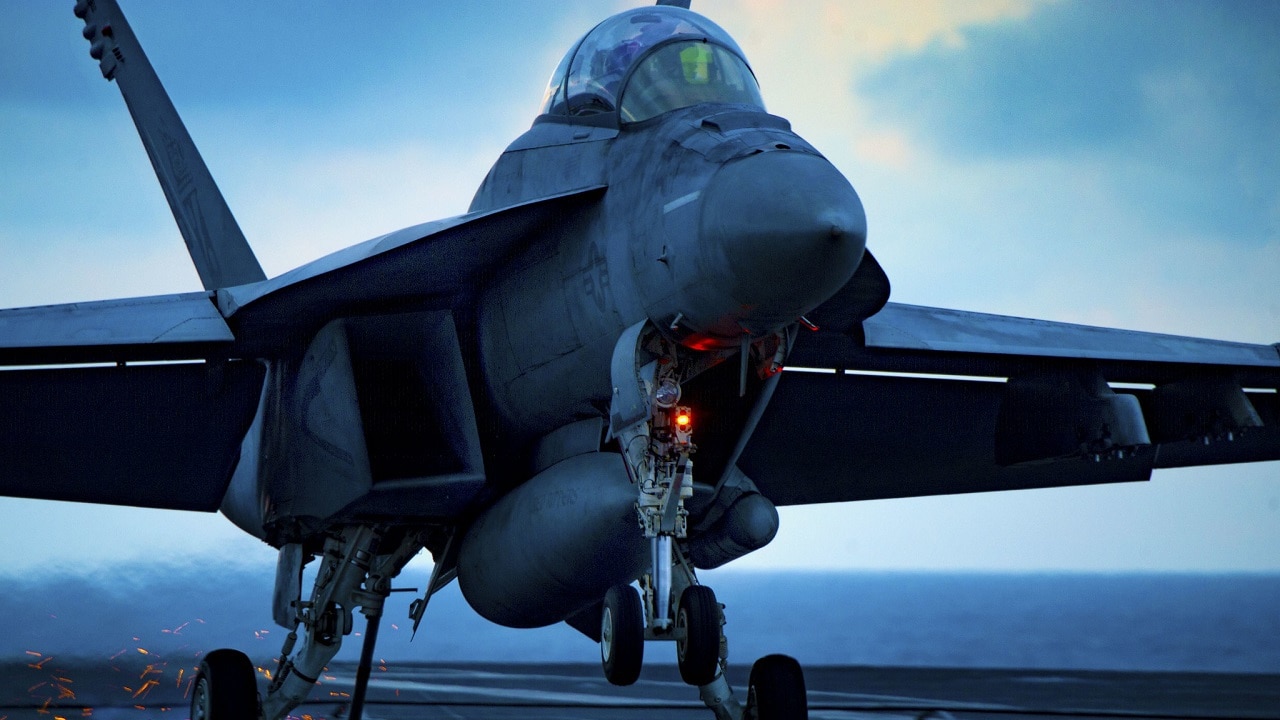
ATLANTIC OCEAN (July 4, 2018) An F/A-18F Super Hornet assigned to the “Red Rippers” of Strike Fighter Squadron (VFA) 11 sits on the flight deck of the Nimitz-class aircraft carrier USS Harry S. Truman (CVN 75). Harry S. Truman is deployed as part of an ongoing rotation of U.S. forces supporting maritime security operations in international waters around the globe. (U.S. Navy photo by Mass Communication Specialist 3rd Class Rebekah A. Watkins/Released) 180704-N-UJ486-0313
Over the summer, the Navy trumpeted the arrival of the AIM-174B.
“On the weapons front, the biggest news of the past year was the unveiling of the AIM-174B Gunslinger long-range air-to-air missile,” Vice Admiral Dan Cheever explained in Proceedings, a publication of the U.S. Naval Institute. He also said that “the air-launched version of the Standard Missile-6 (SM-6), this weapon gives the Super Hornet the ability to ‘out-stick’ adversary fighters and operate inside the weapons engagement zone.”
The Questions of Range and Employment
The exact range of the AIM-174B is naturally unknown.
But it will likely be one of the longest-range air-to-air weapons in the U.S. Navy. Firing the missile from a moving fighter jet, especially one flying at higher altitudes, would impart less drag on the missile body and help boost range.
Compared to some of the Navy’s other air-to-air weapons, notably the AIM-9X Sidewinder and long-range AIM-120 Advanced Medium Range Air-to-Air Missile (AMRAAM), it is significantly longer and wider in diameter.
The SM-6 missile, from which the Gunslinger evolved, can engage surface ships and ground targets in addition to its primary air-to-air role, raising the prospect that the Gunslinger may retain that flexibility.

A Falcon Heavy rocket launches into the sky, surrounded by smoke and fire during takeoff.
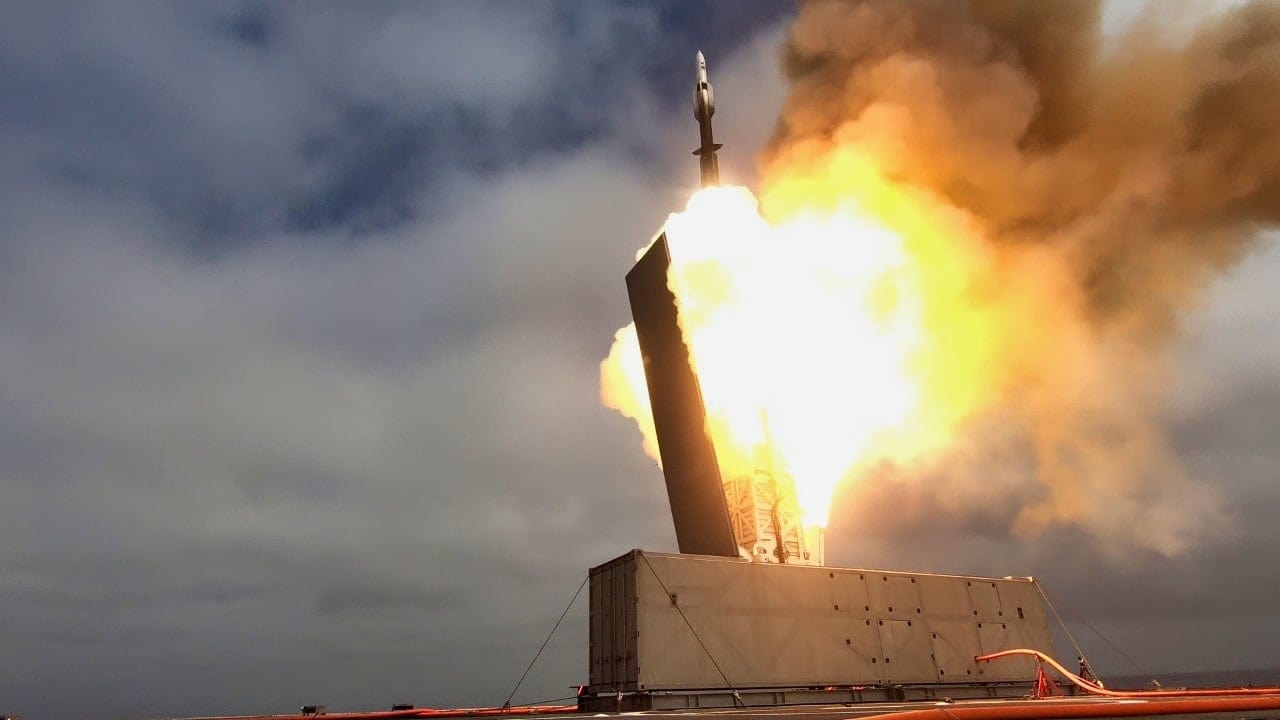
USS Savannah (LCS 28) conducts a live-fire demonstration in the Eastern Pacific Ocean utilizing a containerized launching system that fired an SM-6 missile from the ship at a designated target. The exercise demonstrated the modularity and lethality of Littoral Combat Ships and the ability to successfully integrate a containerized weapons system to engage a surface target. The exercise will inform continued testing, evaluation and integration of containerized weapons systems on afloat platforms.
There are indications that the Navy would take advantage of the missile’s airborne employment to augment defense against hypersonic weapons as well. Notably, the Navy has previously and successfully tested the SM-6 missile against a hypersonic target.
Given the missile’s anticipated high range and large size relative to other air-to-air missiles in Navy inventories, a potential AIM-174B application would take place during the opening stages of an air engagement—right at the edges of the weapon’s engagement distance.
Against high-value targets, such as air-to-air refueling aircraft, command-and-control planes, early warning aircraft, and electronic warfare aircraft, the AIM-174B could provide a significant edge.
Further Afield
The proliferation of beyond-visual-range air-to-air missiles (BVRAAMs) is accelerating with the wider rollout of the AIM-174B, which joins several other BVRAAMs from Europe and China.
The Meteor, manufactured by MBDA in Europe, as well as Russia’s R-37M and China’s PL-15 and PL-21 are among the Gunslinger’s more prominent international counterparts.
In part, the existence of these weapons catalyzed the development of the AIM-174B in the United States.
Though the Gunslinger has been tested and evaluated on U.S. Navy FA-18E/F Super Hornets, the Navy is all but sure to evaluate the weapon’s suitability for other aircraft.
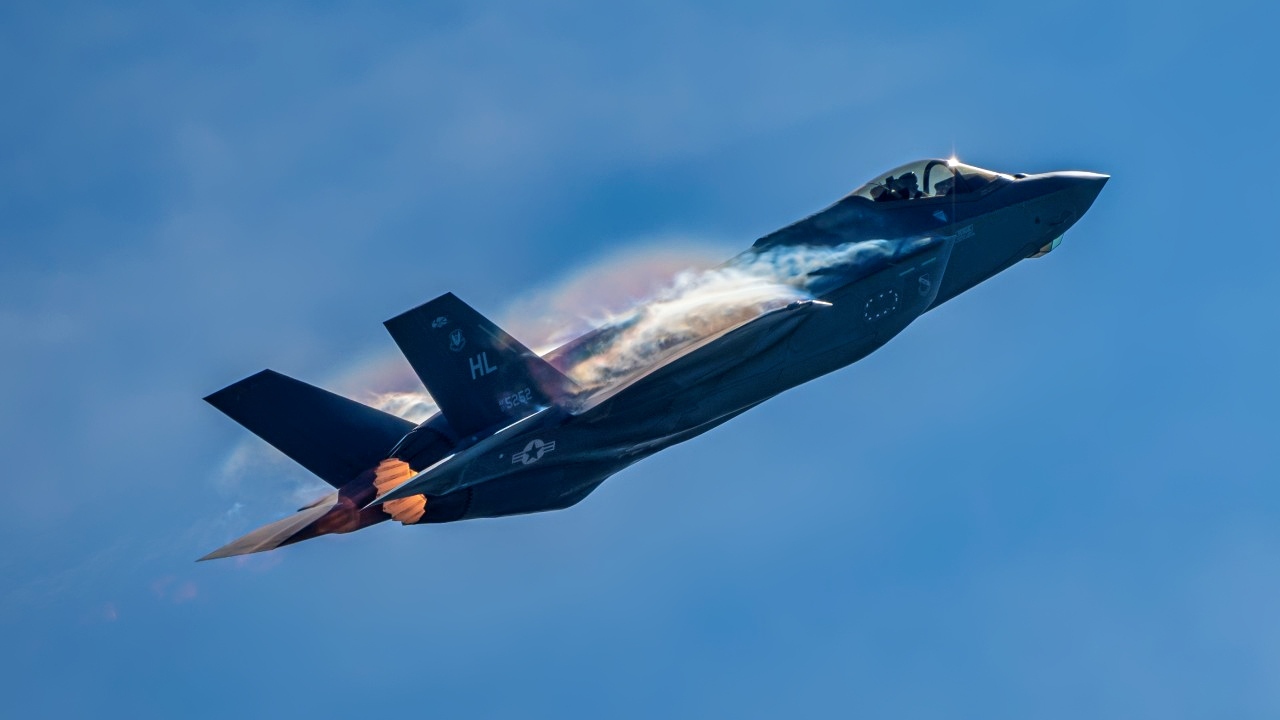
U.S. Air Force Maj. Kristin “BEO” Wolfe, F-35A Lightning II Demonstration Team commander and pilot, flies during a demonstration rehearsal at Hill Air Force Utah, April 28, 2021. The F-35A Lightning II Demonstration Team is part of the first operational F-35A wing for the Air Force, the 388th Fighter Wing, and flies over the Hill Air Force Base runway to practice and prepare for upcoming air shows around the world. (U.S. Air Force photo by Capt. Kip Sumner)
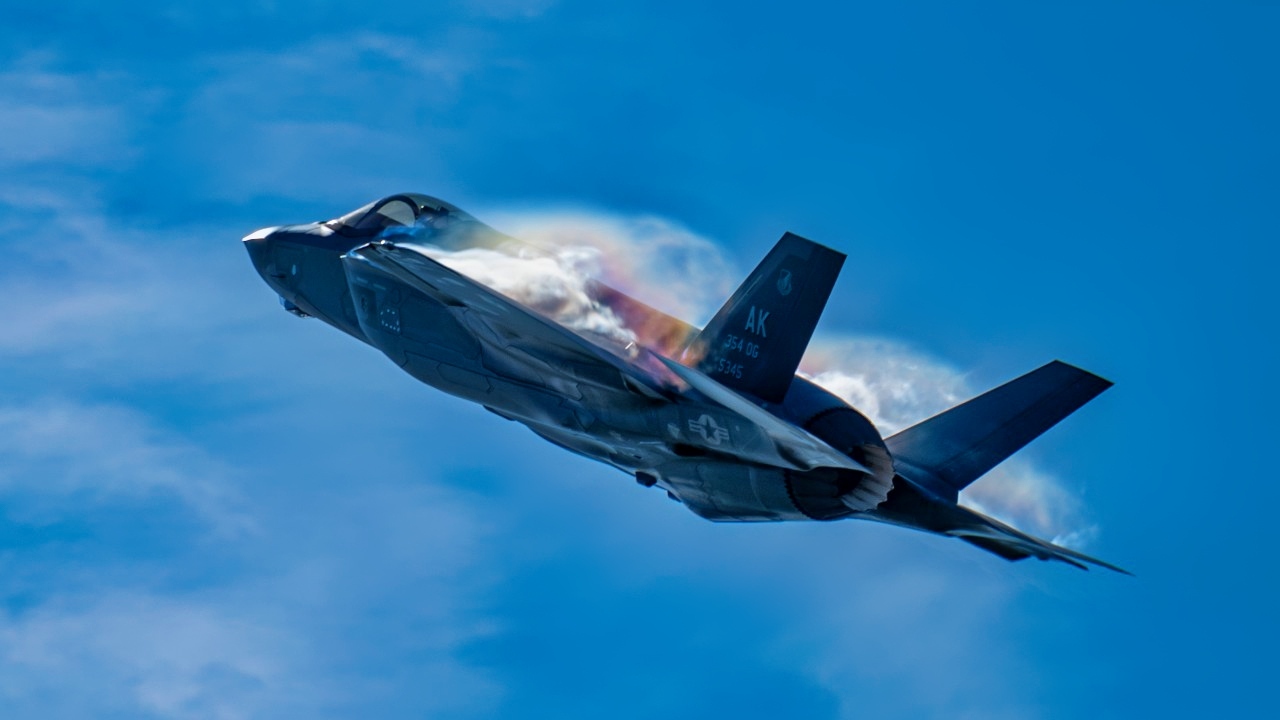
U.S. Air Force Maj. Kristin “BEO” Wolfe, F-35A Lightning II Demonstration Team pilot and commander, flies an aerial performance for the 2021 Arctic Lightning Air Show, July 30, 2021, Eielson Air Force Base, Alaska. The F-35 Demonstration Team utilized F-35s from the 354th Fighter Wing in order to showcase the combat capability of the Pacific Air Force’s newest F-35 units. (U.S. Air Force photo by Capt. Kip Sumner)
The Gunslinger missile, however, seems too large to fit inside the F-35’s internal weapons bay. But the weapon’s extreme range raises the prospect of Super Hornets flying behind F-35 formations and launching the AIM-174B at far-off targets.
The missile’s integration with the U.S. Navy and Marine Corps might raise interesting prospects for the U.S. Air Force.
The F-15EX, as well as current strategic bombers, could benefit mightily from very-long-range air-to-air weapons to defend themselves from enemy fighter formations.
About the Author: Caleb Larson
Caleb Larson is an American multiformat journalist based in Berlin, Germany. His work covers the intersection of conflict and society, focusing on American foreign policy and European security. He has reported from Germany, Russia, and the United States. Most recently, he covered the war in Ukraine, reporting extensively on the war’s shifting battle lines from Donbas and writing on the war’s civilian and humanitarian toll. Previously, he worked as a Defense Reporter for POLITICO Europe. You can follow his latest work on X.