
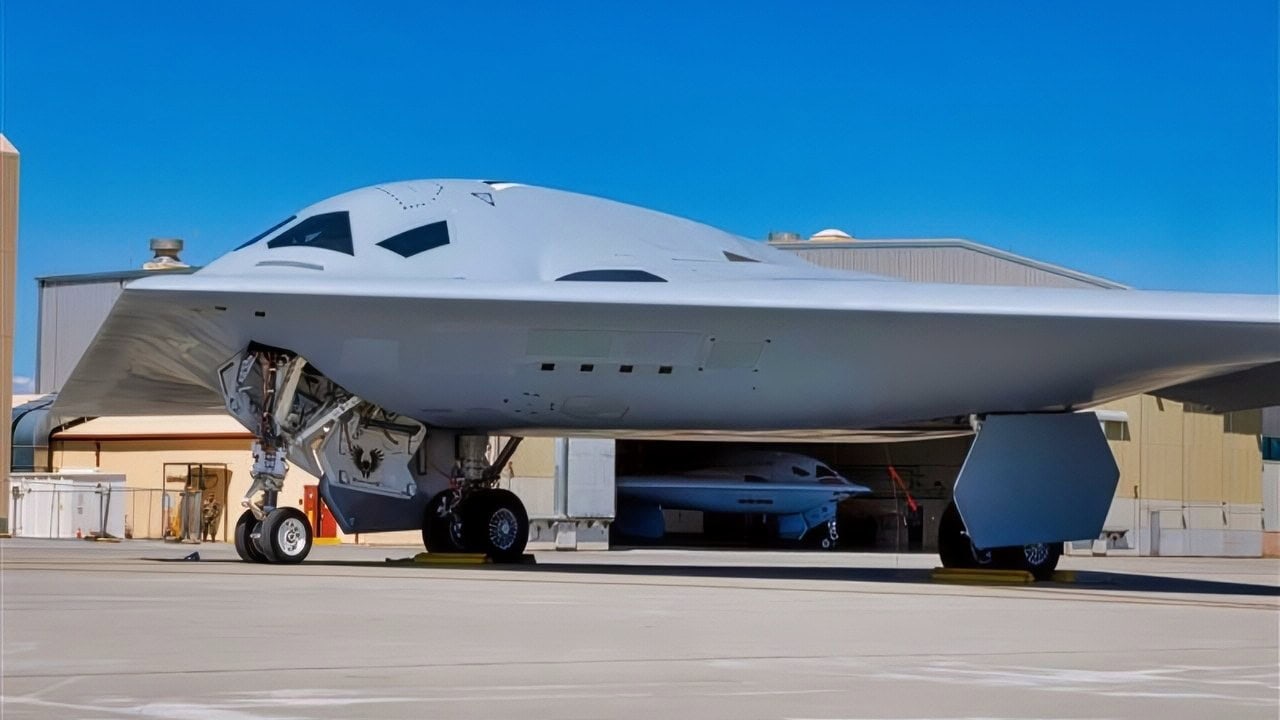
Summary and Key Points: Defense expert Christian D. Orr evaluates China’s claim that its new PADJ-X aerospace simulation tool has exposed “aerodynamic and stability limitations” in the Northrop Grumman B-21 Raider.
-Using adjoint optimization, researchers at the China Aerodynamics Research and Development Centre claim to have improved the bomber’s lift-to-drag ratio by 15% in simulations.
-However, there is still significant skepticism, as these findings rely on publicly inferred shapes rather than classified data.
-This follows a pattern of unverified 2026 claims regarding stealth detection, including infrared tracking of the F-35 and radio interception of B-2 bombers during Operation Epic Fury.
The B-21 “Flaw” Explained: Analyzing China’s Bold Stealth Detection Claims
The B-2 Spirit is the youngest member of the U.S. Air Force’s strategic bomber triumvirate, but it is still no proverbial spring chicken. The B-2 made its maiden flight on July 17, 1989, and officially entered into operational service on New Year’s Day 1997.
Three decades later, the Northrop Grumman B-21 Raider will soon enter service as the sixth-generation successor to the Spirit.
The Raider is the next big thing in stealth bomber technology. The warbird made its maiden flight in 2023, and late last month the U.S. Air Force announced a new agreement with Northrop Grumman to ramp production.
The service is using $4.5 billion in reconciliation funding to help deliver the bomber by 2027.
Great power competition forces geopolitical rivals into a race to keep pace with each other’s military technology. U.S. adversaries such as China thus seek to counterbalance the technological advantages conferred by the Raider and the Spirit.
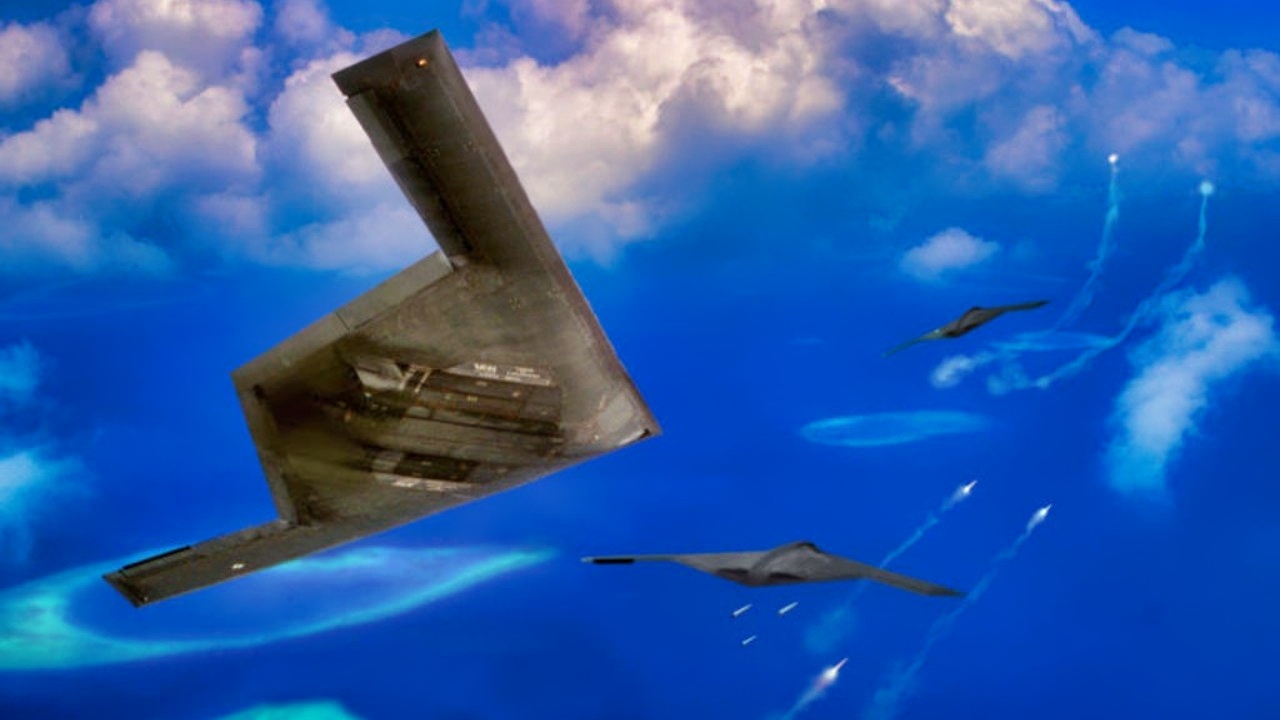
B-21 Raider Bomber. Artist Rendition/Creative Commons.
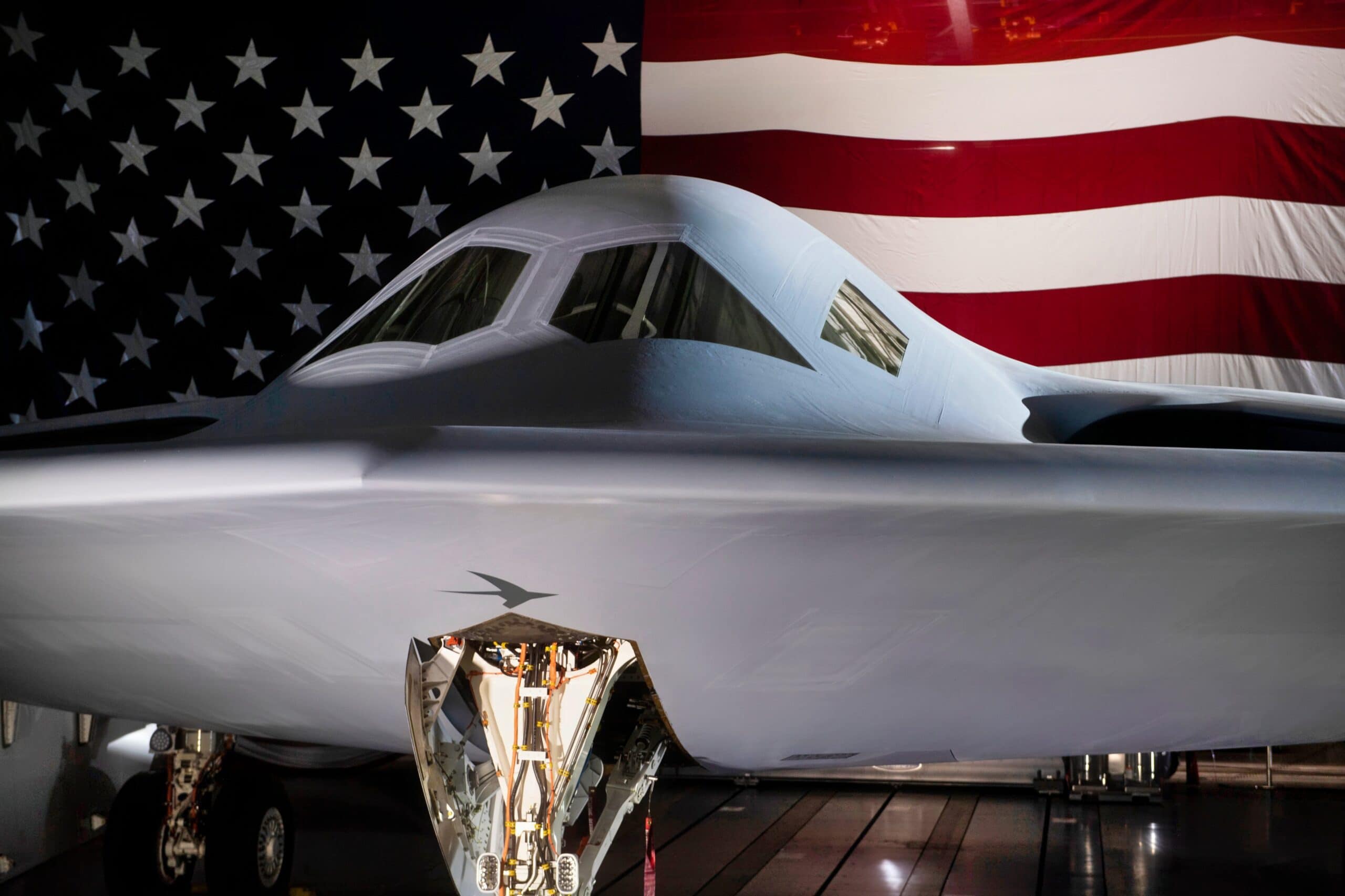
B-21 Raider. Image Credit: Creative Commons.
U.S. Air Force Airmen with the 912th Aircraft Maintenance Squadron prepare to recover the second B-21 Raider to arrive for test and evaluation at Edwards AFB, Calif., Sept. 11, 2025. The arrival of a second test aircraft provides maintainers valuable hands-on experience with tools, data and processes that will support future operational squadrons. (U.S Air Force photo by Kyle Brasier)
As part of that pushback, China is developing its own stealth bomber, the Xi’an H-20. Beijing is also developing technologies to detect stealth aircraft.
Now, China claims it has already exposed a flaw in the B-21—before the plane is even operational.
The Basics
The news comes courtesy of Kapil Kajal of Interesting Engineering:
“Chinese researchers say they have developed a powerful aerospace simulation tool that could reshape how advanced military aircraft are designed. Their initial findings suggest potential aerodynamic and stability limitations in publicly known configurations of the United States’ newest stealth bomber, the B-21 Raider. … The software, known as PADJ-X, was detailed last month in a peer-reviewed paper published in Acta Aeronautica et Astronautica Sinica. … To demonstrate the system’s capabilities, the research team, led by Huang Jiangtao of the China Aerodynamics Research and Development Centre, applied PADJ-X to conceptual configurations resembling the US Air Force’s B-21 stealth bomber, which is currently undergoing flight testing.”
Deeper Dive
Assuming the claims are valid, this highly touted software is based on adjoint optimization technology, an algorithmic method that allows thousands of design parameters to be adjusted simultaneously.
It integrates five major disciplines into a single framework: aerodynamics, propulsion, electromagnetics, infrared signature, and sonic boom.
This is an outside-the-box departure with conventional approaches that rely on repeated trial-and-error simulations, which are costly and often produce only incremental improvements.
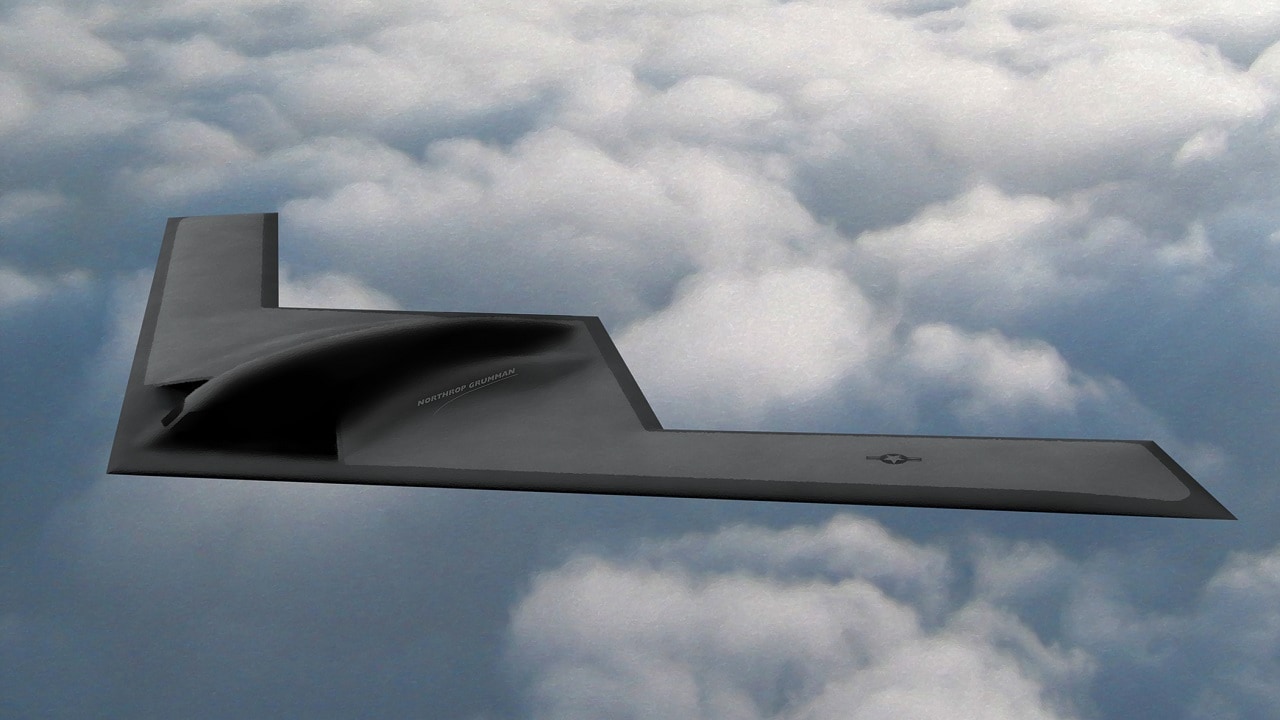
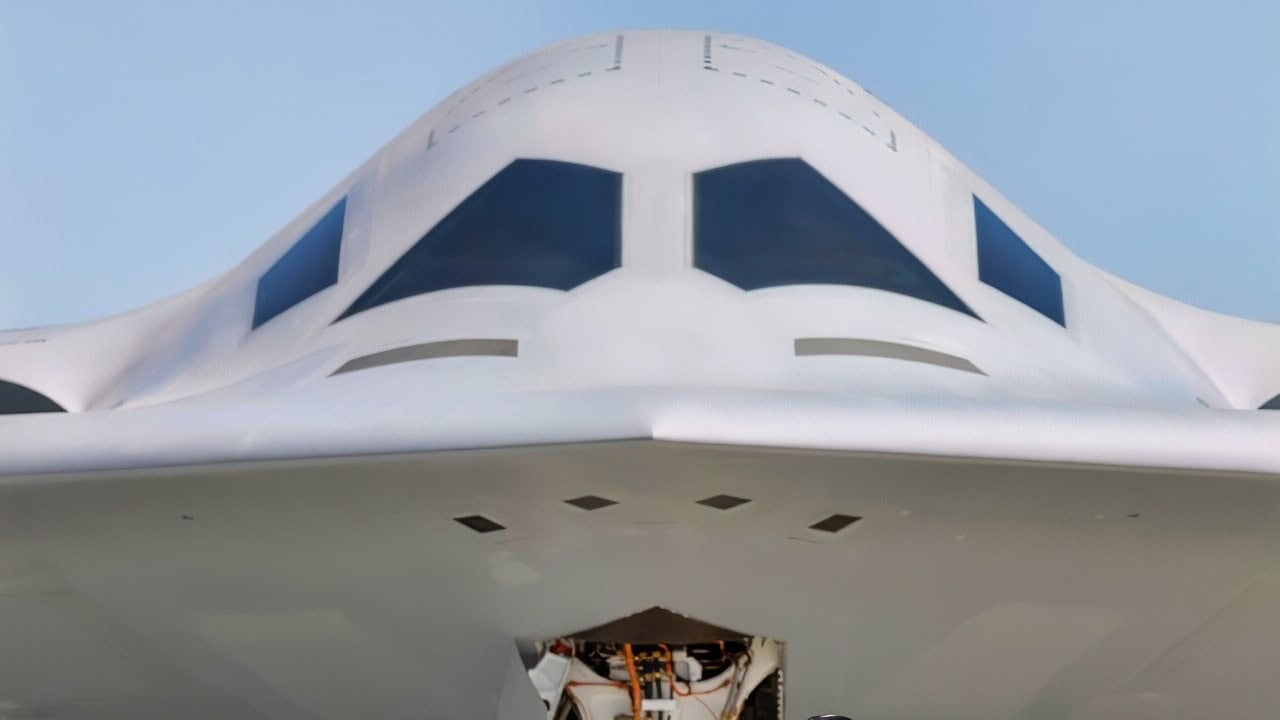
B-21 Raider bomber. Image Credit: Creative Commons.
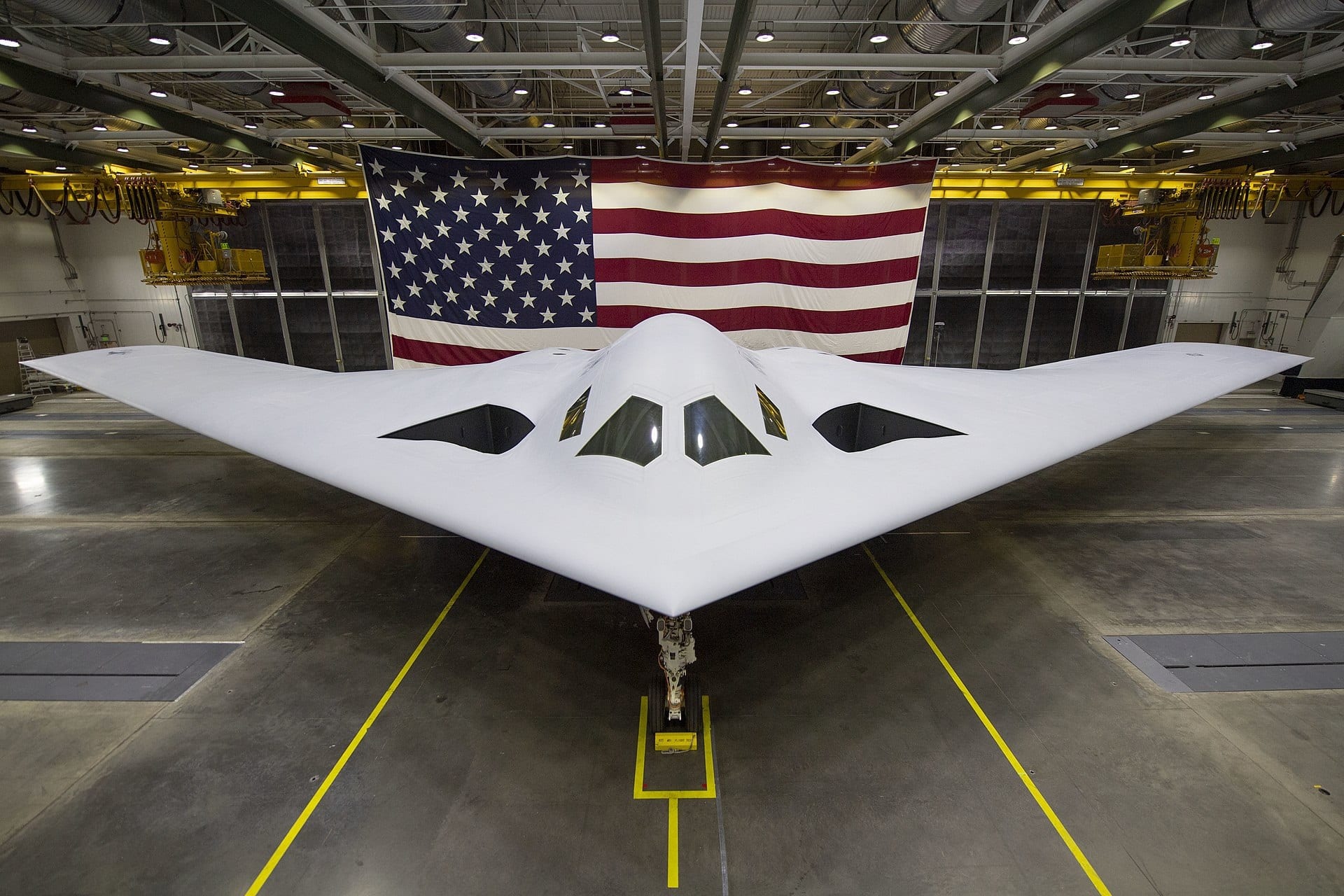
The B-21 Raider was unveiled to the public at a ceremony December 2, 2022 in..Palmdale, Calif. Designed to operate in tomorrow’s high-end threat environment, the B-21 will play a critical role in ensuring America’s enduring airpower capability. (U.S. Air Force photo)
At the risk of getting too far into the proverbial weeds for those of us who aren’t engineering techno-geeks, the research team claimed to accomplish a few things during simulated experiments concerning the B-21:
-Applying 288 parameters in their simulations, they reported that aerodynamic optimization increased the aircraft’s lift-to-drag ratio by about 15 percent and significantly reduced shock-wave effects
-The pitching moment, a measure of longitudinal stability, improved from 0.07 to nearly 0, a change that, in theory, allows smoother, more stable flight with less need for constant control input
Claim Credibility Questions
Of course, as with any claim emanating from China, it must be taken with a grain of salt.
The researchers themselves even admitted as much; they stressed that their findings were based on theoretical models and publicly inferred shapes rather than classified design data.
Actual performance characteristics of the B-21, of course, remain very hush-hush.
Moreover, this isn’t the first time that Chinese scientists have claimed the ability to compromise U.S. stealth warbird technology:
–Roughly 11 months ago, researchers from the Changchun Institute of Optics, Precision Mechanics, and Physics claimed they had developed a system capable of tracking the F-35. Supposedly, this system could pick up on the intense heat signature produced by the fighter’s Pratt & Whitney F135 engine. The system purportedly used high-altitude drones equipped with infrared sensors backed by China’s BeiDou satellite network (their version of GPS), and detected the Lightning II from more than 1,100 miles away
–Last week, the Chinese “private” defense firm, Jingan Technology, claimed that its Jingqi war monitoring system intercepted radio signals from B-2 bombers over Iran on the second day of the Operation Epic Fury bombing campaign.
Thus far, these claims have not been independently verified. In the professional opinion of this former U.S. Air Force officer, they do not pass the smell test just yet.
About the Author: Christian D. Orr, Defense Expert
Christian D. Orr is a Senior Defense Editor. He is a former Air Force Security Forces officer, Federal law enforcement officer, and private military contractor (with assignments worked in Iraq, the United Arab Emirates, Kosovo, Japan, Germany, and the Pentagon). Chris holds a B.A. in International Relations from the University of Southern California (USC) and an M.A. in Intelligence Studies (concentration in Terrorism Studies) from American Military University (AMU). He is also the author of the newly published book “Five Decades of a Fabulous Firearm: Celebrating the 50th Anniversary of the Beretta 92 Pistol Series.”