
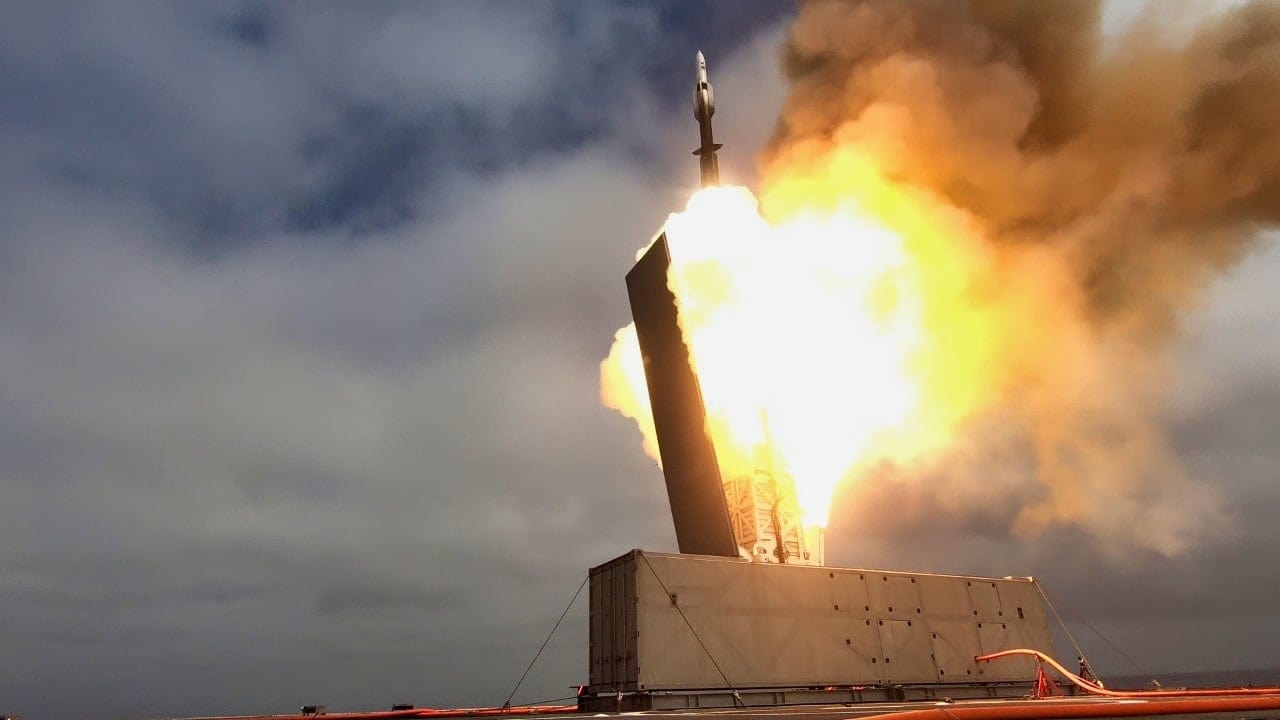
Summary and Key Points: The U.S. Army’s Typhon Mid-Range Capability (MRC) is transforming Indo-Pacific deterrence by reintroducing land-based intermediate-range strikes.
-Deployed to Luzon, Philippines, and Iwakuni, Japan, the mobile Lockheed Martin system launches Block IV Tomahawks, SM-6 interceptors, and Precision Strike Missiles (PrSM).
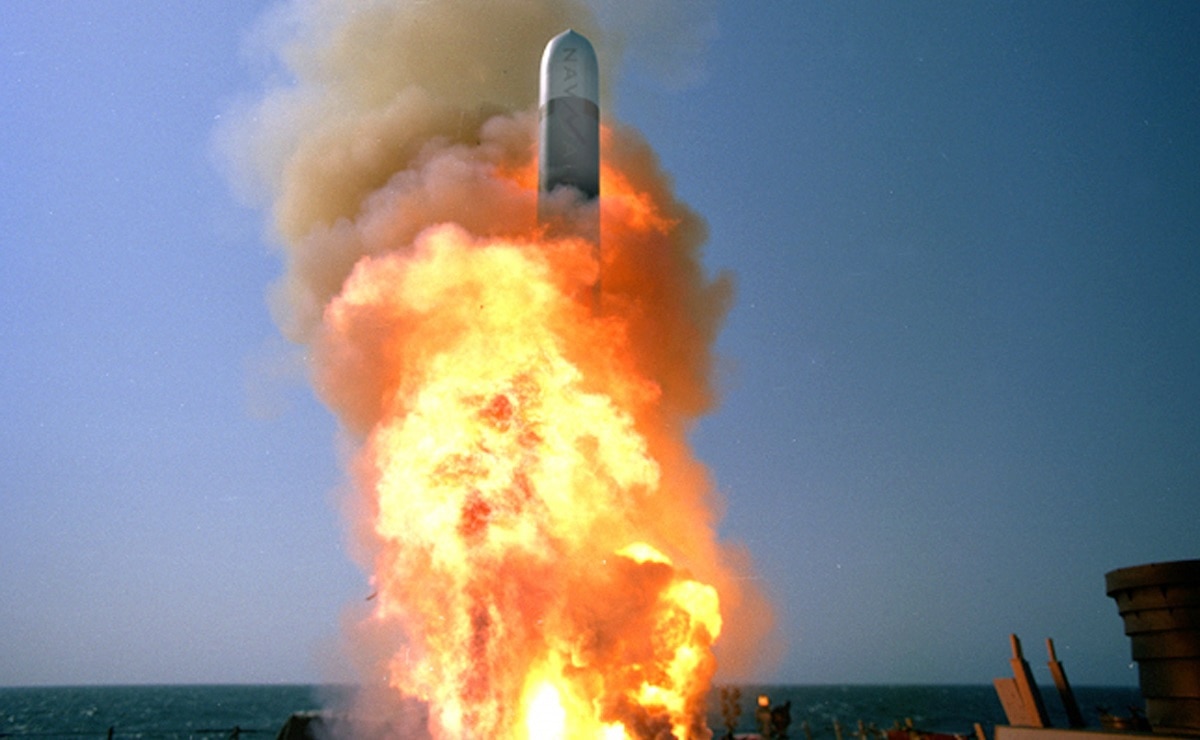
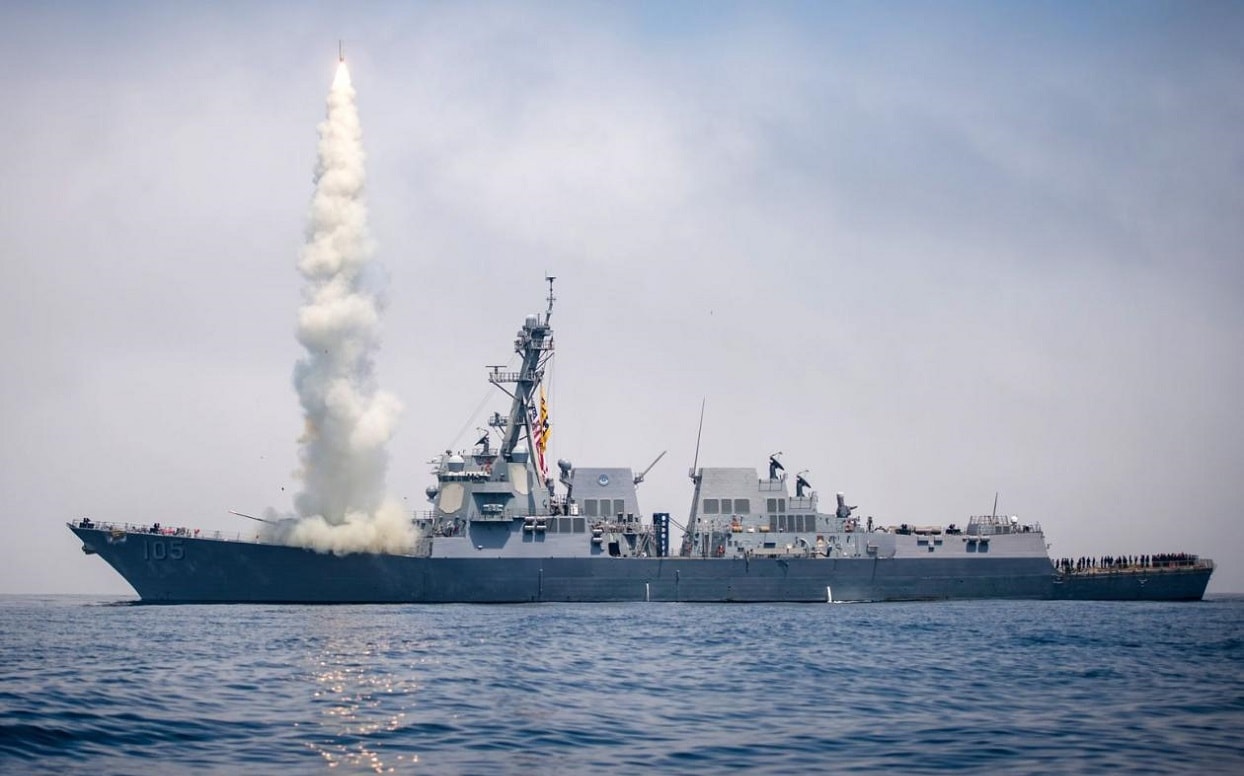
At sea aboard USS Stethem (DDG 63) Ð A Tactical Tomahawk Cruise Missile launches from the guided missile destroyer USS Stethem (DDG 63) during a live-warhead test. The missile traveled 760 nautical miles to successfully impact itÕs intended target on San Clemente Island, part of the Naval Air Systems Command (NAVAIR) test range in Southern California. The Tactical Tomahawk is the next generation of Tomahawk cruise missile, adds the capability to reprogram the missile while in-flight to strike any of 15 preprogrammed alternate targets, or redirect the missile to any Global Positioning System (GPS) target coordinates. It also will be able to loiter over a target area for some hours, and with its on-board TV camera, will allow the war fighting commanders to assess battle damage of the target, and, if necessary redirect the missile to any other target. Launched from the Navy’s forward-deployed ships and submarines, Tactical Tomahawk will provide a greater flexibility to the on-scene commander. Tactical Tomahawk is scheduled to join the fleet in 2004. U.S. Navy photo. (RELEASED)
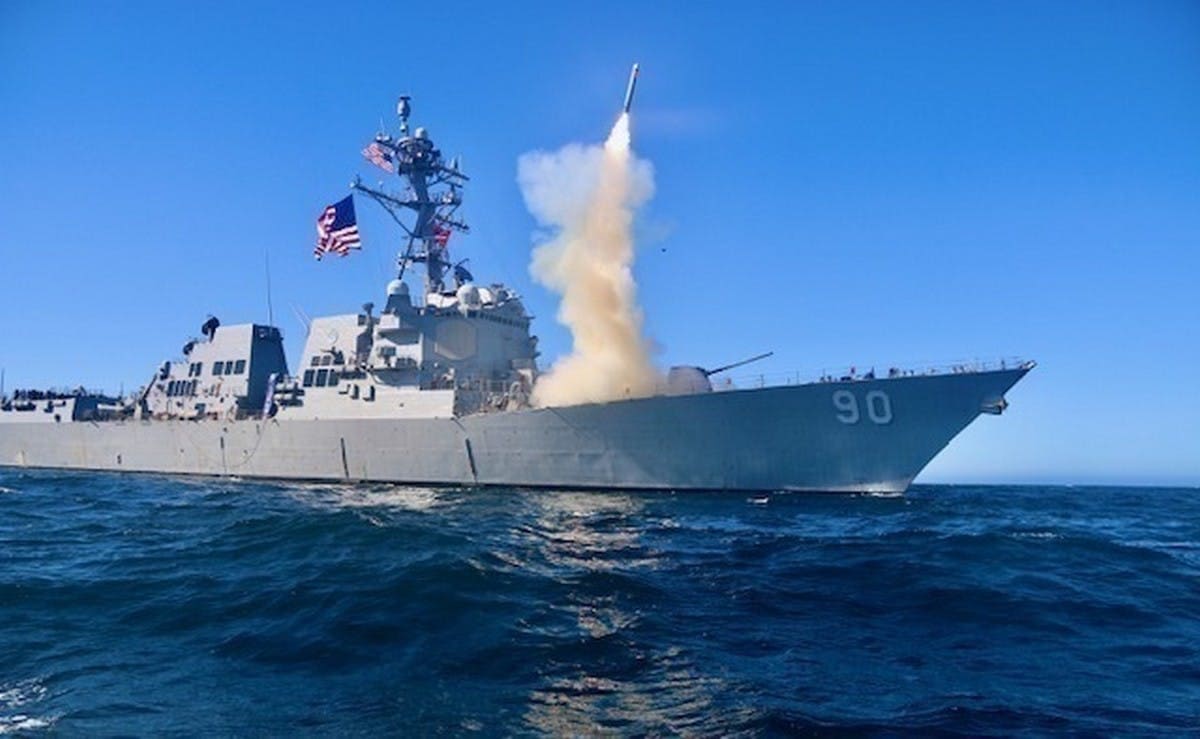
Tomahawk Missile. Image: Creative Commons.
-With a 1,200-mile range, Typhon allows the Army to hold PLAN surface assets and coastal infrastructure at risk, offloading long-range strike duties from the U.S. Navy.
-This mobile “missile arc” along the First Island Chain complicates Chinese A2/AD targeting, ensuring a persistent, survivable deterrent against maritime expansion and securing key chokepoints in 2026.
The Typhon Revolution: Why Land-Based Tomahawks Define 2026 Pacific Deterrence
The U.S. Army has begun deploying its Typhon Mid-Range Capability (MRC) missile system to forward positions in the Indo-Pacific, including the Philippines and Japan.
Defense analyst Kris Osborn recently wrote about how this system could reshape U.S. deterrence in the region.
Osborn noted that the Typhon reflects a major shift in American military thinking: Long-range strike is no longer the exclusive domain of ships and aircraft.
Instead, mobile land-based launchers are increasingly being used to hold ships, bases, and infrastructure at risk across vast distances.
And in the vast expanse of the Indo-Pacific, systems such as the Typhon could play a significant role in countering China’s expanding naval power.
Introducing the Typhon
The Typhon MRC is a mobile, land-based missile launcher system developed by the U.S. Army. The MRC reintroduces ground-launched intermediate-range strike capability after the collapse of the Intermediate-Range Nuclear Forces Treaty.
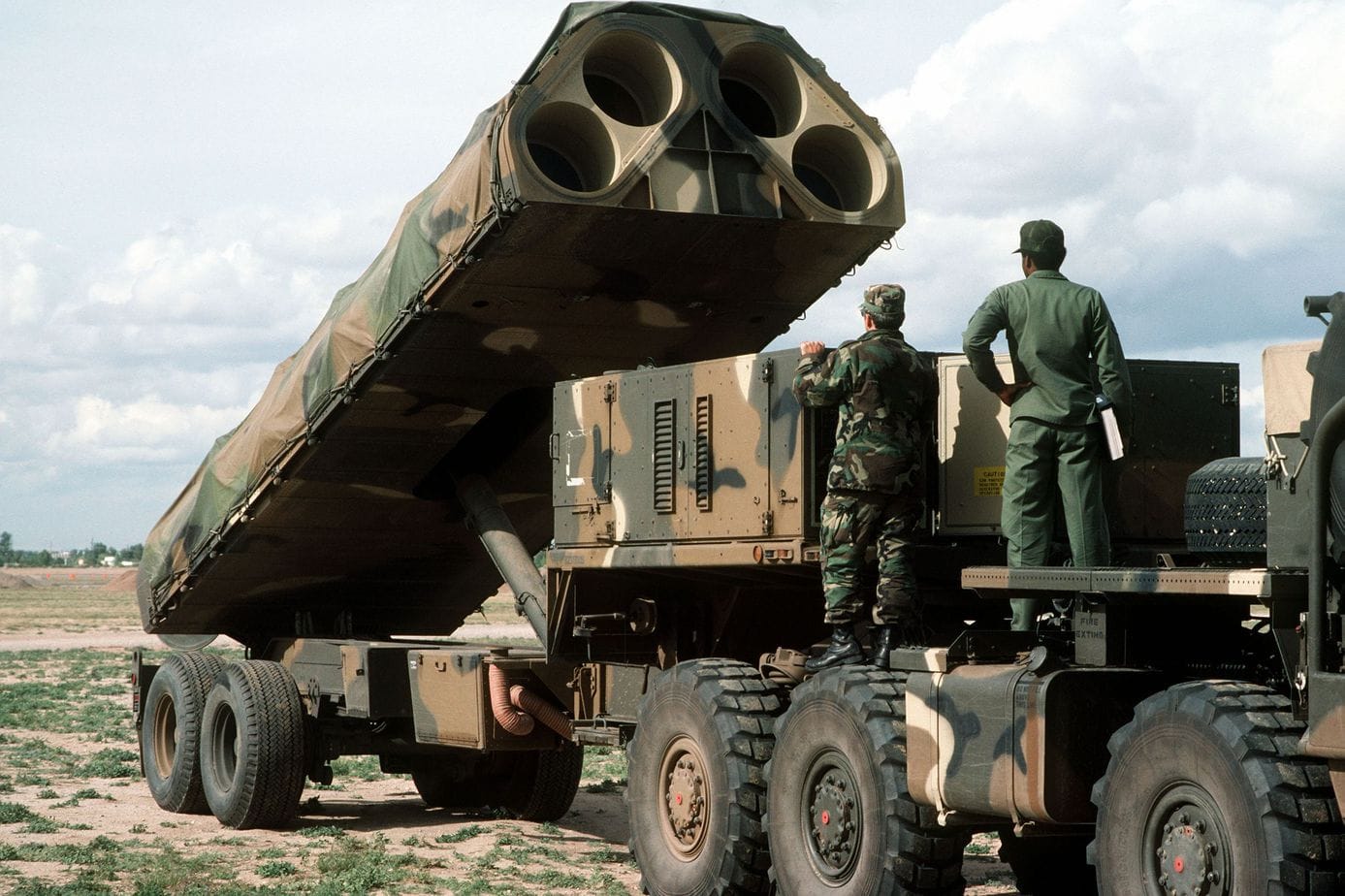
Image of land-based Tomahawk missile from the 1980s.
Tomahawk Cruise Missile. Image Credit: US Navy.
The system can fire several different missile types, including SM-6 missiles, Block IV Tactical Tomahawk cruise missiles, and the new Precision Strike Missile (PrSM). Each missile provides a different operational capability.
Together, they allow Typhon batteries to target ships at sea, air threats, and land-based infrastructure.
Range and Operational Reach
One of the Typhon’s most important features is its range. Typhon batteries reportedly can strike targets up to 1,200 miles away. Strategically, this is important. It means the Typhon, deployed from the northern Philippines or Japan, can cover a large portion of the South China Sea and surrounding waters.
In practice, a land-based mobile launcher could threaten Chinese ships operating hundreds of miles away. That creates a powerful deterrent effect in contested maritime regions.
One of Typhon’s most significant capabilities comes from its ability to fire land-based variants of the Tomahawk cruise missile. The Block IV Tactical Tomahawk has a range of nearly 900 miles and subsonic speed of about 500 miles per hour.
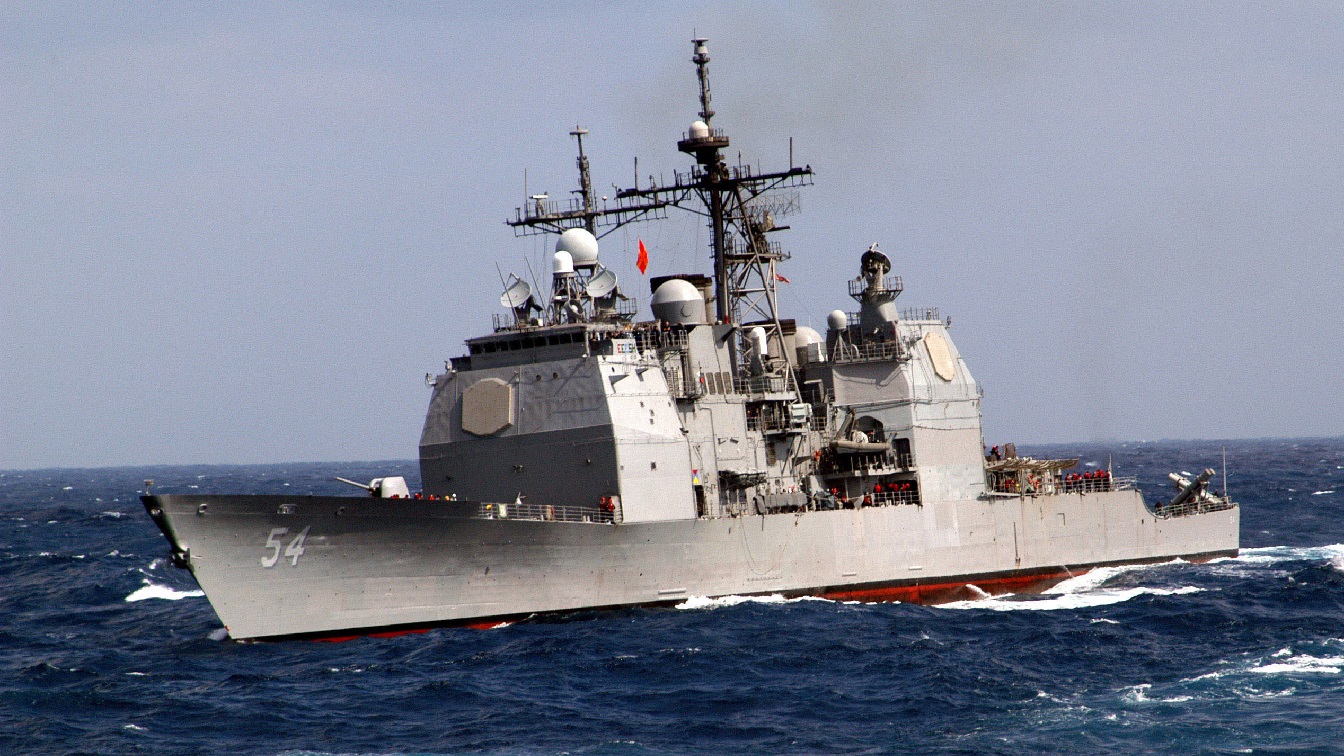
East China Sea (Mar. 28, 2003) — The guided missile cruiser USS Antietam (CG 54) underway in the rough seas of the East China Sea. Antietam is part of the USS Carl Vinson (CVN 70) Battle Group. Antietam and Carl Vinson have just completed participating in Exercise Foal Eagle and are continuing their deployment in the western Pacific Ocean. Exercise Foal Eagle is an annual joint and combined field training exercise between the U.S. and Republic of Korea armed forces. The exercise is designed to strengthen relationships and improve interoperability between both nations through real world training scenarios. U.S. Navy photo by Photographer’s Mate Airman Aaron Hampton.
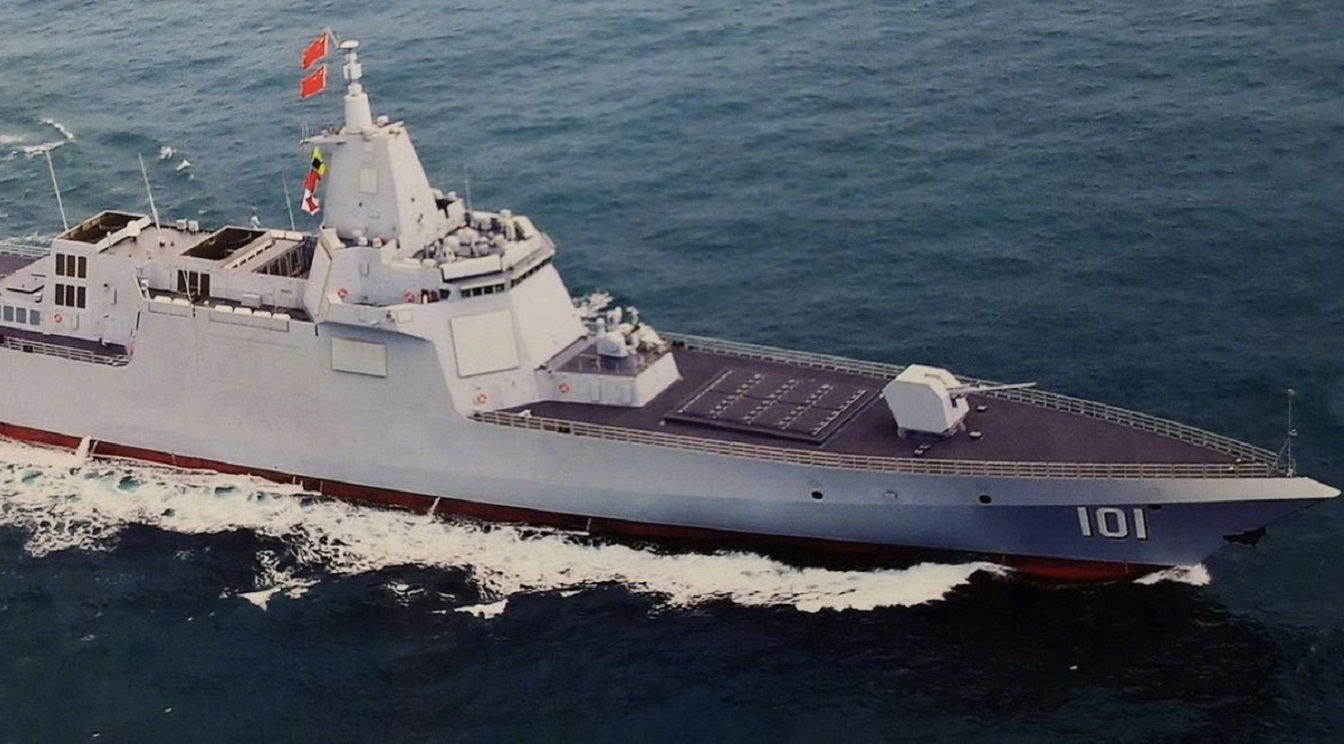
China Navy Destroyer. Image Credit: Creative Commons.
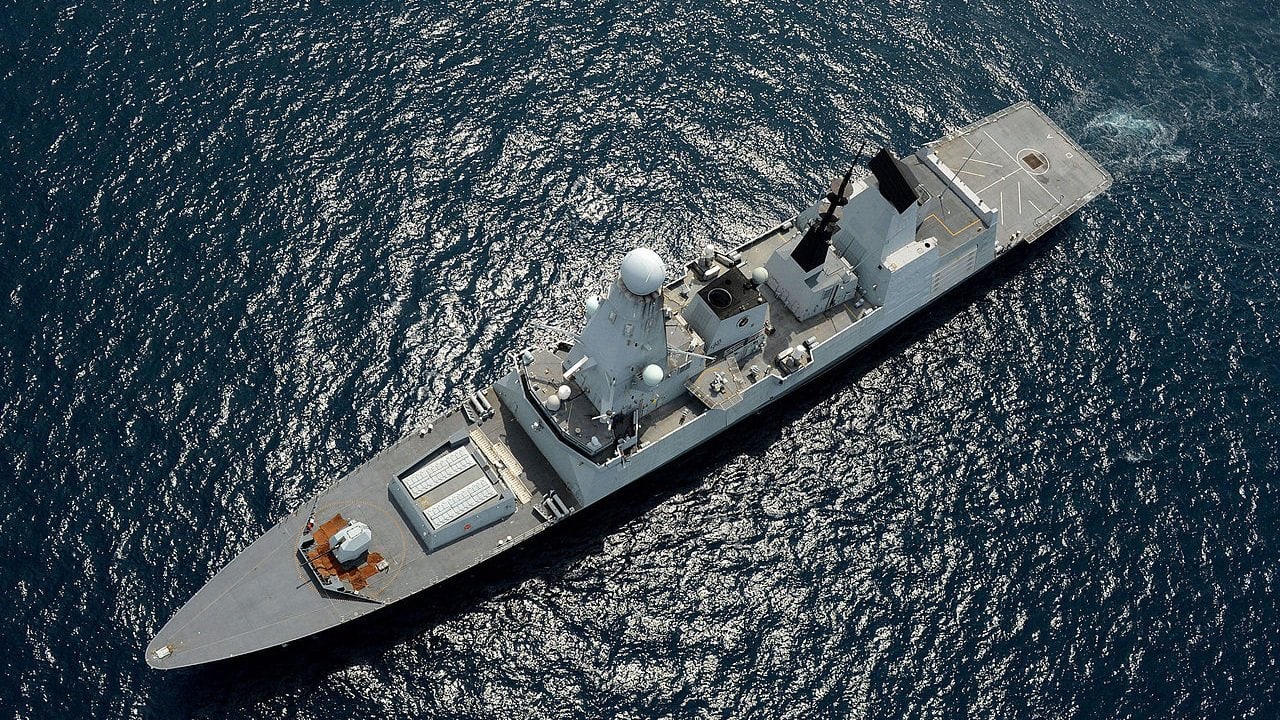
Royal Navy Type 45 destroyer HMS Daring in the South China Sea. The Royal Navy warship HMS Daring was on her way to assist the Philippines after the country suffered crippling devastation during Typhoon Haiyan.
With two-way data link, the Tomahawk can loiter and retarget in flight.
Newer Tomahawk variants can also track moving maritime targets, making them useful for anti-ship missions. Land-launched Tomahawks therefore give the Army the ability to strike ships, radar sites, command centers, and logistics hubs from far outside an enemy’s defensive perimeter.
Army-Navy Operational Synergy
Osborn’s analysis highlights the joint-force advantage Typhon creates.
Traditionally, long-range strike missions in the Pacific are handled by Navy surface ships and submarines. Those ships carry Tomahawk missiles, air-defense interceptors, and anti-ship weapons.
But they must also perform other roles, including escort, sea control, air defense, and patrol. Land-based missile batteries allow the Army to share the long-range strike burden, freeing up the Navy to focus on maritime maneuvers and fleet defense.
Mobility and Survivability
Another key advantage of the Typhon is mobility. Unlike fixed missile bases, Typhon launchers can relocate frequently.
The benefits are obvious. Mobility makes it harder for enemy forces to detect a platform or target it with preemptive strikes.
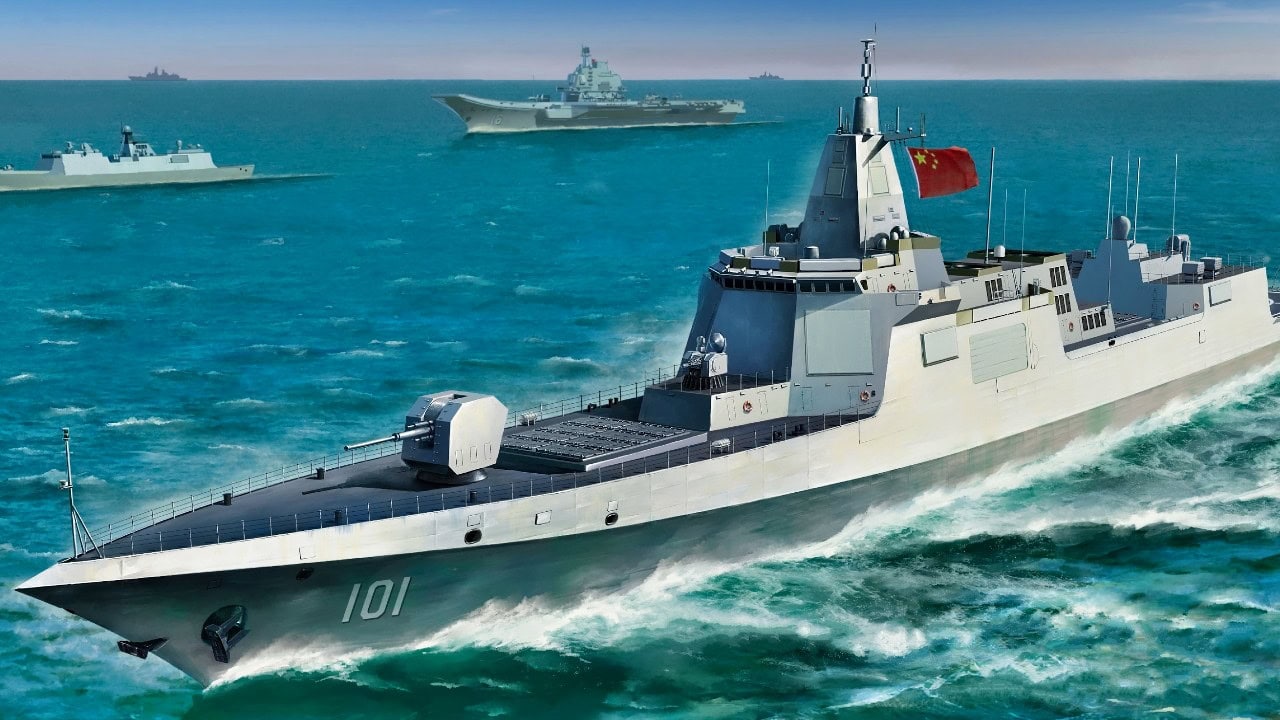
Chinese Navy Warship Created by Artist. Image Credit: Creative Commons.
In a conflict, these Typhon systems could move between launch sites, creating a persistent but unpredictable strike threat.
This makes them particularly valuable in regions where fixed air bases might be vulnerable to missile attack.
In the Indo-Pacific
Typhon deployments aim to strengthen deterrence against China’s growing military capabilities.
China has invested heavily in anti-ship ballistic missiles, long-range cruise missiles, and a rapidly expanding navy. China’s large anti-access/area-denial network makes U.S. penetration difficult.
So, U.S. planners are increasingly distributing their missile forces to counter Chinese pressure. Rather than just relying on ships and aircraft, the United States aims to disperse strike capability across islands and coastal positions throughout the region. By complicating Chinese targeting, this approach strengthens the resilience and lethality of U.S. forces.
Strategically, the Typhon changes the deterrence calculus in the region, allowing the United States to shift from deterrence strategies that rely solely on aircraft carriers, submarines, and long-range bombers.
Now, the United States can deploy land-based missile units across allied territory. These systems create additional strike vectors that adversaries must take into account. In wartime, the Typhon could also help suppress enemy air defenses, strike naval forces, or attack command infrastructure.
About the Author: Harrison Kass
Harrison Kass is an attorney and journalist covering national security, technology, and politics. Previously, he was a political staffer and candidate, and a US Air Force pilot selectee. He holds a JD from the University of Oregon and a master’s in global journalism and international relations from NYU.