
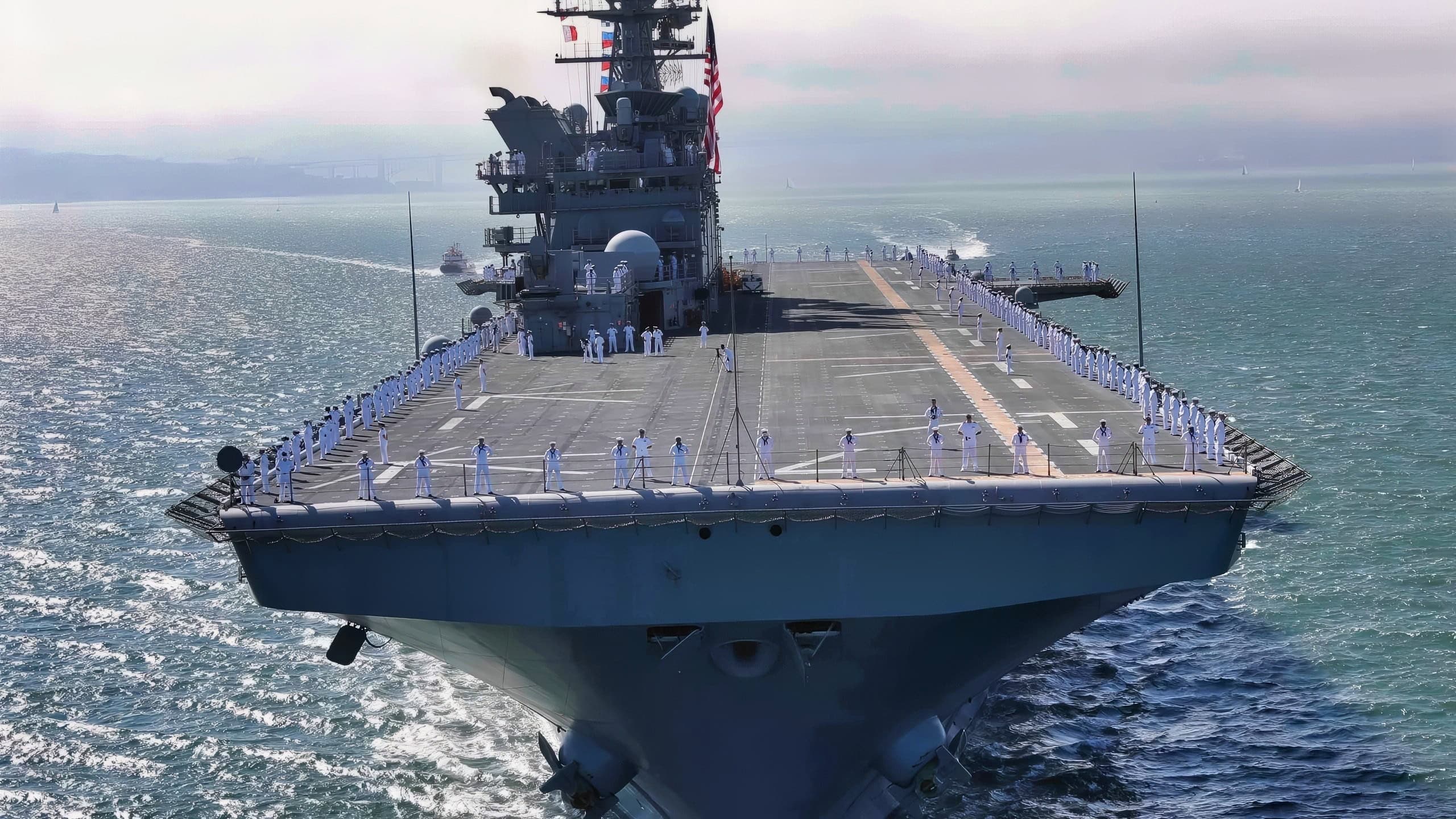
The Tripoli Transit: 2,200 Marines and F-35Bs Move Toward the Middle East
A United States warship has been spotted appearing to head towards the Middle East — and with it, Marines who are on their way to the growing conflict.
According to CNN, which cited AIS tracking data from MarineTraffic.com, the USS Tripoli was, as of earlier this week, “nearing the Malacca Strait off Singapore as it makes its way to the region.”
The Wall Street Journal had reported last week that the Pentagon was “moving additional Marines and warships to the Middle East as Iran steps up its attacks on the Strait of Hormuz.”
About 50,000 troops are already in the Middle East as part of Operation Epic Fury, CNN reported, citing Central Command figures.
“Those Marines are coming from the Okinawa-based 31st Marine Expeditionary Unit (MEU), a rapid-response force of 2,200 personnel, after the Pentagon ordered the unit to deploy,” CNN reported.
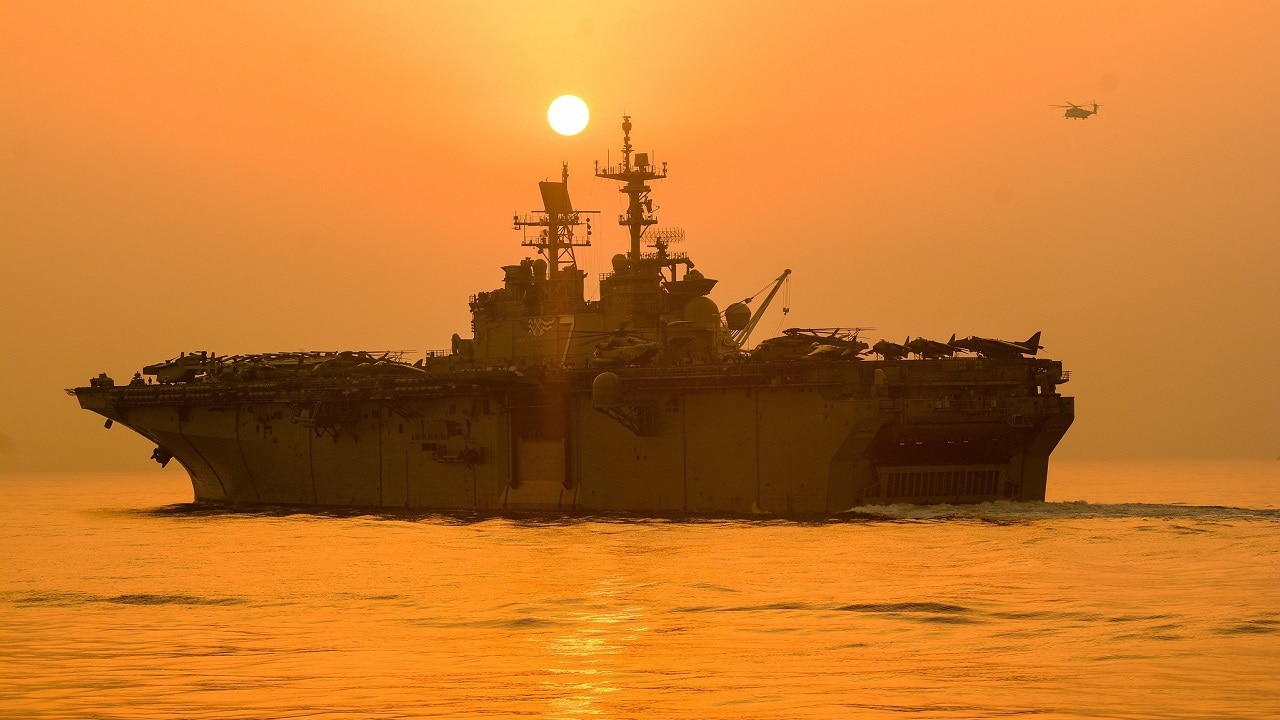
(Aug. 4, 2021) The Wasp-class amphibious assault ship USS Iwo Jima (LHD 7) transits the Strait of Hormuz, Aug. 4, 2021. Iwo Jima is deployed to the U.S. 5th Fleet area of operations to ensure maritime stability and security in the Central Region, connecting the Mediterranean and the Pacific through the western Indian Ocean and three strategic choke points. (U.S. Navy photo by Seaman Logan Kaczmarek)
CNN describes Tripoli as “essentially a small aircraft carrier,” one that carries F-35 jets and MV-22 Osprey transports.
USNI News, on Wednesday, confirmed the report, adding that the unit was “approaching the northern exit of the Malacca Strait.”
“Big deck amphibious assault ship USS Tripoli (LHA-7) and amphibious transport docks USS San Diego (LPD-22) and USS New Orleans (LPD-18) transited the Singapore Strait one day prior, with local media outlet Channel News Asia showing a video of the Tripoli’s transit past Singapore. Automated Identification System data, which ships broadcast to provide their positioning, showed Tripoli, San Diego, and New Orleans sailing north up the Malacca Strait on Tuesday night local time,” USNI News said.
The ships, USNI News said, will join the “Abraham Lincoln Carrier Strike Group and components of the Gerald R. Ford Strike Group operating in the region.”
As noted by Forbes, the Gerald R. Ford carrier group has headed to Crete for repairs following a fire in the carrier’s laundry facilities last week.
Per NPR, which had reported earlier this year on the carrier’s toilet issues, the Gerald R. Ford “has seen war, fire, and plumbing woes” as it approaches a record-long deployment.
“The crews on board this strike group have already endured months at sea only to get their deployment extended. These exceptional Americans rose, all supported by their families, continue to stand the watch, taking the fight to the enemy,” Chairman of the Joint Chiefs of Staff, Gen. Dan Caine said during a recent Pentagon briefing, as cited by NPR.
What is an MEU?
Per CNN, “an MEU consists of four elements: command, ground combat, air combat, and logistics combat. MEUs have typically been used for missions such as evacuations and amphibious operations that require ship-to-shore movements, including raids and assaults. They also have ground and aviation combat components, and some units are trained for special operations.”
The Navy recently released a photo of an F-35B Lightning II preparing to take off from the USS Tripoli in the Philippine Sea on February 12.
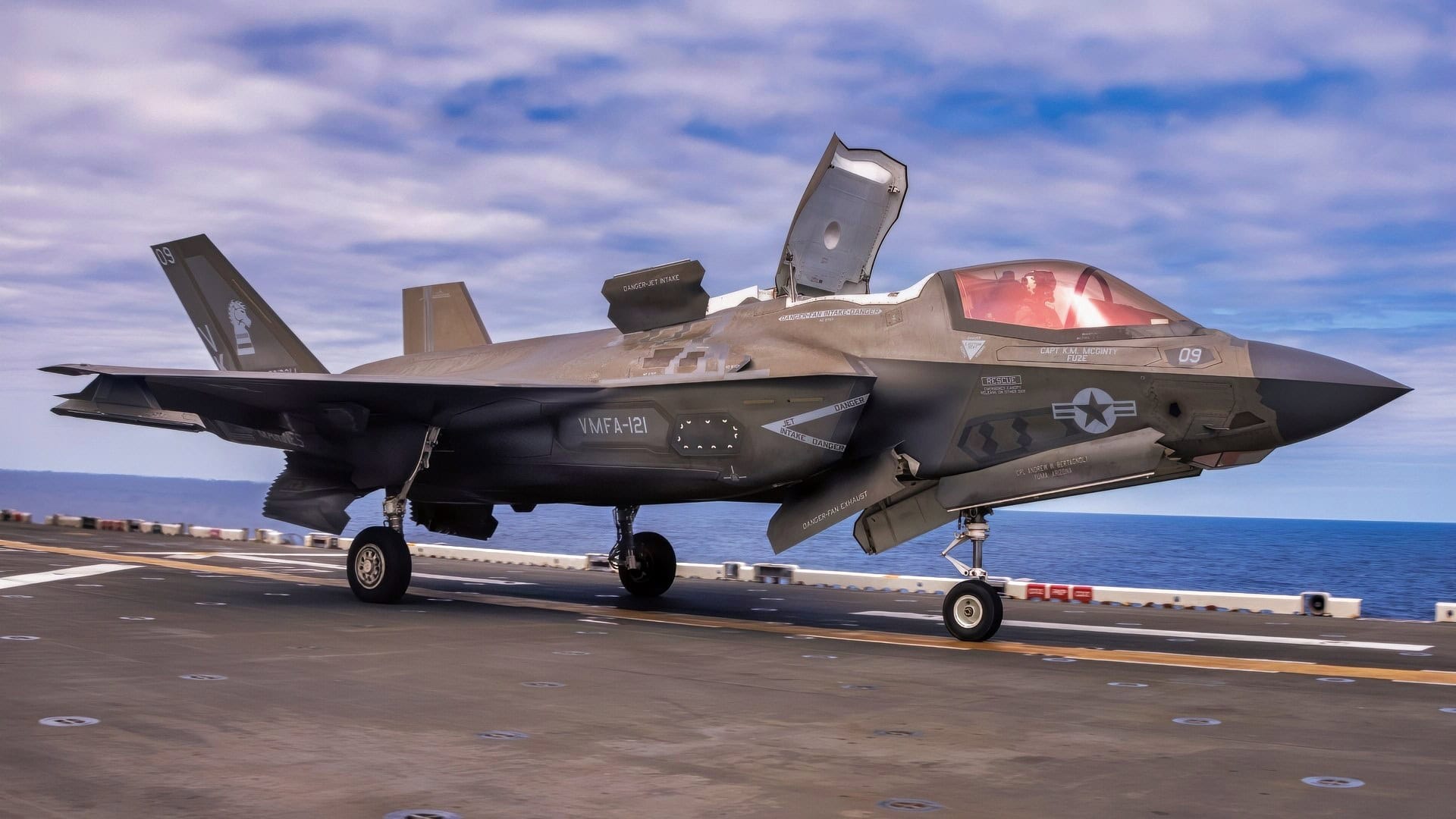
A U.S. Marine Corps F-35B Lightning II assigned to Marine Fighter Attack Squadron (VMFA) 121, 31st Marine Expeditionary Unit, takes off during a joint service flyover in the Philippine Sea, Feb. 26, 2026. Aircraft participated in a coordinated event to demonstrate joint service readiness and maritime capabilities. The 31st MEU is a persistent, combat credible force operating aboard the ships of the Tripoli Amphibious Ready Group in the U.S. 7th fleet area of operations, routinely interacting and operating with our allies and partners to contribute to deterrence, security, crisis response, and combat operations in the Indo-Pacific region. (U.S. Marine Corps photo by Lance Cpl. Victor Gurrola)
“Marines and Sailors conducted flight operations to expand mission capabilities in support of the 31st MEU,” the Navy’s photo description said. “The 31st MEU is a persistent, combat credible force operating aboard the ships of the Tripoli Amphibious Ready Group in the U.S. 7th fleet area of operations, routinely interacting and operating with our allies and partners to contribute to deterrence, security, crisis response, and combat operations in the Indo-Pacific region.”
Iran War: What’s It Going to Cost?
Operation Epic Fury has already cost billions of dollars in its first three weeks alone. Now, multiple news reports say the Pentagon is preparing to ask Congress for hundreds of billions more.
According to the Washington Post, the Department of Defense “has asked the White House to approve a more than $200 billion request to Congress to fund the war in Iran, according to a senior administration official, in an enormous new ask that is almost certain to run into resistance from lawmakers opposed to the conflict.”
That budget ask, the Post said, “would far surpass the costs of the administration’s massive airstrike campaign to date and instead seek to urgently increase production of critical weaponry expended as U.S. and Israeli forces have struck thousands of targets over the past three weeks.”
It’s not clear what the final budget ask will ultimately be, as it would likely hit resistance from Congress, while also forcing lawmakers into a tough vote, six months before the midterm elections, that they will need to defend should the Iran campaign become exceedingly unpopular.
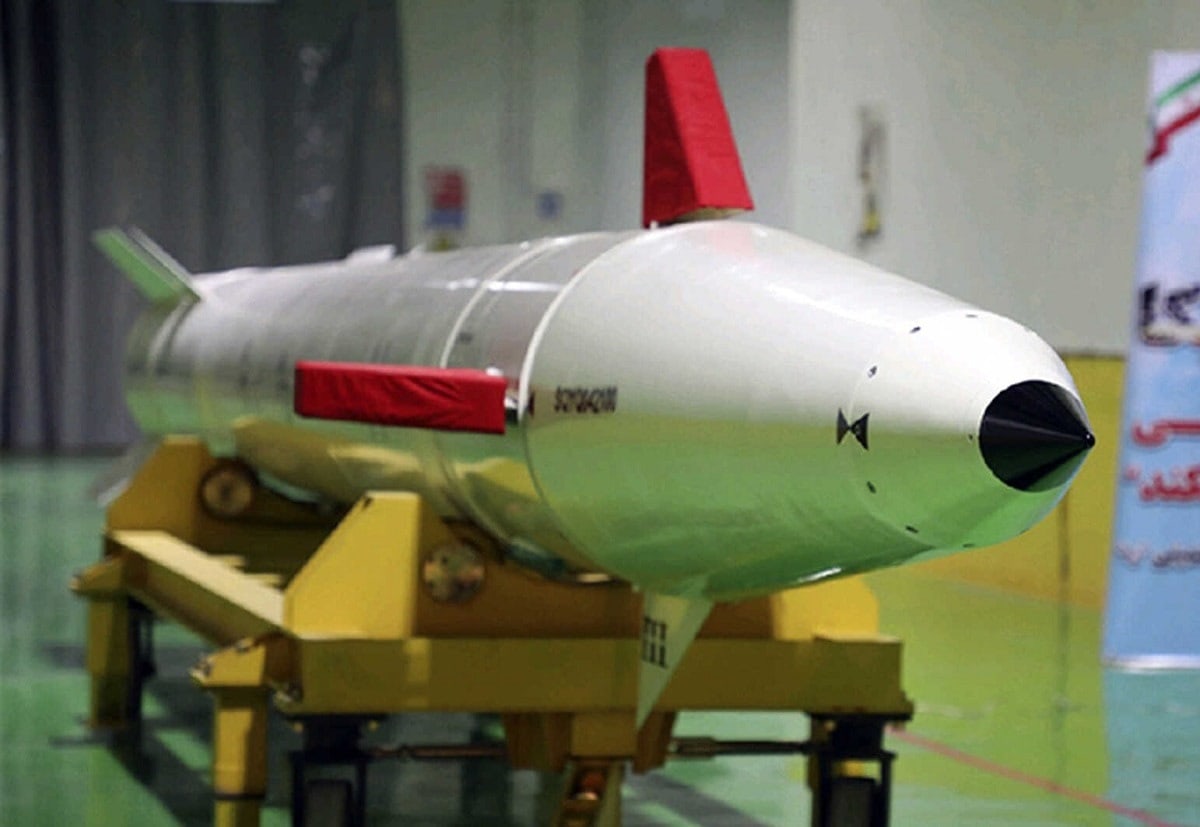
Iranian ballistic missiles. Image: Creative Commons.
“Some White House officials do not think the Pentagon’s request has a realistic shot of being approved in Congress, the senior administration official said. The Pentagon has floated several different proposed funding requests over the past two weeks, according to the official and three other people familiar with the matter,” the Post added.
The first week of the war, the Post report said, cost about $11 billion, more than $1 billion a day.
Selling the Iran War
Meanwhile, Politico on Wednesday reported on the White House’s extremely unconventional strategy for shoring up support for the Iran campaign, including the production of online memes that have sometimes made the war look like a video game, or interspersed war footage with scenes from Hollywood movies and NFL hard hits.
“President Donald Trump’s hype campaign for the Iran war has demolished decades of presidential decorum around wartime messaging — and is mortifying former defense officials and members of Congress,” Politico reported, adding that “The White House is loving it.”
“Over four days, the videos that we put out had over 3 billion impressions,” a senior White House official, sounding like a social media manager, told Politico. “That blows away anything we’ve ever done in the second term.”
There was some pushback, however.
“I don’t think the performance of our men and women in uniform requires embellishment from Hollywood or computer games,” Joe Votel, a former Central Command chief during the first Trump administration, told Politico. “They represent the American people quite well on their own.”
“We’re over here just grinding away on banger memes, dude,” a second senior White House official, and almost certainly the first White House official ever to use that combination of words, told Politico.
About the Author: Stephen Silver
Stephen Silver is an award-winning journalist, essayist, and film critic, and contributor to the Philadelphia Inquirer, the Jewish Telegraphic Agency, Broad Street Review, and Splice Today. The co-founder of the Philadelphia Film Critics Circle, Stephen lives in suburban Philadelphia with his wife and two sons. For over a decade, Stephen has authored thousands of articles that focus on politics, national security, technology, and the economy. Follow him on X (formerly Twitter) at @StephenSilver, and subscribe to his Substack newsletter.