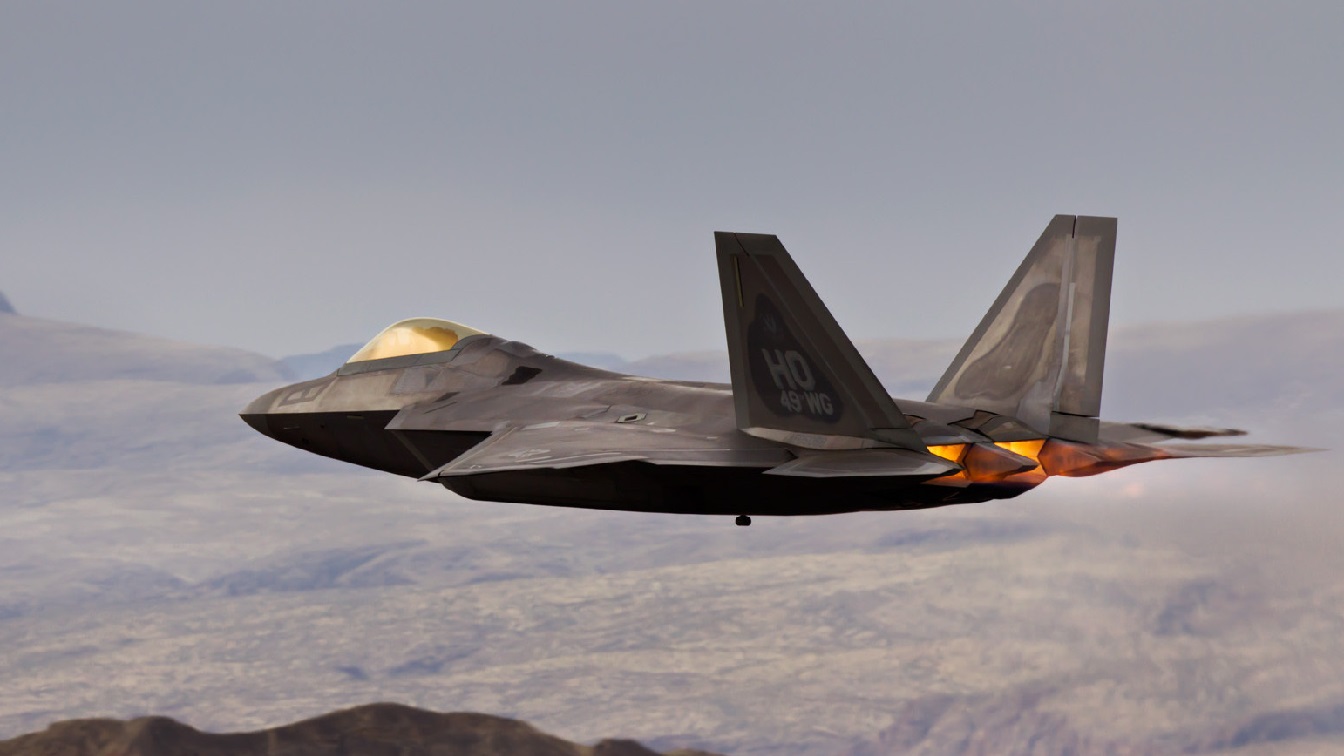
Summary and Key Points: The U.S. Air Force faces a high-stakes “capability gap” following news that the F-47 (NGAD) won’t be operationally available until the mid-2030s.
-Speaking at the McAleese Defense Programs Conference, Rep. Rob Wittman confirmed that the military must now prioritize massive life-extension efforts for the F-22 Raptor and F/A-18 Super Hornet to “bridge” the decade-long wait.
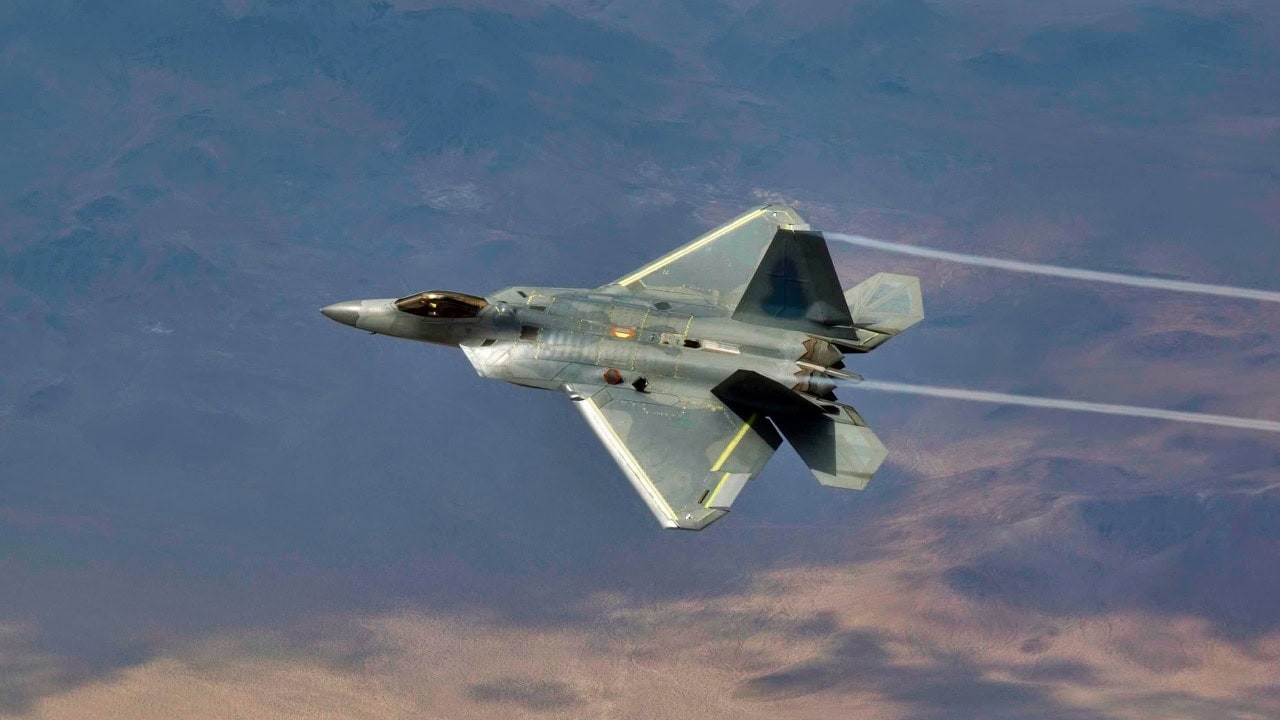
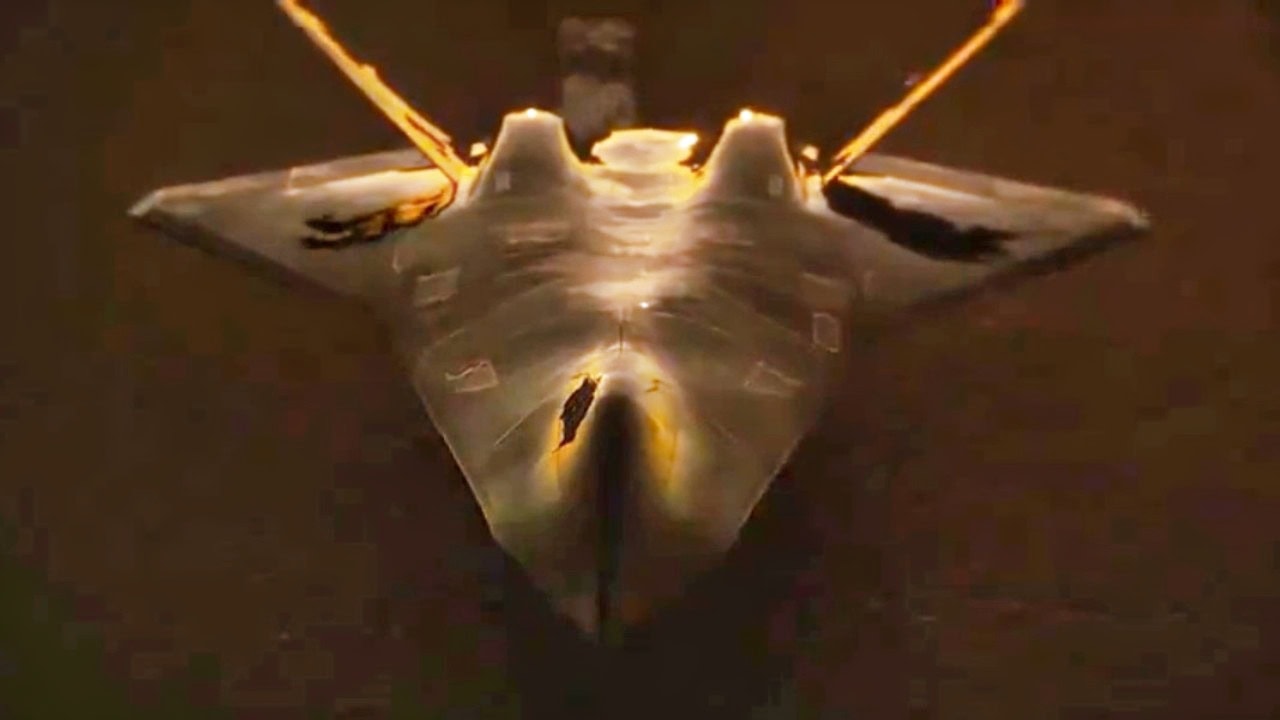
F-22 Raptor 4006 makes its second flight July 18 following an extensive refurbishment to get it back in the air. (Courtesy photo by Christopher Higgins/Lockheed Martin)
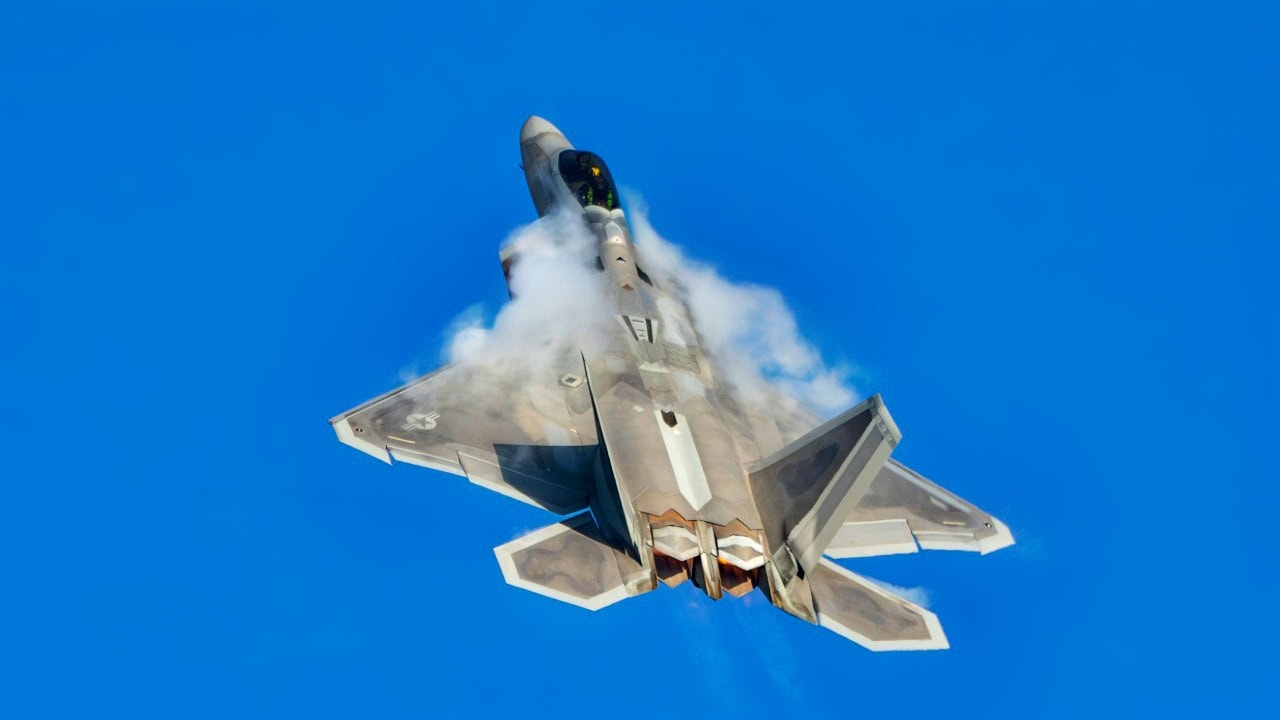
A U.S. Air Force F-22 Raptor, assigned to the F-22 Demonstration Team, executes precision aerial maneuvers during a practice airshow at Hill Air Force Base, Utah, Dec. 5, 2024. The practice session helps ensure the team maintains peak performance and readiness during the off-season. (U.S. Air Force photo by Senior Airman Nicholas Rupiper)
-While the F-47’s first flight remains targeted for 2028, the Air Force is radically shifting its acquisition model toward a government-owned reference architecture to prevent the contractor “vendor lock” that plagued the F-35 program.
The F-47 Delay No One Wanted: America’s Air Force Faces a Fighter Gap
The United States Air Force and United States Navy will have to keep their current fighter fleets in service longer than anticipated, following new information that their upcoming sixth-generation fighter will not enter service according to previously established timelines.
During comments given as part of the McAleese Defense Programs Conference, Representative Rob Wittman, a republican from Virginia, said that the Navy’s F-47 will not be “available” to the Air Force until the mid-2030s. Air and Space Forces Magazine was the first to report on the development.
Time Keeps on Slipping
“The question then becomes, what do we do in the meantime?” Representative Wittman asked rhetorically. “We have to maintain a fleet of F-18s, and then we have to maintain the F-22,” Wittman added, according to reporting by Air and Space Forces Magazine. “That’s the only way we create that bridge to the sixth-generation aircraft” that the U.S. Navy and Air Force are banking on.
While the U.S. Air Force has selected Boeing to build its future F-47 stealth fighter, the U.S. Navy has yet to make a similar decision regarding its own upcoming fighter, provisionally called the F/A-XX. Both aircraft will replace older, fourth-generation fighters for both branches.
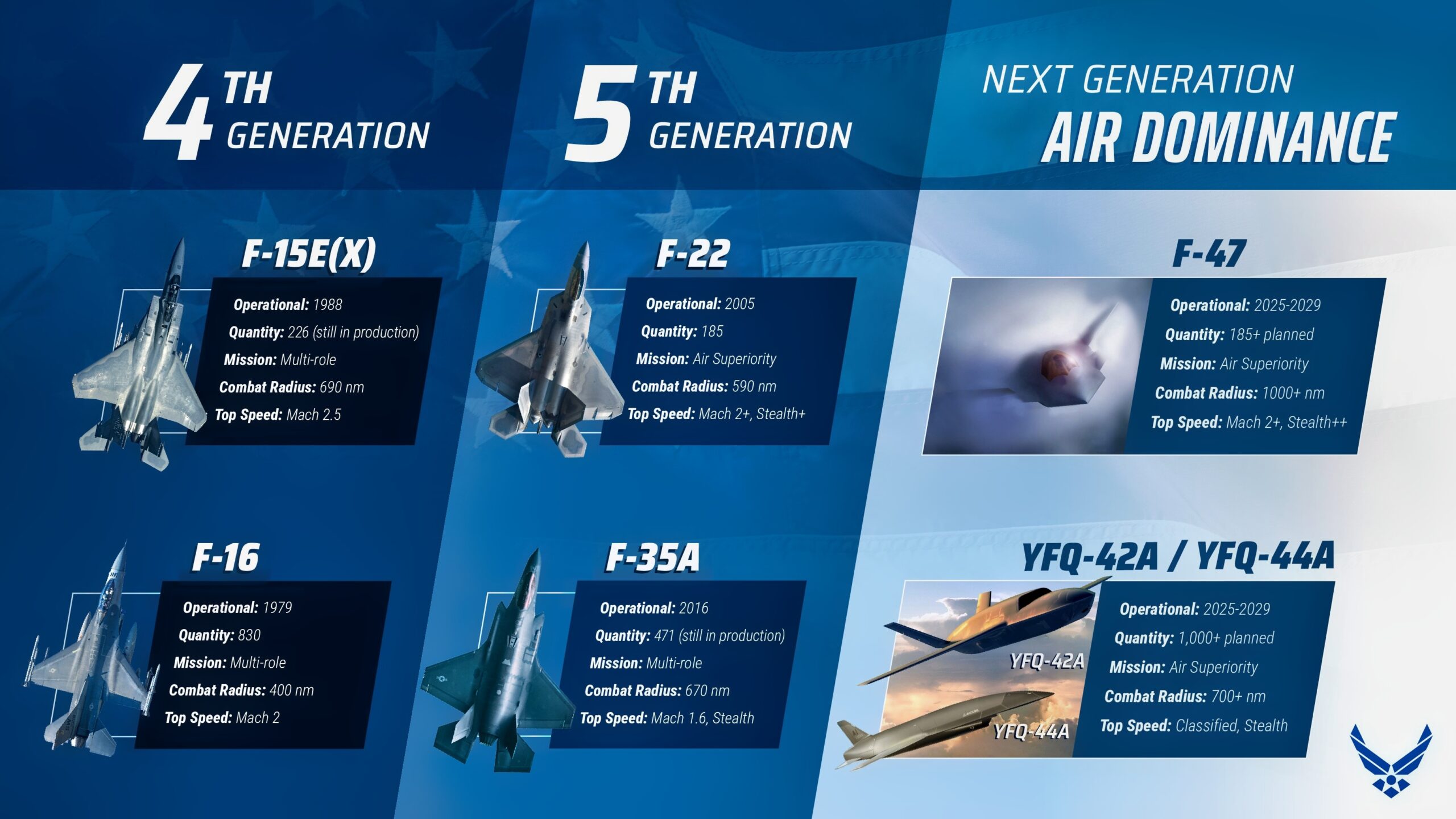
F-47 Infographic. Image Credit: U.S. Air Force
F-47 Fighter from Boeing. Image Credit: U.S. Air Force Screenshot.
Though the F-47 is known only from a small handful of computer-generated renderings, some information provided by senior Air Force leadership indicates it will have a combat radius of more than 1,000 nautical miles, fly in excess of Mach 2, or two times the speed of sound, and fly alongside and take command of Collaborative Combat Aircraft.
Less is known about the F/A-XX.
Though queried about the readiness timeline of the F-47, Air Force General Dale R. White demurred, but he maintained that the F-47’s first flight target date remains on schedule for 2028. General White is the direct reporting portfolio manager for critical major weapon systems, a new role created last year for the Air Force that will manage a number of high-profile projects, including the B-21, the F-47, Air Force One, and the Minuteman III intercontinental ballistic missile system.

F/A-XX Boeing Image.
“We needed to bring the government back into engineering,” General White reportedly said at the conference. “We had outsourced engineering for so long. And so being able to do that, actually have a government reference architecture in partnership with industry … allowed us to have more continuous competition, avoiding vendor lock. But at the same time, we now have a contract by which we can evolve capability.”
Former Air Force Chief of Staff General David Allvin explained to American lawmakers last year that his branch would retain control over the F-47’s mission systems, a course correction from the F-35 project. During negotiations for that program, Lockheed Martin secured the rights to key data related to the stealth jet.
“That’s going to be the foundation of our future,” General White reportedly said. “The architecture we use on CCA, we use on F-47, the other services are leveraging it. So you’re going to see more of it.”
Older Airframes
Any delay in the F-47 entering service will force the U.S. Air Force to rely on the F-22 Raptor for longer than originally anticipated, raising the prospect of refurbishing that platform.
The Raptor’s first flight was in 1997, and the stealth jet entered service in 2005. By mid-2030, the Raptor will have been in service for about 30 years.
Although 30 years is not an exceptionally long time to remain in service, the B-52 Stratofortress has been in service since 1955, and the F-15 has been in service since 1976—the Raptor production line no longer exists, meaning any aircraft lost in accidents or combat cannot be replaced.
There are roughly 185 F-22 Raptors currently in existence, and losses would be impossible to replace except by other aircraft not optimized for the F-22’s air superiority role, which the F-47 would take on.
The same holds true for the Navy’s F/A-XX program and the F/A-18E/F Super Hornets it is slated to replace.
And while the Pentagon maintains it is making progress toward selecting a winner in the Next-Generation Air Dominance competition, a family of systems of which the F/A-XX will be the centerpiece, the timeline of that selection is unknown.
Super Hornets entered service with the U.S. Navy in 1999.
Into the Future
Whether the F-47 program can adhere to that vaguely defined mid-2030 date remains to be seen.
But if that date slips further, the fleet of F-22 Raptors will have to maintain its air superiority role for the U.S. Air Force, placing strain on a program that cannot build replacements.
About the Author: Caleb Larson
Caleb Larson is an American multiformat journalist based in Berlin, Germany. His work covers the intersection of conflict and society, focusing on American foreign policy and European security. He has reported from Germany, Russia, and the United States. Most recently, he covered the war in Ukraine, reporting extensively on the war’s shifting battle lines from Donbas and writing on the war’s civilian and humanitarian toll. Previously, he worked as a Defense Reporter for POLITICO Europe. You can follow his latest work on X.