Summary and Key Points: Caleb Larson, a Berlin-based security journalist, evaluates the S-400 Triumf, one of Russia’s most advanced operational long-range air defense system and successor to the S-300P.
-Since 2007, the S-400 has served as a critical node in Russia’s anti-access/area-denial (A2/AD) strategy, capable of tracking 300 targets simultaneously and engaging 36 at ranges up to 400 kilometers.
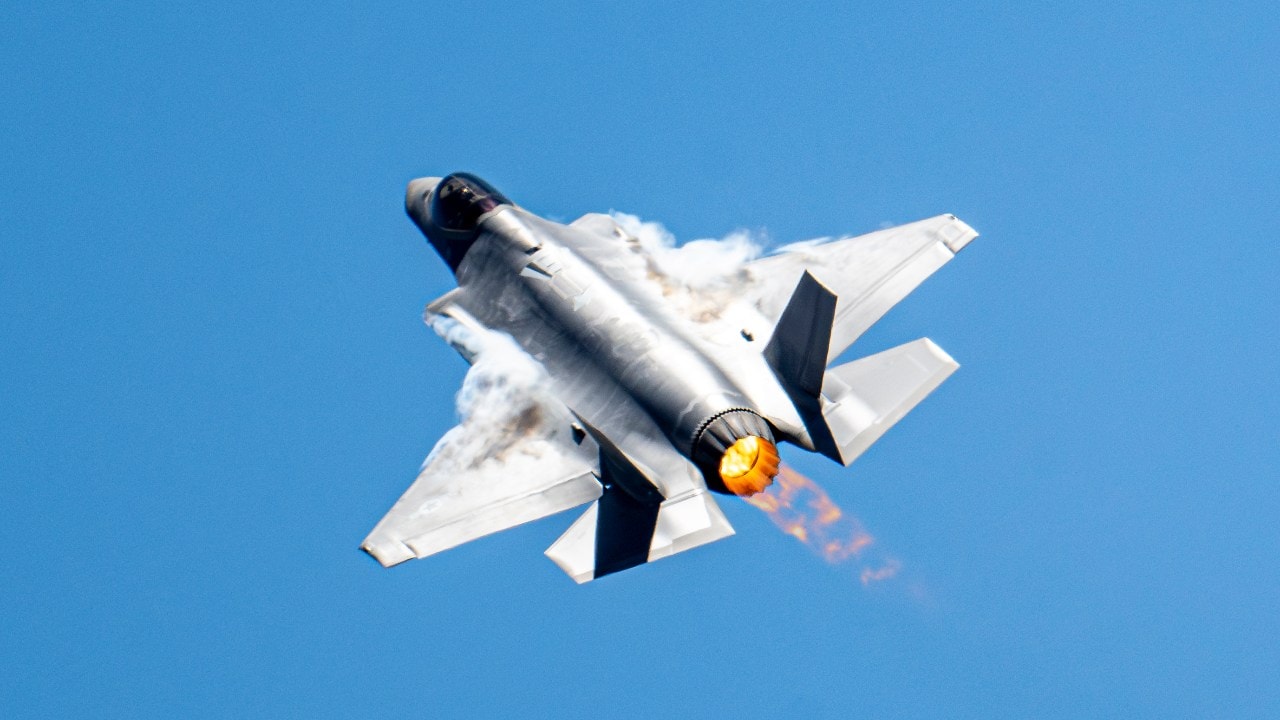
U.S. Air Force Maj. Melanie “Mach” Kluesner, pilot of the F-35A Demonstration Team, performs aerial maneuvers at the Wings and Eagles Airshow at Kingsley Field, Oregon, on July 19, 2025. The demonstration team travels across the country to showcase the power and precision of the world’s most advanced 5th-generation fighter jet. (U.S. Air Force photo by Senior Airman Nicholas Rupiper)
-This report analyzes its export to India, China, and Turkey, the latter causing the first major F-35 program expulsion.
-Larson concludes that while the S-400 has seen use in Syria and Ukraine, combat has exposed vulnerabilities, necessitating the S-500 Prometey transition.
The 400km Shield: Analyzing Russia’s S-400 Triumf and its Global Export Dominance
The S-400 is Russia’s most advanced operational long-range air defense system and forms the centerpiece of Russia’s integrated air defense network.
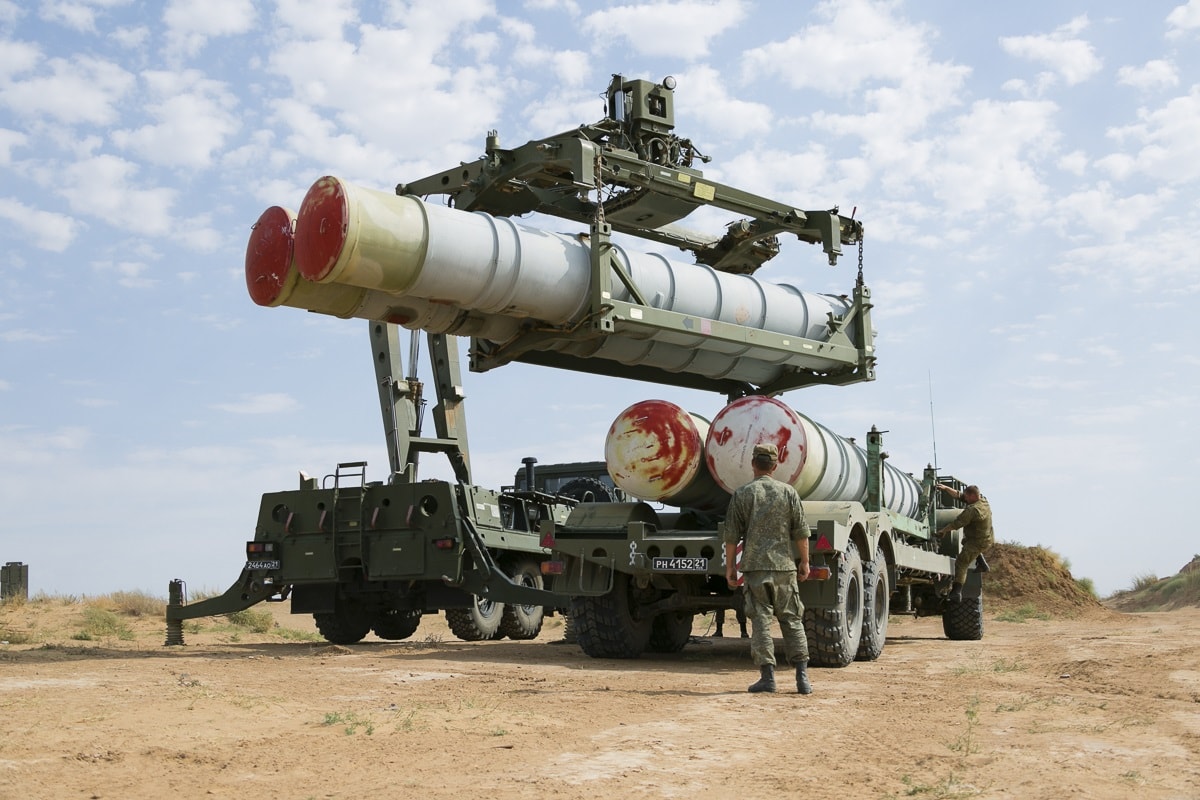
Russia’s S-400 Air Defense System. Image: Russian Military.
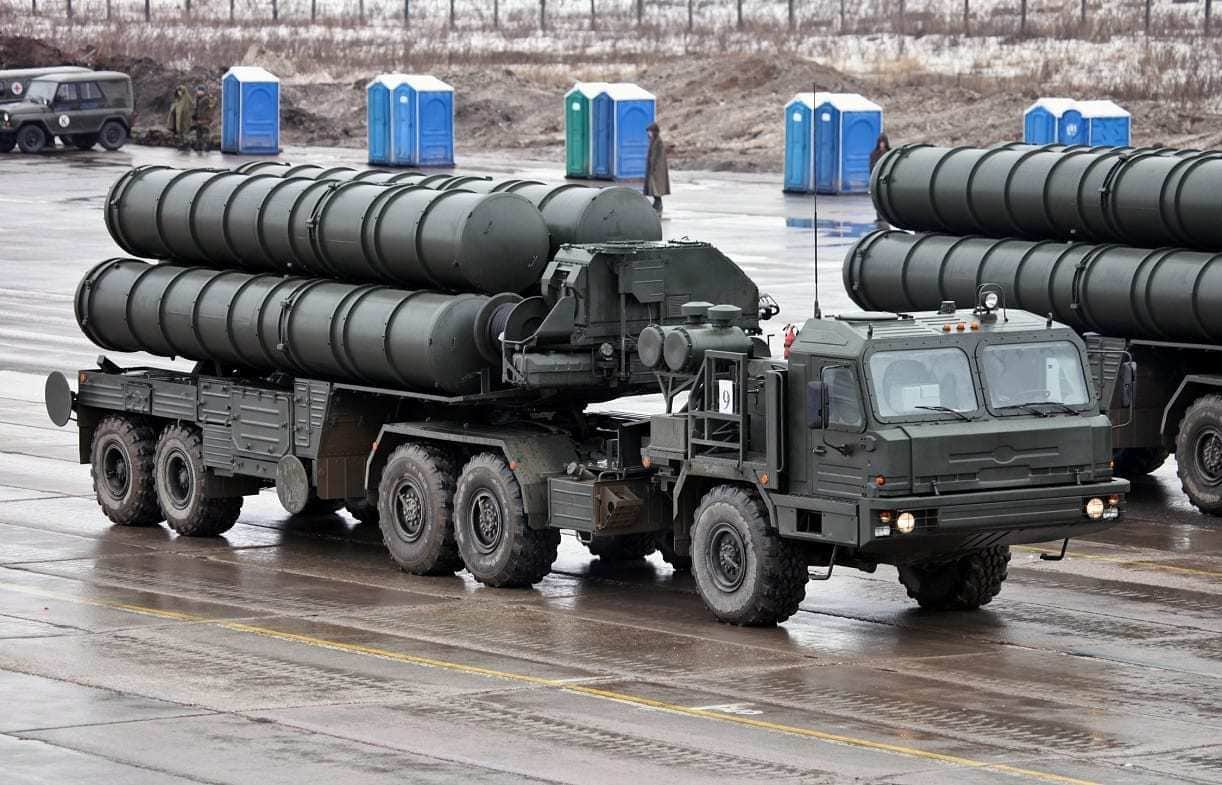
S-400. Image Credit: Creative Commons.
Though the S-500, recently put into service, offers some advancements. The S-400 entered service with Russia in 2007 and is the successor to the S-300P series air defense systems.
The S-400 can engage a broad range of aerial targets, including fighter and bomber aircraft, helicopters, cruise missiles, and drones, as well as some types of cruise missiles at long range and high altitude.
Origin
The S-400 was conceived of as the natural successor to the Soviet S-300 system.
Though the collapse of the Soviet Union hampered its development, the S-400 was finalized and tested in the 2000s. The S-400’s anticipated operational role was to provide layered air defense coverage of strategic targets, including command infrastructure, air bases, and cities, against precision-guided munitions and aircraft.
The S-400 is not intended to operate on its own. Rather, the air defense system is designed to operate as part of a larger, layered air defense network that incorporates shorter-range systems such as Pantsir and Bus launchers, along with early warning radar and command nodes.
In combination, these assets would make penetration by adversary aircraft or munitions very difficult.
A typical S-400 battalion is highly mobile and includes a command post, a long-range acquisition radar for detecting targets at long range, an engagement radar for tracking and missile guidance, and multiple transporter-erector-launchers that each carry four missiles.
Each of the S-400’s components can redeploy relatively quickly and move off-road, a boon to survivability and a hindrance to preemptive adversary strikes.
Capabilities and Export Destinations: F-22 and F-35 Killer?
The S-400 has several types of air defense missiles in its quiver, with ranges as low as 40 kilometers for shorter-range interceptions, up to 400 kilometers for high-value aircraft such as AWACS, surveillance, or refueling tankers, and medium-range interceptors optimized for maneuverable targets such as cruise missiles.
The S-400’s radar components can track hundreds of targets simultaneously and engage dozens of those targets at once. Some Russian sources claim that the S-400 can track up to 300 targets simultaneously and engage 36 of them.

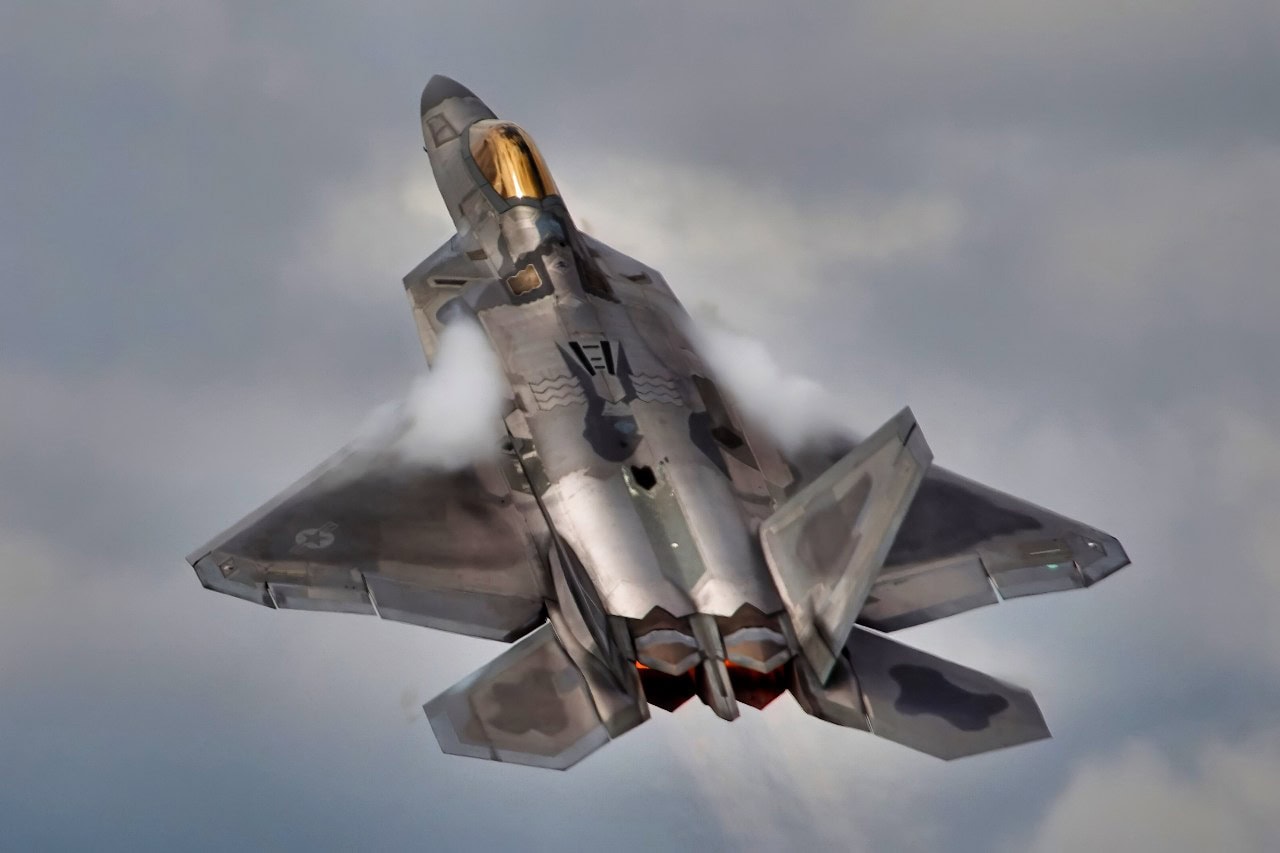
An F-22 Raptor from the Hawaii Air National Guard 154th Wing retreats after mid-flight refueling from a KC-135 Stratotanker assigned to the 128th Air Refueling wing of Milwaukee during Sentry Aloha off the coast of Honolulu, Hawaii on January 14, 2026. Sentry Aloha provides cost-effective and realistic, large-scale training scenarios to prepare warfighters and support the Air National Guard’s position as a crucial component of the nation’s operational force.
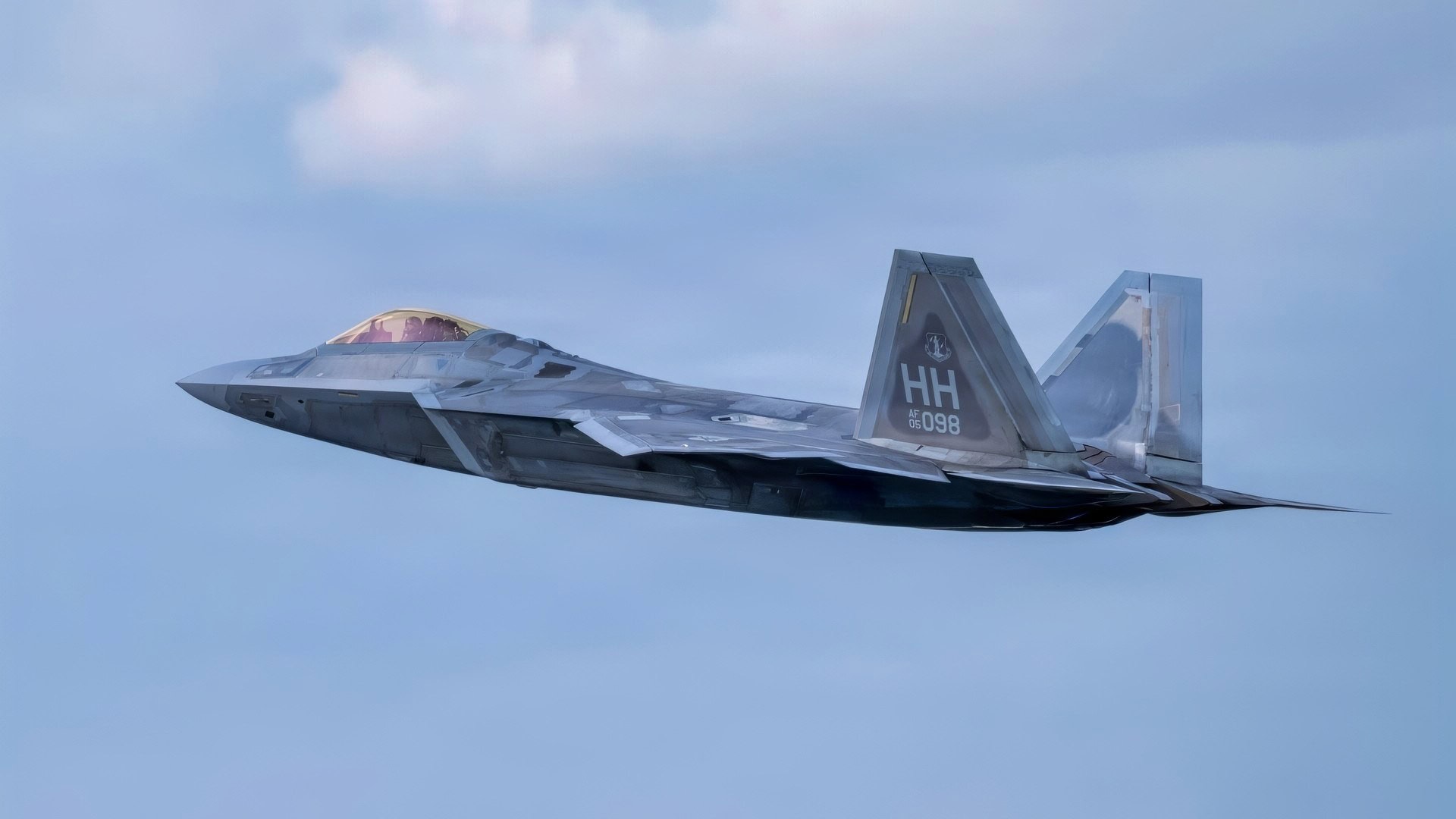
A U.S. Air Force F-22 Raptor, assigned to the 154th Wing, takes off from Daniel K. Inouye International Airport, Hawaii, Jan. 14, 2026, during Sentry Aloha 26-1. The F-22 Raptor is the U.S. Air Force’s premium fifth generation fighter. (U.S. Air Force photo by Senior Airman Aden Brown)
However, those claims depend heavily on ideal environmental conditions and the mix of aircraft and radar available. Although the S-400 is intended to detect low-observable aircraft like the F-22 Raptor or F-35, its effectiveness against fifth-generation stealth aircraft is not publicly known and is a continued subject of debate.
The S-400 has exerted an outsized influence on defense imports and exports. India, China, and Turkey have purchased the S-400 system, and Turkey’s buy-in was the catalyst for a major dispute within the NATO alliance, as the integration of an advanced Russian air defense system raised the prospect of exposing data relevant to the F-35 platform to exploitation if not outright exposure. Turkey rebuffed urging from NATO allies to abandon the S-400 and was consequently expelled from the F-35 program.
For Russia today, the S-400 is a critical node in Russia’s anti-access/area-denial strategy, and it has been deployed to strategically-significant locations such as in Russia’s Kaliningrad Oblast and occupied Crimea.
S-400: Use in Combat
The S-400 has been deployed to several different operational theaters.
In Syria, from 2015 onwards, the S-400 was used by Russian forces.
It was also used in Ukraine primarily for air defense, but has also been leveraged in a surface-to-surface role against ground targets. But the war in Ukraine has also exposed some S-400 vulnerabilities, and Ukrainian forces have managed to destroy several S-400 launchers, radars, and command posts, according to Oryx, an open-source tracking website.
India used the S-400 during the 2025 conflict with Pakistan, with some reports maintaining S-400 units intercepted Pakistani drones, missiles, and aircraft during India’s Operation Sindoor. However, the veracity of those events is difficult to ascertain.
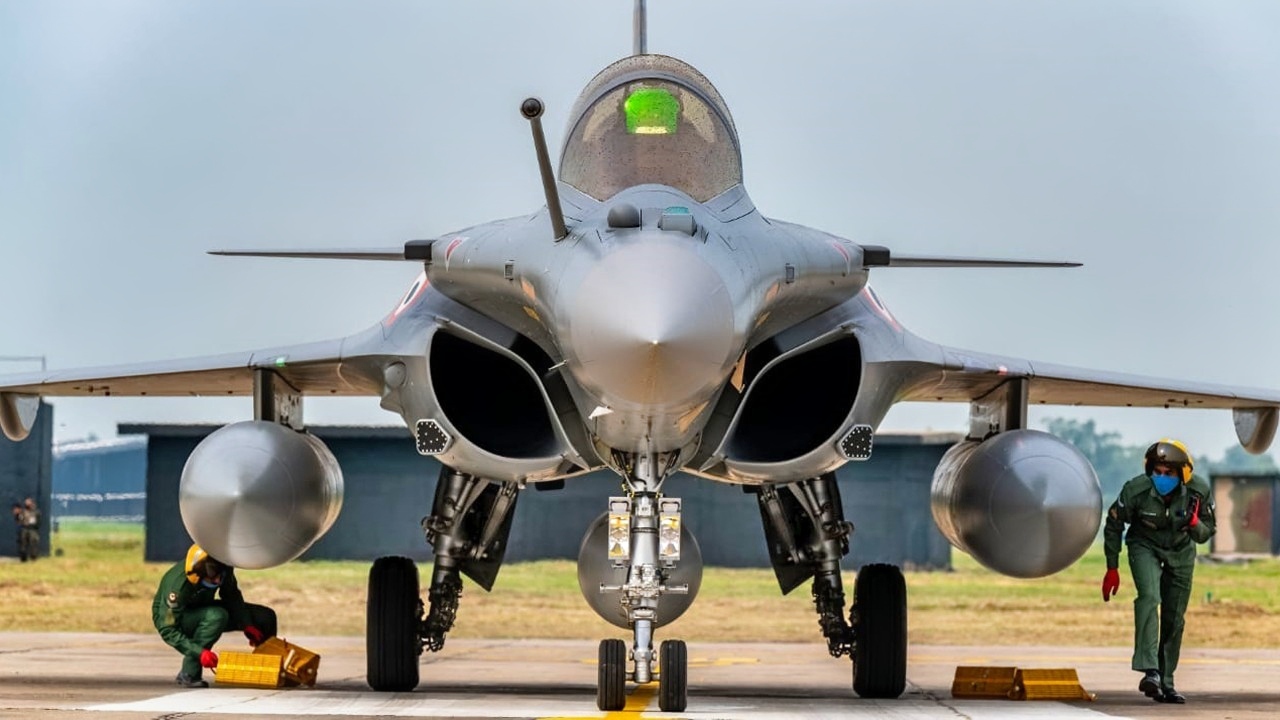
Dassault Rafale Fighter. Image Credit: Creative Commons.
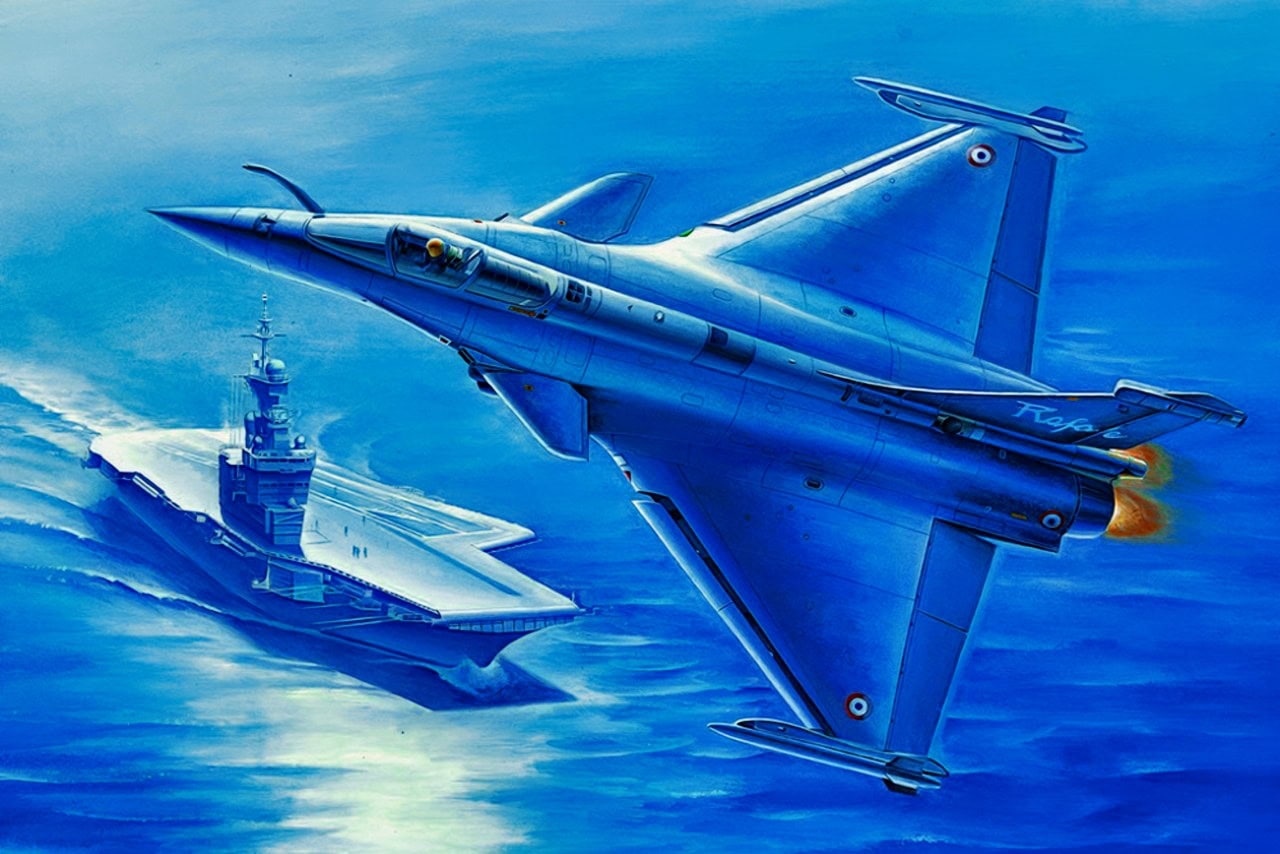
Dassault Rafale Fighter. Image Credit: Creative Commons.
Into the Future
The successor to the S-400 is Russia’s S-500. That air defense system is intended to have a broader mission set that includes expanded defense against ballistic and hypersonic missiles, as well as potentially low-orbit satellites with a 500 to 600 kilometer range.
But the rollout of the S-500 has been hampered by Russia’s ongoing invasion of Ukraine.
“The S-500 has faced significant delays. Russia had declared its design development completed in 2011, but has pushed its serial production from 2014, to 2017, to 2021, and most recently to 2025,” the Center for Strategic and International Studies, a Washington-based think tank, wrote. “Russia may be purposely delaying S-500 induction to keep production lines available for the S-400 and continue exports.”
“Russia will very likely develop an export variant of the S-500. China is a likely S-500 customer, and despite Turkey’s controversial S-400 acquisition, Istanbul has also signaled interest in procuring the new system,” CSIS added. “In May 2019, Turkish President Recep Erdogan announced that Turkey would jointly produce the S-500 with Russia.” The future of the S-500 system is unclear and may require a pause or halt of hostilities in Ukraine to move forward.
MORE – John Bolton Exclusive Op-Ed for 19FortyFive: How Donald Trump Can Still Achieve Regime Change in Iran
About the Author: Caleb Larson
Caleb Larson is an American multiformat journalist based in Berlin, Germany. His work covers the intersection of conflict and society, focusing on American foreign policy and European security. He has reported from Germany, Russia, and the United States. Most recently, he covered the war in Ukraine, reporting extensively on the war’s shifting battle lines from Donbas and writing on the war’s civilian and humanitarian toll. Previously, he worked as a Defense Reporter for POLITICO Europe. You can follow his latest work on X.