
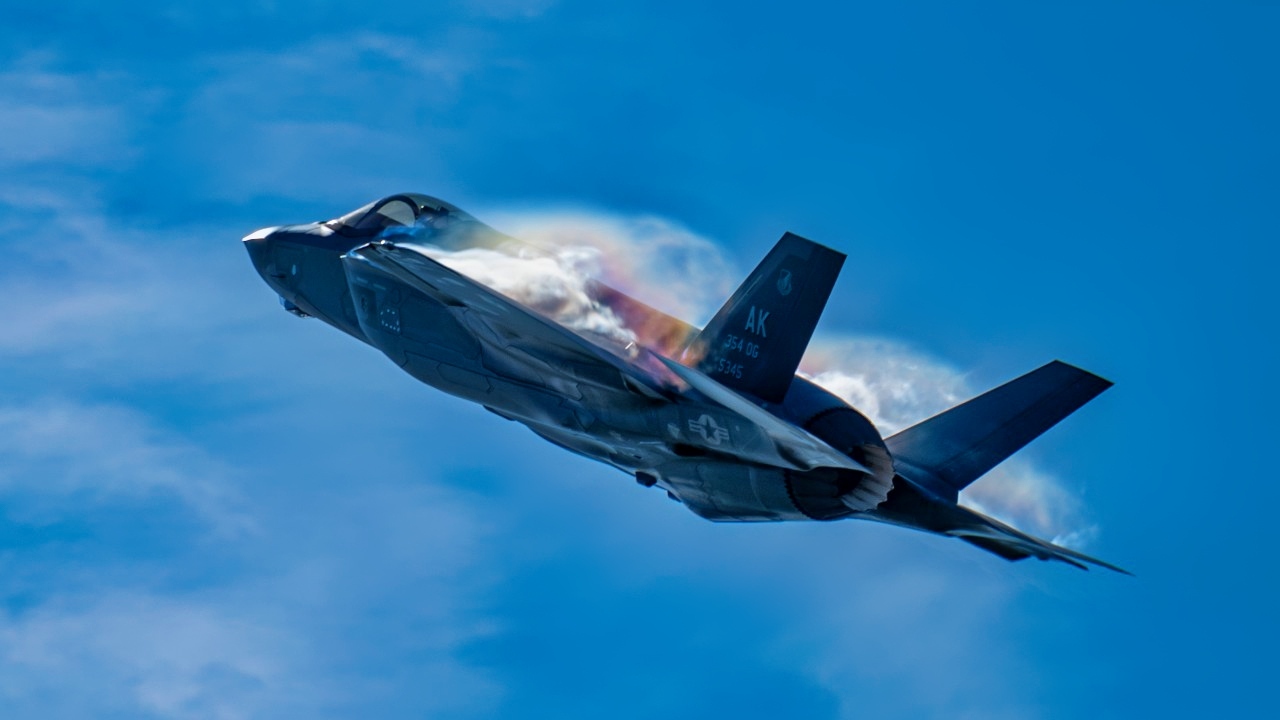
Summary and Key Points: Drawing on over a decade of national security and technology reporting, award-winning journalist Stephen Silver analyzes the first combat damage to a USAF F-35A Lightning II during the 2026 Iran campaign.
-Following an emergency landing at a Middle East air base, CENTCOM is investigating whether the jet was targeted by sophisticated passive sensors that circumvent traditional stealth.
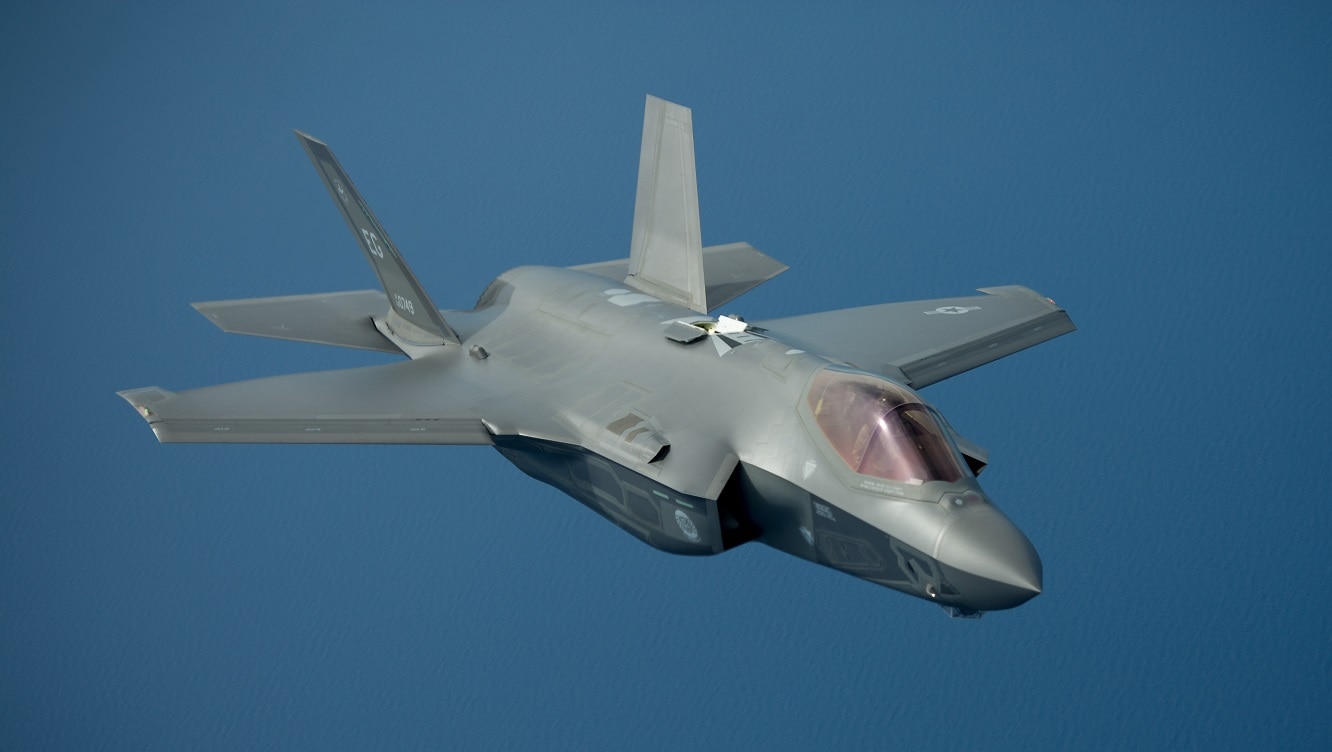
For the first time in Eglin’s air space, instructor pilot U.S. Air Force Lt. Col. Eric Smith, 33rd operations support squadron commander, navigates an F-35A Lightning II Joint Strike Fighter from the 58th Fighter Squadron, 33rd Fighter Wing, Eglin AFB, Fla. toward an Air Force Reserve KC-135R Stratotanker from the 336th Air Refueling Squadron, March ARB, Calif., May 13, 2013. Smith, an Air Force F-35 instructor pilots at the 33rd Fighter Wing trained with others to qualify in aerial refueling for the joint strike fighter. His success will add another capability for student pilot training to the F-35 Integrated Training Center here. The 33rd FW is responsible for F-35 A/B/C Lightning II pilot and maintainer training for the Marine Corps, the Navy, the Air Force and, in the future, at least eight coalition partners. Initially, 59 aircraft and three flying squadrons, one for each service/aircraft variant, will be established at Eglin. (U.S. Air Force photo by Master Sgt. John R. Nimmo, Sr./Released)
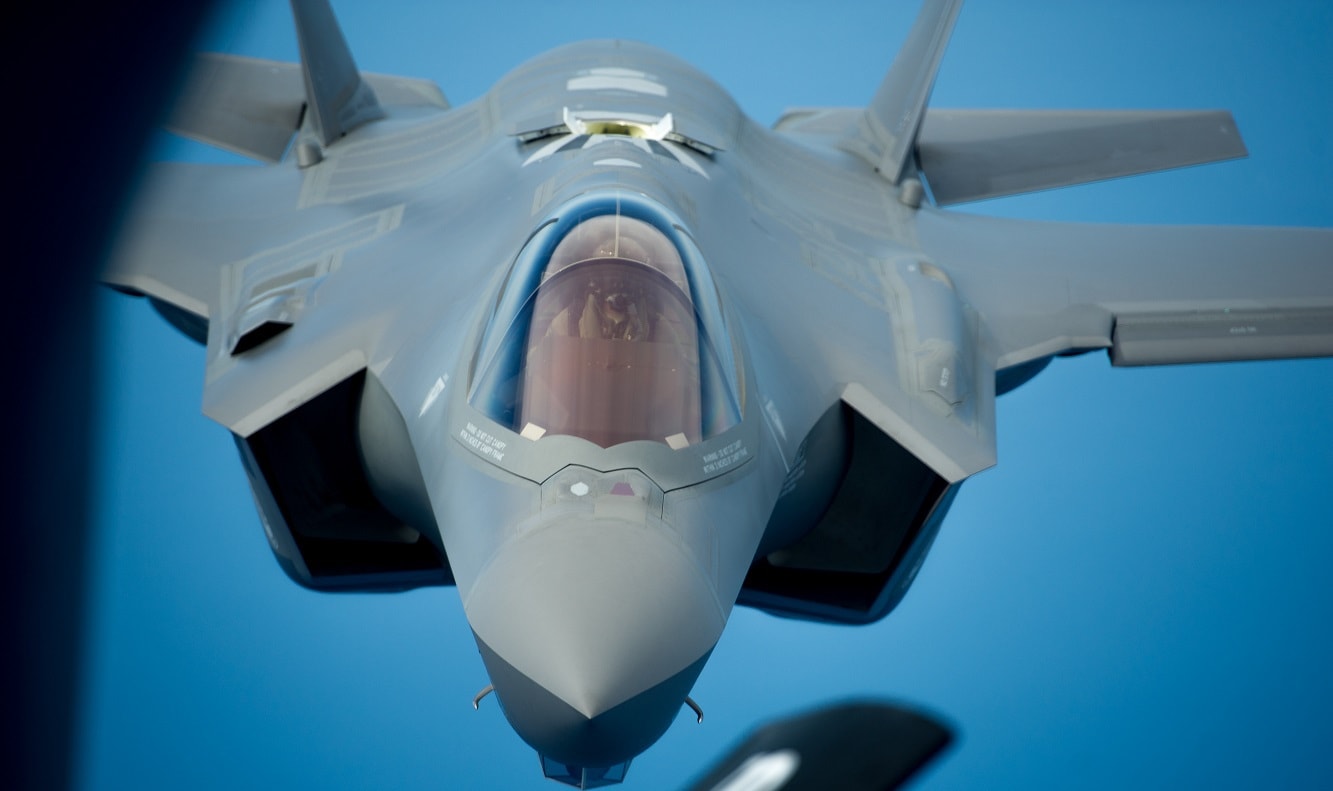
For the first time in Eglin’s air space, U.S. Air Force F-35A Lightning II pilots navigate their aircraft toward an Air Force Reserve KC-135R Stratotanker from the 336th Air Refueling Squadron, March ARB, Calif., May 13, 2013. The initial cadre of Air Force F-35 instructor pilots at the 33rd Fighter Wing trained with others to qualify in aerial refueling for the joint strike fighter. Their success will add another capability for student pilot training to the F-35 Integrated Training Center here. The 33rd FW is responsible for F-35 A/B/C Lightning II pilot and maintainer training for the Marine Corps, the Navy, the Air Force and, in the future, at least eight coalition partners. Initially, 59 aircraft and three flying squadrons, one for each service/aircraft variant, will be established at Eglin. (U.S. Air Force photo by Master Sgt. John R. Nimmo, Sr./Released)
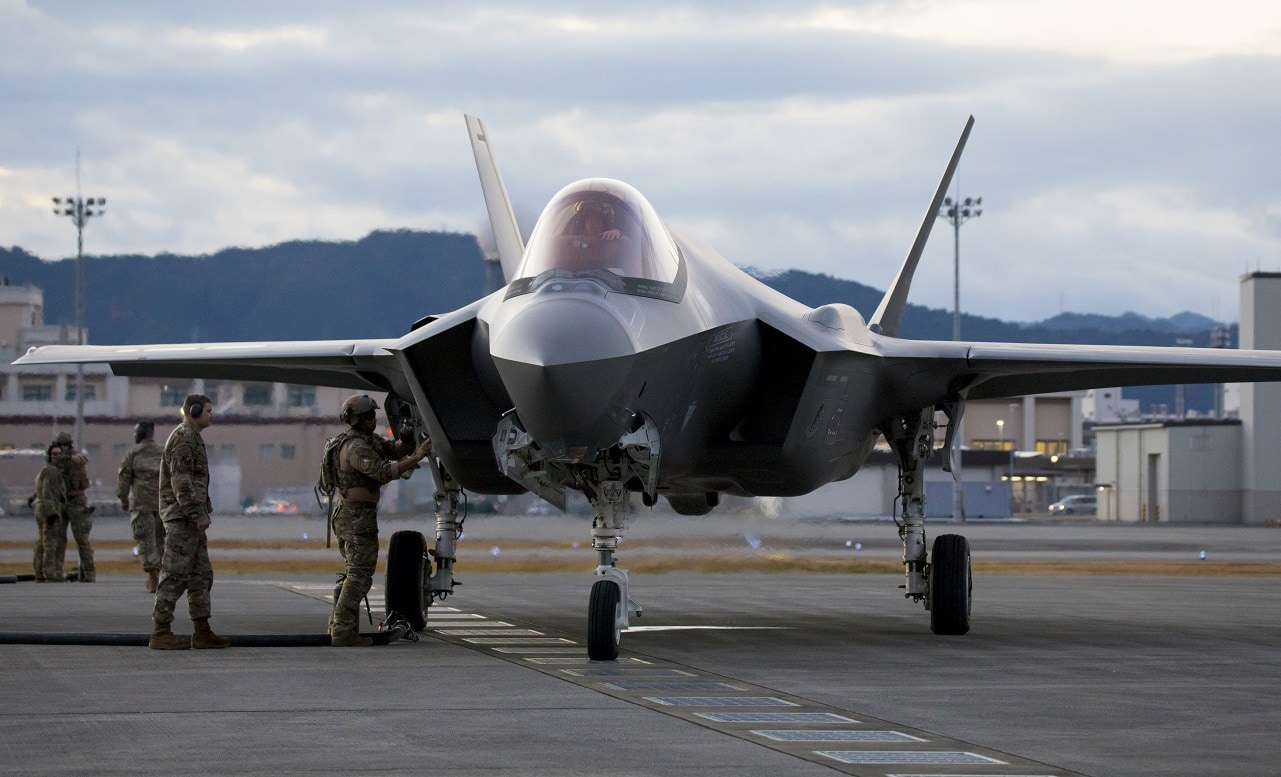
U.S. Airmen with the 356th Aircraft Maintenance Unit and 18th Logistics Readiness Squadron, prepare to refuel an F-35A Lightning II aircraft with the 354th Fighter Wing during a Forward Area and Refueling Point at Marine Corps Air Station (MCAS) Iwakuni, Japan, Dec. 8, 2021. Airmen with the 354th Fighter Wing conducted a Forward Area Refueling Point with 1st Special Operations and 18th Logistics Readiness Squadron while deployed to MCAS Iwakuni, Japan, to simulate expeditionary refueling while operating in Forward deployed environments. (U.S. Marine Corps photo by Lance Cpl. Tyler Harmon)
-Silver also exposes a critical procurement bottleneck: the Pentagon is now accepting “radar-less” F-35s equipped with ballasts because the next-generation APG-85 radar is not yet ready for the redesigned Lot 17 bulkheads, sidelining new assets from combat coding.
Stealth Under Fire: Analyzing the First Iranian Strike on a U.S. F-35A
An F-35 was damaged this week during the military campaign against Iran.
According to CNN, “a US F-35 fighter jet made an emergency landing at US air base in the Middle East after it was struck by what is believed to be Iranian fire.” CNN cited “two sources familiar with the matter.”
Capt. Tim Hawkins, a spokesman for Central Command, told the press that the jet was “flying a combat mission over Iran” and then made an emergency landing.
“The aircraft landed safely, and the pilot is in stable condition,” Hawkins told CNN. “This incident is under investigation.”
According to TWZ, the jet in the incident has been confirmed as an Air Force F-35A.
Per Defence Blog, “the incident comes amid ongoing hostilities involving Iran, where both the United States and Israel are conducting air operations. It reflects a direct engagement involving a fifth-generation stealth aircraft and highlights the risks faced by advanced platforms operating in contested airspace.”
Defence Blog added that Iran’s Islamic Revolutionary Guard Corps claimed it had targeted an F-35 and released video footage of what it said was the strike. However, the footage’s authenticity had not been independently verified.
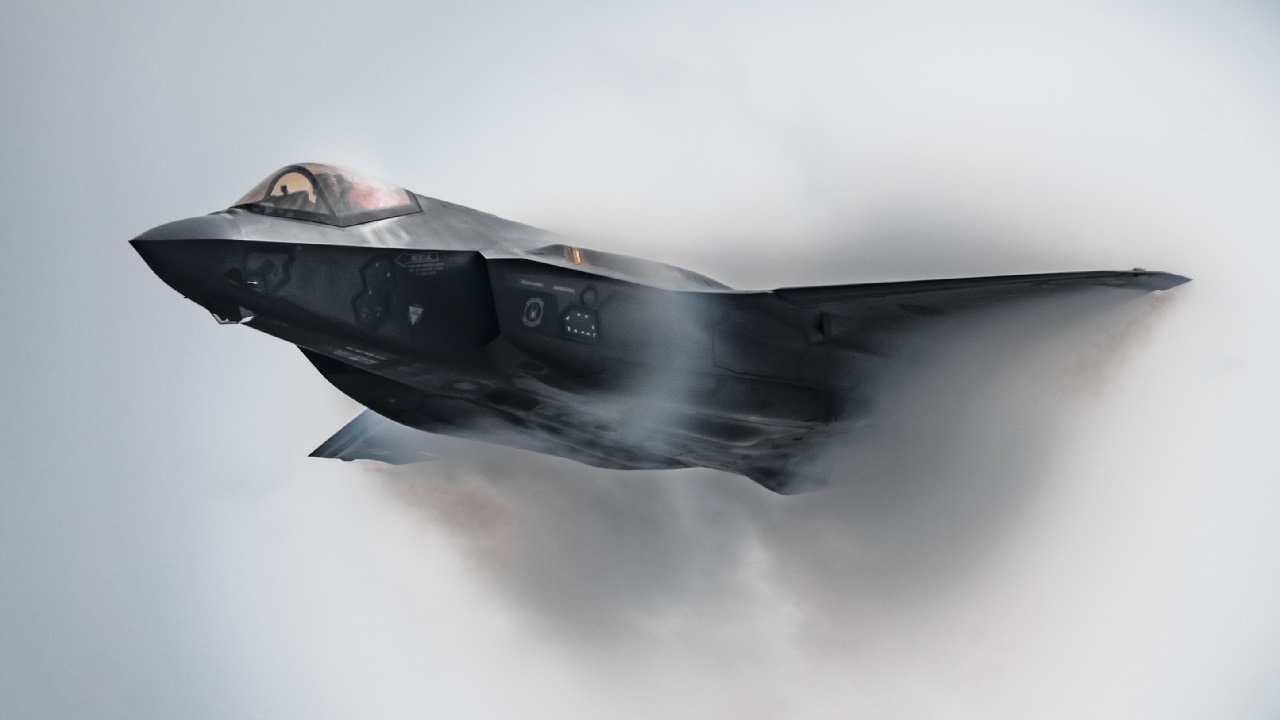
U.S. Air Force Maj. Kristin “BEO” Wolfe, F-35A Lightning II Demonstration Team commander and pilot, flies during a demonstration rehearsal at Hill Air Force Utah, Jan 20, 2021. The F-35A Lightning II Demonstration Team is part of the 388th Fighter Wing, and routinely flies over the Hill Air Force Base to practice and prepare for upcoming air shows around the world. (U.S. Air Force photo by Staff Sgt. Thomas Barley)
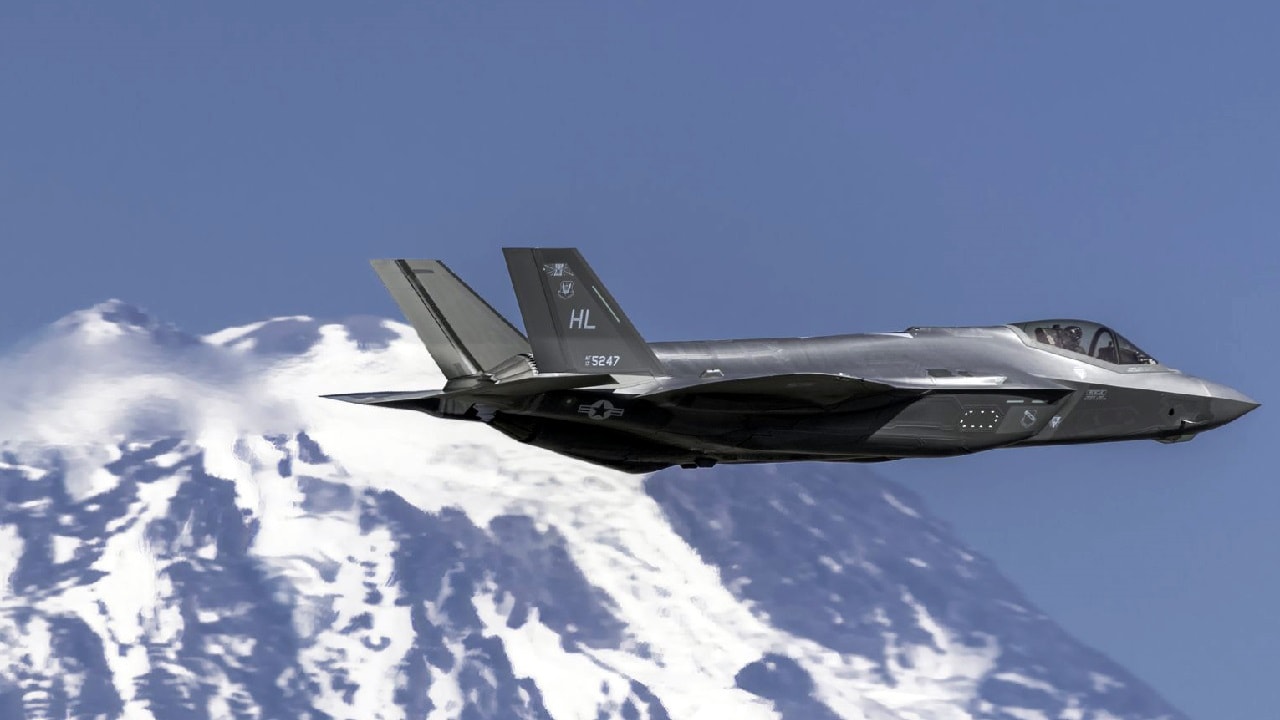
An Airman of the F-35A Lightning II Demonstration Team flies the F-35A in front of a mountain near Tacoma, Wash., on July 5, 2021. The demonstration team headlined both the Gig Harbor Wings-and-Wheels and Tacoma Freedom Fair air shows for the Fourth of July weekend, showcasing the advanced capabilities of the F-35 to the Pacific Northwest. (U.S. Air Force photo by A1C Jake Welty)
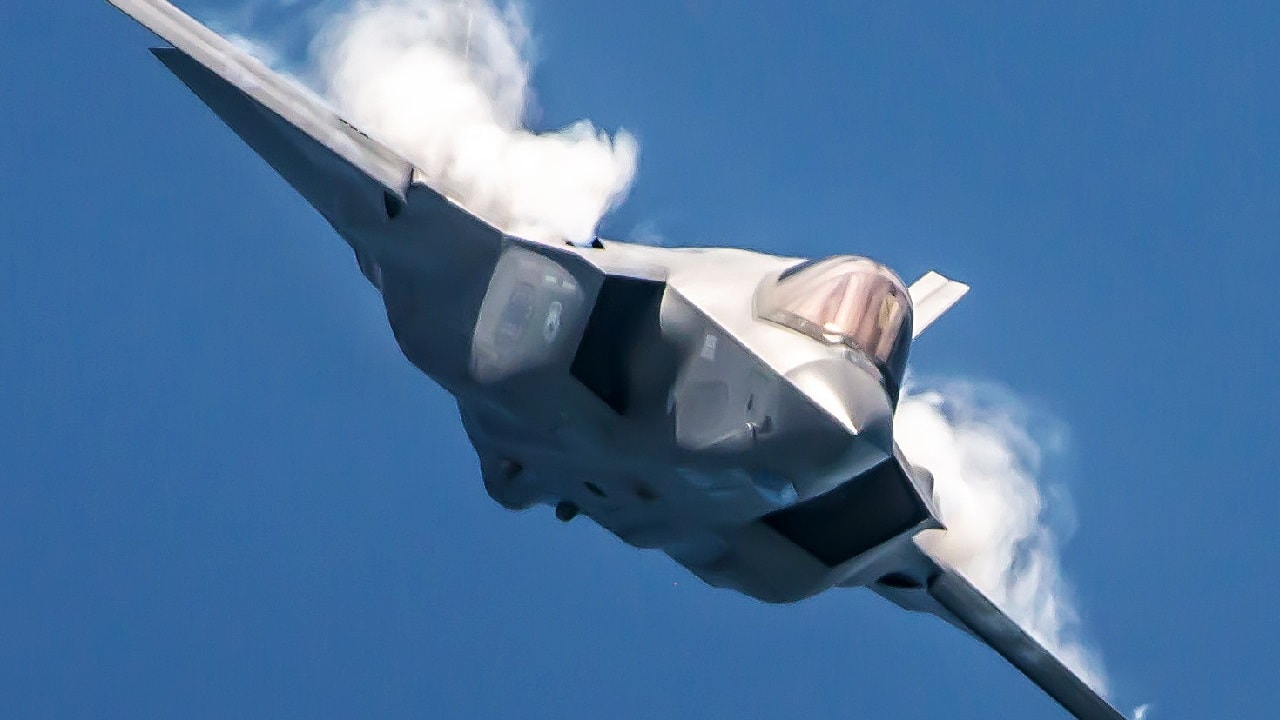
Capt. Andrew “Dojo” Olson, F-35A Lightning II Demonstration Team pilot, performs over Miami Beach, Fla., May 25, 2019. Olson performed the demo during both days of the Miami Beach Air and Sea Show. (U.S. Air Force photo by Staff Sgt. Jensen Stidham)
“Provided that the published video of the claimed shootdown is the real deal, that would point to the real possibility that the jet was targeted by a passive sensor, the same kind we repeatedly warned about,” TWZ reported, noting that the unconfirmed video looks like previous videos of air-defense equipment used by the Houthis.
It would mark the first time in the current military campaign in which a U.S. aircraft has been hit by enemy fire, although jets have been lost under other circumstances.
“Three US F-15 fighter jets were mistakenly shot down by Kuwaiti air defenses, with all six crew members ejecting safely,” CNN reported. “And last week, a KC-135 Stratotanker refueling aircraft crashed in western Iraq, though the cause is still unclear. The US military said the incident was ‘not due to hostile fire or friendly fire.’”
Six U.S. military personnel were killed in the refueling jet crash.
In the F-35’s history, it has never been shot down in direct combat, although various F-35s have crashed in non-combat situations.
F-35s in the War
Both the United States and Israel are flying F-35s during the Iran military campaign. The Times of Israel reported earlier this month that an Israeli Air Force jet was almost shot down, but that the attempted interception, according to an Israel Defense Forces spokesman, “failed due to the alertness and professionalism of the pilot.”
In addition, in early March, British F-35s shot down drones over Jordan, in what was described by Business Insider as the first time a Royal Air Force F-35 had ever “destroyed a hostile target during operations.”
The United Kingdom received its first F-35s in 2012.
Britain is not directly participating in the Iran mission, a fact that has been a topic of contention in recent days. But they are policing and shutting down drones.
“We are moving quickly to further reinforce our defensive presence in the Eastern Mediterranean,” British Defense Secretary John Healey said. “HMS Dragon brings world-class air defense capability, and our Wildcat helicopters are armed with Martlet missiles to counter the growing drone threat.”
How Iran Confronts Air Power
TWZ looked into Iran’s capabilities to defend against U.S. and Israeli air power.
“For all the defense-suppression missions that have been flown, Iran still possesses road-mobile air defenses as well as more exotic types that can pop up virtually anywhere and give aircrews very little time to react,” TWZ reported. “These systems can be easily hidden and will remain a threat on the battlefield long after static air defenses are destroyed. Beyond that, there are man-portable air defense systems (MANPADS), which, while less of a menace in terms of outright performance and engagement envelopes, are impossible to entirely remove from the battlespace.”
Gen. Dan Caine, the chairman of the Joint Chiefs of Staff, has acknowledged the danger.
“We’re flying further to the east now and penetrating deeper into Iranian airspace to hunt and kill one-way attack drone garrisons, destroying Iran’s ability to project power outside of its borders.”
Without Radars?
In other big F-35 news this week, reports suggest the United States will accept new F-35s this year without radars.
According to Breaking Defense, beginning this fall, “all new F-35 Joint Strike Fighters delivered to the American military will come without radars, an issue that could stretch into the future and restrict the jets from participating in combat operations.”
The APG-85 radar could be ready “as soon as next year,” the report added. Those without the radars will be “airworthy,” but not used in combat.
“They can still take delivery of the jet. They can still use it as a flyable asset, [but] obviously not a combat-coded asset. So they can still do limited training with it,” a source told Breaking Defense.
What’s the problem with the radars?
“At issue is an upgraded radar called the APG-85. It’s a different size than the current APG-81, so planes meant to carry it have a redesigned bulkhead,” the Breaking Defense report said. “The Pentagon attempted to time the radar’s entry into an ongoing production batch of jets dubbed Lot 17, but delays with the radar mean those planes will be ready before the APG-85. Due to the different bulkhead, the APG-81 radar can’t be wedged into the spot for the APG-85.”
Rep. Rob Wittman (R-VA), chairman of the House Armed Services tactical air and land forces subcommittee, confirmed the radar trouble.
“We also have an issue with the new radars, the APG-85 radars, and making sure that they’re on the new aircraft,” Whittman told Breaking Defense. “Right now, they’re going to be produced with ballasts, which too, creates an aircraft that’s not going to be combat-coded anytime soon.”
About the Author: Stephen Silver
Stephen Silver is an award-winning journalist, essayist, and film critic, and contributor to the Philadelphia Inquirer, the Jewish Telegraphic Agency, Broad Street Review, and Splice Today. The co-founder of the Philadelphia Film Critics Circle, Stephen lives in suburban Philadelphia with his wife and two sons. For over a decade, Stephen has authored thousands of articles that focus on politics, national security, technology, and the economy. Follow him on X (formerly Twitter) at @StephenSilver, and subscribe to his Substack newsletter.