
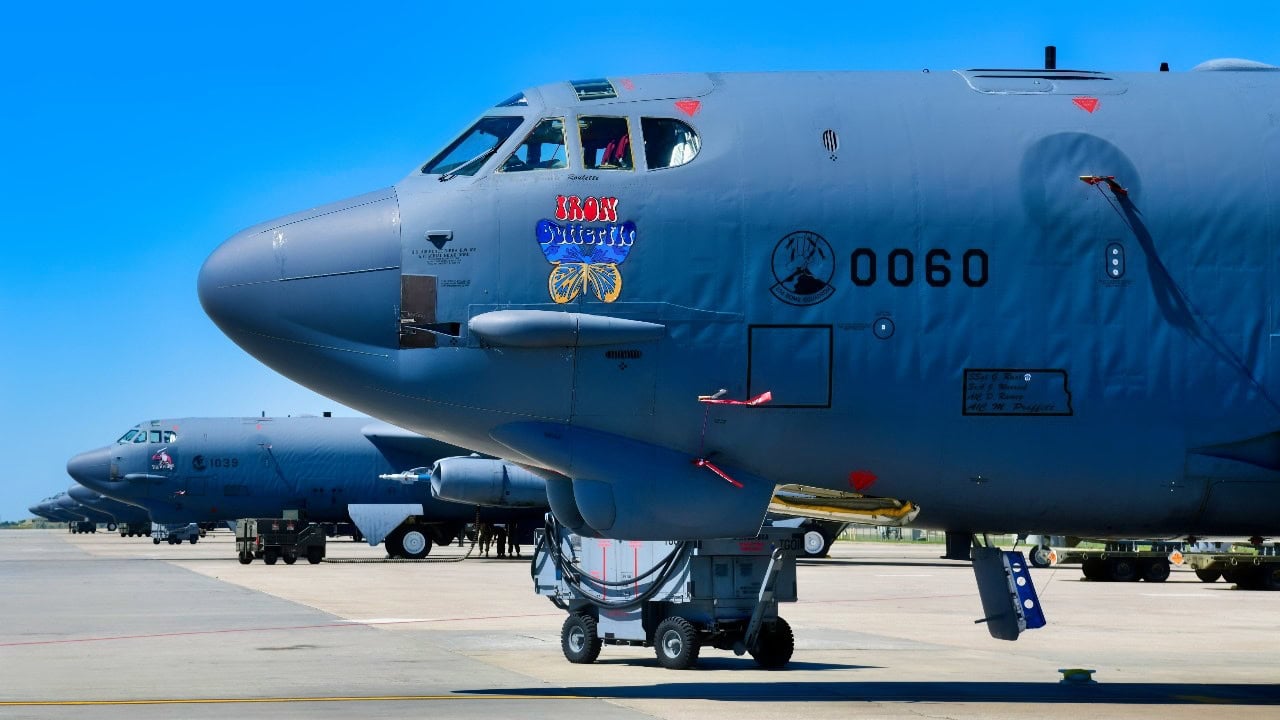
Summary and Key Points: Buried nearly a mile beneath solid Colorado granite lies a Cold War fortress straight out of science fiction. Defense columnist Isaac Seitz takes readers inside the legendary Cheyenne Mountain Complex.
-Carved out in the 1960s to withstand a direct nuclear strike, this subterranean city features 15 buildings mounted on massive steel springs.
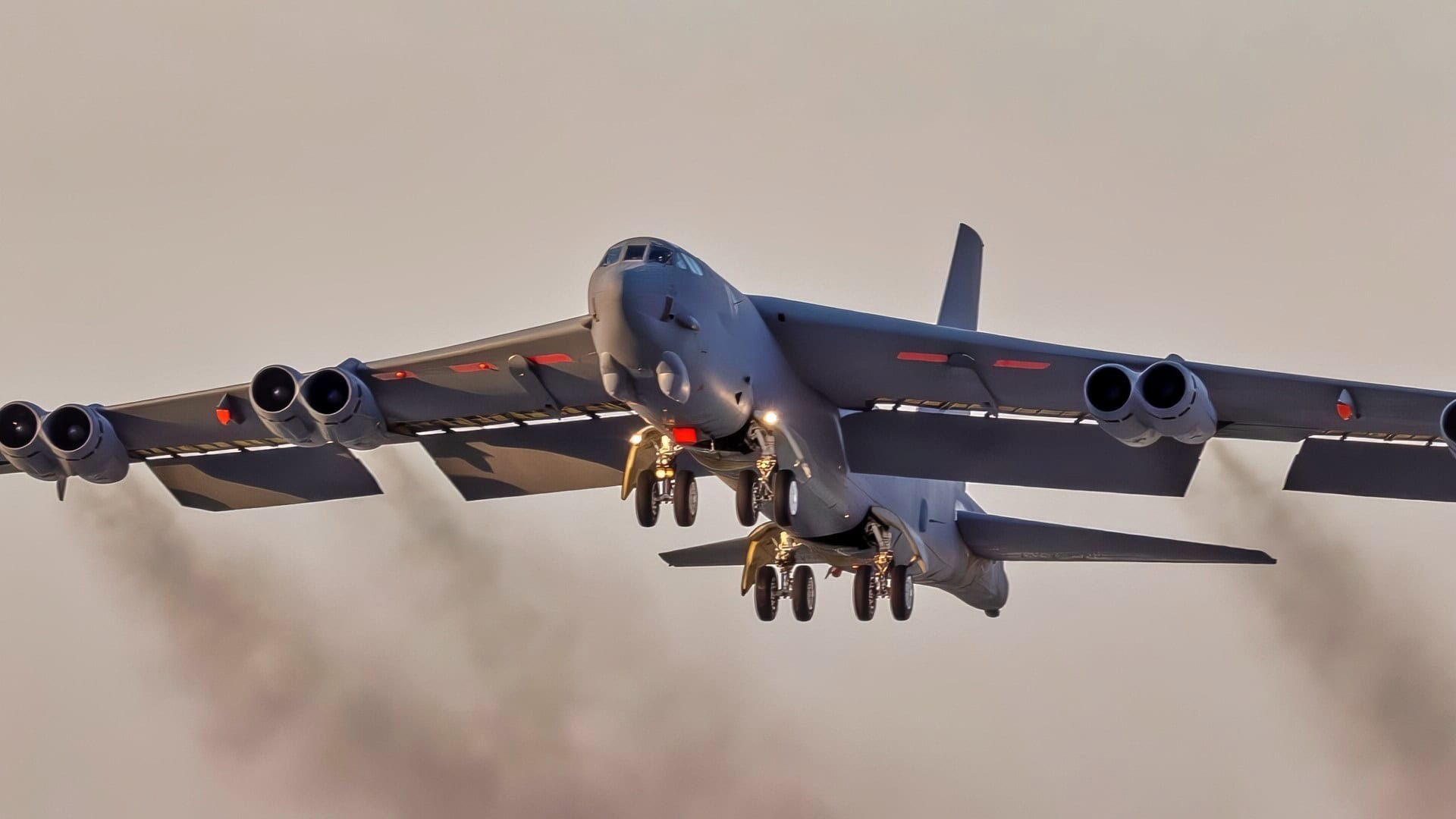
A modified B-52H Stratofortress departs Edwards Air Force Base for an evening training mission on June 25, 2025. The aircraft is assigned to the 419th Flight Test Squadron, Global Power Bombers Combined Test Force, tasked with supporting developmental testing across the B-52, B-1, and B-2 bomber portfolio. Along with most 412th Test Wing aircraft, B-52H bombers at Edwards include special instrumentation to conduct a variety of testing activities. (Air Force photo by Chase Kohler)
-While everyday operations have moved down the road, Cheyenne Mountain remains the ultimate EMP-hardened backup command center for NORAD, USNORTHCOM, and the U.S. Space Force, ready to take over the nation’s defense in an instant.
Inside Cheyenne Mountain: The Cold War Fortress That Inspired Hollywood
The Cheyenne Mountain Complex is an underground military bunker operated by the U.S. Department of War in Colorado. The site has featured in various forms of media, from movies like War Games and the Terminator franchise, to video games like Call of Duty and Fallout.
But what actually goes on at the Cheyenne Mountain Complex, and what is the site used for?
Although the exact details of its mission are classified, the site is currently used by NORAD and USNORTHCOM, which reportedly use it as a backup command center in case of a nuclear attack.
Construction of Cheyenne
The Cheyenne Mountain complex was first devised during the 1950s. During this period, the United States and Canada sought a hardened, survivable command center that could withstand a direct attack from long-range Soviet bombers and intercontinental ballistic missiles.
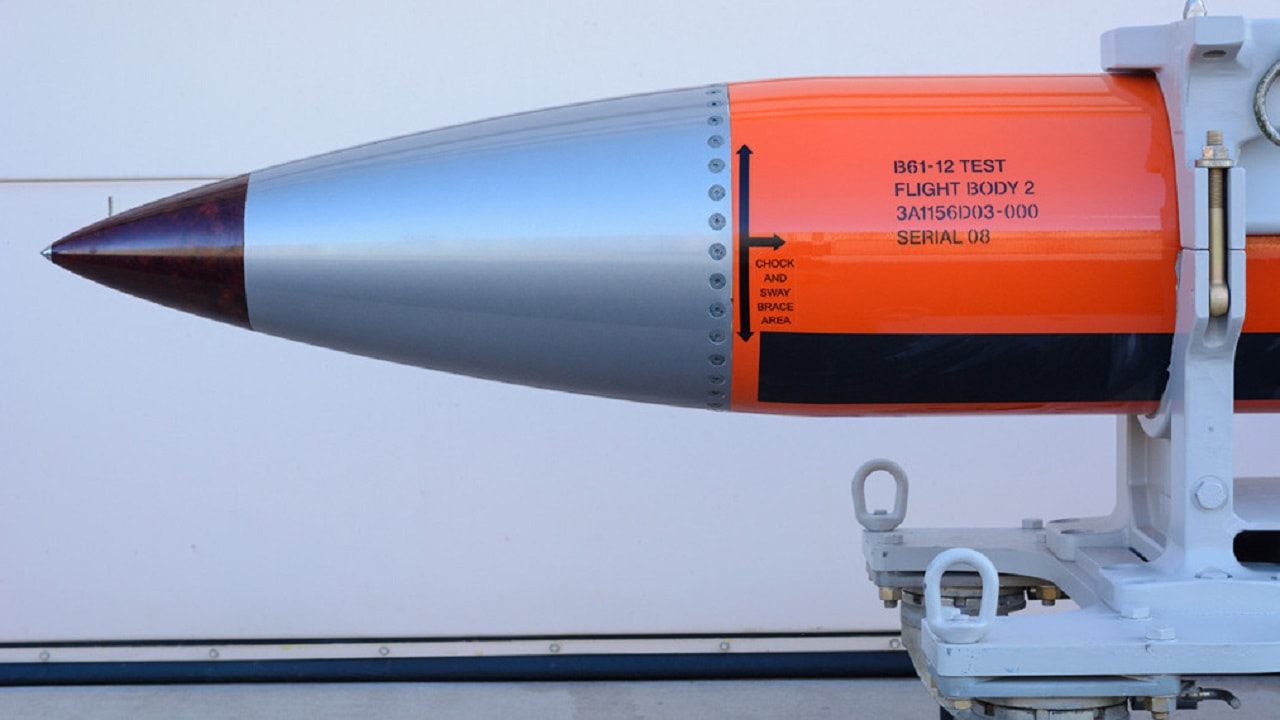
US Military B-61 nuclear weapon. Image Credit: US DOD.
Construction of the facility began in 1961 under the direction of the U.S. Army Corps of Engineers, who oversaw the excavation of enormous volumes of solid granite to create an underground space large enough to support key military operations. The project culminated in 1966, and the complex became fully operational the following year as the NORAD Combat Operations Center.
The undertaking was immense in both engineering ambition and financial investment. By the time construction concluded, its cost had reached $142.4 million, which was considered high but necessary during the height of the Cold War. The complex was designed from the outset not only to be functional but also to be extraordinarily resilient, capable of operating even under conditions of nuclear attack.
Engineering Features and Defensive Capabilities
Cheyenne Mountain’s engineering remains one of the most remarkable aspects of the installation. Carved nearly a mile beneath granite, the complex functions as a self-contained underground city.
It possesses its own power plant, climate-control systems, and subterranean water reservoirs, ensuring that it can operate independently for extended periods if cut off from external infrastructure. Food supplies are also stored in quantities sufficient to sustain personnel for an extended, though classified, length of time.
According to official sources, the facility is able to withstand immense destructive forces, including a nuclear blast many times more powerful than the bomb dropped on Hiroshima. Its structural resilience is augmented by shock-mounted buildings, redundant bunker architecture, and massive blast doors that mark the facility’s entrance.
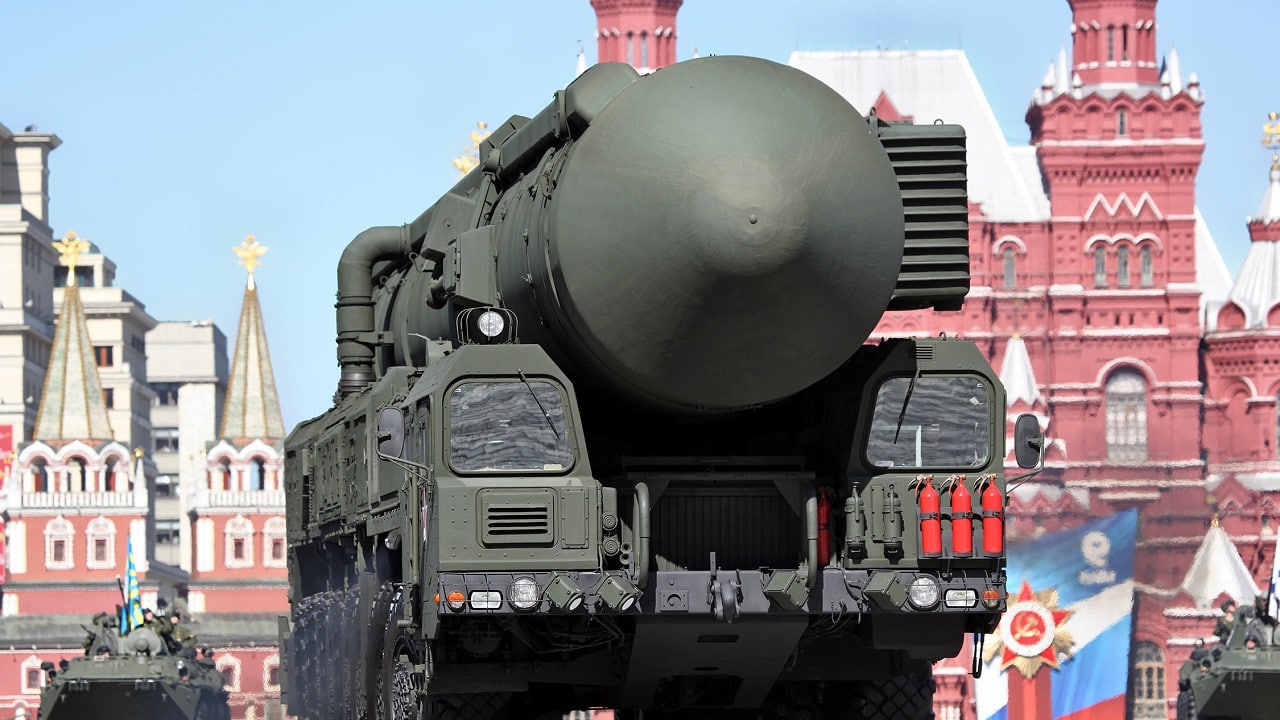
Russian Mobile ICBMs. Image Credit: Creative Commons.
The full underground complex spans 5.1 acres and includes fifteen internal buildings constructed on enormous steel springs to absorb shockwaves from explosions or earthquakes. This established Cheyenne Mountain as one of the most secure and survivable military installations in the world, ensuring that core defense operations could endure a catastrophic attack.
Cheyenne Mountain’s Role During the Cold War
During its first decades of operation, Cheyenne Mountain served as the beating heart of North American aerospace defense.
As NORAD’s (North American Aerospace Defense Command) primary home, the facility coordinated the detection and analysis of potential threats from Soviet bombers, ballistic missiles, and other airborne threats. Analysts and operators monitored radar stations, satellite feeds, and intelligence reports around the clock, ensuring that the United States and Canada would have early warning of any attack.
The mission extended into early space-tracking and later maritime warning activities. Cheyenne Mountain became synonymous with early-warning defense during a period in which reaction time could be measured in minutes or even seconds.
Its deep underground location and nuclear-hardened structure made it the ideal center for managing these high-stakes responsibilities.
From Primary to Alternate Command Center
A major shift occurred in the mid-2000s as defense priorities evolved. By 2006, NORAD and the newly established U.S. Northern Command (USNORTHCOM) began relocating their day-to-day operations from Cheyenne Mountain to nearby Peterson Air Force Base, now known as Peterson Space Force Base.
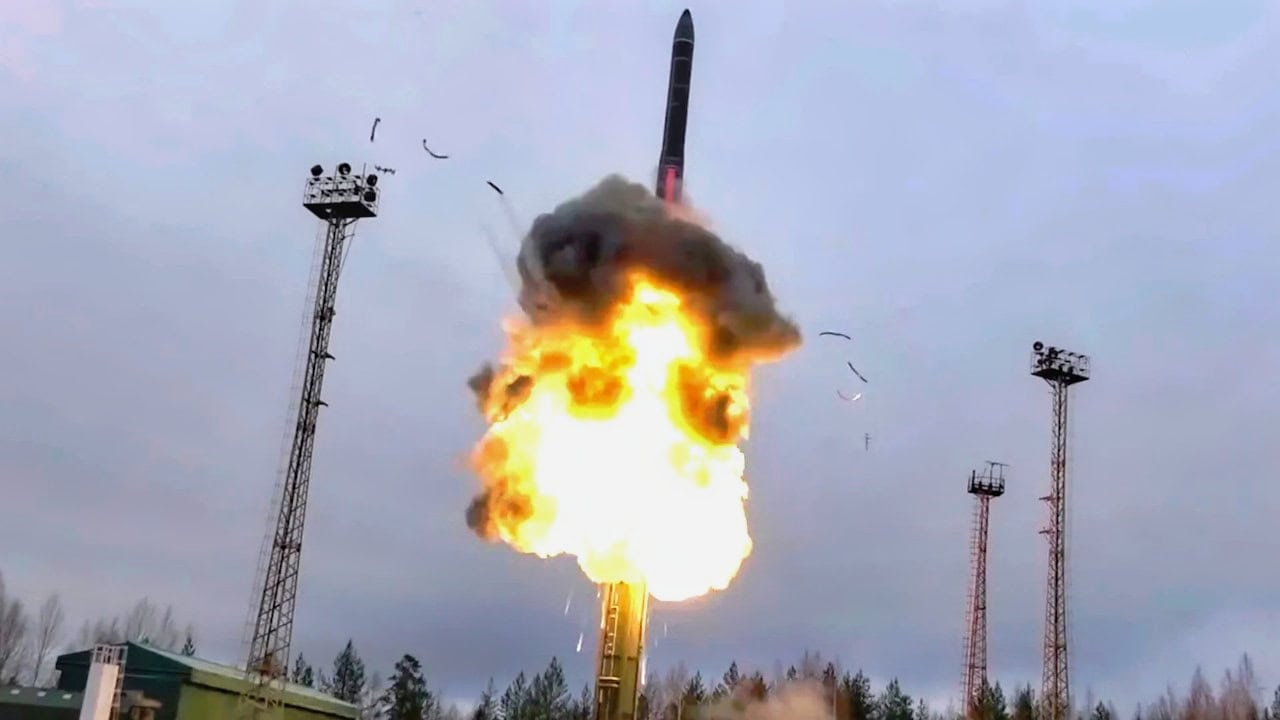
Oreshnik ICBM from Russia. Image Credit: Creative Commons.
Sentinel ICBM U.S. Air Force
Sentinel ICBM. Image Credit: Creative Commons.
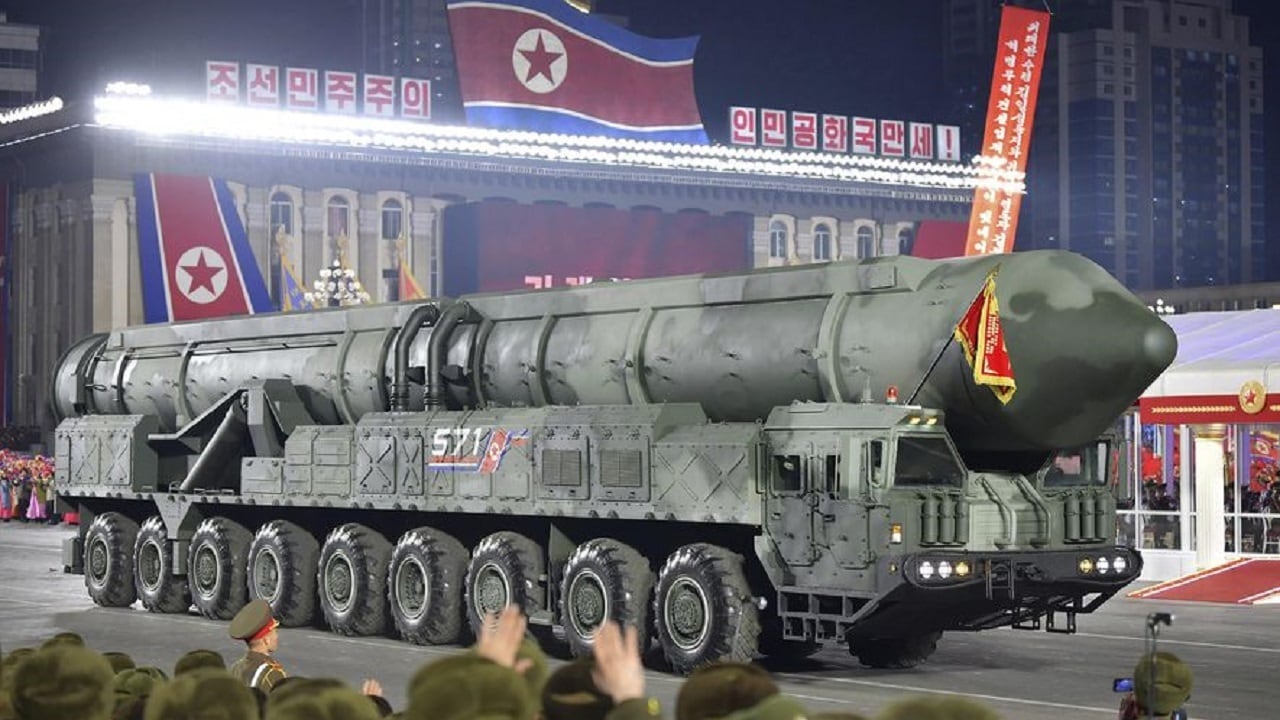
Image Credit: KCNA/North Korean Government.
This transition culminated in 2008, when the Cheyenne Mountain Complex was officially redesignated as the NORAD and USNORTHCOM Alternate Command Center. From that point on, routine operations took place at Peterson, while Cheyenne Mountain remained available as a fully functional, hardened backup facility capable of instantly assuming command in the event Peterson became compromised.
Despite this shift, Cheyenne Mountain remains at high readiness. Although NORAD and USNORTHCOM personnel now occupy less than 30 percent of its interior space and account for only about 5 percent of daily staff presence, the complex plays a critical role in supporting ongoing military functions and remains an essential component of national defense strategy.
What’s Going on at Chayanne Today?
Today, Cheyenne Mountain functions primarily as a hardened alternate operations center. Should Peterson Space Force Base experience a physical attack, cyber disruption, or electromagnetic interference, command and control operations for NORAD and USNORTHCOM can transition immediately to the underground complex.
This ensures continuity of operations during emergencies ranging from large-scale missile strikes to cyberwarfare campaigns. The facility’s design protects against nuclear, chemical, biological, and radiological attacks, as well as EMP events that could disable critical electronics.
The complex also retains the infrastructure needed to assist with NORAD’s longstanding missions of aerospace warning, aerospace control, and maritime warning. Even though day-to-day monitoring occurs at Peterson, Cheyenne Mountain serves as a fully capable alternative site, maintaining data systems and communication networks that support threat detection and strategic decision-making.
Beyond its association with NORAD, the facility supports USNORTHCOM’s broader responsibilities, including homeland defense and coordination with civilian agencies during national emergencies. It also houses multiple tenant units associated with the United States Space Force, and the installation is managed by Space Base Delta 1.
These roles contribute to broader space-domain awareness and help sustain critical infrastructure for satellite monitoring and communication resilience.
About the Author: Isaac Seitz
Isaac Seitz, a Defense Columnist, graduated from Patrick Henry College’s Strategic Intelligence and National Security program. He has also studied Russian at Middlebury Language Schools and has worked as an intelligence Analyst in the private sector.

