
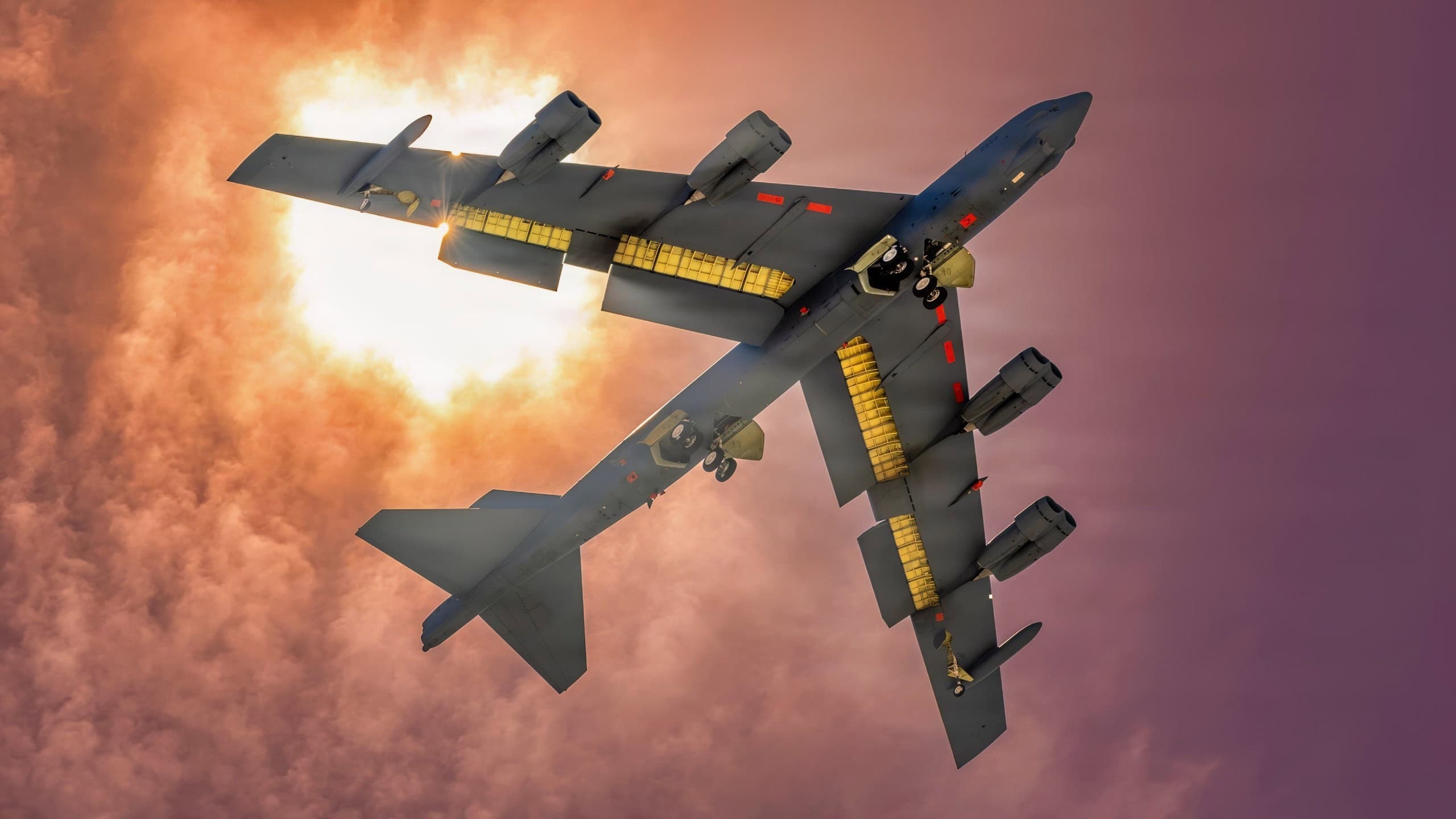
Summary and Key Points: Defense expert Jack Buckby details how a U.S. Air Force B-52H Stratofortress was recently photographed over California carrying two AGM-181 Long Range Stand Off (LRSO) test missiles, signaling a major leap forward in modernizing the American nuclear triad.
-Escorted by an NKC-135R Stratotanker and an F-22 Raptor, the flight indicates complex sensor and interoperability testing is currently underway.
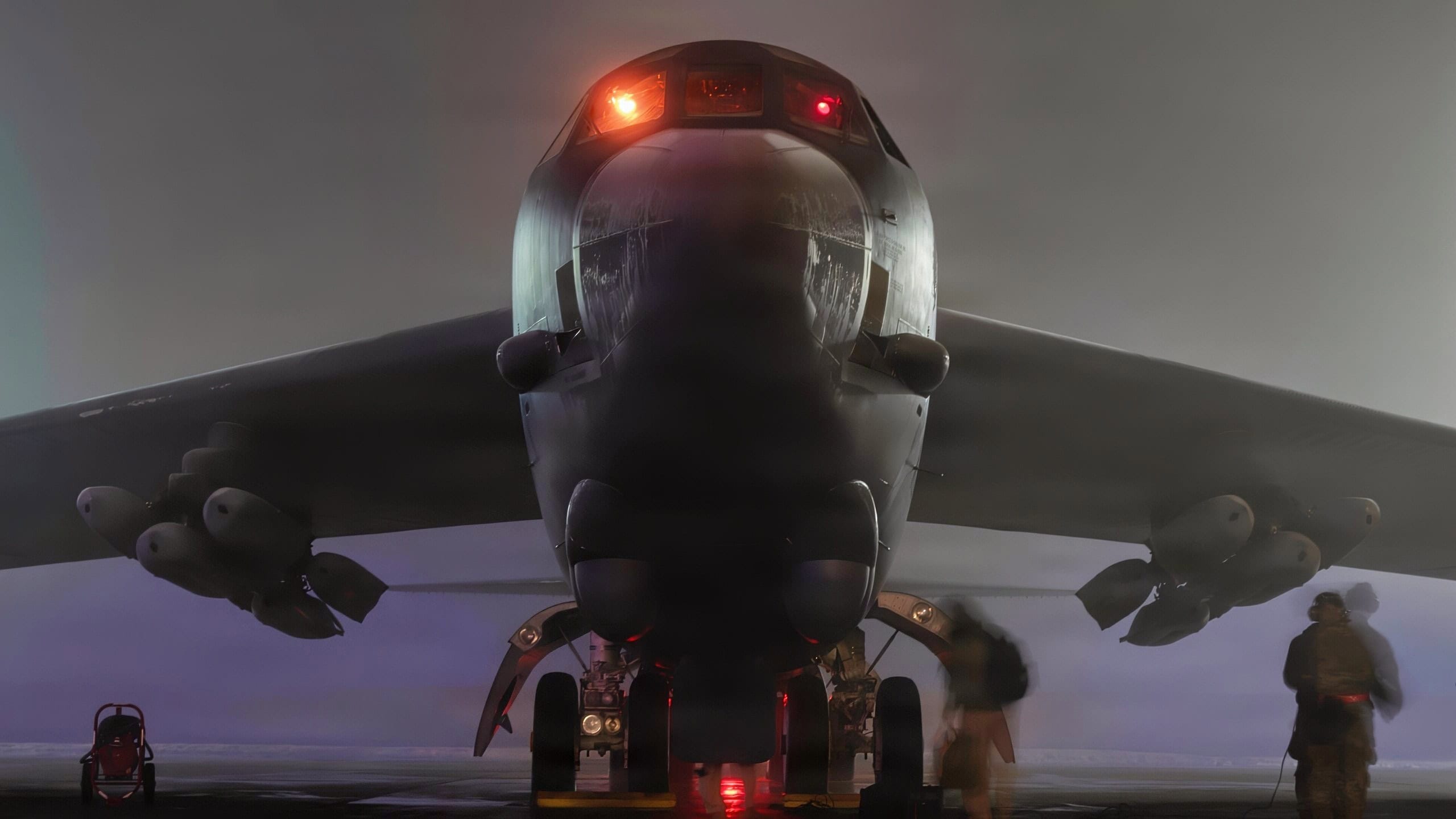
Aircrew members board a B-52H Stratofortress prior to taking off in support of Operation Epic Fury, March 4, 2026. (U.S. Air Force photo)
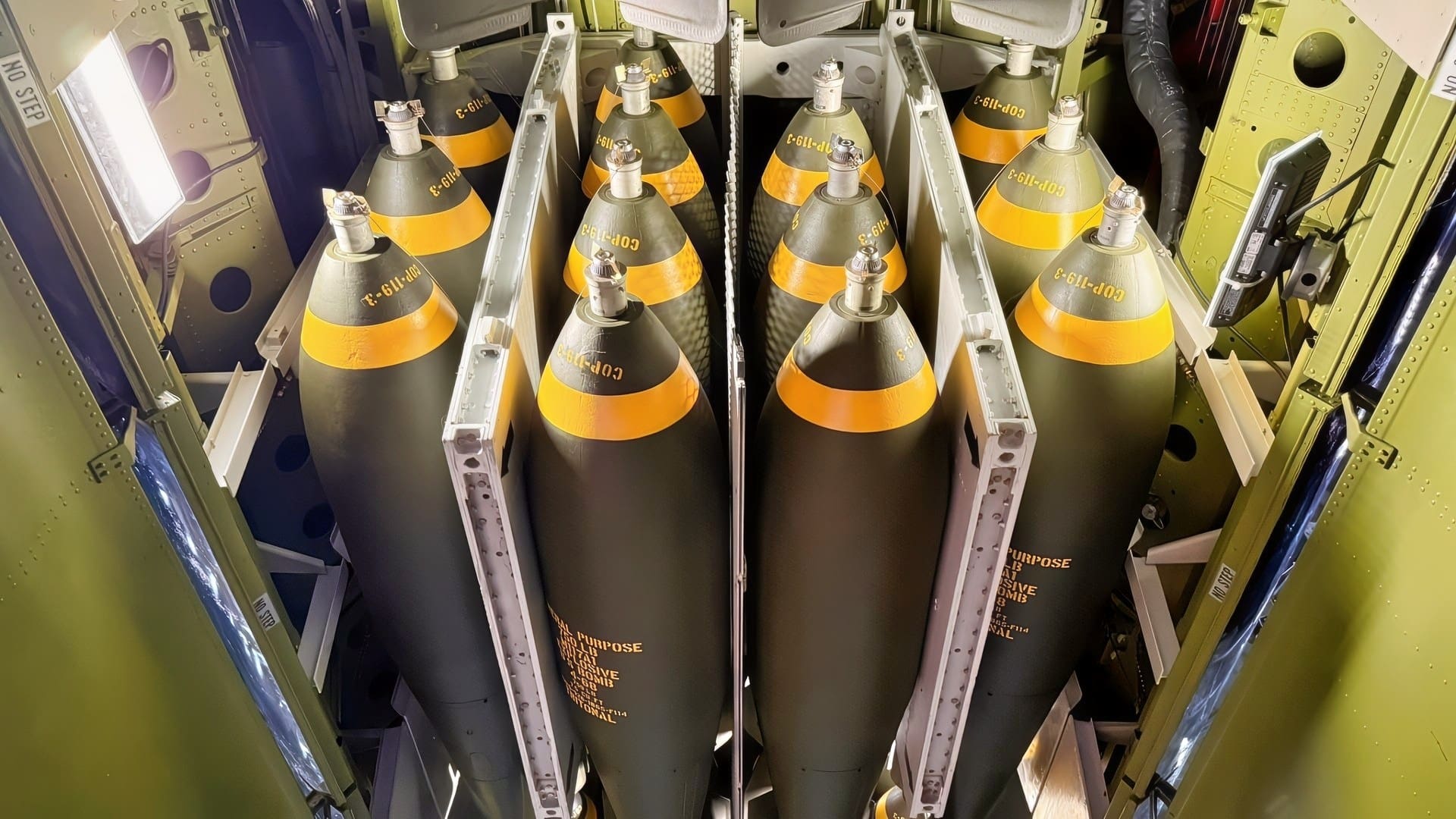
19FortyFive.com B-52 Bomber Bombs. By Harry J. Kazianis in 2025 from the National Museum of the Air Force.

A B-52 Stratofortress assigned to the 2nd Bomb Wing takes off for a Red Flag 21-3 training mission at Nellis Air Force Base, Nevada, July 21, 2021. RF-Nellis 21-3 is unlike any previous Red Flags, as the 414th Combat Training Squadron builds upon the most challenging Red Flags in recent history. (U.S. Air Force photo by Tech. Sgt. Alexandre Montes)

A U.S. Air Force B-52H Stratofortress strategic bomber assigned to the 69th Expeditionary Bomb Squadron flies within the U.S. Central Command area of responsibility, Nov. 15, 2024. The B-52H provides strategic options and flexibility to U.S. and coalition senior leaders with the aircraft’s ability to employ a wide range of weapons with precision and deliver a decisive response to adversaries who threaten peace and security across the region. (U.S. Air Force photo)
-Designed to penetrate the advanced integrated air defense systems of adversaries like China and Russia, the stealthy AGM-181 will officially replace the aging Cold War-era AGM-86B by 2030.
B-52 Spotted Carrying AGM-181 LRSO Again
A U.S. Air Force B-52H Stratofortress was photographed on March 21, 2026, flying near Edwards Air Force Base in California, carrying two AGM-181 Long Range Stand Off (LRSO) test missiles mounted under its wings.
The aircraft, operating under the TORCH92 callsign associated with the 419th Flight Test Squadron, was also seen flying alongside an NKC-135R Stratotanker and what appeared to be an F-22 Raptor, indicating a coordinated test flight involving multiple platforms.
The missiles observed were being used for integration and flight testing and were not live weapons, but they mark the second confirmed public sighting of the AGM-181 in flight following previous sightings in November 2025, months after the Air Force first released official imagery of the missile in June 2025.
The AGM-181 is being developed to replace the AGM-86B Air-Launched Cruise Missile, a Cold War-era system expected to be retired by around 2030.
Is the Program Gaining Momentum?
The second sighting of a B-52 carrying AGM-181 test articles suggests that the program is moving from its early-stage development into a more sustained testing phase.
The aircraft involved uses the “TORCH” callsign, which is associated with the 419th Flight Test Squadron, based at Edwards Air Force Base, a unit responsible for testing American bomber platforms and their associated weapons systems.
Notably, the most recent sighting also included a test support aircraft – the NKC-135R Stratotanker – and what appeared to be an F-22 Raptor flying in formation. The presence of the two aircraft suggests that more complex testing is now underway.
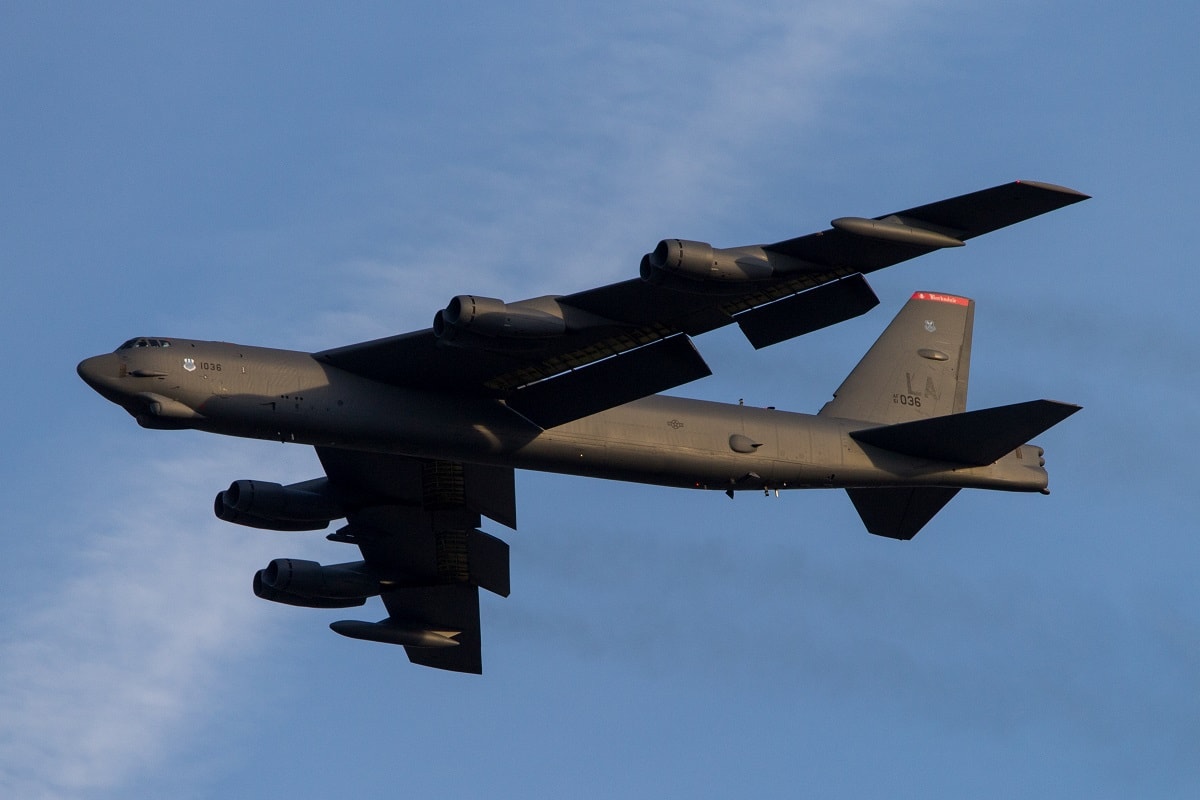
A B-52H-175-BW(61-0036) Stratofortress taking off from Tinker AFB, OK.
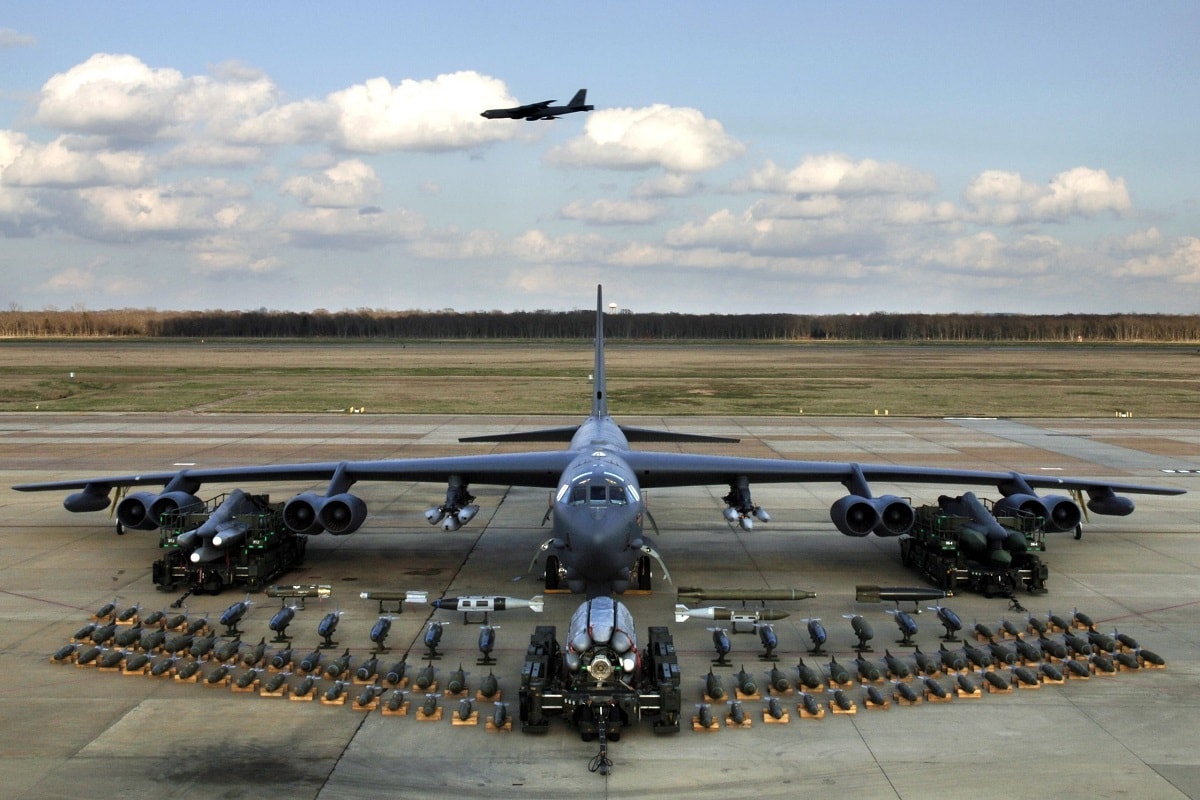
A U.S. Air Force Boeing B-52H Stratofortress of the 2d Bomb Wing static display with weapons, at Barksdale Air Force Base, Louisiana (USA), in 2006.
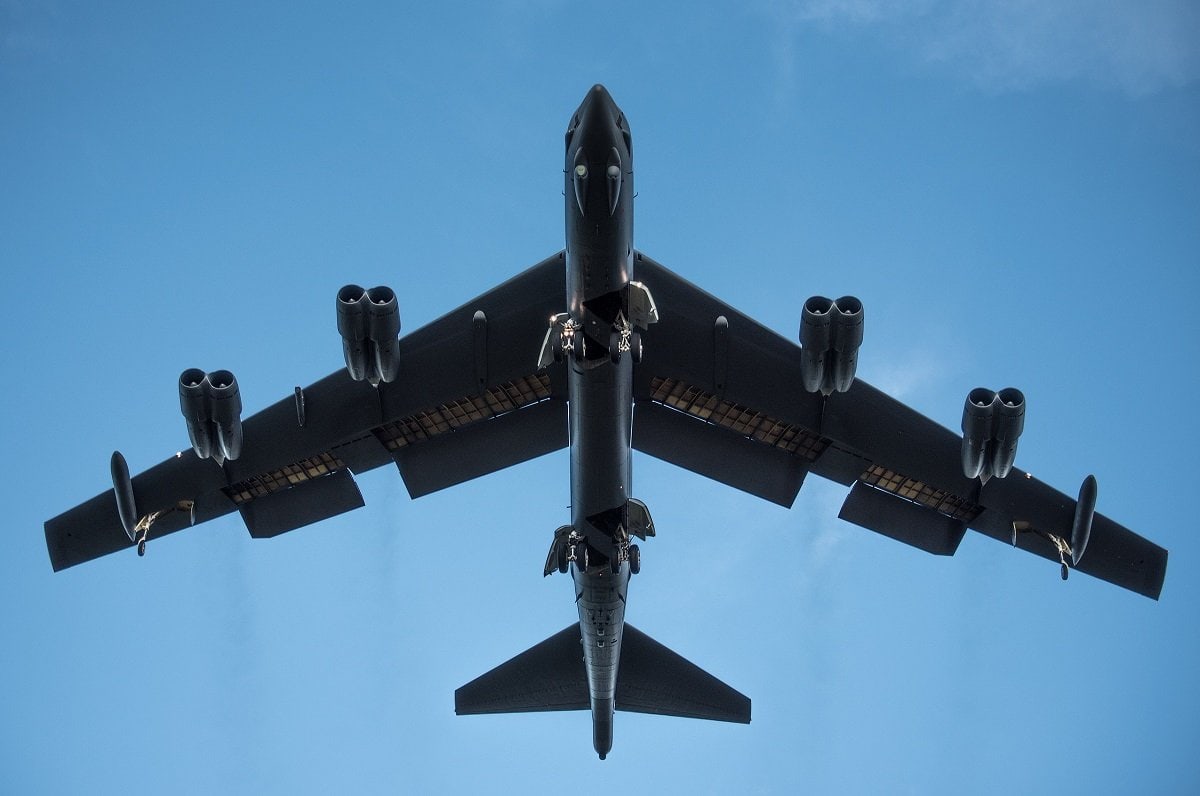
A U.S. Air Force B-52H Stratofortress, assigned to the 20th Expeditionary Bomb Squadron, deployed from Barksdale Air Force Base, La., approaches the flightline at Royal Australian Air Force Base Darwin, Australia, April 6, 2018. Two U.S. Air Force bombers visited the base in Australia’s Northern Territory to support the U.S. Pacific Command’s Enhanced Air Cooperation initiative in cooperation with RAAF joint terminal attack controller teams. The EAC comprises a range of air exercises and training activities designed to enhance regional cooperation, coordination and interoperability between Australian and U.S. service members.
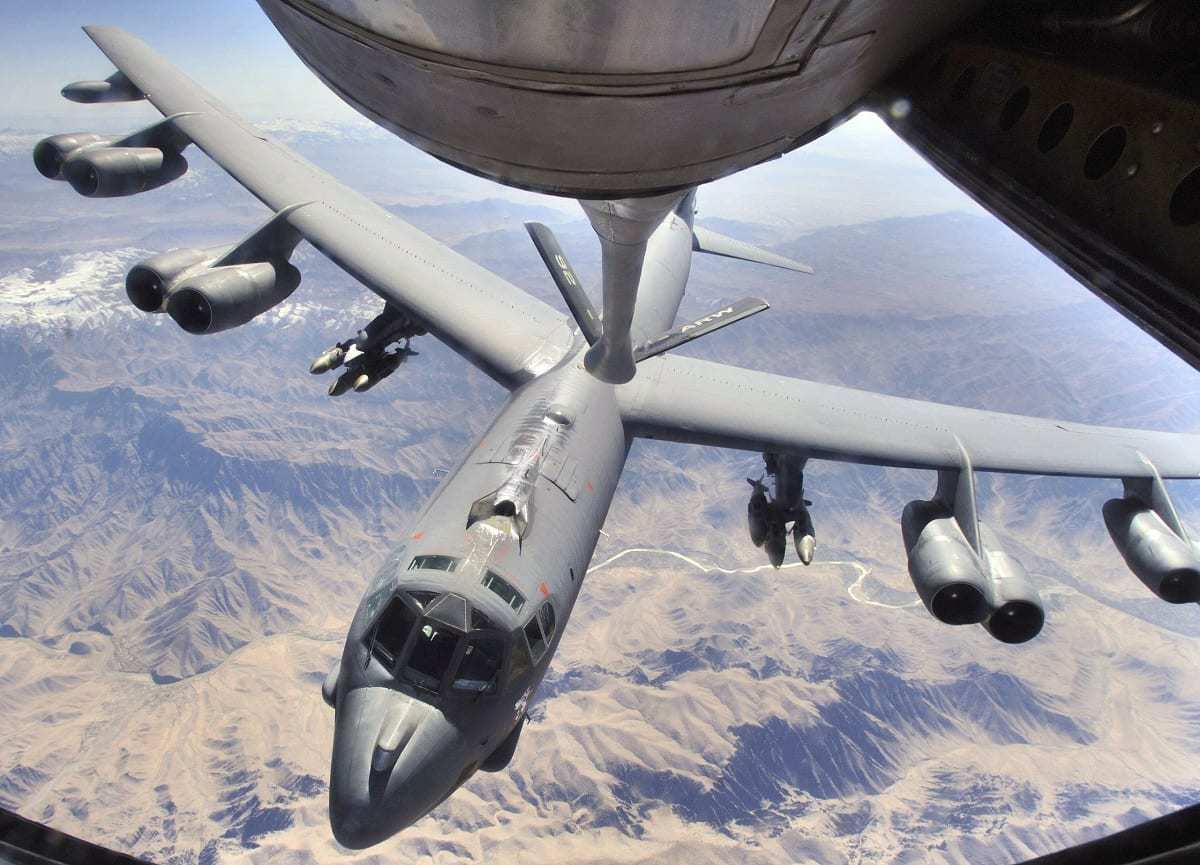
A B-52H from the 2nd Bomb Wing backs out after receiving fuel from a KC-135 Stratotanker over Afghanistan.
Tankers like the NKC-135 are used to extend flight duration and support long-range testing, while the inclusion of fighter jets could indicate that testing of sensors and interoperability with other platforms is also taking place.
As “test articles,” the missiles lacked live warheads and were used solely to evaluate how the weapon can integrate with existing assets like aircraft, how they separate during launch, and their overall aerodynamic behavior in real-world flight. These are critical steps that must be taken before a missile can be officially deployed and before full operational testing can take place.
The AGM-181 LRSO and the U.S. Nuclear Arsenal
The AGM-181 is intended to be a stealthy, long-range cruise missile capable of delivering a nuclear payload from a standoff distance. In military terms, standoff weapons enable aircraft to strike targets beyond the range of enemy air defenses, thereby reducing the risk to the launching platform.
A key feature of the LRSO is its ability to penetrate advanced integrated air defense systems, which are used by countries such as Russia and China and combine surface-to-air missiles with radar systems and command networks to detect and destroy incoming threats. Modern air defense systems are specifically designed to counter older, non-stealthy cruise missiles, which is one reason the U.S. is working to replace the AGM-86B.
The LRSO is expected to be deployed on both the upgraded B-52H Stratofortress and the next-generation B-21 Raider stealth bomber.
And, in addition to the LRSO, the B-21 is expected to carry modernized nuclear gravity bombs, providing multiple delivery options depending on the scenario. The missile is, therefore, a crucial part of the U.S. nuclear arsenal and will remain so for years to come.
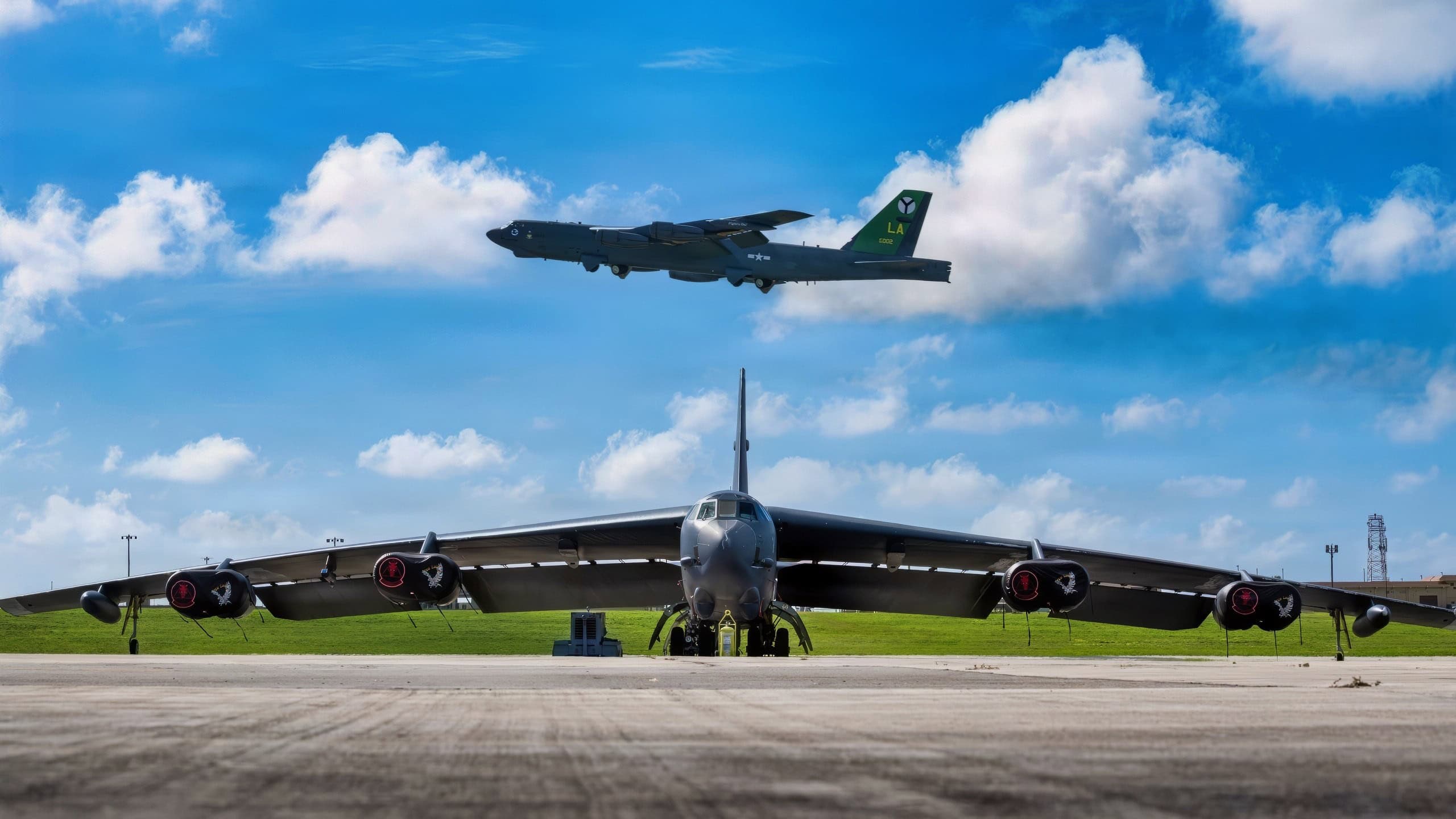
The 2nd Bomb Wing flagship B-52H Stratofortress flies over another B-52H parked on the flightline at Andersen Air Force Base, Guam, Feb. 10, 2026.Andersen Air Force Base, Guam, Feb. 10, 2026. The B-52 is a long-range, strategic bomber, and its presence demonstrates the United States’ ability to project power and respond to crises anywhere in the world. (U.S. Air Force photo by Airman 1st Class Devyn Taylor)
Replacing Cold War-Era Weapons
The AGM-86B ALCM, which the LRSO will replace, was first deployed during the Cold War and has undergone several upgrades to remain viable. However, its design is increasingly challenged by modern air defenses, and its aging components are becoming more difficult to sustain.
Originally, more than 1,700 ALCMs were produced, though the operational inventory has been reduced to around 500 missiles. By contrast, the Pentagon is expected to procure approximately 1,000 AGM-181 missiles.
The transition will take place over the next decade, with the ALCM to be retired sometime around 2030 and a low-rate initial production decision for the LRSO made in fiscal year 2027. Notably, while there were early discussions about developing a conventional version of the LRSO, the U.S. Air Force ultimately decided against it.
Instead, those conventional strike requirements that the LRSO cannot meet will be provided by missiles like the AGM-158 JASSM-ER and JASSM-XR, allowing the LRSO to remain solely a nuclear weapon.
B-52 Bomber: Costs and Controversy
The LRSO program has not been without controversy. As of 2022, total program costs were estimated at around $16 billion, with more recent figures suggesting a single unit may cost as much as $14 million – far higher than earlier projections.
For some critics, the missile might also be redundant given the existing capabilities of submarine-launched ballistic missiles and intercontinental ballistic missiles, which also form part of the nuclear triad.
However, air-launched cruise missiles offer several unique advantages, including the ability to be recalled.
About the Author: Jack Buckby
Jack Buckby is a British researcher and analyst specialising in defence and national security, based in New York. His work focuses on military capability, procurement, and strategic competition, producing and editing analysis for policy and defence audiences. He brings extensive editorial experience, with a career output spanning over 1,000 articles at 19FortyFive and National Security Journal, and has previously authored books and papers on extremism and deradicalisation.

