
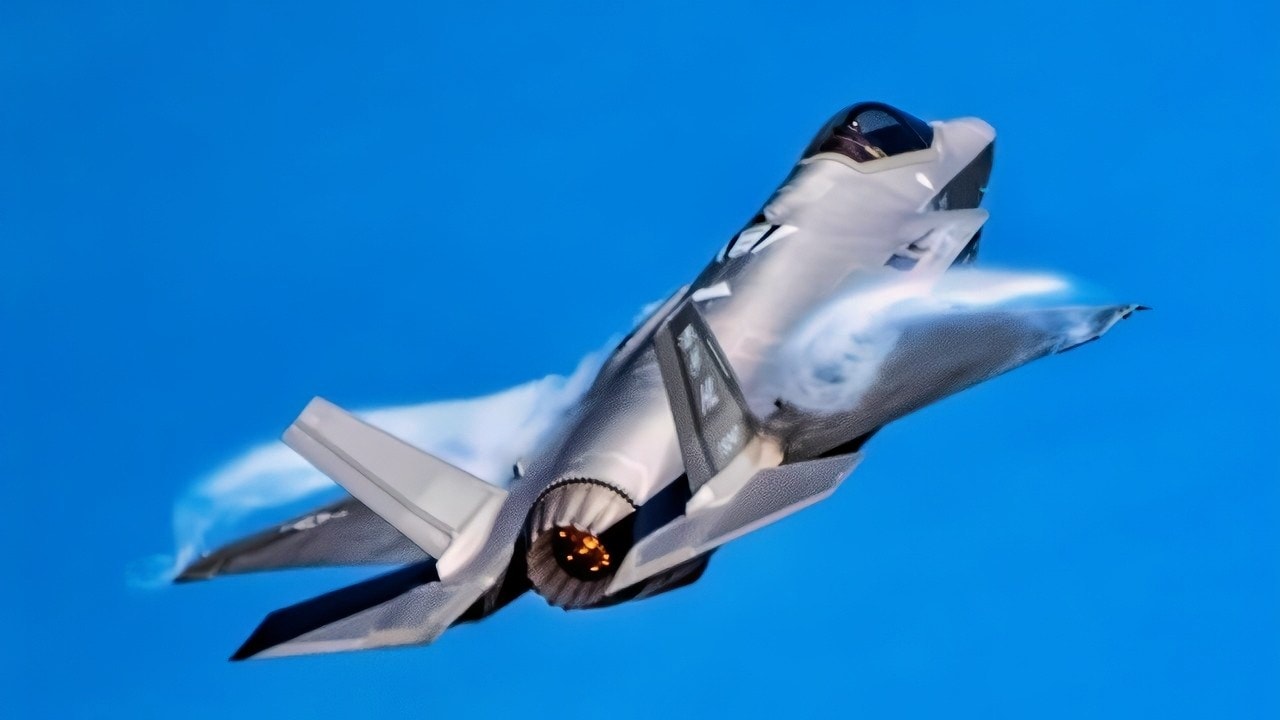
Summary and Key Points: Red Flag 21 at Nellis Air Force Base marked a historic shift in aerial combat training by introducing high-fidelity “stealth-on-stealth” simulations. The exercise pitted F-22 Raptors against F-35 Lightning II aggressors to replicate threats posed by peer adversaries such as the Russian Su-57 Felon and the Chinese J-20 Mighty Dragon.
-Colonel Scott Mills and Captain Patrick “Smokah” Bowlds highlighted that the F-35’s radar-evasive profile and advanced avionics forced pilots to abandon traditional tactics.
-This multi-threat environment, incorporating space and cyber domains, ensures American aviators remain the apex predators in an increasingly “invisible” battlespace.
Stealth vs. Stealth: Inside the F-22 and F-35 “Invisible” Dogfights of Red Flag 21
Five years ago, the U.S. Air Force’s Red Flag aerial combat exercises included plenty of fascinating confrontations. These dogfighting simulations feature some of the world’s best fighter pilots. Red Team aggressors challenge Blue Team friendlies in confrontations that seek to simulate a real fight. The drills at Nellis Air Force Base in Nevada in 2021 involved F-22s and F-35s in head-to-head fly-offs.
Pilots charge into Red Flag confidently, but it is difficult to predict which of them will succeed and which will fail. In competition, as in combat, you just don’t know how the other pilot will react to your speed and maneuvers. The aviators know the stakes are high, which makes every win and loss that much more important.
Elite Pilots Will Never Say Die
Red Flag is the top air-to-air exercise these pilots will face. It pits the best against the best. In 2021, for the first time, the Air Force added the F-35—so pilots knew Red Flag 21 would be a historic event.
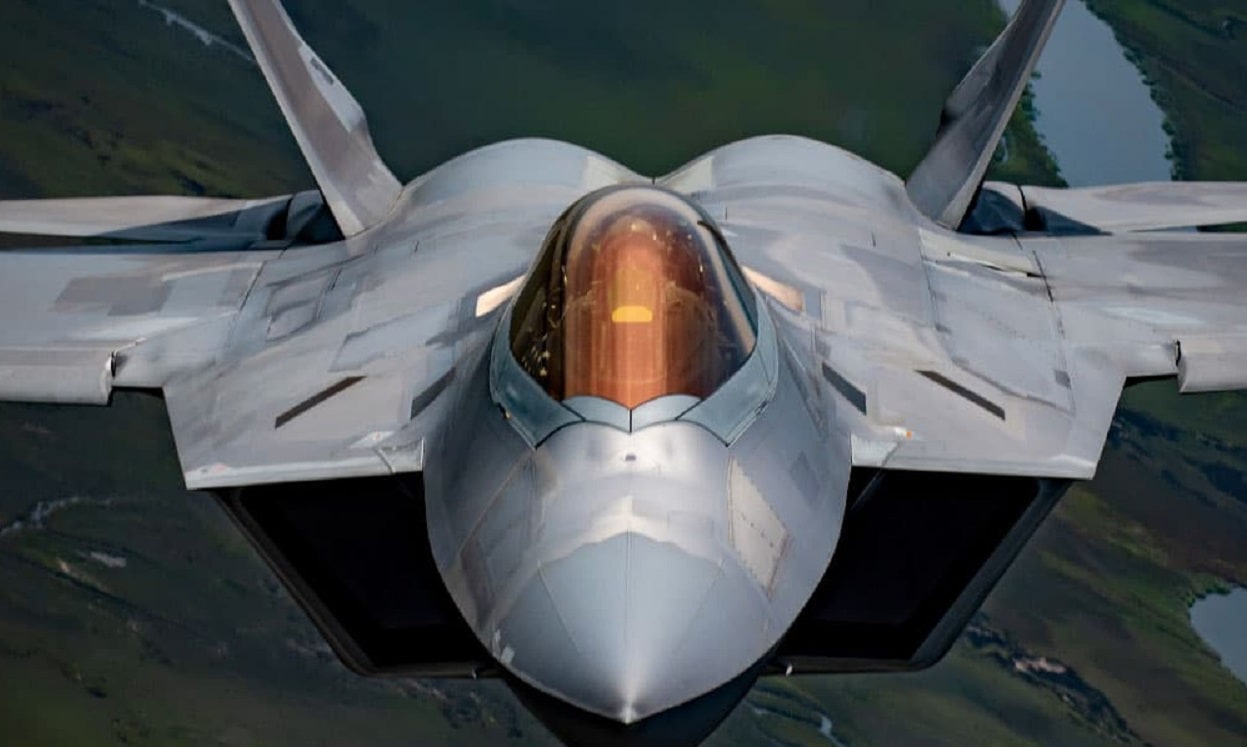
F-22. Image: Creative Commons.
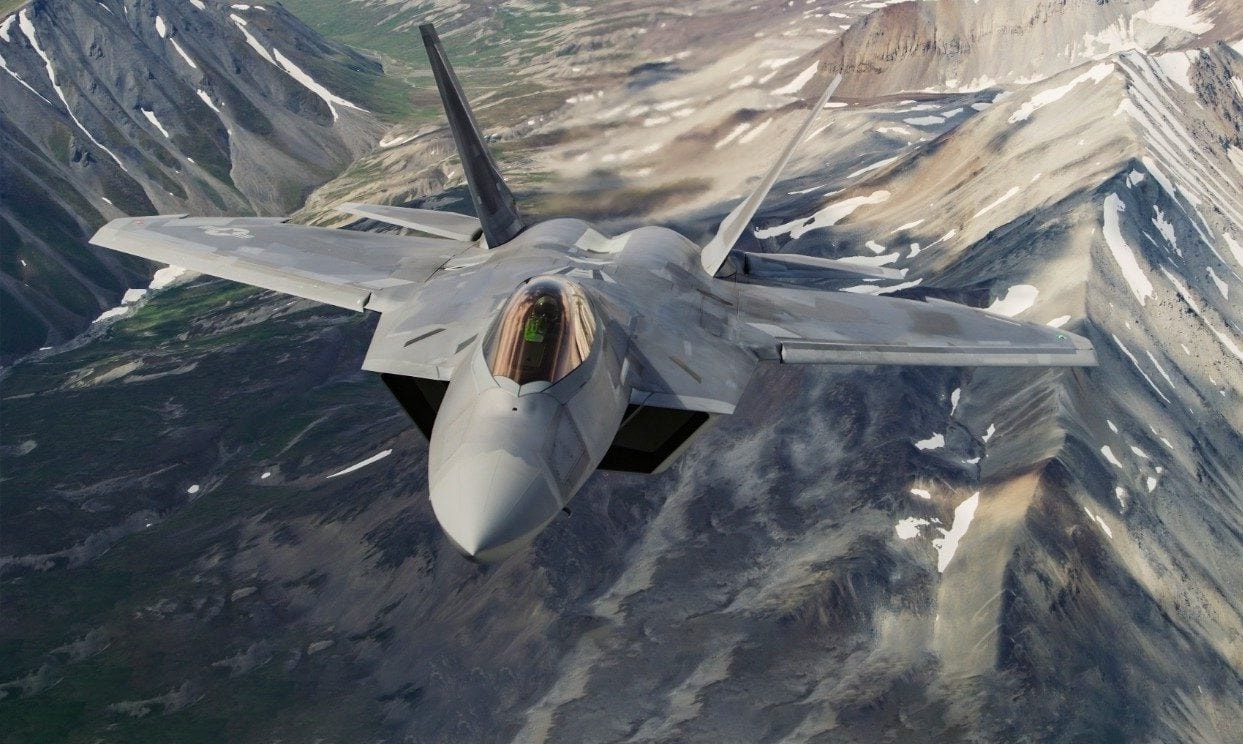
Image: Creative Commons.
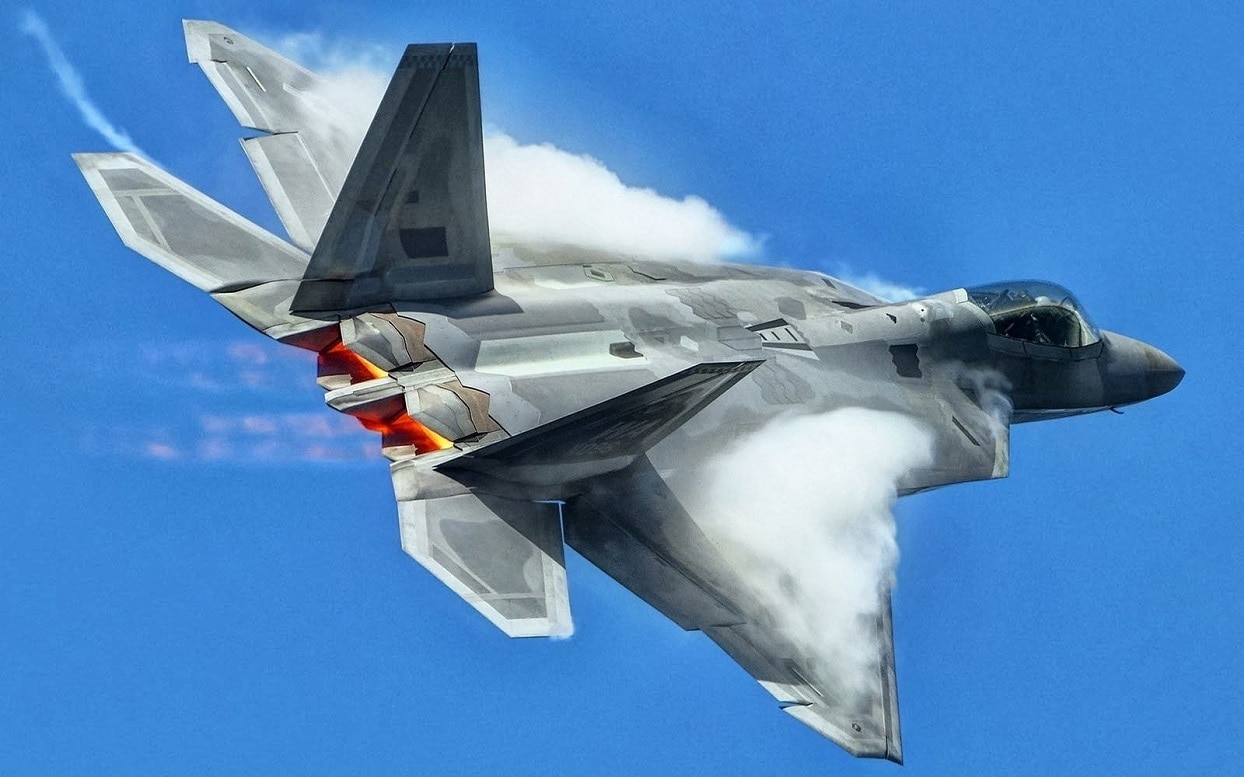
Image: Creative Commons.
Creating a More Realistic Multi-threat Environment
Another factor that made Red Flag 21 different was its combination of different elements of future combat. There were simulated surface-to-air missile threats, information domain warfare, and space replications.
But the most thrilling development was the F-35’s participation.
The Only Easy Day Was Yesterday
“My job is not to give blue an easy day,” Colonel Scott Mills, the 57th Operations Group commander and an F-35 aggressor pilot, said in a statement noted by Business Insider. “My job is to give blue the absolute toughest day that I can. And the way for me to do that is to bring the F-35 into the fight.”
The F-22 pilots had their hands full taking on a premier stealth fighter.
Raptor aviators decided to fall back on tried-and-true tactics that often work against non-stealth aggressors—but this time, the adversary was highly radar-evasive—the F-35 is known as a flying computer.
The F-22, of course, is also one of the stealthiest warbirds in the world.
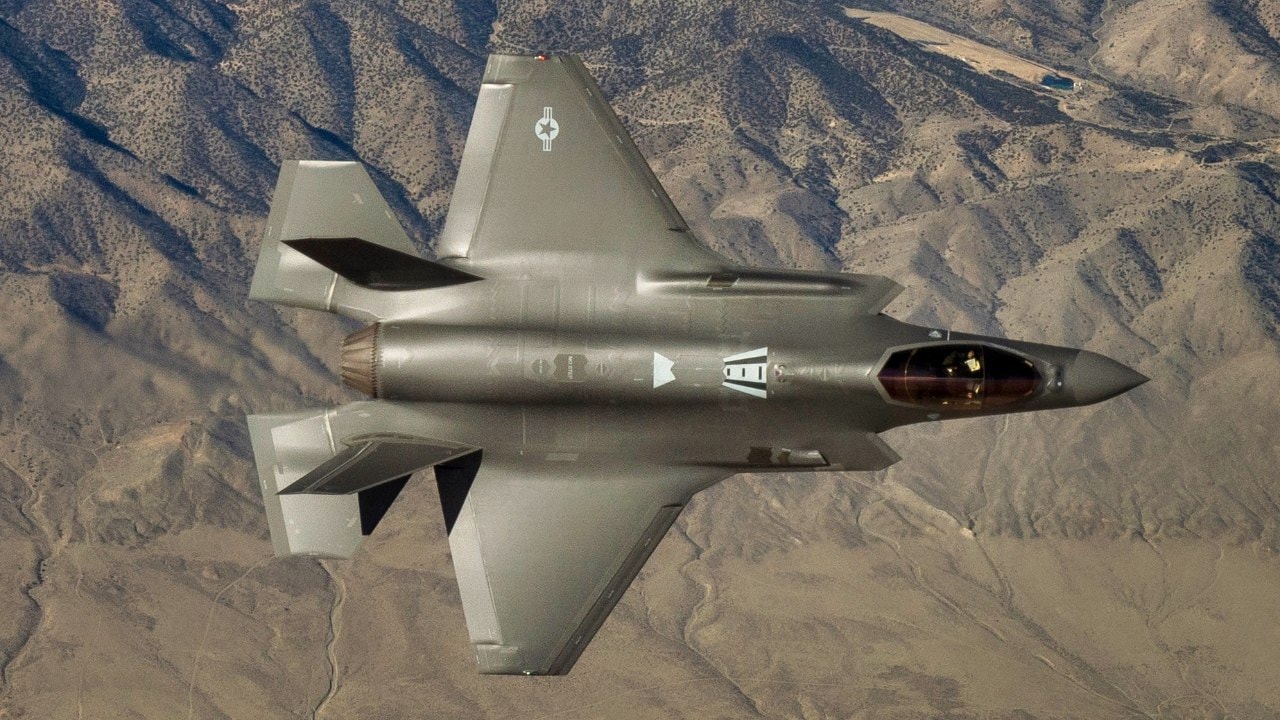
Two U.S. Air Force F-35A Lightning IIs, assigned to the 4th Fighter Squadron from Hill Air Force Base, Utah, conduct flight training operations over the Utah Test and Training Range on Feb 14, 2018. The F-35 is designed to provide the pilot with unsurpassed situational awareness, positive target identification and precision strike in all weather conditions. (U.S. Air Force photo by Staff Sgt. Andrew Lee)
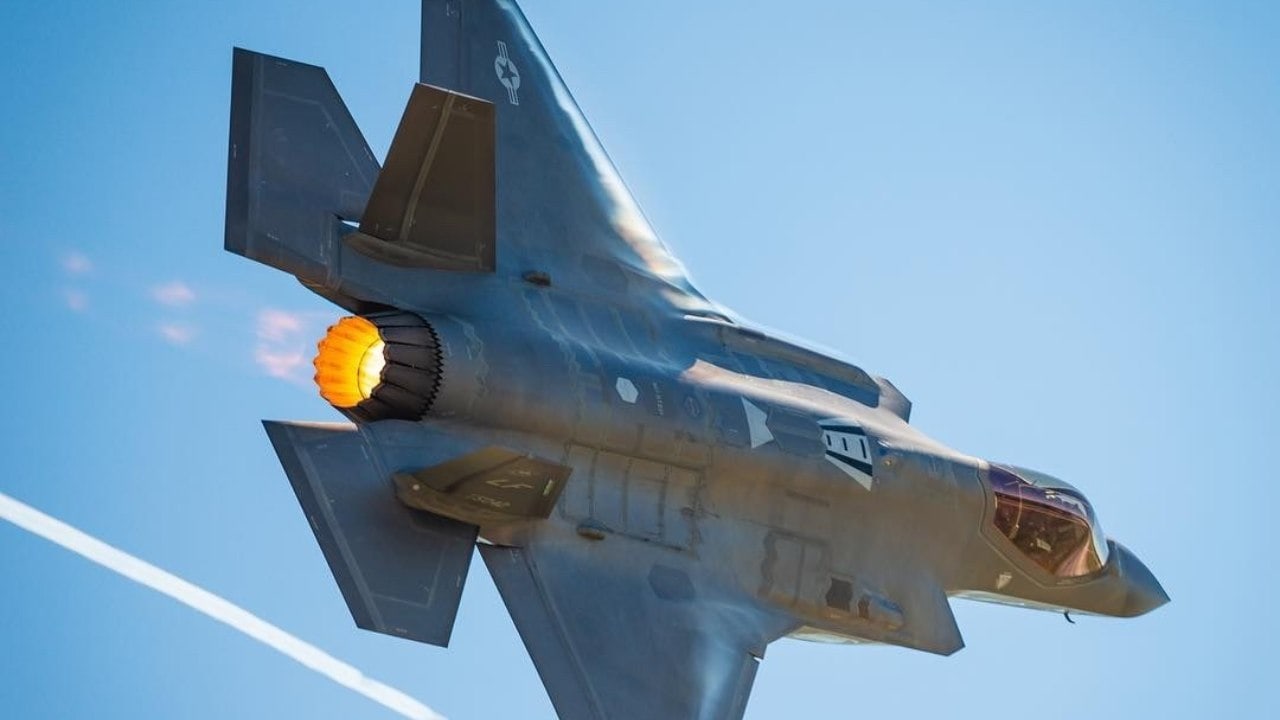
Capt. Andrew “Dojo” Olson, F-35 Demonstration Team commander and pilot performs a dedication pass in an F-35A Lightning II during the 2019 Wings Over Wayne Airshow April 27, 2019, at Seymour Johnson Air Force Base, North Carolina. The WOW Airshow marks the third public performance of the F-35 Demo Team’s new aerial demonstration during 2019 airshow season.
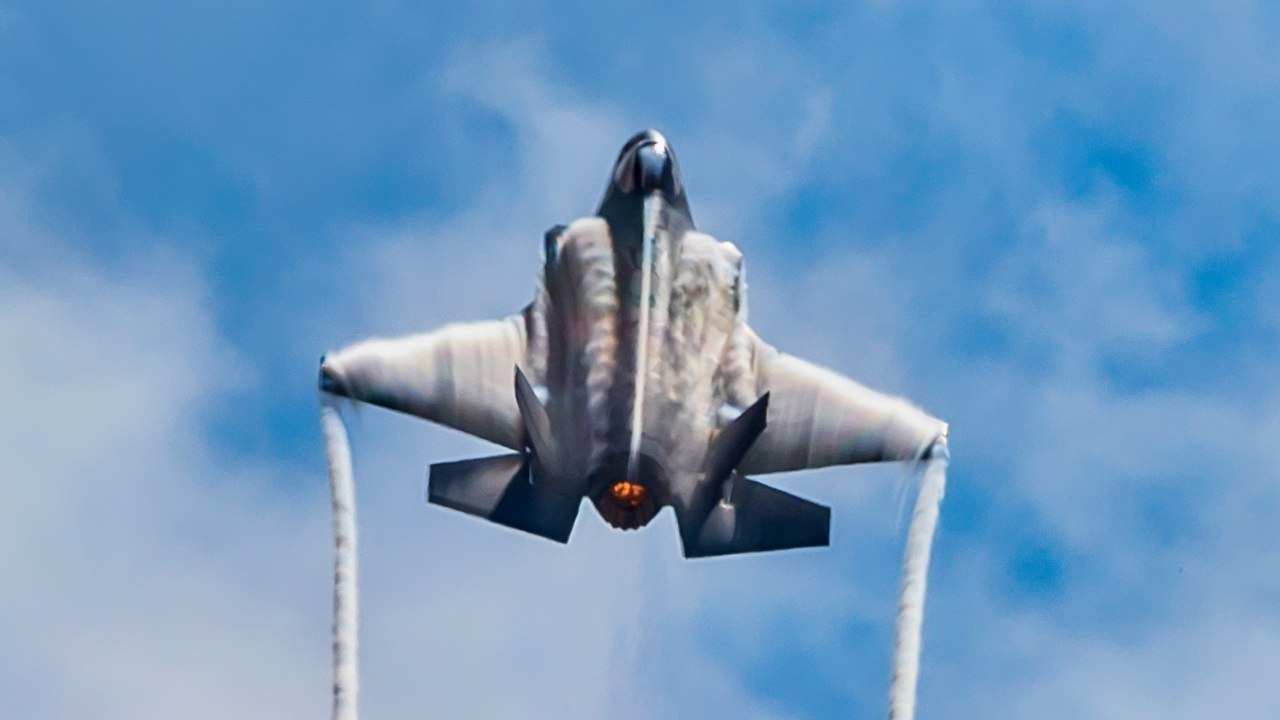
Capt. Andrew “Dojo” Olson, F-35 Demonstration Team pilot and commander performs aerial maneuvers during the Wings Over Houston Airshow Oct. 18, 2019, in Houston, Texas. The show featured performances from the U.S. Air Force Thunderbirds, Tora, Tora, Tora, and Oracle. (U.S. Air Force photo by Senior Airman Alexander Cook)
F-22 Versus the F-35
Captain Patrick “Smokah” Bowlds, an F-22 instructor pilot at Langley Air Force Base in Virginia, was impressed. He was ready for the best the F-35 had to offer, and he knew going into the event that his regular tactics would be pushed to the limit.
“When you have a stealth platform on red air, it makes our job a lot more difficult in terms of knowing where they are, how we are going to protect allied forces or protect points on the ground or whatever the mission set is at that point in time,” Bowlds said.
Getting Ready for Russia and China
The name of the game was “stealth on stealth.”
It would be good practice for a real match-up with fifth-generation fighter jets such as the Russian Su-57 Felon and the Chinese J-20 Mighty Dragon.
Since the F-22 is an air superiority jet, it needs to rehearse how other pilots approach a dogfight.
Bowlds explained that including F-35 aggressors into Red Flag made things “more challenging because there is a little bit of an unknown in terms of what they are going to be able to do. Red air detects are happening at further ranges. It inherently poses more of a threat to allied blue-air forces than older aggressors such as the fourth-generation F-16s.”
The F-35 Brings Much to the Table
The F-35’s advantages when it comes to avoiding detection are well known, but its avionics and radar have also been improved over the years.
During Red Flag, the Blue team is assigned a mission.
It could be air-policing a specified area or attacking a ground target.
The Red Team is told to make the Blue Team’s job so difficult that they disengage and fail their objectives. The skies during this event are full of airplanes, as they are in actual combat.
These are situations that require the pilots to deconflict the airspace in real time and create advantages in the air that they normally would not have to consider during peacetime.
Can You Survive the Competition?
The stealthiness of both airplanes made the situation even hairier as they darted back and forth, trying to create attack openings.
“I’ve flown against red F-35s locally,” Bowlds said. “It’s always challenging. There’s a lot of different things out there that want to hurt you, and that’s where you can start to lose track of the stealth adversaries.”
After Red Flag missions are over, there is a detailed mission debrief and after-action review. Some pilots are disappointed in their performance, but they learn valuable lessons that can be incorporated into future training. Red Flag 21 was a huge success, and it showed that American pilots are up to the stealth-on-stealth challenge posed by the Su-57 and J-20.
About the Author: Brent M. Eastwood
Author of now over 3,000 articles on defense issues, Brent M. Eastwood, PhD is the author of Don’t Turn Your Back On the World: a Conservative Foreign Policy and Humans, Machines, and Data: Future Trends in Warfare plus two other books. Brent was the founder and CEO of a tech firm that predicted world events using artificial intelligence. He served as a legislative fellow for US Senator Tim Scott and advised the senator on defense and foreign policy issues. He has taught at American University, George Washington University, and George Mason University. Brent is a former US Army Infantry officer. He can be followed on X @BMEastwood.