
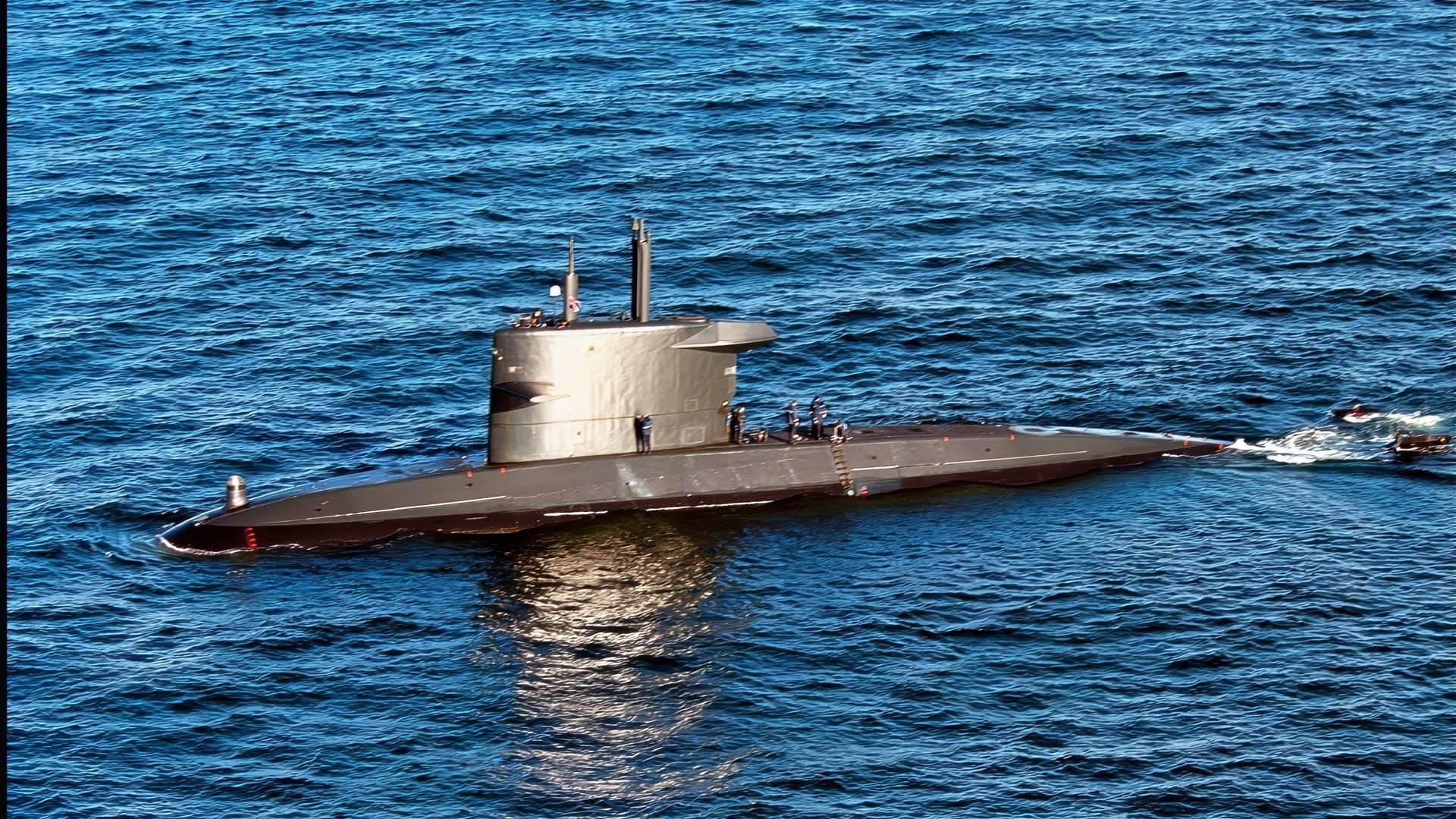
When thinking about the Dutch, soccer, tulips, and windmills come to mind. But what if I told you that one of the Netherlands’ top submarines notionally “killed” a U.S. Navy Nimitz-class aircraft carrier—and all of the escort ships in its strike group?
Teaching the Americans Lessons About Undersea Warfare
Sometimes, U.S. warships can be bested by small, quiet diesel-electric submarines. That is exactly what happened during a 1999 NATO exercise, JTFEX/TMDI99. The HNLMS Walrus, the lead boat of the Netherlands’ Walrus-class, ran rings around the USS Theodore Roosevelt (CVN-71) and taught the U.S. Navy some lessons about undersea warfare.
The Heat Is On
The sailors on the HNLMS Walrus could not believe their good fortune as they maneuvered around the Theodore Roosevelt strike group. They knew their sub was quiet, but could it actually win a fight against a powerful adversary? That remained a question on the minds of the commander and crew.
This Sub Was Stealthy
The HNLMS Walrus featured an older diesel-electric power plant; it worked like a charm, despite its advanced age. When the sub switched to batteries, it was as quiet as a baby dolphin. There was no ambient noise, and passive sonar could not make contact with the sub as it weaved in and out of the strike group’s combat readiness posture. Anti-submarine aircraft were also ineffective against the Walrus.
Slow Moving But Deadly
The Dutch submarine displaced only 2,800 tons when underwater. The propulsion system was not only stealthy but also powerful. The three diesel generators had SEMT-Pielstick PA4V200 12-cylinder engines, each producing 4,700 kW. This does not create the kind of speed you would expect, though; only a top rate of 13 knots on the surface and 9 knots submerged.
The Design Was One Reason for Its Effectiveness
Walrus-class subs are 222 feet long with a beam of 27 feet. They have a draught of over 21 feet. The double-deck hull has a tear-drop shape. What makes this design great is the few welded joints. This helps the sub absorb sonar pings and increases stealth. Dive planes and rudders are laid out in an X configuration rather than a vertical-horizontal cross, as my colleague Peter Suciu described.
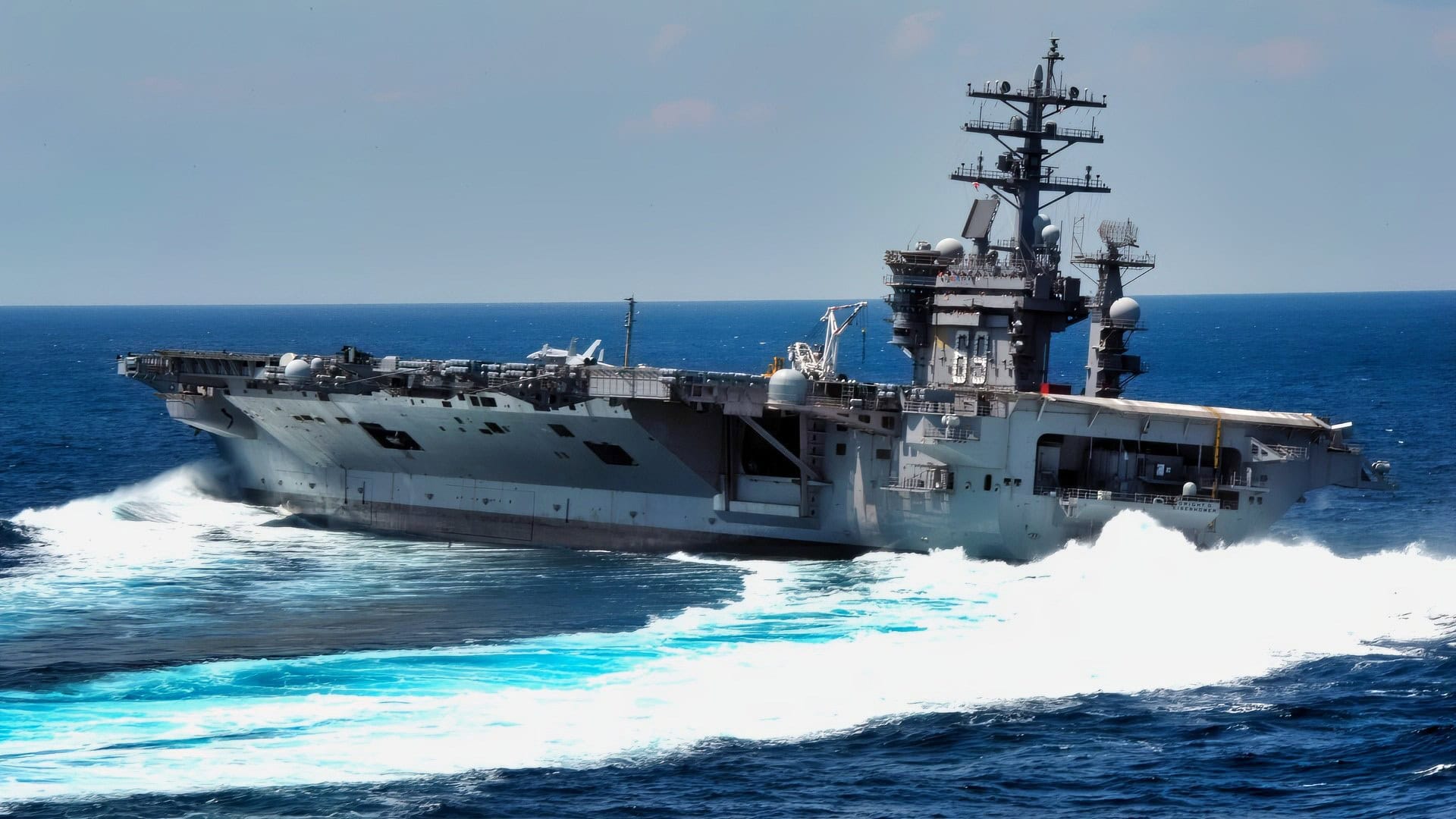
The Nimitz-class aircraft carrier USS Dwight D. Eisenhower conducts rudder turns during sea trials. Dwight D. Eisenhower completed a nine-month planned incremental availability at Norfolk Naval Ship Yard on June 10 and is scheduled to resume underway operations this summer.
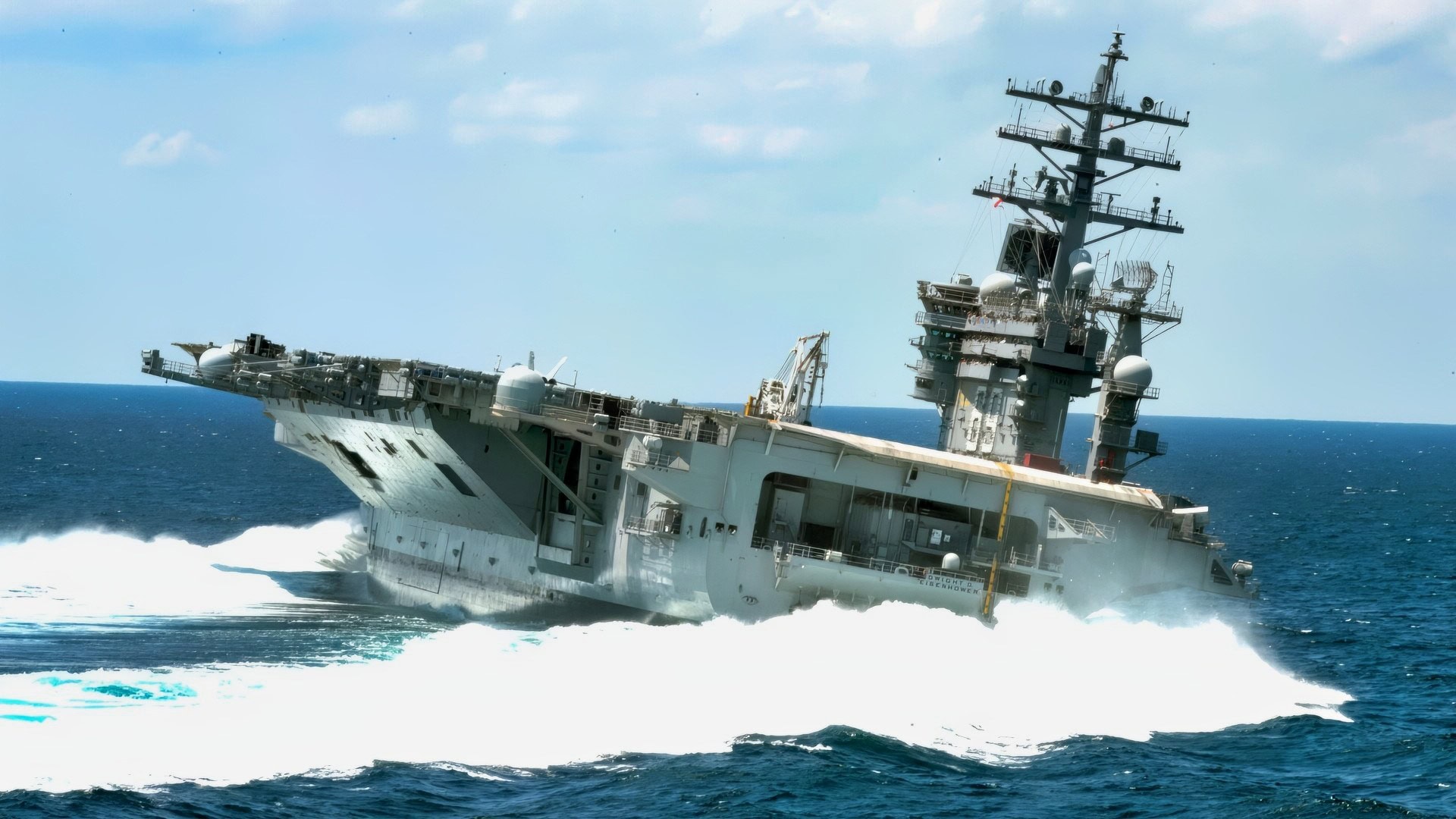
ATLANTIC OCEAN (June 14, 2011) The Nimitz-class aircraft carrier USS Dwight D. Eisenhower (CVN 69) conducts rudder turns during sea trials. Dwight
D. Eisenhower completed a nine-month planned incremental availability at Norfolk Naval Ship Yard on June 10 and is scheduled to resume underway operations this summer. (U.S. Navy photo by Mass Communication Specialist 1st Class Christopher Stoltz/Released)
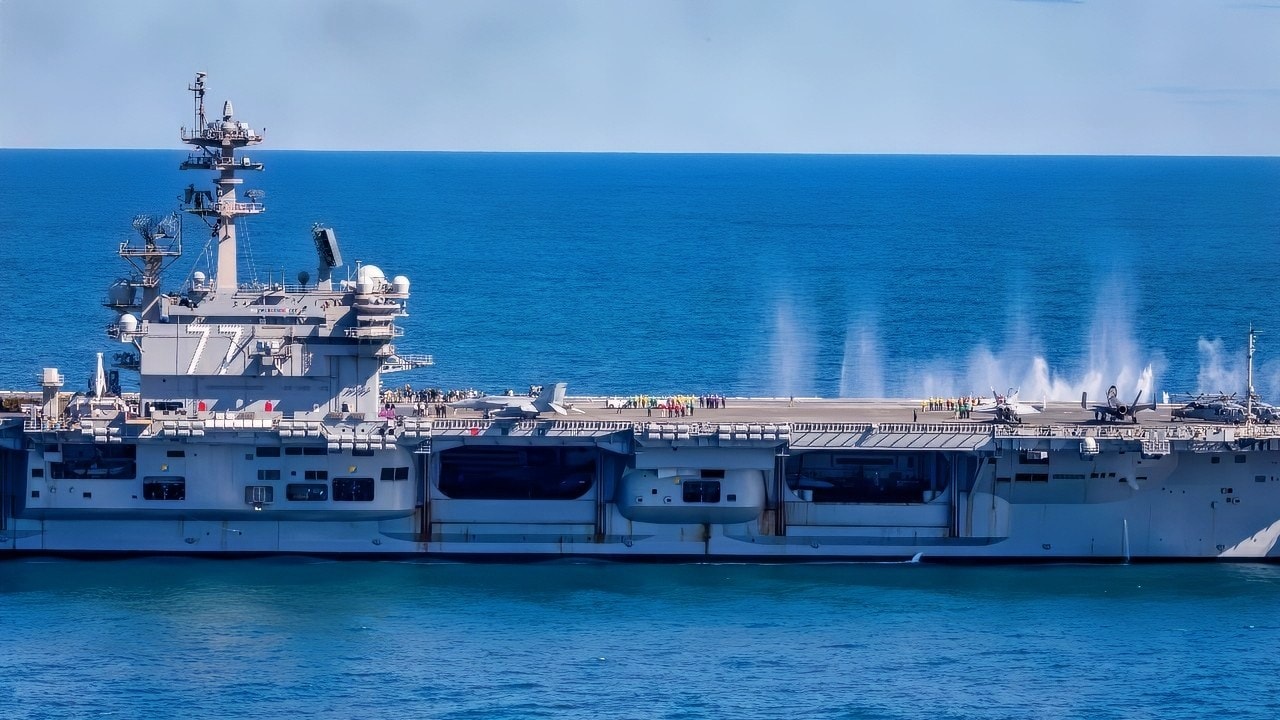
ATLANTIC OCEAN (Oct. 5, 2025) The Nimitz-class aircraft carrier USS George H.W. Bush (CVN 77) transits the Atlantic Ocean while an F/A-18E Super Hornet, attached to the “Pukin Dogs” of Strike Fighter Squadron (VFA) 143 fire rounds into ocean in support of the Titans of the Sea Presidential Review. The Titans of the Sea Presidential Review is one of many events taking place throughout the country to showcase maritime capabilities as part of the U.S Navy’s 250th birthday. America is a maritime nation. For 250 years, America’s Warfighting Navy has sailed the globe in defense of freedom. (U.S. Navy photo by Mass Communication Specialist 2nd Class Mitchell Mason)
Well-armed for Such a Small Sub
The Walrus-class boats have four 21-inch torpedo tubes. Each tube can launch up to 20 torpedoes or 40 sea mines. The boats also carry UGM-84 Harpoon anti-ship missiles.
The Layout of the Game
The JTFEX 99-1 exercise saw 15,000 NATO sailors participate. The idea behind the drill was to simulate an amphibious attack, with 2,100 Marines deposited by the USS Kearsarge (LHD-3), USS Ponce (LPD-15), and USS Gunston Hall (LSD-44). The Theodore Roosevelt strike group was responsible for air cover and overall protection of the amphibious operation.
It Is Time to Start the War
During the simulation, the Walrus acted alone as a hunter-killer in the Atlantic Ocean. All crewmates were silent as the sub stalked its prey. They were covering a huge expanse of ocean, but the Walrus’ sailors were up to the task. There was a concern that the sonar on the Walrus could not penetrate the temperature layers and salinity of the sea in their area of operations. Meanwhile, the Americans were using a highly rated towed sonar array. The Walrus hoped to avoid detection from that contraption.
The Walrus Captain Tells the Fascinating Story of the Exercise
The commander of the Walrus, Jan Hubert (Huub) Hulsker, was excited for his boat—and his sailors. This was a time to make a name for himself. He gave an interview to NaviesWorldWide.com about his sub’s exploits.
The Walrus had a stroke of luck, Hulsker recalled. The electronic warfare operator made contact with a large flotilla of ships. “So there must be something interesting there, and I decided to go for it,” Hulsker recalled.
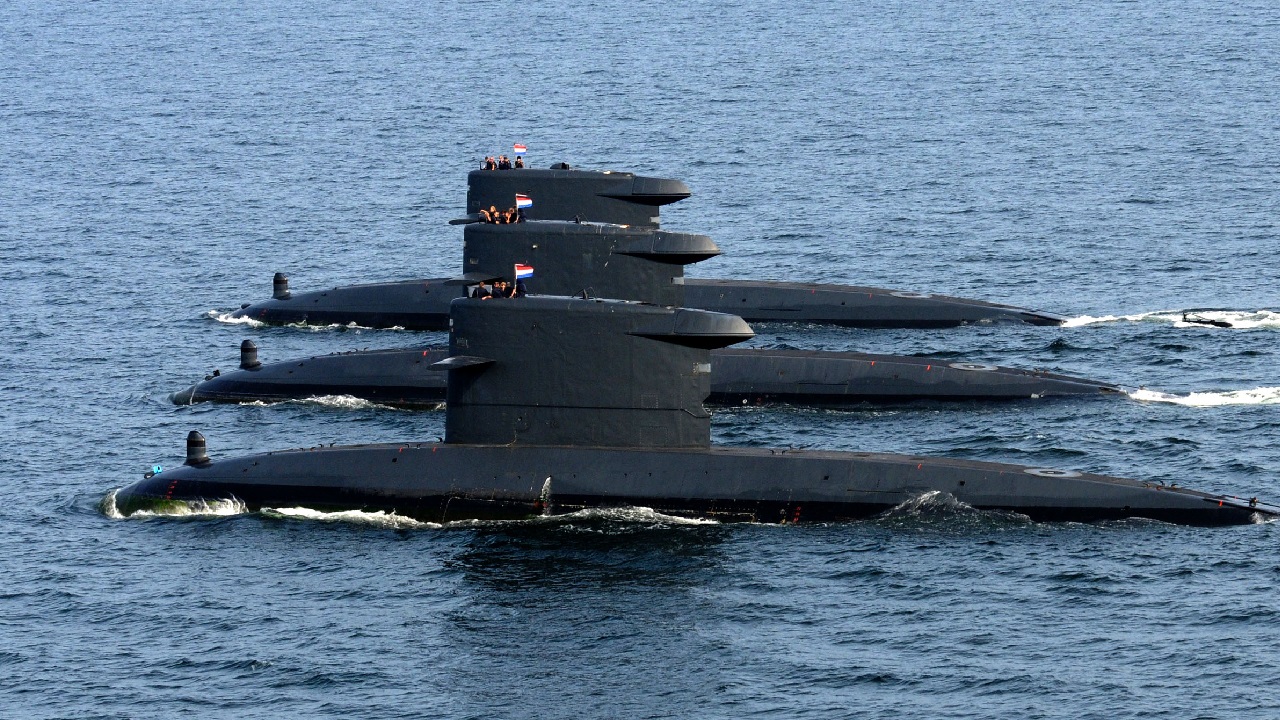
Walrus-Class Submarine. Image Credit: Creative Commons.
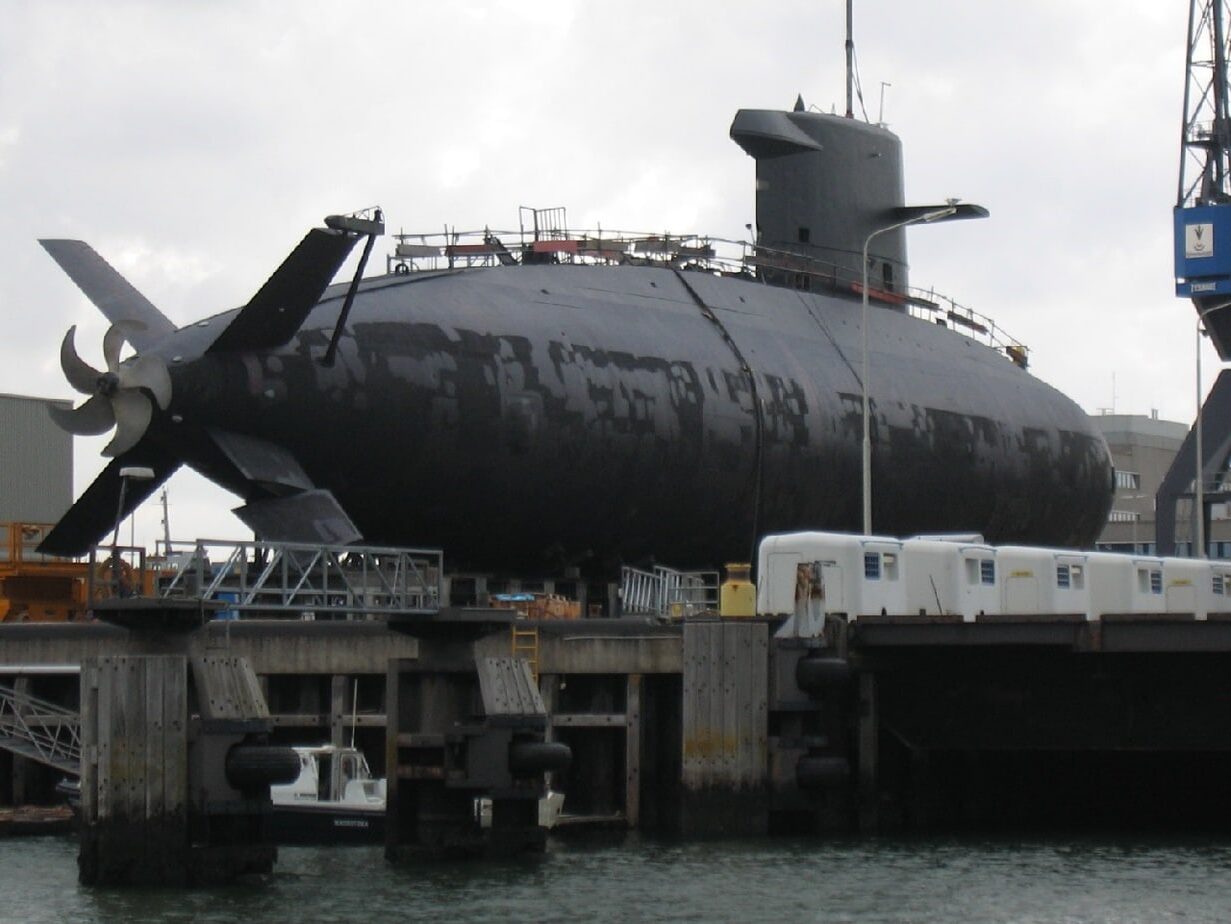
Walrus-Class Submarine. Image Credit: Creative Commons.
The Walrus went to periscope depth. “I looked through the periscope and immediately saw masts of an aircraft carrier. You have to be careful, because when you look for a carrier, everything looks like a carrier. But this time it could not be anything else, so I decided—and that is a classic maneuver, because you also learn that during submarine command training—to go deep and do an interception on the carrier.”
Hulsker explained the situation: “They had their active sonar off, and their passive sonars couldn’t hear us as the Walrus-class is extremely quiet.”
Make My Day
The commander could not believe the view from the periscope. “I saw the escorts of the Roosevelt in the distance to our port and starboard sides, while the carrier was right in front of me, at a distance of 4,000 yards, heading toward me. I thought: ‘This is my day!’”
It was time for the Walrus to launch torpedoes. “The control room and torpedo room were ready. ‘Shoot!’ said Hulsker—and water shot out of the empty torpedo tubes—a simulated shot. Hulsker then ordered a green smoke grenade to be fired—the signal during an exercise for a successful submarine attack.” They then fired another green grenade.
You Won’t Believe This Maneuver
Finally, the Walrus did something to rub it in the Americans’ noses. The sub passed completely underneath the carrier to show just how close it could sneak in.
The escort ships tried to locate the Walrus, but without success. “Anyone who turned on their sonar got a torpedo fired at them.” The ship’s log revealed that three more American frigates received a (simulated) torpedo within 30 minutes.
Now the Americans Had to Recover from Embarrassment
This encounter was a wake-up call to the U.S. Navy. The exploits of a small diesel-electric sub that could maneuver well under the command of a determined and brave captain sent shivers down the spines of the sailors onboard the Roosevelt and its escort ships. This one was going to be chalked up to a disappointing lesson learned.
Navies that operate these types of submarines would be tough customers—and the Americans needed to step up their game before something like this happened again. Give credit to the Dutch. They have an underrated navy that punched above its weight during this NATO exercise. The Walrus will be well-remembered in Dutch naval lore.
About the Author: Brent M. Eastwood
Author of now over 3,000 articles on defense issues, Brent M. Eastwood, PhD, is the author of Don’t Turn Your Back On the World: A Conservative Foreign Policy and Humans, Machines, and Data: Future Trends in Warfare, plus two other books. Brent was the founder and CEO of a tech firm that predicted world events using artificial intelligence. He served as a legislative fellow for US Senator Tim Scott and advised the senator on defense and foreign policy issues. He has taught at American University, George Washington University, and George Mason University. Brent is a former US Army Infantry officer. He can be followed on X @BMEastwood.