
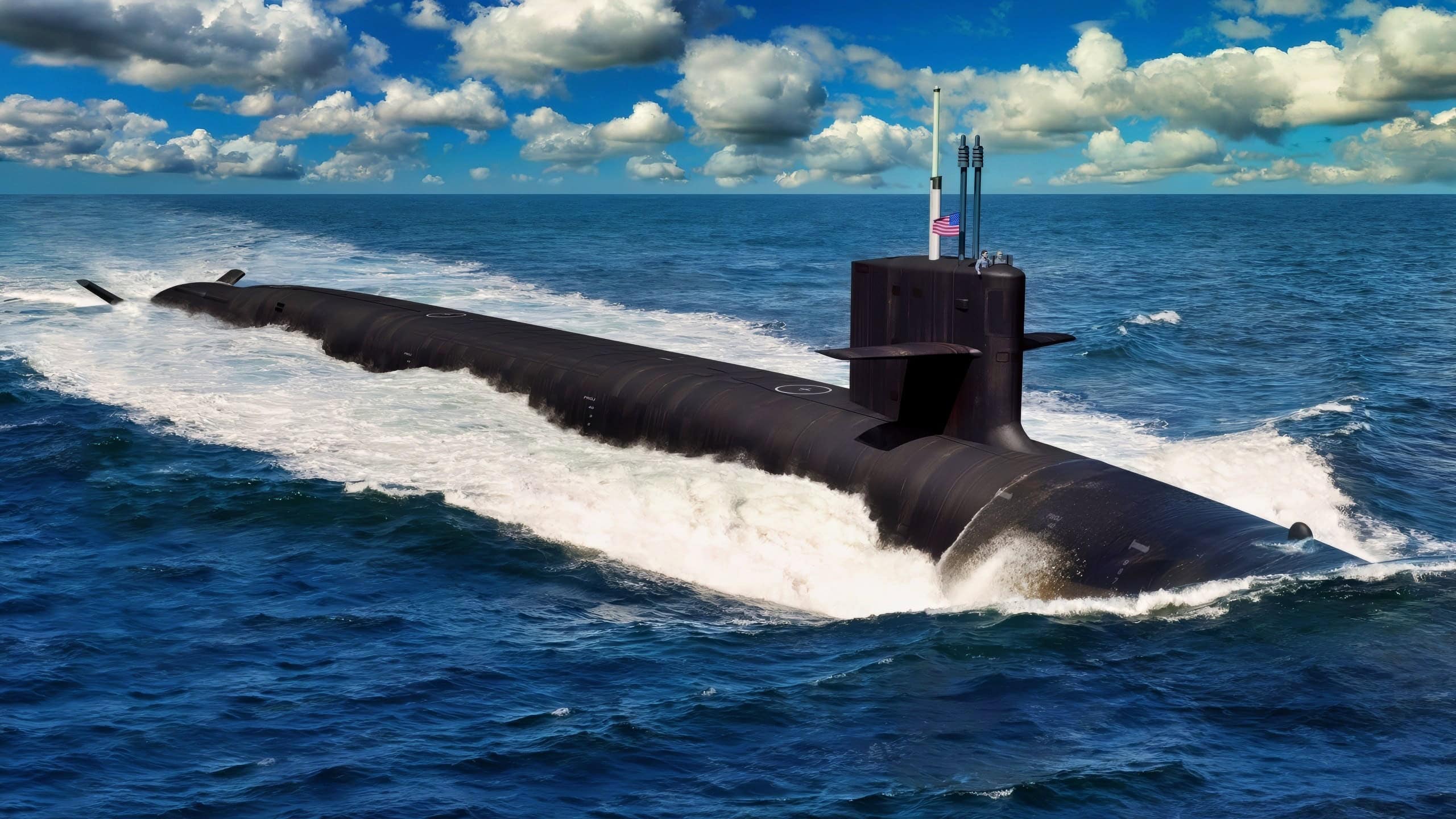
The Colombia-class program is one of the most important projects currently underway for the United States Navy. But the new submarine is already sailing into stormy waters, so to speak.
These submarines are intended to replace the Ohio-class ballistic missile submarines (SSBNs) and take their place as America’s premier nuclear deterrence platforms. Despite their immense strategic value, however, the Colombia-class program has come under intense scrutiny throughout its development.
The lead ship of the class has been delayed by over a year, and the program itself has ballooned in cost, as so many other naval programs have.
What has happened to this program, and why is it so important to the Navy’s interests?
Another Naval Project Delayed
While the Colombia-class is arguably one of the most important projects in the Navy right now, the program has struggled to stay on schedule.
According to a report from the Government Accountability Office (GAO) in 2024, the lead submarine is expected to be delivered twelve to sixteen months later than originally planned, slipping into the 2028–2029 timeframe rather than late 2027.
This delay threatens to create a short-term capability gap in the Navy as the Ohio-class submarines are expected to retire around the same time.
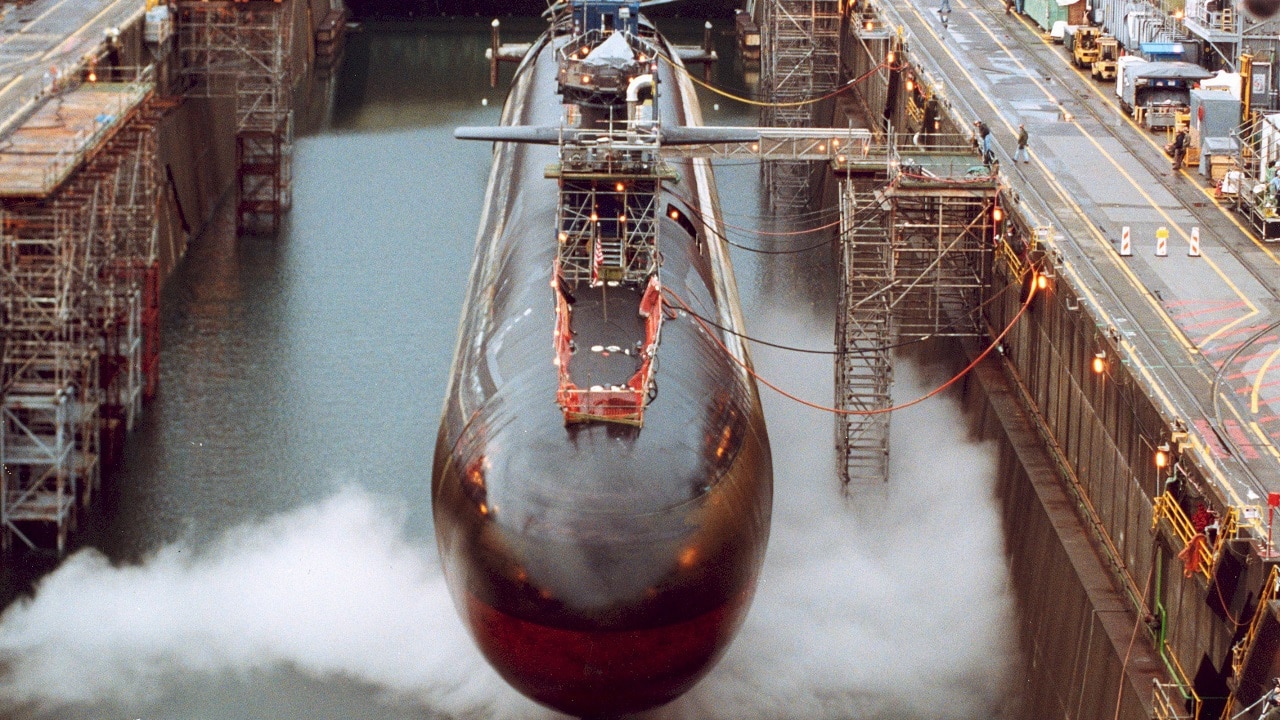
Puget Sound Naval Shipyard, Wash. (Aug. 14, 2003) — USS Ohio (SSGN 726) is in dry dock undergoing a conversion from a Ballistic Missile Submarine (SSBN) to a Guided Missile Submarine (SSGN) designation. Ohio has been out of service since Oct. 29, 2002 for conversion to SSGN at Puget Sound Naval Shipyard. Four Ohio-class strategic missile submarines, USS Ohio (SSBN 726), USS Michigan (SSBN 727) USS Florida (SSBN 728), and USS Georgia (SSBN 729) have been selected for transformation into a new platform, designated SSGN. The SSGNs will have the capability to support and launch up to 154 Tomahawk missiles, a significant increase in capacity compared to other platforms. The 22 missile tubes also will provide the capability to carry other payloads, such as unmanned underwater vehicles (UUVs), unmanned aerial vehicles (UAVs) and Special Forces equipment. This new platform will also have the capability to carry and support more than 66 Navy SEALs (Sea, Air and Land) and insert them clandestinely into potential conflict areas. U.S. Navy file photo. (RELEASED)
Like so many other projects, the delay in the Colombia-class is due to the current state of the U.S. shipbuilding industry.
Construction of a nuclear submarine requires thousands of specialized components sourced from a supplier network that has shrunk significantly since the end of the Cold War.
More than 3,000 suppliers now support the Columbia program, and delays or quality issues at a relatively small number of firms have caused bottlenecks, thereby pushing back the schedule of the entire program.
Worker Shortage and Cost Increases
These problems are further compounded by the shortage of skilled workers at shipyards. Submarine construction demands welders, electricians, pipefitters, and engineers with highly specialized skills and security clearances.
The retirement of experienced tradespeople has outpaced the training of replacements, forcing shipyards to slow work or accept inefficiencies that increase both costs and schedule risk.
According to some sources, the pay for these jobs ranges from around $46,000 to $68,000 per year.
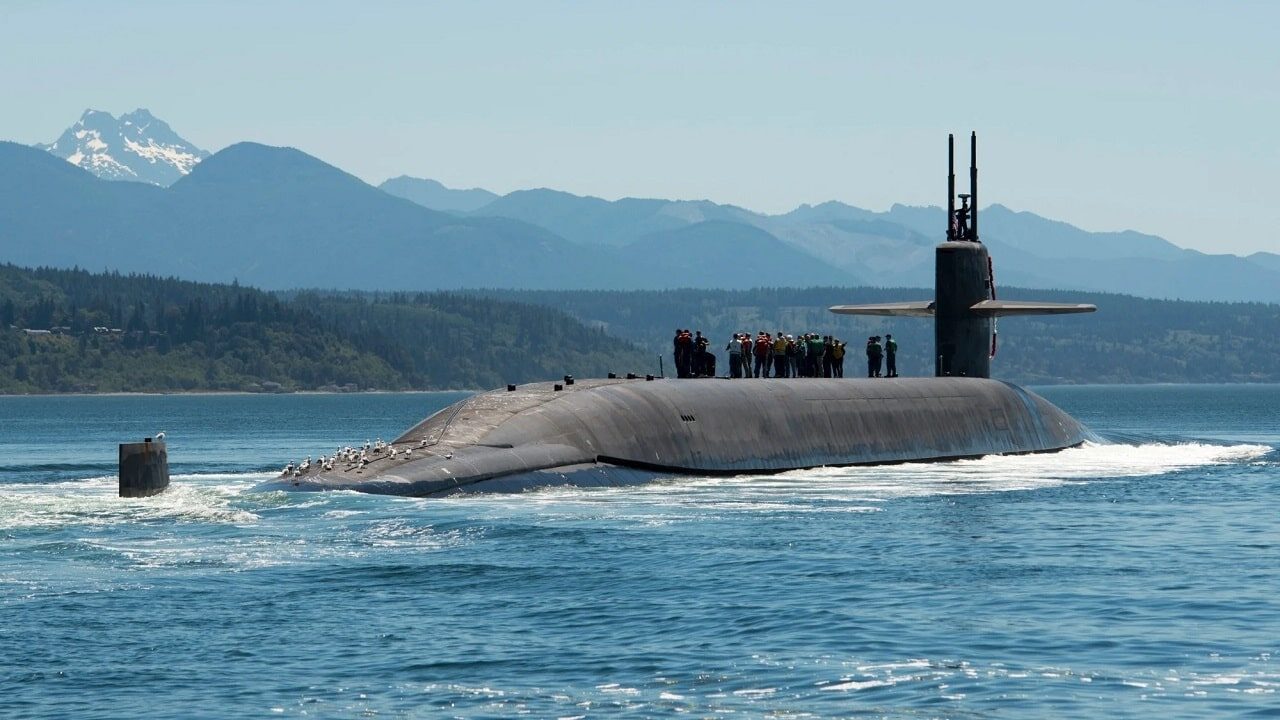
Ohio-Class. Image Credit: U.S. Navy.
At best, this is only slightly higher than the average income across the U.S., which is around $63-66 thousand per year.
With a plethora of other higher-paying/safer jobs on the market, it is no wonder that shipbuilding companies are having trouble with worker retention.
In addition to all of these factors, the submarine industrial base is also stretched thin. Columbia-class submarines are being built in parallel with Virginia-class attack submarines at the same shipyards.
Balancing two nuclear submarine production lines has stretched facilities and management capacity, even as demand for Virginia-class boats increases under commitments such as the AUKUS security agreement.
Strategic Implications of Continued Delay
The delay in the Colombia-class program could have serious consequences for the U.S. Navy’s deterrence strategy. The U.S. Submarine Force structure is governed by strict availability requirements to support continuous at-sea deterrence.
If Ohio-class submarines retire on schedule while Columbia-class boats enter service late, the Navy may temporarily fall below its minimum required number of deployable SSBNs.
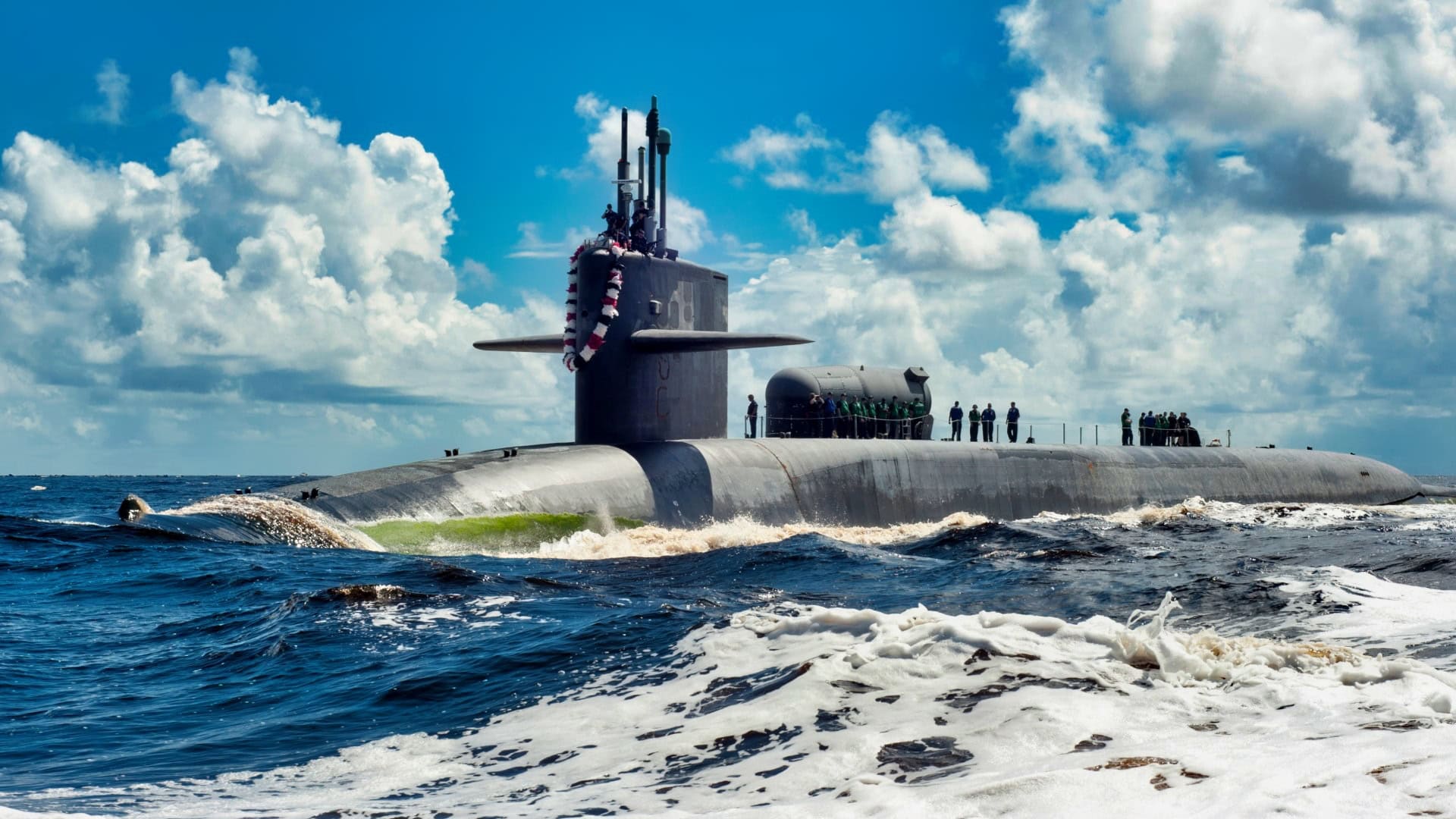
FERNANDINA BEACH, Fla. – The Ohio-class guided missile submarine USS Georgia (SSGN 729) transits the Saint Marys River July 15. Georgia returned to Kings Bay after spending more than a year forward deployed. (U.S. Navy photo by Mass Communication Specialist 1st Class(SW) James Kimber)
Many experts, along with GAO, have warned that this scenario could lead to a vital capability gap for the first time in decades.
The Navy is, of course, looking for ways to mitigate the risks caused by Colombia-class delays. One such option is service life extensions for select Ohio-class submarines, especially the guided missile variants.
These measures are expensive and technically demanding, but they keep the Navy from falling short of the required number of deployable submarines. However, the delays in the Colombia-class have already occurred. The best thing the Navy can do right now is ensure that the project does not experience any further disruptions.
The Colombia-Class: The Navy’s Newest Ballistic Missile Submarines
The Columbia-class is a nuclear-powered ballistic missile submarine designed specifically to replace the Navy’s Ohio-class SSBNs. The Ohio submarines first entered service in the early 1980s and were originally designed for a forty-two-year operational life.
Through careful maintenance and incremental upgrades, the Navy has stretched that lifespan to its absolute limits. Steel fatigue, reactor life constraints, and obsolete components now make further extension impractical and risky, leaving replacement as the only viable path forward.

The Ohio-class guided-missile submarine USS Florida (SSGN 728) departs Naval Submarine Base Kings Bay. Florida will perform routine operations while at sea. (U.S. Navy photo by Mass Communication Specialist 1st Class James Kimber/Released)
Where the Navy operates fourteen Ohio-class SSBNs today, the Columbia program is expected to comprise of at least twelve submarines. This slight reduction in numbers is offset by the fact that the Columbia-class is designed to spend a greater percentage of its life in deployment, allowing the Navy to maintain its current operational tempo with fewer hulls. The downside is that Colombia-class ships will likely remain deployed for periods of up to 6 months, which, from a human perspective, is a lot of time to spend under the sea.
The program originated in the early 2000s under the names “Ohio Replacement Program” and “SSBN(X).” It was officially designated the Columbia-class in 2016. Construction of the lead vessel began on October 1, 2020, with General Dynamics Electric Boat as the prime contractor and Huntington Ingalls Industries’ Newport News Shipbuilding as the co-builder.
Final assembly occurs in Groton, Connecticut, while major modules are fabricated at multiple sites across the United States. The lead submarine was initially expected to be delivered in 2027 and conduct its first strategic patrol around 2030, but as discussed above, this is unlikely to happen.
Strategic Purpose and Nuclear Role
The Columbia-class submarine is expected to assume the Ohio-class’s mission profile. It exists almost exclusively to support strategic nuclear deterrence under the authority of U.S. Strategic Command.
Unlike attack submarines, which engage in intelligence gathering, anti-submarine warfare, and conventional strike missions, Columbia-class boats are optimized to support their strategic mission above all else (though they can perform other roles if necessary).
When deployed, SSBNs account for roughly seventy percent of the United States’ operationally deployed nuclear warheads. Submarine-launched missiles are the least vulnerable to a first strike, thereby stabilizing deterrence by reducing the incentive for preemptive attack.
The Columbia-class is therefore not designed to fight wars in the conventional sense but to prevent nuclear conflict by ensuring that retaliation is always possible.
Design, Size, and Physical Characteristics
The Columbia-class will be the largest submarine ever constructed by the United States Navy. Measuring approximately 560 feet in length with a submerged displacement exceeding 20,800 long tons, they are larger than the Ohio-class submarines they replace. This increase in size accommodates both enhanced quieting measures and a redesigned missile compartment intended to serve throughout multiple decades.
The hull of the Columbia-class is designed to minimize its acoustic signature. The subs use pump-jet propulsion rather than traditional propellers, thereby reducing cavitation and broadband noise.
The control surface adopts an X-shaped stern configuration instead of the cruciform arrangement used on earlier U.S. submarines, improving maneuverability while minimizing hydrodynamic signatures. Hull coatings and internal isolation systems further reduce the likelihood of detection by increasingly sensitive adversary sonar networks.

PACIFIC OCEAN (Dec. 17, 2025) – Los Angeles-class fast-attack submarine USS Annapolis (SSN 760) steams forward off the coast of Guam during a photo exercise, Dec. 17, 2025. Assigned to Commander, Submarine Squadron 15 at Polaris Point, Naval Base Guam, Annapolis is one of five fast-attack submarines forward-deployed in the Pacific. Renowned for their unparalleled speed, endurance, stealth, and mobility, fast-attack submarines serve as the backbone of the Navy’s submarine force, ensuring readiness and agility in safeguarding maritime interests around the world. (U.S. Navy photo by Lt. James Caliva)
Nuclear Propulsion and Electric Drive
The Columbia-class still uses a nuclear reactor for power, but the reactor design has been significantly changed to improve long-term endurance.
Previous U.S. ballistic missile submarines required major mid-life refueling overhauls that kept them out of service for years at a time. Columbia-class reactors are designed to last the full forty-plus years of the submarine’s operational life without refueling, eliminating these gaps entirely.
Power generated by the reactor is distributed through an integrated electric drive rather than a traditional mechanical reduction gear system. This architecture significantly reduces acoustic noise, allows greater flexibility in internal layout, and supports future energy-intensive sensor upgrades. Electric drive also simplifies mechanical arrangements that historically contributed to maintenance burdens and noise generation in earlier submarine classes.
Weapons and Missile Compartment
Each Columbia-class submarine carries sixteen Trident II D5 or D5 Life Extension submarine-launched ballistic missiles. This is a reduction from the twenty-four missile tubes carried by Ohio-class submarines. The Navy has not officially stated why the number of missiles has been reduced, but it is likely due to arms control concerns and advances in missile technology and reliability.
The way I see it, even with sixteen missile tubes, the Colombia-class still has enough ordnance aboard to level most countries, so it isn’t worth getting hung up on the reduced payload volume.
The missile tubes are housed in a Common Missile Compartment developed jointly by the U.S. and UK. This cooperation allows both the U.S. Columbia-class and the Royal Navy’s upcoming Dreadnought-class SSBNs to share launcher architecture, reducing costs and simplifying long-term sustainment. In addition to ballistic missiles, Columbia-class submarines retain conventional torpedoes for self-defense. These weapons are not intended for routine employment but provide a limited ability to protect the submarine should deterrence fail.
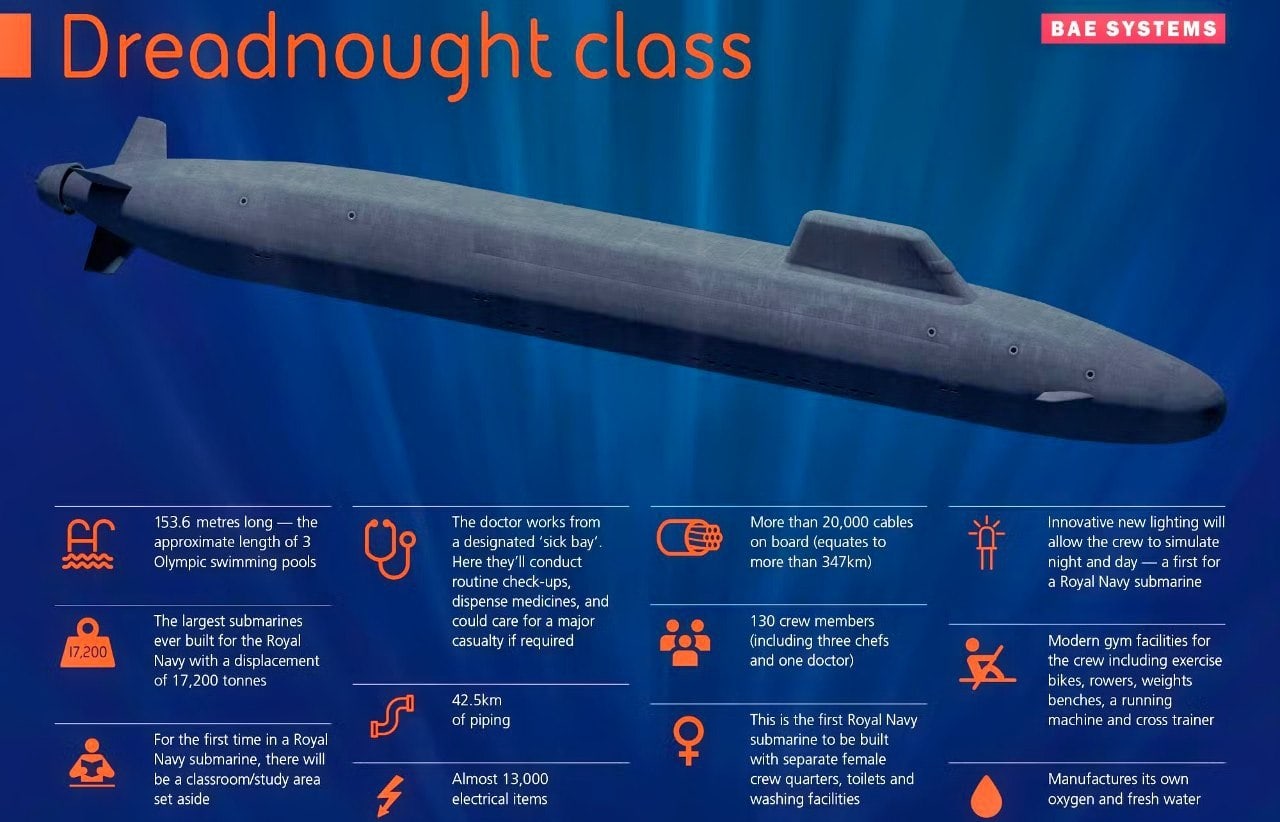
Dreadnought-Class Submarine Royal Navy BAE Systems Image
Sensors, Communications, and Survivability
The Columbia-class integrates an enlarged version of the Large Aperture Bow sonar first introduced on later Virginia-class attack submarines. This sonar system provides improved passive detection capability across a wide range of frequencies, enhancing situational awareness while maintaining acoustic discretion. Complementing this are advanced communications systems that allow SSBNs to remain connected to national command authorities while minimizing transmission risk.
With the Colombia-class expected to undertake longer deployments, greater emphasis has been placed on crew accommodations on board the ship. Columbia-class submarines support mixed-gender crews and incorporate habitability improvements intended to reduce fatigue during extended deterrent patrols. Not too many details have been shared on the specifics of crew accommodation.
While they likely won’t have a sauna as the Typhoon-class did, the ship’s larger size will likely allow to incorporate facilities to improve the quality of life for the sailors on board.
About the Author: Isaac Seitz
Isaac Seitz, a Defense Columnist, graduated from Patrick Henry College’s Strategic Intelligence and National Security program. He has also studied Russian at Middlebury Language Schools and has worked as an intelligence Analyst in the private sector.