
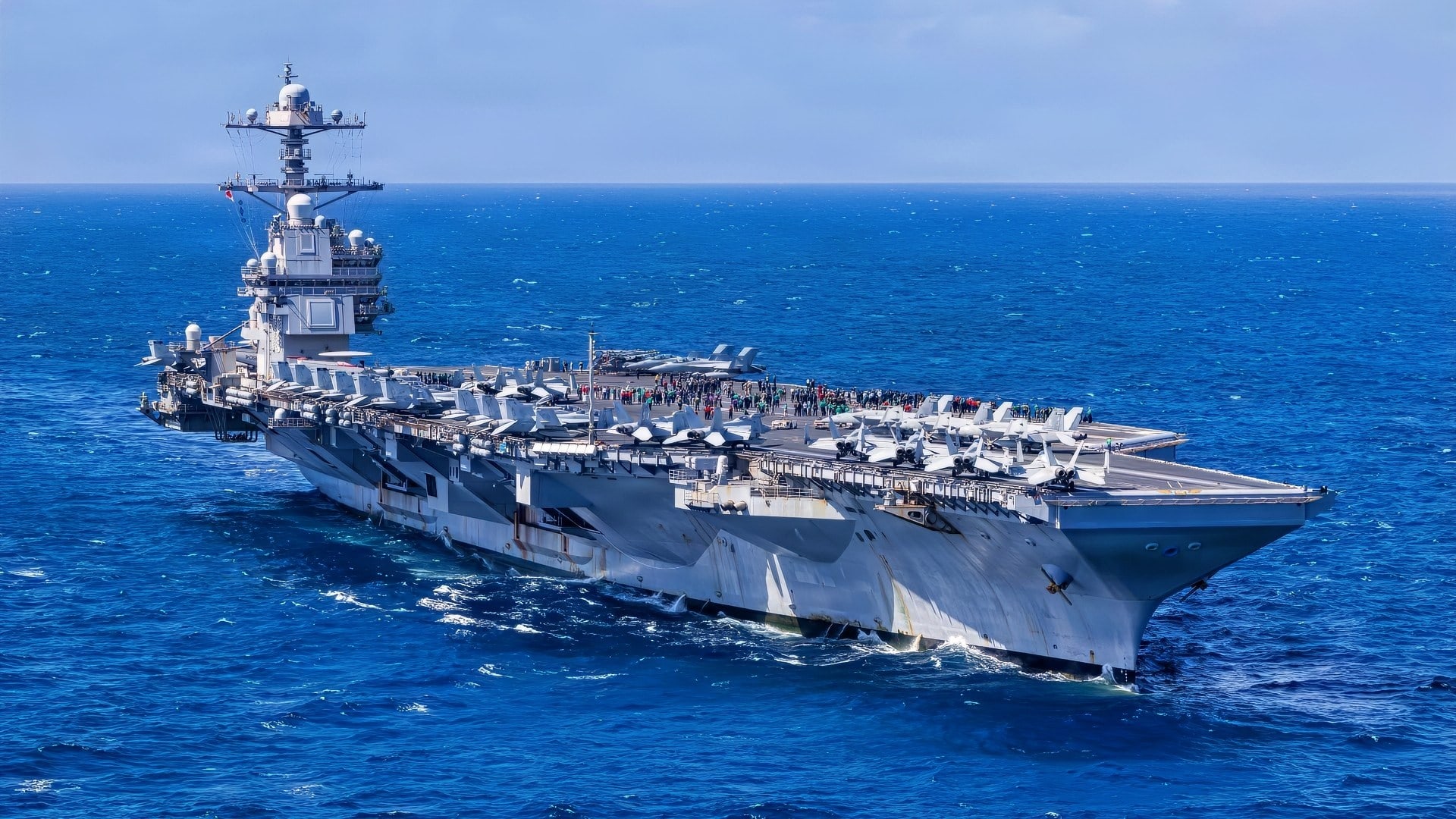
Why America Is Running Short of Aircraft Carriers, And No Solution Seems Easy
In March 2026, the U.S. Navy’s most advanced aircraft carrier, the USS Gerald R. Ford, was forced to leave frontline operations in the Middle East after a fire broke out onboard during combat operations tied to the ongoing war with Iran. The ship, which had been deployed for roughly nine months — well beyond a standard deployment cycle — diverted to Souda Bay in Crete for repairs following the incident, which injured sailors and damaged berthing areas.
The withdrawal came at the worst possible time, with U.S. strike operations continuing in Iran. Carrier-based aircraft continue to play a critical role in that mission, which will soon reach its first month.
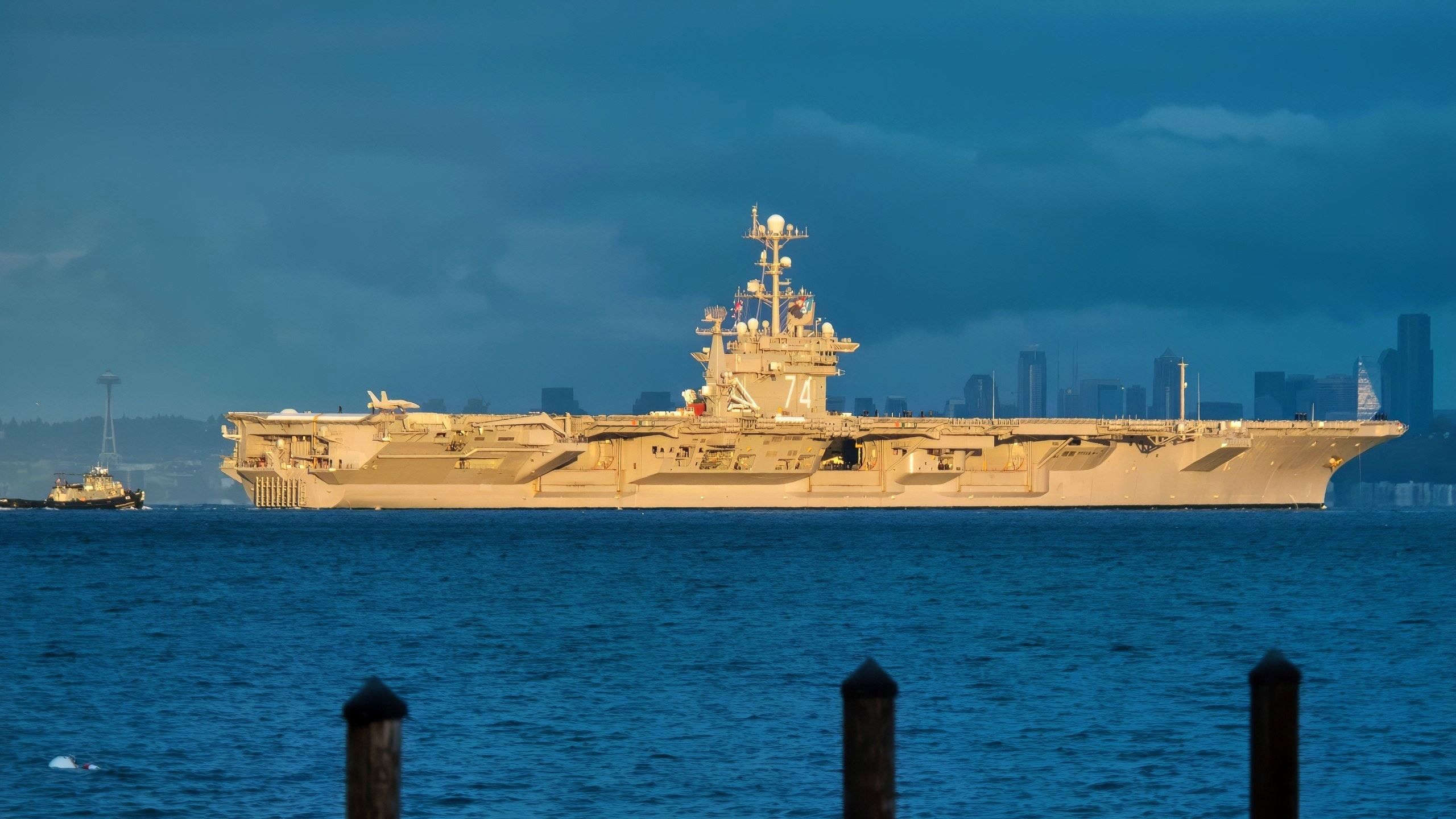
MANCHESTER, Wash. (November 3, 2017) USS John C. Stennis (CVN 74) transits Elliott Bay with Seattle in the background as it gets underway from Naval Base Kitsap’s Puget Sound Naval Shipyard and Intermediate Maintenance Facility. Stennis is underway conducting training as it continues preparing for its next scheduled deployment. (U.S. Navy photo by Mass Communication Specialist 2nd Class Vaughan Dill/Released)
Navy officials were quick to stress that the ship remained fully mission capable, but that its temporary removal from the fight still has operational consequences — and given that recent damage occurred after a prolonged deployment and missed maintenance, it’s unclear just how long the carrier may be out of action.
The carrier will require at least a week for repairs, but if urgent maintenance and repairs to its plumbing systems are deemed necessary, it could take much longer. Regardless of whether the ship is out of action for a week or more, its air wing will not be available for sustained strike operations during that time.
An advanced U.S. carrier being forced out of action during war, due to a combination of accumulated strain and onboard failures, is perhaps not surprising.
The U.S. Navy does not just operate a finite number of aircraft carriers; it is also increasingly struggling to keep enough of them available, at the same time, to meet its global commitments.
Maintenance Cycles Are Taking Carriers Out of the Fight
The most immediate driver of the carrier shortage is not fleet size, but availability. On paper, the U.S. Navy maintains 11 nuclear-powered aircraft carriers, but in reality, a significant portion of those ships are routinely unavailable due to maintenance.
Carriers undergo necessary and lengthy overhaul periods, including the Refueling and Complex Overhaul (RCOH), which can last several years. Even outside of those once-per-lifecycle refits, carriers rotate through incremental maintenance and repair cycles that regularly make them unavailable.
The Gerald R. Ford is also the first of its class, meaning its maintenance requirements are expected to be more demanding than those of ships built over years or decades of sustainment experience.
Ford’s diversion to Crete for repairs was triggered by a non-combat-related fire and compounded by plumbing issues and other system failures reported throughout its deployment. But this is a problem across the board. Congressional reports and Navy briefings all point to a maintenance system that is consistently falling behind schedule – and in some cases, by years rather than months.
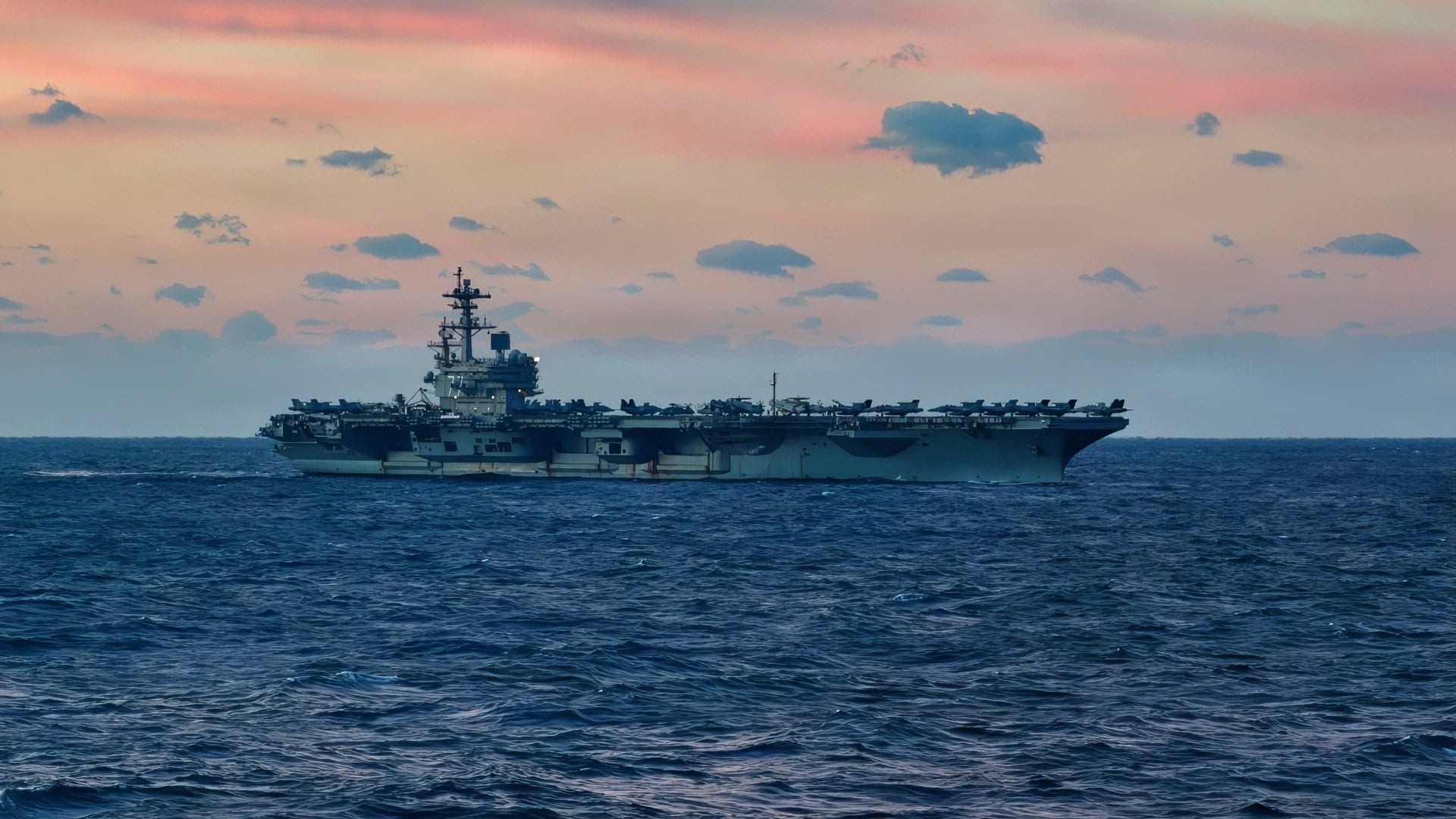
The Nimitz-class aircraft carrier USS George H.W. Bush (CVN 77) sails in the Atlantic Ocean, Feb. 6, 2026. The George H.W. Bush Carrier Strike Group is at sea as an integrated warfighting team. Composite Training Unit Exercise (COMPTUEX) is the Joint Force’s most complex integrated training event and prepares naval task forces for sustained high-end Joint and combined combat. Integrated naval training provides combatant commanders and America’s civilian leaders highly capable forces that deter adversaries, underpin American security and economic prosperity, and reassure Allies and partners. (U.S. Navy photo by Mass Communication Specialist 3rd Class John R. Farren)
The U.S. Navy’s carrier maintenance infrastructure isn’t up to the job – most of which, by the way, is concentrated in the Huntington Ingalls Industries facility in Virginia.
This is the only shipyard in the United States capable of conducting Refueling and Complex Overhauls (RCOH) on nuclear-powered aircraft carriers, as well as building new ones. That makes it a single point of failure in the system; when delays occur there, they ripple across the entire carrier fleet. And, God forbid something ever happens to the facility, the U.S. would face an immediate problem sustaining its existing fleet of nuclear carriers and building new ships.
The delays at the Huntington Ingalls Newport News facility are significant. Take the USS George Washington (CVN-73). Its RCOH was originally scheduled to take four years, which is the standard planning baseline.
In reality, it took nearly six years to complete, driven by a combination of workforce shortages, supply chain issues, and unplanned repair work discovered during the overhaul.
The USS John C. Stennis (CVN-74) is now facing similar problems. Its overhaul has been extended by at least 14 months, again due to “growth work” discovered after the ship entered the yard, including significant damage to turbine generators that required additional repairs.
Delays like this compound when maintenance schedules overlap.
The USS Harry S. Truman (CVN-75), for example, is scheduled to begin its own RCOH – expected to last four to five years – before the Stennis has fully returned to operational status.
These problems create a situation in which multiple carriers are forced out of the fight simultaneously because the industrial base cannot turn them around quickly enough.
That’s happening at a time when the shipyard itself is under strain, with Newport News tasked with overhauling multiple carriers simultaneously, building new Gerald R. Ford-class aircraft carrier ships, and managing workforce shortages and constant supply chain disruptions.
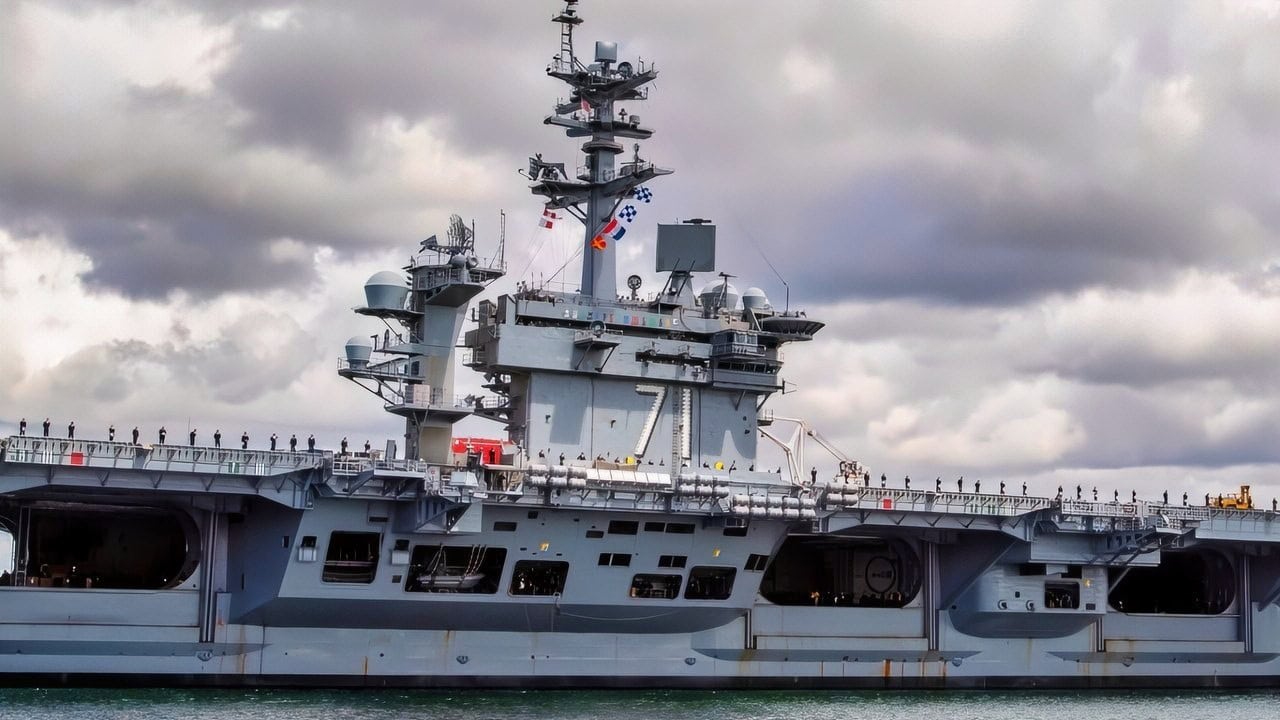
(March 23, 2023) Nimitz-class aircraft carrier USS Theodore Roosevelt (CVN 71) returns to Naval Air Station North Island following a regularly-scheduled maintenance availability and completion of sea trials, March 23. The ship changed its homeport from Bremerton to San Diego after completing an 18-month docking planned incremental availability in Bremerton, Washington, during which the ship received extensive restorations and upgrades to support the F-35C Lightning II, E-2D Advanced Hawkeye, and CMV-22B Osprey, as well as future platforms such as the MQ-25 Stingray unmanned aircraft system. (U.S. Navy photo by Mass Communication Specialist 2nd Class Keenan Daniels)
A Rough Decade Ahead
The next several years are likely to be the most difficult part of the carrier squeeze. The Navy has already pushed the retirement of USS Nimitz (CVN-68) from May 2026 to March 2027 specifically to avoid a deeper force-level dip before USS John F. Kennedy (CVN-79) is delivered. At the same time, USS Harry S. Truman (CVN-75) is scheduled to begin its RCOH in June 2026, with completion planned for January 2031, while USS John C. Stennis (CVN-74) remains roughly 14 months behind schedule and is now expected back in October 2026 rather than August 2025. That means the Navy is heading into a period in which retirements, maintenance, overhauls, and delayed returns will all begin to overlap.
There is, however, still a credible case that the Navy can pull this off. Kennedy has already begun sea trials, and the current budget documents still indicate it will be delivered in March 2027. Beyond that, USS Enterprise (CVN-80) and USS Doris Miller (CVN-81) are expected to be delivered in 2030 and 2032, respectively, gradually stabilizing the replacement pipeline.
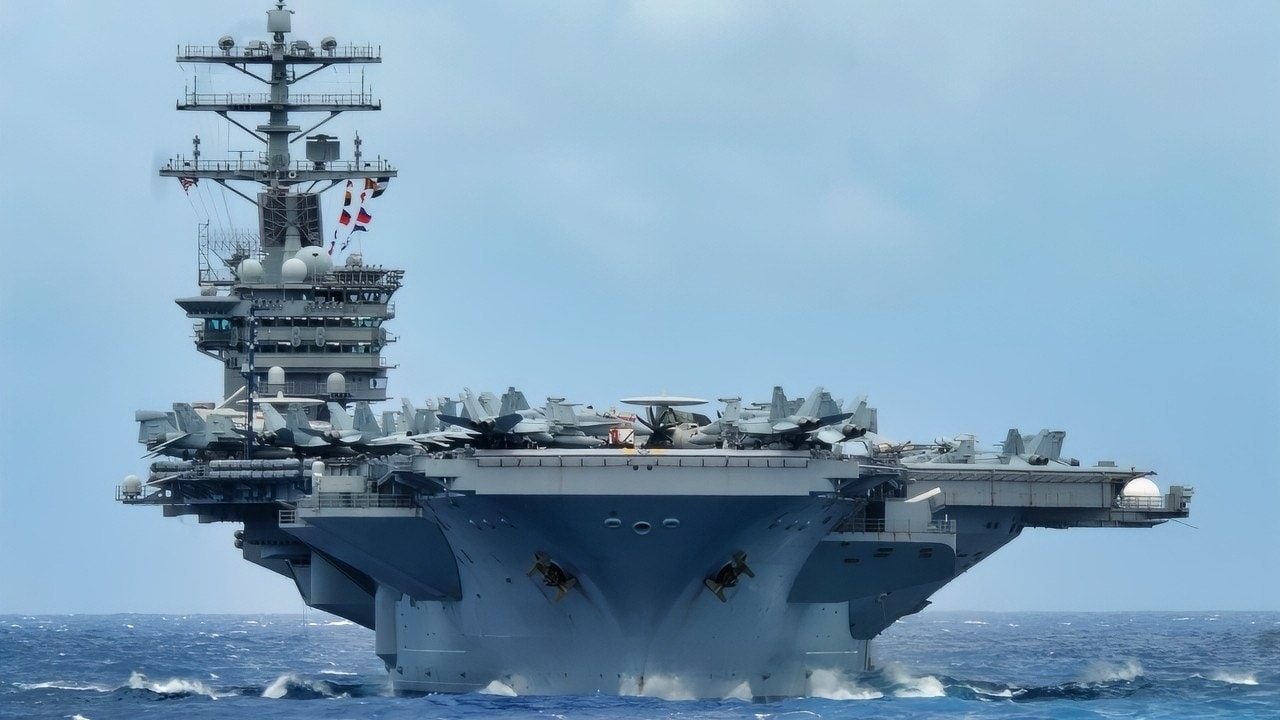
WESTERN PACIFIC (Nov. 12, 2017) The aircraft carrier USS Theodore Roosevelt (CVN 71) transits the Western Pacific during a three-carrier strike force photo exercise. The USS Ronald Reagan (CVN 76), USS Theodore Roosevelt (CVN 71) and USS Nimitz (CVN 68) Strike Groups are underway and conducting operations in international waters as part of a three-carrier strike force exercise. The U.S. Navy has patrolled the Indo-Asia Pacific region routinely for more than 70 years promoting regional security, stability and prosperity. (U.S. Navy photo by Mass Communication Specialist 3rd Class Kelsey J. Hockenberger/Released)
Newport News has also said that workforce retention is improving, which matters because labor losses have been one of the yard’s biggest problems. But that optimistic case depends on something the Navy has been struggling with for years: avoiding further major slips in construction or overhaul work. If the dates hold, the shortage can be managed. If they move again, there’s no telling how difficult the situation may become.
About the Author: Jack Buckby
Jack Buckby is a British researcher and analyst specialising in defence and national security, based in New York. His work focuses on military capability, procurement, and strategic competition, producing and editing analysis for policy and defence audiences. He brings extensive editorial experience, with a career output spanning over 1,000 articles at 19FortyFive and National Security Journal, and has previously authored books and papers on extremism and deradicalisation.